Defining the Technology: What is pH probe Chemistry?
To answer what is ph probe technology in a commercial context, one must look at the electrochemical interaction between a process fluid and a glass membrane. Modern industrial pH sensors utilise a galvanic cell principle where a tiny voltage is generated proportional to the hydrogen ion activity in the water. For UK facility managers, this measurement is the first line of defence against acidic corrosion or alkaline scaling in multi-million pound plant assets. A failure to accurately monitor these levels can lead to rapid degradation of heat exchangers and boiler tubes, often voiding manufacturer warranties if chemistry isn't logged via 4-20 mA or Modbus integration.
The fundamental anatomy consists of a measuring electrode and a reference electrode, traditionally housed within a single body for industrial ease of use. When engineers ask what is ph probe construction, they are specifically interested in the ion-selective glass bulb that reacts to the H+ ions. This bulb is filled with a known internal buffer solution, and the difference in potential between the internal solution and the external process fluid creates the millivolt signal. It is this signal that our transmitters convert into a legible 0-14 pH scale, allowing for automated chemical dosing or alarm triggering in a BMS system.
In the UK market, the robustness of this measurement is governed by standards such as BS 8552, which outlines the sampling and monitoring of water in building services. Understanding what is ph probe reliability means recognising that the environment inside a heating or chilled water circuit is hostile, characterized by pressure fluctuations and suspended solids. By selecting a high-grade industrial pH sensor, M&E contractors ensure that the system remains within the tight parameters required to prevent metallurgical failure. UKGP provides factory-calibrated sensors to ensure out-of-the-box accuracy for these critical applications, reducing the time spent on manual commissioning by onsite plant-room engineers.
- Ion-selective glass membrane sensitive to H+ ion activity
- Reference electrode providing a stable comparison potential
- Internal buffer solution (usually pH 7.0) for baseline calibration
- Porcelain or PTFE junction allowing ion movement while protecting internals
The Anatomy of an Industrial-Grade pH Sensor
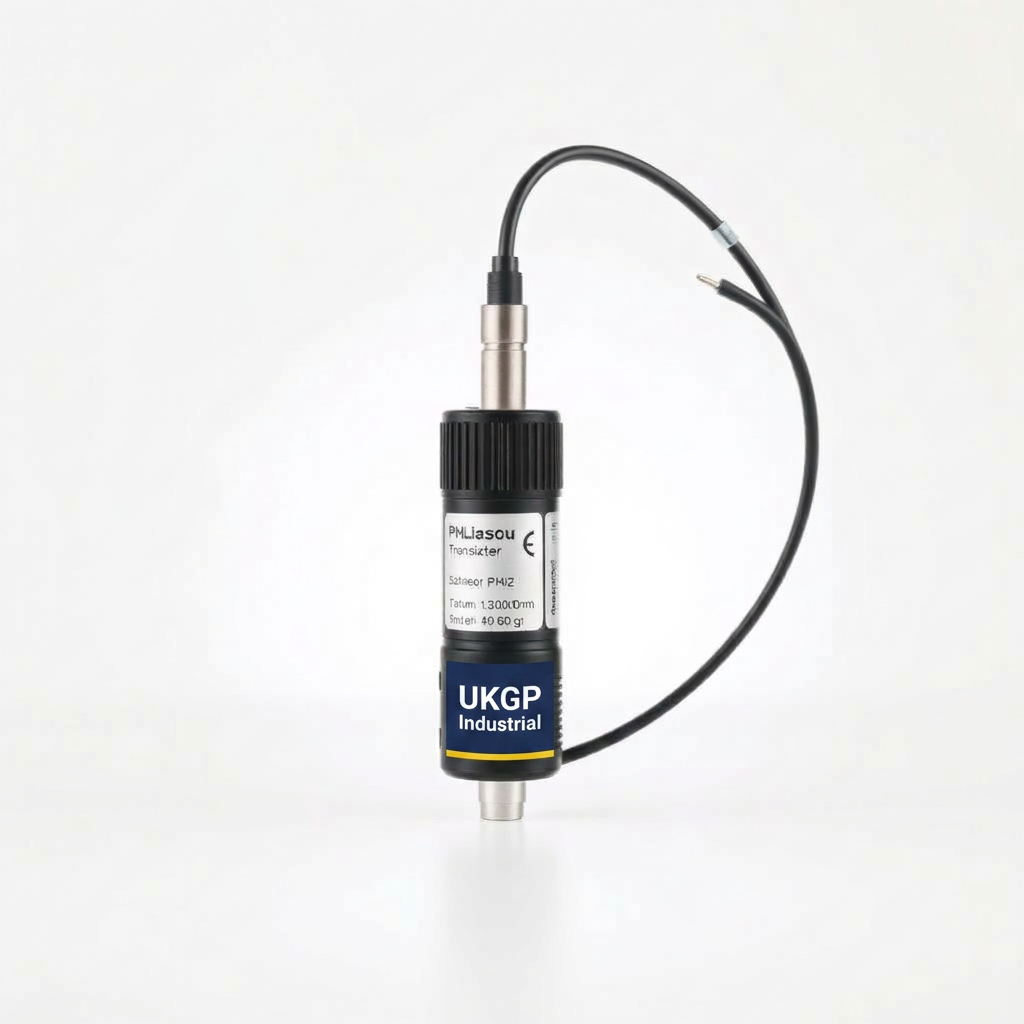
When specifying for UK plant rooms, the query of what is ph probe anatomy extends beyond the glass bulb to the physical housing and cabling requirements. Unlike laboratory-grade sensors, industrial variants must withstand the vibratory and thermal stresses of a secondary circuit. The UKGP industrial pH sensor & transmitter kit features a robust body with an IP68 rating, ensuring that the critical electronics remain protected from moisture ingress in damp, subterranean plant environments. This is particularly important for cooling tower or basement installations where humidity and direct splashes are commonplace and would otherwise cause signal drift in lesser equipment.
Connectivity is another vital anatomical component. Standard BNC connectors often fail in industrial settings due to oxidation; therefore, our kits utilize heavy-duty M12 cable kits. This ensures a secure, waterproof mechanical connection that maintains signal integrity over long distances. Whether you are using a 4-20 mA analogue loop for a legacy PLC or Modbus RTU for a modern digital Building Management System, the anatomy of the transmitter must be capable of precise signal amplification. Because the raw voltage from a pH probe is extremely high impedance, the transmitter acts as the vital 'middle man' to prevent electromagnetic interference from surrounding pump motors.
The internal reference system is also a critical anatomical feature to consider when exploring what is ph probe longevity. Many standard probes use a single junction that is prone to 'poisoning' when heavy metals or contaminants are present in the water. We specify sensors with robust junctions and high-quality electrolytes to ensure a stable reference potential over a 2nd year warranty period. This engineering focus reduces the total cost of ownership for procurement leads and facilities managers, as it extends the intervals between necessary recalibration and replacement, directly aligning with the maintenance philosophies found in BSRIA BG50 for closed-loop systems.
- IP68 rated housing for moisture and dust protection
- M12 connector system for industrial-grade signal integrity
- High-impedance signal amplification via an integrated transmitter
- Dual-output support (4-20 mA or Modbus) for flexible BMS integration
Failure Modes: Why Industrial pH Probes Stop Working
Identifying failure modes is as essential as understanding what is ph probe construction. The most common issue encountered by FM teams is 'coating' or 'fouling'. In systems with high suspended solids or recent construction work (where BSRIA BG29 cleaning has been poorly executed), a film of magnetite or scale can develop over the glass bulb. This physically insulates the sensor from the water, leading to incredibly slow response times or 'lazy' readings. Regular inspection as part of a planned preventative maintenance schedule is the only way to mitigate this, though high-quality industrial glass is designed to be more resistant to such accumulation.
Another prevalent failure mode is the 'poisoning' of the reference junction. This occurs when ions from the process water migrate into the reference chamber, altering its chemical composition and causing a permanent offset in the pH reading. This is often seen in systems where chemical dosing pots are incorrectly used to shock-dose concentrated chemicals directly upstream of the sensor. When we define what is ph probe failure, we often find that chemical depletion of the electrolyte is a natural 'wear and tear' process, which is why UKGP provides factory-calibrated units meant for industrial lifespans, backed by a 2-year warranty for peace of mind.
Mechanical breakage of the glass bulb is the final major failure mode. In high-velocity systems or where there is significant water hammer, the fragile ion-selective glass can crack. Even a hairline fracture allows the internal buffer to leak, rendering the probe useless. Proper installation in a bypass loop, rather than a main header, often mitigates this risk. For engineers looking to protect their assets, understanding what is ph probe fragility leads to better location choices during the design phase, particularly when integrating sensors into side stream filtration skids or near expansion bellows where pressure fluctuations might occur frequently during pump start-up cycles.
- Glass bulb fouling due to magnetite, oils, or limescale buildup
- Reference junction poisoning via chemical ion migration
- Electrolyte depletion causing signal drift and calibration failure
- Physical glass breakage from water hammer or improper handling
Integration with Side Stream Filtration Systems
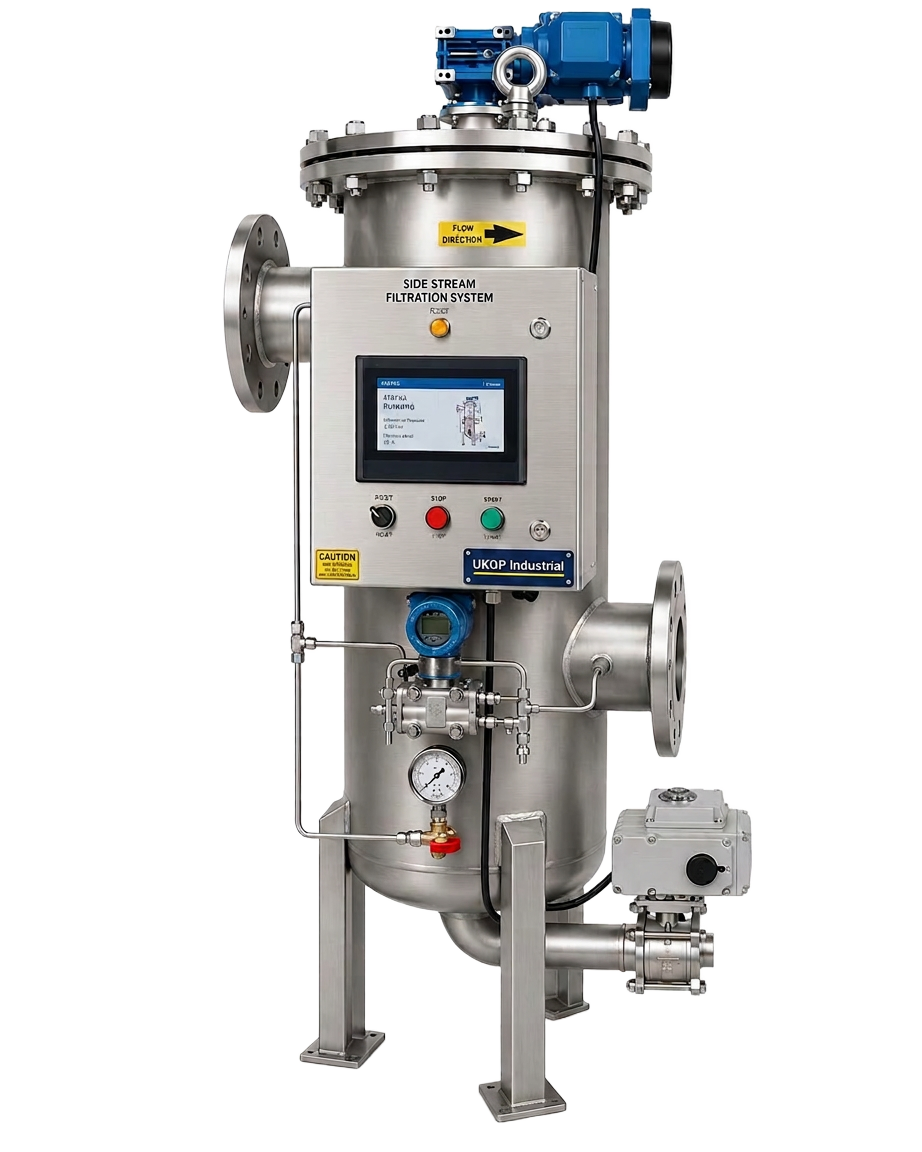
In modern BSRIA-compliant heating and cooling systems, knowing what is ph probe placement is vital for accurate data. pH sensors are frequently installed in conjunction with side stream filtration skids to monitor the chemical efficacy of the water treatment. As the filtration unit removes suspended solids, the pH probe ensures that the corrosion inhibitor levels remain active and that the water does not become too acidic (corrosive) or too alkaline (scaling). This synergy between physical filtration and electrochemical monitoring is the gold standard for large-scale commercial plant rooms, providing a comprehensive view of system health for M&E contractors.
When a side stream filter is active, it creates a controlled flow environment ideally suited for a pH sensor. Installing the probe within this bypass allows for maintenance and calibration without shutting down the entire primary loop. For UK engineers, this means that answering the question of what is ph probe maintenance is simplified; isolation valves on the filtration loop allow the sensor to be cleaned or replaced in minutes. This setup protects the sensor from the highest velocities and largest debris while ensuring the sample remains representative of the bulk fluid, fulfilling the monitoring requirements of BS 8552 for closed circuits.
If you are currently managing a system where water quality is a concern, integrating a UKGP industrial pH sensor & transmitter with your existing filtration setup is a wise move. Our transmitters are factory-calibrated, meaning they can be wired directly into your control panel with minimal fuss. Procurement leads across Surrey and the wider UK choose our kits for their durability and the security of a 2-year warranty. Whether you are dealing with a direct-replacement scenario or a new-build installation, the transition to high-precision monitoring is the most effective way to prevent the high costs associated with chemical over-dosing and asset corrosion.
- Simplified maintenance through bypass loop isolation
- Protection of the sensor from high-velocity primary flows
- Enhanced correlation between chemical levels and particle removal
- Compliance with BSRIA BG50 monitoring recommendations
Maintaining Compliance with BSRIA BG50 and BG29
For any UK building services professional, the underlying reason to understand what is ph probe operation is to remain compliant with industry best practices. BSRIA BG50 (Water treatment for closed heating and cooling systems) emphasises the need for continuous or frequent monitoring of pH to ensure corrosion inhibitors are functioning correctly. Handheld dip tests are often insufficient for large sites, as they only provide a snapshot in time. A fixed industrial pH sensor provides the continuous data stream necessary to spot trends—such as a slow drop in pH that could indicate microbiological activity or a recent fresh-water leak introducing oxygen.
BG29 (Pre-commission cleaning of pipework systems) also highlights the importance of pH during the cleaning and flushing phases. During these stages, understanding what is ph probe accuracy is critical, as cleaners and passivators must be held at specific concentrations to be effective. A UKGP pH transmitter providing a 4-20 mA output allows the commission engineer to log these values automatically, providing a digital audit trail that proves the system was properly cleaned and treated before handover. This level of documentation is increasingly demanded by insurers and building owners as a prerequisite for asset management and liability protection.
Furthermore, by adhering to European standard BS EN 14917 for expansion bellows and other critical plant components, engineers recognise that corrosion is a leading cause of premature material failure. If the pH drops below 8.2 in a steel system, the protective magnetite layer becomes unstable. By specifying a reliable industrial pH sensor, you are essentially installing a 24/7 insurance policy for every pipe, valve, and heat exchanger in the building. Don't leave your system health to chance; request a quote for our factory-calibrated kits and ensure your site meets the highest UK engineering standards.
- Continuous monitoring to detect corrosive trends early
- Digital logging of pH levels for BG29 handover compliance
- Prevention of magnetite layer degradation through pH stability
- Reduced reliance on manual chemical testing and human error
Summary: Selecting the Right pH Equipment
In summary, understanding what is ph probe technology involves more than just knowing it measures acidity. For the professional UK engineer, it is about selecting a robust instrument that can survive the rigours of a plant room while providing the accurate data required for BSRIA compliance. From the high-impedance glass bulb anatomy to the IP68-rated transmitter housing, every component must be designed for durability. Choosing a low-cost, non-industrial sensor often leads to frequent failures, signal drift, and ultimately, a lack of trust in the system's water chemistry data, which can have catastrophic consequences for long-term pipework integrity.
At UKGP, we simplify the procurement process by offering a complete kit: the industrial pH sensor, the matched transmitter, and the M12 cable kit. This takes the guesswork out of compatibility and ensuring waterproof connections. Our systems support both Modbus and 4-20 mA, making them compatible with almost any UK building's existing infrastructure. With a 2-year warranty and factory calibration, we provide the confidence that M&E contractors and FMs need to maintain their systems effectively. When someone asks you what is ph probe technology for our site, you can point to a UKGP system as the benchmark for reliability and engineering excellence.
If you are a consultant designing a new plant room or a maintenance engineer looking to upgrade an existing setup, now is the time to consider the impact of high-quality pH monitoring. Avoiding the failure modes discussed—such as fouling, poisoning, and mechanical breakage—starts with choosing equipment built for the task. Contact the UKGP technical team today for a quote on our industrial pH sensor & transmitter kits. We are based in Surrey and ready to support your UK-wide projects with technical expertise and robust equipment that stands the test of time in the most demanding commercial environments.
- Specify industrial-grade kits to avoid common failure modes
- Ensure compatibility with BMS via 4-20 mA or Modbus
- Prioritise IP68 and M12 connectivity for plant room longevity
- Contact UKGP for factory-calibrated solutions and technical support
Frequently asked questions
What is pH probe calibration frequency for commercial systems?
- Per BSRIA guidelines, industrial pH probes should typically be calibrated every 3 to 6 months. However, in systems with high debris or chemical flux, monthly checks may be required. UKGP sensors are factory-calibrated to simplify initial commissioning.
Can I use a 4-20 mA pH transmitter with an existing PLC?
- Yes, our industrial pH transmitters provide a standard 4-20 mA loop-powered output, making them universally compatible with UK PLCs and Building Management Systems (BMS) for real-time monitoring.
What happens if the pH probe glass gets dirty?
- Fouling leads to 'signal lag' or drift. The sensor will respond slowly to chemistry changes. Regular cleaning with a soft cloth and mild detergent (or specific cleaning solutions) is necessary to maintain accuracy.
Why is an IP68 rating important for a pH transmitter?
- Plant rooms are often humid or prone to leaks. An IP68 rating ensures the transmitter is vacuum-sealed and submersible, preventing internal corrosion of the electronics and ensuring the 2-year warranty remains valid.
What is the lifespan of an industrial pH sensor?
- Typically, an industrial pH sensor lasts 12 to 24 months depending on the temperature and chemical aggressiveness of the water. UKGP offers a 2-year warranty to support the expected service life in standard UK building services applications.