The Fundamentals of Electrochemical pH Measurement
At its core, a pH sensor is a galvanic cell. When the sensing glass membrane comes into contact with an aqueous solution, a voltage is developed across the membrane. This voltage is proportional to the concentration of hydrogen ions (H+) in the liquid. For engineers, understanding that this is a dynamic electrochemical reaction is vital; it is not a static measurement like temperature but one that relies on the consistent ion exchange between the process fluid and the sensor's internal electrolyte.
The sensor typically comprises two primary elements: the glass electrode and the reference electrode. The glass electrode is sensitive to H+ ions, while the reference electrode provides a stable potential against which the glass electrode's voltage is measured. In industrial applications, these are usually combined into a 'combination sensor' to save space and simplify installation within pipework or tanks.
Modern industrial pH sensors must combat 'noise' and signal degradation. Because the glass membrane has an extremely high electrical resistance (often 10 to 1,000 Mega-ohms), the resulting millivolt signal is incredibly weak. If this signal is transmitted over long cable runs without amplification, it is susceptible to EMI (Electromagnetic Interference) from nearby pumps, VFDs, and heavy machinery common in UK plant rooms.
- Measurement of hydrogen ion activity via the Nernst equation.
- The role of the reference electrode and salt bridge.
- Millivolt signal generation (typically +/- 414mV range).
- The necessity of high impedance signal processing.
The Evolution of pH Transmitters and Signal Conditioning
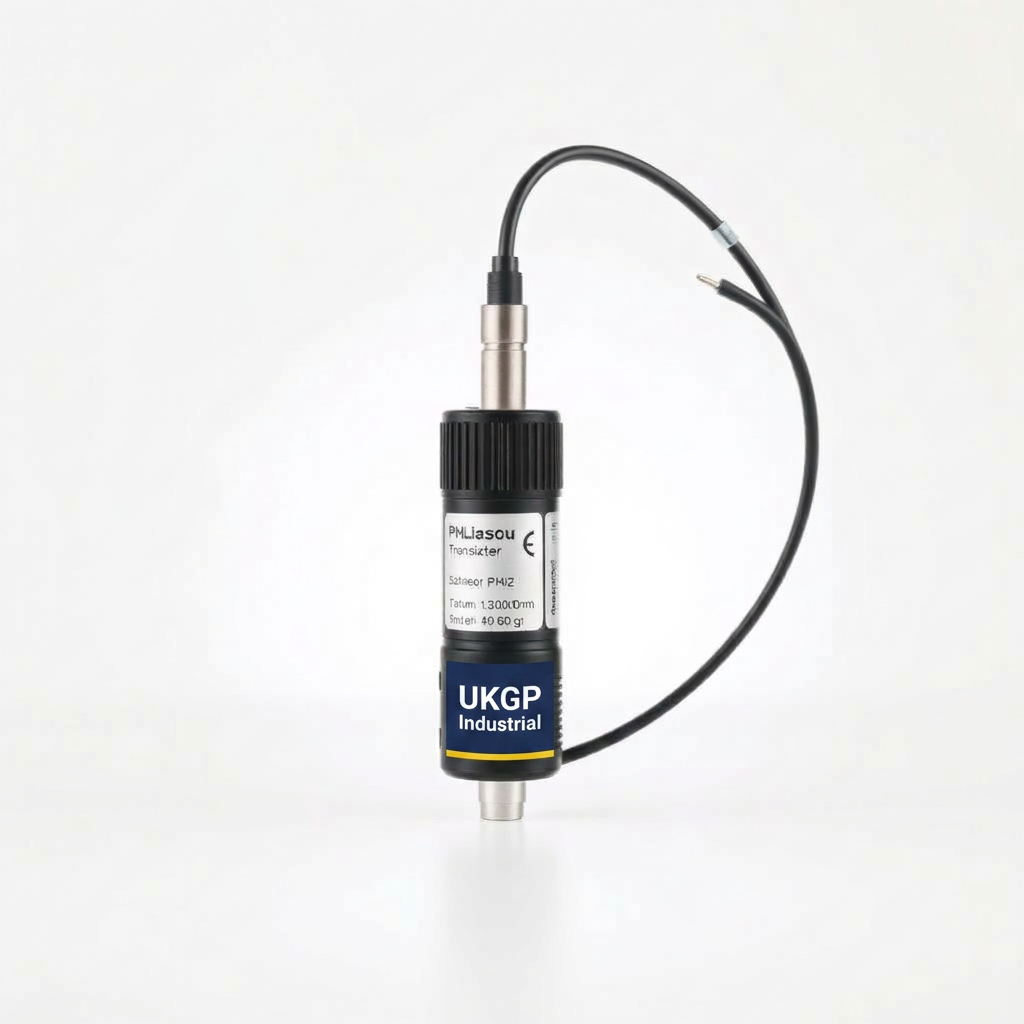
The transition from raw millivolt probes to integrated transmitters has revolutionised water treatment in building services. A transmitter serves as the 'brain' of the pH sensor assembly, taking the high-impedance mV signal and converting it into a robust, industrial-standard signal. In modern UK installations, this is typically a 4-20mA current loop or a digital protocol such as Modbus RTU, which allows for seamless integration into a Building Management System (BMS).
By using a transmitter, engineers can mount the pH sensing element up to several hundred metres away from the control panel without loss of accuracy. This was previously impossible with direct-wired probes. UKGP Industrial units often utilise these transmitters to ensure that the data reaching the plant room controller is accurate, stable, and filtered against the electrical 'chatter' of a dense industrial environment.
Furthermore, smart transmitters now include internal memory for 'plug-and-play' operation. This means the calibration data is often stored within the sensor/transmitter assembly itself. When a sensing element reaches the end of its life, it can be replaced without necessitating a full system recalibration at the central controller, significantly reducing the man-hours required for routine maintenance in commercial complexes.
- Reduction of signal attenuation over long distances.
- Standardisation of output (4-20mA or RS485 Modbus).
- Simplification of PLC and BMS integration.
- Digital calibration storage within the transmitter head.
Frequently asked questions
Why do pH sensors require periodic replacement?
- Standard pH probes use a sacrificial electrolyte. Over time, this ion exchange depletes the reference cell, and the glass membrane can become dehydrated or fouled. Even with high-quality UKGP Industrial transmitters, the sensor element remains a consumable component.
How does temperature affect pH readings?
- The UKGP Industrial pH-sensor-transmitters compensate for temperature automatically. Without this, a measurement taken at 50°C would show a significant deviation from the true pH value compared to a 25°C baseline due to the Nernst equation variables.
What are the risks of ignoring pH monitoring in closed-loop systems?
- BSRIA BG29/21 and BG50 highlight that incorrect pH is a primary driver of corrosion. High pH can attack non-ferrous components (like aluminium heat exchangers), while low pH accelerates acidic corrosion of steel and iron piping.
What is the benefit of M12 connectors over traditional hard-wired sensors?
- M12 quick-connect systems allow for 'plug-and-play' sensor replacement. This removes the need for rewiring at the controller or junction box, reducing MTTR (Mean Time To Repair) and preventing wiring errors in high-stakes industrial environments.