Understanding the sensor pH meter in modern plant rooms
In the context of UK building services, maintaining water chemistry is no longer a manual, monthly task based solely on grab samples. A permanently installed sensor pH meter enables continuous monitoring, providing a critical early warning system for fluctuating acidity or alkalinity that could signal a glycol breakdown or a failure in chemical dosing. For M&E contractors, selecting a probe that can withstand the rigours of high-pressure HVAC environments is essential for meeting the stringent requirements of BSRIA BG50. Unlike laboratory equipment, an industrial sensor must be robust enough to handle turbulent flows and potential debris without losing its calibration within weeks of installation.
When integrating these devices, engineers must consider the mechanical interface between the probe and the pipework. A sensor pH meter should ideally be installed in a bypass line or a specific flow cell rather than the primary high-velocity main to allow for easier maintenance and isolation without shutting down the entire system. This setup ensures that the glass electrode remains saturated and protected from excessive mechanical stress, which can lead to premature failure. UKGP Industrial provides kits that focus on this durability, ensuring that the sensor pH meter can operate reliably in temperatures and pressures commonly found in contemporary commercial boiler houses and district heating schemes.
The shift towards smart building management systems has increased the demand for digital communication over traditional analogue signals. While many legacy systems still rely on simple voltage outputs, a modern sensor pH meter often incorporates sophisticated signal conditioning within the transmitter head. This design reduces the risk of electromagnetic interference, which is a common issue when running low-voltage cabling through cluttered plant-room trunking. By choosing a high-quality sensor pH meter with factory-calibrated electronics, contractors can significantly reduce the onsite commissioning time typically associated with balancing complex chemical monitoring loops and ensure immediate compliance with CIBSE CP1 guidelines for heat networks.
- Ensures 24/7 compliance with BSRIA BG50 water quality parameters
- Reduces reliance on manual grab-sampling and laboratory delays
- Provides immediate detection of glycol degradation or dosing errors
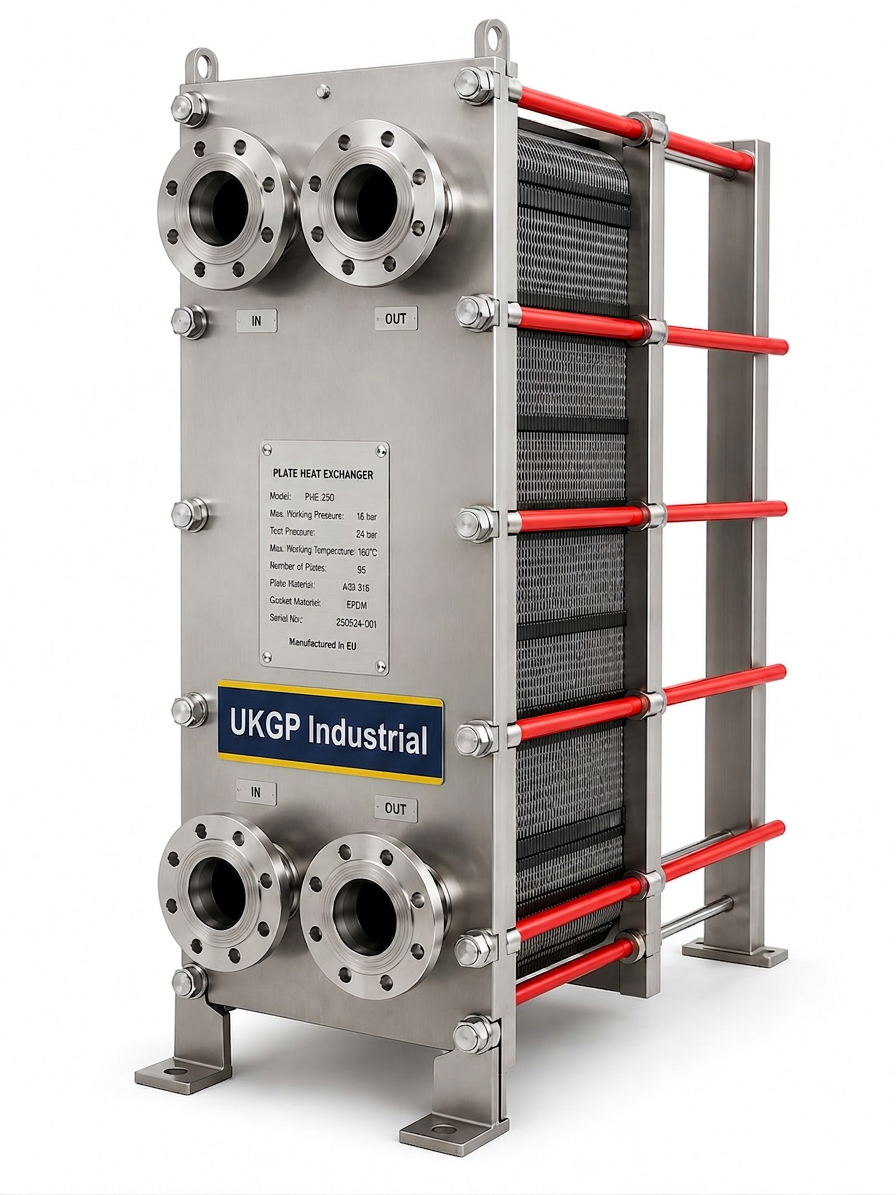
- Protects expensive assets like plate heat exchangers and boilers
Wiring requirements for 4-20 mA and Modbus integration
Correct electrical wiring is the backbone of any reliable sensor pH meter installation. In the UK industrial sector, the 4-20 mA current loop remains the standard for its simplicity and inherent noise immunity over long cable runs. When wiring a sensor pH meter, it is vital to use screened twisted-pair cabling to prevent cross-talk from nearby high-voltage pump drives or inverter panels. Grounding the screen at only one end, typically at the controller side, is a standard practice to avoid ground loops that can induce significant errors in pH readings, which are sensitive to even minor millivolt fluctuations.
For more complex installations where multiple data points are required, Modbus RTU (RS485) offers an efficient alternative for connecting a sensor pH meter directly to a Building Management System (BMS). Using a digital bus minimizes the amount of individual copper wiring required and allows for the transmission of diagnostic data, such as sensor health and temperature compensation values, alongside the primary pH reading. Regardless of the communication protocol chosen, ensuring that the transmitter and sensor connections are housed in a IP68 rated enclosure is paramount, especially in humid or damp plant-room environments where moisture ingress can quickly corrode electrical terminals.
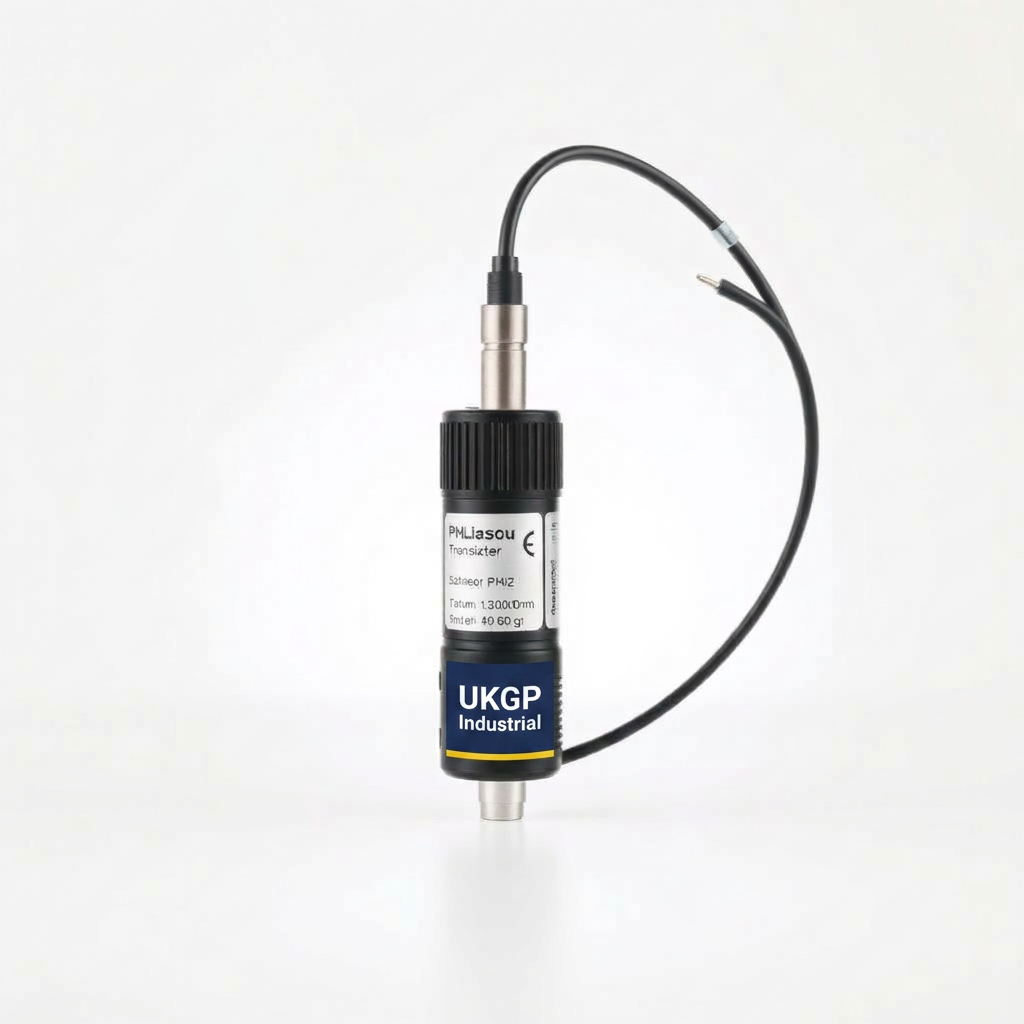
To streamline the installation process, UKGP provides a comprehensive sensor pH meter kit that includes a high-spec transmitter and a specialized M12 cable kit. This plug-and-play approach eliminates the need for complex field-stripping of delicate wires, reducing the risk of installation error. The kit supports both 4-20 mA and Modbus outputs, offering maximum flexibility for the controls engineer. For those looking for a robust solution, the UKGP industrial pH sensor & transmitter features a 2-year warranty and arrives factory-calibrated, ensuring it is ready for immediate deployment into high-stakes HVAC environments where downtime is not an option.
- Utilise screened twisted-pair cable for all 4-20 mA signal runs
- Implement Modbus RTU for advanced diagnostics and reduced wiring
- Ensure IP68 protection for all junction boxes and transmitter heads
- Always ground screens at the PLC or BMS end to prevent interference
Mechanical installation and flow cell positioning
The physical location of the sensor pH meter is just as critical as its electrical configuration. To achieve accurate readings, the sensor must be positioned where it will experience a consistent, representative flow of the system water. Installing the probe at a dead-leg or at the very top of a horizontal pipe can lead to air pockets or stagnant water, resulting in false readings. Ideally, the sensor pH meter should be installed in a vertical section of pipe with upward flow, or via a dedicated bypass assembly that allows for flow regulation and easy removal for cleaning and recalibration without draining the entire circuit.
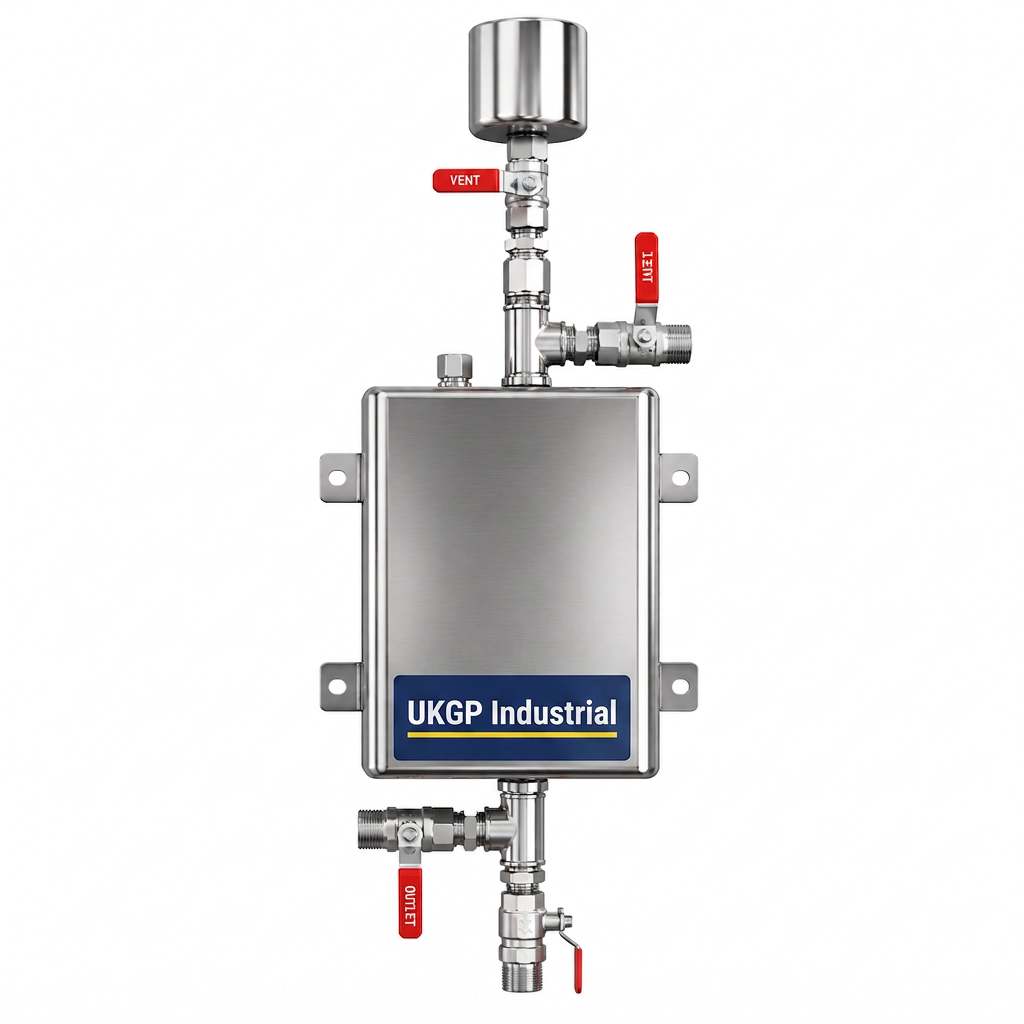
In systems featuring high levels of suspended solids, a sensor pH meter can be prone to fouling, which coats the reference junction and causes the reading to drift. This is particularly prevalent in older retrofitted systems where iron oxide sludge is present. Integrating an air & dirt separator upstream of the sensor can significantly extend the interval between maintenance visits. By removing the particulate matter before it reaches the sensitive electrode, you maintain the accuracy of the sensor pH meter and ensure that the chemical dosing adjustments made by the BMS are based on true system conditions rather than a blocked or dirty probe.
Careful consideration must also be given to the pressure and temperature limits of the sensor. Most industrial probes are rated for specific ranges that must align with the system's operating parameters. In high-temperature heating systems, it may be necessary to include a cooling coil or a localized heat sink in the bypass line to protect the internal electrolytes of the sensor pH meter. Properly managing the environment around the probe ensures that the 2-year warranty remains valid and that the device delivers the reliable data required to meet BS 8552 water sampling standards throughout the building's lifecycle.
- Install in a bypass loop to facilitate safe maintenance and calibration
- Ensure sensors are always submerged to prevent electrode dehydration
- Position upstream of chemical injection points for accurate baseline data
- Maintain flow velocity between 0.5 to 2.0 m/s for optimal response
Calibration and initial commissioning procedures
Commissioning a sensor pH meter involves more than just powering it on; it requires a systematic verification against known standards. Although many units, including those from UKGP, arrive factory-calibrated, a site-specific two-point calibration using pH 4.0 and pH 7.0 or pH 10.0 buffer solutions is recommended after the initial installation. This process accounts for any minor changes that may have occurred during shipping and ensures the transmitter is correctly interpreting the millivolt signal from the probe. This step is vital for compliance with BSRIA BG29, which emphasizes the importance of accurate monitoring during the pre-commissioning cleaning phase of a project.
During the calibration of a sensor pH meter, it is important to allow the probe to stabilize in each buffer solution for at least two minutes. Temperature compensation is also a factor; the transmitter must either use an internal thermistor or a manual setting to adjust the pH calculation based on the fluid temperature. If the temperature fluctuates significantly in the plant room, an automatic temperature compensation (ATC) feature in the sensor pH meter is essential for maintaining precision. Once calibrated, the 4-20 mA loop should be verified at the BMS head-end to ensure the scaled value on the screen matches the physical reading at the transmitter.
Documentation is a key part of the commissioning process for any industrial sensor. Recording the initial slopes and offset values of the sensor pH meter provides a baseline for future maintenance. As the electrode ages, its response time will naturally slow down and the slope will decrease. By tracking these metrics, facility managers can proactively schedule sensor replacement before a total failure occurs. For critical applications, keeping a spare UKGP factory-calibrated probe on-site is a cost-effective way to ensure continuous monitoring and avoid the risks associated with unmonitored water chemistry in high-value HVAC assets.
- Perform two-point calibration using certified buffer solutions
- Verify 4-20 mA scaling at the BMS to ensure data integrity
- Document baseline slope and offset values for future diagnostics
- Utilise automatic temperature compensation for high-accuracy results
Maintenance schedules and sensor longevity
Maintaining a sensor pH meter is essential for preventing drift and ensuring the longevity of the plant room assets it protects. In a typical closed-loop HVAC system, the sensor should be inspected and cleaned every three to six months, depending on the water quality. Soft debris can be removed with a gentle rinse, while scale buildup might require a brief soak in a mild acidic solution. Neglecting this maintenance can cause the sensor pH meter to provide sluggish or inaccurate data, which may lead to over-dosing of chemicals, unnecessarily increasing operational costs and potentially damaging seals and gaskets.
The life expectancy of an industrial sensor pH meter typically ranges from 12 to 24 months, depending on the severity of the application. High temperatures and constant exposure to harsh chemicals will deplete the reference junction over time. When the response time becomes unacceptably slow or the sensor fails to calibrate, it is time for a replacement. UKGP offers a straightforward replacement process with our M12 cable kits, allowing engineers to swap out a depleted sensor for a new factory-calibrated unit in minutes, thereby maintaining the integrity of the water treatment regime as outlined in BSRIA BG50.
It is also prudent to regularly check the integrity of the wiring and the transmitter housing. In humid plant rooms, ensuring that cable glands are tight and that there is no moisture inside the transmitter head will prevent intermittent signal loss. If you are experiencing erratic readings from your sensor pH meter, checking the cable for physical damage or interference is the first step in troubleshooting. For robust performance in demanding environments, many UK engineers specify the UKGP industrial pH sensor & transmitter for its IP68 rating and proven reliability, ensuring that the critical task of water quality monitoring is handled by equipment designed specifically for the task.
- Schedule quarterly inspections and cleaning of the sensor tip
- Replace sensors every 18-24 months to ensure continued accuracy
- Check cable glands and enclosure seals for moisture ingress
- Verify calibration monthly using a handheld reference meter
Integrating pH monitoring with side stream filtration
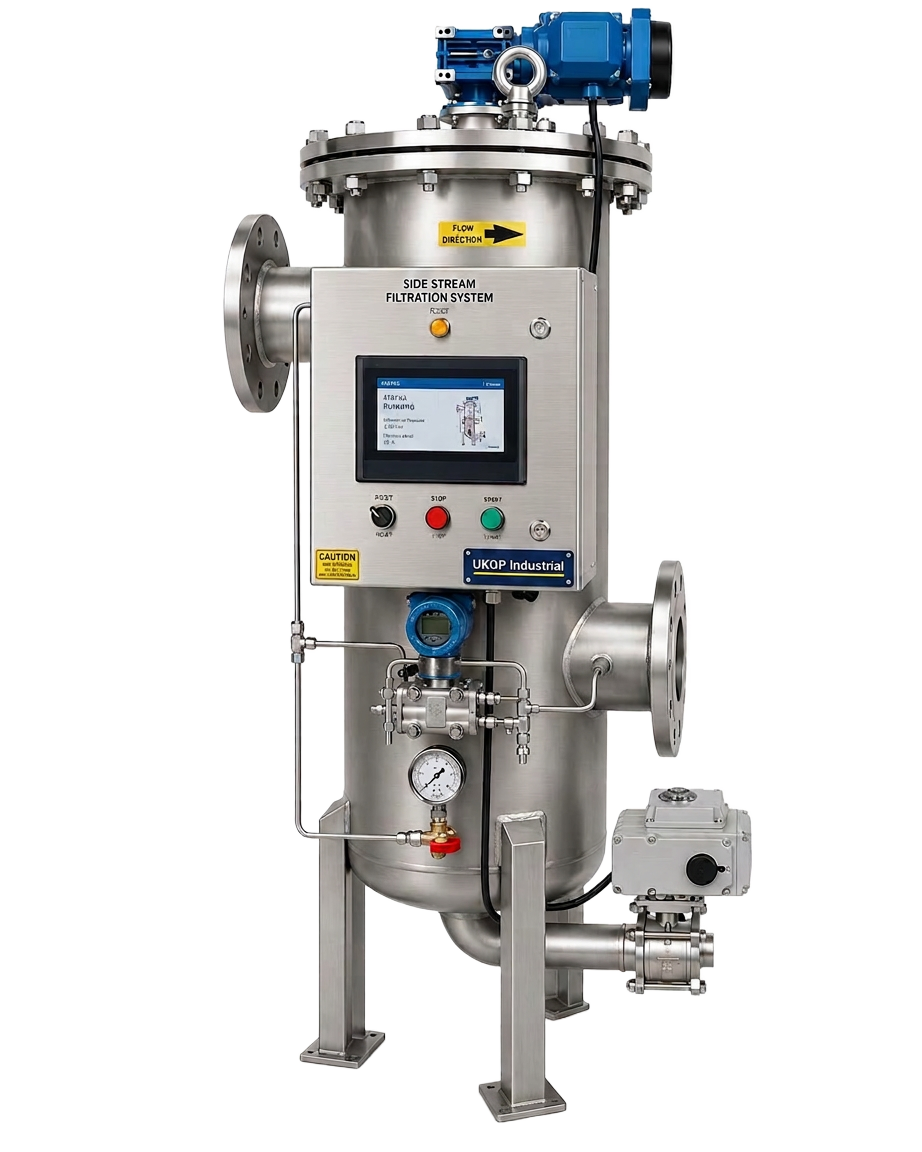
In many modern UK plant rooms, the installation of a sensor pH meter is paired with a side stream filtration skid to provide a comprehensive water quality solution. While the sensor monitors the chemical balance, the filtration system removes the suspended solids that can interfere with the sensor’s accuracy. This synergy is highly recommended by BSRIA BG50 guidelines, which emphasize both chemical and physical water treatment for HVAC systems. By maintaining clean water via filtration, the sensor pH meter stays cleaner for longer, reducing the frequency of manual interventions and ensuring that the readings remain representative of the total system volume.
When designing a system that includes both technologies, the sensor pH meter is often placed on the outlet side of the side stream filtration unit. This ensures that the water passing over the probe has been filtered, providing the most accurate possible assessment of the dissolved chemical levels without the interference of magnetite or other particulates. For contractors, specifying a combined package from UKGP Industrial streamlines the procurement and installation process, ensuring that the filtration skid and the sensor pH meter are perfectly matched for the system flow rates and pressures, leading to a more efficient and reliable plant room.
Ultimately, the goal of installing a sensor pH meter is to protect the long-term health of the building's infrastructure. Whether you are dealing with a new build requiring BSRIA BG29 compliance or an existing system undergoing an upgrade, the combination of accurate real-time monitoring and effective filtration is the gold standard. We encourage consultants and plant-room engineers to request a quote for our UKGP industrial pH sensor & transmitter. This kit, featuring an IP68 transmitter, M12 cable, and factory-calibrated sensor with a 2-year warranty, provides the professional-grade data required for sophisticated modern building management.
- Pair pH monitoring with side stream filtration for optimal system health
- Reduce sensor fouling by removing suspended solids upstream
- Achieve BSRIA BG50 compliance through combined water treatment
- Simplify procurement by sourcing integrated monitoring and filtration
Frequently asked questions
What is the typical lifespan of an industrial sensor pH meter?
- In most commercial HVAC applications, a high-quality sensor pH meter will last between 12 and 24 months. Longevity depends on water temperature, pressure, and the presence of abrasive contaminants. Regular cleaning and calibration as per BSRIA BG50 recommendations will help maximize this lifespan.
Should I use 4-20 mA or Modbus for my sensor pH meter?
- 4-20 mA is ideal for simple, long-distance analogue connections with high noise immunity. Modbus RTU is preferred for modern BMS integration, as it allows for the transmission of additional diagnostic data and simplifies wiring when multiple sensors are used on a single network.
Does the UKGP sensor pH meter require onsite calibration?
- While our sensors are factory-calibrated and ready for use, we always recommend a 'buffer check' or a two-point calibration during the final commissioning phase. This ensures that the sensor pH meter is perfectly synced with your specific BMS or PLC controllers and accounts for any environmental factors.
Is the UKGP sensor pH meter suitable for high-pressure systems?
- Yes, our industrial pH sensor & transmitter kits are designed for the rigours of commercial heating and cooling circuits. However, always verify that the system's maximum operating pressure does not exceed the specific rating found on the product datasheet before installation.
How does moisture protection work on the sensor head?
- The UKGP sensor pH meter features an IP68 rated transmitter and robust M12 cable connectors. This ensures that the electrical terminals remain completely sealed against the humid and damp conditions frequently encountered in UK plant rooms and energy centres.