The Role of a ph controller in BSRIA Compliance
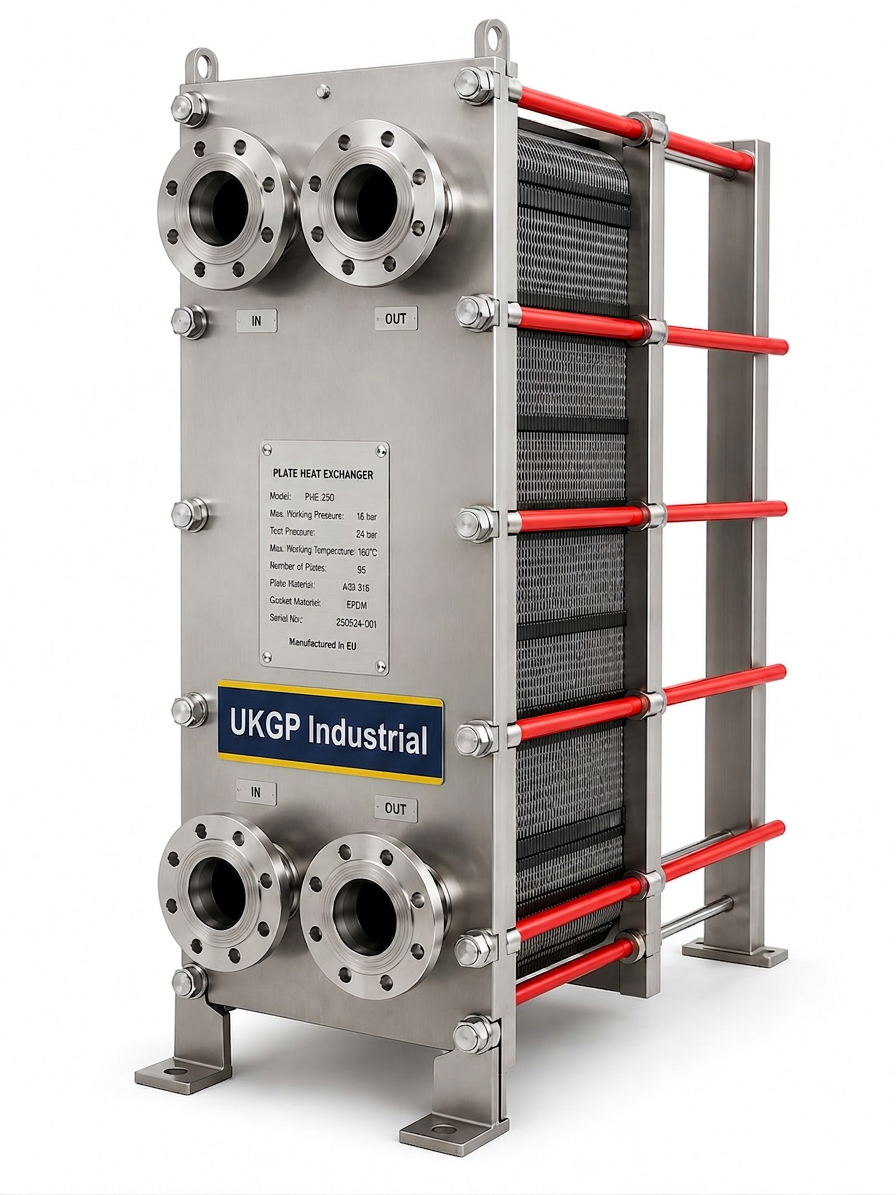
In the UK building services sector, maintaining water quality according to BSRIA BG29 and BG50 guidelines is a non-negotiable requirement for system longevity. A ph controller acts as the central intelligence of your water treatment strategy, constantly monitoring the hydrogen ion concentration to ensure the medium remains within the prescribed alkaline range. Without a reliable ph controller, systems are at risk of accelerated pitting corrosion or the formation of insulating scale, both of which drastically reduce the thermal efficiency of plate heat exchangers and boiler circuits. Engineers must ensure that the control logic within the ph controller is configured to provide stable feedback to the wider Building Management System (BMS).
UKGP Industrial provides the technical foundation for these installations by offering high-grade sensing technology that integrates directly into complex control panels. When selecting a ph controller, technical leads should prioritise units that offer high input impedance and galvanic isolation to prevent ground loops, which are a common cause of erratic readings in industrial environments. By implementing a ph controller that mirrors the rigorous standards of CIBSE CP1, facility managers can significantly extend the life-cycle of their mechanical assets. Proactive monitoring via a digital or analogue ph controller interface allows for real-time adjustments, ensuring that chemical dosing is only active when strictly necessary, thereby reducing operational expenditure on expensive chemical inhibitors.
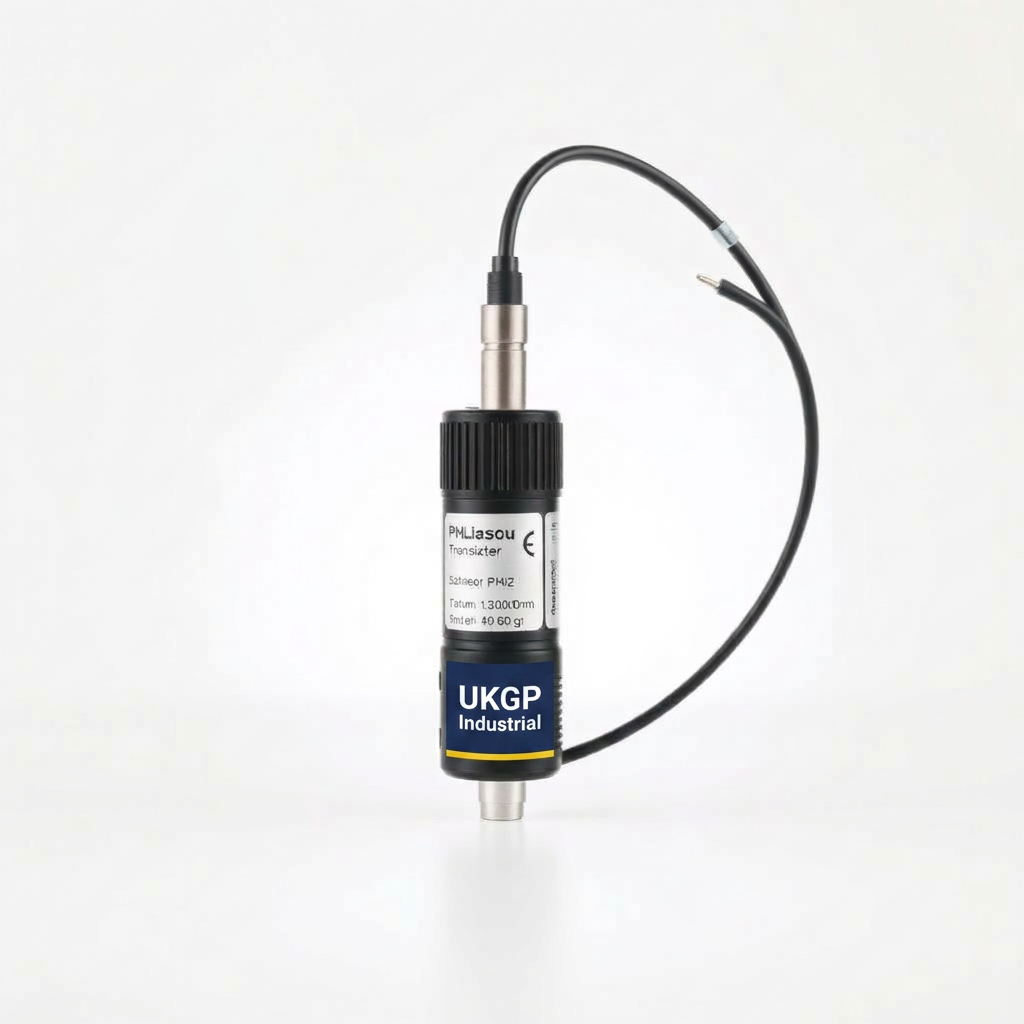
The integration of a ph controller into the plant room's electrical architecture requires a deep understanding of both fluid dynamics and electrical control loops. It is not merely about installation; it is about ensuring that the ph controller can accurately interpret signals from the sensor and translate them into actionable data for the dosing pump. The UKGP industrial pH sensor and transmitter kits are designed specifically for this purpose, providing a factory-calibrated solution that minimises on-site commissioning time. For contractors, specifying a ph controller that is compatible with 4-20 mA or Modbus protocols ensures that the installation remains future-proof and compliant with the latest UK water quality regulations and BS 8552 monitoring protocols.
- Alignment with BSRIA BG50 water quality parameters
- Reduction in chemical waste through precision dosing
- Enhanced protection for heat exchangers and chillers
- Real-time data logging for compliance reporting
Technical Essentials for ph controller Wiring
When planning the dosing pump control wiring for a ph controller, the primary concern is signal integrity across the cable run between the transmitter and the control panel. Most modern UK dosing pumps require either a pulse-width modulation (PWM) signal or a steady 4-20 mA current loop generated by the ph controller to modulate the stroke frequency of the pump. It is essential to use screened instrumentation cable, such as the M12 cable kits provided by UKGP, to prevent electromagnetic interference (EMI) from high-voltage pump motors or variable speed drives. Properly grounded shields are vital to ensuring the ph controller receives a clean signal from the pH probe without the 'noise' that often plagues industrial plant rooms.
The wiring topology should always include a fallback or safety interlock. For instance, the ph controller should be wired in series with a flow switch to ensure that chemical dosing only occurs when there is active flow through the side stream loop. This prevents the dangerous accumulation of concentrated chemicals at the injection point, which can damage pipework and seals. Within the ph controller terminal block, technicians must distinguish between the power supply, the sensor input, and the control output. UKGP's industrial pH transmitters facilitate this with clearly marked terminals and IP68 rated connections, ensuring that the control wiring remains protected even in damp or humid plant room conditions.
Calibration during the wiring phase is often overlooked but remains a critical step for the ph controller to function correctly. Since UKGP units are factory-calibrated, the initial commissioning process is streamlined, allowing engineers to focus on the logic of the dosing pump control wiring. Once the wiring is physically installed, the ph controller should be tested across its full range to ensure that the 4 mA and 20 mA setpoints correspond accurately to the minimum and maximum dosing rates required by the system design. This end-to-end verification ensures that the ph controller will respond proportionally to pH fluctuations, maintaining the delicate balance required for BS EN compliance in closed-circuit heating and cooling systems.
- Utilise M12 cable kits for robust sensor-to-transmitter links
- Integrate flow-switch interlocks for dosing safety
- Ensure 4-20 mA loop calibration for proportional control
- Verify IP68 integrity for all external wiring junctions
Integrating with Side Stream Filtration Units
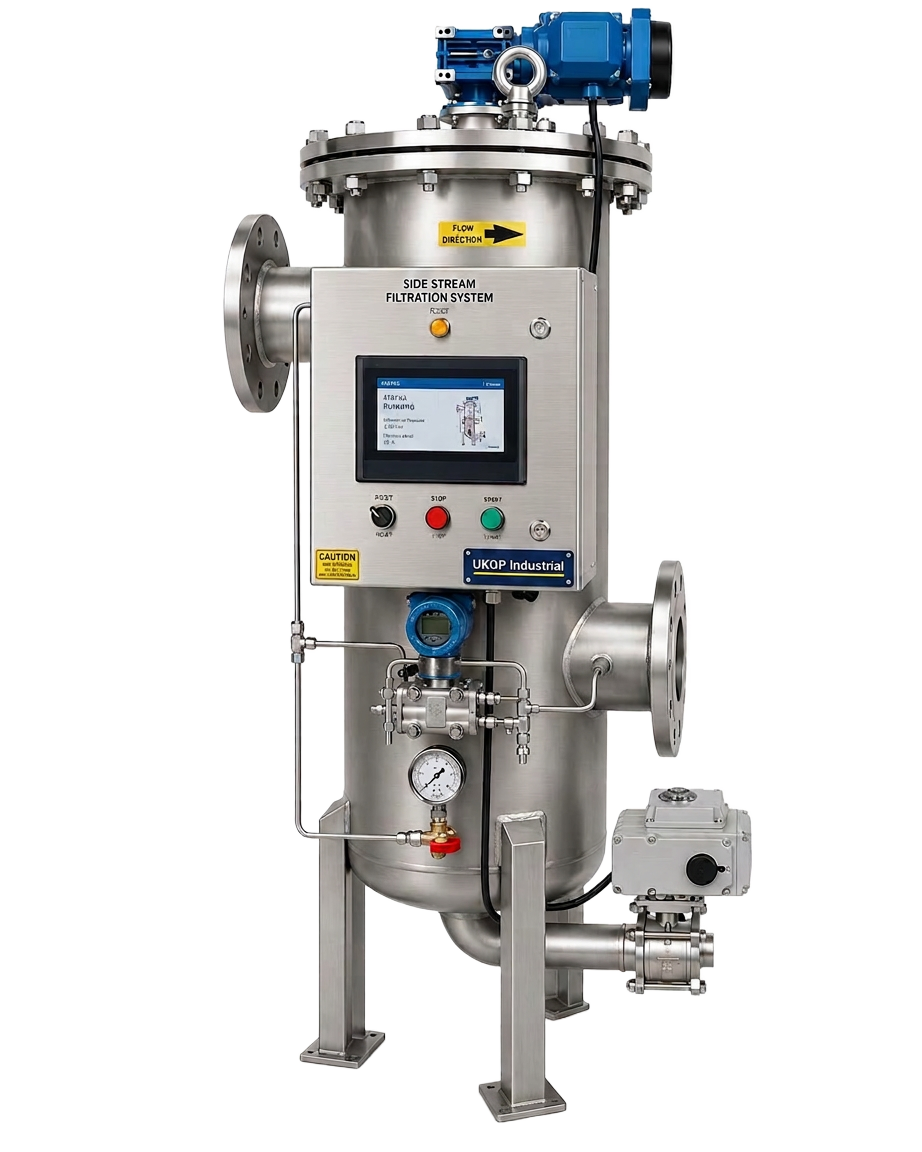
A ph controller is most effective when integrated into a wider water treatment package that includes side stream filtration. In many UK commercial buildings, the side stream filtration skid serves as the ideal hub for the pH sensor, as it provides a representative sample of the system water away from the main headers. By installing the sensor associated with the ph controller on the outlet of a side stream filter, you ensure that the water being measured is free from suspended solids that could otherwise coat the reference electrode and cause drift or delay in the ph controller feedback loop. This synergy between filtration and chemical control is recommended in BSRIA BG29.
The dosing pump control wiring must be coordinated so that when the filtration pump is active, the ph controller is also powered and monitoring. If the filtration system is temporarily valved off for maintenance, the ph controller must be programmed to hold its last state or enter a safe mode to prevent erroneous dosing. UKGP Industrial's side stream filtration skids can be pre-fitted with ports specifically designed for pH transmitters and sensors, making it easy to create a consolidated water quality management station. This integrated approach allows for a cleaner installation, where the ph controller and the filtration controls are housed in a single or adjacent control cabinet, simplifying the electrical layout.
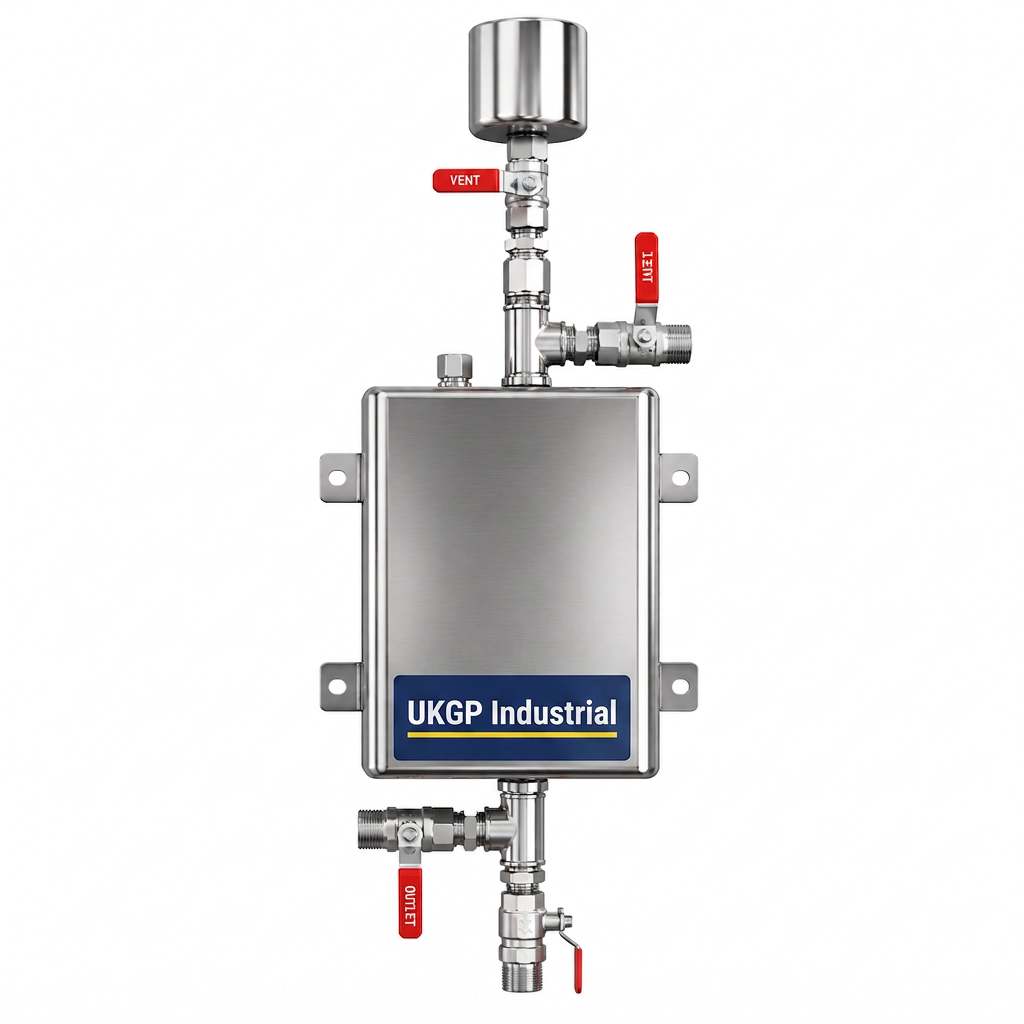
For procurement leads, sourcing a combined solution where the ph controller works in harmony with the filtration and air/dirt separators ensures single-point accountability. When the ph controller detects a drop in alkalinity, it triggers the dosing pump to inject the necessary chemicals through a dosing pot or dedicated injection quill. Because the water has been filtered, the chemicals disperse more effectively throughout the system. This holistic view of the plant room, where the ph controller is a key component of a larger machine, ensures that the building's infrastructure is protected from the corrosive elements of the London or regional water supplies, which vary significantly in hardness and pH levels.
- Combine filtration and pH control for accurate sampling
- Protect sensors from physical debris and bio-fouling
- Streamline control cabinet wiring and power distribution
- Improve chemical dispersity in clean, filtered water
Modbus and Digital Communication for the ph controller
In the era of Smart Buildings and IoT, the transition from simple analogue ph controller units to digital Modbus-enabled systems is accelerating. A digital ph controller provides far more than just a measurement; it can transmit diagnostic data, sensor health status, and temperature compensation values back to the head-end BMS. When configuring the dosing pump control wiring for a Modbus ph controller, engineers can simplify the physical wiring by daisy-chaining multiple sensors onto a single RS485 loop. This reduces the amount of copper required and simplifies the panel layout, though it requires precise addressing of each ph controller device to ensure data is routed correctly.
UKGP Industrial’s pH transmitters offer both 4-20 mA and Modbus options, providing the flexibility needed for both legacy retrofits and new-build installations. A ph controller with digital output allows for remote monitoring, meaning facility managers can receive alerts on their mobile devices if the pH levels drift beyond set limits. This proactive capability is vital for mission-critical sites like data centres or hospitals where a failure in the heating or cooling system due to water chemistry issues could have catastrophic consequences. The ph controller therefore becomes a critical data point in the building's digital twin, allowing for predictive maintenance based on chemical consumption and pH trends.
When wiring for Modbus, the ph controller must be part of a correctly terminated network. Bias resistors and end-of-line terminators are essential to prevent signal reflection that can lead to data corruption. Unlike traditional analogue signals, a digital signal from a ph controller is less susceptible to voltage drops over long distances, making it ideal for large-scale industrial sites where the plant room might be several hundred metres from the main control centre. By selecting a UKGP ph controller with these capabilities, consultants can specify a solution that is both highly accurate and easy to integrate into modern building automation systems, fulfilling the requirements of the most demanding M&E specifications.
- Support for Modbus RTU and 4-20 mA outputs
- Remote diagnostics for sensor health and calibration
- Daisy-chain wiring to reduce installation costs
- High-definition data resolution for BMS trending
Maintenance and Calibration of the ph controller Interface
Maintaining a ph controller is not a 'fit and forget' task; it requires regular attention to ensure the dosing pump control wiring remains effective and the sensor is accurate. BSRIA BG50 clarifies that monitoring equipment should be checked and calibrated at least quarterly. A high-quality ph controller should offer a user-friendly interface for manual calibration using buffer solutions (pH 4, 7, and 10). During this process, the dosing pump should be temporarily disabled to prevent accidental chemical injection. UKGP's factory-calibrated sensors provide an excellent baseline, but professional engineers must still verify the ph controller’s performance against an independent hand-held tester calibrated to UKAS standards.
The wiring integrity should also be inspected during routine maintenance. Loose connections at the ph controller terminals can lead to fluctuating resistances, which the unit may interpret as a change in pH, leading to unnecessary chemical dosing. Checking the M12 cable kit connections for any signs of moisture ingress or physical damage is essential, particularly in high-traffic plant rooms. If the ph controller is installed near vibrating machinery, such as large low loss headers or pumps, ensure that the wiring is secured with proper strain relief. A well-maintained ph controller will provide years of reliable service, but neglecting these simple checks can lead to system-wide water quality failures.
Lastly, when replacing a sensor, the ph controller must be re-synchronised with the new probe's specific slope and offset characteristics. Modern UKGP industrial pH sensors and transmitters are designed to be hot-swappable in many cases, provided the transmitter retains its programming. Buying high-quality components with a 2-year warranty ensures that the ph controller is a reliable asset rather than a liability. By investing in a UKGP industrial pH sensor & transmitter—comprising the sensor, transmitter, M12 cable kit, and dual output options—you are securing a professional-grade solution that simplifies the complexities of dosing pump control wiring and long-term chemical management.
- Quarterly calibration against UKAS hand-held standards
- Visual inspection of M12 cable integrity and IP68 seals
- Validation of setpoints within the ph controller logic
- Software updates and diagnostic checks via Modbus
Standardising your ph controller Specifications
For M&E contractors and procurement leads, standardising on a specific ph controller model across a portfolio of buildings offers significant advantages in terms of spare parts management and staff training. When every plant room uses the same ph controller and dosing pump control wiring schematic, maintenance teams can quickly diagnose issues and perform routine calibrations with confidence. UKGP Industrial's range is particularly suited for this because of its versatility across various industrial applications, from chilled water loops to high-temperature heating circuits. Choosing a ph controller that is built for the British market ensures compliance with local voltage standards and material certifications.
The commercial case for a high-end ph controller is built on risk mitigation. The cost of a UKGP industrial pH sensor & transmitter is negligible compared to the cost of replacing a fouled boiler or a corroded chiller battery. By ensuring the ph controller is correctly specified and wired during the initial fit-out, developers can avoid the costly remedial works that often follow a BSRIA water quality failure during the defects liability period. Furthermore, a precise ph controller facilitates better sustainability credentials by reducing chemical runoff and ensuring that water treatments are used with surgical precision, aligning with modern ESG (Environmental, Social, and Governance) targets for commercial real estate.
In summary, the successful deployment of a ph controller hinges on three pillars: high-quality hardware, correct dosing pump control wiring, and rigorous maintenance. By following the guidelines set out in BSRIA BG50 and utilizing UKGP Industrial's factory-calibrated kits, UK engineers can ensure their systems remain efficient and compliant. Whether you require a single pH sensor for a dosing pot circuit or a complex multi-sensor Modbus network, UKGP Industrial provides the expertise and equipment needed. Request a quote today for a UKGP industrial pH sensor & transmitter to secure a 2-year warranty and the peace of mind that comes with industry-leading water quality monitoring technology.
- Uniformity in spare parts across multiple sites
- Reduced training requirements for facility managers
- Lower long-term risk of mechanical system failure
- Enhanced ESG and sustainability performance
Frequently asked questions
What is the standard signal for a ph controller to a dosing pump?
- Most industrial systems use a 4-20 mA analogue signal for proportional control, although some modern pumps accept digital Modbus signals or pulse commands directly from the ph controller.
How often should a UKGP ph controller be calibrated?
- In accordance with BSRIA BG50, we recommend checking the calibration of your ph controller every three months to ensure accuracy and prevent drift in closed-loop water systems.
Is the UKGP pH transmitter suitable for outdoor installation?
- Yes, our transmitters are IP68 rated, meaning they are fully protected against dust and long-term immersion in water, making them ideal for damp plant rooms or sheltered outdoor skids.
Does a ph controller require a specific type of cable?
- We strongly recommend using our M12 cable kits. These are screened to prevent electromagnetic interference, which is critical for maintaining a stable signal in busy industrial environments.
Can the ph controller connect to a standard building BMS?
- Absolutely. UKGP ph controller units offer both 4-20 mA and Modbus RTU outputs, ensuring compatibility with virtually all modern Building Management Systems used in the UK.