Understanding the Role of a Hanna Ph Probe in UK HVAC
In the UK commercial boiler and chiller landscape, water quality is the primary factor determining asset lifespan. Many engineers initially look for a hanna ph probe because the brand is synonymous with reliable laboratory and field measurements. In a plant room environment, maintaining a stable pH is critical for preventing the corrosion of metallic components, particularly in hybrid systems where aluminium and steel coexist. According to BSRIA BG29 and BG50, precise control of alkalinity is non-negotiable for commercial closed-loop systems. A portable probe is often the first tool an engineer uses during a site survey to identify if the system has drifted into an acidic state, which can lead to rapid pitting and catastrophic failure of expensive heat exchangers if not corrected immediately via chemical dosing or side-stream filtration intervention.
While a handheld hanna ph probe is excellent for periodic spot checks during weekly or monthly maintenance rounds, modern intelligent buildings are moving toward continuous monitoring. Relying solely on manual site visits leaves a significant window of risk between tests where leaks or chemical imbalances can occur. For procurement leads and M&E contractors, the choice often lies between basic manual instruments and high-specification inline transmitters. An industrial-grade sensor provides the data backbone required for BMS integration, ensuring that the 4-20 mA or Modbus signals are relayed back to the central control suite for real-time alerting. This transition from reactive testing to proactive monitoring is essential for meeting the stringent insurance and warranty requirements set out by major UK commercial boiler OEMs and heat pump manufacturers.
When specifying a hanna ph probe for commercial use, one must consider the environment. Plant rooms are harsh environments with high humidity, electromagnetic interference, and often limited space. UKGP Industrial offers robust alternatives and complementary solutions that bridge the gap between simple lab-style probes and heavy-duty industrial telemetry. The accuracy of your pH reading directly impacts your chemical dosing strategy; if your probe is poorly calibrated or not rated for the pressure and temperature of a secondary heating circuit, the resulting data is useless. Ensure that any sensing equipment installed is factory-calibrated and ready for immediate deployment to avoid the common pitfalls of field calibration which often delay project handovers in the MEP sector.
- Critical for BSRIA BG50 compliance in closed-loop systems
- Essential for preventing aluminium corrosion in modern boilers
- First line of defence for checking glycol levels in chilled water
- Bridge between manual spot-testing and automated BMS monitoring
Choosing the Right Industrial pH Sensor and Transmitter
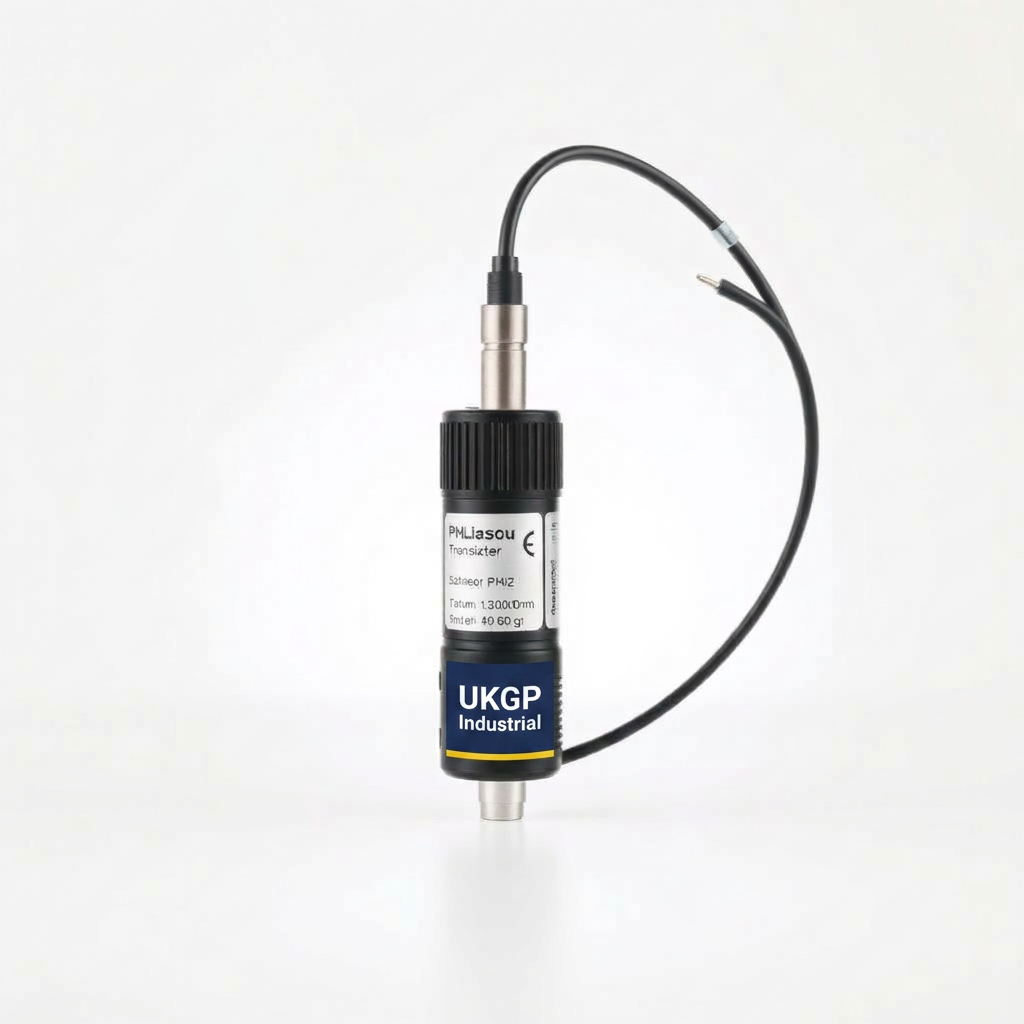
Transitioning from a portable hanna ph probe to a permanent installation requires a shift in technical specifications. An industrial-grade sensor must be capable of withstanding system pressures and should ideally feature an IP68 rating to handle the damp conditions of a typical UK plant room. UKGP provides professional-grade pH sensors & transmitters designed exactly for this purpose. Unlike consumer-level probes, our industrial kits include a durable sensor, a dedicated transmitter, and a high-quality M12 cable kit. These units are factory-calibrated to high standards, ensuring that when they arrive on-site, they are ready to produce accurate data immediately. This level of reliability is what consultants look for when designing systems that must adhere to CIBSE guidelines for water treatment and maintenance.
Integration is key for M&E contractors who need to deliver a fully functional BMS-ready system. Our pH sensor and transmitter packages offer dual output options, featuring both 4-20 mA analogue signals and Modbus digital communication. This flexibility ensures compatibility with almost any building management system used in the UK. When you specify a UKGP industrial transmitter, you are investing in a solution that provides a 2-year warranty, which is a significant upgrade over the standard warranties offered on many laboratory-grade hanna ph probe models. This long-term assurance is vital for facilities managers who are responsible for the lifecycle costs of the building's infrastructure and need to minimise downtime caused by sensor failure or inaccurate readings in sensitive environments.
Consider the logistical advantages of a complete sensor kit compared to sourcing separate components. UKGP simplifies the procurement process by providing the sensor, transmitter, and M12 cable in a single, vetted package. This reduces the risk of compatibility issues during installation—a common headache for on-site engineers. Furthermore, while a hanna ph probe might be the historical standard for manual testing, our industrial transmitters are designed for permanent immersion or flow-through operation. By incorporating these into your plant design alongside our other water quality products like low loss headers or dosing pots, you create a cohesive and maintainable system that meets the high expectations of UK commercial property owners and institutional clients.
- Full kit including sensor, transmitter, and M12 cable
- Dual communication: 4-20 mA and Modbus outputs
- IP68 rated for robust plant room performance
- Factory-calibrated with a 2-year warranty for peace of mind
Maintaining Compliance with BSRIA BG50 and BS 8552
The regulatory burden on UK FM providers has increased significantly with the evolution of BS 8552 and BSRIA BG50. These documents outline the necessity of strictly controlling water quality in buildings to prevent microbiological growth and corrosion. While a hanna ph probe is a fantastic diagnostic tool for an or-site technician to verify pH levels, the industry is seeing a shift toward digitised logging. Automated monitoring systems that utiltise industrial pH transmitters allow for the creation of digital water quality logs, which are often required during audits or when making warranty claims against major HVAC equipment manufacturers. This digital trail proves that the system has been maintained within the required chemical parameters throughout its operational life.
In many commercial systems, the pH level must be kept within a narrow band—typically between 8.0 and 10.0 for steel systems, but lower if aluminium components are present. The sensitivity of a hanna ph probe makes it easy to see when these levels fluctuate. However, without a permanent sensor linked to a transmitter, these fluctuations might only be caught once every quarter during a manual sample collection. By the time a manual test identifies an issue, the damage to the internal surfaces of the pipes and heat exchangers may already be underway. Installing an industrial pH monitor ensures that if the pH drops below a safe threshold, an alarm is triggered immediately, allowing for rapid intervention before any long-term damage occurs.
Furthermore, the integration of high-quality sensing equipment aids in the correct dosing of corrosion inhibitors. Over-dosing chemicals is a waste of resources and money, while under-dosing leads to system degradation. When used in conjunction with a hanna ph probe for secondary verification, a permanent UKGP industrial pH sensor provides the granularity of data needed to fine-tune your chemical dosing pots and side-stream filtration units. This holistic approach to water treatment not only ensures compliance with British standards but also enhances the overall energy efficiency of the building by keeping heat transfer surfaces clean and free from insulating scale or corrosion by-products.
- Meets the monitoring requirements of BSRIA BG50
- Enables automated digital logging for audit trails
- Reduces reliance on quarterly manual sampling
- Supports precision dosing for cost-effective water treatment
Technical Specs: Why Industrial Transmitters Beat Lab Probes
Contractors often ask why they shouldn't just semi-permanently mount a standard hanna ph probe into a system bypass. The answer lies in the electrical and mechanical durability of the equipment. A laboratory probe is designed for stable, room-temperature conditions with no pressure. In contrast, an industrial pH transmitter is designed to handle the thermal cycling found in commercial heating pipes. UKGP's industrial sensors are built to withstand the rigours of the plant room, featuring sealed connections and robust housing that prevents the ingress of moisture—a leading cause of failure in cheaper, non-industrial alternatives. The M12 cable kit included with our systems ensures a secure, vibration-resistant connection that maintain signal integrity over long cable runs.
Signal noise is another critical factor. A hanna ph probe produces a very high-impedance millivolt signal that is extremely sensitive to electrical noise from VFDs and large pumps commonly found in commercial buildings. Without a high-quality transmitter located close to the sensor to convert this into a 4-20 mA or Modbus signal, the readings can jump wildly, leading to false alarms and incorrect chemical dosing. Our industrial pH transmitters solve this by providing on-board signal conditioning, ensuring that the BMS receives a clean, stable measurement. This technical superiority is why professional building services consultants specify industrial transmitters for any high-value project where data accuracy is a contractual requirement.
Finally, the total cost of ownership must be considered. While a basic hanna ph probe may have a lower initial purchase price, its lifespan in an industrial setting is often measured in months rather than years. UKGP industrial sensors are designed for longevity, and when the electrode finally reaches the end of its life, it can be easily replaced without discarding the entire transmitter unit. Combined with our 2-year warranty and factory-calibration service, this represents a much more commercially sensible investment for UK businesses. If you are currently designing a system or replacing worn-out monitoring equipment, reach out to UKGP for a quote on our complete industrial pH sensor and transmitter kits.
- Superior heat and pressure resistance over lab equipment
- Vibration-resistant M12 cable kits for plant room stability
- Signal conditioning for clean 4-20 mA or Modbus data
- Replaceable electrodes to reduce long-term maintenance costs
Installation Best Practices for Your Ph Sensing Equipment
To get the most out of your hanna ph probe or industrial sensor, placement is everything. The sensor should be installed in a location where it is in constant contact with the circulating water but not in a 'dead leg' where stagnant water could lead to inaccurate readings. For M&E contractors, this usually means installing the sensor in a bypass line or after a side-stream filtration unit. This ensures that the water being measured is representative of the entire system's chemistry. Proper installation according to BS EN 14917 and other relevant mechanical standards ensures that the sensor does not become a point of failure or a source of leaks within the system.
Maintenance is the second pillar of success. Even the best hanna ph probe will drift over time due to electrode fouling. In industrial settings, the sensor can become coated with iron oxides or scale, which insulates the glass bulb and slows down reaction times. Regular cleaning and recalibration are necessary to maintain accuracy. UKGP's industrial sensors are designed with easy removal in mind, allowing maintenance teams to quickly clean the sensor and perform a buffer calibration. Our factory-calibrated units provide a solid baseline, but we recommend a quarterly check-up to ensure that the system remains within the tolerances specified in your building's water treatment contract and BSRIA guidelines.
When installing a new sensor, always ensure there is adequate clearance for removal and that the transmitter display is easily visible to plant room engineers. Clear labelling of the output cables (whether 4-20 mA or Modbus) is also essential for future troubleshooting. By combining the immediate accessibility of a handheld hanna ph probe for field verification with the 24/7 reliability of a UKGP industrial transmitter, facilities managers can achieve a 'gold standard' in water quality monitoring. Contact our Surrey-based technical team today to discuss how we can assist with your next plant room upgrade or new-build project, providing the reliable sensing technology your facility deserves.
- Install in active flow areas to avoid stagnant 'dead leg' readings
- Quarterly cleaning prevents electrode fouling and signal drift
- Ensure transmitter accessibility for easy field calibration
- Use factory-calibrated sensors to simplify project commissioning
Commercial Procurement: Sourcing pH Kits in the UK
For procurement leads, the challenge is balancing performance with budget. While a hanna ph probe is a useful individual item for a toolkit, enterprise-level water management requires a more integrated approach. Sourcing from a specialist UK supplier like UKGP Industrial ensures that you receive technical support from experts who understand British building regulations and M&E requirements. We provide comprehensive quotes for industrial pH sensor and transmitter kits that include all necessary mounting hardware and cabling, reducing the need for multiple purchase orders and streamlining your supply chain. This is particularly beneficial for large-scale refurbishments where multiple plant rooms require uniform monitoring solutions.
The value of a 2-year warranty should not be understated in the B2B sector. Most laboratory instruments, including a standard hanna ph probe, are considered consumables with very limited warranty support. UKGP stands by the durability of our industrial pH transmitters, offering a robust warranty that reflects the quality of our IP68-rated hardware. This minimizes the risk for contractors who are often liable for defects during the initial operation period of a building. When performance and reliability are non-negotiable, moving to an industrial-grade solution is the only logical choice for high-specification commercial projects in London and across the United Kingdom.
In summary, while the hanna ph probe remains a staple for manual water analysis, the future of UK building services lies in integrated industrial sensing. By choosing UKGP for your pH sensors & transmitters, you gain a partner dedicated to technical excellence and commercial reliability. Our factory-calibrated units, combined with the versatility of 4-20 mA or Modbus outputs, provide the perfect solution for modern, compliant plant rooms. Whether you are an FM professional looking to improve system uptime or an engineer designing a new heating network, our team is ready to provide the technical documentation and competitive pricing required to make your project a success.
- UK-based technical support and fast shipping options
- 2-year warranty on industrial sensor and transmitter kits
- Simplified procurement with all-in-one installation packages
- Reliable IP68 hardware for demanding commercial environments
Frequently asked questions
Can I use a hanna ph probe for continuous monitoring?
- While handheld hanna ph probe models are excellent for spot checks, continuous 24/7 monitoring in a commercial plant room usually requires an industrial-grade pH transmitter and sensor kit, such as those from UKGP, which feature IP68 ratings and 4-20 mA outputs for BMS integration.
What output signals do UKGP industrial pH transmitters support?
- Our industrial pH kits support both 4-20 mA analogue signals and Modbus digital communication, ensuring they can interface seamlessly with any modern UK building management system.
How often should an industrial pH probe be calibrated?
- In accordance with BSRIA BG50 and BS 8552, we recommend checking and recalibrating your pH sensor every 3 to 6 months, depending on the system's chemical load and the risk of electrode fouling.
What is included in the UKGP pH sensor kit?
- The UKGP kit is a complete solution containing the industrial pH sensor, a dedicated transmitter, an M12 cable kit, and factory-calibration documentation, backed by a 2-year warranty.
Why is pH monitoring critical for BSRIA BG50 compliance?
- BG50 specifies that closed-loop water must be kept within specific pH ranges to prevent corrosion and scale. Continuous monitoring ensures you catch drifts immediately, protecting high-value assets and maintaining warranties.