Understanding the Calibration of pH Meter Requirements
In the context of UK plant rooms, the calibration of ph meter components is not merely a box-ticking exercise but a critical maintenance task that protects multi-million pound HVAC assets. According to BSRIA BG29 and BG50 guidelines, maintaining a stable pH—typically between 8.5 and 10.5 for steel-based systems—is vital to ensuring the protective magnetite layer remains intact on internal pipework. If your sensors are not calibrated regularly, they may provide false positives or negatives, leading to incorrect chemical dosing and accelerated galvanic corrosion. This is especially dangerous in systems containing mixed metals where aluminium components require a much tighter pH control window to avoid pitting and structural failure.
Precision in the calibration of ph meter systems involves verifying the sensor's performance against known buffer solutions, usually at pH 4, 7, and 10. In a commercial plant room environment, sensors are subjected to heat, pressure, and chemical additives which can cause 'sensor drift' over time. This drift is the deviation of the sensor's millivolt output from its original factory profile. Without a rigorous Standard Operating Procedure (SOP), this drift remains undetected, potentially masking a drop in system alkalinity. UKGP Industrial emphasises that a robust calibration schedule is the first line of defence against the systemic failures that lead to costly downtime and premature replacement of plate heat exchangers and boiler blocks.
M&E contractors and procurement leads must recognise that the accuracy of a pH transmitter is only as good as its last calibration. While laboratory-grade meters require frequent attention, industrial-grade solutions like the UKGP industrial pH sensor & transmitter are designed for long-term stability in harsh environments. However, even these high-specification units require a periodic calibration of ph meter check to account for the organic and inorganic fouling that naturally occurs within a closed-loop system. Implementing a quarterly or bi-annual SOP ensures that the 4-20 mA or Modbus output remains a true representation of the water chemistry, allowing the Building Management System (BMS) to respond accurately to fluctuations.
- Compliance with BSRIA BG50 water quality monitoring
- Protection of aluminium and copper heat exchange surfaces
- Reduction in chemical waste through accurate dosing
- Prevention of the 'drift' phenomenon in sensor readings
The SOP for Calibration of pH Meter in Industrial Environments
A formal SOP for the calibration of ph meter starts with the physical isolation of the sensor within the side stream or bypass loop. Before any electronic calibration occurs, the sensor probe should be visually inspected for debris, biofilms, or mineral scaling. In many UK plant rooms, 'blind dosing' occurs because the FM team relies on manual dip-tests rather than a calibrated digital sensor. By following a structured SOP, you ensure that the industrial pH sensor & transmitter provides a constant, reliable data stream. This process involves rinsing the probe in deionised water before immersing it in the first buffer solution to establish the 'zero point', typically at pH 7.
Once the zero point is established, the calibration of ph meter continues by testing the 'slope' using a second buffer, such as pH 4 or 10, depending on the expected operating range of the system. It is critical that the buffer solutions are fresh and have been stored at the correct temperature, as pH values are temperature-dependent. The UKGP transmitter kits simplify this process by offering clear interfaces for adjustment. For engineers looking to minimise maintenance time, choosing a factory-calibrated M12 cable kit system is a significant advantage, as it ensures that the initial setup is accurate and the subsequent field calibrations are straightforward and less prone to user error.
The final stage of the SOP is the documentation of the 'as-found' and 'as-left' values. This record-keeping is essential for audits and for identifying trends in sensor degradation. If a sensor requires excessive adjustment during the calibration of ph meter, it indicates that the glass electrode or reference junction is nearing the end of its service life. UKGP Industrial offers a 2-year warranty on our pH sensor units, providing peace of mind to contractors that they are installing a high-quality, durable component. When the sensor can no longer be calibrated to within the required tolerance, it is time to request a quote for a replacement UKGP industrial pH sensor & transmitter.
- Thorough cleaning of the probe tip with non-abrasive materials
- Two-point or three-point calibration for maximum linearity
- Verification of temperature compensation settings
- Logging of calibration results for F-Gas or BSRIA compliance
Integrating Calibrated Sensors with Side Stream Filtration
Accurate pH monitoring is most effective when integrated into a wider water treatment strategy, such as side stream filtration. In systems where the calibration of ph meter is performed correctly, the data can be used to trigger chemical dosing pumps only when necessary, which prevents the over-introduction of chemicals that can sometimes increase conductivity to problematic levels. Side stream filtration units work by removing suspended solids that could otherwise coat a pH probe and interfere with its accuracy. By keeping the water clear of magnetite and debris, you extend the intervals between required cleanings and calibrations.
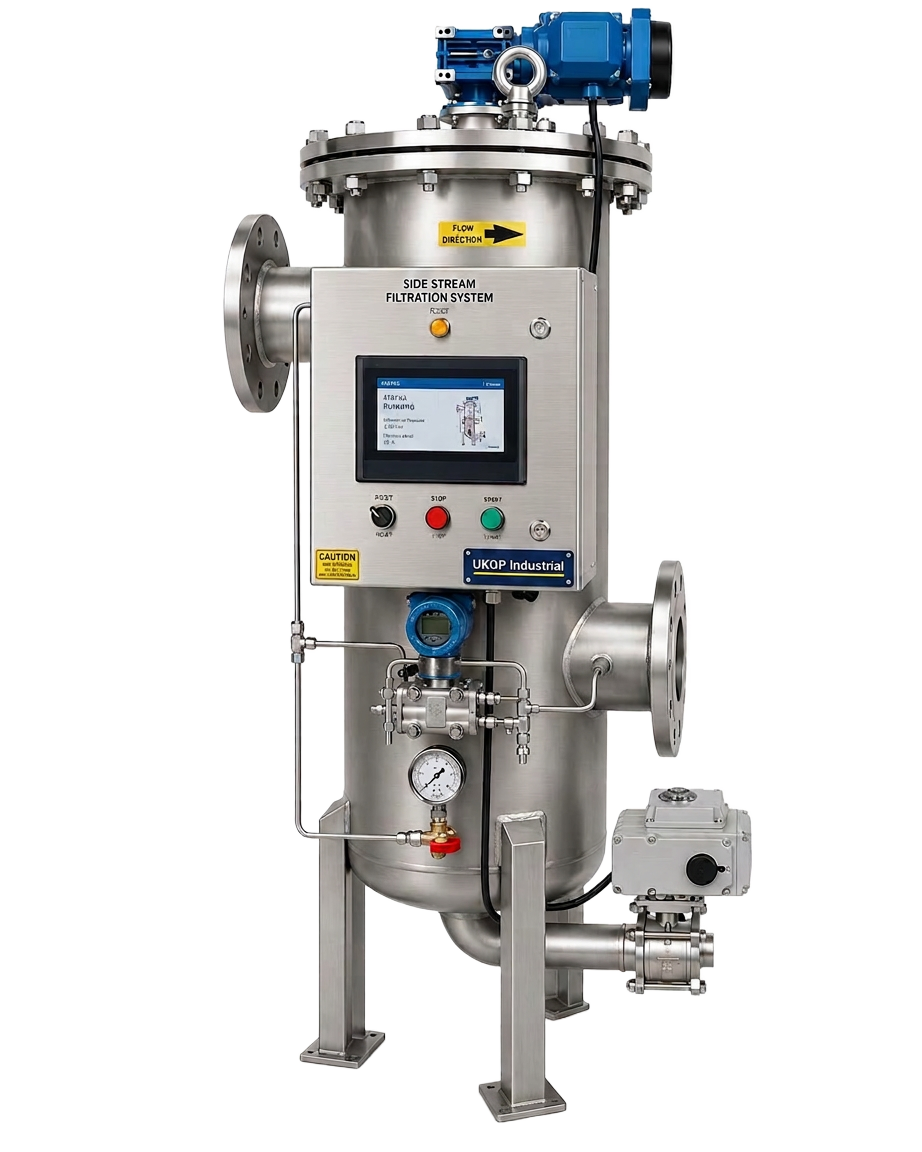
When a side stream filter is in place, the environment for the pH sensor is significantly improved. High levels of suspended solids can act as an abrasive, wearing down the sensitive glass membrane of the pH electrode. Therefore, ensuring your filtration system is functioning correctly is a prerequisite for successful calibration of ph meter. UKGP Industrial provides high-performance side stream filtration skids that, when paired with our pH transmitters, create a comprehensive protection package for large-scale commercial heating systems. This synergy reduces the overall maintenance burden on the onsite plant-room engineers and facility management teams.
Ultimately, the goal of integrating these technologies is to reach a state of 'predictable maintenance.' By having a precisely calibrated pH sensor reporting via Modbus to the BMS, and a side stream filter maintaining water clarity, the risk of unmanaged corrosion is nearly eliminated. Our UKGP industrial pH sensor & transmitter features IP68 protection, ensuring it survives the damp and often difficult conditions of a standard UK plant room. For any professional M&E contractor, specifying this combination of filtration and monitoring is the gold standard for modern building services, ensuring longevity and efficiency for the client's infrastructure.
- Enhanced sensor longevity through debris removal
- Real-time monitoring of alkalinity via BMS integration
- Reduced frequency of manual water sampling
- Optimised chemical consumption through data-driven dosing
Common Pitfalls in the Calibration of pH Meter Process
One of the most frequent errors in the calibration of ph meter is neglecting the importance of temperature compensation. pH is a temperature-sensitive measurement; as the temperature of the fluid changes, its pH value shifts. Standard industrial sensors without built-in temperature compensation will provide inaccurate data if the calibration is performed at 20°C but the system operates at 60°C. The UKGP industrial pH sensor & transmitter addresses this by integrating temperature sensing to provide a corrected 4-20 mA signal. Professionals should always ensure that their SOP accounts for the temperature of the buffer solutions during the calibration phase to avoid systematic errors.
Another common issue is using expired buffer solutions or those that have been contaminated by prior use. In a busy plant room, it can be tempting to reuse the same beaker of buffer for multiple sensors. However, carbon dioxide from the air can slowly lower the pH of an alkaline buffer, leading to an incorrect calibration of ph meter. Always use fresh, traceable buffer solutions. At UKGP, we advocate for a ‘clean-room’ approach to field calibration, where sensors are thoroughly dried before being moved between buffers. This prevents cross-contamination and ensures the most accurate slope calculation possible, maintaining the integrity of the 2-year warranty and performance standards.
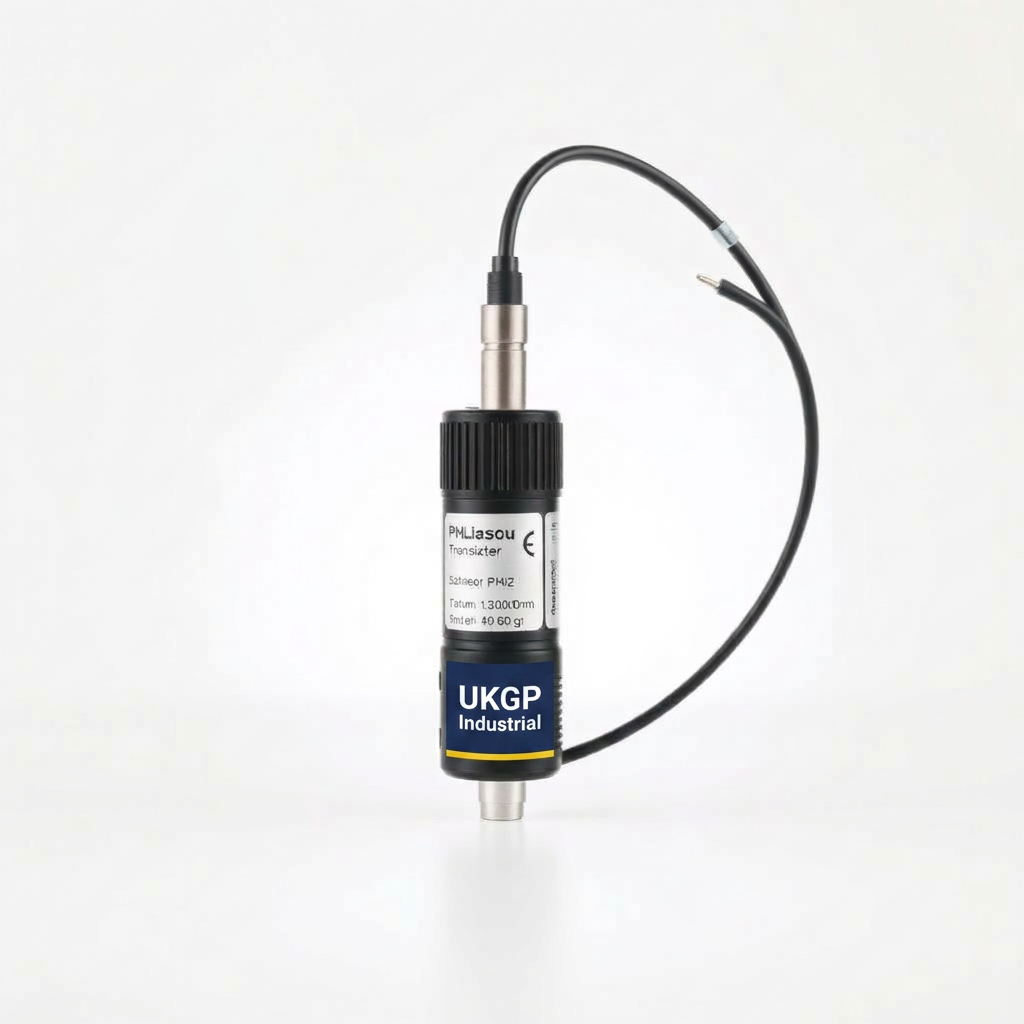
Finally, many engineers fail to check the physical integrity of the M12 cable and transmitter housing during the calibration process. A loose connection or moisture ingress in the cable kit can manifest as an erratic pH reading, which might be mistaken for a calibration issue. The UKGP sensor kits include an IP68-rated transmitter and robust M12 cable to mitigate these risks. If you are experiencing unstable readings that do not resolve after a calibration of ph meter, it is likely a hardware or wiring fault rather than a chemical one. In such cases, replacing the unit with a factory-calibrated UKGP kit is often the most cost-effective and reliable solution for the facility.
- Ignoring temperature-dependency of pH readings
- Using contaminated or expired buffer standard solutions
- Overlooking electrical interference in the 4-20 mA loop
- Failing to clean the electrode before calibration immersion
Compliance and Standards: Why Calibration Matters
Adhering to British Standards and industry best practices is non-negotiable for modern building services consultants. BS 8552 provides the framework for sampling and monitoring water quality in buildings, while BSRIA BG50 details the specific requirements for closed-loop water treatment. Both standards highlight the necessity of regular monitoring, and the calibration of ph meter is a fundamental pillar of this. Without documented calibration, it is impossible to prove that a heating or cooling system is being maintained within the specified chemical parameters. This can lead to the voiding of warranties for expensive components like low-loss headers or boilers.
For procurement leads and FMs, investing in high-quality monitoring equipment is a capital expenditure that pays for itself through reduced operational costs. A system that is accurately monitored requires fewer chemical refills and experiences fewer leaks. When you purchase a UKGP industrial pH sensor & transmitter, you are not just buying a component; you are buying a tool for compliance. Our units are factory-calibrated to the highest standards, ensuring they are ready for immediate deployment in line with BS EN 14917 or other relevant mechanical specifications. This reliability is why UKGP is a trusted partner for Surrey-based and national M&E contractors.
Ultimately, the goal of an SOP for the calibration of ph meter is to eliminate ambiguity in plant room management. When a facility manager sees a pH reading of 9.2, they must have absolute confidence that the value is correct. This confidence is built on the foundation of high-quality hardware and a disciplined approach to maintenance. By specifying UKGP Industrial products, you are ensuring that your site benefits from the latest in electrochemical sensing technology. If your current plant room setup lacks reliable monitoring, contact us to request a quote for our pH sensor, transmitter, and M12 cable kits, and take the first step towards BSRIA-compliant water management.
- Alignment with BS 8552 monitoring protocols
- Verification of chemical inhibitor effectiveness
- Evidence-based maintenance for insurance and warranty
- Enhanced system efficiency through precise alkalinity control
Technical Specifications of the UKGP pH Solution
The UKGP industrial pH sensor & transmitter is engineered specifically for the rigours of the UK building services sector. It is not a lab instrument transplanted into a plant room; it is a purpose-built industrial tool. The kit includes the sensor, the transmitter, and a durable M12 cable kit, offering both 4-20 mA and Modbus outputs for seamless BMS integration. This flexibility allows for real-time data logging and remote monitoring, which are essential for modern Smart Buildings. Furthermore, the IP68 rating ensures that the sensor can withstand the humid and often wet conditions typical of a basement plant-room or rooftop chiller plant.
Calibration of ph meter with our hardware is simplified by the transmitter's intuitive interface. While the units come factory-calibrated, the user-friendly design means that regular field checks can be performed quickly by on-site engineers. The 2-year warranty we offer is a testament to the robust construction of the electrochemical glass and the electronic components. We understand that in a high-pressure M&E environment, reliability is the most important specification. Our sensors are designed to provide stable readings with minimal drift, meaning your calibration intervals can be managed more efficiently without risking system health or compliance.
Whether you are managing a district heating network or a single commercial office block, the UKGP pH monitoring solution provides the accuracy and durability you need. From the precision-machined threads to the high-integrity cable connections, every aspect of our kit is designed for professional use. By choosing a UKGP industrial pH sensor & transmitter, you are choosing a partner that understands UK water chemistry and the specific challenges of BSRIA BG50 compliance. Reach out to our Surrey-based technical team today to discuss your project requirements or to receive a comprehensive quote for your next plant-room upgrade or new-build installation.
- Factory-calibrated for immediate high-accuracy deployment
- Dual output options: 4-20 mA and Modbus for BMS compatibility
- Robust 2-year warranty for commercial peace of mind
- IP68 environmental protection for all plant room conditions
Frequently asked questions
How often should I perform the calibration of ph meter in a plant room?
- For most HVAC applications following BSRIA BG50, we recommend a calibration check every 3 to 6 months. However, if the system has high chemical complexity or high temperatures, quarterly calibration is advised to maintain accuracy.
Can I use any buffer solution for the calibration of ph meter?
- You should use high-quality, traceable buffer solutions (typically pH 4, 7, and 10). It is vital to ensure they are within their expiry date and that the calibration is adjusted for the temperature of the liquid.
What is the difference between 4-20 mA and Modbus pH transmitters?
- A 4-20 mA transmitter provides an analogue signal proportional to the pH value, which is highly reliable for direct control. Modbus is a digital protocol that allows for more detailed data, including temperature and diagnostic information, to be sent over a single bus.
Why is my pH sensor drifting so quickly?
- Sensor drift can be caused by electrode fouling, extreme temperatures, or the presence of oils and grease in the water. Ensuring you have a side stream filter and regular cleaning as part of your calibration of ph meter SOP can significantly reduce this.
Does the UKGP pH transmitter kit come ready to install?
- Yes, our kit includes the sensor, transmitter, and a M12 cable kit. It is factory-calibrated and designed for rapid installation into standard industrial fittings, backed by a 2-year warranty.