Maintaining BSRIA BG50 Compliance Through Precision
In the UK's building services sector, maintaining water quality is not just a best-practice recommendation; it is a fundamental requirement for the longevity of closed-loop systems. BSRIA BG50 Water Treatment for Closed Heating and Cooling Systems outlines the necessity of monitoring pH levels to prevent the degradation of metals and the formation of sludge. When engineers are calibrating a ph probe, they are essentially safeguarding the system against acid-mediated corrosion or alkaline-induced scaling. Without accurate readings, chemical dosing regimes become guesswork, potentially leading to catastrophic component failure within the secondary circuit. For facilities managers, periodic calibration ensures that the high-value assets within the plant room remain within the specified operational parameters defined by major UK commercial boiler OEMs.
The process of calibrating a ph probe should be integrated into the quarterly or bi-annual maintenance schedule depending on the system's complexity and the presence of sensitive components like aluminium heat exchangers. Industry standards suggest that even the highest quality sensors can experience drift due to electrolyte depletion or coating of the glass electrode by system contaminants. By implementing a rigorous calibration routine, building services consultants can guarantee that the data reported by the Building Management System (BMS) is actionable and accurate. This proactive approach reduces the risk of emergency call-outs and extends the operational life of the entire HVAC infrastructure, providing a superior return on investment for the client.
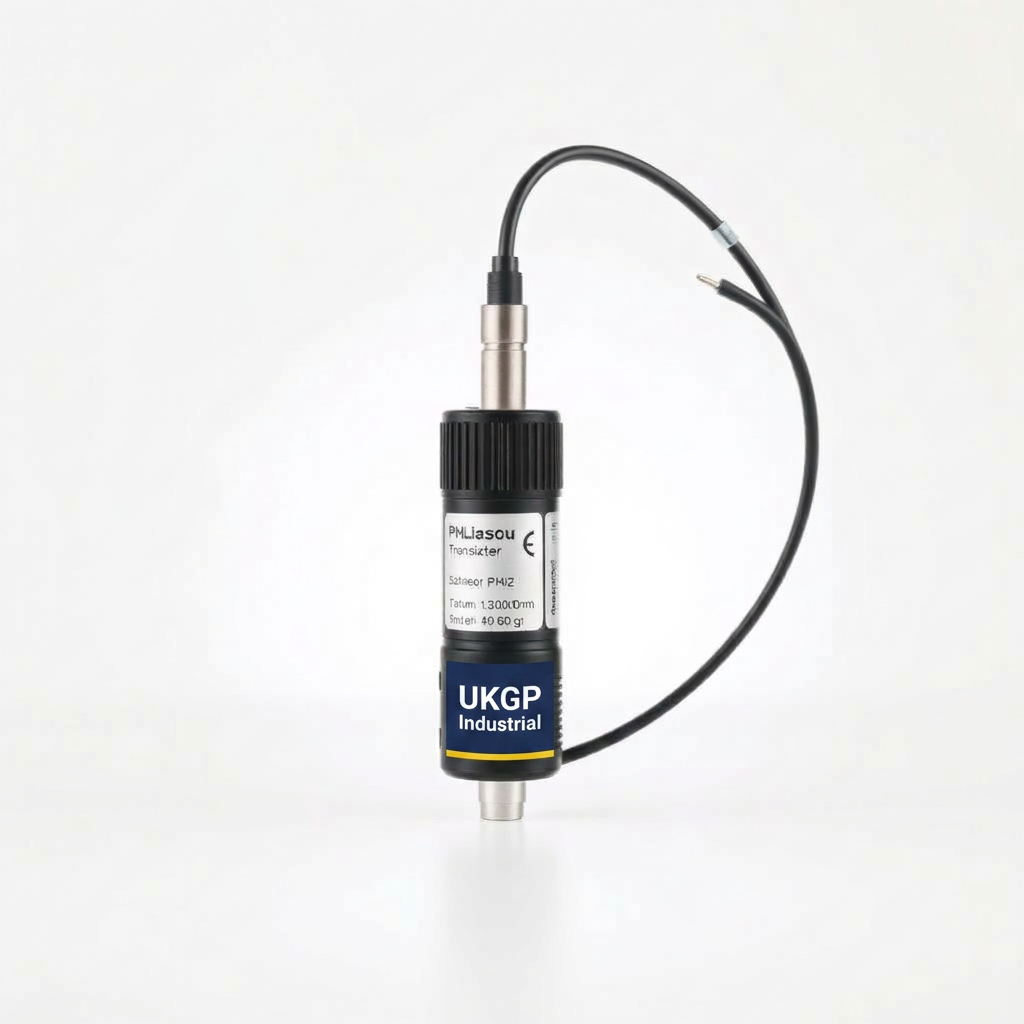
When specifying equipment for new builds or retrofits, procurement leads must look for industrial-grade solutions that facilitate ease of maintenance. A factory-calibrated sensor provides an excellent baseline, but the site-specific environment often necessitates field adjustments to account for local water chemistry. Professional engineers understand that the reliability of a sensor is only as good as its last calibration. Therefore, selecting a UKGP industrial pH sensor & transmitter kit, which includes a high-grade M12 cable and a durable transmitter, ensures that the physical connection to the monitoring system is as robust as the analytical data being generated. This level of technical specification is essential for meeting the stringent demands of modern BSRIA-guided water management programmes.
- Ensures compliance with BSRIA BG50 and BG29 water quality guidelines
- Prevents metallic corrosion in multi-metal heating systems
- Optimises chemical dosing for better system efficiency
- Reduces long-term maintenance costs for facilities managers
Technical Best Practices for Calibrating a pH Probe
The technical execution of calibrating a ph probe requires a structured environment to ensure the results are repeatable and precise. Engineers should always utilise fresh buffer solutions, typically pH 4, 7, and 10, which are traceable to national standards. It is vital to ensure that the sensor is thoroughly cleaned of any biofilm or magnetite deposits before attempting the calibration. A fouled sensor will likely yield an 'offset' error, leading to incorrect chemical interventions. During the calibration process, the transmitter should be verified for zero-point and slope accuracy, ensuring that the 4-20 mA or Modbus signal correctly reflects the physical chemistry of the system water.
Environmental factors such as temperature can significantly impact the accuracy of a pH reading. Professional transmitters often feature automatic temperature compensation (ATC), but when calibrating a ph probe, the buffer solutions should ideally be at the same temperature as the process water or allowed to stabilise at a known ambient temperature. For M&E contractors, using an IP68 rated transmitter with a clear interface allows for streamlined field adjustments. The UKGP sensor kit specifically offers a 2-year warranty and arrives factory-calibrated to simplify the initial installation process, though site-specific calibration remains a necessity for ongoing BS 8552 compliance in water sampling and testing protocols.
Once the calibration is complete, the transmitter's output must be verified against the BMS or local display. Any significant deviation from expected values during the process of calibrating a ph probe may indicate that the electrode is nearing the end of its service life. High-quality sensors from UKGP are designed for industrial longevity, but they still require the same care and attention as any precision scientific instrument. By documenting each calibration event, plant room engineers can track the 'health' of the sensor over time, predicting when a replacement is needed before the system's water chemistry drifts into a corrosive state. Request a quote for our full sensor and transmitter kits to upgrade your monitoring capabilities.
- Use NIST-traceable buffer solutions for maximum accuracy
- Clean sensors with deionised water between buffer immersions
- Verify 4-20 mA output signals for BMS integration consistency
- Log slope and offset values to monitor sensor degradation
Integrating Sensors with Side Stream Filtration
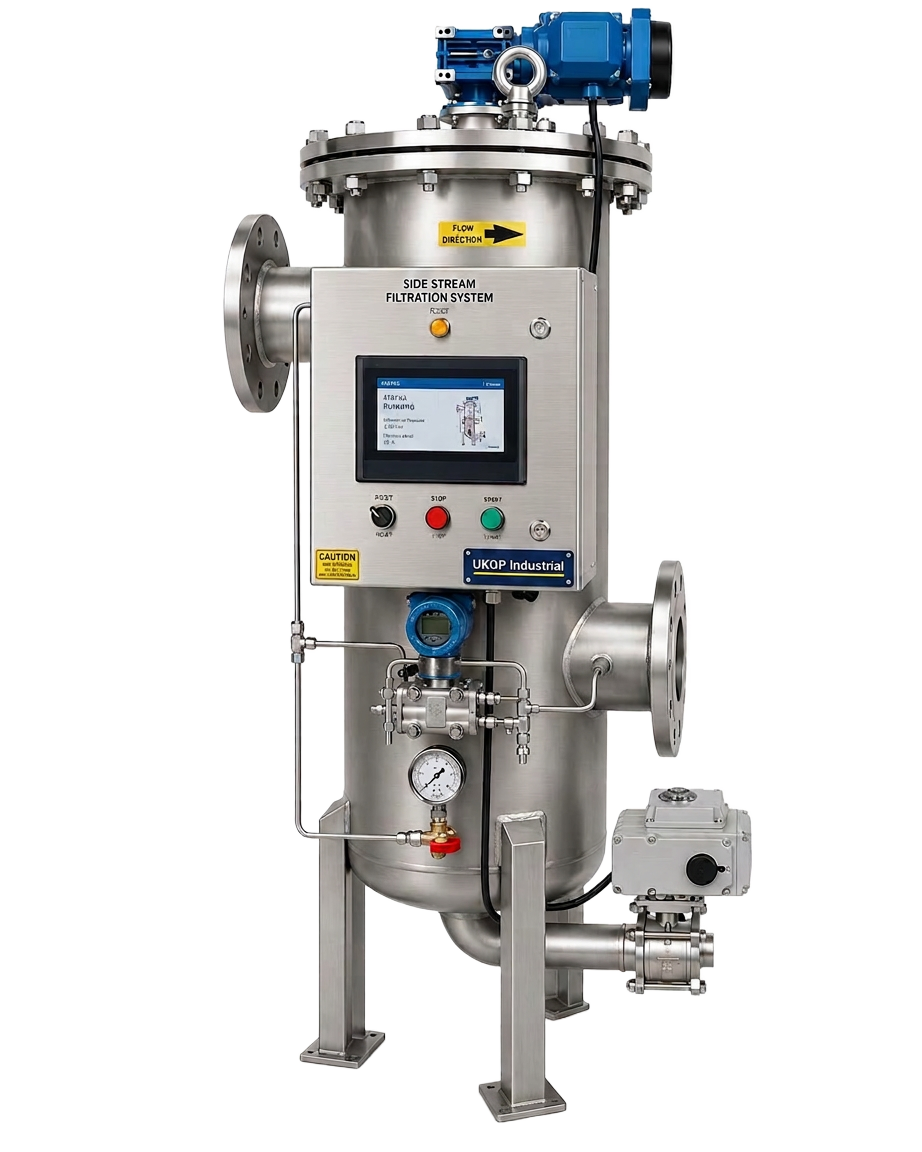
In many modern plant rooms, pH monitoring is most effective when integrated alongside a side stream filtration system. High levels of suspended solids can coat a pH electrode, making the task of calibrating a ph probe more difficult and frequent. By installing a UKGP side stream filtration skid, you remove the magnetite and debris that threaten sensor accuracy. This synergy between filtration and sensing ensures that the water quality remains high, and the maintenance intervals for the pH probe are extended. Consultants often specify these systems together to provide a comprehensive water treatment solution that adheres to CIBSE and BSRIA recommendations for closed-loop protection.
When a side stream filter is operational, the reduced turbidity allows for a cleaner flow across the pH sensor tip. This is particularly important in systems where fine particulate matter can interfere with the salt bridge of the electrode. If an engineer finds they are frequently calibrating a ph probe due to erratic readings, it is often a symptom of poor system cleanliness rather than a sensor fault. Integrating the UKGP sensor into the return line of a side stream loop provides a stable, representative sample of the system water without exposing the delicate glass bulb to the full turbulence or debris-heavy flow of the main header.
Combining high-quality filtration with precision sensing creates a data-driven approach to maintenance. Instead of reactive 'flush and fill' operations, facilities managers can rely on the 4-20 mA data from the calibrated pH sensor to trigger specific chemical dosing actions. This level of automation is only possible when the underlying sensor technology is robust and the process of calibrating a ph probe is simplified through user-friendly transmitter interfaces. UKGP provides the full hardware stack, from the IP68 sensors to the filtration skids, ensuring that M&E contractors have a single point of supply for all plant room water quality components.
- Reduces sensor fouling by removing magnetite and debris
- Provides a stable environment for continuous pH monitoring
- Increases the lifespan of pH electrodes in harsh industrial systems
- Improves the reliability of data sent to the Building Management System
The Role of Manufacturers' Specifications in Calibration
Every industrial sensor has a specific response curve that must be accounted for during installation. When calibrating a ph probe, it is essential to refer to the manufacturer’s technical data sheet to understand the expected millivolt (mV) output at different pH levels. UKGP sensors are engineered to provide a linear response, making the calibration process straightforward for field engineers. The use of a standard M12 cable kit ensures that signal integrity is maintained from the sensor bulb to the transmitter, preventing electrical noise from interfering with the calibration results. Professionals should always ensure that the transmitter is correctly grounded, especially in environments with high VFD activity.
Suppliers like UKGP provide factory-calibrated units to ensure out-of-the-box performance, but the rigours of transit and storage mean that a commissioning-stage calibration is always recommended. For procurement leads, choosing a supplier that offers a 2-year warranty and a complete kit—including the sensor, transmitter, and cabling—simplifies the supply chain and guarantees compatibility. When calibrating a ph probe on-site for the first time, the engineer should verify that the transmitter's Modbus or 4-20 mA output scale matches the range expected by the receiving controller, typically 0-14 pH for full-spectrum monitoring in commercial boiler systems.
Consistency in hardware across a site or portfolio of buildings reduces the training burden on maintenance staff. If every plant room utilizes the same UKGP industrial pH sensor & transmitter setup, the process of calibrating a ph probe becomes a standardised task. This consistency promotes better compliance with BS 8552 and ensures that water treatment contractors can work efficiently across multiple areas. By standardising on high-performance UKGP equipment, you ensure that the technical debt of maintaining multiple disparate systems is eliminated, allowing for a more streamlined approach to plant room management and energy efficiency across the HVAC network.
- Standard M12 cable kits ensure high signal-to-noise ratios
- Dual-point calibration (pH 4 and 7) addresses the majority of HVAC needs
- Transmitter interface allows for rapid field adjustments by contractors
- Factory-calibration provides a reliable baseline for commissioning
Troubleshooting Common Calibration Errors
Even with high-quality components, engineers may encounter challenges when calibrating a ph probe. The most common issue is a slow response time, which is usually indicative of a depleted reference junction or a dehydrated bulb. To resolve this, the probe should be soaked in a storage solution (KCL) rather than deionised water, which can actually leach ions from the glass. If the transmitter shows a 'slope' error during the calibration routine, it is a sign that the sensor's sensitivity has dropped below acceptable industrial thresholds, necessitating a replacement. UKGP sensors are built to withstand the tough conditions of a plant room, but regular maintenance is the only way to identify these issues before they impact water chemistry.
Electrical interference is another factor that can plague those calibrating a ph probe. In large commercial plant rooms, electromagnetic interference (EMI) from pumps and boilers can distort the low-voltage signal from a pH electrode. Using the UKGP M12 shielded cable kit and ensuring the IP68 transmitter is correctly isolated will mitigate these risks. If readings remain erratic despite successful buffer calibration, the engineer should check for ground loops or inadequate shielding in the cable runs connecting the transmitter to the BMS. This level of technical troubleshooting is what separates professional M&E contractors from general maintenance staff.
Finally, ensure that the buffer solutions themselves are not expired or contaminated. Using an old 'pH 7' bottle that has been left open to the atmosphere will cause the solution to absorb CO2, slightly lowering its pH and rendering the process of calibrating a ph probe inaccurate. Always use fresh, temperature-stable buffers and document the batch numbers in the site logbook. For procurement teams looking to improve their plant room monitoring, UKGP offers robust, industrial-grade sensors that stand up to the most demanding UK water conditions. Reach out to our technical team today to discuss your site requirements and request a price list for our transmitter kits.
- Never store sensors in DI water to prevent electrolyte leaching
- Check for EMI and ground loops in high-power plant rooms
- Use fresh, date-coded buffer solutions for every maintenance visit
- Identify sensor 'end of life' through slope percentage analysis
Supply and Installation of pH Monitoring Equipment
Selecting the right equipment is the first step toward a successful water treatment strategy. A UKGP industrial pH sensor & transmitter is designed for the rigorous environment of a commercial plant room, offering an IP68 rating that protects against moisture and dust ingress. When specifying these units, consultants should ensure the kit includes the sensor, the matched transmitter, and the M12 cable. This complete package ensures that the contractor has everything needed for a professional install. By selecting a system that supports both 4-20 mA and Modbus, you provide the end-user with flexibility for future BMS upgrades or additions to their monitoring network.
Installers must ensure that the pH probe is mounted in a position where the glass bulb is always submerged in moving water but not subject to excessive vibration. The correct orientation, usually at a 45-degree angle or vertical, prevents air bubbles from being trapped around the sensor tip, which could cause errors when calibrating a ph probe later. UKGP provides technical support to help contractors determine the optimal placement within the pipework, whether it is near a low loss header or within a dedicated sampling bypass. This attention to detail during the supply and install phase pays dividends in reduced maintenance and higher data accuracy over the system's life.
Procurement leads and M&E contractors who choose UKGP benefit from local UK stock and technical expertise. Our pH sensors are factory-calibrated but designed for simple field adjustment, making them the preferred choice for engineers who value reliability. With a 2-year warranty and a robust build quality, our sensors represent a premium but cost-effective solution for demanding commercial projects. Whether you are working on a new district heating scheme or a commercial office refurbishment, ensuring your system has a professional-grade pH monitoring solution is vital. Contact us for a quote on our full range of sensors, transmitters, and M12 cable kits to secure your plant room's future.
- Supplied as a complete kit for rapid site installation
- Support for both 4-20 mA and Modbus RTU communication
- Robust 2-year warranty for peace of mind in commercial apps
- IP68 rated transmitter housing for harsh UK basement plant rooms
Frequently asked questions
How often should I be calibrating a ph probe in a commercial heating system?
- For most commercial HVAC systems, we recommend calibrating a ph probe every 3 to 6 months. This frequency ensures compliance with BSRIA BG50 guidelines and accounts for any sensor drift caused by the chemical environment.
Can I use standard M12 cables for industrial pH transmitters?
- While standard cables may fit, the UKGP M12 cable kit is specifically shielded and designed to maintain signal integrity for 4-20 mA and Modbus communications in high-EMI plant room environments, ensuring accuracy during calibration.
What is the lifespan of a UKGP industrial pH sensor?
- Under normal operating conditions and with regular maintenance, a UKGP pH sensor typically lasts 12 to 24 months. The 2-year warranty provides additional security for your investment in high-quality water monitoring.
Does the transmitter support digital integration via Modbus?
- Yes, our transmitters are designed for modern smart buildings, offering both traditional 4-20 mA analogue outputs and Modbus RTU digital communication for comprehensive BMS integration.
What buffers are required for calibrating a ph probe in a plant room?
- Standard HVAC water is typically slightly alkaline. We recommend a two-point calibration using pH 7 and pH 10 buffers. If the system is known to be acidic, use pH 4 and pH 7 buffers for better accuracy.