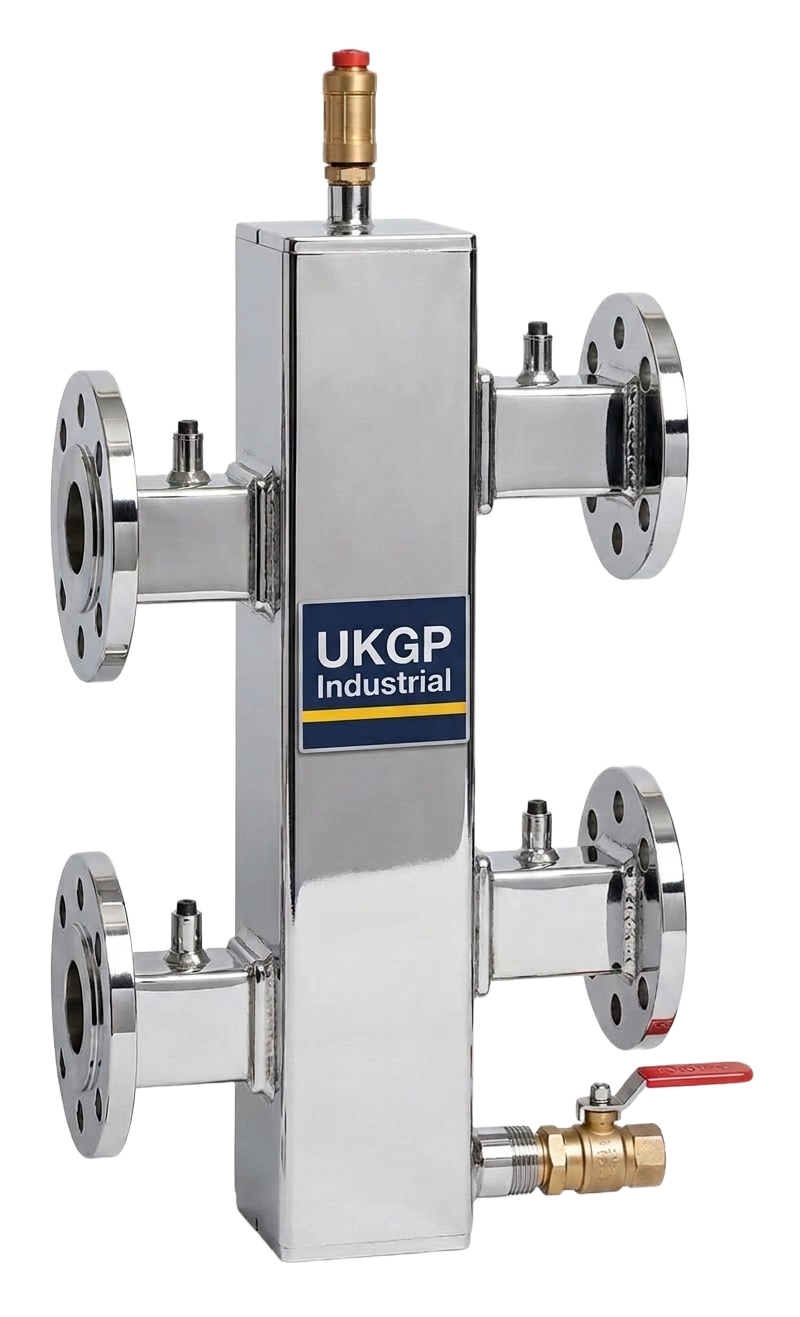
The fundamental principles of hydraulic separation
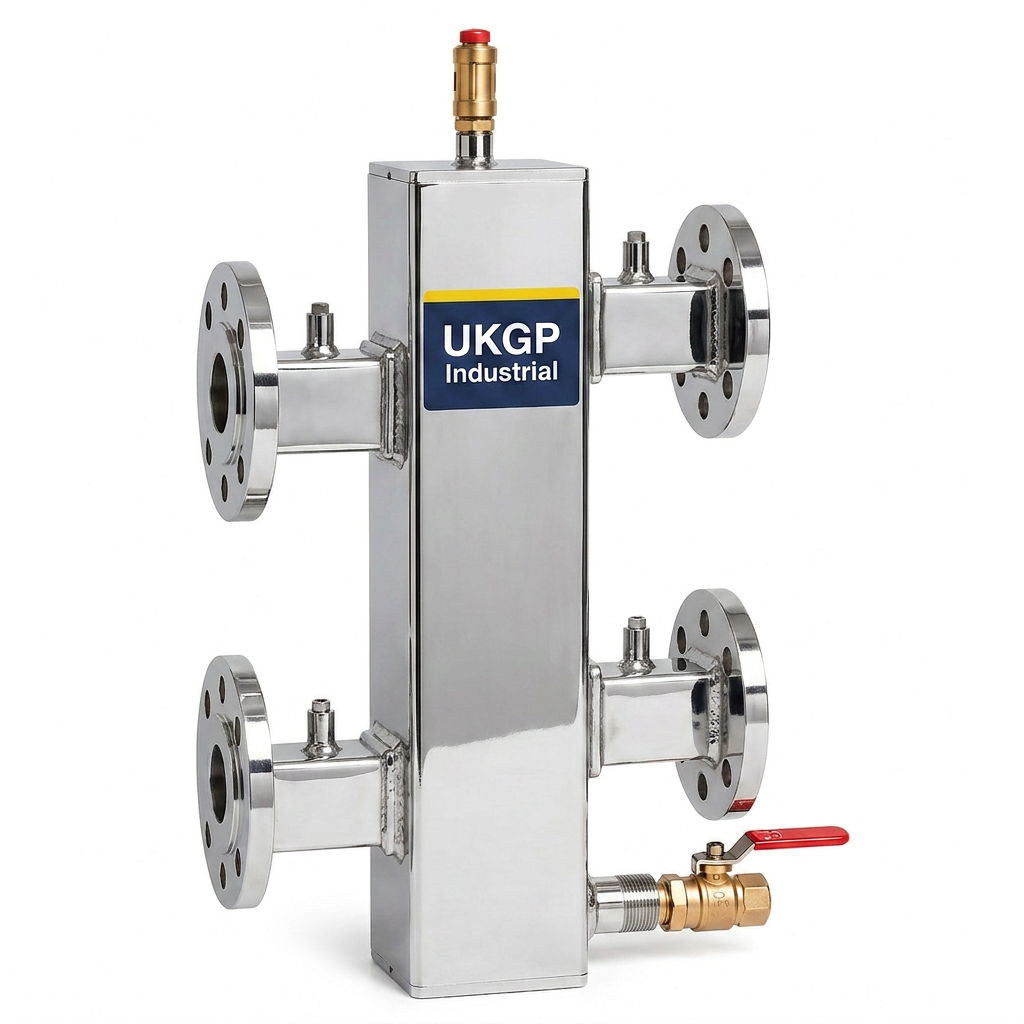
In the context of modern UK building services, defining what is low loss header functionality starts with hydraulic separation between the primary energy source and the secondary heating circuits. In most commercial applications, the flow rate required by the secondary distribution network rarely matches the fixed flow rate required by high-mass or wall-hung condensing boilers. By installing this vertical or horizontal vessel, engineers create a zone of low pressure where the primary and secondary pumps can operate independently without interfering with one another's performance. This preventing 'pump conflict' which is a common cause of premature mechanical failure in older systems.
When contractors ask what is low loss header application necessary for, the answer often lies in maintaining the mandatory minimum flow rates specified by boiler manufacturers. Without this neutral zone, a reduction in secondary demand could lead to the primary circuit being starved of water, triggering high-limit thermostats or causing heat exchanger stress. A correctly sized UKGP header ensures that even if secondary zones are shut down via thermostatic control, the primary loop maintains a consistent flow. This design aligns with CIBSE Guide AM14 on non-domestic heating, ensuring that system efficiency is not compromised by turbulent flow or fluctuating return temperatures.
Furthermore, the physical design of the vessel facilitates secondary benefits such as air and dirt removal. Because the velocity of the water drops significantly as it enters the larger diameter of the header, heavier particles of magnetite and debris can fall to the bottom for blowdown, while microbubbles rise to the top for venting. This naturally complements BSRIA BG29 and BG50 guidelines regarding water quality management. By choosing a UKGP low loss header, specifiers gain a robust solution available in capacities from 40 to 2000 kW, providing the thermal stability required for both refurbishment and new build projects requiring reliable pressure relief.
- Facilitates independent flow rates for primary and secondary circuits
- Prevents hydraulic interference between different circulating pumps
- Protects boiler heat exchangers from low flow conditions
- Assists in the removal of microbubbles and system debris
- Simplifies the balancing of complex multi-zone heating networks
Understanding what is low loss header sizing protocol
Determining what is low loss header sizing involves calculating the maximum flow rate at peak load to ensure the velocity within the vessel stays below 0.1 to 0.2 metres per second. If the velocity is too high, the header fails to act as a neutral point, and the hydraulic separation is lost. For UK M&E contractors, this means carefully matching the kW output of the boiler plant to the header capacity. UKGP offers a versatile range from 40 kW through to 2000 kW, ensuring that whether you are fitting out a small primary school or a large-scale district heating scheme, the vessel can handle the volumetric flow without creating excessive turbulence.
Beyond flow rates, temperature differential (Delta T) is a critical factor in understanding what is low loss header efficiency. Most modern condensing boilers are designed to operate at a Delta T of 20K or higher to ensure the return water temperature is low enough to allow latent heat recovery. A properly commissioned header allows return water to bypass the boiler if the primary loop is too hot, or conversely, ensures the boiler receives the coldest possible return water under high load. This thermal management is essential for achieving the seasonal coefficients of performance required by Part L of the Building Regulations and ongoing CIBSE compliance.
Connectivity is the next consideration for the site engineer. Depending on the plant room layout, we provide both threaded BSP connections for smaller residential-commercial hybrids and PN16 flanged connections for larger industrial systems. The inclusion of a high-quality insulation jacket is standard with our units, preventing heat loss to the plant room and ensuring the energy stays within the distribution loop. With a lead time of just 2-3 weeks, UKGP caters to fast-track projects where plant room equipment must be sourced and installed rapidly without sacrificing the 2-year warranty security that professional installers expect.
- Velocity target of 0.1 to 0.2 m/s for effective separation
- Matching vessel capacity to total plant kW output (40-2000 kW)
- Selection between BSP threaded or PN16 flanged connections
- Requirement for high-density insulation to meet energy standards
- Integration with BMS sensors for precise temperature monitoring
Maintaining water quality and BSRIA BG50 compliance
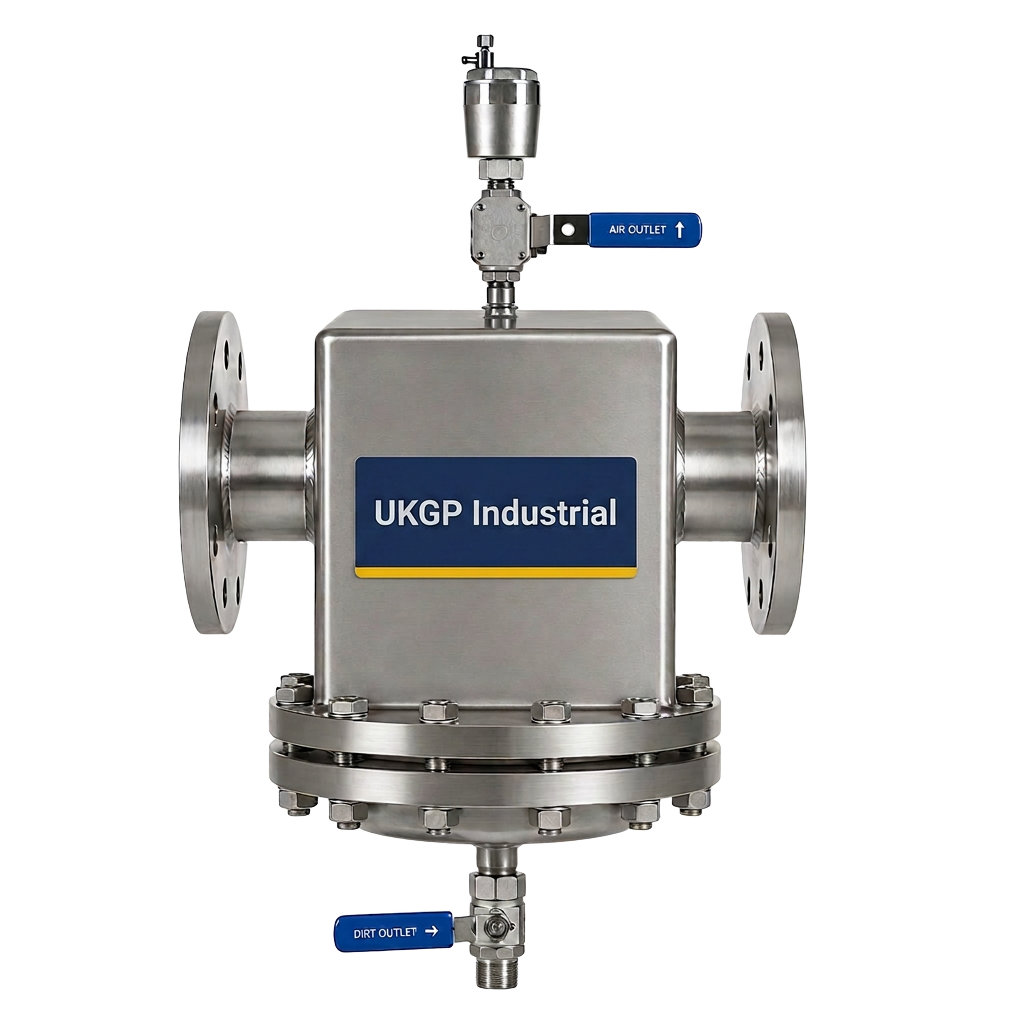
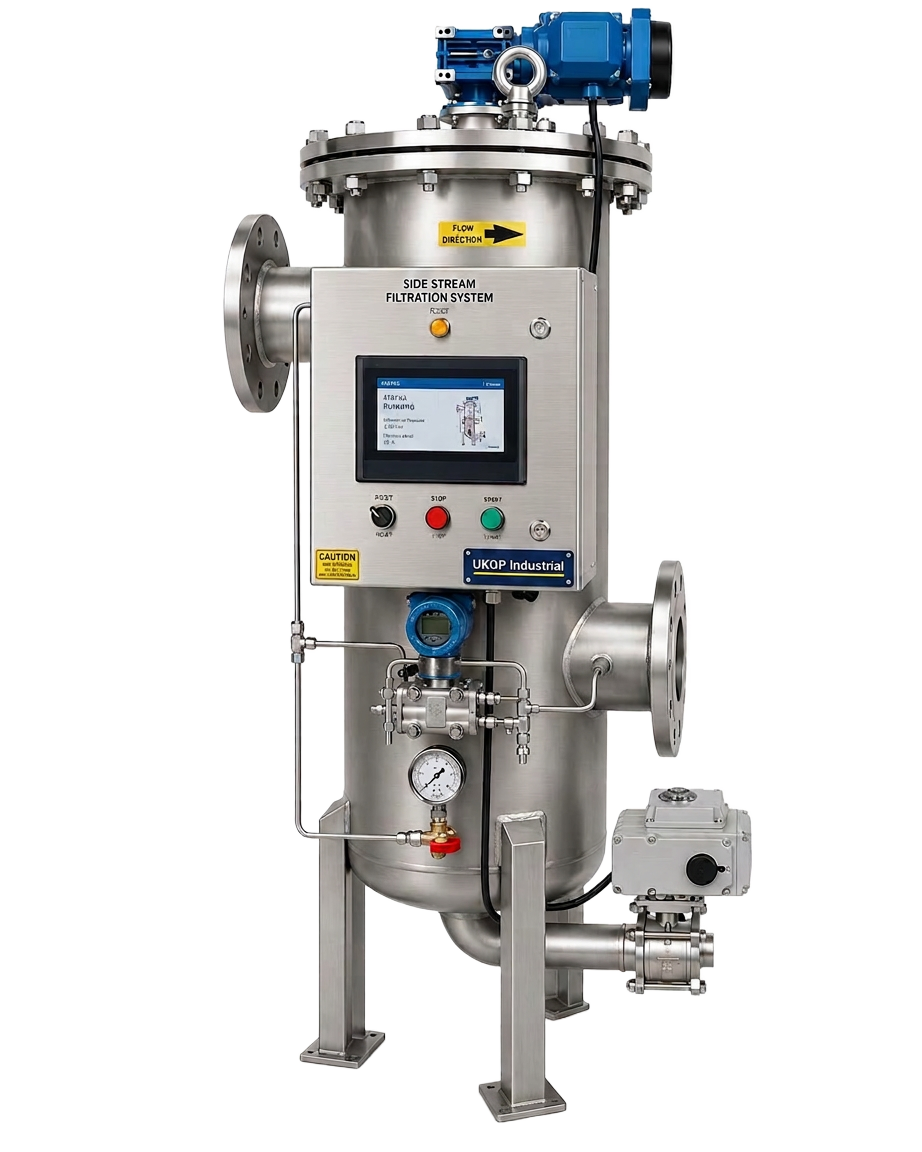
While understanding what is low loss header utility is mostly focused on hydraulics, its role in water quality cannot be ignored. A header contributes to the overall cleanliness of a closed-loop system, but it should not be the sole line of defence. For total system protection, particularly in systems with high concentrations of magnetite or suspended solids, the header should be installed in conjunction with other components like an air and dirt separator. This multi-stage approach to filtration ensures that the delicate internal parts of modern modulating pumps and plate heat exchangers remain free from debris that could cause erosion or blockages.
BSRIA BG50 highlights the importance of ongoing water treatment and the monitoring of dissolved oxygen and pH levels. If the header’s internal flow is turbulent, it can inadvertently re-entrain air back into the system, leading to accelerated corrosion. Therefore, the internal baffle design or the volume of the UKGP unit is engineered to promote laminar flow. For contractors, installing a high-quality header is a proactive step toward meeting BS 8552 requirements for sampling and monitoring, as the lower velocity zone provides an ideal location for consistent temperature sensing and potential sampling points.
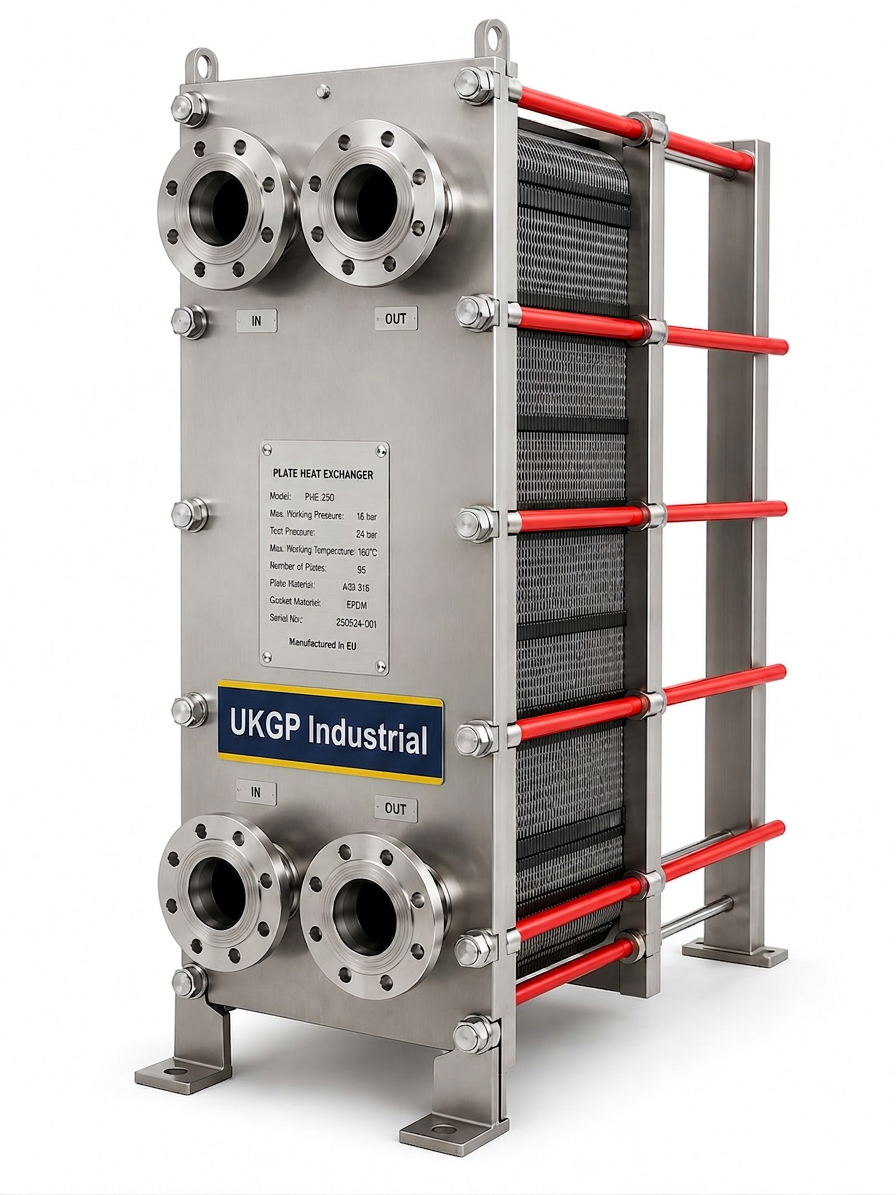
In larger systems where the header connects to a primary circuit that is separate from the secondary load (such as a district heating interface), it may be beneficial to include a plate heat exchanger alongside the header for physical separation of the fluids. This protects the boiler from the potentially contaminated water of an old secondary circuit. Integrating these components into a unified plant room design reduces the risk of system failures. UKGP’s technical team can advise on the best pairing of our headers with our other skids to ensure your project remains compliant with the most stringent UK industry standards and insurance requirements.
- Reduces water velocity to allow for solids to settle out of suspension
- Provides a secondary location for air venting via an automatic air vent
- Complements the role of a dedicated air and dirt separator
- Essential for long-term protection of high-efficiency boiler plants
- Supports BG50 and BG29 water quality management strategies
Thermal performance and the role of insulation
A common oversight in commercial plant rooms is the failure to properly insulate the neutral vessel. When asking what is low loss header energy efficiency, the answer is heavily dependent on the quality of the thermal jacket. Without insulation, the large surface area of the header acts as a giant radiator, dumping heat into the plant room rather than delivering it to the emitters. UKGP units are supplied with tailor-made insulation jackets that are easy to remove for maintenance and inspection, ensuring that the system remains as energy-efficient as the day it was commissioned.
The impact of heat loss is particularly noticeable in summer during domestic hot water (DHW) production. If the header is lose-fitting or uninsulated, the boilers must run more frequently to overcome the standing losses. By specifying a UKGP unit with 2-3 week lead times, you ensure your project uses the latest in thermal lagging technology. This is critical for meeting the carbon reduction targets set out by local authorities and for ensuring that the building's Energy Performance Certificate (EPC) rating is not negatively impacted by preventable distribution losses within the plant room environment.
For the facility manager, an insulated header also improves health and safety by preventing the external surface from reaching dangerous temperatures. This is a practical consideration in tight plant room spaces where maintenance personnel are frequently working in close proximity to the equipment. With our 2-year warranty, purchasers can be confident that both the vessel shell and its insulation are built to withstand the rigours of a busy commercial heating environment. Whether you require a vertical orientation for space-saving or a horizontal configuration for specific pipework runs, our engineering team provides the flexibility needed.
- Reduces plant room overheating and convective heat loss
- Removable jackets allow for easy annual visual inspections
- Assists in maintaining set-point temperatures for DHW production
- Improves overall system carbon footprint and EPC ratings
- Enhances safety for plant room operators and engineers
Installation best practices for M&E contractors
When it comes to the actual installation, engineers must grasp what is low loss header orientation best practice. Most commercial headers are installed vertically to maximise the benefits of thermal layering and to allow for easier venting and draining. The primary flow from the boiler should enter at the top port on one side, with the return to the boiler exiting at the bottom port on the same side. On the opposite side, the secondary flow exit should be at the top, with the secondary return entering at the bottom. This cross-flow pattern ensures that the mixing occurs correctly and that the neutral pressure zone is maintained.
Pipe support is another vital area, especially for larger units in the 1000 kW to 2000 kW range. These vessels are heavy, particularly when full of water, and must be correctly anchored to the floor or wall. Stress on the connections can lead to leaks over time, so we often recommend the use of expansion bellows to manage the thermal movement in the main headers and branches. UKGP provides these ancillary components to ensure a complete, professional installation. Ensuring the header is level is also critical for the performance of the air vent and the sediment drain valve located at the base.
Commissioning engineers should check the pressure drop across the header, which should be negligible if sized correctly. If you observe a significant pressure differential, it suggests that the header is undersized for the flow rate, or that there is an internal blockage. By choosing a UKGP low loss header, you receive a product designed with a wide diameter to ensure minimal resistance. Our BSP and PN16 options allow for a seamless transition from the primary boiler loop to the larger distribution pipework, giving the contractor total control over the hydraulic balance of the entire building.
- Install vertically to take advantage of natural buoyancy and venting
- Connect primary flow/return on one side and secondary on the other
- Ensure the unit is plumb and level to avoid air pockets
- Support pipework adequately to prevent stress on vessel flanges
- Utilise expansion bellows to accommodate thermal growth in large systems
The commercial case for specifying a UKGP header
For procurement leads and building owners, the decision on what is low loss header procurement often boils down to reliability and lead times. A plant room delay can cost thousands in liquidated damages, which is why UKGP maintains a 2-3 week lead time on our standard range of headers. This ensures that you aren't waiting for overseas shipments while your project sits stagnant. Our vessels are manufactured to high standards, featuring robust materials and a finish that stands up to the demands of a high-pressure commercial environment, backed by our comprehensive 2-year warranty.
Investing in a high-quality low loss header also reduces long-term maintenance costs. By preventing boiler cycling and ensuring the pump is not fighting against closed valves or opposing flows, you extend the lifespan of the most expensive components in the heating system. When you consider the cost of a modern 500 kW boiler, the relatively small investment in a properly sized and insulated header is easily justified by the reduction in service calls and the avoidance of heat exchanger cracks. UKGP provides the technical documentation and support to help you make this case to your clients.
In summary, the UKGP low loss header is an indispensable tool for the modern heating engineer. From 40 kW small-business solutions to the massive 2000 kW industrial variants, our range meets the hydraulic needs of any plant room. With options for both BSP and PN16 connections and the inclusion of high-density insulation, we provide a product that is 'fit and forget.' Contact our Surrey office today for a quote and see how our rapid turnaround and expert engineering can benefit your next mechanical services project, ensuring maximum efficiency and hydraulic stability.
- Rapid 2-3 week lead times to keep construction projects on schedule
- Wide range of capacities (40 kW to 2000 kW) for any building size
- Includes a 2-year warranty for peace of mind and quality assurance
- Comes with insulation as standard to ensure peak thermal performance
- Expert technical support based in Surrey for UK-wide projects
Frequently asked questions
What is the main purpose of a low loss header?
- The primary purpose is to provide hydraulic separation between the heat source (boilers) and the heat emitters (radiators, AHUs, underfloor heating). This allows the primary and secondary pumps to operate at different flow rates without affecting each other, protecting the boiler and improving system efficiency.
How do you size a low loss header for a commercial system?
- It is sized based on the maximum total power output of the boilers (kW) and the resulting volumetric flow rate. The internal velocity must remain very low (typically below 0.2 m/s) to ensure a neutral pressure zone. UKGP offers units from 40 kW up to 2000 kW to match these requirements.
Can a low loss header act as a dirt separator?
- Yes, because the water velocity drops significantly as it enters the header, heavy particles tend to settle at the bottom. Most headers, including UKGP models, feature a drain valve at the base for removing this sediment, though they should be used in conjunction with dedicated dirt separators for best results.
Is insulation necessary for a low loss header?
- Absolutely. Without insulation, the header acts as a large heat sink, wasting energy and overheating the plant room. UKGP headers come with high-quality insulation jackets as standard to comply with energy efficiency best practices and building regulations.
What is the difference between BSP and PN16 connections on headers?
- BSP (British Standard Pipe) is a threaded connection typically used on smaller headers up to 50mm or 80mm. PN16 refers to a flanged connection rated for 16 bar pressure, used on larger commercial and industrial systems for greater structural integrity and ease of installation.