The Role of Low Loss Headers in Commercial Systems
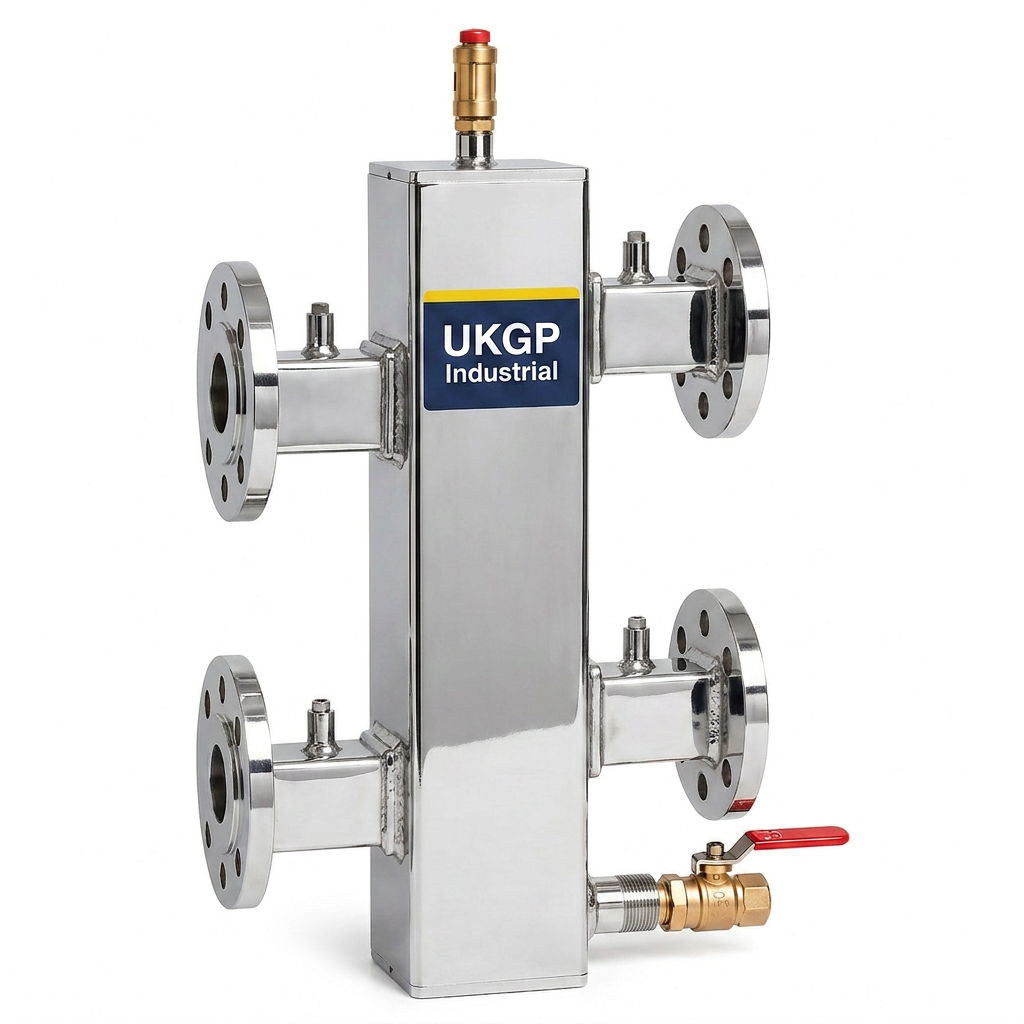
The primary function of a low loss header is to create a zone of low pressure drop, effectively decoupling the hydraulic circuits of the heat source and the heat emitters. In a typical commercial plant room, the primary circuit (usually comprising boilers from manufacturers like leading UK boiler OEMs) requires a specific flow rate to prevent thermal shock and ensure efficient heat transfer. Conversely, the secondary circuit—serving AHUs, radiators, or underfloor heating—operates on variable flow demands controlled by 2-port valves and inverter-driven pumps.
Without an LLH, the secondary pumps can exert a 'pull' or 'push' on the primary circuit, leading to flow rates that exceed or fall short of the boiler manufacturer’s specifications. This often results in premature component failure, inaccurate temperature control, and cycling of the boilers. By installing a correctly sized header, the pressure differential between the flow and return headers is virtually zero, allowing each circuit to operate independently based on its own pump head.
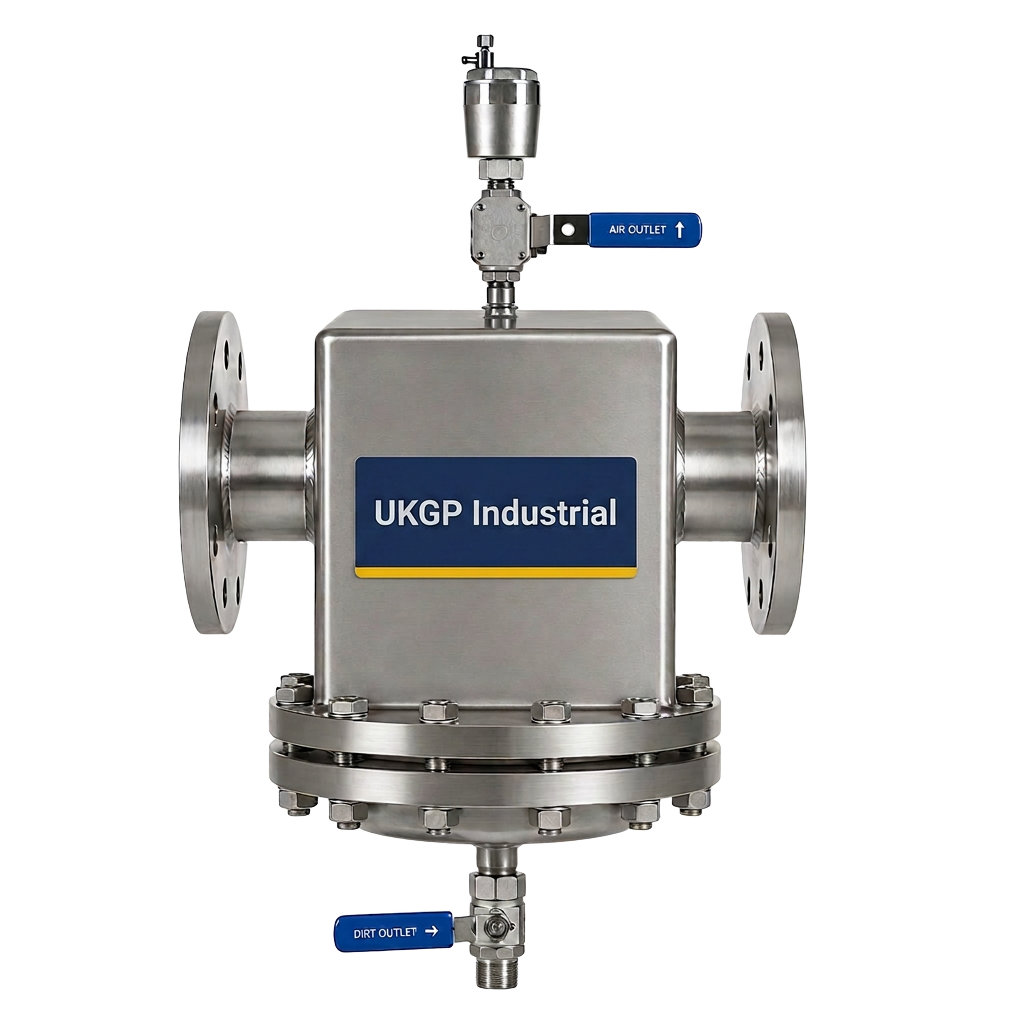
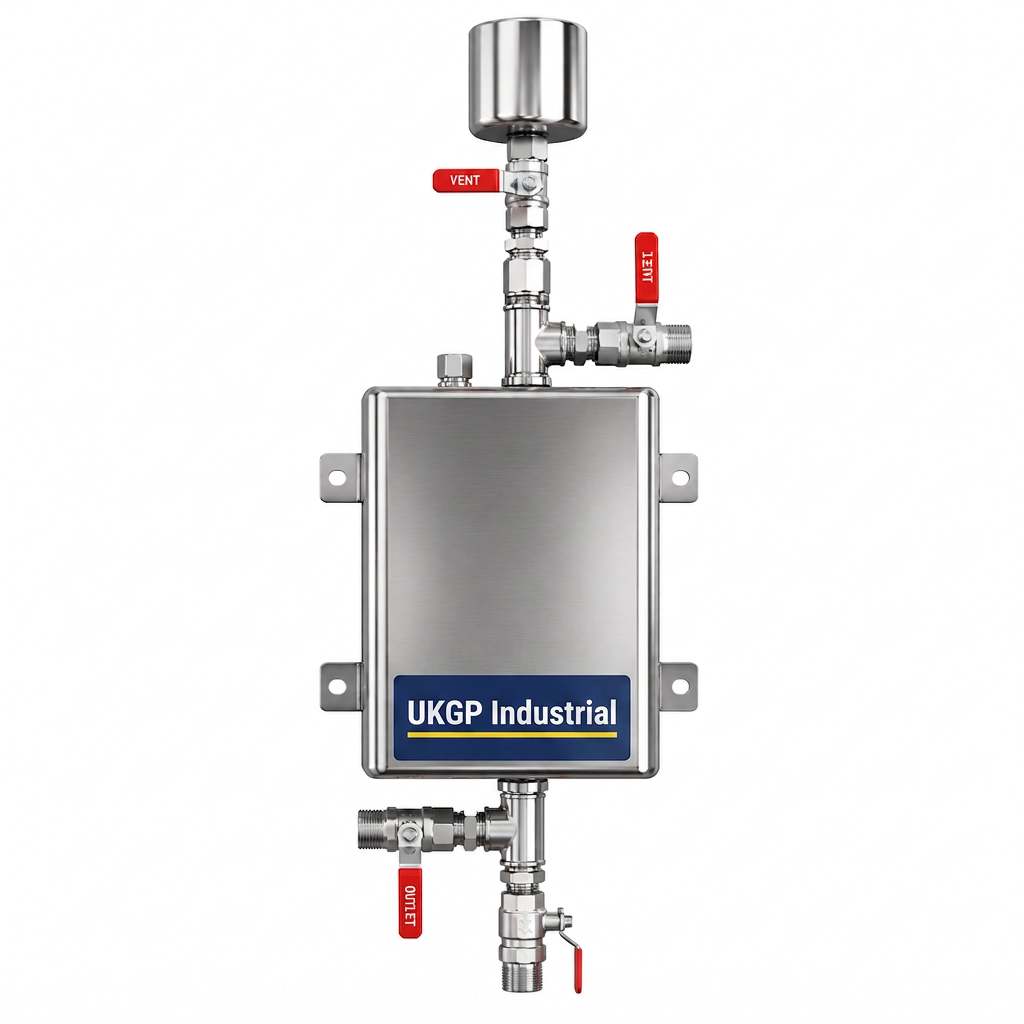
Furthermore, the low-velocity zone within the header serves as an auxiliary point for debris to settle out of the flow. While not a substitute for a dedicated magnetic dirt separator or a side-stream filter, the reduction in velocity to approximately 0.1 m/s allows larger particles to fall to the base for blow-down, and micro-bubbles to rise for venting through an automatic air vent (AAV).
- Decoupling primary boiler pumps from secondary distribution pumps.
- Preventing pump conflict and 'shunting' in multi-boiler cascades.
- Managing flow rate differentials in variable volume systems.
- Providing a centralized point for air and dirt removal.
Sizing and Specification Requirements
Sizing a low loss header solely based on pipe diameter is a common error in commercial M&E design. The specification must be based on the maximum anticipated flow rate through either the primary or secondary circuit. For a standard heating system, the formula Q = m × cp × ΔT is used, where Q is the heat load in kW. However, engineers must account for the narrowest ΔT expected in the system; for example, a 1000kW system at ΔT 20K requires roughly 43 m³/h, whereas at ΔT 11K, this rises to nearly 80 m³/h.
To achieve effective hydraulic separation, the vertical velocity within the header body must remain low—typically below 0.2 m/s. If the velocity is too high, the header acts as a common manifold rather than a separator, causing turbulence that can pull return water back into the flow pipe or vice versa. This ‘short-circuiting’ prevents boilers from reaching their design flow temperature and can cause return temperatures to rise, potentially preventing condensing boilers from operating in their most efficient mode.
When specifying UKGP Industrial products, engineers should also consider the orientation. While vertical headers are standard for their air and dirt separation benefits, horizontal low loss headers are increasingly used in plant rooms with height restrictions. Regardless of orientation, the internal baffle or vessel volume must be sufficient to neutralize the kinetic energy of the incoming water.
- Calculating the maximum volumetric flow rate (m³/h).
- Determining the required vessel diameter to maintain low velocity.
- Assessing the impact of ΔT on header performance.
- Positioning of sensor pockets for BMS integration.
Frequently asked questions
What is the '4-2' rule for low loss header sizing?
- The '4-2' rule refers to the vertical spacing of connections. However, for modern condensing boilers, the flow velocity within the header body should typically not exceed 0.1 to 0.2 m/s to ensure effective hydraulic separation and debris settlement.
Can I use a low loss header instead of a plate heat exchanger?
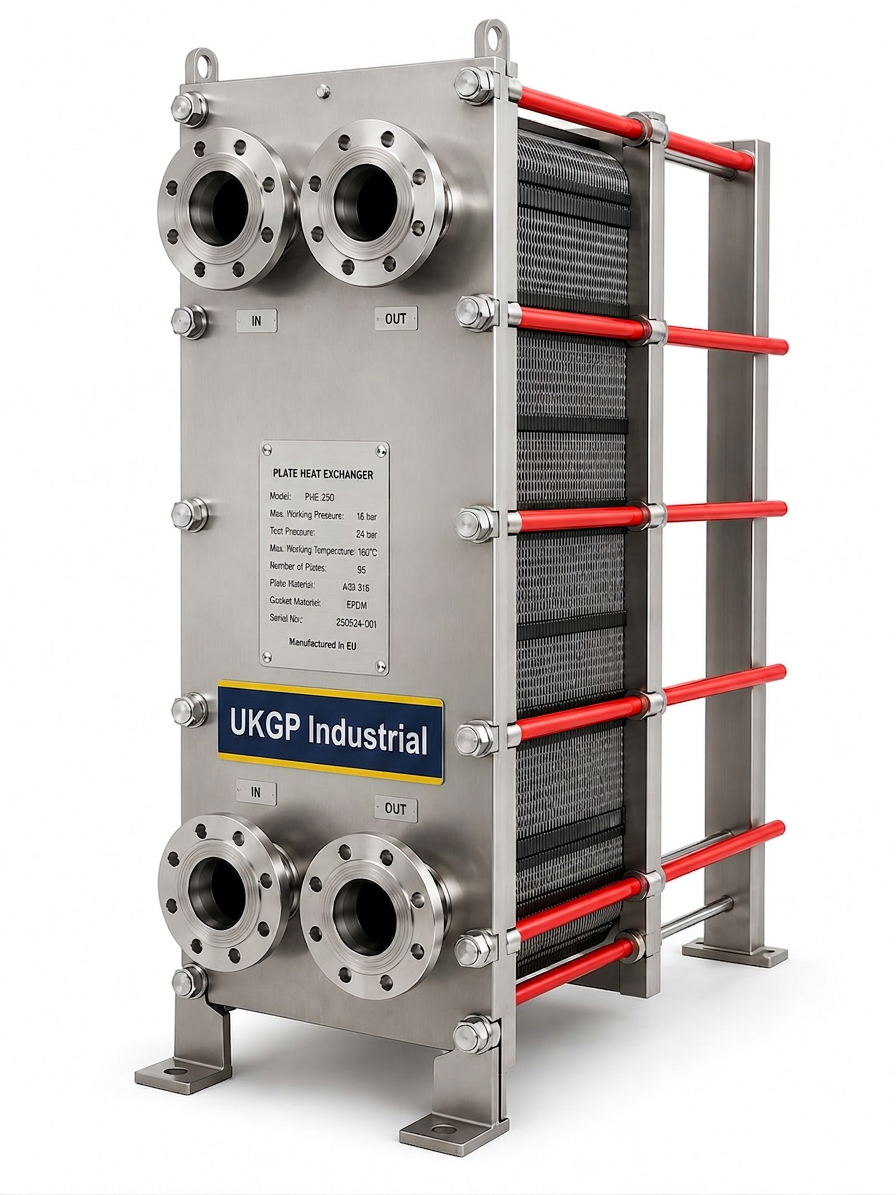
- While both provide hydraulic separation, a plate heat exchanger (PHE) provides physical separation of the fluids (e.g., to protect a new boiler from an old, sludge-heavy system). A low loss header maintains a common water circuit while decoupling flow rates.
How do I size a header for a system with variable speed pumps?
- The header must be sized based on the maximum possible flow rate of either the primary (generator) or secondary (load) circuit—whichever is greater—to ensure the velocity remains within the laminar flow regime.
What are the most common installation errors?
- Failure to include an automatic air vent (AAV) and a dedicated drain/flush valve will lead to air binding and magnetite accumulation, significantly reducing the efficiency of the boiler heat exchangers.