The Role of the Low Loss Header in Modern Plant Rooms
The primary function of a low loss header is to create a zone of negligible pressure drop, allowing the primary and secondary pumps to operate independently. In modern commercial installations utilizing brands such as leading UK boiler OEMs, the internal heat exchangers are often designed for specific flow ranges. If the secondary circuit demand fluctuates due to TRV or 2-port valve modulation, the LLH ensures the primary circuit maintains the manufacturer-specified flow rate, preventing high-limit trips or heat exchanger damage.
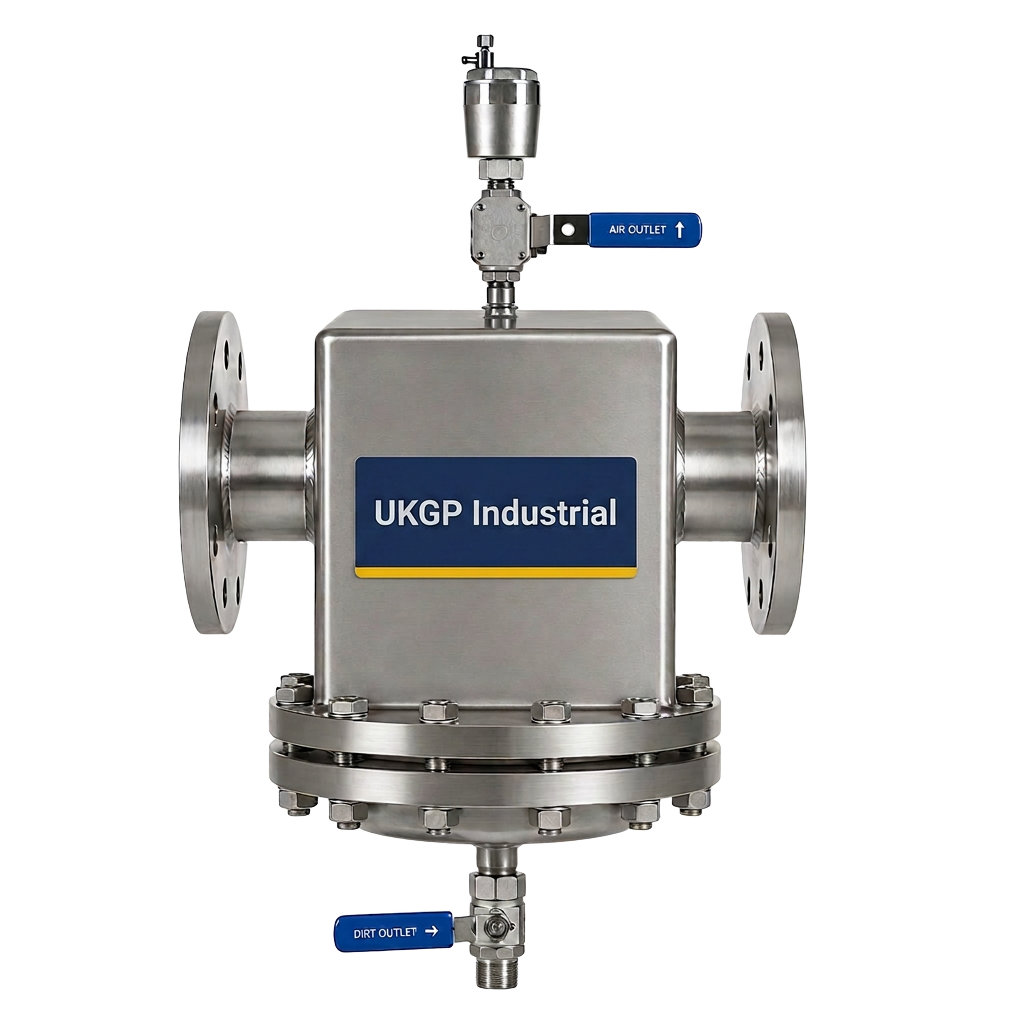
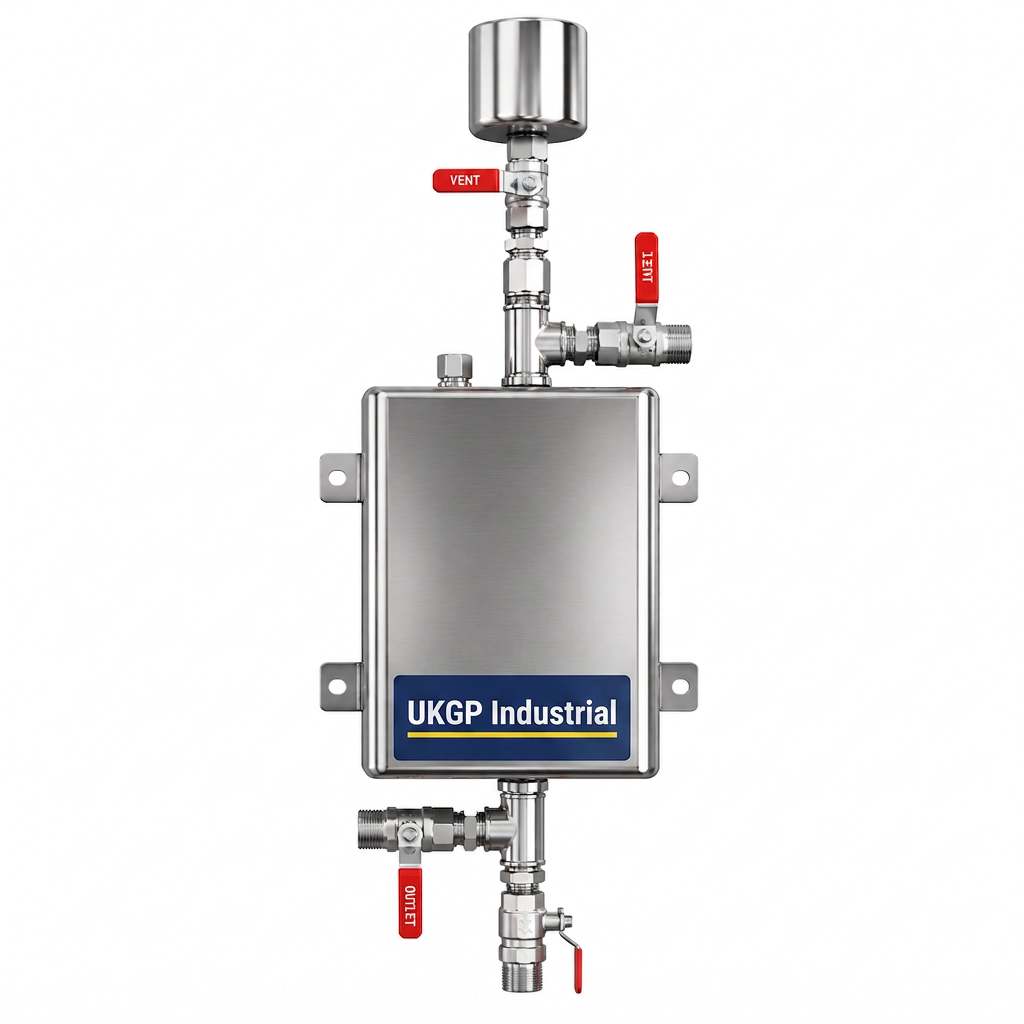
Technically, the LLH acts as a hydraulic break. By sizing the vessel diameter to ensure a vertical velocity between 0.1 m/s and 0.2 m/s, the designer ensures that the pressure difference between the flow and return headers is virtually zero. This eliminates the risk of pumps working in series or opposition, which can lead to unpredictable flow patterns and inefficient heat transfer. Many UK engineers also utilise the LLH as a secondary point for deaeration and dirt collection, taking advantage of the reduced velocity to allow pocketed air to rise and suspended solids to settle.
While highly effective for hydraulic balance, the LLH provides minimal thermal storage. In systems with high-turnover loads or modular boiler cascades, the LLH is sufficient. However, it offers no protection against short-cycling if the minimum boiler output exceed the minimum system load—a common issue in modern well-insulated buildings during shoulder seasons. In these scenarios, the LLH cannot compensate for the lack of system volume.
- Decoupling of the primary (heat source) and secondary (emitters) circuits.
- Maintenance of constant flow rates through the boiler regardless of secondary demand.
- Facilitation of dirt and air separation via low-velocity zones.
- Protection of modern heat exchangers from variable flow rates and thermal shock.
Hydraulic Dynamics and the 'Four-Pipe' Principle
Both LLHs and buffer tanks generally transition a system from a single-loop or primary-secondary pump arrangement into a decoupled 'four-pipe' configuration. The hydraulic logic relies on the principle that fluid will take the path of least resistance. Inside the vessel, the low-velocity zone creates a neutral point. This is essential for preventing 'ghost flows' where active secondary pumps pull return water backwards through inactive boiler modules.
CIBSE AM14 (Non-domestic hot water heating systems) highlights the importance of maintaining the design temperature differential (delta-T). If the primary pump is significantly oversized compared to the secondary demand, the excess flow bypasses through the header, raising the return temperature to the boiler. For condensing boilers, this is detrimental; if return temperatures exceed 54°C, latent heat recovery is lost, and seasonal efficiency drops. Proper sensor placement—typically in a dry pocket at the top of the header—is vital for accurate boiler modulation.
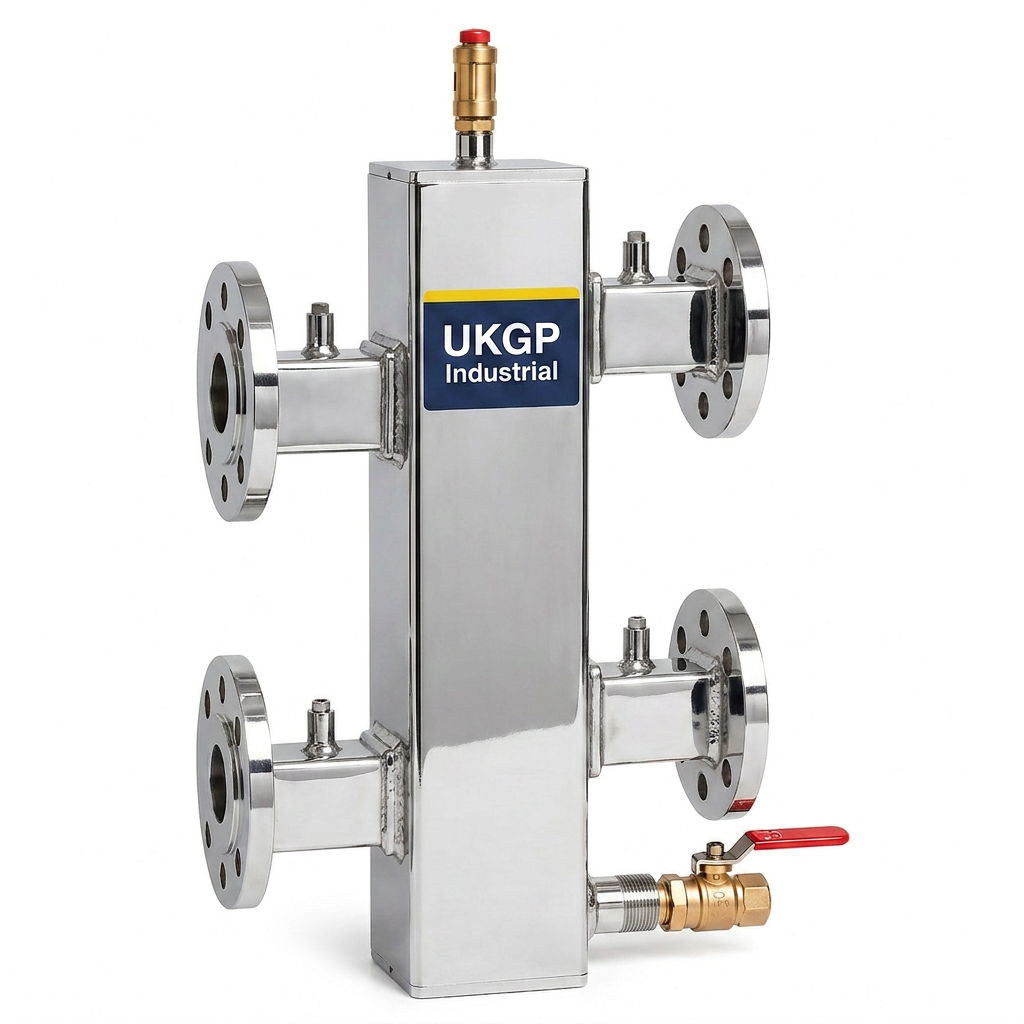
The physical orientation of the connections also dictates performance. For many UK industrial applications, a vertical low loss header is preferred to assist with the natural buoyancy of air and the gravity-led settling of magnetite and sludge. UKGP Industrial headers are often specified with additional ports for temperature sensors and drain valves to facilitate compliance with BSRIA BG50 monitoring requirements.
- Primary flow exceeds secondary flow (Mixing occurs, bypasses hot water to return).
- Secondary flow exceeds primary flow (Return water mixes with flow, reducing flow temperature).
- Matched flow (Ideal steady-state operation).
Frequently asked questions
What is the main difference between a low loss header and a buffer tank?
- A low loss header is primarily for hydraulic separation (pressure equality), whereas a buffer tank provides both separation and significant thermal mass to prevent boiler short-cycling.
Can a buffer tank replace a low loss header?
- Yes, particularly in heat pump or biomass installations where both hydraulic decoupling and a minimum volume of stored energy are required for defrost cycles or combustion stability.
How do BSRIA BG29/21 guidelines apply to these vessels?
- BSRIA BG29/21 focuses on pre-commission cleaning; however, both vessels must be included in the flushing and chemical treatment strategy to prevent debris accumulation in low-velocity zones.
What is the standard sizing calculation for a commercial buffer?
- For headers, the 'v = 0.1 to 0.2 m/s' rule is standard. For buffer tanks, sizing is usually based on 15–25 litres per kW of minimum boiler output or heat pump manufacturer specifications.