Fundamental Principles of Low Loss Headers Design
At the core of any successful HVAC installation, a sound low loss headers design serves as the neutral point where primary and secondary circuits meet without interfering with one another's pressure dynamics. For UK consultants and M&E contractors, the primary objective of this design is to allow the primary heat source pumps and secondary distribution pumps to operate independently. This independence is critical when variable speed pumps are utilised on the secondary side, as it prevents the pumps from 'fighting' each other, which can lead to premature failure of mechanical components and erratic temperature control. A well-specified vessel ensures that the velocity within the header remains low, typically below 0.5 metres per second, allowing gravity to assist in stagnant areas for debris collection.
When calculating the parameters for your low loss headers design, it is vital to account for the full range of operational scenarios, from minimum load to peak demand. Commercial boilers from leading UK manufacturers often require a specific minimum flow rate to prevent heat exchanger damage; conversely, secondary zones may require varying flow based on thermostatic demands. The header acts as a buffer that manages these differences. According to CIBSE Guide B, maintaining hydraulic balance through a header is the most effective way to ensure that condensing boilers operate in their most efficient range by return temperature optimisation. Without a professional header, primary boilers may cycle frequently, significantly reducing the lifespan of the plant and increasing carbon emissions for the asset owner.
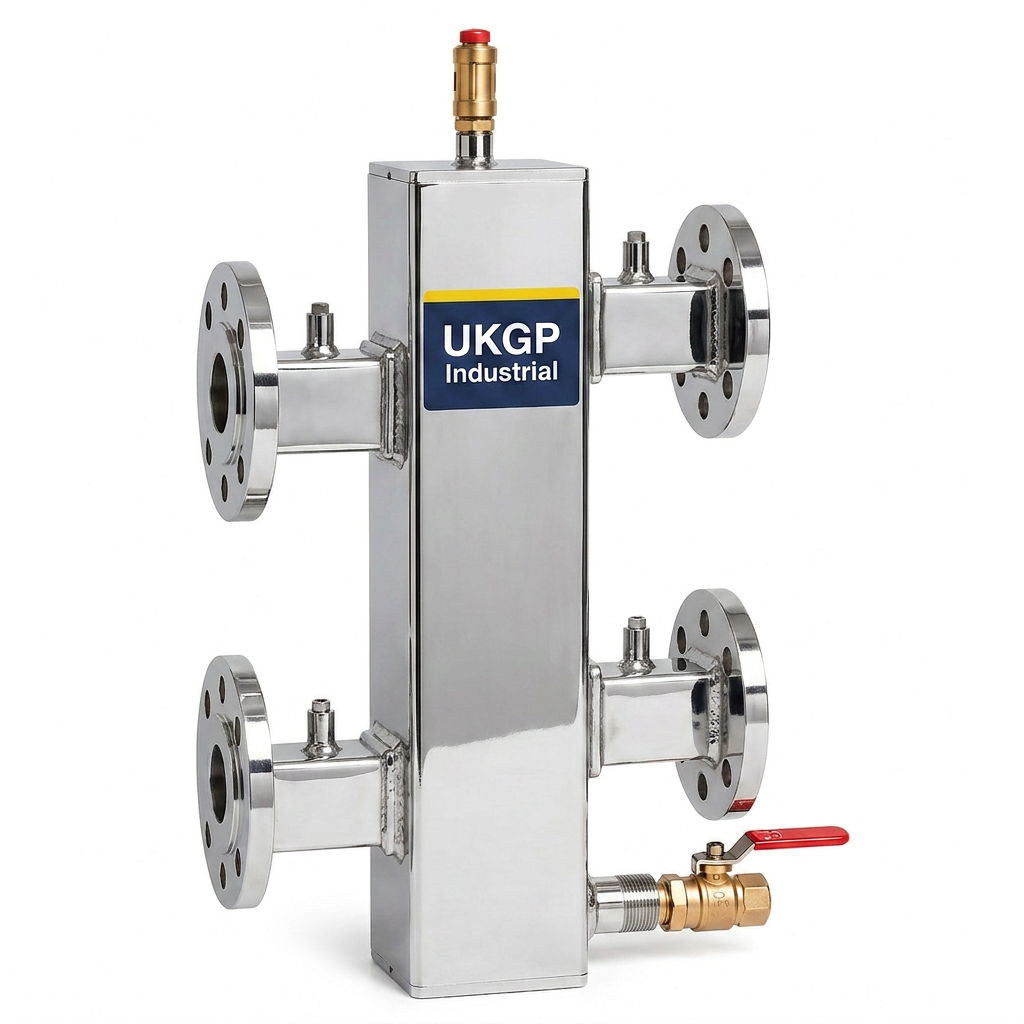
UKGP Industrial provides high-performance low loss headers that simplify the execution of a professional low loss headers design. Our units are manufactured to provide a reliable solution for plant rooms ranging from 40 kW to 2000 kW. These vessels are available with either threaded BSP or flanged PN16 connections, ensuring compatibility with standard UK pipework specifications. Each unit comes supplied with a thermal insulation jacket as standard to minimise standing heat losses, align with Part L of the Building Regulations, and ensure long-term energy efficiency. Our quick 2-3 week lead times and 2-year warranty provide the peace of mind required for fast-paced commercial refurbishments and new build projects where plant room deadlines are non-negotiable.
- Maintains hydraulic separation between primary and secondary circuits
- Prevents pump conflict and mechanical stress on boiler heat exchangers
- Standard range supports commercial capacities from 40 kW to 2000 kW
- BSP or PN16 flange options available for easy site integration
Sizing and Velocity Parameters for the Header
In the realm of low loss headers design, the physical dimensions of the vessel are dictated by the maximum flow rate required by the system. If the vessel is undersized, the velocity of the water remains too high, causing turbulence that eliminates the hydraulic decoupling effect. Engineers should aim for a cross-sectional area that keeps internal velocities to a minimum, ensuring that the pressure drop across the header is negligible. This 'low loss' characteristic is what gave the component its name. Proper sizing also facilitates air and dirt separation; as the water slows down, heavier particles can settle at the base for blow-down, while microbubbles rise to the top for venting, supporting BSRIA BG29 pre-commissioning cleaning standards.
Choosing between a vertical or horizontal low loss headers design is often a matter of plant room footprint. Vertical headers are frequently preferred in UK plant rooms as they naturally encourage the vertical separation of air and debris, with a dedicated drain valve at the bottom and an automatic air vent at the highest point. A larger diameter header is always safer than an undersized one; while a larger vessel adds slightly to the initial capital cost, it provides far greater flexibility if the building's heat load increases or if additional modular boilers are added to the primary bank in the future. Accurate sizing prevents the occurrence of ghost flows where water bypasses the intended circuits due to pressure differentials.
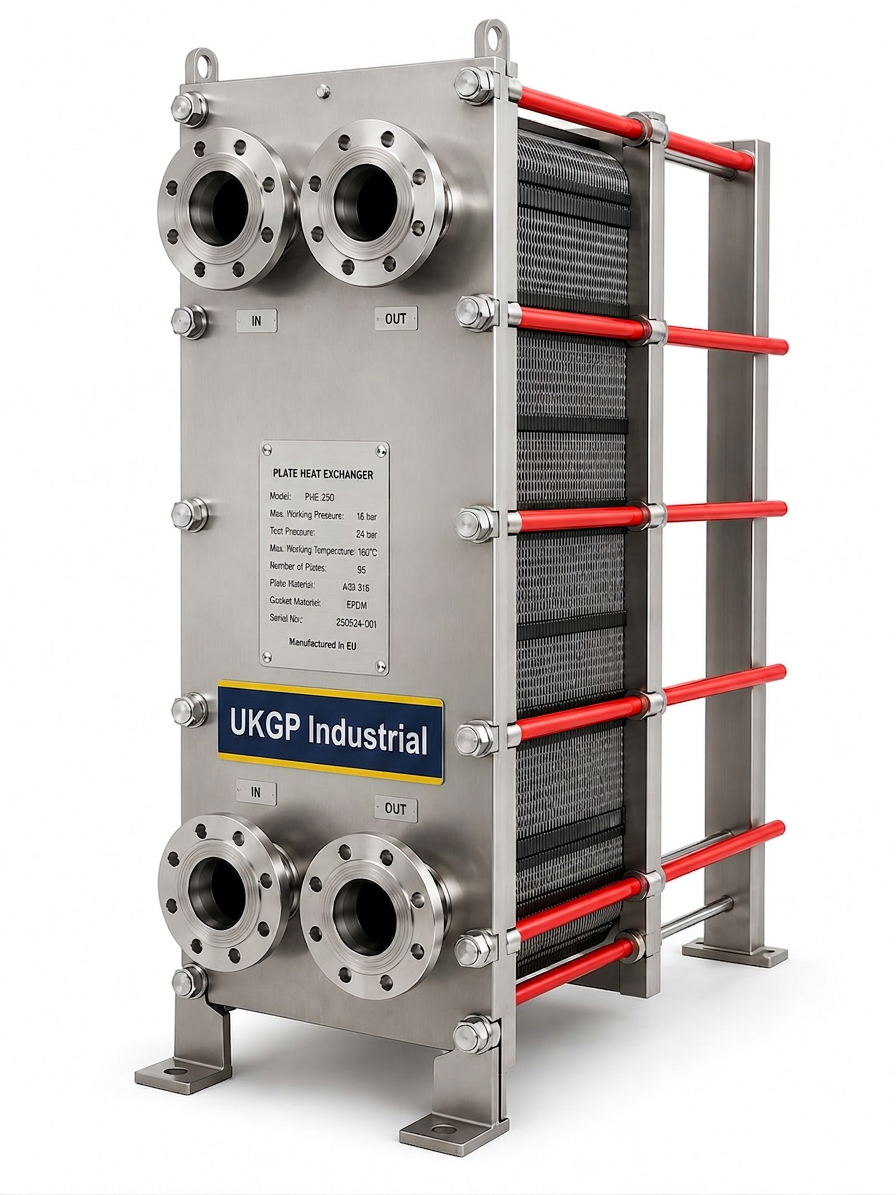
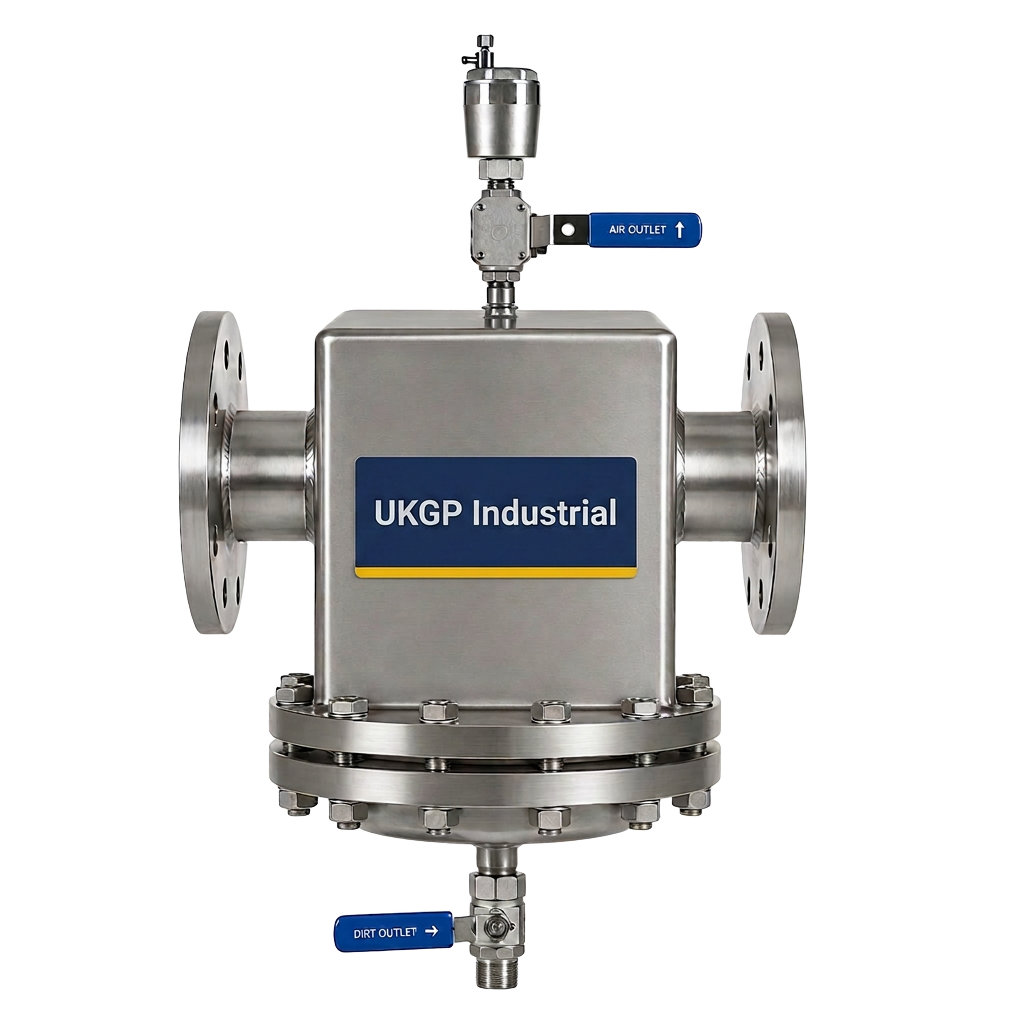
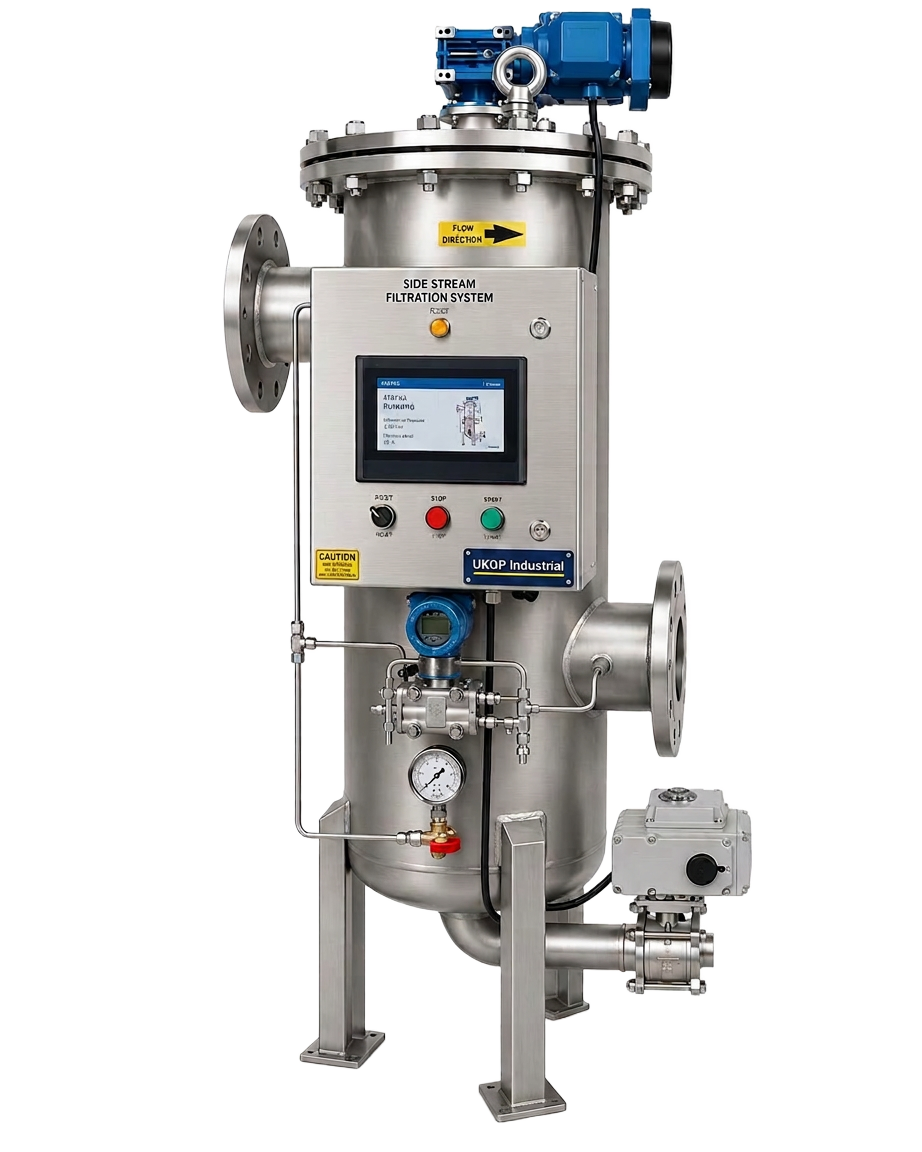
To further enhance system longevity, many engineers integrate additional separation technologies alongside their header. While high-quality low loss headers design naturally assists with some dirt settlement, installing a dedicated air and dirt separator elsewhere in the circuit is standard practice for high-rise or large-scale commercial developments. This multi-stage approach to water quality management is a core recommendation of BS 8552, ensuring that the system water remains clear of magnetite and other suspended solids that could otherwise impair the efficiency of plate heat exchangers or control valves throughout the secondary zones. Proper filtration and separation are the foundations of a 25-year system life.
- Target internal velocity below 0.5m/s for optimal decoupling
- Vertical orientation preferred for superior air and dirt management
- Consider future-proofing by sizing for maximum potential boiler output
- Low pressure drops across the vessel reduce total parasitic pump energy
The Role of Temperature Control and BSRIA Compliance
A critical aspect of low loss headers design is the placement of temperature sensors. For the BMS to accurately control the primary heat source, the 'header sensor' must be placed where it can sense the mixed flow temperature before it enters the secondary circuit. This allows the boilers to modulate based on actual demand rather than just the primary loop temperature. In a delta-T (ΔT) optimised design, managing the return temperature is the priority. High return temperatures can prevent condensing boilers from entering their condensing mode, which significantly degrades the seasonal energy efficiency ratio (SEER). A properly balanced header ensures that the primary flow only increases when there is a genuine demand from the secondary side.
Integrating a low loss headers design also assists in adhering to BSRIA BG50, which provides guidance on the maintenance of closed-loop water systems. By providing a point of low velocity, the header acts as a collection point for system contaminants. This is particularly important during the first few months after commissioning. If the header design includes a bottom-mounted drain cock, engineers can easily purge collected sludge without shutting down the entire system. Furthermore, the inclusion of an insulation jacket, like those provided on all UKGP units, ensures that the master control sensor is reading water temperature rather than being influenced by ambient plant room air, leading to more stable and accurate boiler firing sequences.
Consulting engineers should also consider the impact of low loss headers design on the commissioning process. When primary and secondary flows are separated, it becomes much simpler to balance individual sub-circuits without affecting the flow through the boiler heat exchangers. This modularity reduces the time required on-site for balancing contractors and ensures that the system performs as intended from day one. At UKGP Industrial, we understand that time is money in MEE contracting. Our low loss headers are designed for rapid installation, featuring clearly marked ports and robust mounting brackets that allow for a clean, professional finish in any commercial plant room, backed by our 2-year manufacturer warranty.
- Strategic sensor placement for accurate BMS modulation
- Ensures condensing boilers operate within their peak efficiency range
- Supports BSRIA BG50 maintenance via integrated debris collection zones
- Standard insulation jackets prevent 'sensor drift' and heat waste
Material Specifications and UK Manufacturing Standards
The durability of a low loss headers design is largely dependent on the materials and welding quality used during fabrication. UKGP Industrial headers are constructed from high-grade carbon steel, designed to withstand the rigorous temperature cycles and pressures found in 24/7 commercial heating systems. Every unit is pressure tested to ensure integrity before it leaves our Surrey facility. In accordance with BS EN 14917 and other relevant British engineering standards, we prioritise weld quality and structural thickness to prevent corrosion and fatigue over time. This is especially important in systems where chemical dosing pots are used to introduce inhibitors, as the header must be resilient to chemical concentrations during the initial dosing phase.
For procurement leads and FM managers, the commercial aspects of the low loss headers design are just as important as the technical specs. Sourcing headers made in the UK ensures that the materials used meet the high standards required by UK insurers and building regulations. Unlike some imported 'lightweight' alternatives, UKGP headers feature heavy-duty connections and robust shells that can handle the mechanical stresses of large-diameter PN16 flanged pipework. This robustness is why we confidently offer a 2-year warranty across our entire range. Furthermore, by choosing a Surrey-based supplier, projects benefit from reduced transport emissions and a more responsive technical support desk that understands local HVAC challenges.
When finalising your low loss headers design, remember that the accessories are as vital as the vessel itself. Automatic air vents, drain valves, and pressure gauges should be specified to match the header's quality. UKGP headers are designed with multiple tappings to allow for flexible sensor and accessory placement, ensuring that the final installation is as neat as it is functional. Our lead times of 2-3 weeks mean that even if a design change occurs late in the project, we can provide a bespoke-standard solution that keeps the project on track. Contact our technical sales team for a quote on a flanged or threaded header today to secure your plant room's hydraulic integrity.
- High-grade carbon steel construction for maximum service life
- Pressure tested to ensure compliance with UK safety standards
- Multiple sensor tappings for flexible BMS integration
- Manufactured in Surrey for reliable lead times and local support
Integration with Variable Primary Flow Systems
While traditional low loss headers design was built around constant primary flow, modern systems are increasingly moving towards variable primary flow (VPF) to save even more energy. In these scenarios, the low loss header acts as a safety bypass. If the secondary demand drops and the secondary pumps slow down, the header allows the excess primary flow to return to the boilers, preventing the primary pumps from dead-heading. This flexibility is what makes the low loss header a staple of versatile HVAC design. It effectively allows for different flow rates and different temperature drops (ΔT) between the two sides of the system, which is essential for heating systems that include both high-temperature radiator circuits and low-temperature underfloor heating.
In a hybrid plant room where heat pumps might be integrated alongside commercial boilers, the low loss headers design becomes even more critical. Heat pumps often require significantly higher flow rates and narrower temperature differentials compared to gas-fired boilers. A common header allows these two distinct heat sources to contribute to the same secondary load without the flow requirements of the heat pump disrupting the high-temperature requirements of the boiler circuit. This 'mixing' and 'separation' capability is why consultants specify UKGP headers for multi-fuel and bivalent plant rooms across the UK. The header provides a stable hydraulic heart that can accommodate these complex flow dynamics without risking equipment lockouts.
Ultimately, a well-executed low loss headers design is a commercial safeguard. By preventing the mixing of high-return temperatures and maintaining the correct flow across sensitive heat exchangers, you protect the most expensive assets in the plant room. For projects requiring components between 40 kW and 2000 kW, UKGP Industrial offers the ideal balance of performance and price. Our headers are not just components; they are engineered solutions designed to meet the demands of modern UK building services. Whether you require a standard threaded model for a small office block or a large flanged unit for a district heating scheme, our team is ready to assist with your specific hydraulic separation requirements.
- Enables seamless operation of variable primary flow (VPF) systems
- Ideal for bivalent systems combining boilers and heat pumps
- Protects sensitive primary equipment from secondary flow fluctuations
- Essential for systems with multiple delivery temperatures (e.g. UFH and Radiators)
Common Pitfalls in Header Installation
Even the most meticulous low loss headers design can be undermined by poor installation practices. One common error is the failure to insulate the header correctly. An uninsulated header acts as a massive radiator in the plant room, wasting significant amounts of energy and potentially overheating the space, which can damage sensitive BMS electronics. UKGP addresses this by providing high-quality insulation jackets with every header, ensuring that the heat stays where it belongs—in the water. Another frequent mistake is installing the header too close to an elbow or a pump, which can cause turbulent flow entering the vessel. Best practice dictates a straight run of pipework prior to the header to allow the flow to stabilise.
Incorrect sensor placement within the low loss headers design is another hurdle during commissioning. If the sensor is placed too close to the primary flow inlet, it may read a higher temperature than the actual mixed flow being sent to the secondary circuits, causing the boilers to down-fire prematurely. Conversely, if placed too low, it may read return temperatures and cause the boilers to ramp up unnecessarily. Following the manufacturer’s tapping guide is essential for accurate control. Furthermore, contractors must ensure that the drain point at the bottom of the header is accessible. Over time, heavy sludge will accumulate here, and if it cannot be purged easily, it may eventually restrict flow or be pulled back into the primary circuit.
Finally, ensure that the expansion and contraction of the pipework connecting to the header are accounted for. In large-scale systems, the thermal expansion of the main headers can exert immense force on the vessel connections. Integrating expansion bellows or flexible couplings as part of the wider system design will protect the integrity of the header’s threaded or flanged joints. At UKGP, we provide the full suite of plant room ancillaries to support your low loss headers design, from air separators to expansion solutions. By sourcing your entire header package from a single UK manufacturer, you ensure component compatibility and simplify your procurement chain, ensuring the project remains on schedule and within budget.
- Always use the supplied insulation jacket to meet Part L and prevent heat loss
- Ensure straight pipe runs before the header to avoid internal turbulence
- Place BMS sensors in the specified tappings for accurate mixed-flow readings
- Allow for thermal expansion using bellows to protect header connections
Frequently asked questions
What is the primary function of low loss headers design?
- The primary function is to provide hydraulic separation between the primary heat source circuit and the secondary distribution circuits, allowing differing flow rates to coexist without interference.
What power range do UKGP low loss headers cover?
- Our commercial range covers capacities from 40 kW up to 2000 kW, with custom sizing available upon request for larger industrial requirements.
Are the headers compatible with flanged pipework?
- Yes, we offer both threaded BSP connections for smaller systems and PN16 flanged connections for larger commercial and industrial applications.
Do I need a separate air and dirt separator if I use a low loss header?
- While a header facilitates some separation by slowing flow, BSRIA BG29 and BG50 guidelines generally recommend dedicated air and dirt separators for optimal system cleanliness and longevity.
What is the standard lead time for a UKGP header?
- Our standard lead time is 2-3 weeks, as we manufacture and stock components locally in Surrey to support UK-based projects.