The Fundamentals of Hydraulic Separation
In modern commercial plant rooms, managing flow rates between primary heat sources and secondary emitters is a constant challenge. When multiple pumps operate in series without a break, they can interfere with one another, leading to cavitation, noise, and premature component failure. This is where a low loss header how it works becomes the central focus of the system design. By providing a neutral point in the system, the header ensures that the variable flow rates required by secondary zones—such as underfloor heating or air handling units—do not negatively impact the constant flow required by major UK commercial boiler OEMs. This isolation is critical for protecting the heat exchanger within the boiler while ensuring each zone receives the specific volume of water it demands.
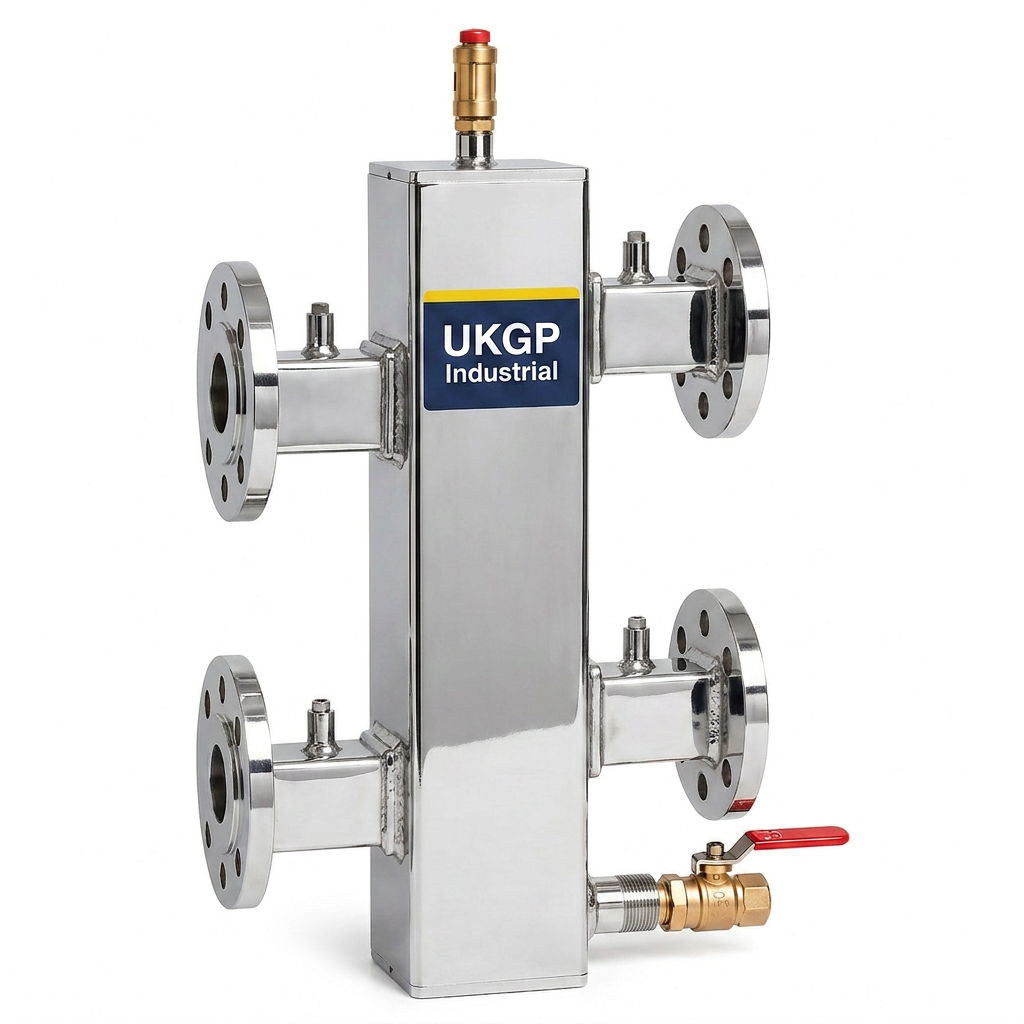
A low loss header acts as a hydraulic 'buffer' or bridge, allowing the primary and secondary circuits to operate independently from a flow perspective. In a perfectly balanced scenario, the flow in the primary circuit matches the flow in the secondary circuit, but this is rarely the case in dynamic building environments. For M&E contractors and consultants, specifying the correct size of vessel is paramount. If the header is sized correctly according to BSRIA BG29 and BG50 guidelines, the fluid velocity within the header stays below 0.5 metres per second. This low velocity allows for effective separation of different temperature layers and facilitates the removal of air and dirt, which are common enemies of system efficiency and commercial longevity.
Beyond flow management, the header serves as a collection point for system debris. As the water enters the larger volume of the header and slows down, heavier particles can settle at the bottom. This pre-filtration effect supports the primary side-stream filtration equipment in maintaining water quality. UKGP Industrial manufactures headers that cater to systems from 40 kW up to 2000 kW, ensuring that whether you are refurbishing a school plant room or designing a large-scale district heating network, the hydraulic integrity remains intact. Understanding this mechanism is the first step in ensuring that your heating system performs according to its design specifications over its entire operational lifecycle.
- Prevents hydraulic interference between primary and secondary pumps
- Reduces water velocity to under 0.5 metres per second for optimal separation
- Protects high-efficiency heat exchangers from thermal shock
- Simplifies system commissioning by isolating individual pump circuits
Low Loss Header How It Works: Flow Relationships
There are three distinct operational states regarding a low loss header how it works, depending on the demand of the building. The first is balanced flow, where the primary supply matches the secondary demand exactly. This is the theoretical ideal but is rarely maintained for long periods. The second state occurs when the primary flow exceeds the secondary demand. In this instance, some of the heated water bypasses the secondary circuit and returns directly to the boiler, raising the return temperature. For leading commercial boiler manufacturers, this can trigger modulation, allowing the plant to save energy by reducing output when the full capacity is not required by the building's zones.
The third and most critical state is when secondary demand exceeds the primary supply. Here, the low loss header allows some of the return water from the terminal units to mix with the primary flow. This increases the flow rate to the secondary systems without straining the primary pumps. However, this also lowers the temperature of the water sent to the emitters. Engineers must account for this mixing when calculating heat output at peak loads. By integrating sensors into the header, modern Building Management Systems (BMS) can monitor these temperature changes in real-time, adjusting boiler firing rates to maintain comfort levels while prioritising energy efficiency across the entire commercial facility.
Choosing the right connection type is also vital for practical installation. UKGP offers both flanged (PN16) and threaded (BSP) connections to suit various pipework specifications. When procurement leads look for solutions, they need units that are robust and ready for site. Our headers come with high-quality insulation jackets as standard, preventing unnecessary heat loss within the plant room environment. With a lead time of just 2-3 weeks and a 2-year warranty, these headers are designed to meet the fast-paced requirements of UK construction schedules. Ensuring the header is sized for the maximum potential flow of either circuit ensures the system avoids the very turbulence it is designed to mitigate.
- Primary flow > Secondary demand: Triggers boiler modulation for energy savings
- Secondary flow > Primary demand: Mixing occurs to maintain secondary flow volume
- Balanced flow: Ideal hydraulic equilibrium (rare in commercial applications)
- Minimum velocity design ensures stratified temperature layers
Integration with Air and Dirt Separation
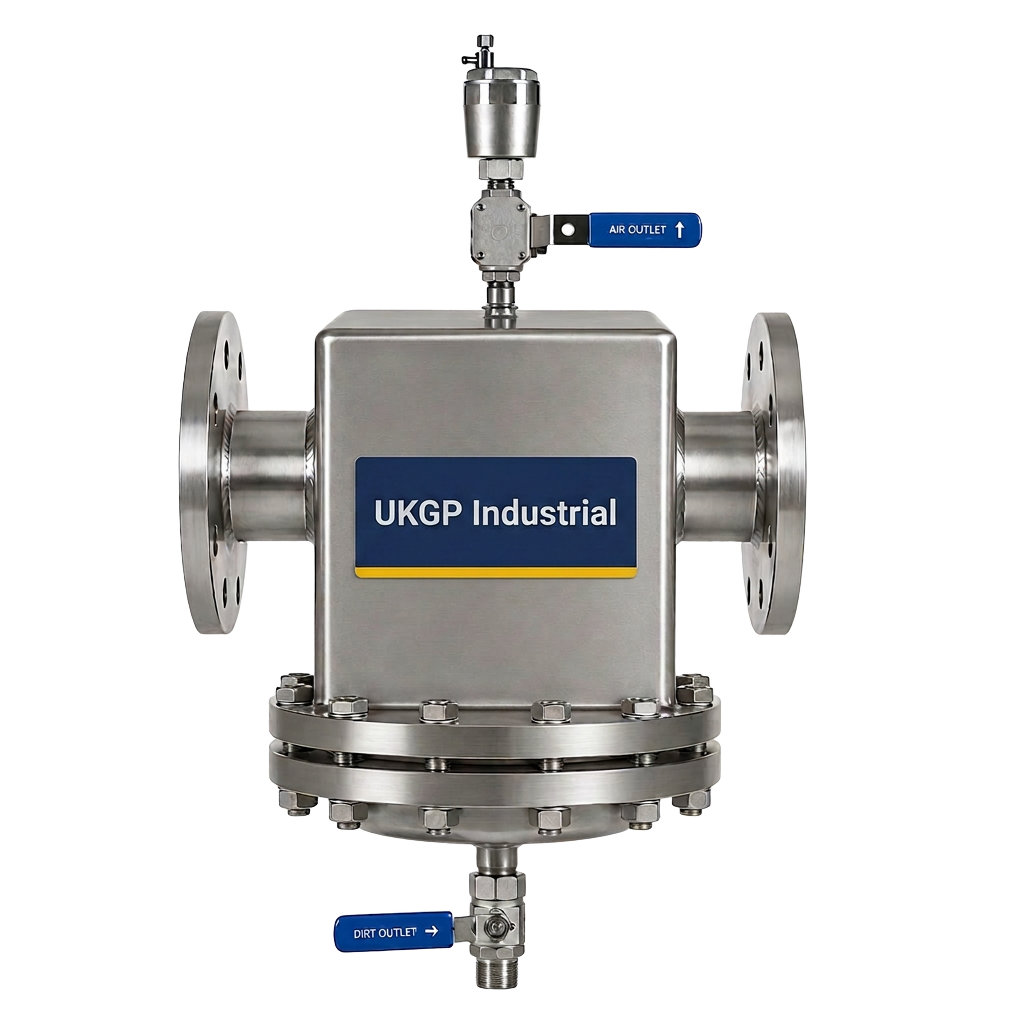
While a low loss header provides basic separation, it often works best when paired with dedicated air and dirt separators. In a commercial plant room, the header acts as the primary hub for flow management, but micro-bubbles and fine magnetite require specialized capture. BSRIA BG50 emphasizes the importance of continuous water treatment and debris removal to prevent the erosion of plate heat exchangers and the fouling of control valves. By installing a dedicated separator upstream of the low loss header, you ensure that the water entering the hydraulic break is as clean as possible, which further enhances the accuracy of temperature sensors located within the header body.
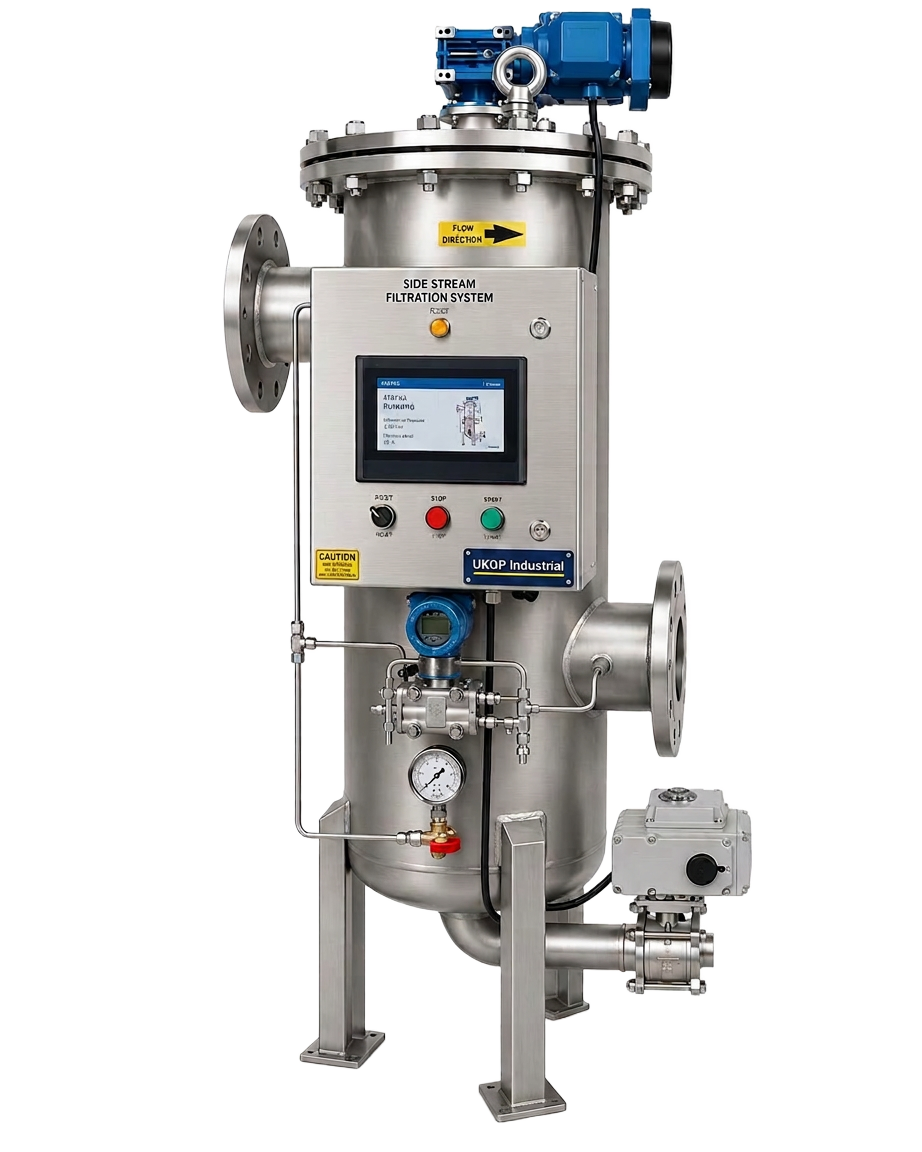
The internal design of a UKGP low loss header further assists this process. Because the vessel diameter is significantly larger than the connecting pipework, the sudden drop in pressure encourages dissolved gases to release from the fluid. This is particularly important in systems using varied metallurgy where oxygen ingress can lead to rapid corrosion. Combining a low loss header with a side-stream filtration skid provides a comprehensive approach to water quality. This belt-and-braces strategy is favored by facilities managers looking to reduce long-term maintenance costs and avoid the catastrophic failure of expensive plant room assets like high-output commercial boilers.
For engineers designing systems in Surrey and across the UK, the commercial reality is that modern, low-water-content boilers are sensitive to flow variations. Without a low loss header, the risk of the boiler cycling frequently or locking out due to high delta-T is high. UKGP headers are designed to withstand the rigours of commercial operation, with pressure ratings suitable for most standard building heights. Integrating these components into the initial design phase ensures that the plant room meets the rigorous standards set out by CIBSE, providing a reliable and manageable heat distribution network for the end user.
- Slows water to allow larger particles to settle for easy drainage
- Acts as a point of air release due to pressure drop in the vessel
- Essential for protecting low-water-content commercial boilers
- Works in tandem with side-stream filtration for total water quality management
Design and Sizing Considerations for UK Consultants
Sizing is the most critical factor when considering a low loss header how it works. A header that is too small will fail to provide the necessary hydraulic break, essentially becoming a turbulent pipe fitting that offers no separation benefits. Consultants generally use the 'four-to-one' rule for the body diameter relative to the nozzle diameter, or more commonly, they size based on the maximum anticipated flow rate to keep velocity levels low. British Standards and CIBSE guidelines recommend specific calculations to ensure the header doesn't become a source of noise or vibration. UKGP provides technical support to ensure the selected header matches the 40-2000 kW output of your specific boiler plant.
Another consideration is the physical orientation and footprint. Many commercial plant rooms are space-constrained, especially in London and Surrey refurbishments. UKGP low loss headers are designed for vertical installation, making them space-efficient. The inclusion of a drain valve at the bottom and an air vent at the top is standard practice, allowing for easy maintenance access. The insulation jacket is not an afterthought; it is a critical component for UK building regulations compliance, ensuring the plant room doesn't overheat and that energy is directed where it is needed—to the building occupants. This attention to detail reflects our commitment to practical, commercially aware engineering.
When specifying for a project, procurement leads should prioritize units that come with a comprehensive warranty and a proven track record. Our 2-year warranty provides peace of mind that the vessel has been manufactured to high standards. With flanged PN16 connections available for larger duties and BSP threaded connections for smaller 40 kW installations, there is a UKGP solution for every scale of M&E project. The lead time of 2-3 weeks is among the best in the industry for manufactured-to-order vessels, ensuring that your project stays on track even during the final, high-pressure stages of a plant room fit-out.
- Sized to maintain water velocity below 0.5m/s for laminar flow
- Vertical design saves valuable floor space in compact plant rooms
- Standard insulation jackets ensure compliance with energy regulations
- Technical support available to match header to system kW ratings
Operational Benefits for Facilities Managers
From a maintenance perspective, the low loss header how it works to simplify troubleshooting is invaluable. Because it separates the primary and secondary sides, technicians can easily identify whether a flow issue is located within the boiler circuit or the distribution network. This isolation reduces the time spent on diagnostic visits and helps prevent the 'blame game' between different sub-contractors during the commissioning phase. With a UKGP header, the inclusion of sensor pockets allows for accurate temperature monitoring, providing the BMS with the data required to optimize the entire building's thermal performance and reduce operational carbon footprints.
Long-term reliability is also improved. By ensuring the boilers always operate with the correct flow rate, the stress on internal pumps and burners is significantly reduced. This extends the service life of the most expensive parts of the HVAC system. For FMs managing multi-site portfolios, the consistency of using a high-quality UKGP header means fewer emergency call-outs and a more predictable maintenance schedule. Our headers are built to last, with robust materials that stand up to the high pressures and temperatures found in 24/7 commercial boiler rooms. The 2-year warranty further reinforces this commitment to longevity and site reliability.
Finally, the role of the header in water treatment should not be underestimated. It provides a convenient point for chemical dosing when used in conjunction with dosing pots. During system flushes according to BSRIA BG29, the header helps by being a high-volume point where debris can be collected and purged. This contribution to system cleanliness is a vital part of a holistic water management strategy. By requesting a quote for a UKGP low loss header, you are investing in a component that simplifies operation, enhances efficiency, and protects the thermal assets of the building for years to come.
- Facilitates easier diagnostic testing of primary and secondary circuits
- Sensor pockets allow for precision BMS integration and data logging
- Reduces wear and tear on primary boiler components and pumps
- Easier to maintain system cleanliness and comply with BSRIA BG29
Technical Specifications and Procurement
When it comes to the final specification, the UKGP range offers versatility that few can match. Our commercial low loss headers are available for systems ranging from 40 kW to 2000 kW, covering everything from small office blocks to major industrial sites. You can choose between flanged PN16 or threaded BSP connections, ensuring compatibility with both modern thin-wall stainless steel and traditional heavy-grade carbon steel pipework. The included insulation jacket is designed for a snug fit, minimizing standing heat losses and ensuring the plant room remains a safe, temperate environment for visiting engineers and staff alike.
The procurement process is streamlined for UK contractors. We understand that on-site delays cost money, which is why we maintain a 2-3 week lead time for our low loss headers. This allows for just-in-time delivery, reducing the risk of on-site damage during the early stages of a build. Each unit is pressure tested and inspected before it leaves our facility, ensuring it arrives ready for immediate installation. For M&E contractors, this reliability is key to maintaining a good relationship with the client and ensuring the project is handed over on time and within the original budget constraints.
To get started with your next project, simply contact our technical team with your system flow rates or total kW output. We can provide a competitive quote and detailed technical drawings to assist with your plant room layout. A UKGP low loss header is more than just a steel vessel; it is a critical piece of engineering that ensures your commercial heating system operates at peak efficiency. Ensure your system design is robust by incorporating a header that is built for the specific demands of the UK commercial market, backed by expert knowledge and a 2-year warranty for complete peace of mind.
- Available in a wide range of sizes from 40 kW to 2000 kW
- Options for both flanged (PN16) and threaded (BSP) connections
- Fast 2-3 week lead time to keep UK projects on schedule
- 2-year warranty as standard on all UKGP low loss headers
Frequently asked questions
Why is hydraulic separation necessary in a commercial plant room?
- Hydraulic separation is necessary to prevent interference between primary and secondary pumps. Without it, pumps can work against each other, leading to inefficient heat transfer, noise, and potential damage to boiler heat exchangers.
How does a low loss header help with air and dirt removal?
- As water enters the larger volume of the header, its velocity drops significantly. This allows air bubbles to rise to the top for venting and heavier dirt particles to settle at the bottom for drainage, supporting the work of air and dirt separators.
What standards should be followed when installing a low loss header?
- Installers and designers should refer to BSRIA BG29 for pre-commission cleaning and BSRIA BG50 for water treatment in closed systems. CIBSE guides also provide best practices for hydraulic design and boiler protection.
Does a low loss header improve boiler efficiency?
- Yes, by allowing for better temperature control and return water management, it enables modern condensing boilers to modulate correctly and operate in their most efficient range for longer periods.
What info do I need to quote a UKGP low loss header?
- You should provide the total system kW output (40-2000 kW range), the preferred connection type (flanged PN16 or threaded BSP), and any specific space constraints in the plant room.