The Role of a Low Loss Header Combi Boiler in Commercial Settings
In the UK commercial sector, the application of a low loss header combi boiler system is frequently seen in light commercial settings or multi-residential blocks where space is at a premium but hydraulic stability is non-negotiable. While smaller domestic units often operate without separation, upscaling to commercial-grade outputs requires a dedicated vessel to decouple the constant flow required by the heat source from the variable flow of the secondary distribution circuits. By installing a low loss header combi boiler arrangement, engineers can eliminate the risk of the primary pump struggling against the high resistance of complex secondary zones, such as underfloor heating manifolds or multiple radiator circuits.
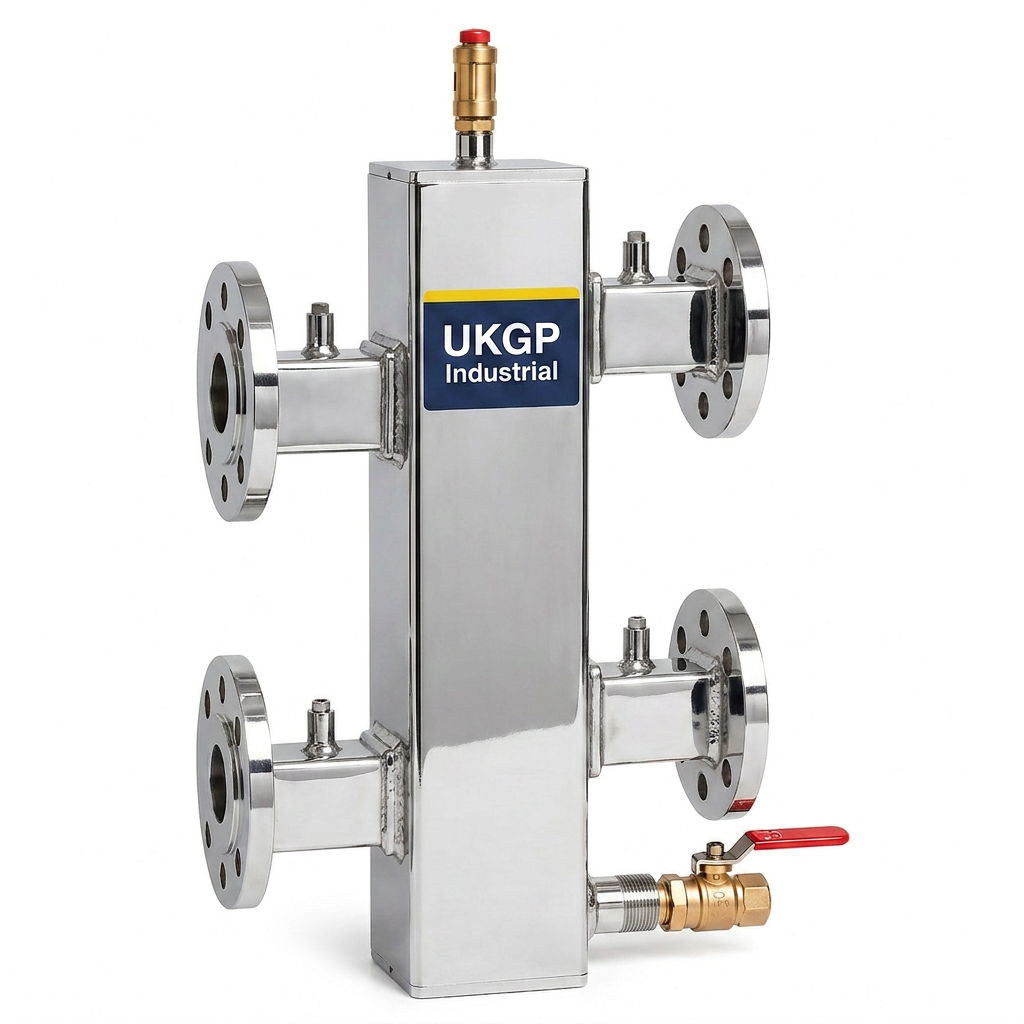
Choosing to install a low loss header combi boiler interface is not merely a design preference; it is a critical strategy for protecting high-value assets within the HVAC plant room. Without this separation, the varying demands of secondary zone valves and thermostatic controllers can lead to significant pressure fluctuations, resulting in boiler short-cycling and premature heat exchanger failure. For M&E contractors and consultants, specifying a robust UKGP header ensures that the primary circuit maintains a consistent delta-T, which is essential for the condensing efficiency of modern high-efficiency heat sources. This stability extends the lifespan of the entire system and reduces energy consumption across the facility's lifecycle.
Furthermore, integrating a low loss header combi boiler setup provides a natural point for the collection of debris and the venting of entrained air, which aligns with the best practices outlined in BSRIA BG29 and BG50. Even in smaller commercial footprints, the volumetric capacity of the header acts as a thermal buffer, smoothing out the rapid temperature fluctuations that can occur when combi units transition between space heating and domestic hot water modes. As search volume for this specific technical integration grows among plant-room engineers, the focus remains on selecting components that offer BSP or PN16 connectivity to match existing pipework standards and ensure a leak-free, high-performance installation for the long term.
- Ensures total hydraulic decoupling between primary and secondary circuits.
- Maintains manufacturer-recommended flow rates across the primary heat exchanger.
- Facilitates the removal of air and dirt to protect system components.
- Reduces boiler short-cycling in systems with variable secondary loads.
Hydraulic Separation and BSRIA Compliance
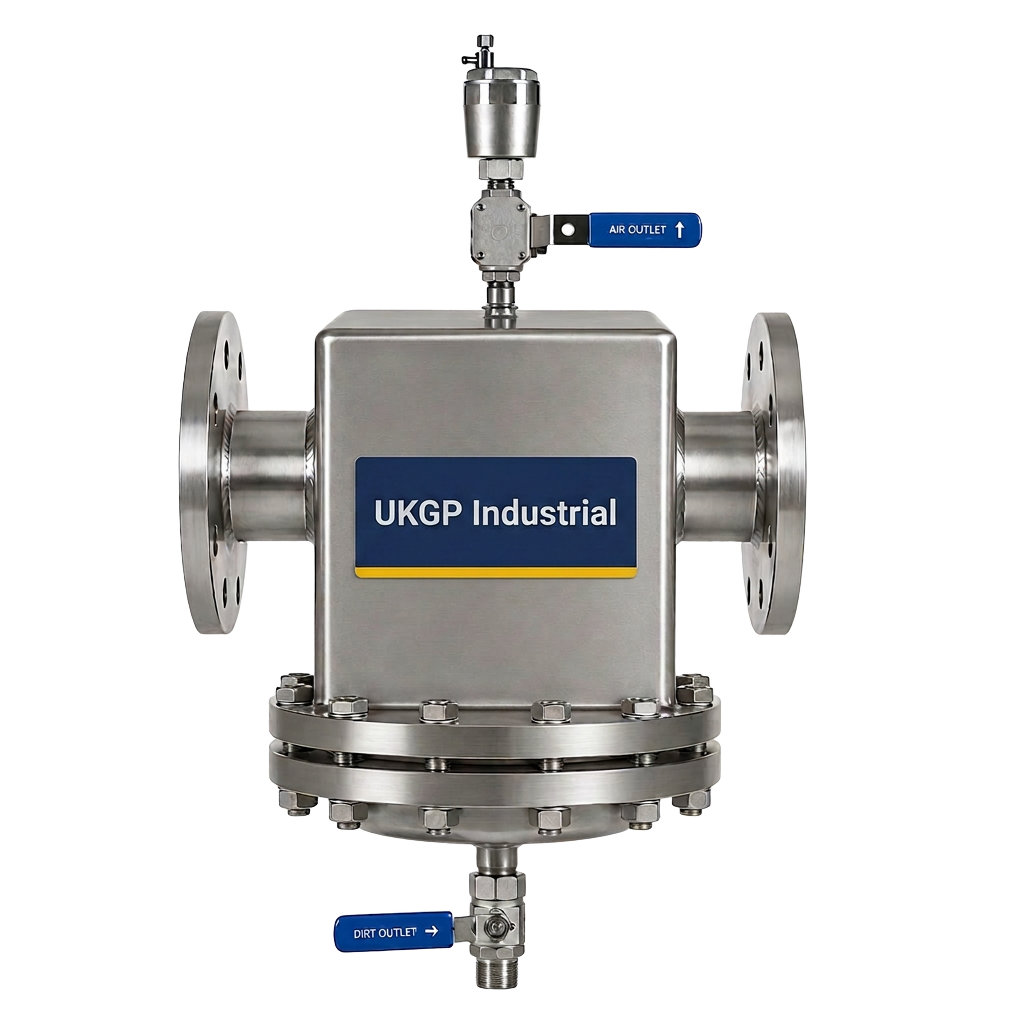
Maintaining water quality and hydraulic balance is paramount in any commercial heating project, particularly when dealing with a low loss header combi boiler specification. BSRIA BG50 highlights the importance of managing water chemistry and physical debris to prevent the degradation of heat transfer surfaces. A well-sized header from UKGP Industrial serves as an essential component in this strategy by lowering water velocity within the vessel, allowing heavy particulates to settle where they can be purged via a drain valve. This mechanical separation is the first line of defence before water enters the primary boiler loop, significantly reducing the risk of clogging within the plate heat exchanger or delicate sensing equipment.
When designing systems around a low loss header combi boiler, consultants should also consider the impact of air entrainment. Microbubbles carry oxygen which promotes corrosion in metallic components; the low-velocity zone created by the header allows these bubbles to coalesce and be removed via an automatic air vent. This proactive approach to system health ensures that the HVAC infrastructure remains compliant with the strict performance standards expected in modern building services. By ensuring the header is properly insulated with a high-quality jacket, thermal losses are minimised, directly contributing to the building's overall BREEAM rating and operational efficiency targets in line with latest government mandates.
Engaging with a specialist supplier like UKGP Industrial allows for the procurement of headers that meet specific PN16 or BSP requirements, ensuring that the interface between the low loss header combi boiler and the rest of the plant is seamless. We recommend ensuring that all commercial 40-2000 kW installations are supported by a header that has been pressure tested and comes with a comprehensive warranty. This level of quality control is essential for FMs who are tasked with maintaining system uptime and avoiding the costly downtime associated with poor hydraulic design or component failure. Our headers are designed to exceed basic industrial requirements, providing a reliable solution for even the most demanding commercial environments.
- Aligns with BSRIA BG50 guidelines for system cleanliness and air removal.
- Supports PN16 or BSP connections for flexible installation across UK sites.
- Enhanced thermal performance through standard-fit insulation jackets.
- Protects internal boiler sensors from turbulent flow conditions.
Technical Specifications for Commercial Headers
For engineers tasked with the layout of a low loss header combi boiler system, understanding the physical and technical constraints of the components is vital. UKGP Industrial specializes in providing commercial headers ranging from 40 kW to 2000 kW, catering to everything from small office hubs to large-scale industrial heating plants. These units are available with either flanged PN16 connections for larger distribution mains or threaded BSP connections for smaller modular boiler banks. Selecting the correct connection type is crucial for maintaining mechanical integrity and ensuring that the installation complies with BS EN standards for pressurised vessels, providing peace of mind for both the installer and the client.
The lead time for these critical components is often a deciding factor in project timelines. UKGP Industrial maintains a streamlined manufacturing process in Surrey, offering a 2-3 week lead time for our standard commercial headers. This ensures that when a low loss header combi boiler unit arrives on site, the header is ready for immediate integration, preventing costly delays in the plant room fit-out. Each unit is supplied with a 2-year warranty, reflecting our confidence in the British manufacturing standards and the high-grade carbon steel used in construction. This reliability is why leading UK consultants specify our headers for critical infrastructure projects where failure is not an option.
In addition to the physical vessel, insulation is provided as standard on our commercial range. This is often an overlooked aspect of the low loss header combi boiler setup, yet it is essential for preventing energy wastage in unheated plant rooms. The insulation jackets are designed for a snug fit, allowing for easy removal during annual inspections while maintaining high R-values during operation. When you request a quote for a UKGP header, you are securing a product that has been engineered to simplify the job of the plant-room engineer while providing the end-user with a durable, efficient, and professionally finished heating system that stands the test of time.
- Power range from 40 kW to 2000 kW to suit various plant room scales.
- Options for flanged PN16 or threaded BSP connections as standard.
- Short 2-3 week lead times to support tight project schedules.
- Standard-fit insulation jackets to reduce heat loss and improve EER.
Integrating Chemical Dosing and Filtration
A low loss header combi boiler circuit is only as effective as the water treatment strategy supporting it. To maintain the efficiency of the primary heat source, it is essential to incorporate a chemical dosing pot into the secondary return or the header itself. This allows for the precise introduction of corrosion inhibitors and biocides, ensuring that the internal surfaces of the low loss header combi boiler remain free from scale and biological fouling. This practice is a core requirement of BS 8552, which outlines the sampling and monitoring of water systems in buildings. By maintaining optimal chemistry, you protect the high-efficiency components within the boiler and ensure the header functions correctly for its entire service life.
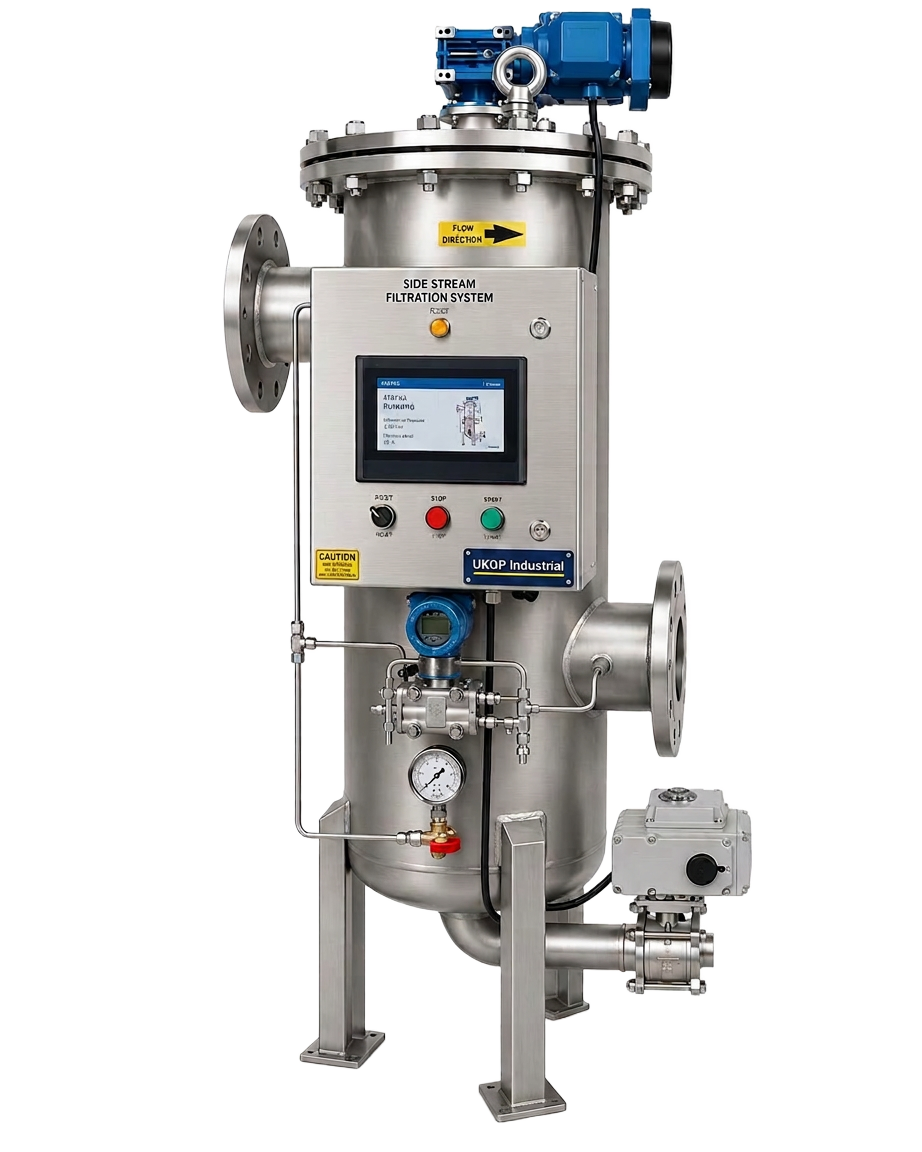
In addition to chemical treatment, mechanical filtration provides the secondary layer of protection necessary for modern HVAC systems. Because the header creates a point of low velocity, it is often paired with side stream filtration skids to remove finer suspended solids that a standard header might miss. This combination ensures that the low loss header combi boiler operates in a clean environment, preventing the erosion of pump impellers and the blocking of control valves. For large-scale commercial installations, this twin-track approach—chemical dosing and mechanical filtration—is the industry gold standard for ensuring operational longevity and minimising the need for reactive maintenance call-outs.
When sourcing these components, consistency in quality is key. UKGP Industrial provides a full suite of ancillary equipment that complements our commercial headers, ensuring that every part of the hydraulic circuit is up to the same rigorous standard. Whether you are installing a single low loss header combi boiler or a complex cascaded system, our technical team can provide advice on the correct sizing of dosing pots and filtration units. Our goal is to provide M&E contractors with a single source for high-quality, Surrey-manufactured plant room equipment that integrates perfectly, reducing the complexity of procurement and ensuring that all components are covered by a reputable UK warranty.
- Essential for meeting BS 8552 water quality and treatment standards.
- Protects the low loss header combi boiler from internal corrosion and scale.
- Dosing pots allow for safe and easy introduction of water treatment chemicals.
- Side stream filtration removes fine particulates from the secondary loop.
Installation Best Practices for M&E Contractors
Successfully commissioning a low loss header combi boiler system requires careful attention to the positioning of the header relative to the primary and secondary pumps. The header must be sized based on the maximum flow rate required by the system, ensuring that the vertical velocity within the vessel does not exceed 0.1 to 0.2 m/s. This allows the neutral point to be established effectively, preventing the primary pump from affecting the secondary circuit and vice versa. Contractors should ensure that the low loss header combi boiler is installed in a vertical orientation to maximize the benefits of gravitational debris settlement and the upward migration of microbubbles to the air vent.
Pipework connections should be robust and reflect the professional standard of the overall installation. Using UKGP’s flanged PN16 or threaded BSP options allows for a secure mechanical joint that can withstand the thermal expansion and contraction cycles typical of a commercial heating season. It is also advised to install isolation valves on either side of the low loss header combi boiler interface to facilitate future maintenance without draining the entire system. Following these practical installation steps not only ensures the system performs as designed but also simplifies the task of the commissioning engineer during the final stages of the project.
Finally, always verify that the thermal insulation jacket is refitted securely after all connections are pressure tested. In a complex plant room, an uninsulated header can become a significant heat sink, raising the ambient temperature of the room and reducing the overall efficiency of the low loss header combi boiler. By choosing a UKGP header, contractors benefit from a product that is designed for easy installation, backed by a 2-year warranty and a team that understands the pressures of UK construction deadlines. Our 2-3 week lead times mean you can keep your project on track while delivering a superior hydraulic solution to your clients.
- Sized to maintain low internal water velocity for effective separation.
- Vertical installation recommended for optimal air and dirt management.
- Isolation valves allow for maintenance without full system drainage.
- Insulation jackets must be correctly fitted to preserve system efficiency.
Long-term Maintenance and System Monitoring
Once the low loss header combi boiler system is operational, the focus shifts to long-term monitoring and maintenance. Facility managers should implement a regular schedule for purging the header's base to remove settled sludge and debris. This simple task prevent buildup that could eventually restrict flow or lead to localized corrosion within the vessel. Because a low loss header combi boiler transition point is where temperature and pressure changes occur, it is also a logical place to install pH sensors and transmitters. Monitoring the acidity of the system water provides early warning of glycol degradation or oxygen ingress, allowing for corrective action before damage occurs to the boiler heat exchanger.
Regular inspections should also include checking the integrity of the insulation jacket and ensuring that the air vent is functioning correctly. A blocked air vent can lead to the 'locking' of secondary circuits, while damaged insulation contributes to invisible energy losses. When maintaining a low loss header combi boiler setup, it is vital to keep detailed records of water treatment levels and any debris removed from the header. This documentation is essential for demonstrating compliance with BG50 and for maintaining the 2-year warranty provided by UKGP. A proactive approach to maintenance ensures that the capital investment in high-efficiency boilers and separation equipment pays off over decades of service.
In conclusion, the integration of a low loss header combi boiler is a strategic decision that enhances the performance, reliability, and lifespan of commercial HVAC systems. By selecting a high-quality UKGP Industrial header, you are choosing a product designed for the specific needs of the UK market, from PN16 connectivity to rapid 2-3 week delivery. Our commercial range (40-2000 kW) provides the versatility needed for any plant room project. To learn more about how our headers can improve your next project, or to request a quote for your specific flow requirements, contact our Surrey-based technical team today. We provide the engineering excellence required to keep your systems running smoothly and efficiently.
- Regular purging of the header base prevents sludge and debris accumulation.
- pH sensors provide real-time data on system water health and stability.
- Protects the primary heat source from flow fluctuations and thermal shock.
- Documented maintenance ensures compliance with BSRIA and warranty terms.
Frequently asked questions
What is the primary benefit of a low loss header combi boiler system?
- The primary benefit is hydraulic separation, ensuring the primary boiler pump and secondary distribution pumps do not interfere with each other, which protects the boiler and optimizes heat transfer.
Can I get a UKGP header with flanged connections?
- Yes, our commercial headers (40-2000 kW) are available with either flanged PN16 or threaded BSP connections to suit your specific pipework requirements.
What is the typical lead time for a UKGP low loss header?
- We offer a standard lead time of 2-3 weeks for our commercial headers, manufactured right here in Surrey.
Does the header come with insulation?
- Yes, all UKGP commercial low loss headers are supplied with a fitted insulation jacket as standard to prevent thermal loss in the plant room.
Why is BSRIA BG50 relevant to low loss headers?
- BSRIA BG50 focuses on water treatment and system cleanliness; a low loss header facilitates air and dirt removal, which is a key part of maintaining the water quality standards described in the guide.