The fundamental role of a low loss header boiler system
In modern commercial heating, the integration of a low loss header boiler configuration is primarily driven by the need for hydraulic isolation. Standardised modern condensing boilers typically feature narrow heat exchanger waterways designed for specific high-velocity flow rates. When these are connected directly to secondary circuits with varying demands—such as multi-zone underfloor heating or large-scale radiator banks—the resulting pressure differentials can cause significant operational instability. By installing a low loss header, you create a zone of low pressure where the primary and secondary circuits meet, allowing each to operate at its own designed flow rate without interfering with the other. This prevents the primary pump from being 'pulled' by more powerful secondary pumps, which is a common cause of pump wear in larger UK commercial buildings.
From a technical perspective, the low loss header acts as a neutral point in the system. When a low loss header boiler system is correctly sized, it ensures that the velocity within the header itself remains very low, typically below 0.5 metres per second. This reduction in velocity allows for any entrained air to rise to the top for venting and for heavier dirt particles to settle at the base, effectively acting as a secondary filtration stage. For M&E contractors, this means fewer call-outs related to air locks or debris-related sensor failures. It also provides a dedicated location for a temperature sensor, allowing the boiler's control logic to modulate based on the actual blended flow temperature being delivered to the building loads, rather than just the internal heat exchanger temperature, which may not reflect true demand.
Furthermore, following the principles set out in CIBSE Guide AM14, hydraulic separation is not merely a recommendation but a necessity for systems involving multiple boilers in a cascade. Without a low loss header boiler setup, the varying flow rates required as different boilers fire or modulate can create back-pressure issues that starve certain zones of heat. UKGP Industrial specializes in providing these critical components to ensure that your carefully designed plant room operates at peak efficiency. Our headers are manufactured to withstand the rigours of commercial environments, providing a robust solution for contractors who demand reliability and quick site integration. By specifying the right header early, you protect the investment made in high-value condensing boiler plant and ensure consistent comfort for the end-user.
- Ensures total hydraulic separation between primary and secondary circuits.
- Provides a neutral pressure zone to prevent pump conflict.
- Facilitates accurate temperature monitoring for boiler modulation.
- Assists in the separation of air and debris within the water column.
Maintaining water quality and BSRIA standards
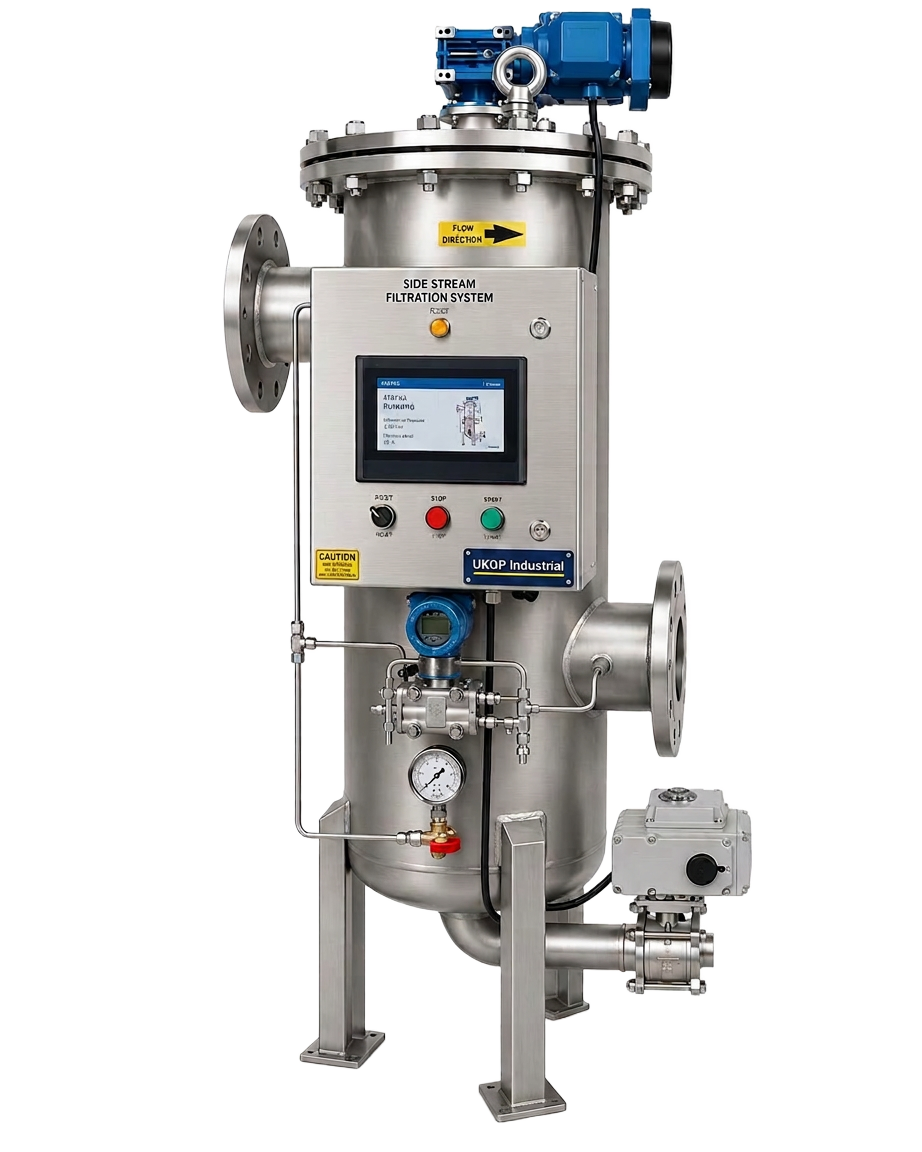
While a low loss header boiler installation manages hydronic balance, it must work in tandem with rigorous water treatment protocols to meet BSRIA BG29 and BG50 standards. The low velocity zone created within the header is beneficial, but it does not replace the requirement for dedicated side stream filtration. In any closed-loop commercial system, microscopic magnetite and debris from legacy pipework can still bypass large-volume headers. Therefore, we recommend installing a side stream filtration unit alongside your low loss header to continuously polish the system water. This combined approach reduces the risk of scale and corrosion, which are the primary causes of reduced heat transfer efficiency in high-performance boiler heat exchangers.
Regular monitoring is just as critical as the hardware itself. Under BSRIA BG50 guidelines, consistent water chemistry testing is required to prevent the buildup of corrosive elements that can compromise the stainless steel or aluminium components of a modern boiler. Integrating a dosing pot into the circuit, typically near the low loss header, allows for the easy introduction of inhibitors and glycol. Professionals managing facilities must ensure that the pH levels remain within the manufacturer's specified range—often between 8.2 and 9.5 for steel systems—to prevent thinning of the metal surfaces. Neglecting this integration can lead to the 'pin-holing' of boiler components, which is seldom covered by standard warranties if water quality data is missing.
UKGP Industrial provides the full suite of equipment required to meet these stringent UK standards. From our high-capacity low loss headers to our precision side stream filtration skids, we allow engineers to build a resilient plant room from a single, reliable source. When you specify a low loss header boiler with integrated filtration and dosing points, you are essentially future-proofing the installation against the long-term effects of poor water quality. This is particularly vital in retrofit projects where existing pipework may be heavily contaminated with iron oxide. By controlling both the flow dynamics and the chemical composition of the water, you ensure that the system performs to its specified energy ratings for decades.
- Aligns system design with BSRIA BG29 and BG50 longevity standards.
- Reduces the risk of magnetite buildup in narrow boiler waterways.
- Supports accurate chemical dosing via dedicated plant room ports.
- Enhances heat transfer efficiency by maintaining clean thermal surfaces.
Selecting the right UKGP low loss header
Choosing the correct specification for your low loss header boiler project involves more than just matching pipe diameters. At UKGP Industrial, our commercial low loss headers are engineered to cover a vast output range from 40 kW to 2000 kW, ensuring we have a solution for everything from small office blocks to major industrial complexes. We offer both flanged (PN16) and threaded (BSP) connections, providing the flexibility required for both modern press-fit installations and traditional heavy-wall steel pipework. Every unit comes with a high-quality insulation jacket as standard, minimizing standing heat losses and ensuring compliance with Part L of the Building Regulations regarding thermal efficiency in plant rooms.
Speed of delivery is a major factor for M&E contractors facing tight handover deadlines. UKGP Industrial maintains a streamlined manufacturing process that allows us to offer a lead time of just 2-3 weeks on our standard low loss header range. This is significantly faster than many European competitors, reducing the risk of project slippage. Furthermore, we back our products with a comprehensive 2-year warranty, giving consultants and procurement leads the confidence that they are specifying a piece of equipment built to last. When you are looking for a quote on a low loss header boiler setup, our technical team is available to assist with sizing calculations to ensure the flow velocity remains within the optimal range for air and dirt separation.
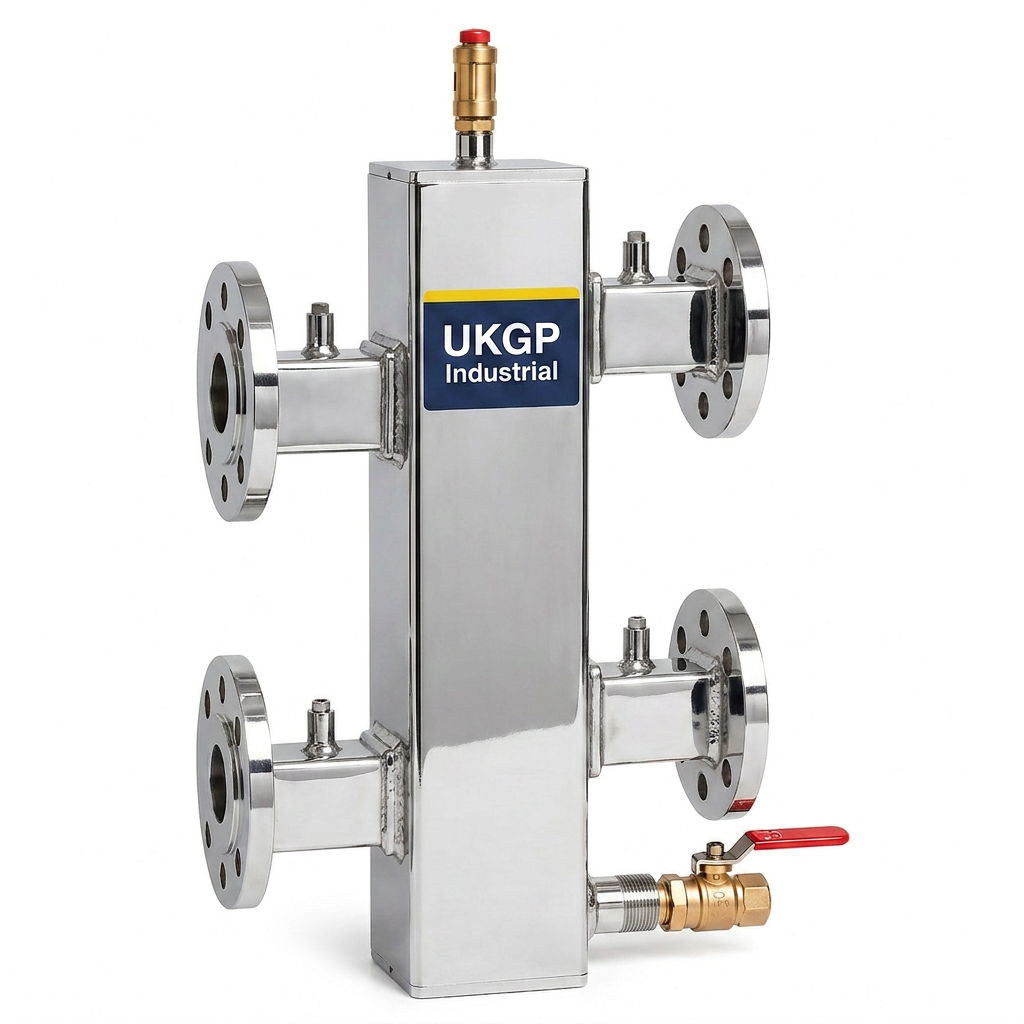
Our headers are designed with practicality in mind, featuring dedicated tapping points for temperature sensors, air vents, and drain valves. The robust construction ensures that once it is installed and commissioned, the low loss header requires minimal maintenance. By facilitating stable hydraulic conditions, the header also extends the life of the boiler's internal components, such as sensors and gaskets, which would otherwise be stressed by rapid temperature fluctuations or high-pressure differentials. For the latest pricing or to discuss a bespoke requirement for your next project, contact our Surrey-based team today. We pride ourselves on clear communication and technical accuracy, ensuring you get the exact hardware your system design requires without unnecessary complexity.
- Output range covering 40 kW up to 2,000 kW for large-scale applications.
- Options for BSP threaded or PN16 flanged connections to suit any pipework.
- Includes a thermal insulation jacket to meet Part L efficiency requirements.
- Rapid 2-3 week lead time and a 2-year warranty for peace of mind.
Hydraulic separation and the expansion of secondary zones
In many UK commercial buildings, the heating load is not static; it grows as wings are added or floor plans are renovated. A low loss header boiler arrangement is the only way to effectively manage these changes without redesigning the entire primary plant. By decoupling the boilers from the system, you can add or remove secondary circuits—such as fan coil units or AHUs—with minimal impact on the boiler flow rates. This modularity is a core requirement for sustainable building management. It allows for the integration of variable speed pumps on the secondary side that can modulate down to zero flow when zones are unoccupied, while the primary side continues to circulate at the minimum rate required to prevent boiler tripping.
BS EN 14917 and CIBSE guidelines emphasize the importance of managing thermal expansion and pressure fluctuations in these complex systems. While the low loss header provides the hydraulic break, it must be supported by correctly sized expansion bellows and vessels to absorb the thermal movement of the water. Without this, the 'neutral' pressure achieved by the header can still be compromised by atmospheric changes or fluid expansion, leading to relief valve discharge or system fatigue. UKGP Industrial provides the full kit for these scenarios, ensuring that the interface between your heat source and your distribution network is thermally stable and mechanically sound. This holistic approach to plant room design is what separates a standard install from an expert one.
Consultants should also consider the temperature differential (Delta T) across the low loss header. Ideally, in a condensing low loss header boiler system, the return temperature should be kept low to maximize the condensing effect. However, if the secondary flow rate exceeds the primary flow rate, 'bypass' occurs where return water mixes with flow water, raising the return temperature and potentially dropping the boiler out of condensing mode. Professional sizing from UKGP ensures that your header volume is sufficient to prevent this short-circuiting, maintaining the high efficiency that modern condensing boilers are advertised to deliver. It is this attention to detail in the hydronic design that prevents high energy bills and premature equipment failure.
- Allows for flexible addition of secondary heating zones and AHUs.
- Protects the boiler by maintaining minimum flow even during low load.
- Enables variable speed pumping to be used effectively on the secondary side.
- Simplifies the commissioning process for multi-zoned commercial buildings.
Technical considerations for low loss header boiler installation
When installing a low loss header boiler unit, orientation and positioning are critical for performance. The header should be installed vertically to take full advantage of the gravitational separation of dirt and the buoyant rise of air bubbles. Our UKGP units feature a top tapping for an automatic air vent and a bottom tapping for a drain valve or dirt collection point. This physical layout transforms the header into a multi-functional device: a hydraulic separator, an air separator, and a dirt collector. This is particularly useful in plant rooms with limited space, as it consolidates several functions into a single footprint, reducing the number of joints and potential leak points.
The flow of water through the low loss header must be carefully managed to avoid turbulence. High-velocity entry into the header can disrupt the stagnant zone required for hydraulic decoupling. UKGP designs incorporate internal baffles or sufficient internal volume to dissipate this energy immediately upon entry. This is a common failure point in 'low-cost' alternatives where the internal volume is too small, leading to the primary pump effectively pushing water straight through the secondary circuit. Our flanged PN16 headers are specifically designed to handle the high-volume flows of 1000 kW+ systems without creating the noise or vibrations associated with high-velocity turbulence, ensuring a quiet and professional installation.
Finally, consideration must be given to the insulation. A low loss header boiler setup is a significant thermal mass. Without the high-density insulation jackets provided by UKGP, the header can become a major source of heat loss in the plant room, undermining the efficiency of the boilers. These jackets are removable, allowing for easy inspection of the vessel during annual maintenance cycles. By choosing a UK-manufactured solution, you ensure that even the accessories, like insulation and mounting brackets, are designed to fit perfectly and endure the high temperatures of a commercial circuit. Request a quote today to see how our engineering-led approach can simplify your procurement process and improve system performance.
- Vertical installation maximizes air and dirt separation capabilities.
- Internal design reduces turbulence to maintain the neutral pressure zone.
- Removable insulation jackets provided as standard for energy savings.
- Consolidates several plant room functions into a compact vertical footprint.
Commercial benefits of specifying UKGP hardware
From a procurement perspective, the decision to use a low loss header boiler system from UKGP Industrial offers significant commercial advantages. In addition to the technical performance, our 2-3 week lead time allows for just-in-time delivery to the site, reducing the need for on-site storage and the risk of damage. For FMs and plant room engineers, the 2-year warranty provides a layer of security that reflects the build quality of our Surrey-manufactured units. We understand the pressures of B2B project delivery, and our team is committed to providing accurate technical data sheets and drawings at the specification stage to avoid delays during the install phase.
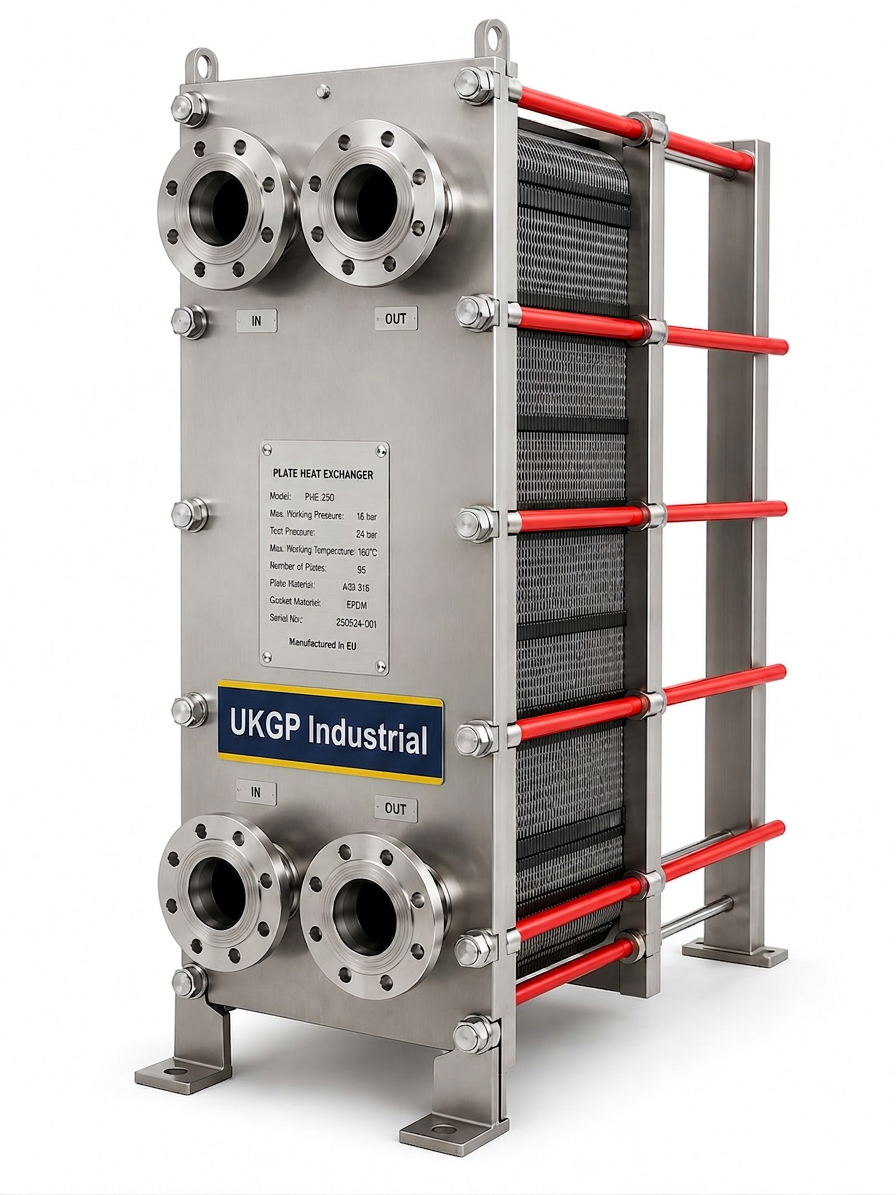
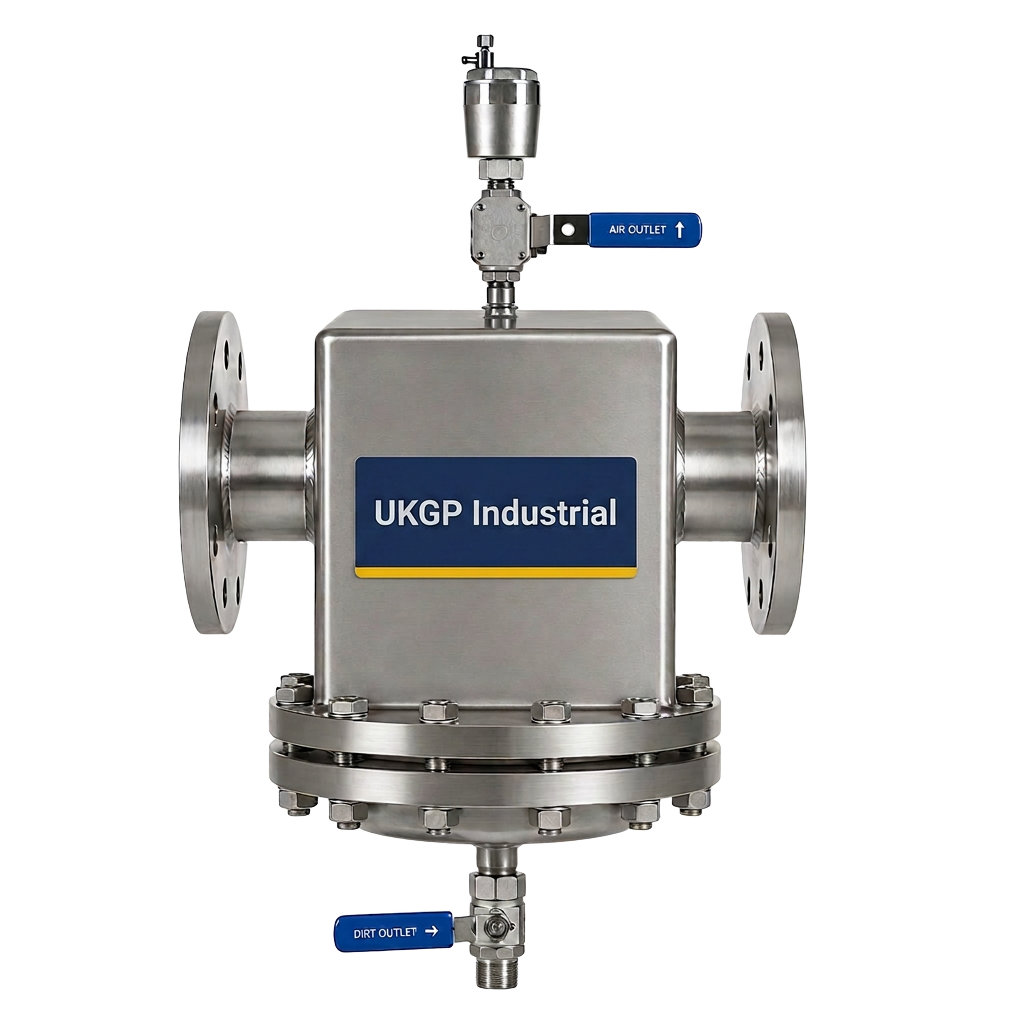
The cost-effectiveness of a low loss header is often seen in the reduction of secondary component failures. By shielding the boiler from hydraulic shock and erratic pressure changes, the lifespan of expensive pumps and control valves is extended. In a large-scale project where budgets are scrutinised, justifying the inclusion of a low loss header boiler setup is easy when considering the total cost of ownership. It is an insurance policy against the most common causes of system failure. Furthermore, our ability to supply related items like air and dirt separators or plate heat exchangers allows for a consolidated supply chain, reducing administrative overhead for procurement leads.
Ultimately, a high-quality heating system is only as good as its weakest link. By ensuring the primary and secondary circuits are properly decoupled with a UKGP header, you are adhering to best practices outlined by CIBCE and BS standards. Whether you are working with a 40 kW wall-hung boiler or a 2000 kW floor-standing cascade, the principles remain the same: control the flow, protect the heat exchanger, and manage the water quality. We invite you to reach out to our technical sales team for a bespoke quotation, and discover why UKGP Industrial is the preferred partner for M&E specialists across the United Kingdom.
- Consolidated supply chain by sourcing headers and separators together.
- Extended life for primary boilers and secondary pumps/valves.
- Improved project timelines with reliable 2-3 week UK manufacturing.
- Compliance with CIBSE and Building Regulations made simple and certain.
Frequently asked questions
Does every commercial boiler need a low loss header?
- Not strictly every boiler, but any system where the secondary circuit flow rate exceeds or varies independently from the primary manufacturer's flow rate requires one. A low loss header boiler setup is essential for cascading boilers and systems with multiple pump zones.
What is the lead time for a UKGP low loss header?
- Our standard range of low loss headers, covering 40 kW to 2000 kW, typically has a lead time of 2-3 weeks from order. This includes the insulation jacket and relevant connections.
Can a low loss header replace an air and dirt separator?
- While a low loss header boiler configuration does provide some settlement for dirt and venting for air due to low velocity, it is not a replacement for high-efficiency microbubble air separators or magnetic dirt separators, especially in high-velocity commercial systems.
Are UKGP headers compatible with both threaded and flanged pipework?
- Yes, we offer both PN16 flanged and BSP threaded connections to ensure compatibility with all types of UK commercial pipework, facilitating easier installation for M&E contractors.
Why is insulation important for a low loss header?
- A low loss header has a large surface area and contains a high volume of heated water. Without the insulation jackets we provide, it acts as a large radiator in the plant room, significantly wasting energy and violating Part L energy efficiency standards.