Defining the Heating Buffer Tank in Modern Systems
A heating buffer tank is primarily designed to provide additional thermal mass to a system, preventing short-cycling of boilers or heat pumps during periods of low heat demand. In the context of the UK building services sector, the integration of a heating buffer tank is frequently necessitated by the move toward low-carbon technologies such as air source heat pumps, which require longer run times to maintain efficiency. Unlike simpler vessels, a high-quality heating buffer tank ensures that the primary generator can discharge its minimum energy output without forcing a burner shutdown, thereby extending the lifecycle of the primary plant and reducing mechanical wear and tear on compressor components or burners.
From a technical standpoint, the design of a heating buffer tank must account for stratification and flow rates to ensure that return temperatures remain as low as possible for condensing efficiency. When specifying a heating buffer tank for a large-scale commercial project, consultants must consider the internal baffle arrangements and the insulation properties of the vessel to minimise standing heat losses. Failure to correctly size the volume of the heating buffer tank can lead to significant energy wastage, often countering the benefits of high-efficiency heat generators. Proper placement within the primary circuit is essential for achieving the intended thermal balance while complying with CIBSE and BSRIA BG50 guidelines for water quality and system longevity.
While often confused with other vessels, the fundamental differentiator for a heating buffer tank is its volume and its role as an energy reservoir rather than just a hydraulic bridge. In modern plant rooms, these tanks are often fitted with multiple tappings to accommodate bivalent heat sources, allowing for seamless integration of biomass, gas-fired boilers, and electric heat pumps. The thermal inertia provided by the heating buffer tank acts as a shock absorber for the system, smoothing out the peaks and troughs of demand that are common in multi-zone commercial buildings like schools or healthcare facilities. Choosing the right UK manufacturer for these vessels ensures that the steel grade and welding standards meet the rigorous demands of pressurized commercial heating circuits.
- Prevents boiler short-cycling by adding vital thermal mass.
- Essential for heat pump systems with low minimum modulation.
- Assists in maintaining temperature stratification across different zones.
- Compliant with CIBSE heat pump design recommendations.
- Reduces pressure fluctuations within the primary return line.
The Role of the Low Loss Header in Hydraulic Separation
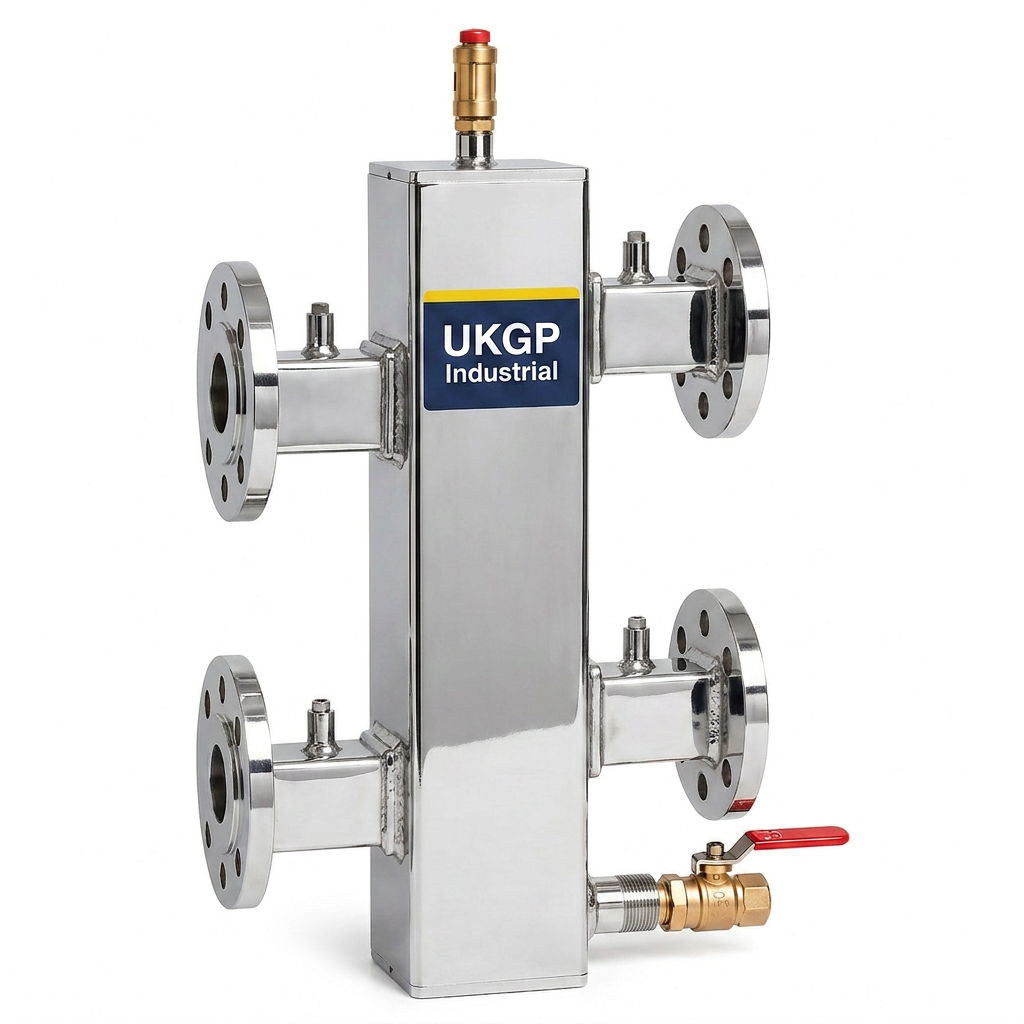
In contrast to the high-volume heating buffer tank, a low loss header serves as a dedicated point of hydraulic separation between the primary boiler circuit and the secondary distribution circuits. The primary function of the low loss header is to ensure that the flow rates in the secondary circuit do not interfere with the flow across the primary heat exchanger, which is critical for protecting the boiler's delicate internal components. For M&E contractors, installing a low loss header is the most effective way to manage systems where the secondary pump flow exceeds the primary pump capacity, avoiding the risk of pump conflict and ensuring stable delivery of heat to all zones within the building.
UKGP Industrial offers a premium range of low loss headers designed for commercial applications ranging from 40 kW to 2000 kW. These units are available with either flanged PN16 or threaded BSP connections to suit any pipework configuration and come standard with a high-performance insulation jacket to prevent thermal bypass losses. With a standard lead time of only 2-3 weeks and a 2-year warranty, these headers are a staple for fast-track refurbishments. The design allows for the efficient collection of debris and the venting of air, effectively acting as a multi-functional hub that simplifies the plant room layout while maintaining hydraulic integrity across vastly different system pressures.
Selecting a low loss header over a larger heating buffer tank is often a matter of space and specific system requirements. In systems where the heat source can modulate down effectively and there is no requirement for mass energy storage, the compact footprint of our low loss header provides a commercially viable solution. These units are engineered to handle high flow rates without significant pressure drops, ensuring that the primary plant operates within its designed temperature differential. By decoupling the circuits, contractors can commission secondary pumps independently of the boiler pumps, leading to a much more predictable and balanceable hydronic system that adheres to BSRIA BG29 pre-commissioning cleaning standards.
- Capacity range from 40 kW up to 2000 kW for large scale projects.
- Available in BSP threaded or PN16 flanged options for flexibility.
- Includes a fitted insulation jacket to meet energy efficiency standards.
- Rapid 2-3 week lead time for UK-wide site delivery.
- Robust 2-year warranty for long-term peace of mind.
Technical Comparison: Volume vs Velocity
The primary technical distinction in the heating buffer tank vs low loss header explained debate revolves around water volume and velocity. A low loss header is characterized by low velocity but does not aim to store significant heat energy; its geometry is designed to create a neutral pressure zone. Conversely, the heating buffer tank is sized specifically for its water holding capacity, often calculated based on the minimum run time of the heat source and its output. In a commercial setting where space is at a premium, a low loss header is often preferred unless the heat source is an older non-modulating boiler or a modern heat pump that requires a specific minimum volume to function without cycling.
When designing a system, engineers must account for the fact that a heating buffer tank will introduce a time lag into the system response, which can be beneficial or detrimental depending on the control strategy. In systems with highly variable loads, the low loss header provides a more immediate response to thermostat calls because the primary water is almost immediately available to the secondary pumps. However, if the primary boiler has a limited turn-down ratio, the lack of a heating buffer tank will result in frequent cycling, which significantly lowers the seasonal efficiency of the plant. Understanding the specific modulation capabilities of the primary plant is therefore the first step in deciding between these two vessels.
Furthermore, the installation of a heating buffer tank often requires more complex pipework and sophisticated control sensors to manage the temperature at different levels of the tank. A low loss header is generally simpler to integrate, acting as a vertical pipe with a larger diameter than the main headers, facilitating both air and dirt separation at a single point. For consultants, the choice often comes down to the balance between capital expenditure and operational efficiency. While a header is cheaper and smaller, the long-term energy savings of a correctly applied buffer tank in specific low-carbon scenarios can outweigh the initial investment costs, provided the project budget allows for the larger footprint.
- Low loss headers focus on hydraulic decoupling and pressure neutrality.
- Buffer tanks focus on thermal storage and lifecycle protection for boilers.
- Volumetric requirements vary significantly between heat pumps and gas boilers.
- Space constraints often dictate the use of headers over buffer vessels.
- Low loss headers provide quicker response times for secondary pump circuits.
Protecting the System with Air and Dirt Separation
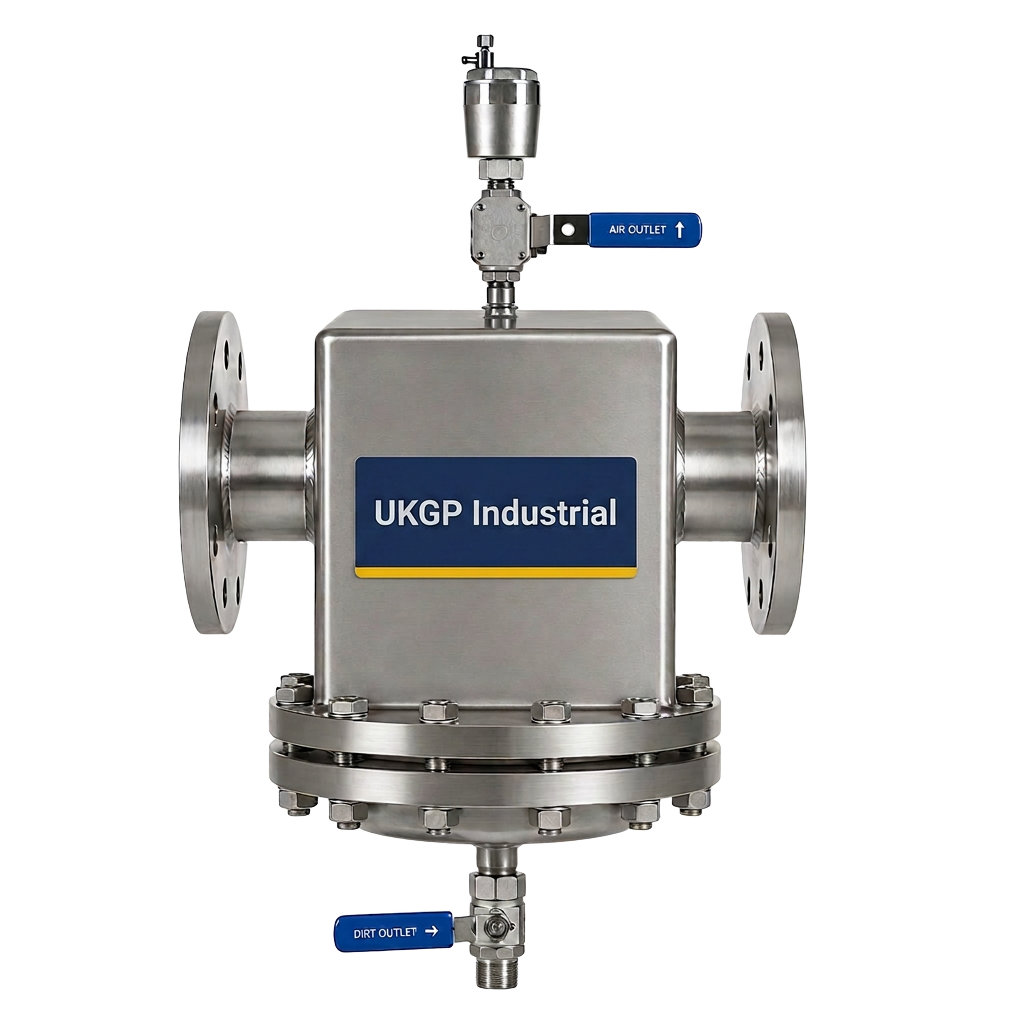
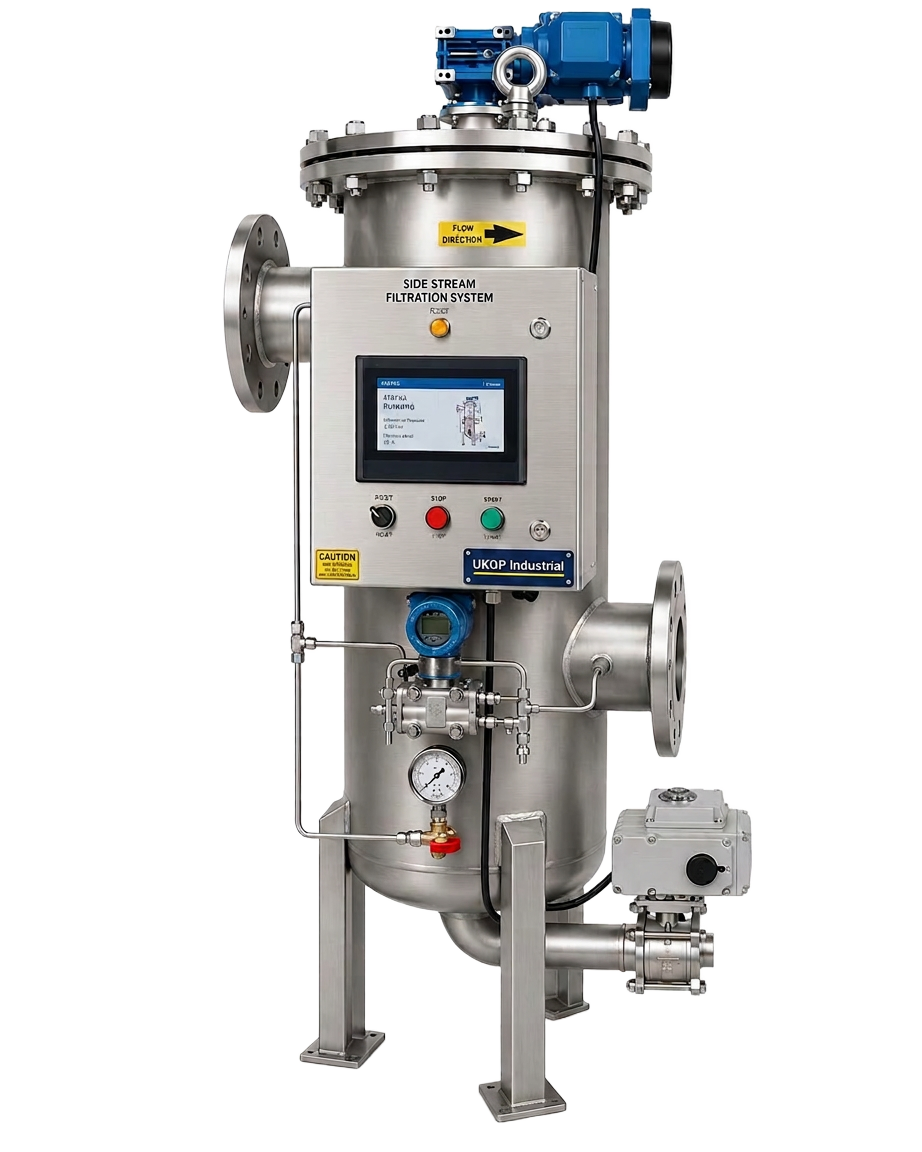
Regardless of whether a project utilizes a heating buffer tank or a low loss header, the management of air and dirt is paramount to maintaining system efficiency. In large commercial circuits, the accumulation of magnetite and micro-bubbles can lead to catastrophic pump failure and the clogging of heat exchangers. Incorporating dedicated air & dirt separators alongside your decoupling vessel is a best practice recommended by BSRIA BG50. These units utilize internal media to slow water velocity, allowing air to rise to the vent and dirt to settle for easy removal via a blow-down valve, ensuring the system water remains within the required chemical parameters.
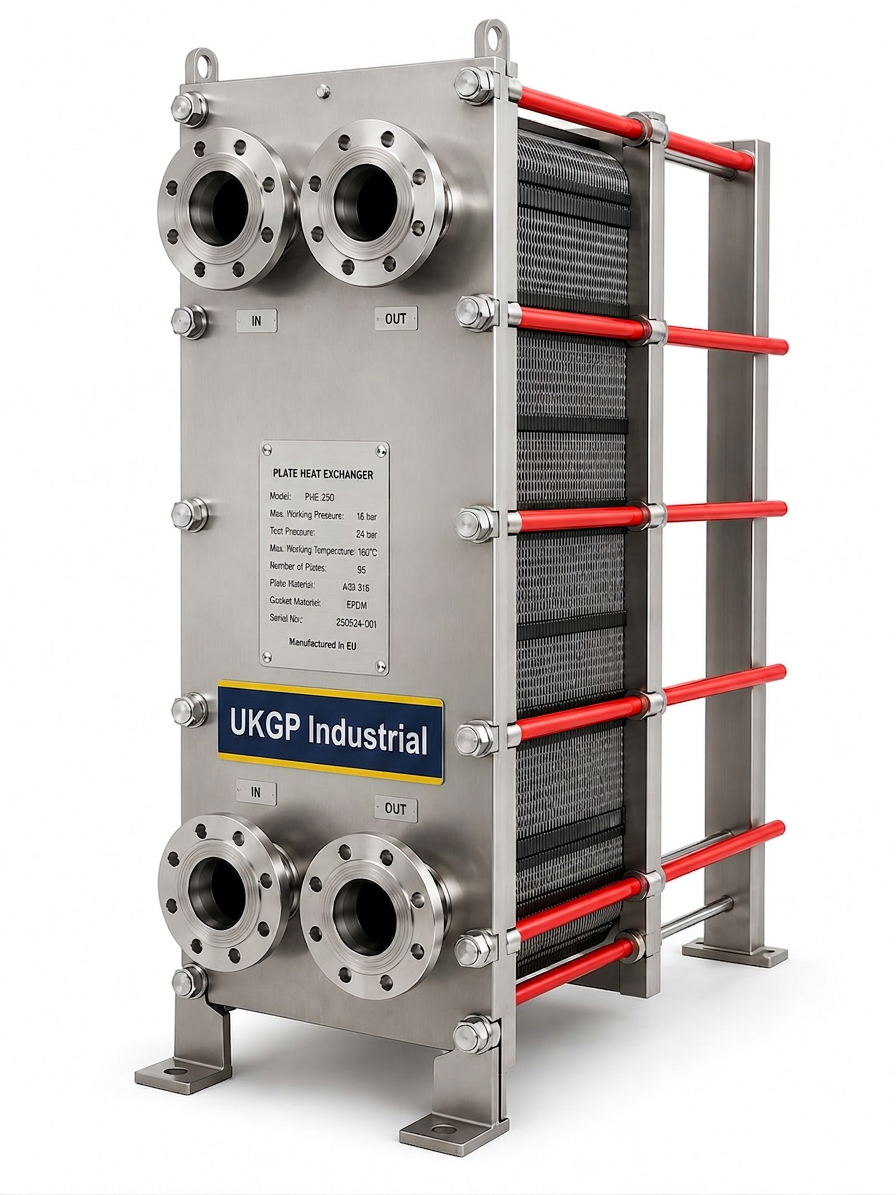
UKGP Industrial provides high-performance air & dirt separators that complement any low loss header installation. By removing impurities before they reach the main heating buffer tank or the primary boiler, you significantly reduce the risk of internal corrosion and maintain the heat transfer efficiency of the system. This is particularly important in systems using plate heat exchangers or high-efficiency condensing boilers with narrow internal waterways. Regular maintenance of these separators, combined with proper chemical dosing via a dosing pot, ensures that the system water remains clean and clear of the sludge that typically plagues older commercial installations in the UK.
Effective separation also helps in the accurate sensing of system parameters. Micro-bubbles can interfere with ultrasonic flow meters and temperature sensors, leading to erratic control signals. By ensuring that the water flowing through the plant room is clear of debris and air, the low loss header can perform its job of hydraulic balancing much more effectively. For contractors, installing these components is an insurance policy against future call-outs and potential warranty disputes with boiler manufacturers, as clean system water is almost always a prerequisite for valid warranty claims in the commercial sector.
- Improves heat transfer efficiency across the entire building circuit.
- Essential for protecting high-efficiency boiler heat exchangers.
- Facilitates easier system balancing by removing micro-bubbles.
- Reduces the risk of magnetite build-up in pump impellers.
- Supports compliance with BSRIA water quality guidelines.
Operational Efficiency and BSRIA Compliance
In the UK, the design and maintenance of closed-loop heating systems are governed by standards like BSRIA BG29 and BG50. These documents emphasize the importance of maintaining water quality and hydraulic stability. A heating buffer tank plays a role here by providing a location where water can settle and where chemical treatments can be effectively integrated. However, the increased volume of a heating buffer tank also means more water needs to be treated and monitored. For facilities managers, this translates to a slightly higher cost in chemical inhibitors and regular testing to prevent the growth of anaerobic bacteria or the onset of localized corrosion within the large vessel.
A low loss header simplifies some aspects of BSRIA compliance because it contains a smaller volume of water while still providing a point for debris to collect at the base. UKGP Industrial low loss headers are designed with this in mind, featuring drain valves that allow for easy removal of sediment during routine maintenance visits. When comparing a heating buffer tank vs low loss header explained for an FM audience, the maintenance of the header is often seen as less intensive. However, if the heating buffer tank is required for the technical operation of a heat pump, the maintenance trade-off is unavoidable and must be planned for in the annual O&M (Operation and Maintenance) budget.
Ultimately, adherence to BS 8552 for sampling and monitoring of water is required regardless of the vessel chosen. A well-designed plant room will utilize the low loss header as the primary hydraulic junction while ensuring that the system is properly dosed through a dosing pot. If a heating buffer tank is used, it should be equipped with its own dedicated air vents and drain points to ensure that it does not become a stagnant 'dead leg' in the system, which could foster microbial growth. Regular thermal imaging of the tank and header can also confirm that stratification is occurring as intended and that the insulation jackets are performing their role in heat retention.
- Ensures compliance with BSRIA BG50 water quality management.
- Simplifies the periodic flushing and cleaning required by BG29.
- Proper insulation on UKGP headers reduces energy waste and heat gain.
- Reduces the likelihood of water treatment 'dead legs' in the system.
- Allows for the collection and disposal of magnetite during maintenance.
Summary: Selecting the Right Solution for Your Project
The decision between a heating buffer tank and a low loss header depends on the specific heat source and the operational dynamics of the building. For modern condensing boiler systems where hydraulic separation is the primary concern, the UKGP low loss header is the most effective and space-efficient choice. It provides the necessary decoupling and air/dirt removal capabilities for systems up to 2000 kW without the footprint of a large vessel. With flanged and threaded options, these units are ready for immediate site integration and come with the reliability of a 2-year warranty and a quick 2-3 week turnaround.
Where low-carbon technologies like heat pumps are involved, the heating buffer tank becomes an essential component to ensure the primary generator functions within its optimal parameters. It is not uncommon for large commercial designs to utilize both: a buffer tank to provide thermal mass and a low loss header to manage the distribution to multiple secondary pump sets. Understanding the heating buffer tank vs low loss header explained nuances allows engineers to design robust systems that minimize energy consumption and maximize the lifespan of expensive plant equipment. When in doubt, consulting with a technical supplier like UKGP Industrial can provide the clarity needed for accurate specification.
In conclusion, the right choice ensures a balanced, quiet, and efficient heating system that meets the demands of modern UK building regulations and CIBSE standards. Whether you require a compact low loss header or a high-capacity separator, our team in Surrey is available to provide technical support and competitive quotes. For contractors and procurement leads, high-quality UK-manufactured components are the key to a successful handover and a trouble-free defects period. Contact UKGP Industrial today to discuss your plant room requirements and secure a quote for our range of low loss headers and ancillary plant room equipment.
- Evaluate heat source modulation to determine the need for thermal mass.
- Prioritise hydraulic separation to protect primary heat exchangers.
- Choose UKGP for rapid 2-3 week lead times on commercial headers.
- Ensure all vessels are fitted with high-quality insulation jackets.
- Integrate air and dirt separators for maximum system longevity.
Frequently asked questions
What is the primary difference between a low loss header and a buffer tank?
- A low loss header is used for hydraulic separation to prevent pump conflict, while a heating buffer tank is used to add thermal mass and prevent short-cycling of the heat source.
Do I need a heating buffer tank for a heat pump system?
- Yes, most heat pumps require a heating buffer tank to ensure a minimum water volume is available for defrost cycles and to maintain long run times for efficiency.
Can a low loss header act as a dirt separator?
- Yes, many low loss headers, including those from UKGP, are designed to catch debris at the bottom and vent air at the top, simplifying plant room equipment needs.
What are the standard sizes for UKGP low loss headers?
- UKGP supplies low loss headers for commercial systems from 40 kW to 2000 kW, with custom options available for specific PN16 or BSP requirements.
How does mid-system separation affect BSRIA BG29 cleaning?
- Separation via a low loss header allows for easier sectional flushing and cleaning of secondary circuits without risking the contamination of the primary boiler loop.