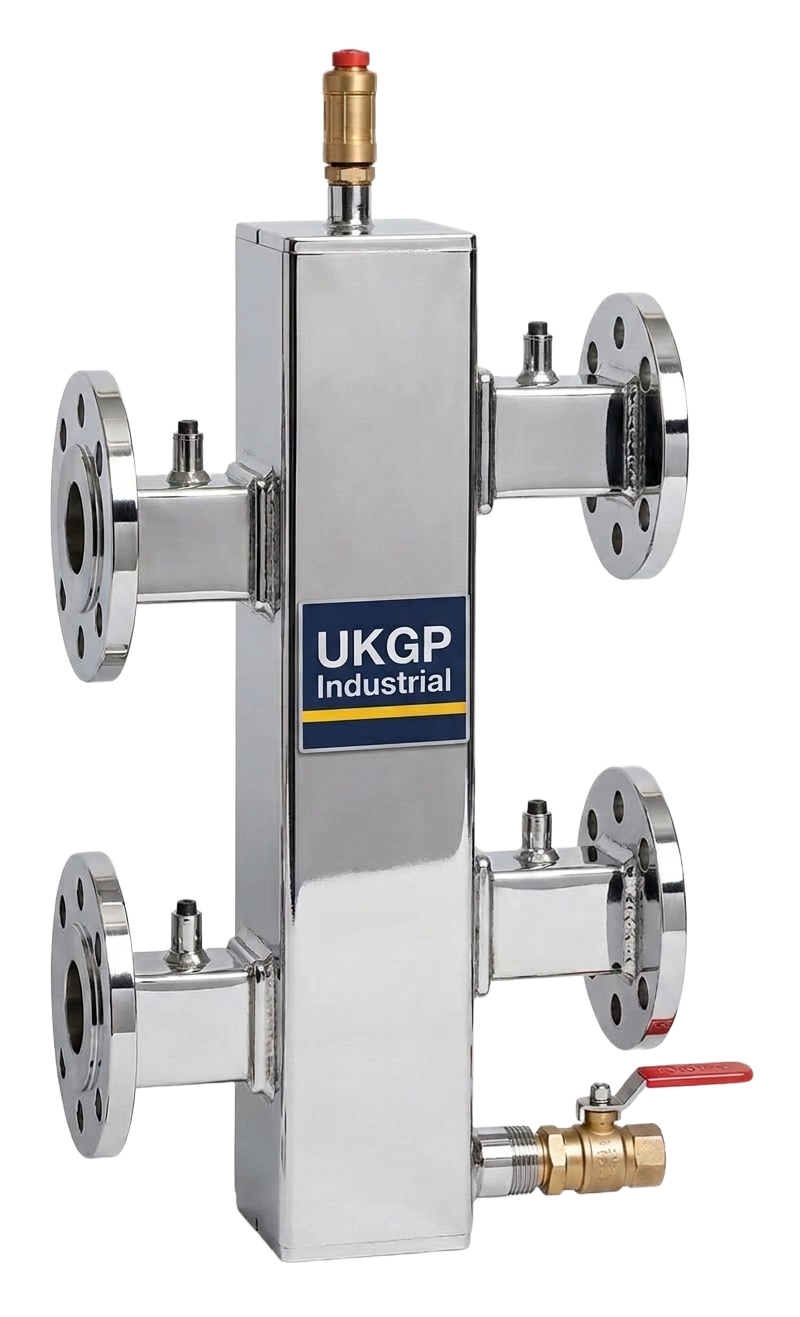
The Role of the Boiler Low Loss Header in Hydraulic Separation
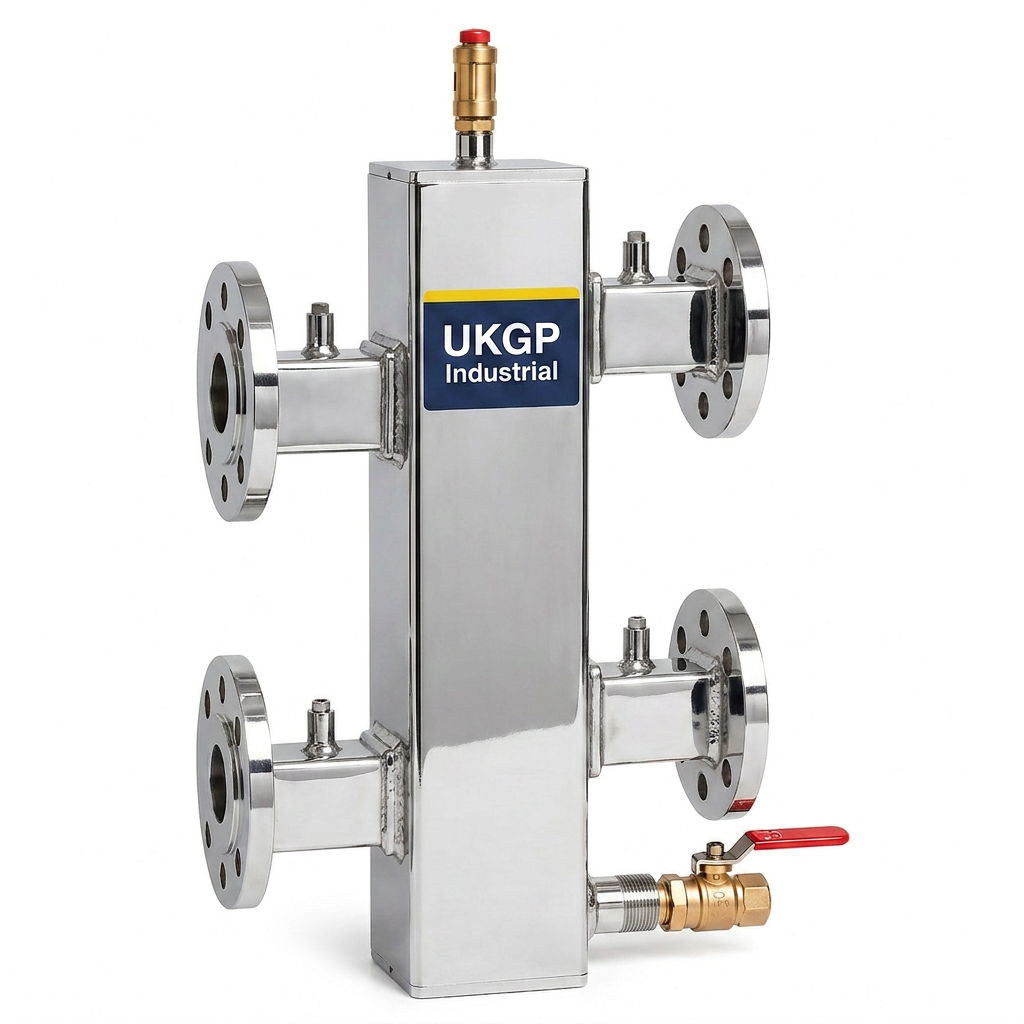
In modern plant-room design, the primary objective is to maintain a constant flow through the heat source while allowing the secondary circuit to vary based on building demand. A boiler low loss header serves as the neutral point in the system where the velocity of the water is significantly reduced, effectively decoupling the hydraulic circuits. This is essential in cascade arrangements where multiple boilers may fire in sequence; without a header, the varying pump speeds of the secondary circuit could interfere with the primary circulators, leading to cavitation, poor heat transfer, or even boiler shutdown. By providing a zone of low pressure drop, the header ensures that the pressure difference between the flow and return headers is kept to a minimum, hence the term 'low loss'.
From a technical perspective, achieving hydraulic equilibrium within a boiler low loss header requires a careful calculation of the ‘neutral zone’. When the primary flow exceeds the secondary demand, the excess heated water bypasses back into the return, raising the return temperature slightly. Conversely, if secondary demand is higher, return water is mixed with the flow. For consultants adhering to CIBSE Guide AM11, the header is the most reliable way to prevent the secondary pumps from 'pulling' water through non-firing boilers in a cascade. This prevents the dilution of flow temperatures and ensures that the design Delta T is maintained across the distribution network, which is vital for the thermal comfort of the building occupants.
UKGP Industrial provides a robust range of headers designed for these exact scenarios. When you specify a boiler low loss header from our Surrey facility, you are choosing a component engineered for durability and performance. Our units cater to commercial outputs from 40kW to 2000kW, ensuring compatibility with almost any scale of cascade installation. Furthermore, each unit comes with a tailored insulation jacket to minimise standby heat losses, aligning with the energy efficiency goals set out in Part L of the Building Regulations. Whether your project requires flanged PN16 connections or threaded BSP fittings, our technical team ensures your hydraulic separation strategy is underpinned by high-quality British manufacturing.
- Ensures total hydraulic independence between heat generation and distribution.
- Prevents pump conflict and oscillation in variable speed systems.
- Protects high-efficiency heat exchangers from thermal shock.
- Facilitates easier system balancing and commissioning for M&E contractors.
Optimising Cascade Efficiency and Condensing Performance
The integration of a boiler low loss header is particularly critical when dealing with condensing boiler cascades. To maximise the seasonal efficiency of these units, the return water temperature must be kept below the dew point (approximately 54°C for natural gas). A poorly sized header can lead to 'short-circuiting', where high-temperature flow water mixes prematurely with the return, raising the temperature and preventing the boilers from condensing. By correctly sizing the header based on the maximum possible flow rate of either the primary or secondary circuit (whichever is greater), engineers can maintain the stratified temperature layers necessary for efficient operation and long-term reliability.
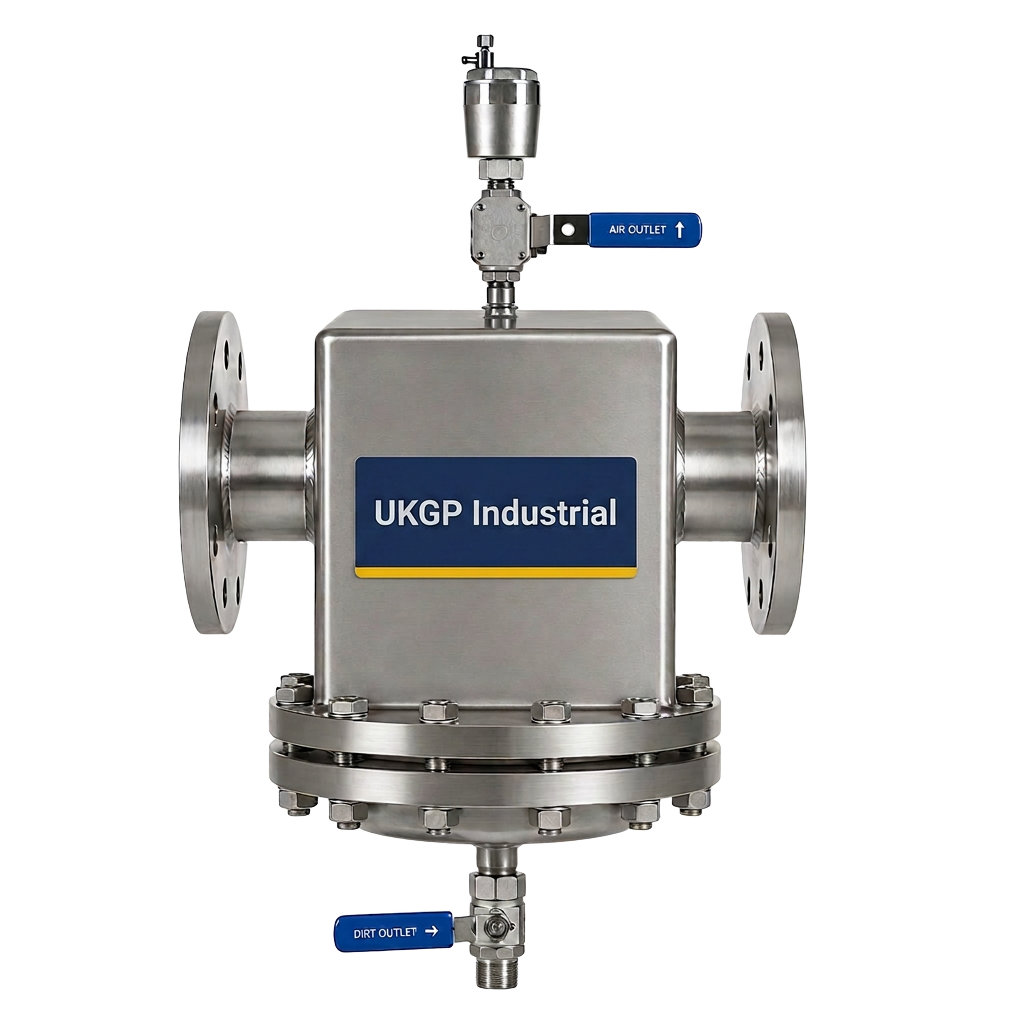
Furthermore, BSRIA BG50 guidelines emphasise the importance of water quality and air management within the plant room. A well-designed boiler low loss header also acts as a point of de-aeration. Because the water velocity drops significantly upon entering the larger vessel of the header, micro-bubbles of air are liberated from the flow and can be vented through an automatic air vent at the top. Simultaneously, heavy dirt and magnetite particles can settle at the bottom of the header to be flushed out via a drain valve. This multi-functional approach reduces the burden on other system components and helps the site FM team maintain the system according to BS 8552 water testing standards.
For engineers focusing on long-term system health, combining a header with dedicated air and dirt separators is best practice. At UKGP Industrial, we understand that plant room space is often at a premium. Our headers are designed to be compact yet effective, providing the necessary internal volume to allow for sediment settlement without requiring an oversized footprint. When selecting a boiler low loss header for your next project, consider the lead times which are typically 2-3 weeks, allowing for rapid deployment on-site and ensuring that your cascade system is commissioned and operational without unnecessary delays or hydraulic complications.
- Maintains lower return temperatures to promote consistent condensing.
- Acts as a secondary point for air release and dirt collection.
- Reduces the risk of nuisance tripping of boiler high-limit thermostats.
- Complies with BSRIA BG50 recommendations for system cleanliness.
Technical Calculations and Selection Criteria
Selecting the correct boiler low loss header requires more than just matching pipe sizes. The primary metric is the maximum flow rate, measured in cubic metres per hour (m³/h). To ensure the 'low loss' characteristic remains true, the internal velocity within the header body should generally not exceed 0.1 to 0.2 metres per second. If the velocity is too high, the header fails to decouple the circuits effectively, and you risk creating a pressure differential that forces water through the primary circuit unnecessarily. This is why UKGP Industrial provides detailed flow data for our 40-2000 kW range, ensuring your procurement lead can buy with confidence based on precise engineering data.
Another critical factor is the physical orientation and connection type. In commercial plant rooms, space constraints may dictate whether you require flanged PN16 connections or threaded BSP ports. Our flanged options provide a robust, leak-proof seal for higher-pressure systems, while threaded versions are often preferred for smaller 40-150kW cascades due to ease of installation. Every boiler low loss header we supply is manufactured to withstand the rigours of a commercial environment, backed by a 2-year warranty and a high-quality finish. The inclusion of an insulation jacket is standard, ensuring that the plant room remains cool and the heat energy is delivered where it is actually needed.
M&E contractors must also consider the height of the header relative to the boilers. To facilitate natural venting and effective dirt separation, the header should be positioned strategically. In a cascade, the common flow pipe from the boilers enters the header, and the secondary flow departs from the same side or opposite, depending on the header design. UKGP Industrial's headers are designed with versatility in mind, allowing for various piping configurations. By sourcing your boiler low loss header directly from a UK manufacturer, you benefit from expert technical support, helping you navigate the complexities of hydraulic design while meeting the stringent requirements of BSRIA BG29 pre-commissioning cleaning protocols.
- Sized based on maximum flow rate to maintain low internal velocity.
- Available in PN16 flanged or BSP threaded connections.
- Standard 2-year warranty for peace of mind in commercial spec.
- Supplied with a tailored insulation jacket to meet Part L requirements.
Integrating Dosing Pots and Side Stream Filtration
While the boiler low loss header manages the hydraulics, the chemical integrity of the system water is equally important. To protect the heat exchangers within a cascade, installers often install a chemical dosing pot near the header. This allows for the controlled introduction of inhibitors and biocides, as recommended by BSRIA BG50. By maintaining the correct chemical balance, you prevent the buildup of scale and corrosion, which could otherwise settle within the header or, worse, inside the boilers. The header provides a convenient bypass point or a neutral zone where such additions can be integrated into the system without disrupting main flow paths.
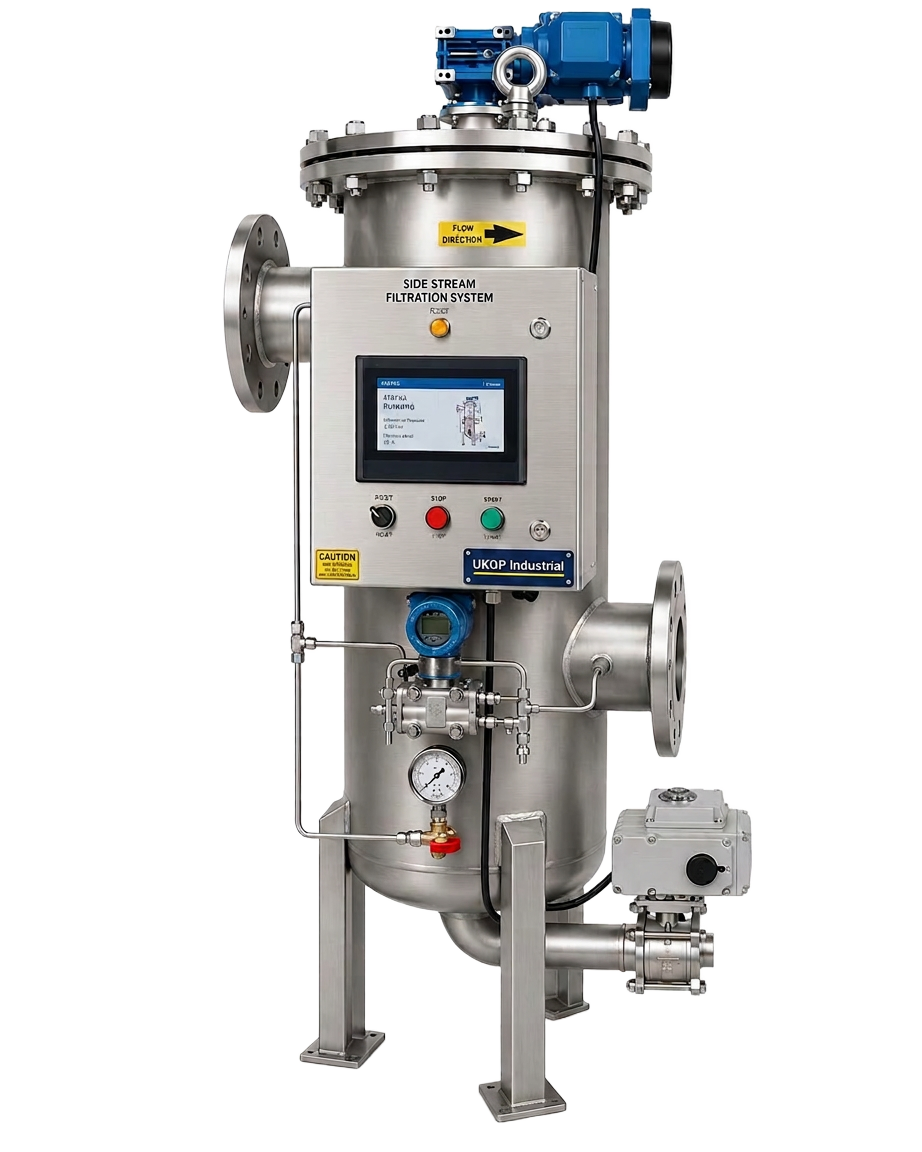
In addition to dosing, modern commercial systems often require side stream filtration to remove finer particles that the header's natural settlement might miss. Filtration units work in tandem with the boiler low loss header to keep the water clear, protecting sensitive components like variable speed pump impellers and 2-port control valves. When managing a large 2000 kW system, the volume of water is significant, and the potential for debris accumulation is high. Integrating these water treatment solutions during the initial installation phase, rather than as a retrofit, ensures the system remains compliant with BS 8552 from day one of operation.
UKGP Industrial offers a complete suite of plant room components to complement your boiler low loss header. From dosing pots to expansion bellows, our range is designed to work harmoniously. When contractors bundle these items, they ensure that all components meet the same high manufacturing standards and carry the same UK-based technical support. Our headers are specifically designed to handle the thermal expansion and contraction cycles of large cascades, and when paired with our expansion bellows, the mechanical stress on the boiler manifold is virtually eliminated, extending the service life of the entire heating plant for the facility managers.
- Dosing pots facilitate easy chemical maintenance to BG50 standards.
- Side stream filtration keeps system water clear of fine magnetite.
- Reduces maintenance costs for FMs by protecting boiler internals.
- Consistent British manufacturing across the entire product suite.
Installation Best Practices for M&E Contractors
Correct installation of the boiler low loss header is vital for the successful commissioning of a cascade system. Contractors should ensure the header is mounted vertically and securely supported, as the weight of the water-filled vessel can be substantial, especially in the 1000kW+ range. It is essential to leave adequate clearance for the removal of the insulation jacket and for access to the drain valve and air vent. Before connecting to the boilers, the system should be thoroughly flushed in accordance with BSRIA BG29. A UKGP Industrial header, with its large internal volume, is an excellent point to monitor for the collection of debris during the initial cleaning cycles.
When piping the boiler low loss header, the use of flexible connectors or expansion bellows is often recommended to prevent the transfer of vibration and to accommodate thermal movement. This is particularly important in plant rooms where boilers are located on upper floors or near noise-sensitive areas. Our headers are compatible with both PN16 and BSP fittings, providing the flexibility needed for different pipework materials. A well-installed header should feel like a 'set and forget' component, but its performance is contingent on it being the correct size for the peak load of the cascade—a mistake here can lead to persistent 'short cycling' and increased energy bills.
Finally, ensure that temperature sensors are correctly placed. Many modern boiler controllers require a sensor located within the boiler low loss header to accurately monitor the common flow temperature. This sensor provides the feedback loop necessary for the cascade controller to decide how many boilers to fire. UKGP Industrial headers typically include a dedicated sensor pocket for this purpose, making it easy for the controls engineer to integrate the hardware. With our quick 2-3 week lead time, you can secure a mission-critical component that is ready to be integrated into your BMS (Building Management System) with minimal on-site modification or hassle.
- Include sensor pockets for BMS integration and cascade control.
- Support headers adequately to manage weight and thermal stress.
- Ensure accessibility for routine maintenance and BG29 flushing.
- Align connections carefully to avoid stress on heat exchanger manifolds.
Why Specify UKGP Industrial Low Loss Headers?
For UK building services consultants and FMs, the choice of supplier is just as important as the technical specification. UKGP Industrial is a Surrey-based manufacturer that understands the nuances of the UK market, from BSRIA standards to the practicalities of small London plant rooms. Our boiler low loss header range covers everything from 40kW to 2000kW, ensuring we have a solution for every commercial application. By manufacturing in the UK, we can offer superior quality control and a reliable 2-3 week lead time, which is significantly faster than many imported alternatives that may be subject to supply chain disruptions.
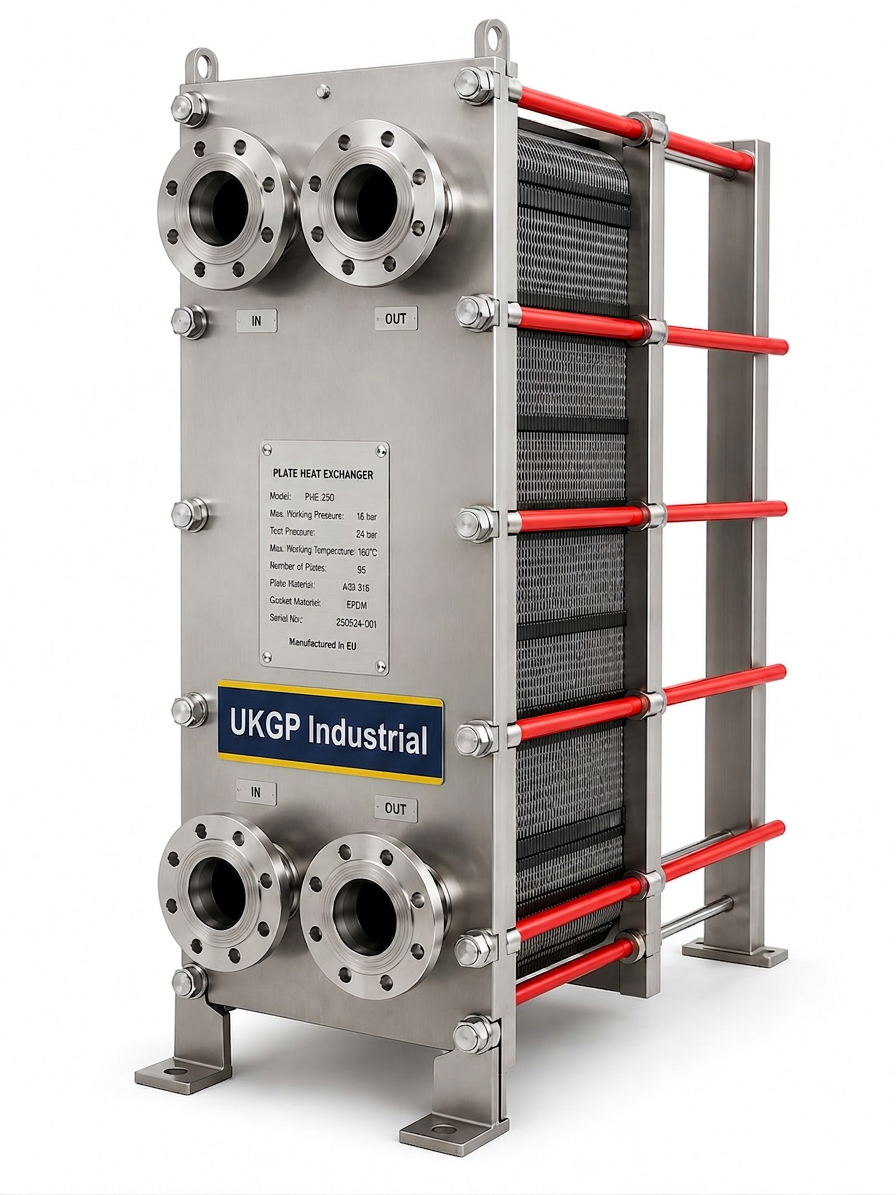
Every boiler low loss header we produce is tested to ensure it meets our rigorous standards for pressure and temperature resistance. We provide a 2-year warranty as a testament to our confidence in our craftsmanship. Whether you are dealing with a simple two-boiler cascade or a complex multi-megawatt system involving plate heat exchangers and multiple secondary zones, our headers provide the hydraulic stability you need. The inclusion of a high-performance insulation jacket as standard ensures you are not wasting energy, helping your clients achieve better EPC ratings and lower operational costs over the lifetime of the installation.
We invite procurement leads and engineers to contact us for a bespoke quote. Our team can help you select the right boiler low loss header based on your specific flow rates and connection requirements. We are not just a supplier; we are a technical partner committed to the success of your project. From the initial design phase through to on-site delivery, UKGP Industrial provides the confidence that your cascade system will perform exactly as intended, protecting your reputation and the long-term interests of the end user. Request a technical data sheet today to see how our British-made headers can improve your next plant room refurbishment or new build project.
- Surrey-based manufacturing with expert technical support.
- Fast 2-3 week lead time for urgent commercial projects.
- Robust 40kW to 2000kW range to suit all cascade sizes.
- Peace of mind with a comprehensive 2-year warranty.
Frequently asked questions
What is the primary benefit of a boiler low loss header in a cascade?
- The primary benefit is hydraulic separation. It allows the primary boiler circuit and the secondary distribution circuit to operate at different flow rates without interfering with each other's pumps, which is essential for cascade stability.
How do I size a boiler low loss header for a 500kW system?
- Sizing is based on the maximum flow rate of either the primary or secondary side. You must ensure the internal velocity in the header remains low (typically < 0.2 m/s) to maintain the neutral pressure zone required for separation.
Are UKGP Industrial headers supplied with insulation?
- Yes, all our commercial low loss headers (40-2000 kW) come with a tailored, removable insulation jacket to minimise heat loss and comply with energy efficiency regulations.
Do these headers support air and dirt separation?
- Yes, due to the significant drop in water velocity, they naturally allow air to rise and dirt to settle. We include ports for an automatic air vent and a drain valve to facilitate these functions.
What connection types are available for the boiler low loss header?
- We offer both BSP threaded connections for smaller systems and PN16 flanged connections for larger commercial installations, providing flexibility for all pipework specifications.