Understanding the Role of Tied Expansion Bellows
In the realm of building services and plant-room engineering, the primary function of tied expansion bellows is to accommodate lateral deflection while resisting the immense internal pressure thrust of the medium. When a system is pressurised, the bellows acts like a piston, attempting to push the pipework apart at the joints. By incorporating tie rods, the manufacturer ensures that the bellows cannot extend beyond its design limit under pressure. This is particularly vital in situations where the anchoring of the pipework is either insufficient or impossible due to structural constraints. At UKGP Industrial, we provide solutions that range from DN15 to DN600, ensuring every diameter is catered for in these high-stress environments.
Engineers must distinguish between untied units, which require heavy-duty main anchors to absorb the full pressure thrust, and tied versions which contain this thrust within the assembly itself. For M&E contractors working on high-rise residential or commercial office blocks, selecting tied expansion bellows is often a matter of safety and space-saving. Without these ties, the axial force (calculated as pressure multiplied by the effective cross-sectional area of the bellows) would be transferred directly onto the pipe guides and anchors, necessitating massive concrete blocks or heavy steelwork that may not be feasible within a restricted plant-room footprint or a modern riser design.
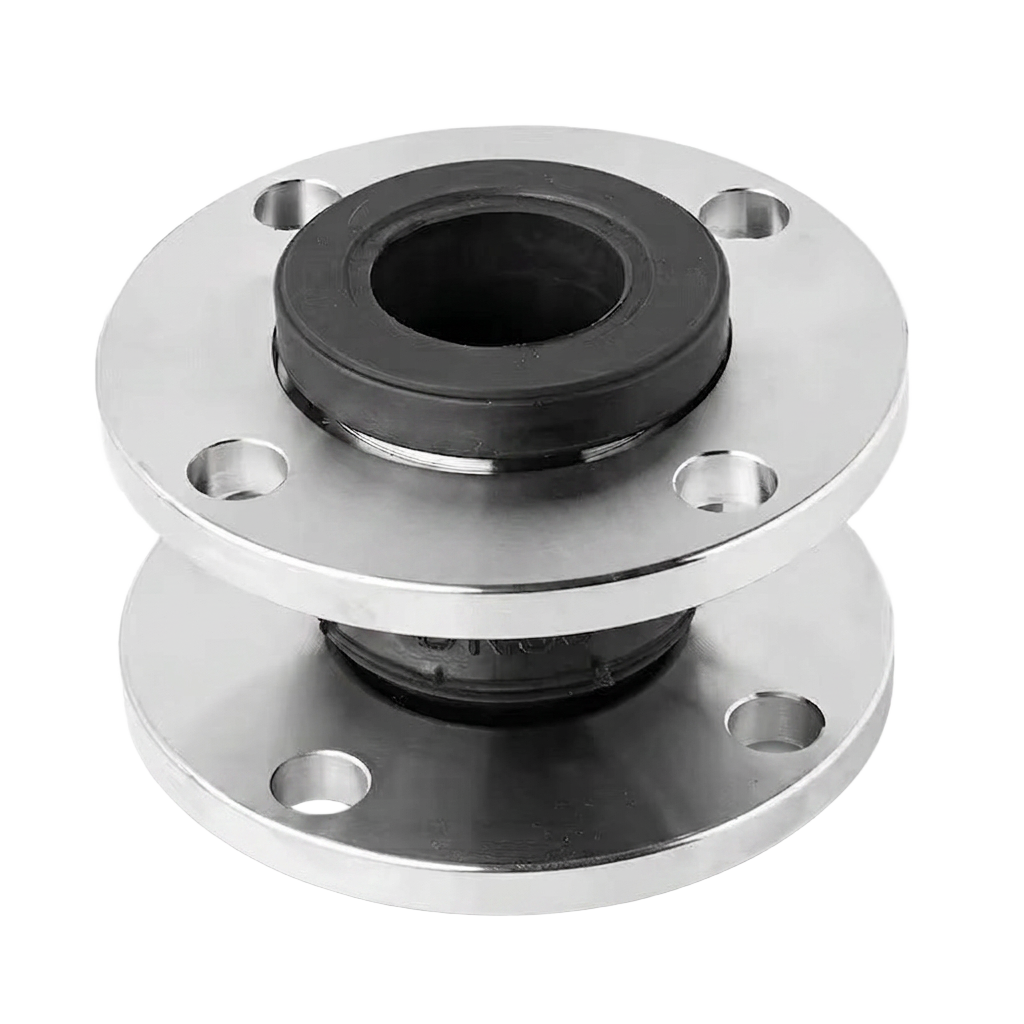
Choosing the correct material for your tied units is just as important as the mechanical configuration. UKGP Industrial offers a comprehensive range including EPDM and NBR rubber for general HVAC, as well as stainless steel, PTFE, and fabric options for more aggressive media or higher temperatures. These units come with a standard 2-year warranty, providing procurement leads and facilities managers with long-term peace of mind. Whether you require flanged or weld-end connections, ensuring the unit is specifically designed for the calculated lateral offset is the hallmark of a high-quality installation that adheres to the best practices seen in CIBSE Guide C and other relevant industry standards.
- Restrains pressure thrust within the bellows unit itself.
- Reduces the load on main system anchors and pipe guides.
- Ideal for systems where space prevents large anchor installations.
- Available in high-grade EPDM, NBR, and stainless steel variants.
When are Tied Expansion Bellows Required by Standards?
The requirement for tied expansion bellows is often dictated by the specific hydraulic and thermal dynamics of the system, often referenced in accordance with BS EN 14917. Most commonly, these components are mandatory when the piping layout transitions into a direction change where axial expansion cannot be naturally absorbed. In these lateral configurations, the tie rods prevent the bellows from extending axially, forcing the unit to move laterally instead. This prevents the 'squirm' effect, a dangerous phenomenon where the internal pressure causes the bellows convolutions to deform and eventually fail. Consultants must specify tied units in any section of a run where the main anchors are not robust enough to withstand the calculated end-thrust.
Furthermore, BSRIA BG29 and BG50 highlight the importance of system integrity during flushing and water treatment phases. A tied expansion bellows ensures that during high-pressure testing or system cleaning, the bellows does not over-extend and catastrophically fail. This is a critical consideration for M&E contractors during the commissioning phase. If an untied bellows is mistakenly used in a location where the anchors aren't designed for full pressure thrust, the risk of pipework displacement is high. Our UKGP units are designed to meet these rigorous site conditions, offering reliable service from the first pressure test through decades of operation in commercial heating and chilled water systems.
Finally, ties are required in pump and valve connections where vibration isolation is needed alongside thermal movement. Pumps generate significant thrust forces that can damage sensitive equipment if not managed. Using a tied lateral expansion joint at these junctions protects the pump casings from stress. UKGP Industrial supports your design process by offering products from DN15 up to DN600, ensuring that even the largest industrial district heating schemes are protected. Our technical team can help you determine the exact tie rod settings required to maintain the safety margins specified in CIBSE guides, ensuring a professional and compliant installation every time.
- Mandatory when anchors cannot support axial pressure thrust.
- Essential for preventing bellows 'squirm' in lateral applications.
- Critical during commissioning and high-pressure system flushing.
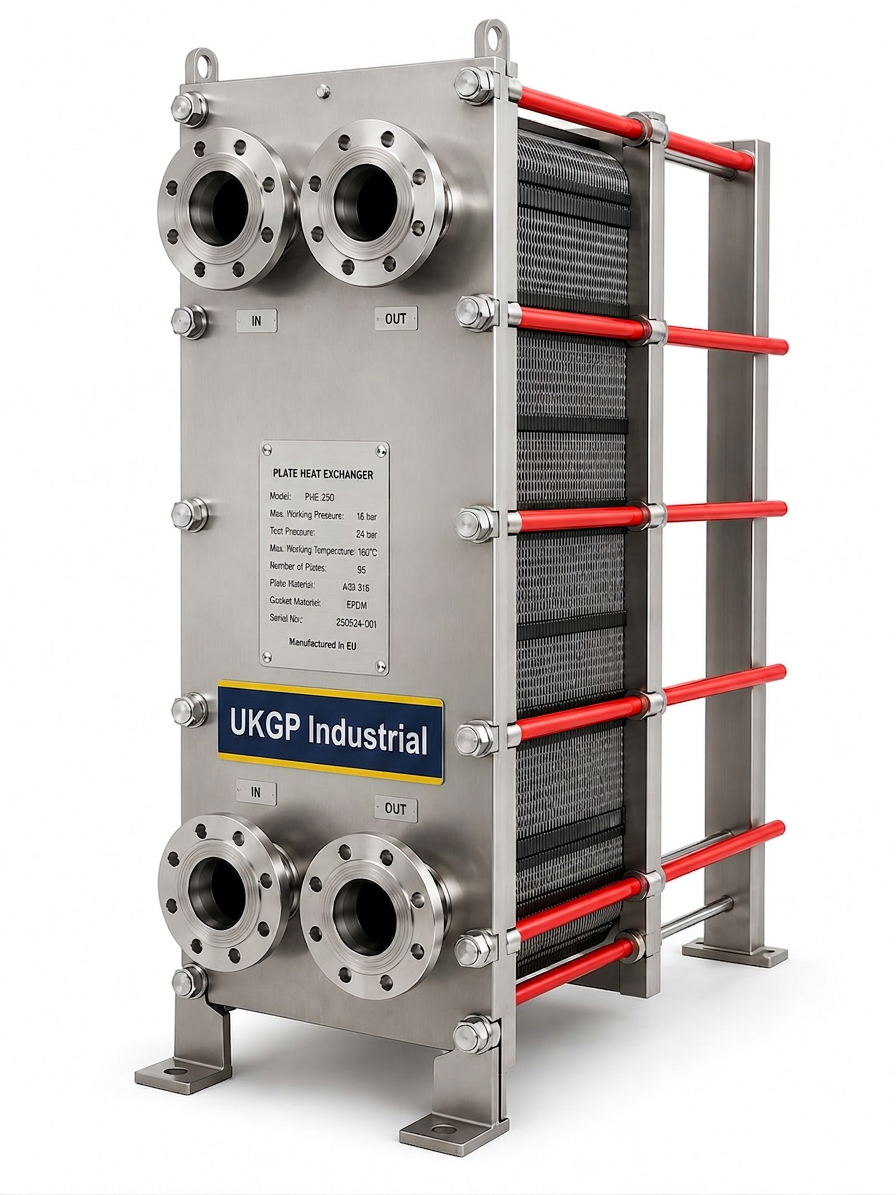
- Protects sensitive plant-room equipment like pumps and plate heat exchangers.
The Mechanics of Pressure Thrust Management
To appreciate the engineering behind tied expansion bellows, one must look closely at the physics of pressure thrust. In any pressurised pipework system, the internal pressure acts equally in all directions. However, at a bellows joint, there is no pipe wall to resist the longitudinal force. Instead, the force is calculated based on the effective area of the bellows. Without tie rods, this force must be countered by massive external anchors. In many modern UK HVAC projects, particularly within repurposed heritage buildings or lightweight modular constructions, the structural capacity to house these anchors simply does not exist. Tied units solve this by transferring the load through the rods.
The tied expansion bellows essentially acts as a rigid link for axial forces while remaining flexible for lateral movements. This is achieved through the use of spherical washers and heavy-duty nuts on the tie rods, which allow the flanges to tilt or move laterally relative to each other without moving further apart. This mechanical constraint is what makes the tied unit so versatile. Whether you are dealing with a stainless steel bellows for a steam line or an EPDM unit for a secondary heating circuit, understanding these load paths is essential for long-term system reliability. UKGP Industrial units are factory-set to ensure that movement limits are respected from the moment of installation.
Consultants should also consider the impact of vacuum conditions or pressure surges. Tied units provide a fixed length that prevents the bellows from collapsing or over-extending during these transient states. This protection is a core reason why our expansion bellows are favoured by plant-room engineers across the UK. With options for flanged or weld-end connections, these units fit seamlessly into any specification. By choosing a UKGP tied solution with a 2-year warranty, you are not just buying a component; you are ensuring that the entire piping system is protected against the predictable, yet often underestimated, power of hydraulic pressure thrust.
- Tie rods act as a structural bypass for longitudinal pressure forces.
- Spherical washers allow for essential lateral deflection and tilting.
- Prevents axial growth that would otherwise damage pipe supports.
- Maintains system geometry during vacuum or surge conditions.
Material Compatibility and Selection for Tied Units
Material selection is a critical pillar of technical SEO for HVAC components, as the longevity of tied expansion bellows is directly linked to the media they carry. For standard LTHW (Low Temperature Hot Water) and chilled water systems, EPDM or NBR rubber is often the preferred choice due to its excellent noise and vibration damping properties. However, in applications involving oil or high-temperature steam, stainless steel or PTFE-lined bellows become necessary. UKGP Industrial offers the full spectrum of these materials across our DN15 to DN600 range. Choosing the wrong material can lead to premature degradation, especially if the chemical dosing or pH levels in the system are not strictly monitored.
When specifying tied expansion bellows for complex systems, engineers must also look at the exterior environment. In coastal areas or corrosive industrial plants, the tie rods themselves should be adequately protected or made from corrosion-resistant materials to ensure they don't seize over time. A seized tie rod effectively turns an expansion joint into a fixed pipe, which will inevitably lead to a failure elsewhere in the system as thermal expansion finds the weakest point. Our 2-year warranty covers our expertly manufactured units, reflecting our confidence in the durability of both the bellows element and the restraining hardware provided for every UK order.
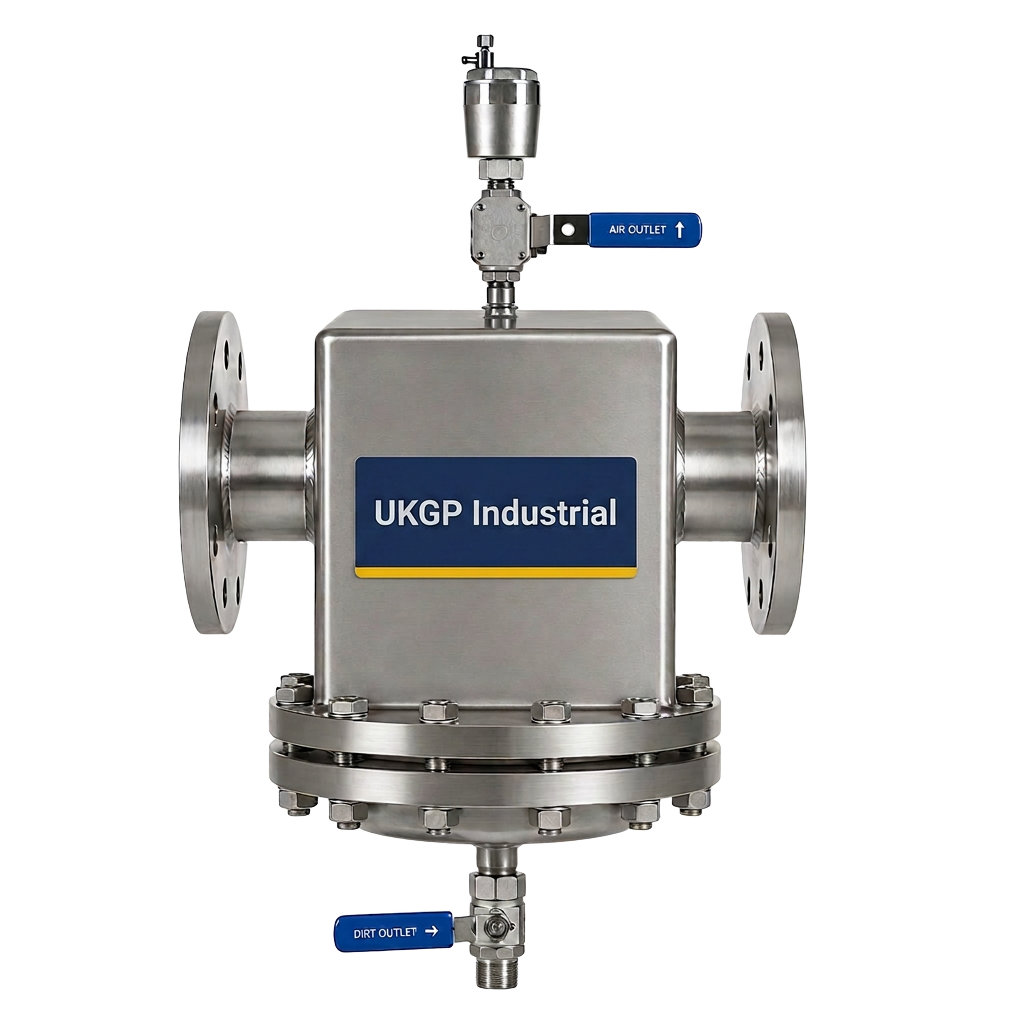
Integration with other plant-room components is another consideration. For example, if you are installing a dosing pot or a series of air and dirt separators, the pipework layout may require multiple tied units to manage the resulting complex movement patterns. UKGP Industrial is a one-stop-shop for these needs, providing not just the bellows but also the sensors and separators required for a BSRIA-compliant system. By consolidating your procurement, you ensure that all components, from the expansion joints to the pH sensors, are designed to work in harmony under the same set of operational parameters and safety margins.
- EPDM and NBR for standard HVAC; Stainless and PTFE for harsh media.
- Corrosion resistance in tie rod assemblies is essential for longevity.
- Compatible with high-precision chemical dosing and pH monitoring.
- Available in versatile flanged or weld-end configurations.
Installation Best Practices for Tied Expansion Bellows
Proper installation is where many piping projects succeed or fail. When installing tied expansion bellows, it is imperative that the tie rods are not tampered with or removed during the installation process unless specifically instructed by the manufacturer's guidelines. These rods are precision-calibrated to allow for the design-specified lateral movement while strictly limiting axial growth. If tie rods are over-tightened or loosened unevenly, the bellows will be subjected to torsional stress or uneven loading, which can lead to rapid fatigue and eventual rupture of the flexible element, especially in high-pressure applications where forces are extreme.
Alignment is another critical factor. While tied units are designed for lateral movement, they should not be used to compensate for poor pipework alignment during initial installation. Pushing a bellows into place to correct a 50mm misalignment puts permanent 'cold-draw' stress on the unit, reducing its effective service life. Contractors should ensure that pipework is correctly supported and guided as per CIBSE recommendations. This ensures that the only forces acting on our UKGP tied expansion bellows are the ones they were designed to handle: thermal expansion and lateral offset. Our units, whether stainless steel or rubber, are built to withstand these operational loads when installed correctly.
Finally, periodic inspection as part of a facilities management (FM) routine is recommended by BS 8552 and BSRIA guides. Inspectors should look for signs of 'necking' near the tie rod attachments, any leakage from the bellows convolutions, or corrosion on the rods themselves. Because our units come with a 2-year warranty and are available in sizes up to DN600, they are a standard choice for FM teams who value reliability and ease of maintenance. Replacing a poorly specified untied unit with a high-quality tied expansion bellows from UKGP Industrial can often resolve chronic leak issues and structural vibrating in ageing plant-rooms.
- Never remove or adjust tie rods without manufacturer approval.
- Ensure pipework is aligned before bellows installation to avoid stress.
- Follow CIBSE and BSRIA guidelines for support and guiding.
- Schedule regular inspections to monitor for fatigue or rod corrosion.
Summary: Selecting UKGP Industrial for Your Project
In summary, understanding when a tied expansion bellows is required is fundamental to safe and efficient pipework design. These units are more than just flexible connectors; they are engineered safety devices that manage the inherent risks of pressure thrust and thermal movement. By choosing tied units, you reduce the structural requirements for your building, protect expensive equipment from mechanical stress, and ensure compliance with UK building standards. UKGP Industrial stands as a premier UK supplier, offering technical expertise and a vast stock of units ranging from DN15 to DN600 in a variety of high-performance materials.
Whether your project involves EPDM, NBR, stainless steel, PTFE, or fabric bellows, our selection is designed to meet the rigours of modern M&E contracting. With features like flanged or weld-end connections and a robust 2-year warranty, our tied expansion bellows offer the reliability that procurement leads and consultants demand. We understand the nuances of BSRIA and CIBSE requirements, and our products are manufactured to exceed these expectations. Our Surrey-based team is ready to assist you with technical queries, ensuring that every lateral expansion joint in your system is perfectly specified for its intended role.
Don't compromise on the safety and longevity of your building services. Contact UKGP Industrial today for a competitive quote on our full range of expansion solutions. From the initial design stage through to commissioning and long-term maintenance, our tied expansion bellows provide the durability and performance necessary for the UK's most demanding plant-room environments. Let us help you secure your pipework against pressure thrust and thermal expansion with our industry-leading components, ensuring your next project is a benchmark for engineering excellence and operational safety across the UK market.
- Expert technical support based in Surrey for all UK projects.
- Range from DN15 to DN600 covering all commercial applications.
- Reliable 2-year warranty on all expansion bellows units.
- Comprehensive stock including rubber, stainless steel, and PTFE.
Frequently asked questions
What is the difference between an untied and a tied expansion bellows?
- An untied bellows allows for axial, lateral, and angular movement but requires heavy-duty main anchors to resist pressure thrust. A tied expansion bellows uses tie rods to restrain axial movement and pressure thrust, allowing only for lateral deflection, which reduces anchor requirements.
Can tied expansion bellows be used for axial movement?
- No, tied expansion bellows are specifically designed to restrain axial movement. If your system requires axial expansion, you should use an untied bellows or a sleeve-type compensator, provided the system anchors can support the resulting pressure thrust.
In what pipe sizes are UKGP expansion bellows available?
- Our range covers standard sizes from DN15 to DN600. They are available with various end connections, including flanged and weld-end, to suit your specific project requirements in accordance with BS EN standards.
Are UKGP bellows suitable for potable water?
- Yes, we offer WRAS-approved EPDM bellows suitable for potable water applications. Always ensure the liner material is specified for the correct media during the procurement process to ensure compliance with BS 8552.
What warranty is provided on your tied expansion bellows?
- All UKGP Industrial expansion bellows, including our rubber, stainless steel, and PTFE tied versions, come with a comprehensive 2-year warranty as standard, ensuring reliability for building service engineers.