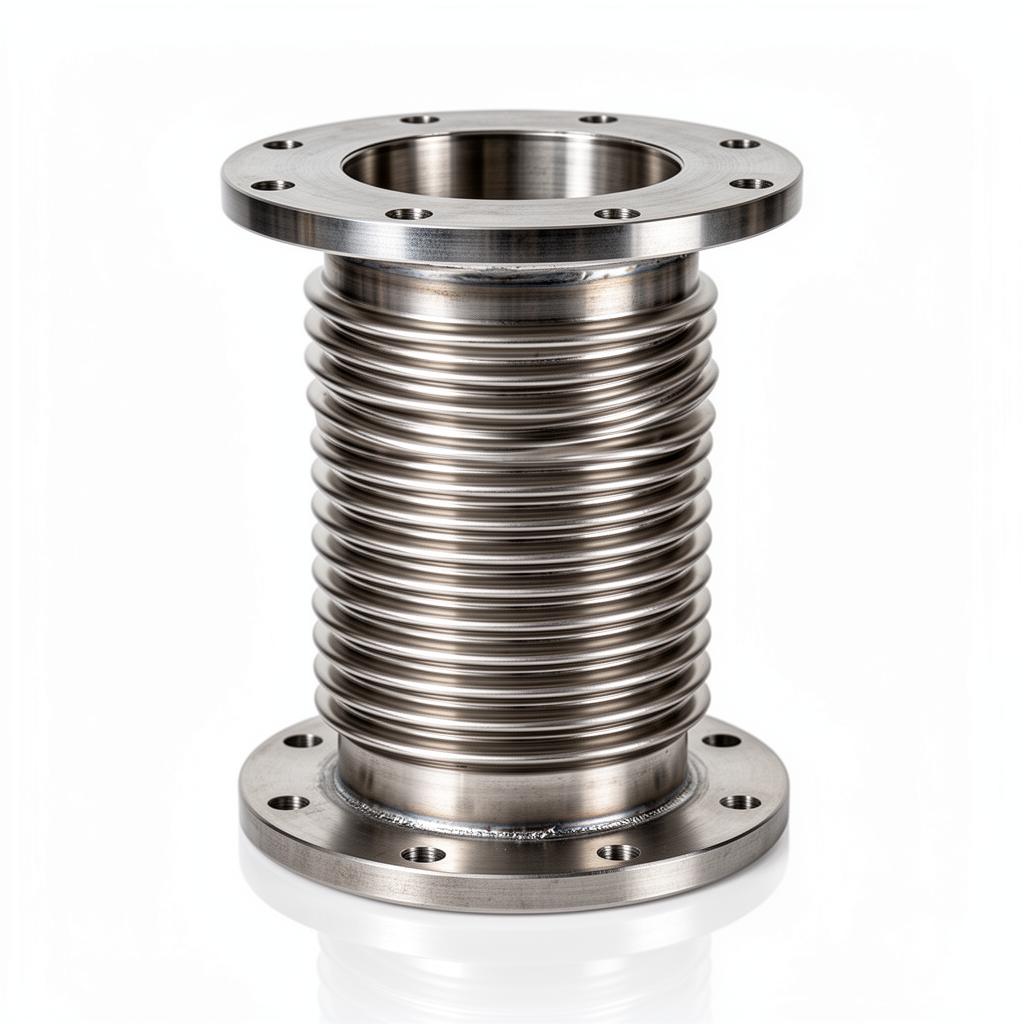
The Role of a Stainless Steel Pipe Expansion Joint
In modern commercial building services, the thermal cycle of medium and high-temperature water systems creates significant physical expansion and contraction within pipework. A stainless steel pipe expansion joint is engineered to absorb these dimensional changes, preventing the buildup of stresses that could otherwise lead to premature fatigue, weld failure, or damage to connected equipment such as pumps and heat exchangers. These components are essential in complex plant rooms where rigid piping lacks the inherent flexibility to accommodate temperature swings. By integrating a professionally sized expansion solution, consultants can ensure the system remains compliant with the structural requirements set out in CIBSE Guide B and various relevant British Standards for piping integrity.
Choosing a stainless steel pipe expansion joint over rubber or fabric alternatives is often dictated by the specific operating environment of the plant. Stainless steel variants, typically grade 304 or 316, provide superior resistance to high temperatures and pressures that would degrade EPDM or NBR elastomers. They are particularly vital in steam applications or high-head hydronic systems where the risk of catastrophic failure must be absolute zero. When specifying these units, engineers must account for the spring rate of the bellows, ensuring that the force required to compress the joint does not exceed the load capacity of the fixed pipe anchors. Incorrect selection often leads to 'bellows squirm' or anchor displacement, compromising the entire mechanical installation.
Beyond simple thermal movement, these joints act as a vital safety buffer against hydraulic shock and vibration isolation. While primary vibration control is often handled by specific anti-vibration mounts, the bellows provide a secondary layer of protection for delicate instrumentation and control valves. High-quality construction, featuring multi-ply bellows, ensures the unit can withstand cyclic loading over a 25-year design life, provided the water chemistry is maintained in accordance with BSRIA BG50. Our expert team at UKGP Industrial understands that every project is unique, offering technical support to ensure your expansion strategy is robust, commercially viable, and expertly tailored to the specific mechanical stresses of your unique building design.
- Absorption of significant axial, lateral, and angular thermal movements.
- Reduction of stress on mechanical anchors and heavy plant connections.
- Compatibility with high-temperature LTHW, MTHW, and steam circuits.
- Long-term durability surpassing traditional rubber joints in aggressive environments.
- Compliance with BS EN 14917 for metal bellows expansion joints.
Technical Sizing for a Stainless Steel Pipe Expansion Joint
The mathematical precision required for sizing a stainless steel pipe expansion joint cannot be overstated. Designers must first calculate the total anticipated thermal expansion using the coefficient of linear expansion for the specific piping material, whether it be carbon steel or copper. This involves determining the maximum temperature delta between the lowest installation temperature and the peak operating temperature of the medium. Once the total expansion (in millimetres) is known, the engineer must select a bellows unit with a rated movement capacity that includes a conservative safety margin. Over-compressing a joint beyond its design limits will significantly shorten its service life and may void the manufacturer warranty, leading to costly remedial works later in the defect's liability period.
Pressure thrust is another critical factor that frequently catches out junior M&E contractors. When a stainless steel pipe expansion joint is pressurised, it exerts a force equal to the internal pressure multiplied by the effective cross-sectional area of the bellows. This thrust must be restrained by substantial main anchors at each end of the pipe run. If anchors are not sufficiently sized or if the bellows are installed without proper guiding, the pipework will likely bow or deflect. Following BSRIA BG29 protocols during the pre-commissioning phase is essential to ensure that no debris is trapped within the bellows convolutions, which could restrict movement or cause localised corrosion. Proper alignment and support are the hallmarks of a professionally installed expansion system.
UKGP Industrial provides a comprehensive range of solutions for these challenges, offering units from DN15 to DN600. Whether you require flanged or weld-end connections, our stainless steel options are designed to integrate seamlessly into modern UK plant rooms. For those managing high-pressure systems, we advise reviewing the maximum working pressure ratings carefully. Our stainless steel bellows are built to handle rigorous demands, and we provide a 2-year warranty to give the specifying engineer and the end-user absolute peace of mind. Investing in a high-specification joint early in the procurement phase prevents the far higher costs associated with emergency bellows replacement and system downtime in a live commercial facility.
- Accurate calculation of linear thermal expansion based on temperature differentials.
- Assessment of maximum working pressures and surge potential.
- Calculation of anchor loads and guide spacing to prevent buckling.
- Selection of appropriate end connections including PN16 flanges or sch 40 weld-ends.
- Consideration of flow liners to minimize turbulence and erosion in high-velocity systems.
Material Compatibility and BS EN 14917 Standards
Material selection for the inner bellows and the outer shroud of a stainless steel pipe expansion joint is pivotal for preventing stress corrosion cracking, especially in chlorinated water systems. While 304 stainless steel is common, 316L is often preferred for its enhanced resistance to pitting in environments where water treatment may be inconsistent. All UKGP stainless steel bellows are manufactured to meet the stringent requirements of BS EN 14917, ensuring that the metallurgy and weld quality are sufficient for the cyclical stresses of industrial heating and cooling. This standard provides a framework for testing and quality control that gives consultants the evidence they need for professional indemnity assurance on large-scale infrastructure projects.
In addition to the bellows material, the choice of flanging and internal liners must be addressed. Internal liners are particularly important when flow velocities exceed a certain threshold, as they protect the thin bellows convolutions from the abrasive effects of the moving fluid. However, liners can limit the amount of lateral movement the joint can accommodate, so a balance must be struck during the design phase. It is also worth considering the external environment; if the joint is located in a coastal area or near aggressive chemical processes, the external hardware may also require stainless steel or high-grade galvanised finishes to prevent atmospheric corrosion from weakening the assembly over time.
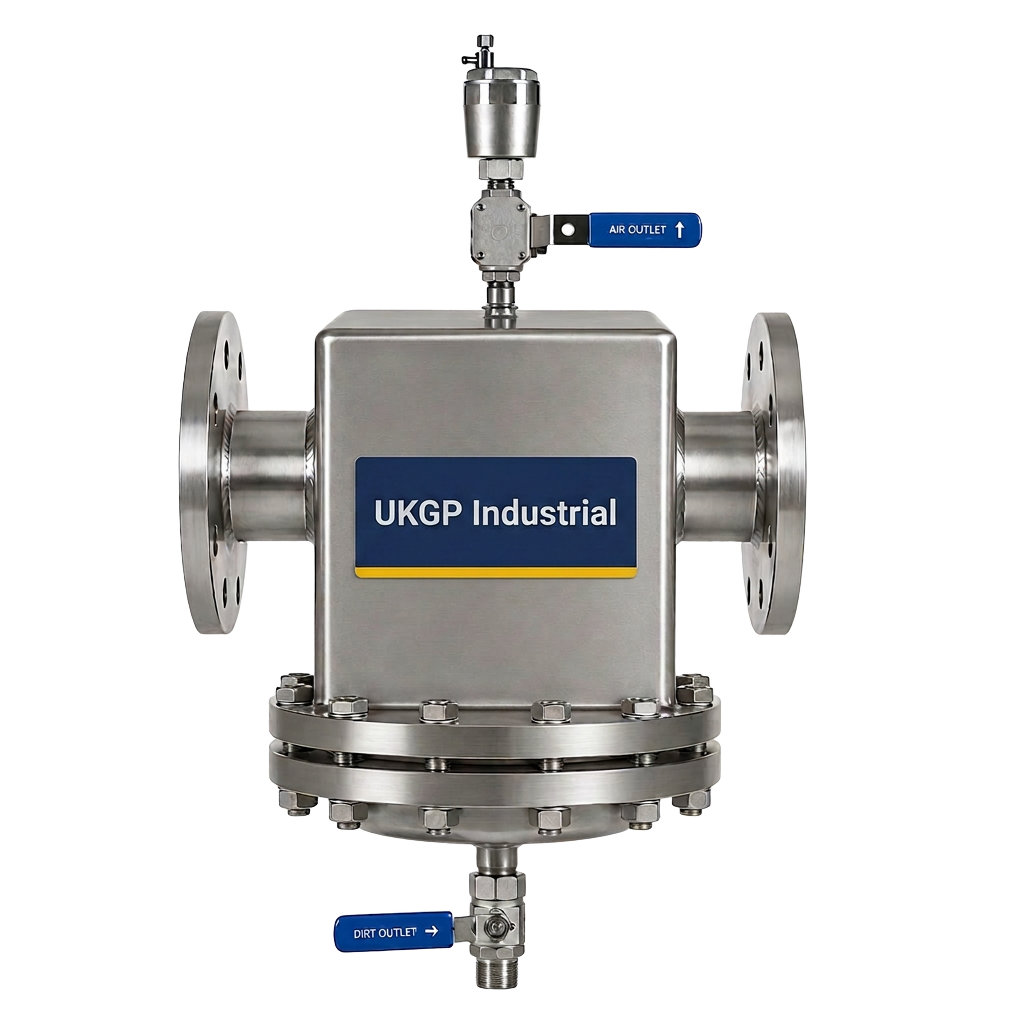
When consulting on plant room layout, UKGP recommends a holistic approach to water quality and thermal management. A stainless steel pipe expansion joint works best when the surrounding water is free from suspended solids and corrosive gases. This is why we often suggest pairing expansion solutions with high-efficiency air and dirt separators. By maintaining clean, deaerated water according to BSRIA BG50, you not only protect the boilers and pumps but also ensure the thin-walled bellows of your expansion joints are not compromised by sludge accumulation. Request a quote from our Surrey-based technical team to receive a tailored specification that covers both expansion and system cleanliness for your next project.
- Grade 316L bellows for superior corrosion resistance in HVAC circuits.
- Adherence to BS EN 14917 for performance validation and safety.
- Optional internal sleeves for high-velocity or turbulent flow applications.
- Precision-welded construction for maximum cycle life and fatigue resistance.
- Availability in a variety of materials including PTFE and fabric for specialized needs.
Guiding and Anchoring Requirements
The effectiveness of a stainless steel pipe expansion joint is entirely dependent on the quality of the surrounding pipe support system. Without correct guiding, the bellows can act like a spring under pressure, causing the pipe to 'snake' or kick out of alignment. This is especially dangerous in vertical risers where the weight of the water column adds to the complexity of the load. Standard practice dictates that the first pipe guide should be located within 4 pipe diameters of the expansion joint, with the second guide located within 14 diameters. This ensures that the thermal movement is directed axially into the bellows, allowing it to function as designed without being subjected to damaging eccentric loads.
Main anchors must be designed to withstand the sum of the pressure thrust, the bellows spring rate force, and the frictional resistance of the pipe guides. In refurbishments of older plant rooms, existing structural points may not be sufficient to handle these loads, requiring the installation of new steelwork. This is a critical point for Facility Managers to monitor; if an anchor shows signs of movement or distress, the expansion joint is no longer protected and failure is imminent. During the installation of a stainless steel pipe expansion joint, it is also vital to check that the 'cold pull' or pre-setting of the bellows is performed correctly according to the manufacturer's installation manual to optimize movement range.
Proper installation oversight is a core part of the value UKGP brings to M&E contractors. We provide detailed technical drawings and installation guides for our DN15-DN600 bellows range to ensure that every unit is fitted for success. Whether you are using flanged or weld-end units, the alignment must be laser-accurate. Remember that expansion bellows are not meant to compensate for poor pipe alignment during initial installation; they are precision mechanical components designed for thermal management. By specifying UKGP expansion bellows, you are choosing a partner that understands the nuances of UK mechanical engineering and provides the 2-year warranty required by savvy procurement leads.
- Mandatory use of primary and secondary pipe guides for axial alignment.
- Calculation of total anchor loads including pressure thrust and spring force.
- Avoidance of bellows pre-compression during installation unless specified.
- Visual inspection of bellows convolutions for signs of distortion or damage.
- Strict adherence to CIBSE Guide B for thermal expansion calculations.
Maintenance and Lifecycle of Expansion Bellows
While a stainless steel pipe expansion joint has no moving parts in the traditional sense, it is a highly stressed component that requires periodic inspection. Under BS 8552 and BSRIA BG50 guidelines, water quality monitoring is essential to prevent internal corrosion, but external inspections are equally important. Facility managers should look for signs of 'convolutions touching' which indicates the joint has reached its movement limit, or any signs of discoloration that might suggest a pinhole leak. Because stainless steel can be susceptible to chloride-induced stress corrosion, any external leaks from nearby valves or pumps that drip onto the bellows must be immediately rectified to prevent rapid degradation of the bellows stack.
Replacing a failed expansion joint is often a logistically challenging and expensive process, particularly if it requires a system shutdown in a mission-critical facility like a hospital or data centre. To mitigate this risk, many engineers now specify bellows with external shrouds or internal liners to provide additional mechanical protection. When the time comes for replacement, ensuring the new stainless steel pipe expansion joint matches the original specification exactly is crucial. Changes in bellows thickness or the number of convolutions can alter the spring rate, potentially overloading existing anchors. Our technical department can help identify legacy units and provide equivalent high-performance replacements from our Surrey warehouse.
The lifecycle cost of a high-quality UKGP stainless steel bellows is significantly lower than budget alternatives that may fail prematurely. By opting for a 2-year warranty and a product that meets all UK industrial standards, you protect the long-term ROI of the mechanical installation. Our range, covering everything from rubber EPDM/NBR to stainless steel and PTFE, allows for a single-source procurement strategy. This simplifies the supply chain and ensures that all expansion components across a site are compatible with the overarching maintenance strategy. For expert advice on selecting the correct expansion bellows for your specific temperature and pressure requirements, contact UKGP Industrial today for a technical consultation.
- Regular visual inspection for convolution deformation or fatigue cracks.
- Monitoring of water treatment levels to prevent stress corrosion cracking.
- External protection from debris and corrosive drips in the plant room.
- Ensuring anchors and guides remain secure and functional over time.
- Planned replacement schedules to avoid emergency system outages.
Comparing Stainless Steel vs. Rubber Bellows
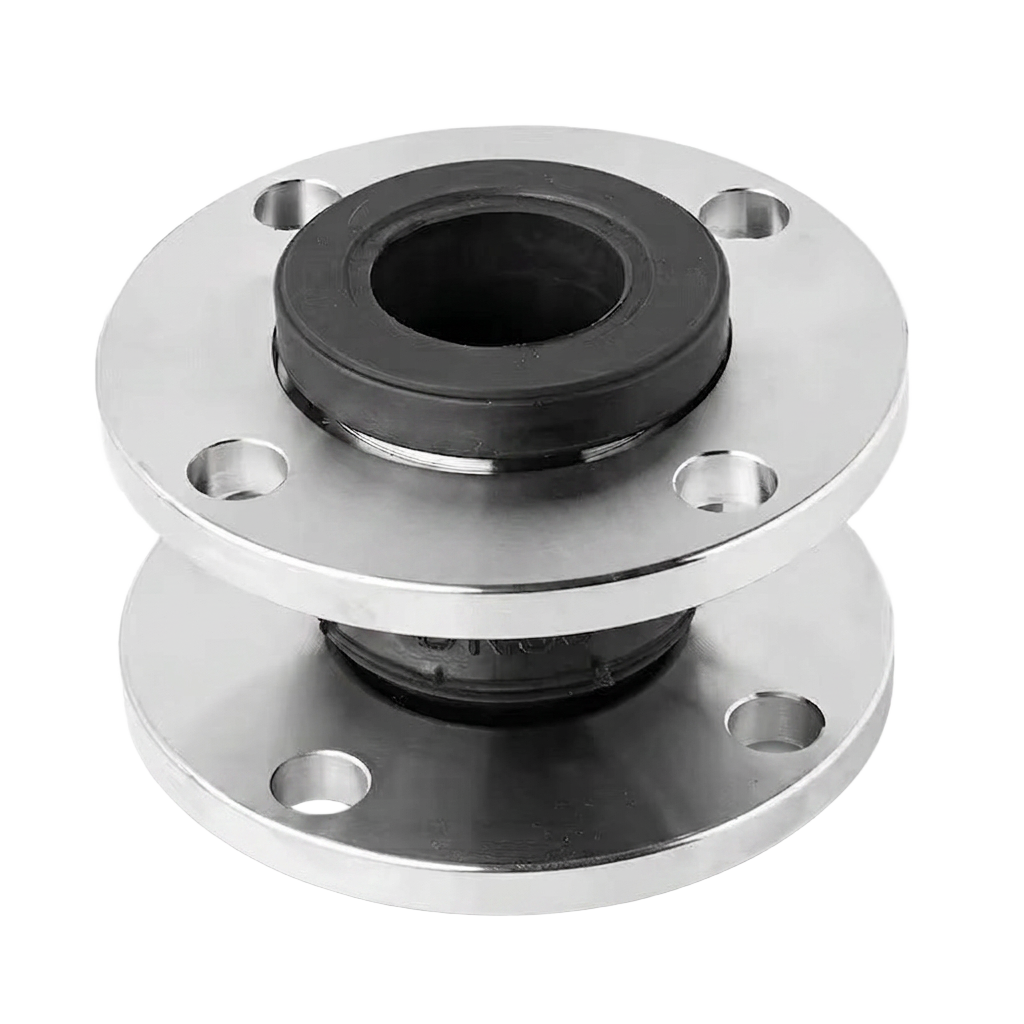
A common question for procurement leads is when to specify a stainless steel pipe expansion joint versus a rubber EPDM or NBR alternative. Rubber bellows are excellent for vibration isolation and are generally more cost-effective for LTHW systems with moderate temperatures and pressures. However, they have a finite shelf life and are susceptible to degradation from UV light and certain oil-based chemicals. In contrast, stainless steel bellows are the only viable option for high-pressure steam, MTHW, or HTHW systems where temperatures exceed 100°C. The metallic construction provides a much higher safety factor against 'burst' conditions and does not suffer from the 'perishing' issues associated with elastomers over many years of service.
From a commercial perspective, the choice often hinges on the specific design life of the building. For heritage refurbishments or high-end commercial developments, the stainless steel pipe expansion joint is the standard choice due to its robustness. While the initial capital expenditure is higher, the reduced frequency of replacement and the ability to withstand higher pressure surges make it a more commercially aware choice for the end client. UKGP stocks a wide range of both rubber and stainless steel options, ensuring we can provide the right technical fit for every budget and application. Our flanged and weld-end stainless units are particularly popular for their versatility in both new builds and complex plant room upgrades.
In summary, while rubber has its place in domestic-scale or light commercial vibration control, the heavy-lifting of thermal expansion in industrial HVAC is best handled by stainless steel. When specifying these components, always ensure the manufacturer can provide full traceability and material certificates in line with BS EN 10204. UKGP Industrial is committed to transparency and quality, ensuring that every stainless steel pipe expansion joint we supply meets the exact needs of UK building services consultants and M&E contractors. Reach out to us for a competitive quote on our DN15 to DN600 range, and let our Surrey-based engineers assist with your next plant room design.
- Stainless steel for high temperature (>100°C) and high pressure (>10 bar).
- Rubber EPDM/NBR for superior vibration damping in LTHW circuits.
- PTFE-lined bellows for aggressive chemical dosing or corrosive fluids.
- Consideration of fire safety: stainless steel is non-combustible.
- Evaluating the 2-year warranty and total cost of ownership across the system life.
Frequently asked questions
What is the maximum temperature a stainless steel pipe expansion joint can handle?
- Depending on the specific grade of stainless steel and the pressure rating, these joints can typically handle temperatures from -200°C up to 500°C and higher for specialized industrial applications, far exceeding the limits of rubber alternatives.
Why is BS EN 14917 important for expansion bellows?
- BS EN 14917 is the European standard for metal bellows expansion joints. It ensures the product has been designed, manufactured, and tested to withstand the stated mechanical and thermal stresses, providing safety and reliability for the installer.
Do I need an internal liner for my expansion joint?
- Internal liners are recommended when flow velocities are high (e.g., >2m/s for liquids, >20m/s for gases) or if the medium is abrasive. They protect the bellows from erosion and reduce turbulence, though they may slightly limit movement.
Can a stainless steel pipe expansion joint be used for vibration isolation?
- While primarily designed for thermal movement, they do provide some vibration damping. However, for significant pump vibration, rubber bellows or specific anti-vibration mounts are often more effective at absorbing high-frequency oscillations.
What is the difference between axial and lateral movement?
- Axial movement is the compression or extension of the bellows along its longitudinal axis. Lateral movement is the displacement of the two ends of the bellows in a direction perpendicular to the axis. Selection must account for both if the pipe run is not perfectly straight.