The Mechanics of Thermal Expansion in B2B Systems
In the UK's commercial HVAC sector, the fundamental physics of thermal expansion presents a significant challenge to fixed piping infrastructure. When water temperatures fluctuate within LTHW or chilled water circuits, the metallic pipework undergoes dimensional changes that exert immense force on anchors, guides, and plant room equipment. Without the strategic installation of a pipe expansion bellows, these forces can lead to pipe bowing, joint fatigue, or even terminal pump casing failure. Engineering designers must calculate the precise linear growth based on the material's coefficient of expansion and the anticipated temperature differential to determine the required compensation. UKGP Industrial specializes in providing these critical components to withstand the rigorous demands of modern British building services environment.
Consultants often refer to the CIBSE Guide C for thermal expansion data, which highlights the necessity of flexible joints in long pipe runs. Whether the system utilizes carbon steel, copper, or stainless steel, the expansion rates vary significantly, requiring a tailored approach to selecting the correct pipe expansion bellows for each specific application. For instance, a 50-metre run of steel pipe heating from 10°C to 80°C will expand by approximately 45mm. If this movement is restricted by rigid fittings, the resulting stress can exceed the yield strength of the material. By integrating high-quality bellows from the UKGP range, contractors can mitigate these risks and ensure the system operates within its designed safety margins.
Furthermore, modern building designs often incorporate tighter plant room spaces, making natural expansion loops or offsets impractical due to spatial constraints. This is where the compact nature of a pipe expansion bellows becomes an invaluable asset for M&E contractors and consultants. Rather than dedicating large areas of floor space to significant pipework deviations, a direct axial bellows can manage the movement within the footprint of the main pipe run. This efficiency in design not only saves on material costs but also simplifies the structural support requirements for the building. Understanding these basics is the first step toward achieving a robust, low-maintenance mechanical installation that meets the demanding lifecycle requirements of contemporary UK commercial property assets.
- Calculation of linear expansion based on ΔT and material coefficients
- Reduction of mechanical stress on fixed anchors and rotating equipment
- Spatial efficiency compared to traditional expansion loops or horseshoe bends
- Alignment with CIBSE Guide C benchmarking for thermal displacement
Types of Pipe Expansion Bellows for British Standards
When specifying a pipe expansion bellows, engineers must choose between different configurations based on the direction of movement: axial, lateral, or angular. Axial bellows are most common in domestic and commercial heating systems, designed to compress or extend along the longitudinal axis of the pipe. However, in complex riser systems or across building expansion joints, lateral or angular movement may occur, necessitating tied bellows or gimbal arrangements. Selecting the right configuration is essential for compliance with BS EN 14917, which dictates the design and fabrication standards for metal pressure bellows. At UKGP Industrial, we provide expert guidance to ensure your selection aligns perfectly with the unique hydraulic and thermal profile of your specific project.
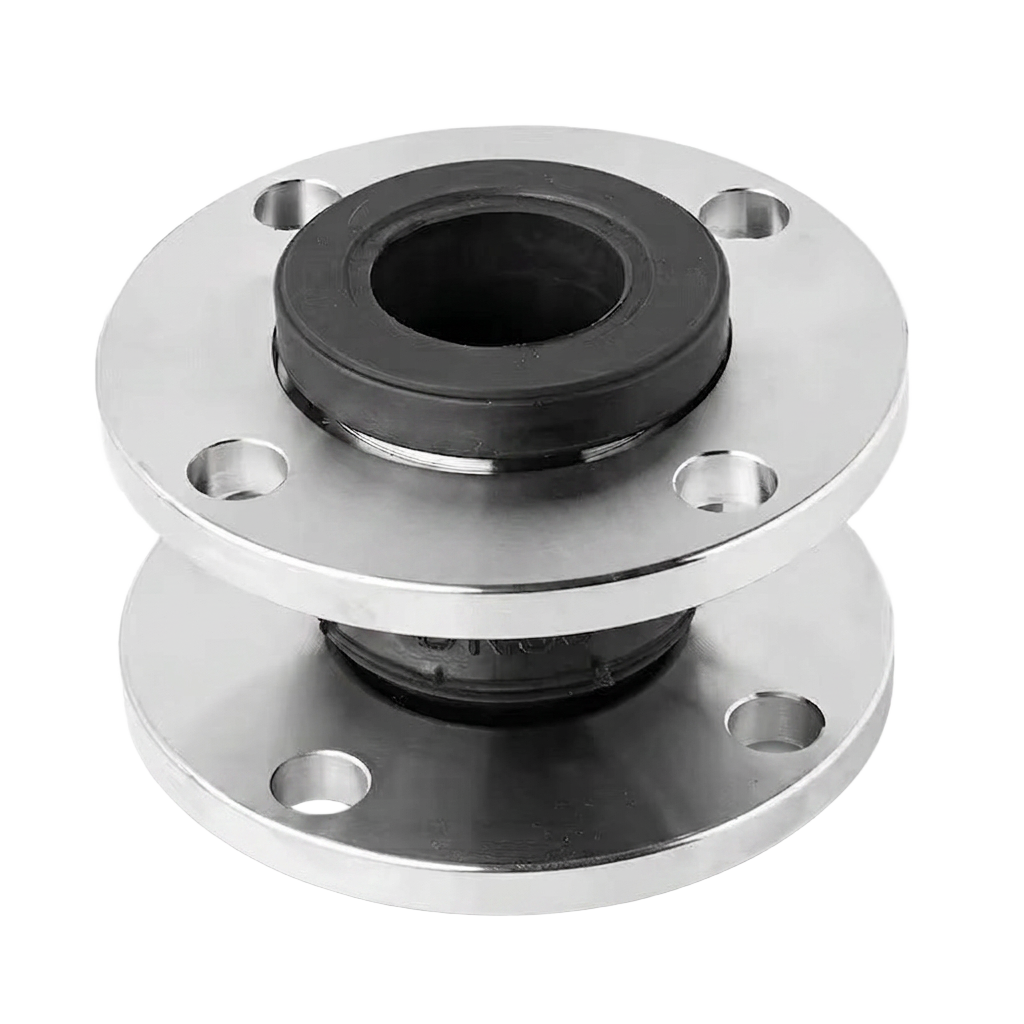
Material selection is equally critical to the longevity of the installation. For many standard HVAC applications, EPDM or NBR rubber bellows are preferred for their excellent vibration isolation properties and cost-effectiveness. However, for high-temperature steam or industrial process lines, stainless steel or PTFE-lined bellows are required to resist thermal degradation and chemical attack. Each pipe expansion bellows supplied by UKGP Industrial undergoes rigorous quality control to ensure it can handle the specified pressure and temperature ranges. Our range covers everything from DN15 to DN600, available with flanged or weld-end connections to suit any site requirement. We also offer a comprehensive 2-year warranty to give facilities managers and procurement leads total peace of mind regarding product reliability.
Compliance with BSRIA BG29 and BG50 is also influenced by the quality of these flexible components. Poorly specified or low-quality bellows can become points of stagnation or debris accumulation, potentially compromising water treatment regimes and leading to localized corrosion. By choosing a UKGP Industrial pipe expansion bellows, you are investing in a component designed with internal flow liners where necessary to minimize turbulence and sediment build-up. This attention to detail ensures that the flexible joint does not become the 'weak link' in your system's hydraulic performance. Whether you are working on a new build or a plant room refurbishment, our technical team can provide the submittal data required to satisfy even the most stringent consultant specifications.
- Axial, Lateral, and Angular configurations for diverse movement profiles
- Material options including EPDM, NBR, Stainless Steel, PTFE, and Fabric
- Sizes ranging from DN15 to DN600 with flanged or weld-end options
- Robust 2-year warranty to ensure commercial long-term viability
Installation Best Practices and BSRIA BG50 Alignment
The successful integration of a pipe expansion bellows relies heavily on correct installation and the positioning of anchors and guides. According to industry best practices, a bellows must be placed between two main anchors that are capable of withstanding the full pressure thrust and the force required to compress the unit. Without adequate anchoring, the internal pressure can cause the bellows to over-extend and fail. Additionally, the first and second pipe guides must be positioned at specific intervals from the bellows—typically 4 pipe diameters and 14 pipe diameters respectively—to prevent squirm and ensure the movement remains strictly axial. Failing to follow these spacing rules is one of the leading causes of premature failure in commercial piping systems.
Maintenance is another pillar of the BSRIA BG50 framework, which focuses on the management of water quality and the preservation of system metalwork. Facilities managers should regularly inspect the pipe expansion bellows for signs of weeping, surface cracking, or excessive deformation. During system flushing and chemical cleaning (BG29), these components must be protected from high-pressure surges or aggressive chemistries that might fall outside their design parameters. A well-maintained bellows not only protects the pipework but also reduces the noise and vibration transmitted from the plant room to the rest of the building, enhancing the comfort of the occupants. UKGP Industrial provides technical sheets for all products to assist FM teams in developing effective PPM schedules.
Correct pre-setting of the pipe expansion bellows is often overlooked during the installation phase. If a bellows is installed when the ambient temperature is significantly higher or lower than the midpoint of the system's operating range, it may require 'cold pulling' to ensure it has sufficient travel in both directions. This level of technical precision separates high-quality mechanical installations from those prone to early leaks and stress fractures. When you partner with UKGP Industrial, you gain access to decades of engineering expertise, ensuring that your expansion strategy is built on a foundation of technical excellence. We recommend requesting a quote early in the design stage to ensure lead times align with your construction programme.
- Precise placement of main and intermediate anchors to manage pressure thrust
- Specific guide spacing (4D and 14D) to ensure linear movement
- Visual inspection protocols in line with BSRIA BG50 maintenance standards
- Pre-setting and cold-pulling techniques for temperature-specific installs
The Role of Cleanliness and Side Stream Filtration
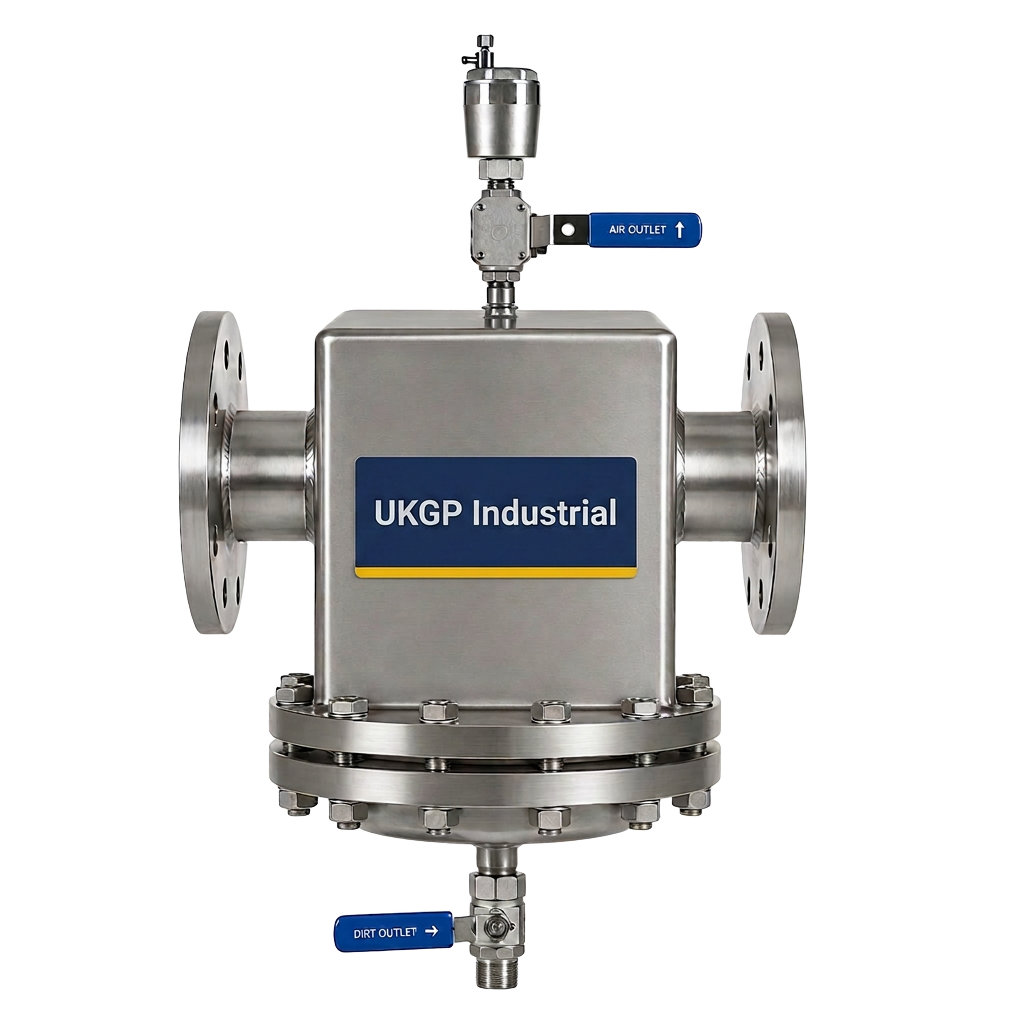
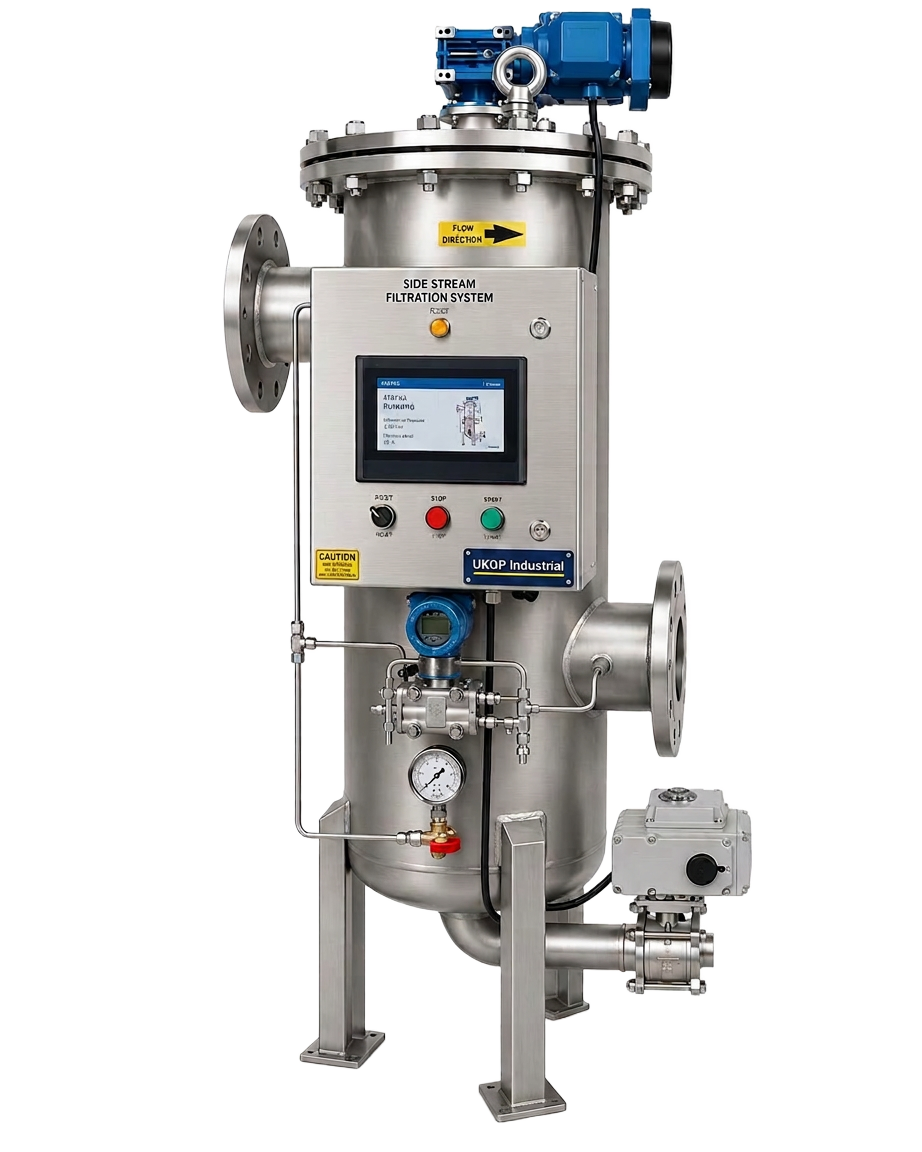
While managing physical movement with a pipe expansion bellows is vital, the internal environment of the pipe is equally important for the component's lifespan. Suspended solids and magnetite can accumulate in the convolutions of a bellows, leading to restricted movement and accelerated corrosion. This is especially true in older systems where corrosion products are prevalent. To protect these sensitive flexible joints, implementing high-efficiency side stream filtration is a requirement under BSRIA BG29. By continuously removing microscopic debris, filtration protects the integrity of bellows, valves, and heat exchangers, ensuring that the system remains hydraulically balanced and efficient. UKGP Industrial offers advanced skids designed specifically for this purpose.
Effective filtration works in tandem with chemical dosing to maintain a passive internal surface on all metallic components. If particulates are allowed to settle in the 'dead zones' of a pipe expansion bellows, they can cause under-deposit corrosion, which is often undetectable until a leak occurs. By maintaining clean water via a UKGP side stream filtration unit, M&E contractors can ensure that the investment in expansion joints is protected for the long term. This holistic approach to system health is what defines modern building services engineering, moving away from reactive repairs toward proactive asset management. Our filtration solutions are designed for easy integration into existing plant rooms with minimal downtime.
Ultimately, the synergy between mechanical flexibility and chemical/physical water quality cannot be overstated. A system that is moving correctly but is full of sludge will suffer from premature failure just as quickly as a clean system with no expansion relief. By sourcing both your expansion bellows and your filtration solutions from a single, trusted British supplier like UKGP Industrial, you ensure compatibility and technical accountability. We provide comprehensive support to help you meet the water quality targets set out in BS 8552, ensuring your closed-circuit systems remain efficient and compliant throughout their lifecycle. Contact our Surrey office today to discuss how we can support your next project with integrated plant room solutions.
- Prevention of sediment build-up in bellows convolutions
- Alignment with BSRIA BG29 water quality and flushing guidelines
- Reduction of under-deposit corrosion in flexible pipework components
- Improved system longevity through combined mechanical and chemical protection
Specifying Bellows for Pump and Plant Protection
Protecting high-value assets such as pumps and boilers is a primary function of the pipe expansion bellows. Pumps are particularly sensitive to 'pipe strain,' where the weight or thermal expansion of the connected pipework applies torque to the pump housing. This can lead to misalignment of the motor and impeller, bearing failure, and mechanical seal leaks. By installing flexible bellows at the pump suction and discharge, these forces are isolated, allowing the pump to operate within its design clearances. This practice is standard for any professional M&E installation, particularly in large-scale residential or commercial developments where continuous uptime is an absolute operational requirement.
Beyond thermal movement, a pipe expansion bellows also acts as a dampener for high-frequency vibrations generated by rotating equipment. This is essential for preventing the transmission of noise through the building's structural framework, which can be a major issue in hospitals, hotels, and office blocks. The choice of rubber versus stainless steel often comes down to the required level of vibration attenuation. Rubber EPDM bellows are exceptionally effective at absorbing these harmonics, while stainless steel bellows are better suited for higher temperature or pressure thresholds where rubber would perish. UKGP Industrial stocks both types to ensure we can meet the acoustic and mechanical needs of your project.
Procurement leads should look for suppliers who can provide full technical data sheets and certificates of conformity. When purchasing a pipe expansion bellows from UKGP, you receive a product that is not only built to BS EN 14917 but also backed by our commitment to customer service and technical support. We understand the pressures of site deadlines, which is why we offer a wide range of DN15 to DN600 units ready for rapid dispatch. Whether your requirement is for a standard EPDM flanged unit or a bespoke PTFE-lined bellows for a specific chemical process, we have the manufacturing capacity and technical oversight to deliver the right solution every time.
- Isolation of pump nozzles from thermal stress and pipe strain
- Acoustic dampening to prevent noise transmission through building structures
- Suitability for both high-pressure steam and chilled water circuits
- Full certification and compliance documentation for technical submittals
Future-Proofing Your Plant Room with UKGP Industrial
As the UK building industry moves towards more sustainable and efficient HVAC solutions, the importance of robust component selection becomes even more apparent. A high-quality pipe expansion bellows is a small investment that protects much more expensive equipment from the inevitable forces of nature. Future-proofing your system means anticipating the stresses of 24/7 operation and choosing products that are tested to the limit. UKGP Industrial is dedicated to supporting Surrey and the wider UK market with British-engineered solutions that stand the test of time. From expansion bellows to dosing pots and sensors, we provide the full spectrum of plant room ancillaries required for modern high-performance buildings.
Our team of engineers is available to help you navigate the complexities of expansion calculations and material selection. We don't just sell components; we provide the technical background necessary to ensure those components function perfectly within your specific system architecture. If you are unsure about the required movement capability or the chemical compatibility of a specific pipe expansion bellows, our experts are just a phone call away. This level of service is why we are the preferred supplier for many of the UK's leading M&E contractors and consultants who demand reliability and technical depth in their supply chain. Our Surrey-based warehouse ensures we can react quickly to site changes.
In conclusion, mastering the basics of thermal movement is essential for anyone involved in the design, installation, or maintenance of commercial piping systems. By specifying a pipe expansion bellows from UKGP Industrial, you are choosing a product that meets all relevant British Standards, including BS EN 14917, and aligns with the best practice guidance from BSRIA and CIBSE. We invite you to explore our full range of rubber, stainless steel, and fabric bellows. For a competitive quote or to find out more about our DN15-DN600 flanged and weld-end units, reach out to our team today and ensure your next project is protected against the risks of thermal expansion.
- Expert engineering support for expansion calculations and material compatibility
- Rapid dispatch from our Surrey distribution hub to meet project deadlines
- Comprehensive range including rubber, steel, PTFE, and fabric options
- Commitment to British engineering excellence and industry-leading standards
Frequently asked questions
What is the primary function of a pipe expansion bellows?
- The primary function is to absorb thermal expansion and contraction in piping systems, preventing stress on anchors, guides, and connected plant equipment like pumps and boilers.
How do I choose between EPDM and stainless steel bellows?
- EPDM is generally used for HVAC applications up to 100°C for vibration dampening, while stainless steel is required for higher temperatures, pressures, and steam applications as per BS EN 14917.
Why is guide spacing important when installing expansion bellows?
- Correct guide spacing (typically 4D and 14D from the bellows) ensures the pipe moves linearly into the bellows and prevents 'squirm' or buckling, which can lead to bellows failure.
Are UKGP expansion bellows covered by a warranty?
- Yes, all our expansion bellows, from DN15 to DN600, come with a comprehensive 2-year warranty, reflecting our confidence in their durability and engineering quality.
Do bellows require maintenance according to BSRIA BG50?
- Yes, BSRIA BG50 recommends regular visual inspections for signs of fatigue, corrosion, or leaks to ensure the flexible joints continue to protect the system effectively.