Understanding the Role of an Expansion Joint Rubber Seal
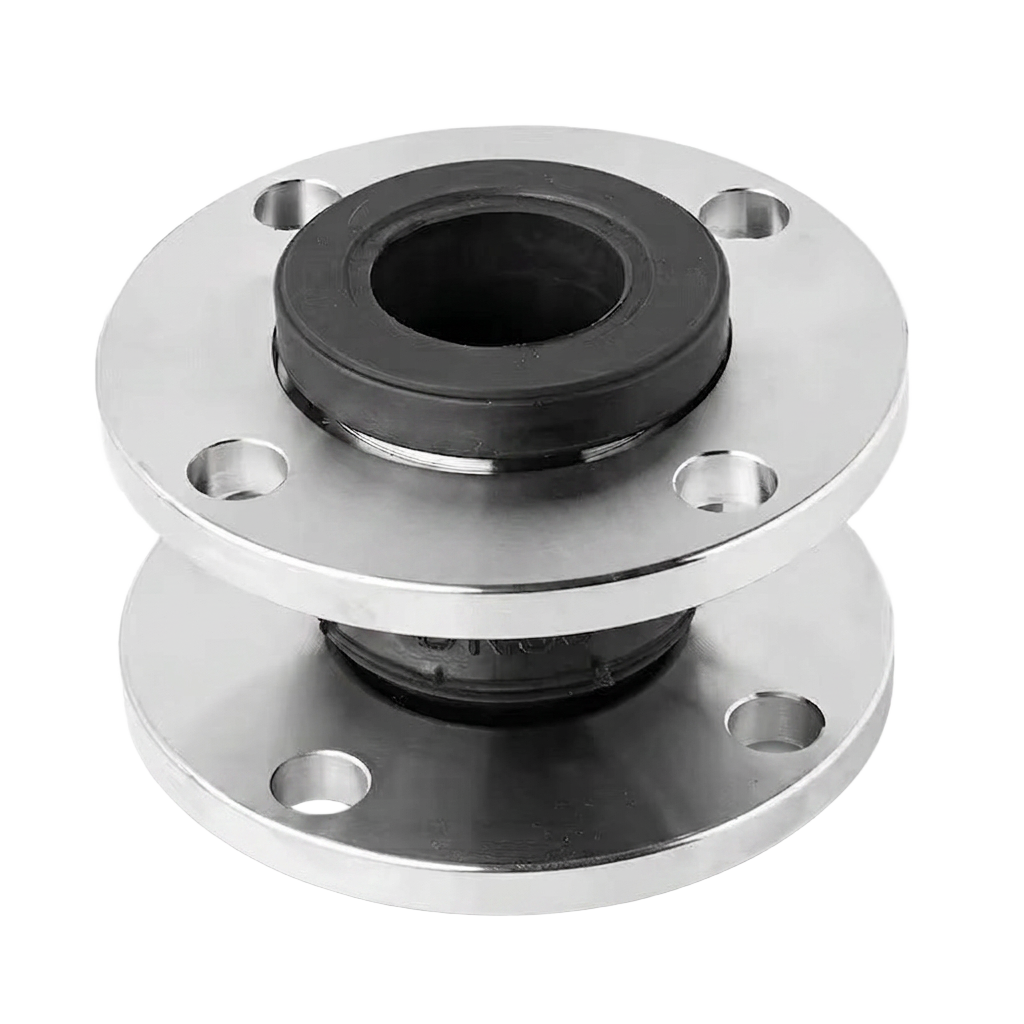
In modern UK building services, the expansion joint rubber seal serves as a primary defence against the physical stresses caused by heat-induced pipework movement. As water temperatures fluctuate in LTHW or chilled water circuits, the metal pipework expands and contracts significantly. Without a robust rubber expansion joint in place, this energy is transferred directly to fixed points, pipe supports, and expensive equipment like heat exchangers or pumps. Our UKGP rubber bellows are designed to accommodate these axial, lateral, and angular movements while maintaining a watertight seal under varying pressures. These components are essential for maintaining system integrity over a 25-plus year lifecycle in busy commercial plant rooms.
When engineers specify an expansion joint rubber seal, they are often looking for more than just thermal compensation. These units are highly effective at isolating high-frequency vibrations produced by centrifugal pumps and other rotating machinery. By installing a rubber bellow immediately adjacent to the pump suction and discharge ports, consultants can prevent noise transition through the building fabric and protect sensitive instrumentation from mechanical shock. This dual-purpose role makes the EPDM or NBR rubber joint a staple in modern M&E specifications across the United Kingdom. At UKGP Industrial, we ensure our rubber seals meet the rigorous demands of industrial environments, providing a 2-year warranty as standard for peace of mind.
Material selection is the first technical hurdle for any procurement lead or FM. The choice of elastomer for your expansion joint rubber seal depends entirely on the fluid characteristics and temperature profile of the system. EPDM is generally preferred for heating and cooling water due to its excellent resistance to ozone and heat aging. However, if the system contains traces of oil or hydrocarbons, an NBR (Nitrile) liner should be specified to prevent the rubber from swelling and losing its structural integrity. Understanding these chemical compatibilities is vital for complying with BSRIA BG50 guidelines regarding water treatment and system longevity. Failure to match the elastomer to the medium is a common cause of premature failure in UK plant rooms.
- Axial compression and extension capabilities for thermal growth.
- Lateral deflection to compensate for pipe misalignment.
- Vibration dampening to protect sensitive plant room equipment.
- EPDM liners for standard HVAC; NBR for oil-contaminated systems.
Technical Sizing and Calculation Standards
Accurate sizing of an expansion joint rubber seal requires a detailed analysis of the expected thermal expansion within the pipe run. UK consultants typically refer to the coefficient of linear expansion for the specific piping material, whether it be carbon steel, copper, or stainless steel. By calculating the total movement between two fixed anchors, the engineer can determine if a single rubber bellow provides sufficient axial travel. It is a common mistake to undersize these joints, which leads to the rubber being stretched beyond its design limits, resulting in a catastrophic breach. Our technical team at UKGP Industrial can assist with these calculations to ensure the selected DN size and movement rating are perfectly matched to your project requirements.
Pressure ratings are equally critical when selecting an expansion joint rubber seal for high-rise or large-scale industrial applications. Most standard EPDM bellows are rated for PN16 service, but actual working pressures and potential surge pressures must be checked against the manufacturer's data sheets. It is essential to account for the temperature de-rating factor; as the system temperature rises, the maximum allowable pressure for the rubber material decreases. This is specifically outlined in BS EN 14917, which provides a framework for the design and testing of expansion joints. Consulting the UKGP technical catalogue ensures that the bellows specified can handle the peak operating parameters without risk of deformation or flange leakage.
The installation environment also dictates whether a tied or untied expansion joint rubber seal is required. In many UK plant rooms, control units (tie rods) are used to prevent the bellow from over-extending under pressure thrust. If the pipework is not sufficiently anchored at both ends, the internal pressure will act like a piston, forcing the joint apart. Tie rods limit this movement, ensuring the rubber element stays within its safe work envelope. For installations ranging from DN15 up to DN600, UKGP provides flanged or weld-end options that can be configured with or without tie rods depending on the specific hydraulic forces present in your pipework design.
- Calculation of linear thermal expansion based on Delta T.
- Assessment of maximum working pressure including surge margin.
- Application of temperature de-rating factors for rubber liners.
- Use of tie rods to manage pressure thrust in untied systems.
Integration with Side Stream Filtration and Water Quality
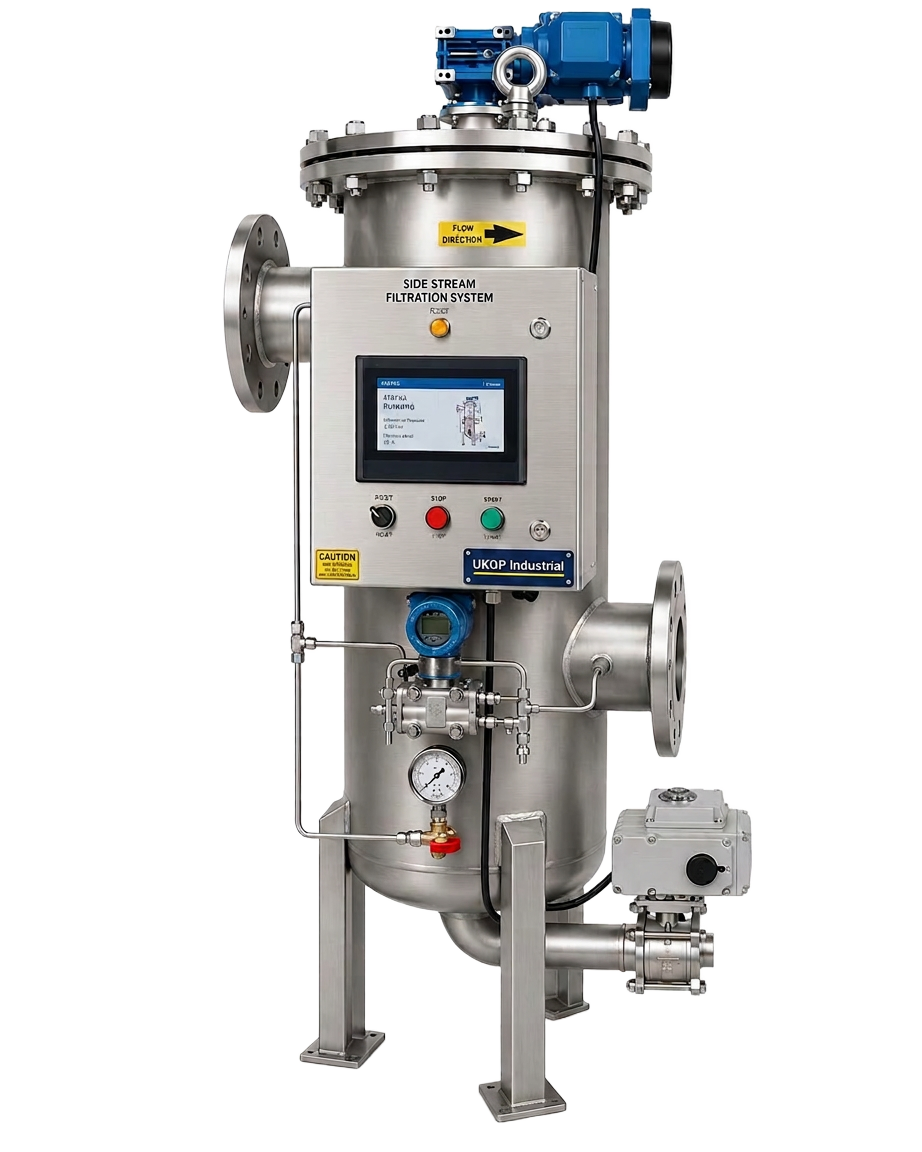
Maintaining the integrity of an expansion joint rubber seal is heavily dependent on the water chemistry within the system. According to BSRIA BG29 and BG50, the presence of suspended solids and corrosive elements can degrade internal components over time. If a system is plagued by magnetite or debris, these particles can settle in the convolutions of the rubber bellow, causing abrasive wear and reducing its flexibility. This is why we recommend the installation of side stream filtration skids alongside our flexible joints. By removing particles down to 5 microns, you protect the elastomer from internal scouring and ensure that the movement characteristics of the joint remain consistent throughout its long service life.
Consistent water quality monitored through advanced sensors is the best way to prevent the chemical degradation of an expansion joint rubber seal. High levels of chlorine or aggressive biocides can harden EPDM, leading to cracking under cyclic loading. By integrating real-time monitoring, FMs can adjust dosing levels before the rubber components are damaged. UKGP Industrial offers a complete range of water treatment solutions that work in tandem with our expansion joints to create a resilient HVAC infrastructure. From dosing pots to pH transmitters, managing the environment inside the pipe is just as important as the mechanical installation of the bellows themselves.
When designing a plant room, the synergy between filtration and movement control cannot be ignored. A clean system with low turbidity ensures that the sealing faces of the expansion joint rubber seal remain free from scale and corrosion. This reduces the risk of weeping at the flanges and maintains the vacuum ratings required for certain industrial processes. Whether you are working on a new build or a refurbishment, specifying UKGP filtration and expansion equipment together provides a single point of accountability for system reliability. Our team can provide a comprehensive quote for both filtration skids and the full range of PN16 rated rubber bellows to suit your specific DN requirements.
- Protection of bellow convolutions from abrasive suspended solids.
- Compliance with BSRIA BG50 water quality standards.
- Reduction of chemical stress on EPDM and NBR liners.
- Enhanced lifecycle for all plant room rubber bridge seals.
Installation Best Practices for the Expansion Joint Rubber Seal
Correct installation is paramount to the performance of any expansion joint rubber seal. It is a strict requirement that the pipework is properly aligned before the bellow is bolted into place; using the rubber joint to correct significant piping misalignment puts an initial 'set' or stress on the material that will lead to premature failure. Furthermore, the flanges should be tightened in a star pattern to ensure even pressure across the sealing face. Over-tightening can crush the integrated rubber flange, while under-tightening leads to leaks under thermal cycling. Following these practical steps, as advised by CIBSE guidelines, ensures the installation remains compliant and functional for years to come.
During the installation of an expansion joint rubber seal, care must be taken to protect the elastomer from external damage. Welding in close proximity to a rubber bellow without heat shielding is a common cause of 'spark-pitting,' which creates micro-tears in the rubber surface. Similarly, insulation should be applied in a way that allows for inspection of the joint without damaging the unit. At UKGP Industrial, we supply bellows that are robust, but they still require expert handling on-site. Our DN15 to DN600 units are shipped with protective covers to ensure they arrive at the contractor's site in perfect condition, ready for immediate installation into the HVAC or process circuit.
Finally, once the expansion joint rubber seal is installed, the system must be pressure tested in accordance with UK standard procedures. It is during this phase that the anchors and guides are verified; if an anchor fails, the rubber bellow will likely be the first component to fail as it absorbs the resulting uncontrolled movement. Periodic inspections should be scheduled to check for signs of aging, such as surface crazing or 'ballooning' of the rubber carcass. By choosing UKGP expansion bellows, you are investing in a product backed by a 2-year warranty and a UK-based technical support team ready to assist with any post-installation queries or maintenance inspections.
- Ensure precise pipe alignment to avoid pre-stressing the rubber.
- Apply correct torque settings in a cross-diagonal sequence.
- Protect rubber from welding sparks and extreme external heat.
- Verify anchor points before conducting system hydrostatic tests.
Material Compatibility and Environmental Factors
The environmental conditions surrounding an expansion joint rubber seal are just as important as the fluid it carries. In outdoor installations, UV exposure can cause standard rubber compounds to degrade and crack. UKGP offers specialized PTFE and fabric variants for extreme chemical or temperature environments, but for most external HVAC applications, our EPDM rubber is formulated with UV stabilizers to prolong its life. It is also vital to consider the ambient temperature; in unheated plant rooms or industrial units, the rubber can become less flexible in extreme cold, which must be factored into the movement calculations during the initial design phase.
Substances such as oils, greases, and certain water treatment chemicals can act as solvents for specific elastomers. When selecting an expansion joint rubber seal, the procurement lead must verify the full list of chemicals that will be introduced to the system, including any temporary cleaning agents used during a BG29 flush. While EPDM is excellent for water, it will fail rapidly if exposed to petroleum-based products. In such cases, switching to NBR or even a PTFE-lined bellow is the only way to ensure the long-term integrity of the expansion joint. UKGP Industrial stocks a wide variety of these materials to ensure we can meet the most demanding specifications in the UK market.
Weight and support also play a role in the health of the expansion joint rubber seal. Rubber bellows are not designed to support the weight of the pipework; the pipes must be independently supported by hangers and guides. If the weight of a long vertical run is allowed to rest on a DN200 rubber joint, it will deform and eventually tear. By following simple but effective engineering principles, M&E contractors can ensure that the expansion joints they purchase from UKGP Industrial perform as intended, protecting the building's infrastructure and the reputation of the engineering firm responsible for the installation.
- UV stabilization for outdoor or exposed pipework runs.
- Chemical resistance mapping for EPDM, NBR, and PTFE.
- Verification of ambient temperature effects on rubber elasticity.
- Strict adherence to pipe support and guiding requirements.
Procurement and Lifecycle Costs
From a procurement perspective, the initial cost of an expansion joint rubber seal is small compared to the potential cost of a system failure. A burst bellow in a high-rise plant room can cause thousands of pounds in water damage and system downtime. Specifying UKGP Industrial bellows, which come with a 2-year warranty, ensures that you are sourcing a product manufactured to high standards. When comparing quotes, it is important to look beyond the price and evaluate the technical support and material quality provided. Our units are designed for longevity, reducing the total cost of ownership by extending the intervals between necessary replacements.
Lifecycle management of an expansion joint rubber seal involves regular visual inspections for hardening, swelling, or cracking. In commercial settings, where systems are often pushed to their limits, having a reliable supplier based in Surrey like UKGP Industrial means that replacement units can be sourced quickly to prevent prolonged outages. We carry a significant stock of standard sizes from DN15 to DN600, available with various flange drillings including PN6, PN10, and PN16. This rapid availability is a key factor for Facility Managers who need to maintain 24/7 operations in hospitals, data centres, and large residential blocks.
In conclusion, the successful application of an expansion joint rubber seal depends on accurate sizing, material matching, and professional installation. By adhering to the standards set out by BSRIA, CIBSE, and British Standards, and by choosing a reputable UK supplier like UKGP Industrial, you ensure the safety and efficiency of your mechanical systems. Whether you require stainless steel, rubber, or PTFE joints, our team is here to provide the technical expertise and high-quality products needed for your next project. Contact us today for a competitive quote and detailed data sheets for our entire expansion joint range.
- Lowering total cost of ownership through quality elastomer selection.
- Fast UK lead times for emergency replacement bellows.
- Comprehensive 2-year warranty on all rubber expansion joints.
- Technical support for consultants from design to commissioning.
Frequently asked questions
What temperature range can a standard expansion joint rubber seal handle?
- Our standard EPDM expansion joint rubber seal is typically rated for temperatures between -10°C and +110°C. For higher temperature applications or specialized industrial fluids, we offer PTFE or stainless steel alternatives that can exceed these limits.
Are UKGP expansion bellows available with tie rods?
- Yes, we can supply any expansion joint rubber seal from DN15 to DN600 with custom-engineered tie rods (control units). These are essential for preventing over-extension in systems where pipework anchors are insufficient to counter pressure thrust.
Does your expansion joint rubber seal comply with BSRIA guidelines?
- Absolutely. Our products are designed to support the system integrity requirements outlined in BSRIA BG29 and BG50, particularly regarding the prevention of fatigue and the maintenance of a leak-free environment in commercial HVAC systems.
What is the difference between EPDM and NBR expansion joints?
- EPDM is the industry standard for hot and cold water applications due to its heat and weather resistance. NBR (Nitrile) is specifically used when the fluid contains oils or fats, as EPDM will swell and fail if it comes into contact with hydrocarbons.
Can I use an expansion joint rubber seal to fix pipe misalignment?
- No, expansion joints should not be used to compensate for poor pipe alignment. While they can handle minor lateral movement, they must be installed with the pipework correctly aligned to ensure the material isn't pre-stressed before operation.