The Fundamentals of expansion bellows installation
Successful expansion bellows installation starts with understanding the relationship between thermal growth and structural restraint. In any closed-loop heating or chilled water system, temperature fluctuations cause physical changes in pipeline dimensions. Without a calculated approach to installation, these forces can buckle pipework, shear flanges, or destroy expensive terminal units. M&E contractors must ensure that every flexible joint is treated as a critical pressure vessel component rather than a simple connector. By adopting a methodical approach, engineers can mitigate the risks of excessive noise, vibration, and mechanical fatigue that often plague poorly designed systems. Our technical team frequently observes that the root cause of bellows failure is rarely a manufacturing defect but rather a lack of understanding regarding the mechanical loads applied during the commissioning phase.
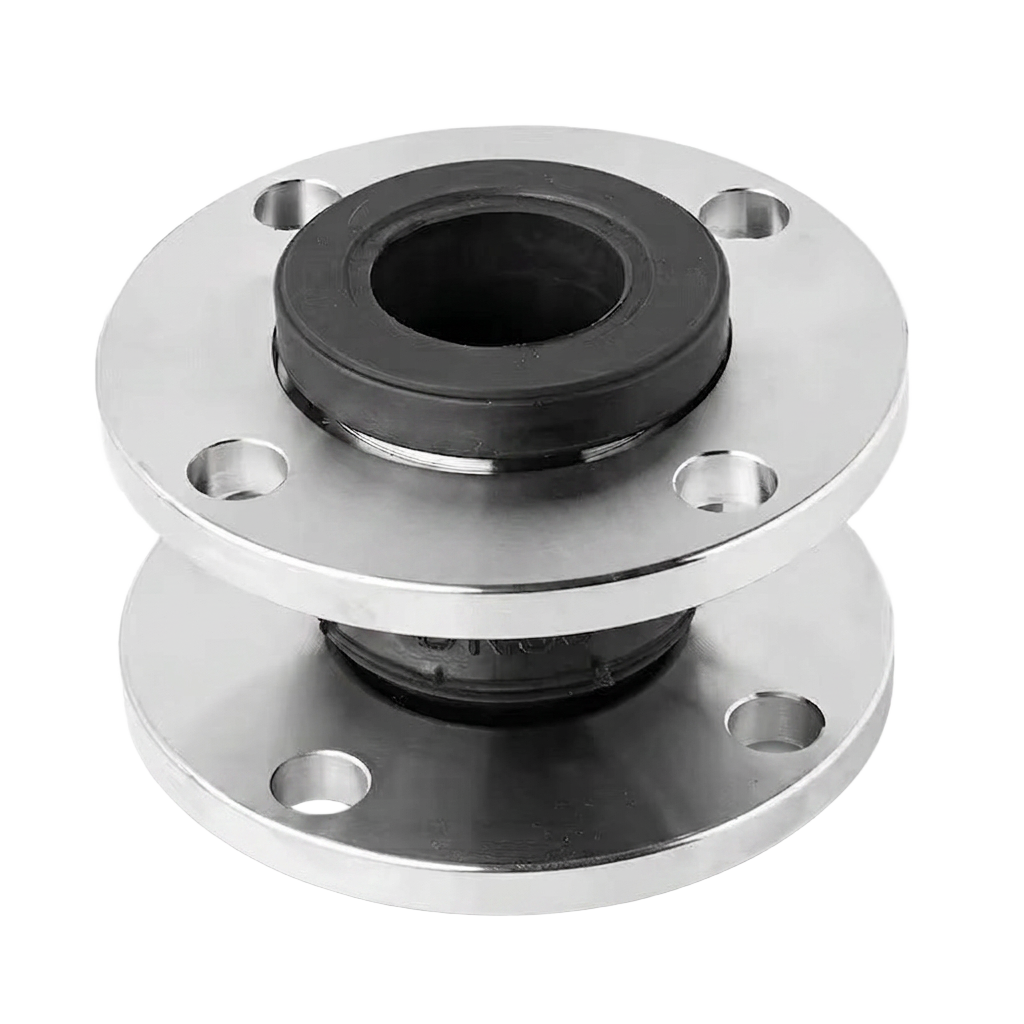
When planning your expansion bellows installation, it is vital to consult the specific movement capabilities of the selected unit. Whether you are using EPDM rubber for chilled water or stainless steel for high-temperature LTHW or steam, the axial compression and extension limits are non-negotiable. British Standards, specifically BS EN 14917, provide the structural framework for these components, ensuring they can withstand the internal pressure while facilitating movement. For London-based developments or regional industrial sites, adhering to these standards is not just a best practice but a requirement for insurance and system longevity. Failure to calculate the thermal expansion delta accurately leads to 'over-travel,' which is the primary driver of premature bellows rupture and subsequent plant-room flooding or downtime.
Quality assurance during the initial phase of expansion bellows installation involves more than just verifying the product's part number. It requires a comprehensive review of the site conditions against the original design intent. UKGP Industrial provides EPDM, NBR, and stainless steel bellows spanning DN15 to DN600, offering the versatility needed for diverse commercial applications. Every unit we supply comes with a 2-year warranty, reflecting our confidence in the build quality. However, this warranty depends on the installer following rigorous procedures, including the correct removal of shipping bolts only after the pipework is fully anchored. Attempting to pressure test a system before the anchors are set is a common error that can result in the bellows extending beyond its design limit, often with dangerous consequences for on-site personnel.
- Verify thermal expansion calculations against CIBSE Guide C data
- Ensure movement limits of the bellows match the calculated pipe growth
- Inspect all flange faces for plane parallelism before bolting
- Maintain a 2-year warranty by following UKGP installation protocols
Critical Role of Main and Intermediate Anchors
Anchoring is arguably the most critical variable in expansion bellows installation. Main anchors must be designed to withstand the sum of the bellows pressure thrust, the force required to deflect the bellows, and any frictional forces from pipe guides. A common misconception is that standard pipe clips are sufficient to act as anchors; in reality, fixed points must be structurally tied to the building's fabric or heavy-duty steelwork. If a main anchor fails under pressure, the bellows will act as a piston, potentially exerting several tonnes of force against the pipework. This is why BS 8552 and BSRIA guidance emphasizes the importance of verifying anchor integrity before the system is filled and pressurised during the initial pre-commissioning cleaning stages.
Intermediate anchors are used when a long pipe run is divided into smaller sections, each containing its own expansion joint. While these do not have to withstand the full pressure thrust, they are essential for ensuring that each bellows only handles its piece of the total thermal movement. During the expansion bellows installation process, these intermediate points prevent the cumulative growth of 50 metres of pipe from being dumped into a single joint designed for only 20 metres. Proper distribution of movement is the only way to ensure the system operates within the elastic limits of the materials used. UKGP's technical support can assist in quantifying these forces to ensure your structural engineers design the supports with an appropriate factor of safety.
For plant-room engineers, the placement of anchors relative to the expansion bellows installation is a strategic decision. Typically, a bellows should be located immediately adjacent to an anchor point, with the first guide placed within four pipe diameters of the joint. This proximity prevents the pipe from 'squirming' or becoming unstable when the bellows is in a compressed state. If your project involves complex routing or limited space, UKGP offers flanged or weld-end options to suit specific site configurations. Our technical consultants are available to review your drawings to ensure that the anchor loads are correctly calculated, particularly in retrofit scenarios where the existing building structure may have limitations on the point loads it can safely accept.
- Design main anchors for pressure thrust plus spring rate forces
- Never use standard pipe hangers as movement-limiting anchors
- Calculate anchor loads based on maximum system test pressure
- Consult UKGP for EPDM or NBR material compatibility advice
Guiding Requirements for System Stability
Without proper guiding, even the best expansion bellows installation is doomed to fail. Pipe guides serve to prevent lateral deflection and angular rotation, ensuring that all thermal movement is translated into pure axial compression along the centre line of the bellows. The first guide (G1) must be exceptionally close to the bellows, followed by G2 within 14 pipe diameters. Subsequent guides are then spaced according to standard pipework tables. If these guides are omitted or spaced too widely, the pipe will likely bow under the pressure thrust, leading to 'bellows squirming.' This condition causes the convolutions to rub against each other or the pipe wall, leading to rapid abrasive wear and eventual pinhole leaks in the stainless steel or EPDM membrane.
The friction generated by pipe guides must also be accounted for in the overall system design. In large installations, the cumulative friction of dozens of guides can add significant load to the main anchors. During expansion bellows installation, it is crucial to ensure that the internal bores of the guides are smooth and allow for free axial movement without binding. Misaligned guides are a frequent cause of system noise, often mistaken for hydraulic issues. By using high-quality UKGP components, contractors can ensure that the fit and finish of the system meet the exacting standards required by BSRIA BG29 for pre-commissioning cleanliness and mechanical stability. Our DN15 to DN600 range ensures that from small branch lines to massive headers, your guiding strategy remains consistent.
In vertical risers, the guiding requirements during expansion bellows installation become even more complex due to the weight of the water column and the pipework itself. Here, guides must also act as lateral restraints against swaying. It is often recommended to use a combination of spider guides and roller supports for horizontal runs to minimise friction while maintaining perfect alignment. When procuring for your next project, consider UKGP as a single-source supplier for not just bellows, but also the air & dirt separators and chemical dosing pots needed to maintain system health. A holistic approach to plant-room design ensures that the mechanical stresses managed by the bellows are not compounded by internal corrosion or debris accumulation that could jam the movement of the pipe guides.
- Position G1 within 4D and G2 within 14D of the expansion joint
- Ensure guides allow free axial movement without binding
- Account for guide friction in total anchor load calculations
- Regularly inspect guides during the 2-year warranty period
BSRIA BG29 and BG50 Compliance in Installation
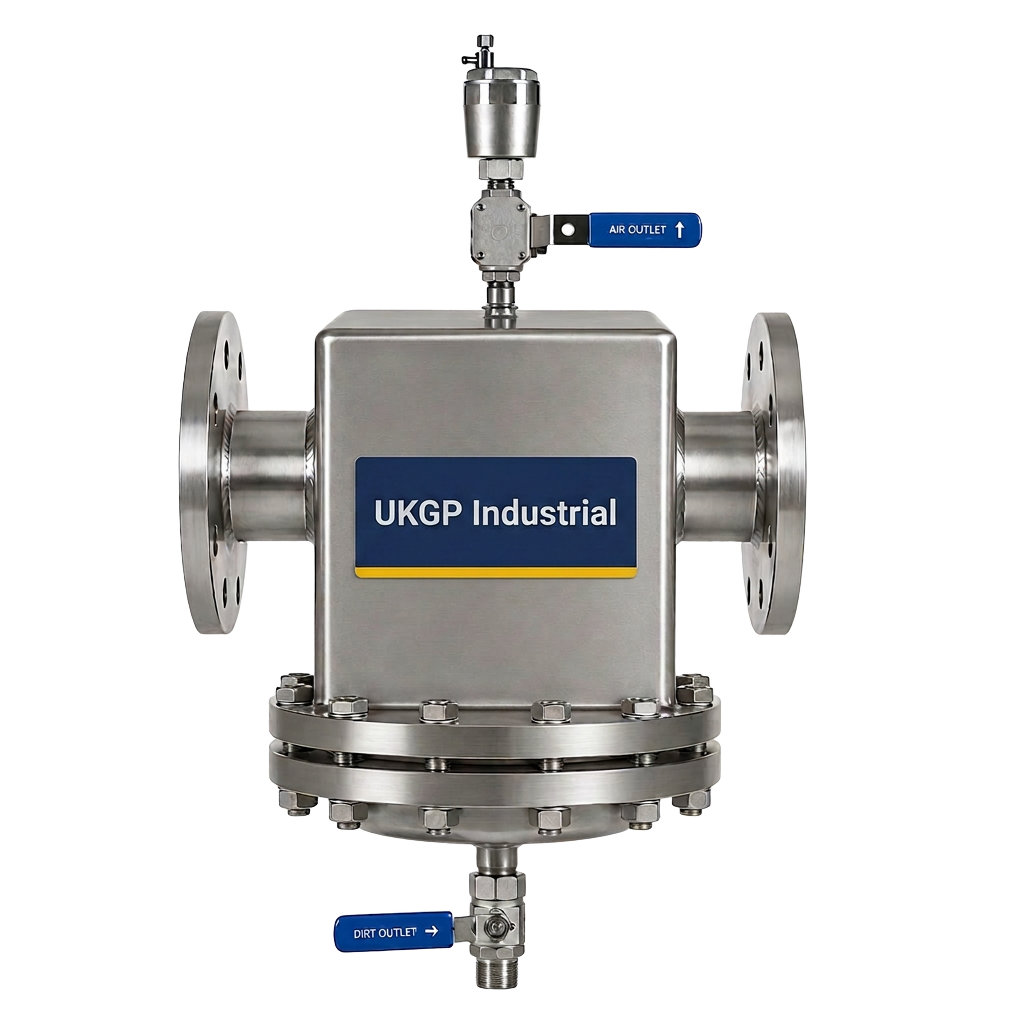
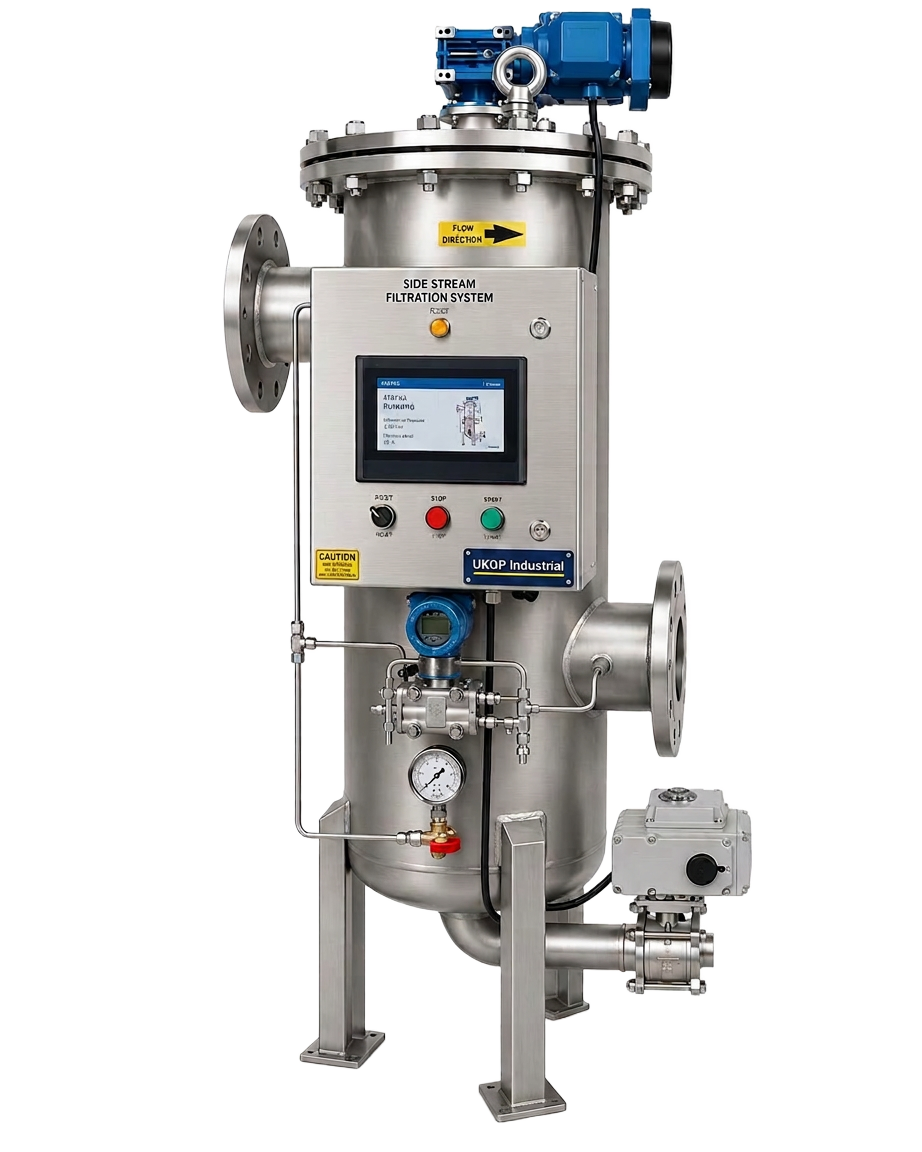
Compliance with BSRIA BG29 and BG50 is non-negotiable for modern UK building services. These guidelines provide the framework for the pre-commissioning cleaning and ongoing water treatment of closed-circuit systems. During expansion bellows installation, the presence of construction debris or site-won contamination can be devastating. If particulates settle within the convolutions of a stainless steel bellows, they can cause localised pitting corrosion or mechanical obstruction, preventing the bellows from compressing fully. This is why UKGP recommends the installation of high-efficiency side stream filtration and air & dirt separators alongside our expansion joints. These components work in tandem to keep the system clean, ensuring that the bellows material—whether PTFE, fabric, or EPDM—remains flexible and functional over its entire service life.
The expansion bellows installation phase overshoots into the commissioning phase, where system flushing occurs. It is common for contractors to install temporary 'spool pieces' in place of the expansion bellows during the high-velocity flush required by BG29. This prevents the bellows from being subjected to excessive velocities or debris that could damage the internal liner. Once the system is clean, the UKGP bellows can be installed, ensuring that the delicate convolutions are never exposed to the harsh conditions of the initial flush. This attention to detail is what separates a high-quality M&E installation from one fraught with long-term maintenance headaches. Our bellows are designed to withstand the chemical additives used in dosing pots, provided the concentrations align with BS 8552 standards for water quality monitoring.
System temperature cycles during the initial weeks of operation are the ultimate test for your expansion bellows installation. BSRIA BG50 highlights the importance of monitoring system expansion during these cycles to ensure that the designed anchors and guides are performing as intended. If you notice any unusual movement or if a bellows appears to be nearing its maximum compression before reaching full design temperature, it is imperative to stop and re-evaluate the anchor points. UKGP Industrial's 2-year warranty provides peace of mind, but proactive monitoring of the installation against BSRIA standards ensures that the warranty is backed by a system operating within its safe mechanical envelopes. We encourage procurement leads to specify UKGP for our technical rigour and commitment to these industry standards.
- Use spool pieces during BG29 high-velocity flushing procedures
- Verify chemical compatibility of NBR/EPDM with dosing agents
- Monitor thermal expansion during the first three heating cycles
- Integrate side stream filtration to protect bellows convolutions
Material Selection: EPDM vs Stainless Steel
Choosing the right material for your expansion bellows installation is a commercial and technical decision that dictates the lifespan of the system. Rubber EPDM bellows are excellent for vibration isolation and providing flexibility in chilled water and LTHW systems up to 100°C. They are particularly popular in London commercial developments due to their ability to dampen acoustic transfer through pipework. However, for high-pressure or high-temperature steam applications, stainless steel bellows are the only viable option. UKGP stocks both, with flanged or weld-end connections from DN15 to DN600. Specifying the wrong material can lead to rapid degradation; for example, using standard EPDM in a system with high oil content will cause the rubber to swell and fail, whereas NBR would be the appropriate choice.
In more aggressive environments, such as chemical processing or specific industrial HVAC loops, PTFE or fabric bellows may be required. Every expansion bellows installation involving these materials requires refined anchoring strategies because the spring rates (the force needed to move the bellows) differ significantly from metallic or rubber counterparts. Stainless steel units often include internal sleeves to protect against turbulent flow, which is crucial if the water velocity exceeds certain thresholds. At UKGP, we provide the full data sheets required by consultants to ensure that the selected material aligns with the fluid medium and expected temperature range. Our 2-year warranty covers all material types, provided they are applied within their operational limits and installed correctly.
Procurement leads often weigh the cost-benefit of different materials during the expansion bellows installation planning phase. While stainless steel may have a higher capital cost, its longevity in high-stress environments often results in a lower total cost of ownership compared to replacing rubber units every few years. Conversely, for most standard commercial HVAC projects, EPDM rubber bellows provide an ideal balance of performance and value. UKGP's expertise across these materials ensures that you receive unbiased advice on which product best suits your specific M&E project. Contact our Surrey-based team to discuss your DN15-DN600 requirements and receive a competitive quote that reflects the technical excellence your project demands.
- EPDM: Best for acoustic dampening and temperatures up to 80-100°C
- Stainless Steel: Mandatory for high-pressure steam and high-temp LTHW
- NBR: Specified for oil-contaminated media or industrial process lines
- Ensure all materials meet the project-specific BS EN 14917 requirements
Common Pitfalls in expansion bellows installation
One of the most frequent errors in expansion bellows installation is the failure to account for 'cold pull.' Cold pulling is the practice of pre-stretching a bellows during installation to allow for greater compression when the system heats up. However, if not calculated correctly, this can lead to the bellows being over-stressed in its cold state. Modern design often avoids cold pull in favour of accurately sized bellows that can handle the full range of movement from ambient to peak temperature. Another common mistake is the misalignment of pipework. Forcing a bellows to take up lateral offset for which it was not designed will create stress concentrations at the welds or flange seats, leading to inevitable failure. Alignment should always be achieved through precise pipe fitting, not by using the bellows as a corrective tool.
Torsion is another silent killer during expansion bellows installation. Bellows are designed for axial, lateral, or angular movement, but they are extremely weak when subjected to twisting forces. When tightening flanges, it is crucial to use a two-wrench method to ensure that no torque is transmitted into the bellows convolutions. This is particularly important for threaded units in smaller DN sizes. If a bellows is twisted during installation, the convolutions lose their uniform shape, significantly reducing their ability to handle pressure and thermal expansion. UKGP Industrial emphasises this in our installation manuals, as torsional damage is easily identifiable and usually voids the manufacturer's warranty. Ensuring your site team is aware of these nuances is key to a successful handover.
Finally, the environment surrounding the expansion bellows installation must be considered. In outdoor applications or harsh industrial plant-rooms, bellows may require protective shrouds to prevent external damage or the ingress of corrosive agents. For stainless steel units, exposure to chlorides can lead to stress corrosion cracking, a rapid and dangerous form of failure. UKGP offers advice on the best protective measures for our DN15 to DN600 range, ensuring that whether your installation is in a pristine basement plant-room or an exposed rooftop, the bellows are protected from the elements. Request a quote today to see how our Surrey-based technical team can provide the robust products and expert guidance needed to avoid these common installation pitfalls.
- Never use bellows to compensate for poor pipework alignment
- Avoid torsional stress by using correct bolting techniques
- Remove shipping bars only after anchors are fully secured
- Protect stainless steel units from chloride exposure in harsh areas
Frequently asked questions
What is the maximum pressure UKGP expansion bellows can handle?
- Our range of DN15 to DN600 bellows is typically rated for PN16 as standard, but we can provide units for PN25 and higher depending on the material and application. Always check the specific data sheet for your expansion bellows installation.
Do I really need guides for a short expansion bellows installation?
- Yes. Even on short runs, the pressure thrust can cause the pipe to deflect. Following the 4D/14D guiding rule is essential for maintaining the 2-year warranty and system safety.
Can I use EPDM bellows for steam applications?
- No, EPDM is not suitable for steam. For steam and high-temperature LTHW, you must specify stainless steel bellows or PTFE-lined units depending on the pressure.
What is the warranty period for UKGP expansion bellows?
- All of our standard bellows products, including rubber, stainless steel, and fabric, come with a 2-year warranty against manufacturing defects when installed correctly.
How do I calculate the movement needed for my project?
- Movement is calculated based on the pipe material (e.g., carbon steel or copper), the total length of the run, and the temperature delta. UKGP can provide calculation support for your expansion bellows installation.