The Critical Role of a Drain Dosing System in Plant Longevity
In modern commercial heating environments, maintaining precise chemical concentrations is not merely a recommendation but a operational necessity. A drain dosing system allows engineers to introduce chemical inhibitors, biocides, and glycol without the need to fully depressurise or shut down the primary heating loops. This bypass-mounted approach ensures that system pressure remains stable while the necessary liquids are introduced. When the drain dosing system is correctly utilised, it mitigates the risk of oxygen ingress—a primary driver of magnetite formation which often leads to poor heat transfer and premature failure of plate heat exchangers and boiler heat cells.
Systemic water quality in closed-loop networks is often ignored until efficiency drops or component failure occurs. By incorporating a dedicated drain dosing system into the plant room design, building services consultants provide facilities teams with the tools to manage water health proactively. These units facilitate easy sample collection and chemical top-ups, ensuring that the system remains within the tight parameters defined by BS 8552 for water sampling. The ease of access provided by a high-quality dosing pot means that chemical testing and subsequent remediation happen more frequently, significantly extending the life of the assets within the network.
Commercial systems are particularly prone to micro-leaks and pressure fluctuations which necessitate regular top-ups of corrosion inhibitors. Without a reliable drain dosing system, these small interventions become complex maintenance tasks that require significant downtime. UKGP industrial pots are designed specifically to accommodate these requirements, offering a range of capacities from 5L to 25L. Selecting the correct size ensures that the volume of chemicals introduced does not cause hydraulic shock or sudden variations in water chemistry that could strip protective passivating layers from the internal surfaces of the carbon steel or copper pipework.
- Maintains system integrity during chemical introduction
- Reduces risk of oxygen ingress and aerobic corrosion
- Simplifies the administration of glycol and inhibitors
- Ensures alignment with BSRIA BG50 maintenance regimes
- Available in high-grade carbon steel or stainless steel options
Compliance with BSRIA BG29 and BG50 via Precise Dosing
For any new-build commercial installation or major refurbishment, the pre-commissioning cleaning process under BSRIA BG29 is essential. A drain dosing system serves as a vital access point during this phase, allowing for the introduction of flushing agents and biocides. Failure to maintain these standards often results in the presence of Pseudomonas and sulphate-reducing bacteria, which can cause rapid pitting of metal surfaces. Designers must specify a robust drain dosing system that can handle the aggressive nature of pre-commission cleaning chemicals while providing a secure, leak-free interface with the main flow and return headers.
Ongoing maintenance, governed by the BSRIA BG50 guidelines, focuses on the continuous monitoring of water chemistry to prevent metallic corrosion and non-metallic degradation. The use of a drain dosing system is intrinsic to this process, as it allows for the precise injection of film-forming inhibitors that coat the internal surfaces of the system. Without this consistent chemical barrier, the risk of galvanic corrosion increases, particularly in systems where dissimilar metals like stainless steel and carbon steel meet. A well-installed dosing pot ensures that these protective agents are distributed evenly throughout the entire circuit.
Furthermore, the BS 8552 standard for water sampling highlights the importance of consistent site-wide chemical management. A drain dosing system that is equipped with high-quality isolation valves and a dedicated drain point makes it easier for engineers to extract representative samples without introducing contaminants from the local environment. This level of control is essential for site managers to demonstrate compliance during annual inspections and to maintain the warranties provided by major UK commercial boiler OEMs, which often require detailed logs of water quality and chemical treatment protocols.
- Facilitates BG29 compliant pre-commissioning cleaning
- Supports BG50 ongoing water quality management
- Enables accurate chemical sampling as per BS 8552
- Protects against bacterial growth in stagnant legs
- Provides a secure interface for biocidal treatments
Technical Specifications of a High-Performance Dosing Pot
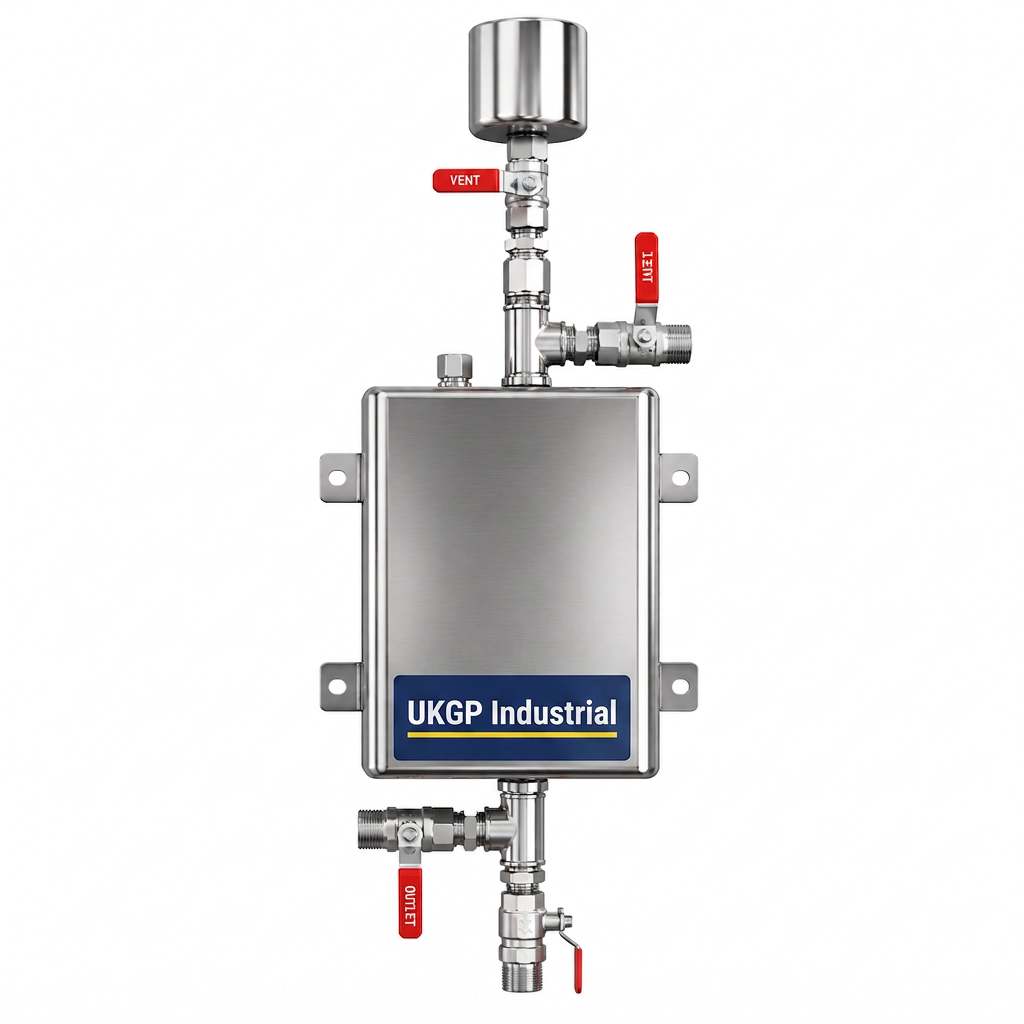
When specifying a drain dosing system, the build quality and material selection are paramount. UKGP offers chemical dosing pots in both carbon steel and stainless steel to suit various commercial applications. These units are bypass-mounted, typically across the main flow and return, and are supplied as a complete kit including high-quality isolation valves, a funnel for entry, and a dedicated drain and vent for safety and control. The 2-year warranty provided with these units reflects the confidence in their manufacture and their ability to withstand the demanding pressures found in large-scale commercial plant rooms.
Operation of the drain dosing system is straightforward yet effective. By closing the isolation valves, the pot can be safely drained of system water via the drain valve. The chemical agent—whether it be a 5L concentration of inhibitor or a larger glycol top-up for a 25L pot—is then poured through the tundish. Once the unit is sealed and vented of air, the isolation valves are reopened, allowing the differential pressure to draw the chemicals into the system flow. This mechanical simplicity ensures long-term reliability and reduces the risk of mechanical failure compared to automated motorized dosing pumps in certain low-frequency applications.
Choosing between a 5L, 10L, or 25L drain dosing system depends on the total system volume and the desired concentration of inhibitors. For large industrial sites, a 25L stainless steel pot offers the best balance of capacity and corrosion resistance. These pots are pressure tested to ensure they meet the rigorous safety standards required for UK plant room environments. By selecting a unit that includes a tundish and air vent, contractors ensure that the dosing process is clean, safe for the operative, and prevents any air entrainment that could lead to air locks in the wider system.
- Available in 5L, 10L, and 25L capacities
- Durable carbon steel or stainless steel construction
- Complete with isolation valves, drain, and vent
- Bypass-mounted for zero-downtime maintenance
- Supported by a comprehensive 2-year manufacturer warranty
Integrating Air and Dirt Separators for System Health
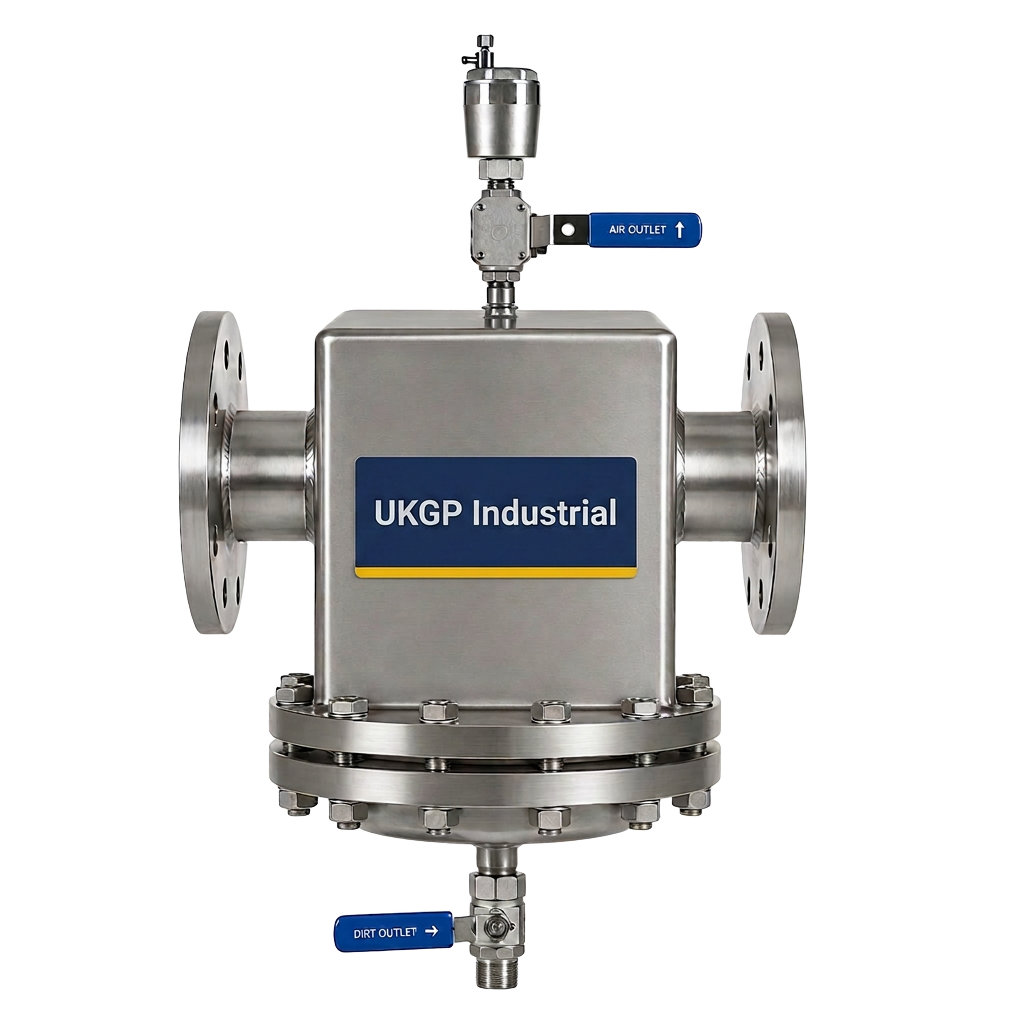
While a drain dosing system is essential for chemical balance, it works most effectively when paired with high-quality air and dirt separation technology. Micro-bubbles and debris can inhibit the distribution of chemicals, leading to 'dead zones' where corrosion can take hold despite the presence of inhibitors. Air and dirt separators remove these contaminants, ensuring that the water treated via your dosing pot can flow freely and reach every corner of the system. This synergy between mechanical filtration and chemical treatment is the gold standard for modern HVAC system design, significantly reducing maintenance call-outs.
In systems featuring high-efficiency boilers, the presence of even small amounts of magnetite can be devastating. These particles are often smaller than 5 microns and can adhere to the internal surfaces of heat exchangers. While the drain dosing system provides the chemical means to keep these particles in suspension, an air and dirt separator provides the physical means to remove them from the flow. Many M&E contractors now specify both components on the return line of the primary loop to ensure the utmost protection for their plant equipment, resulting in a cleaner, more efficient heating circuit.
Furthermore, the integration of these components supports the thermal efficiency of the entire building. Air in the system acts as an insulator, reducing the effectiveness of heat emitters and increasing the workload on pumps. By using a drain dosing system to maintain the correct surface tension of the water and an air separator to remove trapped gases, the system can operate at its peak design COP (Coefficient of Performance). This commerically aware approach to plant design not only protects the hardware but also reduces the ongoing energy costs for the end-user or building owner.
- Removes micro-bubbles that hinder chemical distribution
- Protects heat exchangers from magnetite and debris
- Improves overall thermal efficiency of the system
- Reduces pump wear and energy consumption
- Works in tandem with chemical inhibitors for full protection
Sizing and Installation Best Practices
Proper sizing of the drain dosing system is critical for operational efficiency. A pot that is too small for a large-scale district heating network will require multiple filling cycles to reach the required chemical concentration, increasing labor costs and the potential for error. Conversely, an oversized pot in a small system may lead to over-dosing, which can be just as detrimental as under-dosing. UKGP provides technical guidance to help engineers select between 5L and 25L models, ensuring that the dosing ritual is as streamlined as possible while adhering to the specific glycol-to-water ratios required for frost protection.
Installation should always occur on the return side of the system, ideally in a bypass configuration. This location allows the chemicals to be thoroughly mixed before they reach the main heat source, preventing highly concentrated slugs of chemicals from entering the boiler or heat exchanger directly. The drain dosing system must be mounted securely and should include a visible tundish to prevent backflow and allow the operator to monitor the pouring process. Accessibility is also a key factor; the pot should be located where an engineer can safely carry chemical containers and perform the dosing procedure without obstruction.
Contractors must also consider the pressure rating of the drain dosing system. Standard commercial systems often operate between 3 and 10 bar, and the dosing pot must be rated accordingly. UKGP units are manufactured to rigorous UK standards, ensuring they can handle the thermal expansion and pressure spikes common in large-scale installations. When requesting a quote, it is worth specifying the material—stainless steel is often preferred in chilled water systems or high-humidity environments where external corrosion of a carbon steel pot might occur over its service life, despite the internal water being treated.
- Size the pot based on total system fluid volume
- Install on the system return for optimal mixing
- Ensure easy access for maintenance engineers
- Verify pressure ratings against system design specs
- Select stainless steel for high-moisture environments
Protecting the Investment in Commercial Plant
The financial implications of a system failure in a commercial or industrial setting are vast. Beyond the cost of replacing a commercial boiler or a large plate heat exchanger, the disruption to business operations can be significant. Implementing a drain dosing system is a low-cost, high-impact insurance policy against these risks. By providing a reliable method for chemical administration, you are safeguarding the multi-million pound investment of the building owner. A UKGP dosing pot, with its 2-year warranty and robust construction, serves as the gatekeeper for system health, ensuring that water treatment remains a simple, routine task rather than a neglected chore.
In the context of the UK’s drive for net-zero and increased energy efficiency, the role of water chemistry cannot be overstated. Fouled systems require more energy to provide the same level of comfort, and the carbon footprint of system repairs and component manufacture is substantial. A drain dosing system that enables regular and accurate chemical top-ups directly supports these sustainability goals by maintaining design efficiency throughout the building's lifecycle. Procurement leads are increasingly looking for such durable, UK-supplied solutions that offer long-term value and operational reliability over cheaper, less robust alternatives.
Final commissioning and handover should always include a demonstration of the drain dosing system to the facilities management team. This ensures that the importance of chemical balance is understood and that the equipment provided is utilised correctly from day one. UKGP Industrial is a Surrey-based supplier committed to providing the technical data and reliable hardware required for these critical tasks. For those looking to secure their next project with proven UK-manufactured components, requesting a quote for a 5L, 10L, or 25L dosing pot is the first step toward a compliant and efficient commercial heating system.
- Secures boiler warranties and long-term asset value
- Supports UK sustainability and net-zero goals
- Reduces long-term operational and energy costs
- Simplifies handover to FM teams and end-users
- Backed by expert technical support from Surrey
Frequently asked questions
What size drain dosing system do I need for my commercial project?
- The size depends on the system's total water volume and the concentration required. UKGP offers 5L, 10L, and 25L units. Generally, larger systems benefit from a 25L pot to reduce the number of dosing cycles required for a full chemical treatment.
Can I use a drain dosing system in a chilled water (CHW) system?
- Yes, they are essential for CHW systems to add biocides and glycol. In these environments, we typically recommend a stainless steel pot to resist external condensation corrosion.
Does your drain dosing system come with a warranty?
- Every UKGP chemical dosing pot is supplied with a 2-year manufacturer warranty, covering both carbon steel and stainless steel models.
Are the isolation valves included with the pot?
- Yes, our drain dosing system is supplied as a complete kit, including the high-quality isolation valves, a funnel for entry, and the necessary drain and vent valves.
Is a drain dosing system required by BSRIA standards?
- While BSRIA BG50 doesn't dictate the specific brand, it mandates the ability to maintain chemical levels. A bypass-mounted dosing pot is the industry-standard way to achieve this compliance reliably.