Material Integrity and the Stainless Steel Dosing Pot
In the UK commercial sector, system longevity is often dictated by the quality of the materials used in the plant-room. While carbon steel is the traditional choice for many closed-loop systems, the specification of a stainless steel dosing pot offers superior resistance to pitting and localized corrosion, particularly in systems where aeration or aggressive chemical additives might occur. This is especially relevant in modern BSRIA BG29 and BG50 compliant maintenance regimes where water quality is strictly monitored. Choosing a high-grade stainless steel variant ensures that the dosing interface itself does not become a point of failure or an entry point for iron oxide contaminants that could ultimately compromise heat exchangers and control valves downstream.
Engineering consultants often prefer a stainless steel dosing pot for its aesthetic finish and its durability in damp or humid plant-room environments where external oxidation can degrade carbon steel alternatives over time. These units are typically bypass-mounted, allowing for the manual introduction of liquid chemicals without the need to shut down the main circulating pumps. By utilising a material that is inherently more robust against chemical attack, procurement leads can justify the slightly higher initial capital expenditure through significantly reduced lifecycle maintenance costs. This alignment with long-term asset management strategies is why many modern specifications for high-end commercial office developments now mandate stainless steel for all auxiliary dosing equipment to match the high standards of the primary plant.
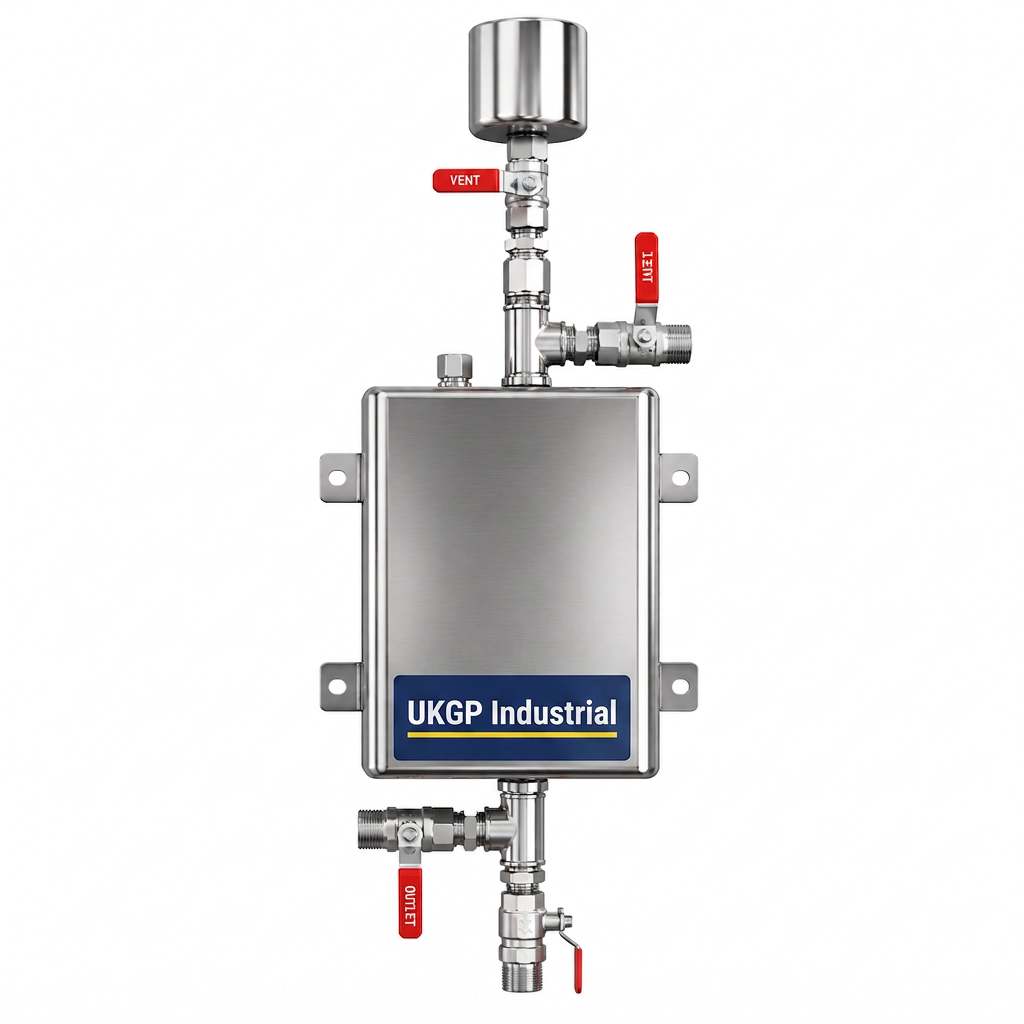
When integrating these units into an existing setup, it is vital to ensure that the isolation valves and connection points are equally high-quality. A UKGP stainless steel dosing pot is available in 5L to 25L capacities, ensuring that whether you are managing a small satellite plant-room or a primary distribution hub, the dosing volume is appropriate for your inhibitor requirements. These units come equipped with essential features including a tundish, fill valve, air vent, and drain valve as standard. This comprehensive design minimizes the risk of air ingress during the dosing process, which is a common cause of internal oxygen-driven corrosion in closed-loop systems, thus upholding the strict water chemistry standards required by British industry best practices.
- Enhanced resistance to chemical erosion in high-frequency dosing applications.
- Prevents the introduction of rust particles from the dosing vessel itself.
- Polished or brushed finish offers superior resistance to external plant-room humidity.
- Fully compatible with all standard UK HVAC chemical inhibitors and glycol.
- Standardised mounting brackets allow for ease of installation on walls or skids.
Sizing Calculations for Closed-Loop Systems
Sizing a stainless steel dosing pot requires an understanding of the total system volume and the concentration requirements of the chemicals being introduced. Typically, the vessel is used to batch-dose inhibitors or glycol. Professional engineers should calculate the total fluid volume of the system—including pipework, radiators, and heat exchangers—and then determine the volume of chemical required. If a system requires 10 litres of inhibitor to reach the desired concentration, a 10L dosing pot allows for a single-shot application, which is more efficient and safer for the operator than multiple smaller doses. Selecting a vessel that is too small increases labor time, while an oversized vessel occupies unnecessary space in often-congested plant-room footprints.
For most medium-scale UK commercial buildings, a 25L stainless steel dosing pot provides the versatility needed for primary circuits. However, it is important to remember that these vessels are designed for bypass operation. They are not storage tanks; they are pressure vessels intended to divert a portion of the system flow through the unit to pick up the chemical charge. According to CIBSE guidelines, the method of chemical introduction should not disturb the hydraulic balance of the system. Therefore, the bypass diameter and the valve sizing must be checked to ensure they do not create significant pressure drops when the dosing loop is active. Most UKGP units feature 15mm or 25mm connections, providing a balance between flow rate and dosing precision.
Under BS 8552, regular sampling and testing of water quality are mandatory. When testing reveals a drop in inhibitor levels, the ease of using a correctly sized dosing pot becomes apparent. M&E contractors like the UKGP range because they can quickly specify a 5L, 10L, or 25L unit based on the project scope. Each unit is pressure tested to ensure it can handle the operating conditions of modern high-pressure heating systems. Integrating a stainless steel dosing pot into the system design from the outset, rather than as an afterthought, ensures that the maintenance team has the correct tools to keep the system compliant with BSRIA BG50 recommendations throughout its operational life.
- 5L units: Ideal for small commercial loops and satellite plant-rooms.
- 10L units: The standard choice for medium systems and booster loops.
- 25L units: Best suited for primary heating or chilled water distribution.
- Always calculate total system volume before selecting pot capacity.
- Check plant-room clearance for the tundish and drain valve operation.
Compliance with BSRIA BG29 and BG50
Adhering to BSRIA BG29 (Pre-commission cleaning of pipework systems) and BG50 (Water treatment for closed heating and cooling systems) is a non-negotiable requirement for high-quality UK installations. A stainless steel dosing pot plays a central role in this by facilitating the controlled introduction of cleaning chemicals during the commissioning phase and protective inhibitors during the life of the system. The use of stainless steel is often preferred in the pre-commissioning phase because the aggressive nature of some cleaning agents can accelerate corrosion in lower-grade sacrificial carbon steel components. By using a UKGP stainless steel vessel, you ensure the dosing equipment itself does not contaminate the system being cleaned.
Furthermore, the design of the dosing pot must prevent air from entering the system. Every time a dosing pot is used, there is a risk of atmospheric oxygen ingress. Our stainless steel dosing pot features an integrated air vent at the top of the vessel, allowing the engineer to purge air before opening the isolation valves to the main circuit. This is a critical step specified in BSRIA guidelines to prevent the onset of aerobic bacterial growth and micro-bubble-related pump cavitation. The inclusion of a clear, permanent flow direction indicator on the unit also helps ensure that installers mount the bypass correctly, preventing backflow issues that could disrupt the dosing efficacy.
In commercial environments managed by FMs, the durability of the stainless steel dosing pot is a commercial asset. It reduces the frequency of replacement parts and ensures that the system always meets BS 8552 requirements for water quality management. When procurement teams look for 'value engineering,' they must consider the total cost of ownership. A 2-year warranty on UKGP dosing pots provides peace of mind, ensuring that the vessel will perform under the rigours of commercial heavy-duty use. Whether you are installing in a new build or retrofitting an old plant, following these BSRIA standards ensures that your chemical dosing strategy is robust and defensible.
- Meets all BSRIA BG50 requirements for chemical introduction.
- Essential for safe biocidal dosing in cooling water systems.
- Reduces risk of oxygen ingress during inhibitor top-ups.
- Facilitates the regular sampling required under BS 8552 metrics.
- Rugged stainless construction thrives in harsh commissioning environments.
Installation Best Practices for Safety
Safety is paramount when handling chemical additives and operating pressurized vessels. A stainless steel dosing pot should always be installed in a bypass across the flow and return lines, or across a pump to provide the necessary differential pressure. This allows the fluid to move through the dosing pot and carry the chemicals into the main system. It is vital that the vessel is mounted securely using the provided brackets. The physical weight of a 25L stainless steel dosing pot when full of water can be significant, so wall-mounting must be into a structural substrate. Contractors should also ensure there is sufficient space below the unit for a drain bucket or connection to a foul drain to accommodate the volume when flushing the pot.
The operation sequence must be strictly followed to prevent scalding or chemical splashes. By closing the isolation valves, opening the drain, and then filling via the tundish, the operator stays in control. The UKGP units include a high-quality tundish which provides a visible break, preventing any potential back-siphonage into the local water supply should the unit be temporarily connected to a fill line. The use of durable stainless steel for the vessel body further adds a layer of safety, as it is less prone to the hidden internal corrosion that can lead to catastrophic vessel failure in pressurized carbon steel units. This reliability is why our stainless steel dosing pot is a staple for M&E contractors across the UK.
Finally, always ensure that the dosing pot is fitted with a non-return valve if there is any risk of backflow into the chemical supply. While most dosing procedures are manual and supervised, the system design should account for human error. Using a UKGP stainless steel dosing pot with its high-quality isolation and vent valves ensures that even under high operating pressures, the operator can safely introduce the necessary glycol or inhibitor. For engineers requiring technical drawings or CAD blocks for their plant-room layouts, UKGP provides full support to ensure the selected pot fits perfectly within the proposed M&E schematic.
- Always install on a bypass with a minimum of 0.5 bar differential pressure.
- Ensure the tundish is positioned for easy access and visibility.
- Do not exceed the maximum working pressure specified on the data plate.
- Regularly inspect the vent and drain valves for debris or scale.
- Incorporate a check valve if the system architecture permits back-siphonage.
Maintaining System Balance with Side-Stream Filtration
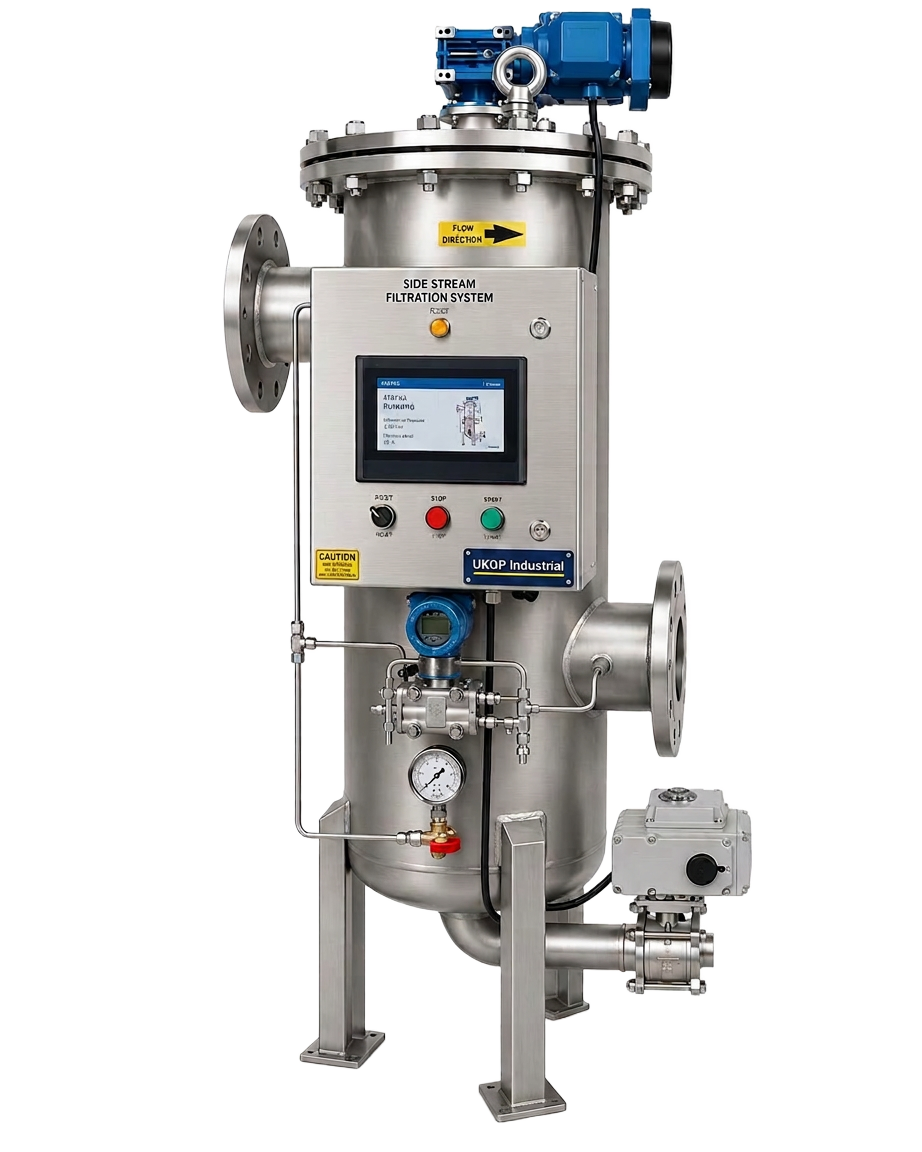
While a stainless steel dosing pot is essential for chemical introduction, maintaining water quality also requires the removal of suspended solids. To achieve the best results, many engineers install a dosing pot in conjunction with a side-stream filtration unit. The dosing pot introduces the inhibitors that loosen scale and prevent further corrosion, while the filter captures the loosened debris. This two-pronged approach is recommended in CIBSE Knowledge Series 21 and is the industry standard for ensuring high-efficiency boilers and chillers remain at peak performance. Combining these technologies protects the secondary side of plate heat exchangers from fouling, which is a common cause of efficiency loss in UK commercial buildings.
A stainless steel dosing pot is particularly effective when used in systems with high glycol concentrations, such as chilled water loops. Glycol can be more difficult to mix thoroughly than water-based inhibitors, and the high-flow bypass of a well-sized pot ensures rapid distribution. For facilities managers, having a dedicated dosing station that doesn't corrode ensures that the system can be topped up whenever the expansion vessel pressure drops or a leak is repaired. This proactive maintenance prevents the system water from becoming diluted and losing its protective properties, which would otherwise lead to a rapid increase in iron levels and system sludge.
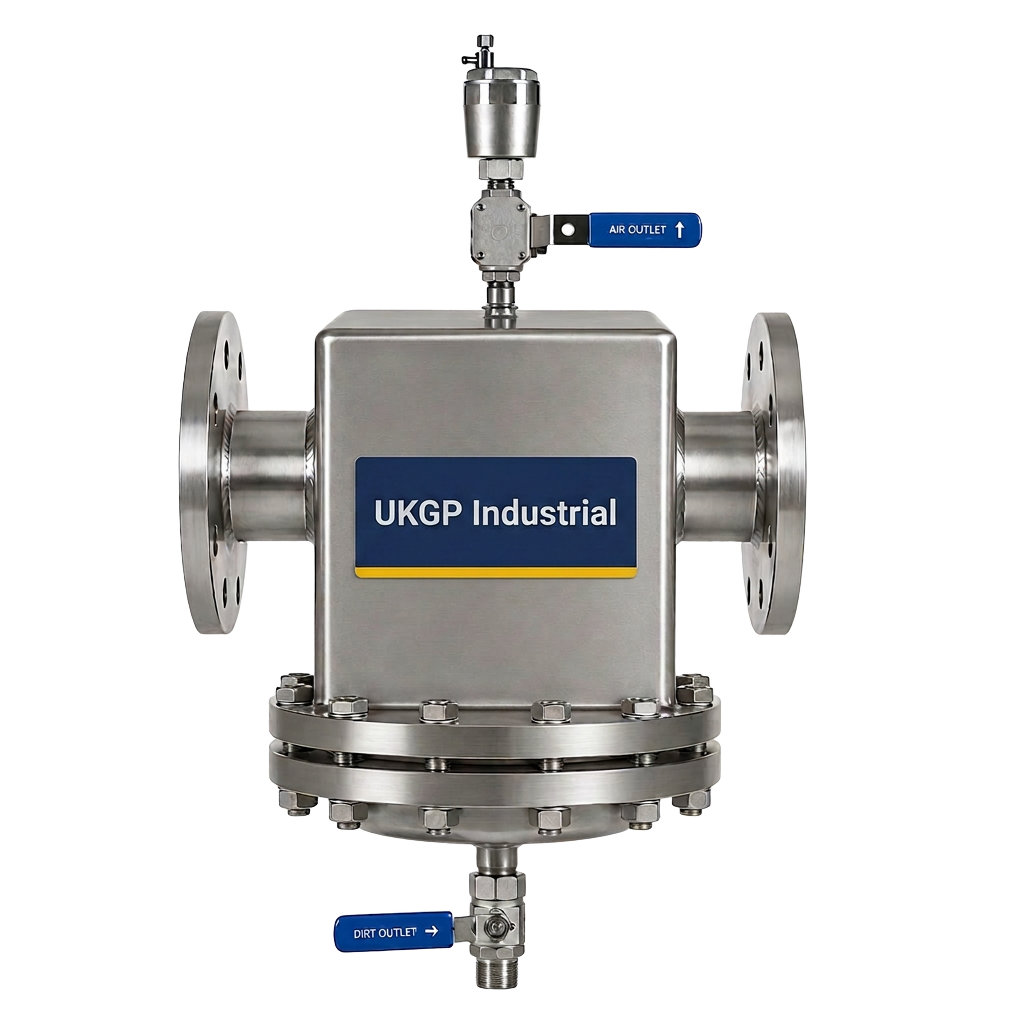
UKGP understands the complexities of commercial plant-room design. By offering 5L, 10L, and 25L stainless steel dosing pots as part of a wider range of accessories—including air and dirt separators—we provide a one-stop-shop for system protection. All our products are designed to withstand the rigours of the UK HVAC market, with every stainless steel dosing pot undergoing rigorous quality checks before dispatch. This ensures that when the unit arrives on-site, it is ready for immediate installation, helping contractors hit their project milestones while delivering a high-specification system to the end-user.
- Pair with side-stream filtration for comprehensive water quality control.
- Critical for maintaining glycol levels in chilled water circuits.
- Reduces the risk of fouling in high-efficiency heat exchangers.
- Ensures long-term protection of sensitive system sensors and valves.
- Supports the clean-system mandates found in modern UK building regs.
Technical Specifications and Procurement
When procuring a stainless steel dosing pot, it is important to verify the pressure and temperature ratings. Most commercial systems in the UK operate between 6 and 10 bar, though some high-rise applications may require higher. The UKGP range is designed to meet these standard requirements, providing a robust solution for a variety of building types. The stainless steel construction is compatible with both 304 and 316 specifications where required, offering peak protection against chemical attack. Each unit includes a 2-year warranty, which is a testament to the build quality and the confidence we have in our manufacturing process. For contractors, this means fewer call-backs and a more professional handover to the client.
Beyond the material, look at the completeness of the kit. A UKGP stainless steel dosing pot comes as a complete assembly with high-quality valves, meaning there is no need to source mismatched components from various suppliers. This modularity simplifies the procurement process for lead engineers and ensures that the assembly is hydrostatically tested as a single unit before leaving our Surrey facility. Whether you need carbon steel or the superior stainless finish, we maintain stock levels that allow for rapid delivery to site, minimizing downtime during critical maintenance windows or phased commissioning schedules.
To ensure you are selecting the right stainless steel dosing pot for your project, consult with the UKGP technical team. We can assist in sizing the unit based on your specific system volume and help you choose between the 5L, 10L, and 25L options. Contact us today for a competitive quote or to request technical data sheets that you can include in your next tender submission. With our expertise in UK commercial HVAC systems and our commitment to BSRIA standards, we are the preferred partner for high-specification dosing solutions across the South East and beyond.
- Available in 5L, 10L, and 25L capacities to suit any system size.
- Supplied with a 2-year warranty for commercial peace of mind.
- Includes all necessary isolation valves, drain, vent, and tundish.
- Manufactured in accordance with PED and standard UK safety regs.
- Easy to integrate into BMS-monitored water treatment regimes.
Frequently asked questions
Why should I choose a stainless steel dosing pot over carbon steel?
- A stainless steel dosing pot offers superior corrosion resistance, particularly when using aggressive chemicals or in environments where the vessel may be exposed to moisture. It prevents internal rust within the pot from entering the system and provides a longer service life with a 2-year warranty for peace of mind in high-spec commercial projects.
What size dosing pot do I need for a commercial building?
- Sizing depends on the total system volume and the chemical dosage required. For small satellite systems, 5L is often sufficient. 10L is the standard for most medium commercial systems, while 25L is recommended for primary circuits to allow for single-shot dosing of inhibitors or glycol without repeated manual refills.
Does a stainless steel dosing pot work with all chemicals?
- Yes, high-grade stainless steel is compatible with virtually all commercial HVAC inhibitors, biocides, and glycol solutions used in the UK. It is more resistant to the harsh cleaning agents used during the BSRIA BG29 pre-commissioning process compared to standard carbon steel.
Where should the dosing pot be located in the system?
- It should be installed in a bypass loop, typically across the main flow and return headers or across a pump to ensure sufficient differential pressure (minimum 0.5 bar) to drive the fluid through the vessel. It should be easily accessible for maintenance and near a drain for safe flushing.
What maintenance does a dosing pot require?
- Ongoing maintenance involves checking for leaks at the valve connections, ensuring the air vent is clear, and verifying that the tundish remains unobstructed. Regularly using the pot as part of a BS 8552 water quality regime ensures the valves remain operational and do not seize due to inactivity.