The Role of Copper Pipe Expansion Bellows in Thermal Management
In modern commercial developments, copper remains a preferred material for small-to-medium bore pipework due to its thermal conductivity and resistance to corrosion. However, copper has a high coefficient of linear expansion compared to mild steel. When fluid temperatures fluctuate during heating cycles or chilled water distribution, the resulting axial movement can exert immense stress on fixed points, anchors, and plant-room equipment connections. Without the integration of copper pipe expansion bellows, the physical growth of the pipework may lead to buckling or catastrophic failure of joints and fittings. UKGP Industrial specializes in providing flexible solutions that absorb this movement, ensuring that the piped infrastructure remains within its elastic limit and adheres to the rigorous safety requirements found in CIBSE Guide B and current BSRIA standards.
Choosing the right expansion joint requires a deep understanding of the temperature differentials within the system. For domestic hot water services (DHWS) or LTHW circuits, the temperature delta between the ambient installation state and the operational peak can cause significant millimetre-per-metre growth. A copper pipe expansion bellows acts as a mechanical shock absorber, compressed or extended by the pipework to prevent the transfer of force to sensitive areas such as heat exchangers or boiler manifolds. By incorporating these components at prescribed intervals, M&E contractors can ensure that the installation remains silent and durable. Neglecting thermal expansion calculation often leads to expensive remedial work post-commissioning, which is why early-stage technical consultation with UKGP is essential for procurement leads looking to de-risk their project delivery schedules.
The application of copper pipe expansion bellows is not limited to simple axial movement; they also provide essential vibration isolation. In plant-rooms where high-velocity pumps and mechanical plant are operational, secondary vibrations can travel through the copper network, causing audible noise in occupied spaces or mechanical fatigue in the pipe walls. Our range of expansion solutions, available in multiple materials including EPDM and stainless steel, provides the requisite dampening to maintain a quiet environment. When sourcing these components, engineers must verify that the bellows unit is compatible with the working pressure of the system and the chemical treatment regime prescribed by BSRIA BG50. Using the correct bellows ensures that the entire system lifecycle is maximized, significantly reducing the total cost of ownership for facility managers and property owners in the UK commercial sector.
- Absorption of linear thermal expansion in high-rise copper risers.
- Reduction of mechanical noise and vibration transfer across plant-room boundaries.
- Protection of delicate secondary equipment and fixed anchors from excessive stress.
- Compliance with CIBSE and BSRIA best practices for commercial pipework design.
Technical Standards and BS EN 14917 Compliance
For any commercial installation in the UK, compliance with British and European standards is non-negotiable. Metal expansion joints, including specific copper pipe expansion bellows configurations, should ideally be designed and tested in accordance with BS EN 14917. This standard specifies the requirements for design, manufacture, and testing of metal bellows expansion joints for pressure applications. Adhering to these standards ensures that the bellows can withstand the cyclic fatigue life calculated during the design phase. At UKGP Industrial, we provide expansion solutions that meet these stringent benchmarks, offering peace of mind to consultants and insurers alike. Properly certified bellows prevent the common pitfalls associated with substandard imported components, such as premature failure of the convolution or leakage at the flange interface.
The pressure equipment directive (PED) also plays a vital role in the selection of expansion bellows for commercial hot water systems. Depending on the volume and pressure of the fluid, the bellows must be correctly categorized and CE/UKCA marked where applicable. For copper systems typically operating between PN10 and PN16, the bellows must maintain structural integrity under both peak operating pressure and hydrostatic test conditions. Buying from a reputable UK manufacturer like UKGP means you receive a 2-year warranty and full technical backing. Our bellows are available in sizes from DN15 to DN600, ensuring that whether you are working on a small commercial refurbishment or a large-scale district heating scheme, the mechanical components are robust enough to handle the calculated expansion loads without compromising safety.
Beyond the metallic components, the choice of end connections—whether flanged or weld-end—is critical for ensuring a leak-free system. In copper installations, the transition between the expansion unit and the pipework must be executed with precision. Stainless steel bellows with copper ends for brazing are a common solution, providing the durability of steel with the ease of installation associated with copper. It is essential during the procurement phase to specify the correct movement requirements (axial, lateral, or angular) because an incorrectly specified copper pipe expansion bellows will fail prematurely if subjected to movements outside its design envelope. Our technical team works alongside M&E contractors to review schematics and ensure the specified expansion joints provide the necessary movement capacity while staying within the footprints of modern, compact plant-rooms.
- Adherence to BS EN 14917 for design and testing of expansion joints.
- Compliance with UKCA/CE markings for pressure equipment safety regulations.
- Full traceability of materials and 2-year warranty on all UKGP bellows units.
- Selection of appropriate end-fittings (DN15-DN600) for seamless integration.
Optimising System Health with Air and Dirt Separators
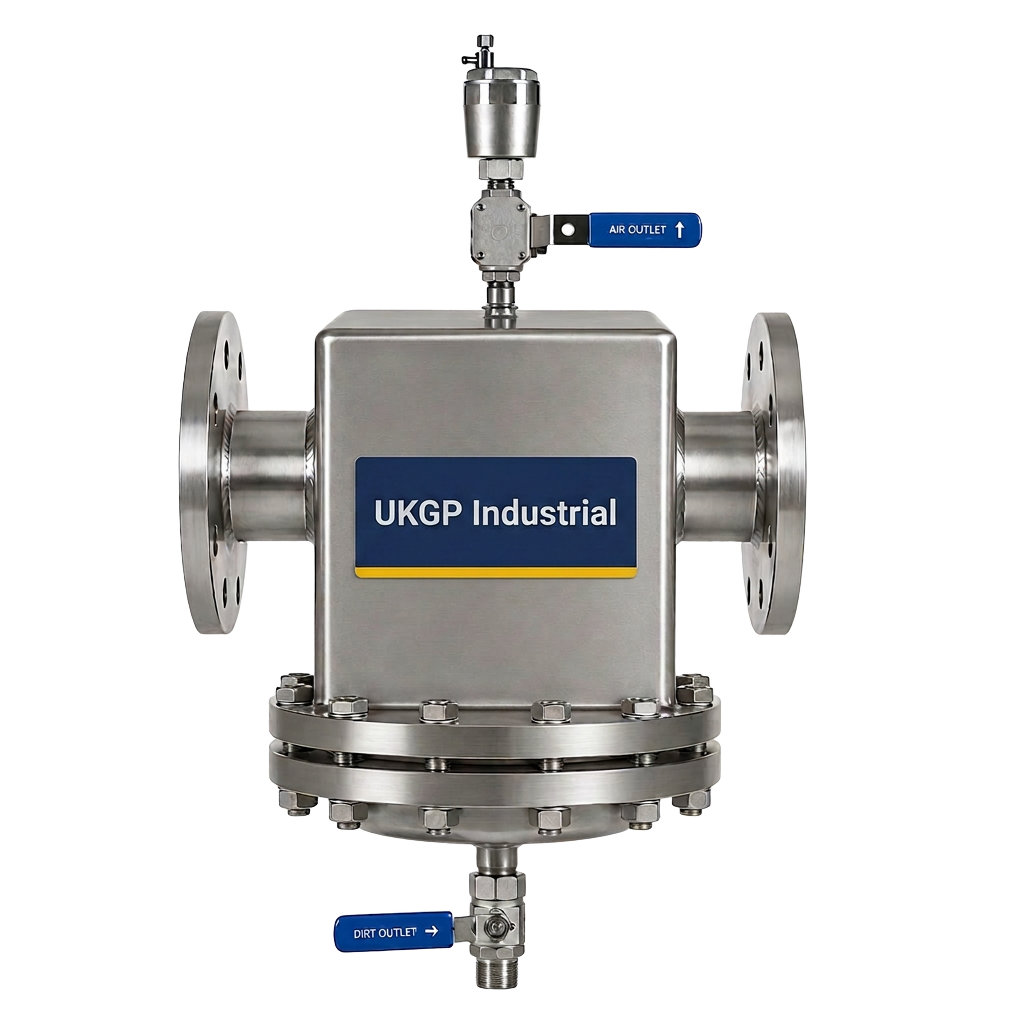
While expansion management is crucial for physical stability, the internal environment of the copper pipework is equally important for system longevity. Large quantities of air and micro-bubbles in a system can lead to oxidative corrosion and inefficient heat transfer, particularly in systems utilizing copper pipe expansion bellows where air can potentially accumulate in the bellows' convolutions. By installing high-efficiency air and dirt separators alongside expansion bellows, engineers can ensure that the system remains free of debris and gases. This dual approach to system health prevents the 'pinholing' of copper pipes and protects the delicate surfaces of heat exchangers. UKGP Industrial provides a comprehensive range of separators designed to remove magnetite and other particulates that could otherwise cause mechanical wear on the expansion joint's internal liners.
Micro-bubbles and suspended solids act as abrasives within the fluid stream. In a system where copper pipe expansion bellows are constantly flexing, the presence of abrasive silt can accelerate the wear on the bellows' inner surfaces, eventually leading to a breach. Therefore, the removal of these contaminants is a prerequisite for any high-performance commercial HVAC system. BSRIA BG29 highlights the importance of pre-commissioning cleaning and the ongoing maintenance of water quality to prevent debris buildup. Incorporating a separator at the point of lowest velocity or highest temperature (depending on the specific system design) ensures that the water remains clear, protecting both the pipework and the expansion components from erosion and internal corrosion, thus extending the overall service life of the building's mechanical assets.
The synergy between expansion control and water quality cannot be overstated. A well-designed copper network featuring UKGP expansion bellows and air separators will operate more quietly, experience fewer leaks, and maintain higher thermal efficiency. Managing these two factors simultaneously allows facility managers to reduce maintenance call-outs and avoid the emergency replacement of damaged pipework sections. When planning your next plant-room upgrade or new build, consider the total system environment. Our range of filtration and separation equipment is designed to work in tandem with our expansion solutions, providing a holisitic approach to commercial water system management that aligns with modern sustainability and efficiency targets for the UK built environment.
- Removal of micro-bubbles and magnetite to prevent internal erosion.
- Protection of expansion bellows convolutions from debris accumulation.
- Alignment with BSRIA BG29 and BG50 water quality guidelines.
- Enhanced thermal efficiency and reduced maintenance frequency.
Installation Best Practices for Copper Pipe Expansion Bellows
The effectiveness of a copper pipe expansion bellows is entirely dependent on its correct installation and the placement of surrounding anchors and guides. According to standard engineering principles and CIBSE guidelines, an expansion joint must be installed between two main anchors that are capable of withstanding the pressure thrust and the spring rate of the bellows. Failure to provide adequate anchoring will result in the pipework moving away from the bellows rather than compressing it, leading to joint failure or pipe misalignment. UKGP recommends that contractors carefully calculate the anchor loads before installation to ensure the building structure can support the forces generated when the system is pressurized and at peak temperature. This is a common area where design errors occur, necessitating expert oversight during the procurement phase.
Guiding the pipework is equally vital. When a copper pipe expansion bellows is compressed, the copper pipe tends to act like a slender column under load, which can lead to bowing or 'squirm' if not properly supported by intermediate guides. Typically, the first guide should be placed within four pipe diameters of the expansion joint, and the second guide within fourteen diameters. This configuration ensures that the thermal growth is directed straight into the bellows, preventing lateral forces from damaging the unit. At UKGP Industrial, we assist consultants in understanding these requirements, ensuring that the copper pipe expansion bellows we supply are installed in an environment that allows them to function optimally for their entire 2-year warranty period and beyond, protecting the integrity of the entire mechanical installation.
Finally, it is crucial to ensure that the expansion joint is not over-extended or compressed during the initial installation. Many copper pipe expansion bellows are supplied with shipping bars to maintain the correct neutral length during transit and fitting. These bars must be removed after the anchors are secured but before the system is pressure tested. If left in place, the bellows cannot move, and the expansion forces will be transmitted directly to the pipework and fixed equipment, potentially causing immediate damage upon commissioning. By following these rigorous installation steps and utilizing high-quality UKGP expansion solutions—including our EPDM, stainless steel, and PTFE varieties—M&E contractors can ensure a professional, compliant finish that stands up to the demands of modern commercial heating and cooling applications.
- Correct placement of main anchors to resist pressure thrust.
- Implementation of pipe guides to prevent squirm and lateral misalignment.
- Removal of shipping bars only after anchors are fully secured.
- Precise alignment checks to ensure linear movement within design limits.
Material Selection: EPDM vs Stainless Steel for Copper Lines
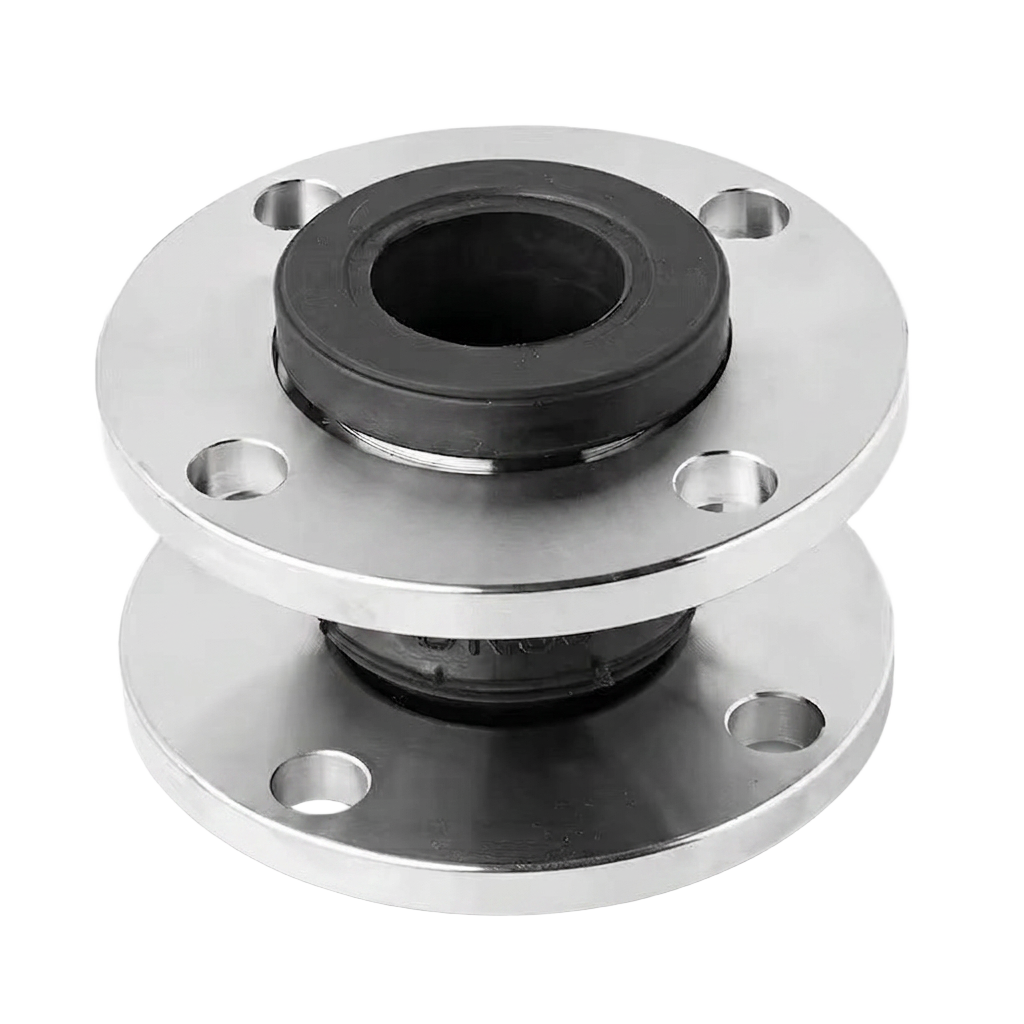
Selecting the material for a copper pipe expansion bellows depends heavily on the fluid being transported and the operational temperature. For many LTHW (Low Temperature Hot Water) and chilled water systems, rubber EPDM bellows are a highly cost-effective and efficient choice. EPDM (Ethylene Propylene Diene Monomer) offers excellent flexibility and sound-deadening properties, which is advantageous in residential-to-commercial conversions or offices where noise pollution must be minimized. These units are typically flanged and provide a significant amount of axial movement in a compact face-to-face dimension. UKGP Industrial offers EPDM bellows that are suitable for most commercial HVAC applications, providing a reliable barrier against thermal stress and mechanical vibration for systems using copper or steel pipework.
In higher temperature applications or where the chemistry of the water might be aggressive, stainless steel bellows are often the preferred solution for copper pipe systems. Stainless steel units offer higher pressure ratings and greater resistance to extreme temperatures compared to rubber alternatives. When used with copper pipe, these bellows usually feature copper tailpieces for easy brazing or union connections for smaller bores. It is vital to ensure that the stainless steel grade is compatible with the environment; 304 or 316L are standard for most building services applications. UKGP provides a range of stainless steel expansion joints from DN15 up to DN600, ensuring that even the largest commercial risers are protected from the destructive effects of uncontrolled thermal expansion. Our technical team can advise on the best material choice based on your specific project parameters.
For specialized applications involving chemicals or high-purity water, PTFE-lined or fabric expansion joints might be required. While less common in standard domestic water services, they are essential in industrial processing or laboratory environments where copper pipework is utilized. Regardless of the material, the core purpose remains the same: ensuring that the thermal growth of the copper pipe expansion bellows is controlled and predictable. Procurement leads should ensure they are purchasing from a supplier like UKGP that provides a 2-year warranty and a range of end connection options, including flanged and weld-end. This variety ensures that the expansion joints can be integrated into any existing or new-build infrastructure with minimal on-site modification, keeping project costs down and installation speeds high while maintaining full compliance with BS EN 14917.
- EPDM bellows for superior vibration dampening and LTHW systems.
- Stainless steel bellows for high-temperature and high-pressure ratings.
- Material compatibility checks to prevent galvanic corrosion at connections.
- Options for DN15 to DN600 sizing to suit all commercial copper projects.
Total Quality Assurance and Commissioning
The commissioning phase represents the final hurdle in ensuring that the copper pipe expansion bellows are fit for purpose. BSRIA BG50 highlights the importance of water treatment and monitoring from the very start of the system's life. During the initial heat-up, a visual inspection of all expansion joints is mandatory. Engineers should look for signs of even compression and ensure that no guides have become bound or anchors have moved. Any unusual noise or visible deflection in the pipework indicates that the expansion is not being absorbed correctly by the copper pipe expansion bellows, requiring immediate investigation. UKGP Industrial advocates for a proactive approach to commissioning, providing technical documentation to assist engineers in verifying that the installed products meet the design intent.
Long-term maintenance is equally critical for the continued safety of the building. External inspection for signs of fatigue, such as cracking in rubber bellows or pitting in stainless steel convolutions, should be part of the annual facilities management regime. Over time, the chemical additives in the water—monitored by pH sensors and transmitters—can affect the elasticity of rubber components or the corrosion resistance of metal ones. Ensuring that the system remains balanced and treated according to BS 8552 and BSRIA guidelines will protect the investment made in high-quality copper pipe expansion bellows. UKGP's 2-year warranty is a testament to our confidence in the durability of our products, provided they are managed within a compliant system environment and not subjected to extreme conditions outside their specification.
When procurement leads and M&E contractors partner with UKGP Industrial, they gain more than just a component supplier; they gain an expert partner in commercial thermal management. From our facility in Surrey, we support the UK construction industry with reliable, high-performance expansion solutions tailored to the needs of copper pipework. Whether you require a single DN15 unit for a small manifold or a full suite of DN600 flanged bellows for a major energy centre, we provide the technical expertise and inventory to keep your project moving. Contact us today for a quote on our expansion bellows range and discover why we are the preferred choice for consultants and plant-room engineers across the United Kingdom. Protecting your pipework today prevents the costly failures of tomorrow.
- Thorough visual inspection during the initial system heat-up phase.
- Adherence to BS 8552 for water quality monitoring to protect bellows.
- Regular maintenance checks to identify early signs of fatigue or wear.
- Direct access to UKGP technical support for installation and commissioning queries.
Frequently asked questions
How often should copper pipe expansion bellows be replaced?
- With proper installation and water treatment according to BSRIA BG50, a high-quality copper pipe expansion bellows from UKGP can last for many years. We provide a 2-year warranty as standard, but the actual service life is typically much longer, provided the bellows are not subjected to movements exceeding their design limits or aggressive chemical environments.
Can I use steel expansion bellows on a copper pipe system?
- Yes, stainless steel bellows are frequently used in copper systems, particularly for high-temperature applications. It is important to use appropriate transition fittings or copper-ended bellows to facilitate a secure connection and to prevent galvanic corrosion where the two different metals meet.
What is the maximum pressure for UKGP copper pipe expansion bellows?
- Our range of expansion bellows is available in various pressure ratings, typically from PN10 up to PN25, depending on the material and size (DN15-DN600). Always check the specific data sheet for the unit to ensure it meets your system's peak operating and test pressures.
Do you offer different end connections for the expansion joints?
- Yes, UKGP Industrial supplies expansion bellows with a variety of end connections including flanged, weld-end, and screwed/union connections. This ensures compatibility with any commercial copper pipework installation method.
Why is guiding so important for copper pipe expansion bellows?
- Proper guiding is essential because copper pipe can buckle or 'squirm' under the compressive forces required to activate the bellows. Guides ensure that all thermal growth is directed axially into the copper pipe expansion bellows, protecting the system from lateral failure and mechanical stress.