Understanding the Role of a Chemical Dosing Pot
In the context of closed-loop heating and chilled water systems, a chemical dosing pot serves as the primary gateway for introducing water treatment chemicals without disrupting system pressure. Unlike smaller residential filters, a commercial-grade chemical dosing pot is designed to handle significant volumes of inhibitor or glycol, ensuring that the entire hydronic circuit remains protected against corrosion and scale. According to BSRIA BG50, maintaining the correct chemical concentration is a non-negotiable requirement for the longevity of heat exchangers and pumps. By utilising a bypass-mounted design, these vessels allow operations teams to isolate the pot, pour in the required treatment, and gradually bleed the concentration into the main flow. This process is essential for preventing the ingress of air, which could otherwise lead to oxidisation and sludge formation.
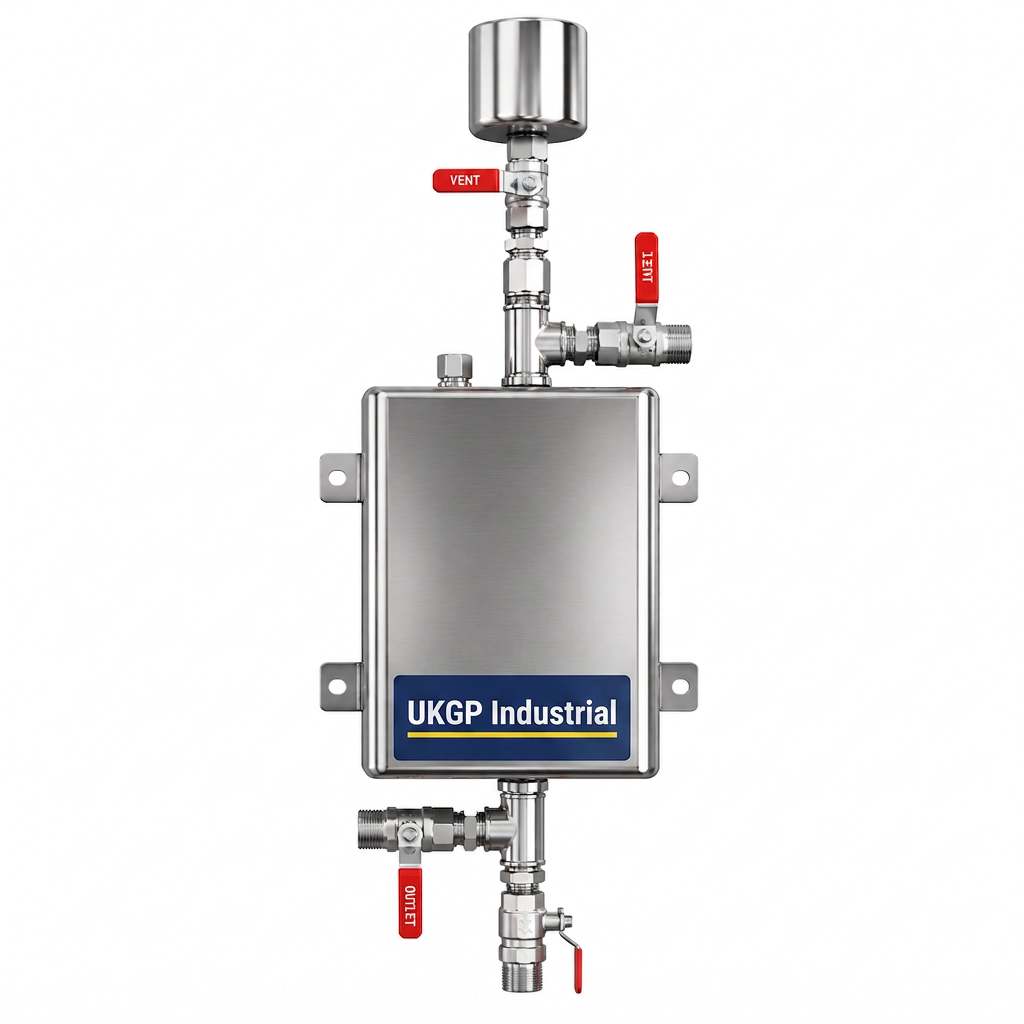
The integrity of a chemical dosing pot is paramount, especially in high-pressure environments common in London and South East commercial developments. UKGP Industrial manufactures these units from either high-quality carbon steel or stainless steel, ensuring they withstand the thermal stresses associated with central boiler plant and district heating networks. Every chemical dosing pot we supply features a robust configuration including isolation valves, a drain valve, and an air vent. This setup not only simplifies the dosing procedure for facilities managers but also ensures that the system remains balanced and air-free. When consultants specify a unit, they must consider the system volume to determine whether a 5L, 10L, or 25L capacity is most appropriate for the project’s specific requirements and frequency of maintenance intervals.
Choosing a British-supplied chemical dosing pot from UKGP ensures that your installation aligns with UK industry standards and insurance requirements. Our units are rated for high-pressure operations and are pressure tested to ensure total reliability within the plant room. In many scenarios, M&E contractors find that having a dedicated chemical dosing pot integrated into the primary return line is the only way to effectively manage water chemistry over the 25-plus year lifecycle of a building. We offer these units with a comprehensive 2-year warranty, reflecting our confidence in the build quality and the industrial-grade materials used. Whether you are dealing with a simple boiler circuit or a complex multi-zone chiller system, having a reliable mechanism for chemical introduction is a foundational element of effective HVAC asset management and risk mitigation strategy.
- Facilitates safe introduction of inhibitors and glycol without system shutdown.
- Available in 5L, 10L, and 25L capacities to suit varying system volumes.
- Mandatory for compliance with BSRIA BG29 and BG50 water treatment protocols.
- Constructed from carbon steel or stainless steel for maximum durability.
- Includes essential safety features like air vents and robust isolation valves.
Compliance with BSRIA BG29 and BG50 Standards
Adherence to BSRIA BG29 (Pre-commission cleaning) and BG50 (Water treatment for closed systems) is the gold standard for UK building services. A chemical dosing pot is integral to these standards because it allows for the precise titration of chemicals required to maintain a pH-stable system. If a system is not properly dosed, the risk of micro-biologically influenced corrosion (MIC) increases significantly. By having a high-specification chemical dosing pot installed, engineers can ensure that biocide or corrosion inhibitors are added at the exact moment a laboratory report indicates a deficiency. This proactive approach prevents the build-up of magnetite, which is known to degrade the efficiency of commercial boilers and plate heat exchangers, leading to spiralling energy costs and premature component failure.
The technical design of our chemical dosing pot allows for the meticulous control of fluid introduction, which is vital during the commissioning phase of a project. During pre-commissioning cleaning, large volumes of flushing agents may be required, and the dosing pot acts as the focal point for these activities. British standards emphasise that air must be purged during the dosing process to prevent oxygen-rich water from entering the loop. Our units are equipped with a top-mounted air vent specifically to address this concern. By integrating a UKGP chemical dosing pot into your design, you provide the facilities management team with the tools needed to follow the BS 8552 sampling guidelines effectively, allowing for easy replenishment of chemicals whenever the quarterly water analysis suggests the system is becoming vulnerable.
For M&E contractors, specifying a chemical dosing pot that is compliant with BS EN 14917 and other relevant pressure equipment directives is a matter of safety and professional liability. A poorly manufactured vessel can become a weak point in the plant room, particularly under the thermal expansion cycles of a large heating circuit. UKGP Industrial ensures that every chemical dosing pot is designed to handle these fluctuations while providing a clear and simple interface for the operative. By maintaining the chemical integrity of the water, the dosing pot indirectly protects every other component, from the circulating pumps to the expansion bellows. Investing in a quality dosing solution is far more cost-effective than dealing with the remediation costs associated with a corroded system or the emergency replacement of fouled terminal units and heat emitters.
- Enables precise dosing to meet BSRIA water treatment targets.
- Reduces the risk of magnetite formation and system sludge.
- Integrated air vents prevent oxygen ingress during the dosing cycle.
- Supports long-term compliance with BS 8552 sampling regimes.
- Essential for the protection of high-efficiency commercial boiler plant.
Installation Best Practices for the Chemical Dosing Pot
Correct installation of a chemical dosing pot is critical for its performance and the safety of the operative. It should ideally be installed as a bypass across the main flow and return pipework, usually on the return side before the pumps. This positioning ensures that the chemicals are thoroughly mixed before passing through the primary heat source. When installing a UKGP chemical dosing pot, contractors must ensure that the isolation valves are easily accessible and that there is sufficient clearance above the unit to pour chemicals comfortably. Our units come equipped with a wide-mouth funnel and high-quality valves to facilitate this. It is also standard practice to include a drain valve at the bottom of the pot to allow for the safe removal of any debris or to empty the pot before adding new chemicals.
The pipework connecting the chemical dosing pot to the main system should be kept as short as possible to minimize dead legs, which can become breeding grounds for bacteria if not managed. While carbon steel is the standard choice for most heating systems, we recommend stainless steel units for chilled water applications or environments where external corrosion is a concern. Every chemical dosing pot installation should also consider the height of the unit; mounting the pot at a height that allows the engineer to pour from a stable position is a key health and safety consideration. Furthermore, the inclusion of a non-return valve on the inlet can provide an additional layer of protection, preventing backflow during the dosing process. Proper support and bracing are also required to handle the weight of the pot when full of fluid.
Once the chemical dosing pot is plumbed in, it is vital to perform a pressure test as part of the wider system commissioning. UKGP Industrial units are designed to integrate seamlessly with standard UK flange or threaded connections, making them a favourite for retrofit projects where plant room space is at a premium. By selecting our 5L, 10L, or 25L versions, you can tailor the footprint of the installation to the available space while still meeting the required chemical capacity. We recommend that once the pot is installed, a clear operating plate is attached nearby, outlining the bypass procedure. This ensures that even junior technicians can operate the chemical dosing pot safely, maintaining the chemical balance of the system as per the CIBSE guidelines for closed-circuit water treatment and general system maintenance.
- Install as a bypass across flow and return to ensure optimal mixing.
- Utilise the drain valve to clear the unit before each new dose.
- Ensure the funnel is at a safe working height for plant room operatives.
- Check all isolation valves are operational before commencing commissioning.
- Consider stainless steel options for chilled water or high-humidity areas.
Optimising System Health with Side Stream Filtration
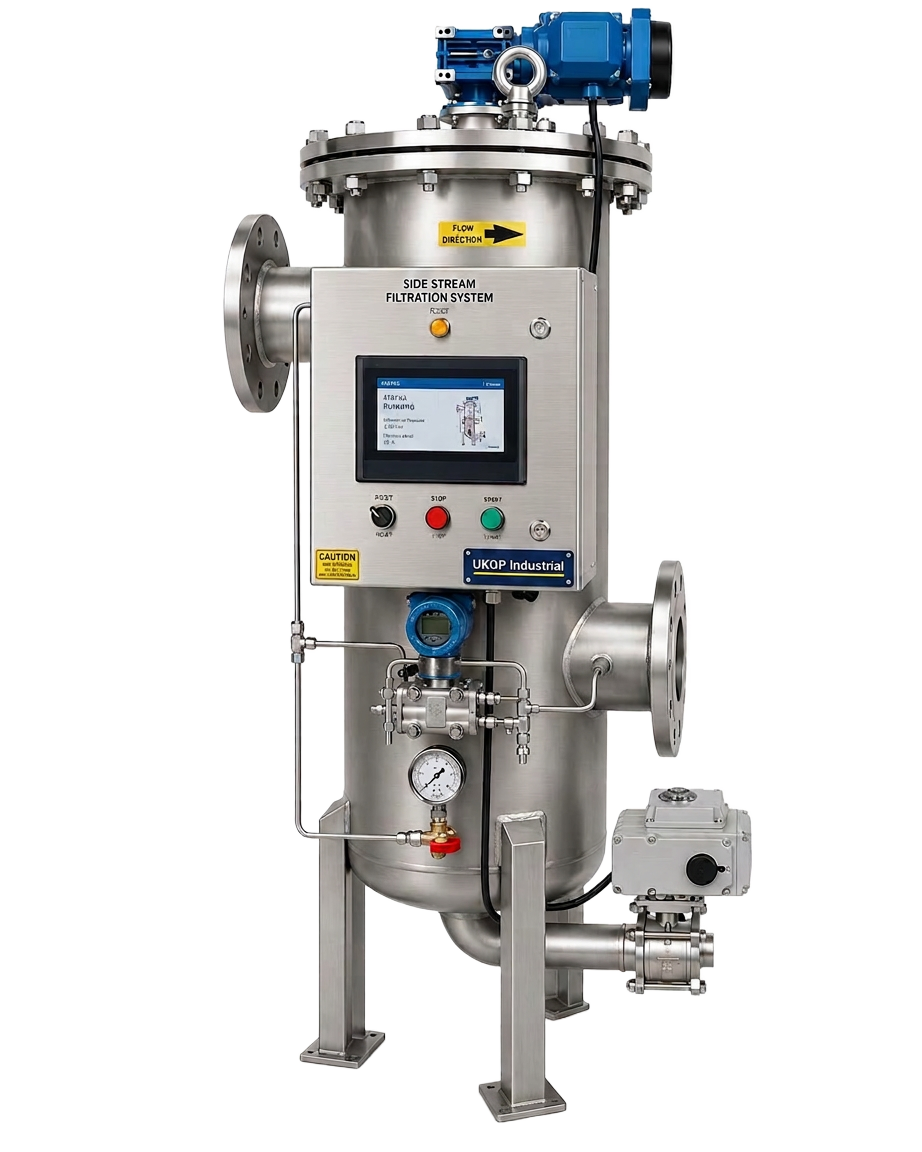
While a chemical dosing pot handles the chemical balance, it works most effectively when paired with a side stream filtration system. High-performance filtration units remove the suspended solids and magnetite that inhibitors are designed to passivate. When a chemical dosing pot is used to introduce surfactants or dispersants, these chemicals loosen existing debris which must then be captured by the filter. This dual approach ensures that the water remains clear and the thermal transfer across plate heat exchangers remains at peak efficiency. UKGP Industrial offers both solutions, allowing M&E contractors to source a complete water quality package that satisfies the most demanding project specifications and provides peace of mind for the end-user or landlord.
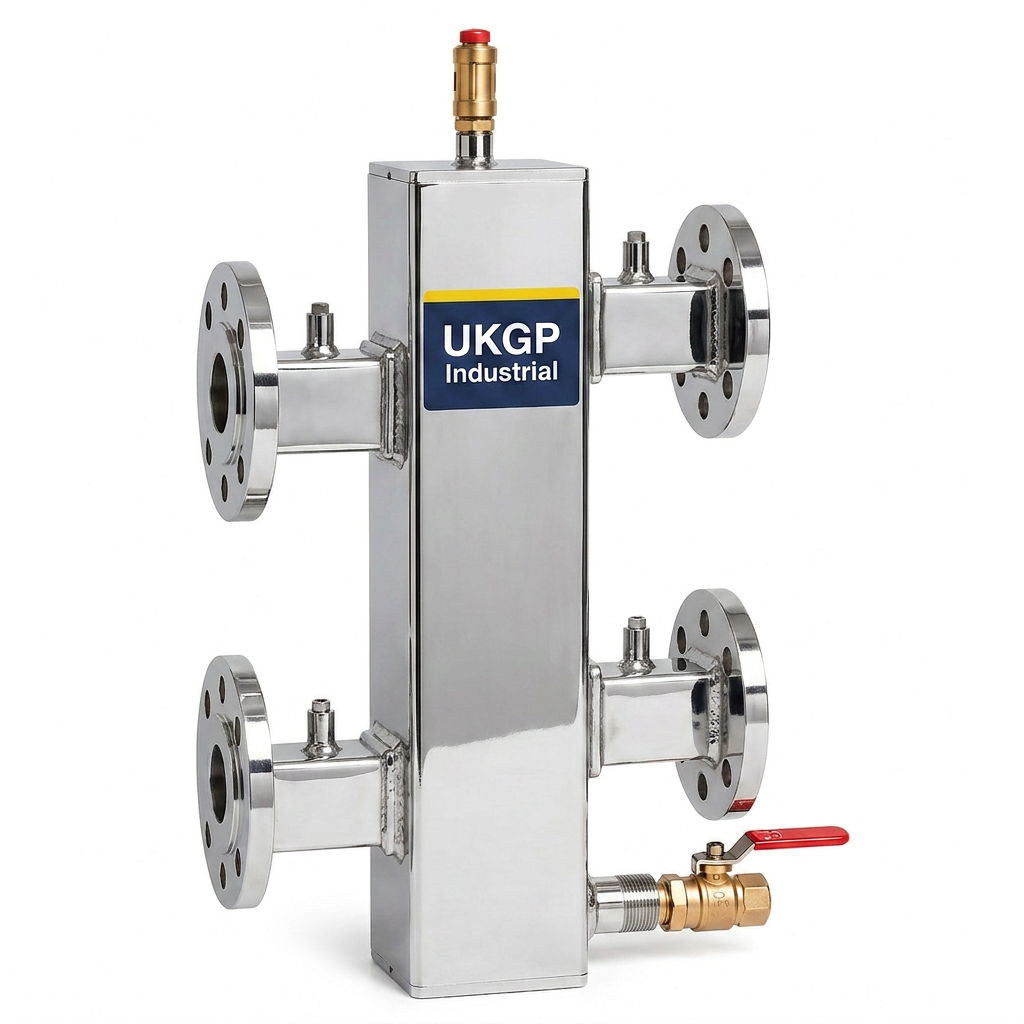
In many modern commercial buildings, the complexity of the HVAC system means that a simple filter is not enough. The synergy between the chemical dosing pot and the side stream filter is what prevents 'cold spots' in radiators and ensures that the low-loss headers remain free of sediment. If a system is neglected and chemicals are not topped up via the dosing pot, the resulting corrosion will quickly overwhelm even the best filtration system. Therefore, the dosing pot should be viewed as the first line of defence in a comprehensive water treatment strategy. Regular testing of the system water, followed by precise chemical additions through the dosing pot, ensures that the protective film on the internal pipework remains intact, even in systems with diverse metallurgy including steel, copper, and aluminium.
For procurement leads, sourcing both the chemical dosing pot and the filtration equipment from a single UK supplier like UKGP Industrial streamlines the supply chain and ensures technical compatibility. Our engineers can provide advice on the sizing of both components based on the total system volume and the anticipated flow rates. By ensuring that the dosing and filtration are correctly specified at the design stage, consultants can avoid the costly remedial clean-outs that often plague poorly maintained systems. Our chemical dosing pots are built to the same exacting standards as our filtration skids, ensuring a consistent level of quality across the entire plant room installation. This integrated approach is essential for achieving the energy efficiency targets required by the latest UK building regulations and sustainability certificates.
- Filters remove the debris loosened by chemicals added via the dosing pot.
- Synergy between dosing and filtration extends the life of plate heat exchangers.
- Reduces maintenance requirements for terminal units and commercial boilers.
- UKGP provides matched sets of dosing pots and filtration for easy procurement.
- Essential for maintainng clear water in complex, multi-metal HVAC circuits.
Material Selection and Technical Specifications
The choice of material for your chemical dosing pot is influenced by both the budget and the operating environment. Carbon steel is the most common choice for standard LTHW (Low Temperature Hot Water) systems, providing excellent strength and cost-effectiveness. However, in systems where pure water or aggressive chemicals might be used, or in food-sensitive environments, a stainless steel chemical dosing pot is the preferred specification. UKGP Industrial provides both options across our 5L to 25L range. Each unit is supplied with high-specification ball valves that provide a leak-tight seal, which is crucial when the pot is isolated from the pressurised system. The inclusion of a sturdy funnel as standard ensures that the process of adding inhibitor is clean and spill-free, protecting the plant room floor from chemical stains.
Each chemical dosing pot we supply is rated for a maximum working pressure that exceeds most commercial system requirements, typically up to 10 or 14 bar depending on the model. This high pressure rating is vital for installations in high-rise buildings where static head pressure is significant. The physical footprint of a 5L chemical dosing pot is compact enough for small plant rooms, while our 25L units are robust enough for industrial-scale district heating schemes. All units are finished with a durable coating to resist external corrosion, ensuring they look professional and function perfectly for years. When specifying, engineers should also check the compatibility of the seals within the valves to ensure they can withstand the specific glycols or biocides intended for use in the system.
Technical reliability is at the heart of the UKGP brand. We understand that a failing chemical dosing pot can cause a system-wide shutdown or a hazardous chemical spill. This is why we offer a 2-year warranty on all our dosing units, providing an extra layer of security for the installing contractor. Our bypass-mounted design is the industry standard for a reason: it allows for zero-down-time maintenance. When you choose a UKGP chemical dosing pot, you are choosing a product that has been refined through years of feedback from UK plant room engineers and facilities managers. We maintain high stock levels in our Surrey-based facility to ensure that we can meet tight project deadlines, often providing next-day delivery to sites across London and the wider UK to keep your project on schedule.
- Carbon steel for cost-effective heating; stainless steel for chilled water.
- High pressure ratings suitable for high-rise commercial applications.
- Leak-tight isolation valves come as part of the standard assembly.
- Wide-mouth funnel designed to prevent chemical spills and skin contact.
- Durable external finish to withstand harsh plant room conditions.
Investing in Long-Term HVAC Asset Protection
In the competitive UK commercial property market, building owners and facilities managers are increasingly focused on the total cost of ownership rather than just the initial capital expenditure. Installing a high-quality chemical dosing pot is one of the most cost-effective ways to protect millions of pounds worth of HVAC infrastructure. Without regular chemical top-ups, system efficiency can drop by as much as 15% due to scale build-up, significantly increasing the carbon footprint of the building. By making the dosing process simple and safe, the chemical dosing pot encourages regular maintenance rather than it being a task that is avoided by the onsite team. This ensures that the water chemistry remains within the parameters defined by the original equipment manufacturers of the boilers and chillers.
UKGP Industrial is committed to supporting UK consultants and contractors with technical data sheets and expert advice to ensure the right chemical dosing pot is selected for every project. We understand the pressures of meeting BSRIA BG50 requirements and our products are designed to make that compliance as straightforward as possible. Whether you are working on a new build school, a refurbished office block, or a large-scale hospital, our dosing pots provide the reliability and ease of use that modern facilities management requires. Requesting a quote for our 5L, 10L, or 25L units is a quick process, and our technical team is always available to discuss custom requirements or high-pressure variants if your specific project demands them.
Concluding your specification with a UKGP chemical dosing pot ensures that you are providing the end-user with a professional-grade solution. Our focus on quality materials, British manufacturing standards, and a 2-year warranty makes us the go-to supplier for discerning M&E professionals. Don't leave the water quality of your next project to chance; ensure that a dedicated bypass-mounted dosing unit is at the heart of your water treatment strategy. Contact us today for technical specifications or to discuss how we can support your upcoming installation with our wide range of plant room components, from dosing pots and separators to plate heat exchangers and expansion bellows. We look forward to helping you maintain the health and efficiency of your commercial hydronic systems with our market-leading dosing solutions.
- Protects high-value HVAC assets from 15% efficiency losses due to scale.
- Encourages regular maintenance by making dosing simple and safe.
- Fully supported by UKGP technical expertise and comprehensive data sheets.
- Fast turnaround from our Surrey warehouse for urgent site requirements.
- 2-year warranty provides peace of mind for contractors and clients alike.
Frequently asked questions
What size chemical dosing pot do I need for my system?
- Sizing depends on the total system volume and the amount of additive required. 5L units are common for smaller commercial systems, while 10L and 25L units are specified for larger loops or where significant glycol top-ups are anticipated. UKGP can help you calculate the correct volume based on your water treatment specialist's recommendations.
Should I choose carbon steel or stainless steel for my dosing pot?
- Carbon steel is standard for most heating systems. Stainless steel is recommended for chilled water systems to prevent external corrosion due to condensation, or in systems where a higher degree of internal purity is required. UKGP provides both options across our full range.
Where in the system should a chemical dosing pot be installed?
- It should be installed on a bypass across the main flow and return headers, typically on the return side before the pumps. This ensures that the chemicals are thoroughly diluted and mixed into the system water before reaching the main boiler or chiller plant.
Does your chemical dosing pot comply with BSRIA guidelines?
- Yes, our chemical dosing pots are designed to facilitate the water treatment regimes outlined in BSRIA BG29 and BG50. They allow for controlled chemical introduction and include the necessary vents and valves to prevent air ingress and ensure safety.
What is the warranty period for UKGP dosing pots?
- We offer a 2-year warranty on our chemical dosing pots, which covers manufacturing defects and material quality. Our units are built for longevity in demanding industrial and commercial plant room environments.