The Role of Central Heating Rust Inhibitor in Commercial Systems
In commercial HVAC plant rooms, the presence of dissolved oxygen and mixed metals creates an environment ripe for electrolytic corrosion. A professional central heating rust inhibitor works by creating a protective passivation layer on the internal surfaces of pipework and heat exchangers, effectively stifling the electrochemical process that leads to magnetite formation and pinhole leaks. Unlike domestic systems, commercial circuits operate under significantly higher pressures and thermal loads, meaning any failure in chemical protection can lead to rapid catastrophic component failure across the entire network.
Adherence to BSRIA BG50 'Water treatment for closed heating and cooling systems' is non-negotiable for modern building services consultants. This guidance emphasises that chemical dosing is not a 'fit and forget' exercise but a continuous maintenance requirement. Without the consistent presence of a central heating rust inhibitor, the system is susceptible to carbon steel oxidation, which eventually returns to the plant room as sludge. This black iron oxide restricts flow rates and reduces the heat transfer efficiency of leading commercial boiler manufacturers' equipment, increasing operational carbon footprints and utility costs.
Furthermore, the transition to lower temperature heating regimes, such as those involving heat pumps or district heating interfaces, has increased the need for precise chemical monitoring. Lower flow temperatures do not inherently prevent corrosion; in fact, they can sometimes foster microbiological growth if not managed alongside the central heating rust inhibitor. Ensuring that the system is properly cleaned according to BSRIA BG29 before the application of chemicals is the only way to guarantee that the inhibitor can bond effectively with the metal surfaces to provide long-term protection.
- Protects carbon steel, copper, and aluminium components.
- Prevents the build-up of magnetite sludge and scaling.
- Essential for maintaining manufacturer warranties on heat exchangers.
- Required for compliance with BSRIA BG50 maintenance standards.
Dosing Strategies Using a Chemical Dosing Pot
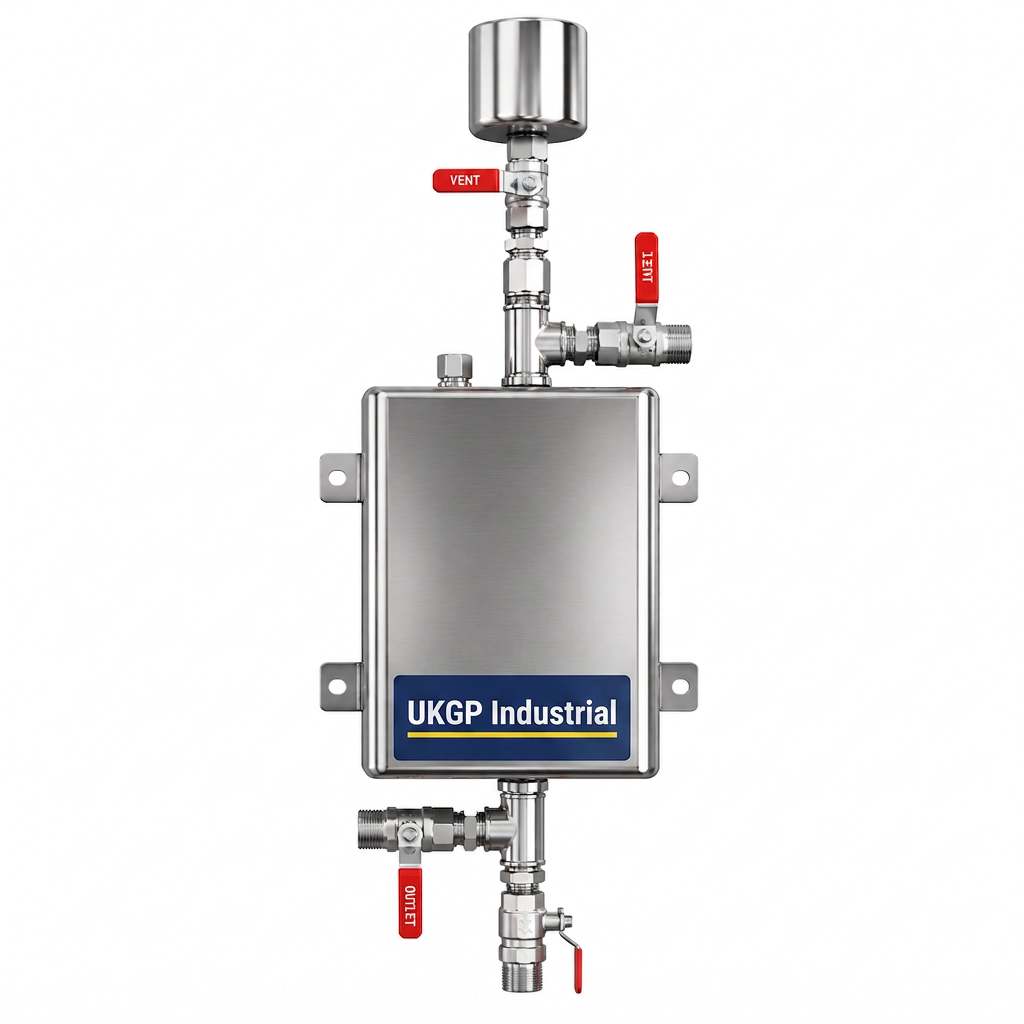
For a central heating rust inhibitor to provide maximum efficacy, it must be introduced into the system through a controlled and reliable mechanism. For most UK plant rooms, the specified method is the installation of a bypass-mounted dosing vessel. Using a UKGP chemical dosing pot allows engineers to introduce inhibitors and glycol top-ups without shutting down the entire system. These units are typically installed across the flow and return headers, utilising the differential pressure to draw the chemical charge into the primary circulation loop efficiently and safely.
UKGP provides a robust range of dosing solutions designed specifically for the rigours of the UK commercial market. Our chemical dosing pots are available in 5L, 10L, and 25L capacities to suit various system volumes, manufactured from high-grade carbon steel or stainless steel for maximum durability. Each unit comes complete with essential isolation valves, a tundish, and integrated drain and vent valves, ensuring that the process of adding central heating rust inhibitor is both clean and compliant with health and safety protocols during regular maintenance intervals.
When selecting a dosing pot, procurement leads must consider the build quality to ensure a long service life within the plant room environment. UKGP units feature a 2-year warranty and are designed for ease of installation by M&E contractors. By integrating a bypass-mounted pot, facilities managers can perform periodic chemical 'shots' to keep the central heating rust inhibitor at the PPM levels recommended by laboratory analysis, thereby fulfilling the auditing requirements set out in BS 8552 for water sampling and testing.
- Available in 5L, 10L, and 25L capacities to suit any system size.
- Supplied with isolation valves, drain, vent, and a stainless steel tundish.
- Bypass-mounted design allows for dosing while the system remains live.
- Carbon steel or stainless steel options with a 2-year warranty.
Maintaining Proper Levels of Central Heating Rust Inhibitor
Once a system has been treated with central heating rust inhibitor, the work is not finished. System water is dynamic; leaks, maintenance work, and the operation of automatic air vents can lead to the loss of treated water and its subsequent replacement by fresh, oxygenated 'make-up' water. This dilution effect quickly reduces the concentration of the inhibitor below the minimum effective threshold. Consequently, the metal surfaces are left exposed, and the rate of corrosion can accelerate rapidly, often unnoticed until a circulating pump fails or a plate heat exchanger becomes blocked.
Routine testing is the only way to verify that the central heating rust inhibitor is still providing adequate protection. CIBSE guidelines suggest that water quality should be checked at least quarterly in large commercial installations. Testing should look for specific inhibitor residuals as well as iron and copper levels. If the inhibitor levels are found to be low, the system should be immediately topped up using the dosing pot. This proactive approach prevents the 'peaks and troughs' of water quality that shorten the lifespan of expensive plant room assets.
It is also worth noting that over-dosing can be just as problematic as under-dosing in specific scenarios, particularly if it affects the pH balance of the water. While most modern central heating rust inhibitor products are buffered, maintaining a stable pH is essential for the longevity of non-ferrous components. For high-value systems, many engineers now specify the installation of permanent pH sensors and transmitters alongside their dosing equipment to provide real-time telemetry on the health of the system water.
- Regular sampling as per BS 8552 prevents silent corrosion damage.
- Dilution from fresh make-up water must be countered with chemical top-ups.
- Maintaining correct PPM levels is vital for BSRIA BG50 compliance.
- Proactive dosing extends the life of commercial boiler heat exchangers.
Integration with Side Stream Filtration
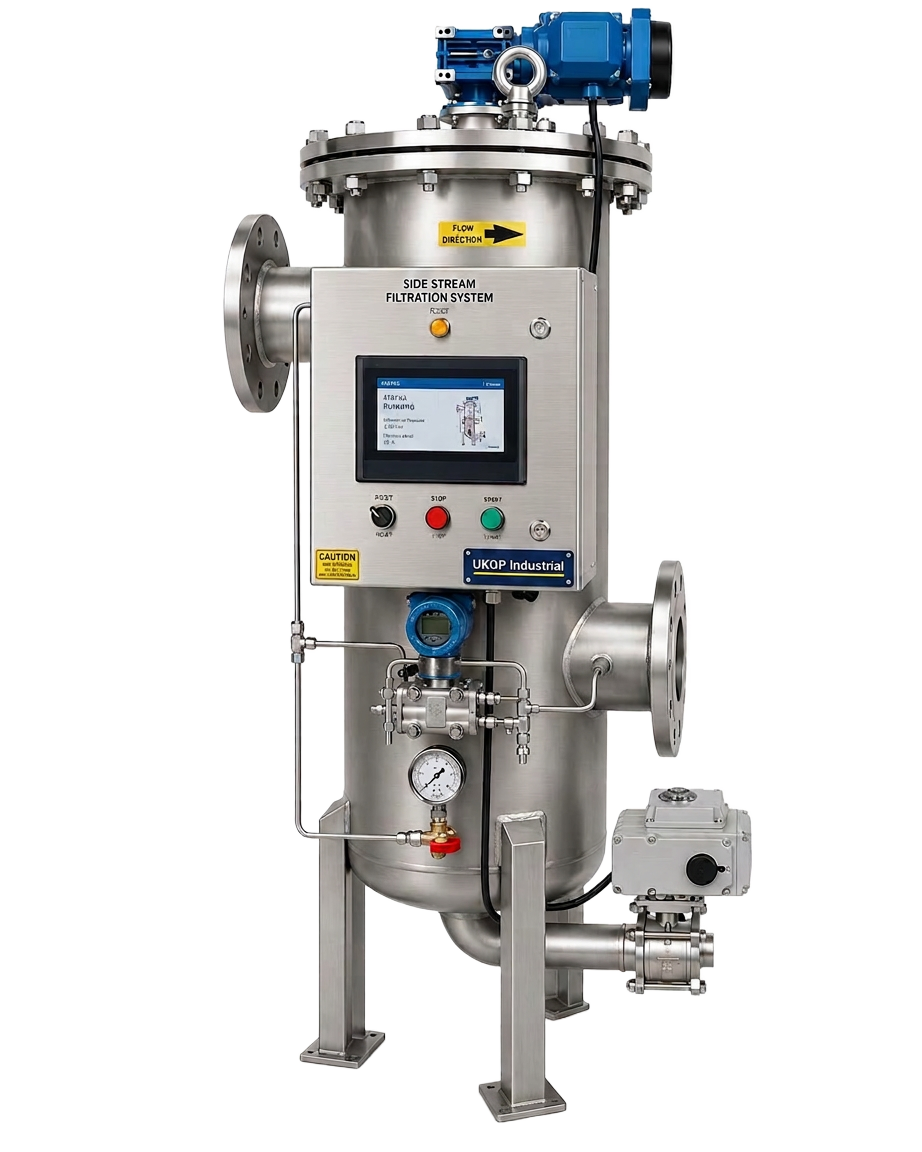
While a central heating rust inhibitor is excellent at preventing new corrosion, it cannot remove existing debris or 'clean up' a system that was poorly commissioned. To achieve the highest standards of water clarity, the inhibitor should be used in conjunction with side stream filtration. This setup ensures that any historical magnetite or installation debris is physically removed from the circuit, while the chemical inhibitor prevents further degradation of the pipework walls. This dual-action approach is now standard specification for most Tier 1 M&E contractors.
When a central heating rust inhibitor is added to a system that already contains significant sludge, the chemical can sometimes loosen old deposits, sending them into circulation. Without a side stream filter to capture these particles, they would likely settle in low-velocity areas like the secondary side of a plate heat exchanger or within the heat emitters themselves. By combining chemical and mechanical protection, you ensure that the plant room remains efficient and that the heat transfer surfaces remain clear and conductive.
The synergy between chemicals and filtration also reduces the load on the dosing pot over time. A clean system requires fewer chemical interventions because the central heating rust inhibitor is not being 'consumed' by reacting with massive amounts of suspended solids. This leads to lower chemical costs for the client and a much higher degree of system reliability. For any consultant designing a new plant room, specifying both a 25L dosing pot and a high-performance side stream filtration skid is the benchmark for modern system design.
- Mechanical filtration removes existing sludge that chemicals cannot.
- Prevents loosened debris from clogging plate heat exchangers.
- Reduces chemical consumption by maintaining a cleaner base environment.
- Improves overall thermal efficiency of the HVAC network.
Compliance with BS EN 14917 and Expansion Management
System integrity is not just about water chemistry; it is also about physical stability. As a central heating rust inhibitor circulates, the system undergoes thermal expansion and contraction cycles. If expansion bellows are not correctly specified according to BS EN 14917, the resulting mechanical stress can lead to fatigue in the pipework. These stress points are often where corrosion begins, as the flexing action can crack the protective passivation film created by the inhibitor, allowing oxygen to attack the exposed metal.
Therefore, a holistic approach to plant room maintenance must include the inspection of expansion joints and bellows alongside the chemical dosing regime. If a system is losing water through minor leaks at stressed joints, the constant intake of fresh water will deplete the central heating rust inhibitor. By ensuring the pipework is properly supported and that thermal movement is compensated for, you maintain a 'closed' loop in the truest sense, making the water treatment programme far more effective and easier to manage.
Consultants should always specify expansion bellows that are compatible with the chemicals found in a standard central heating rust inhibitor. Some lower-grade elastomers used in bellows can degrade when exposed to certain glycol-based inhibitors over long periods. UKGP supplies a range of bellows and expansion solutions that are tested for compatibility with common HVAC chemicals, ensuring that the hardware and the chemistry work in harmony to protect the building's infrastructure.
- Stress points in pipework are highly susceptible to localised corrosion.
- BS EN 14917 compliant bellows prevent mechanical failure and leaks.
- Minimising leaks preserves the concentration of the chemical inhibitor.
- Chemical compatibility between bellows and inhibitors is essential.
Technical Specifications for Dosing Installation
The installation of a dosing pot for central heating rust inhibitor should follow best engineering practices to ensure safety and performance. The pot should be mounted at a height that allows the engineer to comfortably pour chemicals into the tundish, and it must be supported by a robust bracket or floor stand. UKGP dosing pots are designed for easy integration, featuring standard BSP connections that allow for straightforward pipework runs. It is vital to ensure that the isolation valves are of a high quality to prevent any backflow or leakage during the dosing cycle.
Before adding any central heating rust inhibitor, the dosing pot should be drained of any stagnant water using the bottom drain valve. Once the chemical is poured into the vessel, the top vent valve is used to bleed out any trapped air, ensuring that no air pockets are introduced into the primary heating circuit. This is a critical step, as air introduced into the system will counteract the work of the inhibitor by providing a fresh source of oxygen for the corrosion process to start again.
Finally, always refer to the manufacturer’s technical data sheet for the specific central heating rust inhibitor being used. Different concentrations and formulations may require different residence times within the dosing pot before being flushed into the main system. By using a UKGP 5L, 10L, or 25L dosing pot, you have the flexibility to dose accurately according to the specific volume of the building's HVAC circuit, backed by our 2-year warranty for peace of mind in high-pressure commercial environments.
- Always install with a tundish to prevent chemical spills.
- Vent the vessel thoroughly to prevent oxygen ingress.
- Select the pot size based on the total system water volume.
- Use high-quality bypass valves to ensure reliable chemical delivery.
Frequently asked questions
How much central heating rust inhibitor do I need?
- The amount depends on the total system volume. Typically, inhibitors are dosed at a concentration of 0.5% to 1.0%. For commercial systems, a 25L UKGP dosing pot is often preferred to allow for significant volumes of chemical or glycol to be added in a single operation.
Can I use central heating rust inhibitor in systems with aluminium heat exchangers?
- Yes, but you must ensure the inhibitor is specifically 'multi-metal' and buffered to maintain a pH level generally between 7.0 and 8.5. Always check the boiler manufacturer's guidelines to ensure the chemical treatment is compatible with their warranty requirements.
How often should I top up the inhibitor?
- It shouldn't be a 'top up' by guesswork. Following BSRIA BG50, you should conduct water analysis annually or quarterly. If the analysis shows the concentration of central heating rust inhibitor has dropped, use a dosing pot to restore it to the recommended level.
Is a dosing pot better than a pump-based chemical feed?
- A chemical dosing pot is often preferred for closed-loop HVAC systems because it is a simple, passive device with no moving parts to fail. It allows for easy manual dosing of central heating rust inhibitor and glycol without the complexity of an electronic pump system.
Does central heating rust inhibitor prevent Limescale?
- Most high-quality inhibitors contain scale inhibitors as well as corrosion inhibitors. This prevents calcium carbonate from dropping out of the water and forming hard scale on heat exchanger surfaces, which is vital for maintaining energy efficiency in hard water areas.