Core Components and Construction
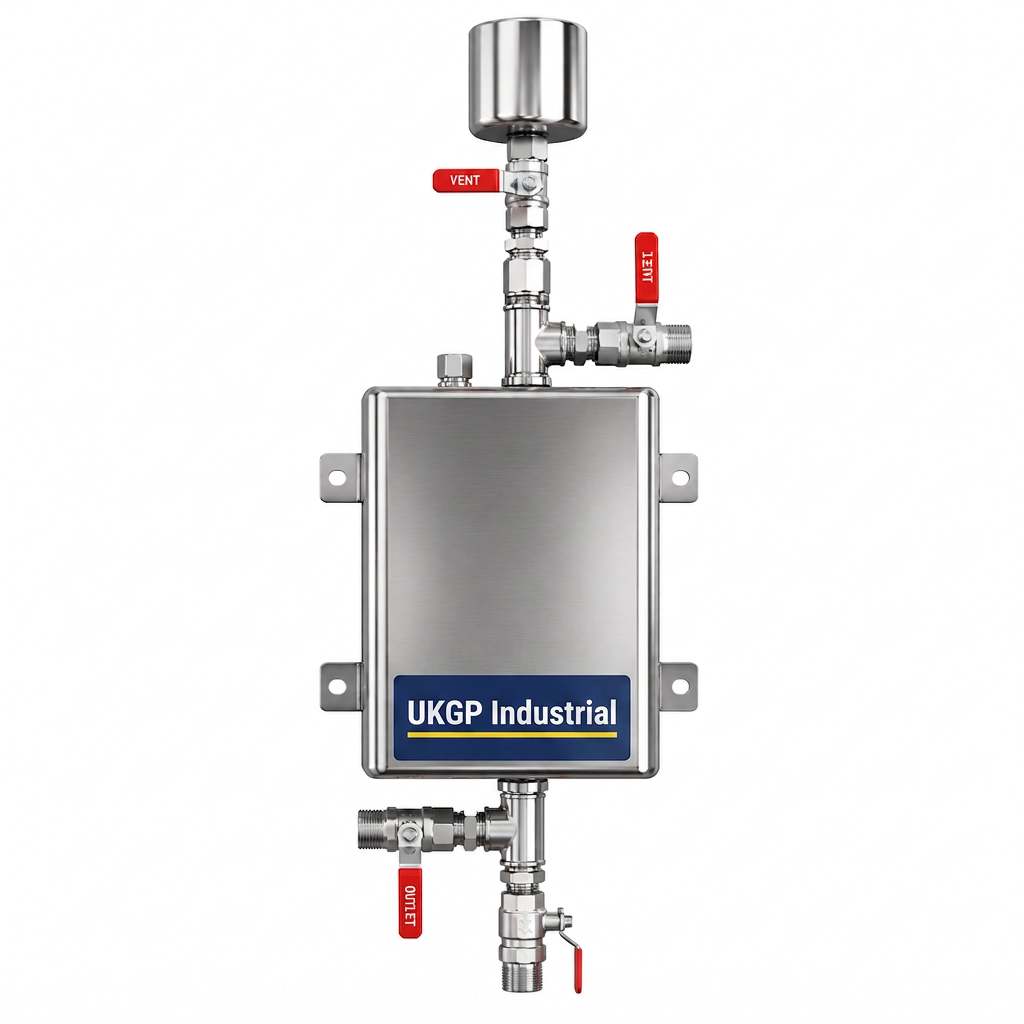
A chemical dosing pot is essentially a pressure vessel rated to the system’s operating pressure, typically fabricated from stainless steel to ensure longevity and resistance to the chemicals it will contain. Unlike low-grade carbon steel alternatives, UKGP Industrial dosing pots utilise robust materials that withstand the aggressive nature of concentrated chemicals before they are diluted into the system volume. The vessel is mounted vertically, often on a wall bracket or a floor-standing cradle, and integrated into the main flow and return pipework via a side-stream bypass arrangement.
The physical assembly must include a tundish, which serves as a safety funnel for the operator. This is positioned above the top filling valve. The inclusion of a tundish is a key safety feature, reducing the risk of chemical spills or skin contact when the engineer is charging the unit. Beneath the vessel, a drain valve allows the operator to empty the pot of system water before adding the chemical, ensuring there is a sufficient vacuum to accept the new fluid.
Internally, the pot is a hollow chamber. Its efficacy relies entirely on the pressure differential across the system pumps to drive flow through the vessel. Because it is a static pressure vessel when isolated, it must be designed to withstand the maximum working pressure of the plant room, which in commercial UK applications typically ranges from 3.5 bar to 10 bar, though 16 bar units are required for high-rise developments.
- Heavy-duty stainless steel cylinder (304 or 316 grade) to prevent internal corrosion of the pot itself.
- Four-valve arrangement: Inlet, Outlet, Drain, and Filling.
- Integral tundish to prevent splashback and facilitate easy pouring.
- High-quality non-return valves to prevent backflow into the filling area.
- Air vent/bleed valve to discharge air introduced during the filling process.
Functional Role in Water Treatment Regimes
The primary role of the dosing pot is the maintenance of water chemistry as defined by BS 8552 and BSRIA BG50. In a closed-loop system, water is the heat transfer medium; however, untreated water is naturally corrosive to steel, copper, and aluminium components. By using a dosing pot, a maintenance engineer can inject precise volumes of chemical inhibitors that neutralise acidity and provide a protective sacrificial layer on the internal pipe surfaces.
In chilled water systems, the risk of microbiological fouling is significant. Pseudomonads and SRBs can create biofilms that drastically reduce heat transfer efficiency and cause localised under-deposit corrosion. The dosing pot allows for 'shock dosing' of biocides, a process where a high concentration of antimicrobial agent is introduced to clear biological growth. This is a critical requirement in modern HVAC maintenance to ensure the system remains compliant with health and safety standards.
Furthermore, as the UK transitions toward heat pump technology, the use of propylene glycol for frost protection has increased. Dosing pots provide the means to top up glycol concentrations that may have depleted due to minor leaks or system maintenance. Without a dedicated dosing point, the process of adding glycol becomes a complex task involving the temporary depressurisation of the loop, which can introduce unwanted oxygen and contaminants.
- Inhibitors: To form a protective film on metallic surfaces.
- Biocides: Essential in low-temperature chilled water or LTHW systems to prevent BSR (Sulphate Reducing Bacteria).
- Glycol: For frost protection and burst protection in external pipework or heat pumps.
- Dispersants: To keep suspended solids in motion for removal by side-stream filtration.
Frequently asked questions
What size dosing pot do I need for my system?
- For manual dosing pots, the capacity is typically 5, 10, 15, 101, or 25 litres. Selection is usually based on the total system volume and the desired concentrations of inhibitors or glycol. While a larger pot allows for fewer charging cycles, it must be sized to fit within the physical constraints of the plant room.
What is the maximum pressure rating for a standard dosing pot?
- While UKGP Industrial chemical dosing pots are rated to 14 bar or 10 bar depending on the model, it is critical to ensure the pot is rated for the specific system's Maximum Allowable Working Pressure (MAWP). Standard units are often 10 bar, but high-rise or high-pressure industrial loops may require 16 bar or 25 bar variants.
How often should I dose a closed-loop system?
- BSRIA BG50 recommends inspecting the water quality at least quarterly. However, dosing should only occur when testing shows inhibitor levels have fallen below the manufacturer's recommended ppm, or when significant water loss/make-up has occurred.
Do chemical dosing pots require regular maintenance?
- Modern stainless steel dosing pots are highly resistant to corrosion. However, the seals and valves are wear items. Regular maintenance should include checking the integrity of the tundish, ensuring the non-return valve is not seized, and verifying the air vent is clear.