Technical Criteria for Dosing Pot Selection
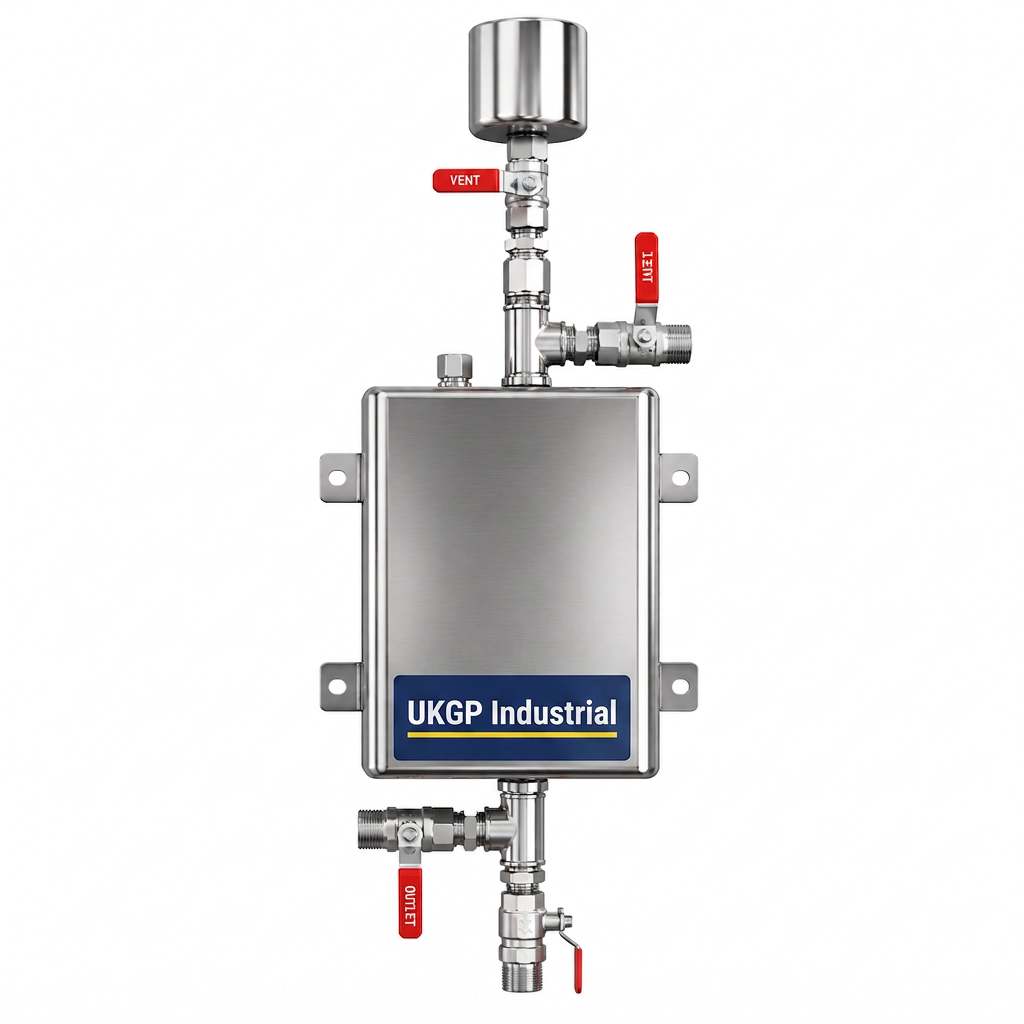
The selection of a chemical dosing pot is often treated as an afterthought in plant room design, yet it is a critical component for the long-term protection of heat exchangers and chillers. Unlike automated dosing pumps, a dosing pot relies on a pressure differential created across a pump or a high-resistance valve to divert a portion of the system flow through the vessel. The sizing must therefore balance the total system volume against the practical frequency of manual dosing.
According to BSRIA BG50 'Water Treatment for Closed Heating and Cooling Systems', maintaining correct inhibitor levels is non-negotiable for preventing corrosion and scale. When sizing, engineers must calculate the total volume of the 'shot' required. If a 10,000-litre system requires a 1% inhibitor concentration, 100 litres of chemical are needed. Using a 3.5-litre pot would require nearly 30 individual dosing cycles, which is labour-intensive and prone to human error. A larger 15-litre or 25-litre vessel would be more appropriate for such a system.
- Total system volume (m³ or Litres).
- Required chemical concentration (e.g., 0.5% or 1%).
- Desired number of passes/doses to reach target.
- Physical space constraints within the plant room.
Frequently asked questions
Can I use a dosing pot to fill a system with glycol from scratch?
- No, it is not best practice. Using the dosing pot for primary glycol fills is inefficient and risks massive spillages. Glycol should be introduced via a dedicated pressurisation unit with a glycol break tank or a specialised pump. Dosing pots are for maintenance top-ups only.
What is the maximum flow rate allowed through a dosing pot?
- BSRIA BG29/21 and BG50 highlight that high-velocity bypasses can cause erosion or noise. The flow rate through the pot should be controlled via the inlet/outlet valves to ensure consistent chemical dispersal without creating a significant pressure drop across the main header.
What pressure ratings are standard for UK commercial dosing pots?
- Dosing pots are generally rated to PN16 (16 bar) or PN25 (25 bar). It is critical to ensure the pot's pressure rating matches or exceeds the safety relief valve setting of the sealed system.
Are stainless steel dosing pots necessary?
- Standard UKGP Industrial dosing pots are manufactured from carbon steel. For systems where high-purity water or specific corrosive chemicals are used, stainless steel variants should be specified to prevent the pot itself from becoming a source of corrosion.