The Engineering Necessity of a Water Air Separator
In the UK commercial HVAC sector, the presence of entrained air and magnetite is the primary catalyst for system degradation. A water air separator serves as the frontline defence by aggressively removing microbubbles that traditional manual air vents cannot capture. These gasses, if left in suspension, create an aerobic environment that accelerates the oxidation of ferrous components, leading to the formation of magnetite. By installing a high-quality water air separator, building services consultants ensure that the system remains within the tight oxygen parameters necessitated by BSRIA BG29 pre-commissioning cleaning standards and ongoing BG50 maintenance regimes. This proactive approach significantly reduces the risk of air-locks in terminal units and dry-running damage in circulating pumps.
Precision engineering dictates that the removal of gasses should occur at the point of lowest solubility within the system. Typically, this is situated at the highest temperature and lowest pressure point, usually just after the boiler or heat source and before the primary pump. Utilizing a water air separator at this critical juncture ensures that the Henry's Law principle is leveraged to maximize deaeration efficiency. For M&E contractors, specifying a unit that combines air removal with magnetic dirt separation represents a best-practice strategy for protecting high-efficiency plate heat exchangers and sensitive control valves. Without this level of protection, the system's thermal skip and delta-T will inevitably drift, resulting in increased energy consumption and higher operational overheads for facility managers.
Choosing UKGP for your separation requirements means investing in British-engineered reliability. Our units are designed to handle the rigorous demands of modern plant rooms, offering a robust solution that mitigates the need for frequent site visits to bleed radiators or replace failed seals. When selecting a water air separator, engineers must account for the specific volume flow rates and pressure drops across the device. A poorly sized separator can become a bottleneck, inducing unnecessary turbulence and reducing the overall efficiency of the hydronic circuit. By prioritizing a dual-action unit that handles both deaeration and debris removal, you satisfy both the technical requirements of CIBSE guides and the commercial needs of the client for a low-maintenance, long-life heating or cooling system.
- Ensures compliance with BSRIA BG50 water quality guidelines
- Prevents oxygen-induced corrosion in ferrous pipework
- Reduces pump cavitation and noise in occupied spaces
- Extends the operational lifespan of commercial boilers and heat pumps
Sizing Parameters for BSRIA Compliance
Accurate sizing of a water air separator is not merely about matching the pipe diameter; it is about managing the velocity of the fluid to allow for effective coalescing of microbubbles. For optimal performance, the fluid velocity entering the separator should ideally be maintained below 1.5 m/s. If the velocity is too high, the internal coalescing media cannot effectively interrupt the flow to allow air bubbles to rise and be vented. Conversely, if the unit is significantly oversized, the lack of sufficient flow energy might impede the centrifugal or collision-based separation of dirt particles. Most UKGP units are specified based on the peak flow rate of the secondary circuit to ensure full-stream deaeration during all load conditions.
The pressure drop (Kvs) across the water air separator is another vital metric for M&E designers. Every component added to a plant room increases the total head requirement of the pumps. By selecting a UKGP separator with a low-pressure-drop design, engineers can often specify smaller, more efficient pumps, contributing to the building's overall BREEAM or EPC rating. We provide detailed performance curves for our PN10 and PN16 flanged units to assist in precise hydraulic modelling. This ensures that the inclusion of an air and dirt separator does not negatively impact the balancing of the system or the delivery of design flow rates to the furthest terminal units.
Operational pressure and temperature ratings must also be scrutinized during the specification phase. While many standard commercial applications operate within the PN10 range, high-rise developments or district heating schemes may require PN16 or even PN25 rated vessels. A water air separator specified for these environments must also be capable of withstanding peak temperatures, particularly in LTHW systems during pasteurization cycles or peak winter loads. Our range covers DN25 up to DN300, providing flexible solutions for everything from light commercial offices to large-scale industrial processing plants, ensuring that the structural integrity of the vessel matches the design life of the wider building services infrastructure.
- Design for fluid velocities typically between 1.0 m/s and 1.5 m/s
- Consult pressure drop charts to optimize pump head selection
- Verify flange ratings (PN10/PN16) against system static pressure
- Select DN sizes based on flow rate rather than just pipe connection
The Role of Magnetic Catch Technology
In modern systems, a water air separator is rarely sufficient if it only handles gas; it must also address the 'black sludge' or magnetite that plagues commercial heating circuits. Magnetite is highly abrasive and magnetically charged, meaning it tends to accumulate in the magnetic fields generated by high-efficiency ECM pumps. By integrating a high-gauss magnetic catch within the water air separator, UKGP units provide a dual-layered protection strategy. This magnetic element attracts and captures even the smallest sub-micron metallic particles that would otherwise bypass a standard strainer. This keeps the heat transfer surfaces of your plate heat exchanger clean and functioning at design capacity, preventing the 'fouling' that often leads to increased fuel bills.
Maintenance accessibility is a key factor that many engineers overlook during the initial design phase. A water air separator equipped with an external magnetic sleeve or an internal dry-pocket magnet allows for easy cleaning without the need to drain down the entire system. During routine service visits, the FM team can simply isolate the magnet, allowing the captured magnetite to fall into the collection chamber, which is then flushed through the blow-down valve. This simplified process encourages regular maintenance, which is a core requirement of BS 8552 for water sampling and monitoring. Choosing a UKGP unit with an included isolation kit makes this process even faster, reducing labor costs and system downtime.
The economic argument for high-performance magnetic separation is compelling. When compared to the cost of replacing a seized pump or chemically flushing a fouled boiler, the capital expenditure of a premium water air separator is negligible. Furthermore, keeping the water clear of debris ensures that chemical dosing pots can be used more effectively, as the inhibitors aren't being used up reacting with massive amounts of circulating sludge. For contractors, the use of a combined magnetic and coalescing separator reduces the number of leak paths by combining two essential functions into a single flanged vessel, simplifying the plant room footprint and speeding up onsite installation times.
- Protects expensive ECM pumps from magnetic particle damage
- Increases the efficiency of chemical inhibitors and biocide treatments
- Reduces frequency of plate heat exchanger strip-down and cleaning
- Features easy-clean magnetic dry-pockets for rapid maintenance
Installation Best Practices for Maximum Efficiency
To achieve the best results from a water air separator, the unit must be installed in a horizontal run of pipework where the flow is most stable. Turbulence should be avoided immediately upstream of the unit to allow the coalescing media to work effectively. We recommend a straight run of pipe at least five diameters in length before the inlet. Because air is less soluble in warmer water, the separator should be placed on the flow pipe of a heating system. If used in a chilled water system, the water air separator should be installed on the return pipe where temperatures are highest, maximizing the release of dissolved gasses before the water returns to the chiller.
Correct orientation is vital, especially for units utilizing float-style automatic air vents. The vessel must be perfectly vertical to ensure the float mechanism operates correctly and prevents water leakage. UKGP units arrive with flanged connections for ease of installation, but it is essential that installers use the correct gasket materials suitable for the system temperature and chemical composition. Our 2-year warranty provides peace of mind that the vessel materials—typically robust carbon steel or stainless steel—will withstand the rigors of a commercial environment, provided they are installed according to our technical data sheets and BS EN 12170 guidelines.
Finally, consideration must be given to the discharge of the blow-down valve. The water air separator will collect a significant amount of sludge during the first few weeks of system operation, particularly in retrofit projects. The blow-off should be piped to a suitable drain or tundish to allow for safe flushing of the captured sediment. By integrating the UKGP isolation kit, maintenance teams can perform these flushes under full system pressure, ensuring that the coalescing media remains clear of blockages. This attention to detail during the installation phase ensures that the system performance remains optimized for years, directly supporting the building's operational sustainability goals.
- Install at the point of highest temperature and lowest pressure
- Ensure a minimum of five pipe diameters of straight run upstream
- Verify vertical orientation for optimal float vent operation
- Pipe the blow-down valve to a drain for safe sediment removal
Technical Specifications of UKGP Separators
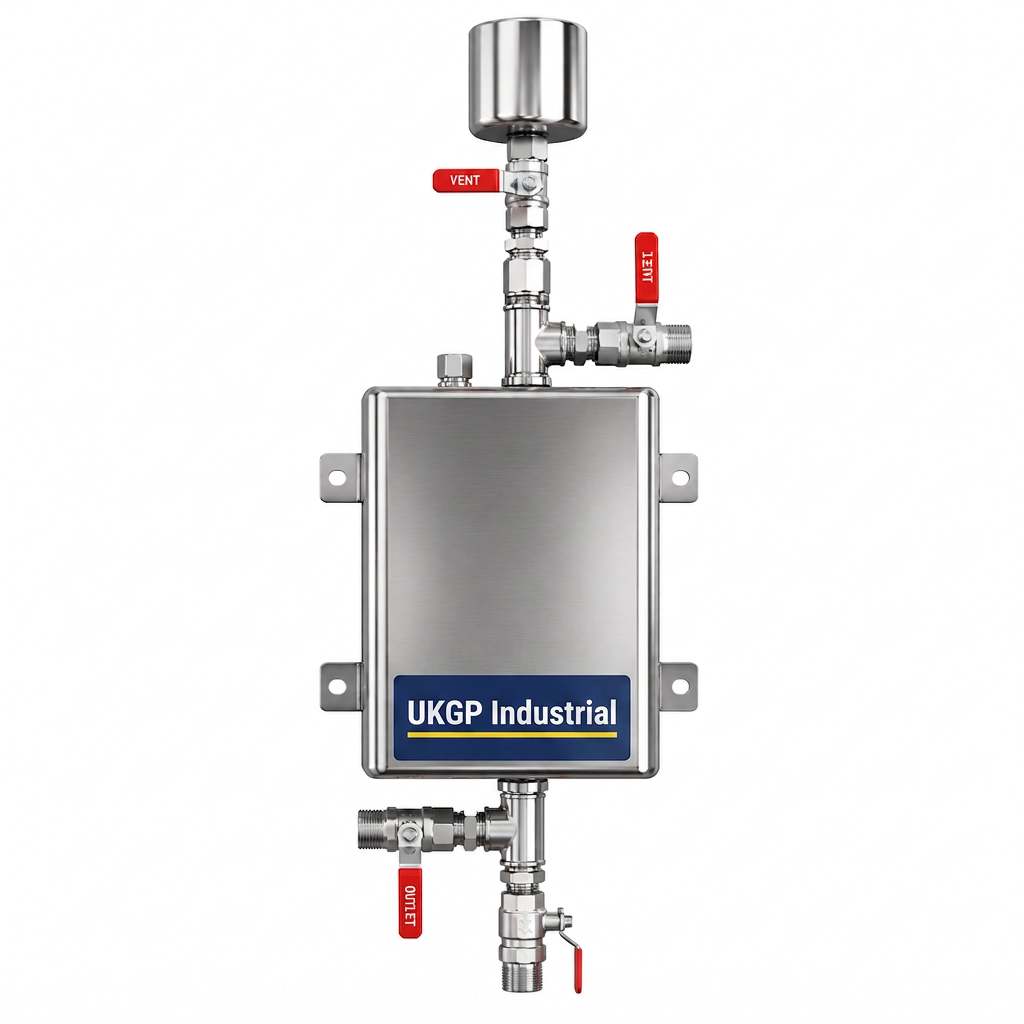
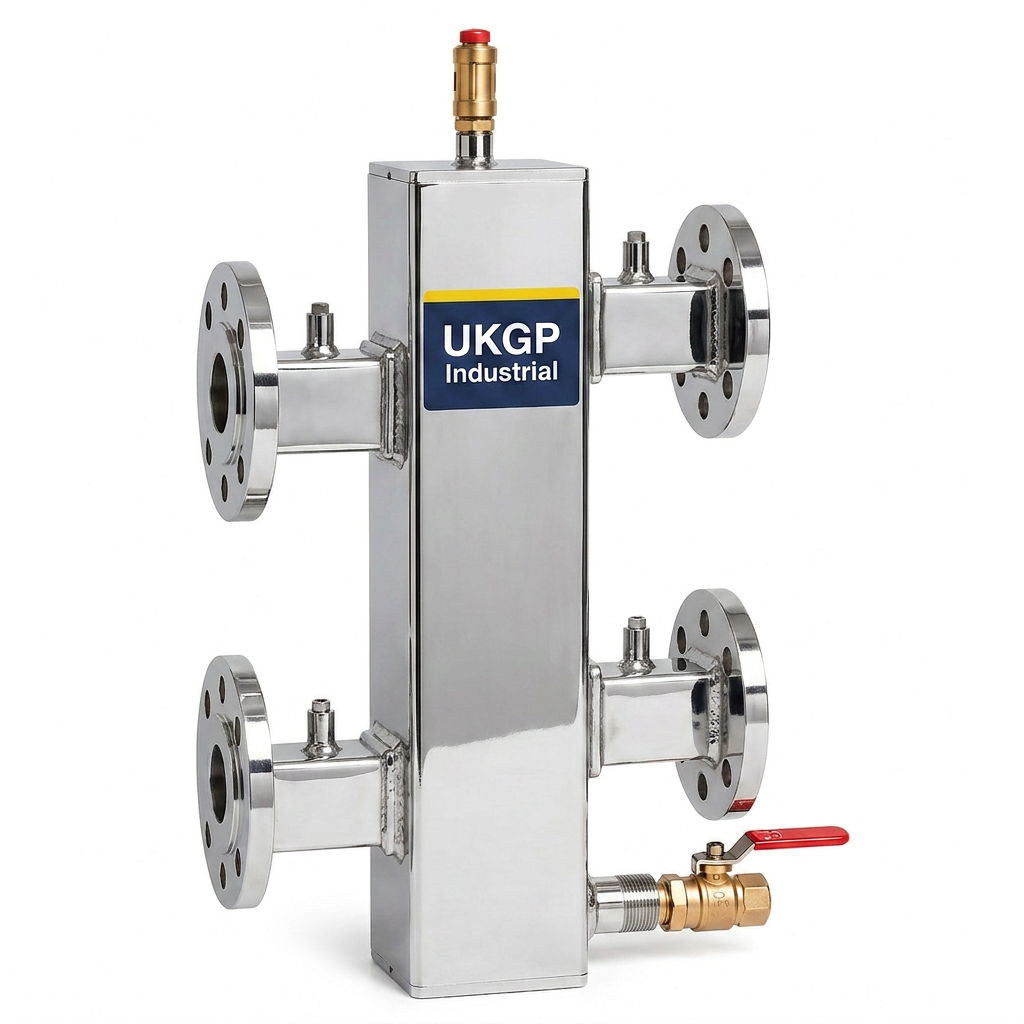
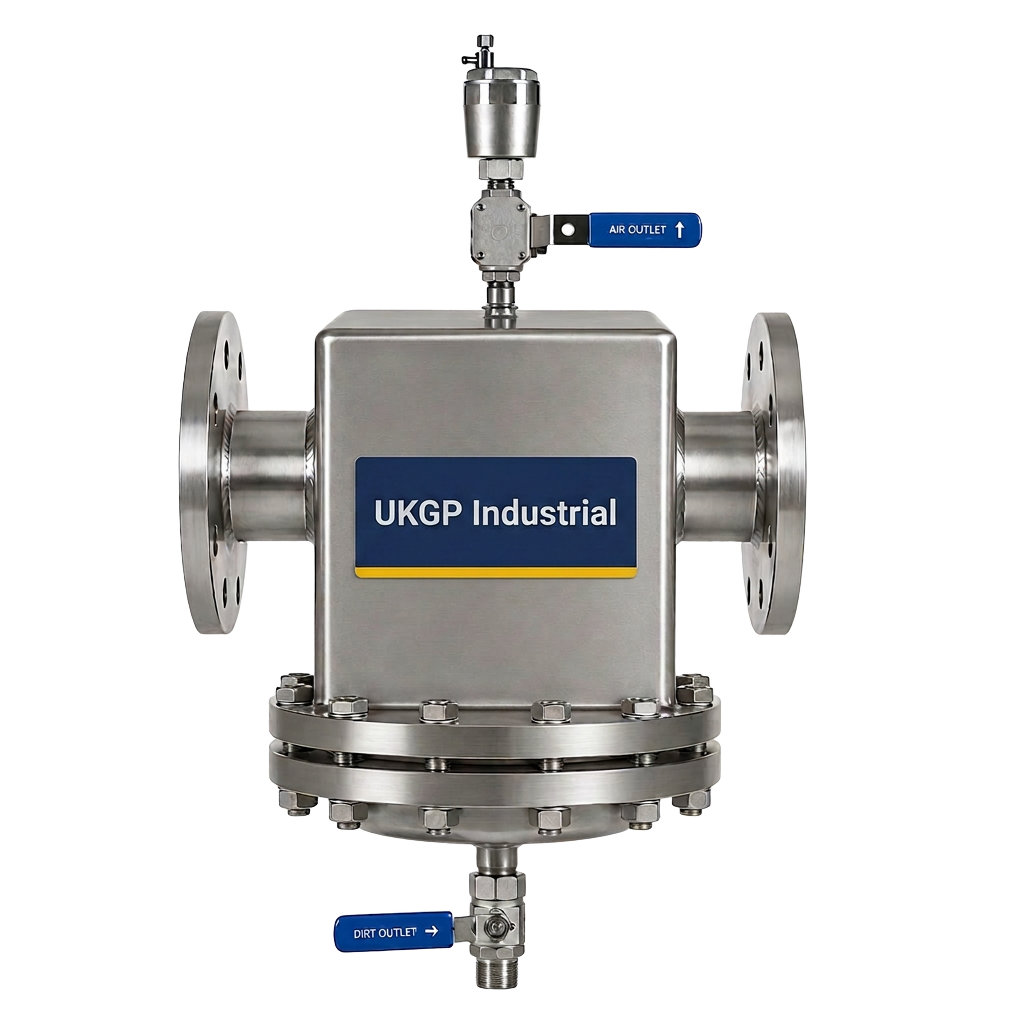
Our range of water air separator units is built to the highest UK standards, catering to commercial and industrial flow rates from DN25 up to DN300. Every unit features a high-surface-area coalescing media that forces microbubbles to coalesce and rise out of the flow. The internal design is optimized to minimize turbulence, ensuring that the macroscopic air bubbles are directed toward the automatic air vent at the top of the chamber. This ensures that the water air separator effectively 'scrubs' the system water on every pass, eventually reaching a state of total deaeration that is required for high-performance condensing boilers and heat pump systems.
In addition to air removal, our separators feature a powerful magnetic catch assembly. The stainless steel housing ensures longevity, while the flanged PN10 or PN16 connections provide a secure, leak-proof interface with the main headers. For engineers concerned with thermal loss, we offer bespoke insulation jackets that fit snugly around the separator, reducing heat emission into the plant room and further improving system efficiency. The inclusion of a 2-year warranty highlights our confidence in the durability of our manufacturing process, which follows strict quality control protocols to ensure every weld and flange meets British standards for pressurized vessels.
Whether you are working on a new build school, a hospital retrofit, or a large industrial process cooling loop, selecting a UKGP water air separator provides the technical assurance needed for high-stakes projects. Our technical support team is available to assist with pressure drop calculations and model selection, ensuring that your specification meets the specific demands of your project's hydraulic profile. By standardizing on UKGP equipment, procurement leads can consolidate their supply chain with a Surrey-based manufacturer known for rapid lead times and robust technical documentation, ensuring that project deadlines are met without compromising on engineering quality.
- Available in sizes DN25 to DN300 with flanged connections
- Options for PN10 and PN16 pressure ratings as standard
- Supplied with a full isolation kit for simplified maintenance
- Constructed from heavy-duty materials with a 2-year warranty
Comparing Mechanical and Vacuum Deaeration
While a mechanical water air separator is the industry standard for most LTHW and CHW systems, it is important to understand when it is the primary solution. For larger, low-temperature systems where the pressure may be insufficient to release air through coalescing alone, a vacuum degasser might be used in tandem. However, for 90% of commercial applications in the UK, a high-quality water air separator provides the most cost-effective and reliable method of air removal. It requires no power supply, has no moving electronic parts to fail, and provides continuous, 'in-line' treatment of the total flow, rather than the side-stream approach adopted by vacuum units.
The simplicity of a passive water air separator is a significant advantage for long-term facility management. There are no control panels to program or sensors to calibrate. Once installed, the unit works silently to remove air and dirt, requiring only a periodic flush of the collection chamber. This reliability is why many M&E contractors prefer our combined coalescing and magnetic units for decentralized plant rooms where regular manual inspection might be infrequent. It provides a 'fit and forget' level of protection that is essential for maintaining the hydraulic balance and thermal efficiency of modern variable-variable-flow systems frequently found in commercial offices.
In conclusion, the selection of a water air separator shouldn't be an afterthought. It is an essential component that ensures the integrity of the water chemistry and protects the most expensive parts of the HVAC system. By following the sizing and placement guidelines outlined in this guide and choosing a UKGP unit, you are guaranteeing a higher standard of system performance. For a bespoke quote or technical consultation on your next project, contact our Surrey office today. We can provide full CAD blocks and Revit files for our entire separator range, helping you integrate our high-performance UK-manufactured solutions into your designs with ease.
- Lower capital and operational expenditure than vacuum degassers
- Passive operation requires no external power or control wiring
- Provides 24/7 in-line protection for the entire system volume
- Simple maintenance regime suitable for all facility management teams
Frequently asked questions
Where is the best place to install a water air separator?
- For heating systems, install on the flow pipe after the boiler (the hottest point). For chilled water, install on the return pipe before the chiller (the hottest point in that circuit) for maximum deaeration.
What flange ratings are available for UKGP separators?
- We supply our water air separator range with PN10 or PN16 flanged connections as standard, suitable for most commercial UK plant room pressures.
Does a water air separator remove magnetite?
- Yes, if it is a combined model like the UKGP range. Our units feature a magnetic catch specifically designed to capture fine magnetite particles alongside the air removal process.
How often should I clean the water air separator?
- During commissioning (BG29), it should be checked daily. For ongoing maintenance (BG50), we recommend flushing the dirt collection chamber every 3-6 months depending on system water quality.
What sizes do UKGP separators come in?
- Our units are available from DN25 for smaller commercial loops up to DN300 for large-scale industrial and district heating applications.