Understanding the Role of a Spirovent Air Separator
In modern B2B HVAC environments, the presence of air leads to a cascade of mechanical failures including pump cavitation, localized overheating, and accelerated corrosion. A spirovent air separator is traditionally specified to address the challenge of microbubbles that cannot be captured by standard manual air vents. These microscopic bubbles often adhere to heat transfer surfaces, creating an insulating layer that forces commercial boilers and chillers to work significantly harder, thus increasing energy consumption and carbon footprints across Surrey and the wider UK commercial sector. By utilizing a coalescing media, a spirovent air separator allows these bubbles to rise and be purged through an automatic air release valve.
System designers must recognize that air in a closed-loop system is not just a nuisance but a primary driver of metallic degradation. When oxygen is continuously introduced or remains trapped, it reacts with ferrous components to form magnetite. This sludge eventually settles in low-flow areas, clogging heat exchangers and seizing motorized valves. Specifying a spirovent air separator during the design phase or as part of a plant room refurbishment ensures the fluid remains 'dead', which is the ideal state for chemical inhibitors to function effectively according to BS 8552. This proactive approach significantly reduces the frequency of emergency call-outs and extends the operational life of expensive plant assets.
Choosing between different configurations of a spirovent air separator involves assessing the flow rates and pressure drops of the specific circuit. Whether you are dealing with a small-scale commercial unit or a large industrial district heating network, the velocity of the water as it passes through the separator is critical. If the velocity is too high, the microbubbles may not have sufficient dwell time to coalesce and separate from the flow. Consulting with UKGP Industrial allows M&E contractors to verify these parameters, ensuring the selected equipment aligns perfectly with the hydraulic requirements of the building services project, maintaining peak thermal efficiency throughout the heating season.
- Reduction in pump noise and cavitation risks
- Improved heat transfer across plate heat exchangers
- Compliance with CIBSE CP1 heat network codes
- Minimised risk of air-locks in terminal units
- Enhanced longevity of control valves and sensors
Technical Specifications for Air and Dirt Management
While many engineers specifically request a spirovent air separator, the modern industry standard has pivoted toward combined units that manage both air and magnetite simultaneously. UKGP Industrial manufactures and supplies high-specification alternatives designed to meet the rigours of heavy-duty plant rooms. Our units feature a robust steel body with flanged connections ranging from DN25 to DN300, accommodating the vast majority of commercial pipework sizes across the UK. These units are rated for PN10 and PN16 pressures, making them suitable for high-rise plant rooms and industrial processes where standard domestic-grade separators would fail. Each unit is finished with a high-quality protective coating to prevent external corrosion.
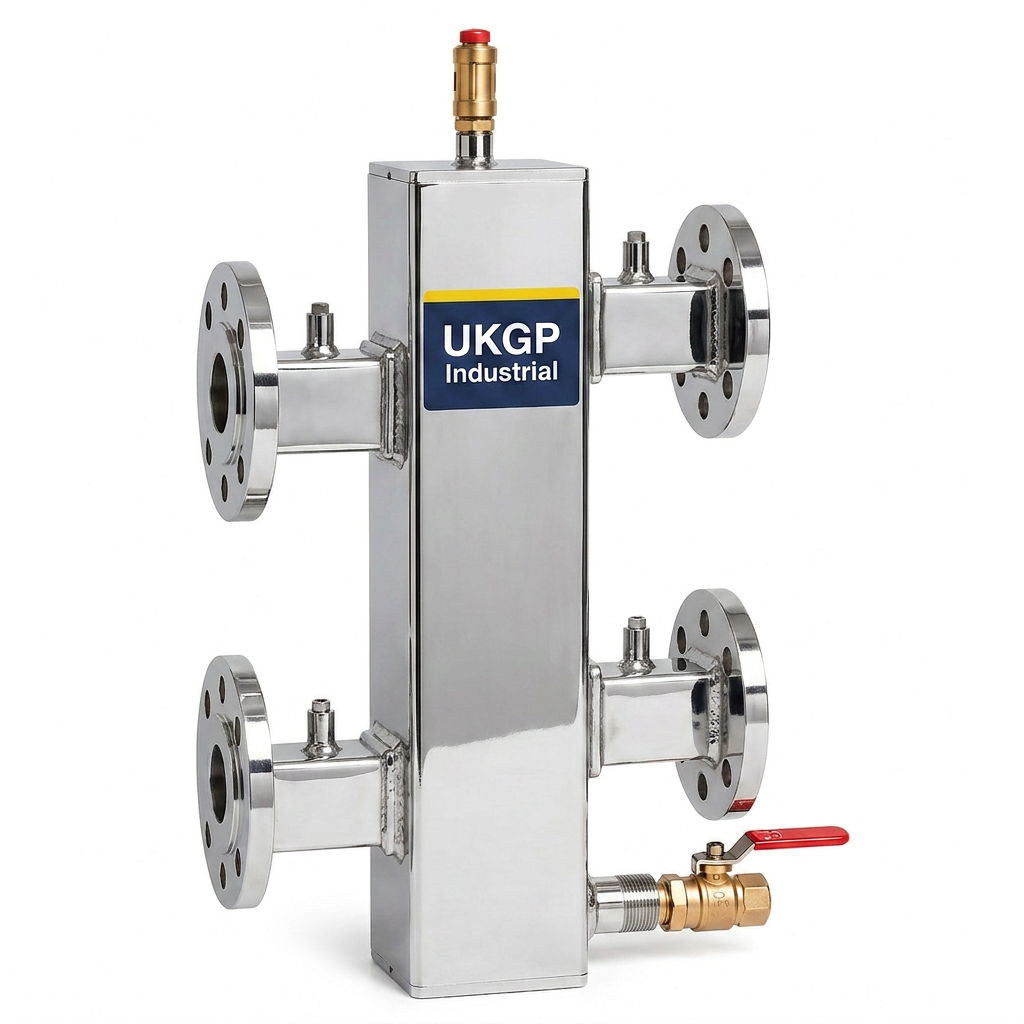
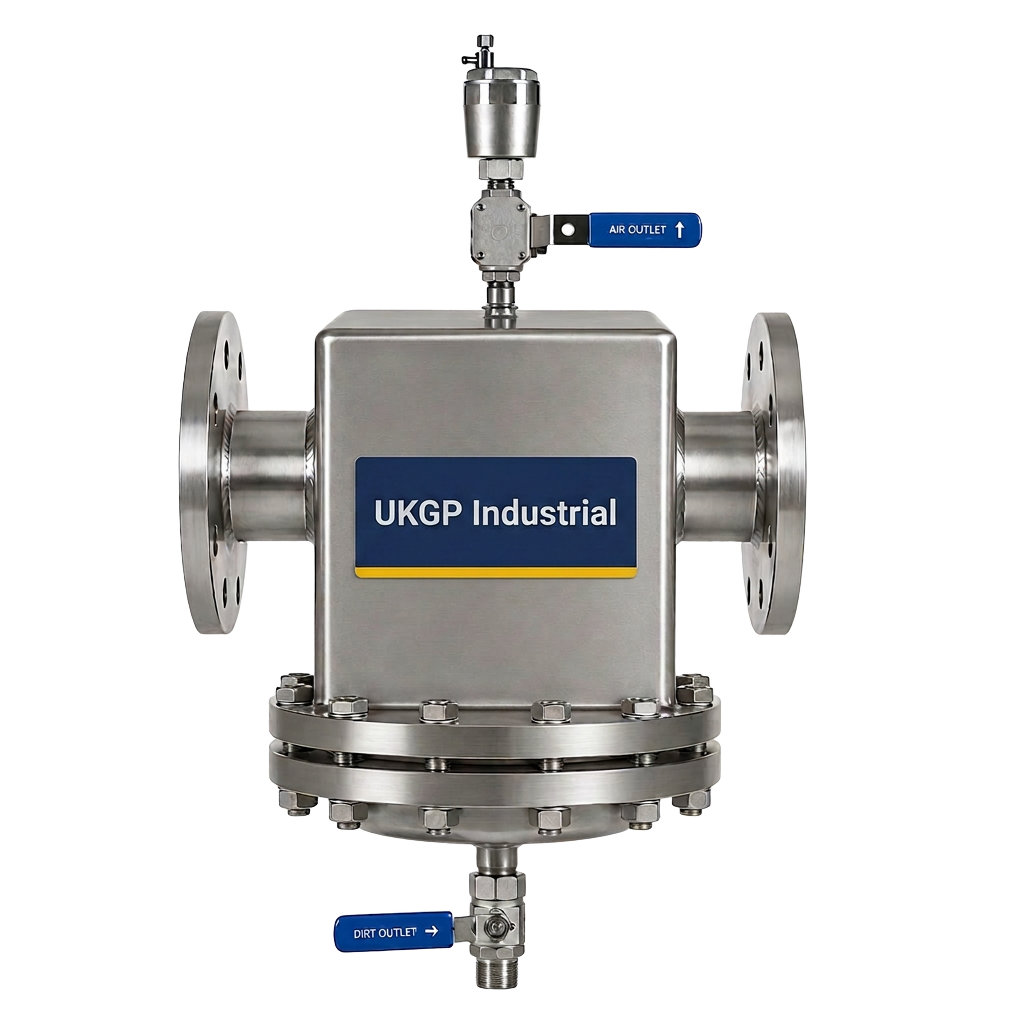
The internal architecture of our combined separators utilizes advanced coalescing media, similar to the principle found in a spirovent air separator, but with the added benefit of a high-power magnetic catch. This magnetic element is crucial for capturing black iron oxide (magnetite) which is often too fine for traditional strainers to catch. By integrating this into a single flanged unit, M&E contractors save significant space in cramped plant rooms and reduce the number of potential leak points. UKGP units come with a comprehensive isolation kit as standard, allowing for easy maintenance and purging of collected debris without having to drain the entire system, ensuring continuous operation for facilities managers.
When you buy from UKGP, you are securing UK-engineered quality backed by a 2-year warranty. Our combined air and dirt separators are designed for horizontal installation and feature a large collection chamber to ensure that the purged dirt does not interfere with the main flow. This design mirrors the efficiency of a spirovent air separator but adds the commercial-grade durability required by modern FM teams. Whether you are replacing an end-of-life unit or fitting out a new-build plant room, our technical team provide full support on sizing and flow calculations to ensure the separator performs as intended under peak load conditions.
- Flange sizes from DN25 up to DN300 available
- Dual-action coalescing media and magnetic filtration
- Standard PN16 pressure rating for industrial use
- Integrated isolation kit for simplified maintenance
- Robust 2-year warranty for peace of mind
Installation Best Practices for the Spirovent Air Separator
The placement of a spirovent air separator is the single most important factor in its effectiveness. According to Henry's Law, the solubility of air in water decreases as temperature increases and pressure decreases. Therefore, for heating systems, the spirovent air separator should always be installed on the flow pipe, ideally at the hottest point of the system immediately after the boilers. For chilled water systems, the opposite applies; the unit should be installed on the return pipe before the chiller where the water is at its warmest. Failure to follow these thermodynamic principles will result in poor deaeration, regardless of the quality of the separator hardware chosen by the contractor.
Proper installation also requires sufficient straight pipe runs before and after the unit to ensure laminar flow. Turbulence at the inlet of a spirovent air separator can impede the coalescing process, leading to air being carried straight through the unit. M&E contractors should consult the UKGP technical datasheets for specific clearance requirements to allow for the removal of the magnetic rod and the purging of the dirt chamber. We recommend installing the unit in an accessible location where the automatic air vent can be easily inspected. If installed in a high-level ceiling void, ensure that a discharge pipe is routed to a safe visible tundish to monitor air release.
Maintenance is often overlooked but is essential for BSRIA BG50 compliance. A spirovent air separator or UKGP combined unit should be purged regularly, especially during the first few weeks following a system flush or commission. The magnetic sheath should be removed and wiped clean of magnetite build-up to maintain the intensity of the magnetic field. Our units are supplied with an isolation kit to facilitate this process without significant fluid loss. By documenting these maintenance activities, plant-room engineers can demonstrate a commitment to water quality standards, preserving the efficiency of the entire building services infrastructure and avoiding costly repairs down the line.
- Install at the point of lowest air solubility
- Ensure adequate clearance for magnetic rod removal
- Route vent discharge to a visible drainage point
- Maintain laminar flow conditions at the inlet
- Frequent purging during the initial commissioning phase
Integrating Chemical Dosing and Filtration
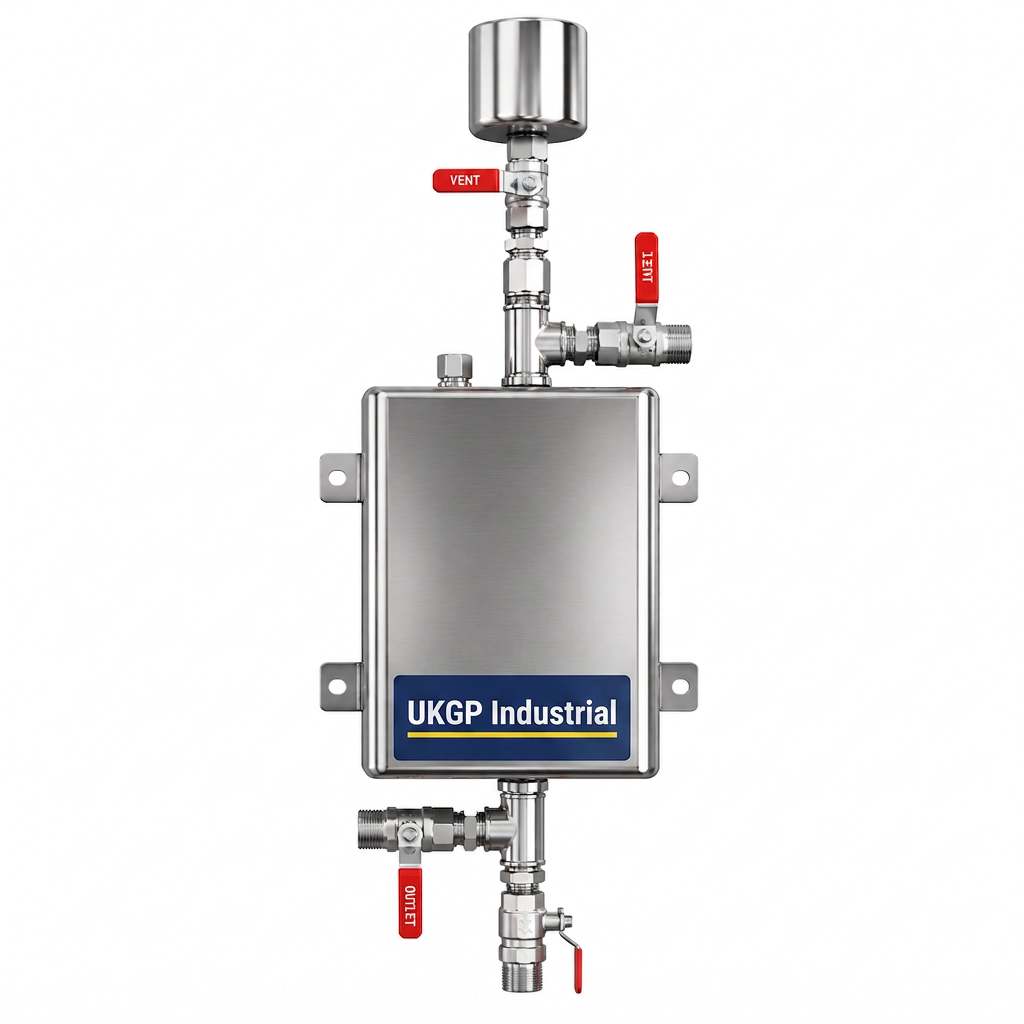
A spirovent air separator constitutes one part of an effective water treatment strategy. To fully comply with BSRIA BG29, the system must also be properly cleaned and protected with chemical inhibitors. Following the installation of deaeration equipment, a chemical dosing pot should be used to introduce the necessary biproducts to prevent corrosion and scale. This holistic approach ensures that any residual oxygen not captured by the spirovent air separator is neutralized by chemical means. UKGP Industrial offers a range of dosing pots that complement our filtration skids, providing a complete solution for commercial contractors looking to secure their systems against premature failure.
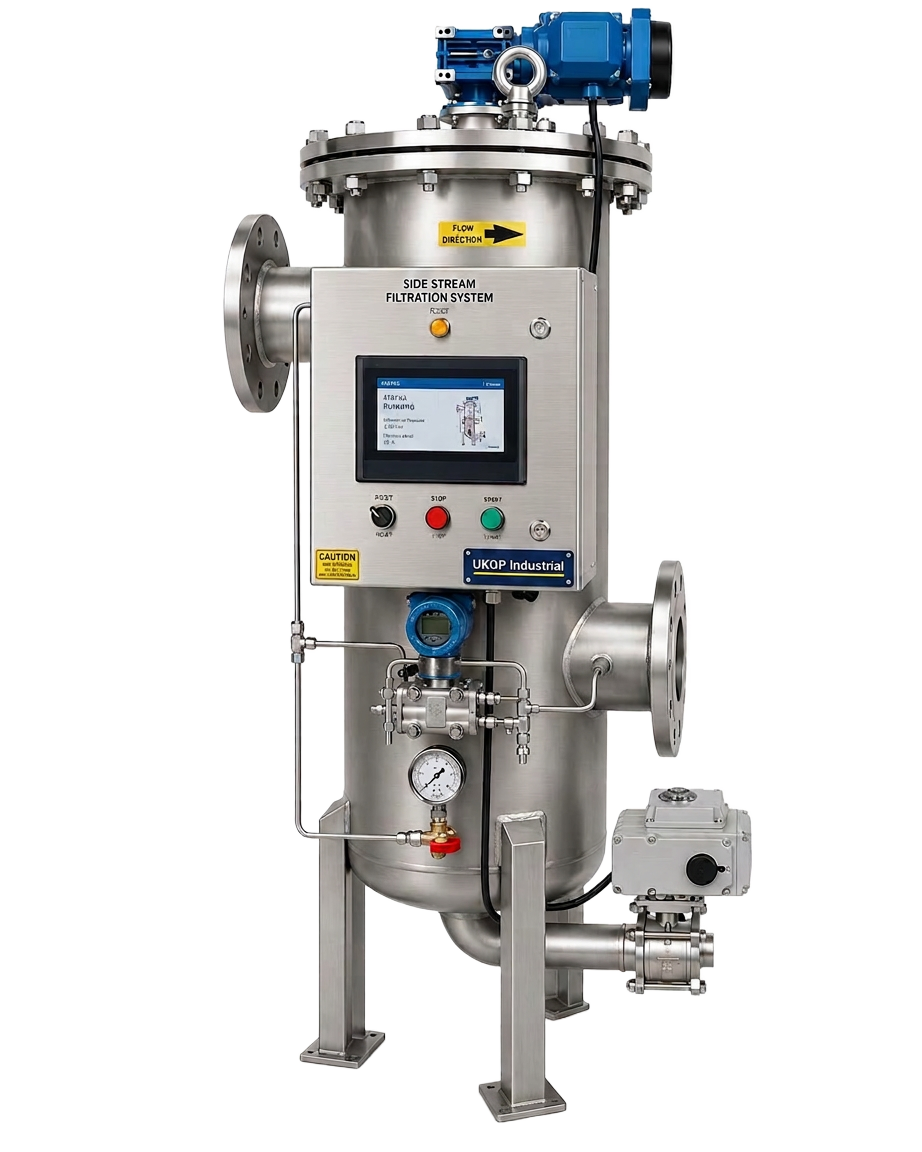
In larger systems where the build-up of particulate matter is significant, a side stream filtration skid may be required alongside a spirovent air separator. While the separator handles microbubbles and heavy magnetite, the side stream unit provides fine-particle filtration by processing a portion of the system volume continuously. This is particularly effective in existing buildings where old pipework may slowly shed debris over several years. Combining these technologies allows for a 'belt and braces' approach to system cleanliness, ensuring that high-efficiency commercial boilers and sensitive heat exchangers remain free from debris that could cause hot spots or thermal stress.
Contractors and consultants can streamline their procurement by working with UKGP as a single-source supplier for these critical components. Whether you need an expansion bellows to manage thermal movement or a spirovent air separator for deaeration, our technical team ensures all components are compatible. We understand the commercial pressures of M&E projects and offer competitive lead times for our range of dosing pots and filtration equipment. By specifying a coordinated suite of UKGP products, you reduce the risk of installation errors and ensure that the building's HVAC system operates at the highest possible efficiency for the end-user.
- Dosing pots available for easy inhibitor addition
- Side stream filtration for fine particulate removal
- Full range of BC4 stainless steel dosing vessels
- Compatibility with all major UK chemical inhibitors
- Expert assistance with BSRIA BG29 compliance
Compliance with BS EN 14917 and CIBSE Guidelines
Adhering to British and European standards is mandatory for any professional building services installation. When specifying a spirovent air separator or a UKGP equivalent, engineers must ensure the equipment meets the pressure equipment directive requirements. Furthermore, when integrating these units into systems with high thermal expansion, the use of expansion bellows compliant with BS EN 14917 is essential to protect the pipework and the separator from mechanical stress. Failure to account for thermal expansion can lead to stress fractures at the flanged connections of the spirovent air separator, leading to costly leaks and system downtime in commercial plant rooms.
CIBSE guidelines emphasize the importance of water quality for the net-zero transition. Air trapped in systems significantly degrades the performance of low-temperature heating systems, such as those fed by heat pumps. A spirovent air separator is a critical tool in achieving the low dissolved oxygen levels required for these efficient systems to function. By removing air, you ensure that the heat emitters receive the designed flow rate and temperature, maximizing the seasonal coefficient of performance (SCOP). UKGP products are designed with these modern energy standards in mind, providing the reliability required for the next generation of UK commercial buildings.
Finally, the implementation of PH sensors and transmitters allows for real-time monitoring of the system fluid. While a spirovent air separator removes the physical air, a sudden shift in pH can indicate a chemical imbalance or an ingress of fresh water, which brings in more air. Monitoring these levels ensures that the investment in high-quality deaeration and filtration remains protected. UKGP provides a full technical wrap-around service, from the supply of the initial separator to the ongoing monitoring equipment, helping FMs maintain a stable and efficient HVAC environment that meets all relevant UK standards and insurance requirements.
- Compliance with Pressure Equipment Directive (PED)
- Adherence to BSRIA water quality monitoring protocols
- Integration with BS EN 14917 expansion bellows
- Support for CIBSE energy efficiency targets
- Enhanced system stability for heat pump integration
The Commercial Case for High-Quality Air Separators
From a procurement perspective, the choice of a spirovent air separator or a UKGP alternative is an investment in the building’s operational expenditure (OPEX) reduction. Systems free from air and dirt consume up to 10% less energy on average compared to neglected systems. This is due to improved pump efficiency and better heat transfer at the terminal units. For procurement leads, the initial capital expenditure (CAPEX) of a high-quality flanged unit is quickly offset by the reduction in maintenance costs and the avoidance of premature component replacement. Our 2-year warranty provides further commercial security for stakeholders concerned with long-term asset management.
In the competitive UK M&E sector, being able to provide a robust solution that complies with BSRIA BG50 is a significant advantage. By installing a spirovent air separator at the outset, contractors can avoid the costly 'flush and clean' cycles that often plague the first year of a building's life. This reliability builds trust with clients and reduces the likelihood of liquidated damages caused by system handover delays. UKGP Industrial supports contractors with rapid quotations and technical submittals, ensuring that the specification of air and dirt separators remains a smooth part of the larger project workflow, regardless of the site complexity.
In conclusion, whether you are seeking a spirovent air separator by name or looking for the enhanced features of a UKGP combined magnetic separator, the goal remains the same: a clean, efficient, and reliable HVAC system. Our DN25 to DN300 range, complete with a 2-year warranty and flanged PN16 construction, represents the pinnacle of industrial air and dirt management. Contact the UKGP technical sales team today to discuss your specific requirements or to request a quote for your next project. We are committed to providing Surrey and the wider UK with the highest standard of plant room equipment to ensure long-term operational success.
- Significant reduction in annual energy bills
- Lower frequency of expensive component failures
- Straightforward procurement with UKGP technical help
- Faster system commissioning and handover cycles
- Long-term protection of the building's capital assets
Frequently asked questions
Where should a spirovent air separator be installed?
- For maximum efficiency, it should be installed at the point of lowest air solubility. In heating systems, this is the hottest point on the flow pipe exiting the boiler. In chilled water systems, it is the warmest point on the return pipe before the chiller.
What is the difference between an air vent and a spirovent air separator?
- A standard air vent only removes large pockets of trapped air at high points. A spirovent air separator uses coalescing media to remove entrained microbubbles throughout the fluid, which an ordinary vent cannot capture.
Can UKGP provide flanged separators for high-pressure systems?
- Yes, our air and dirt separators are available in flanged configurations from DN25 to DN300 and are rated for PN16 pressure as standard, making them suitable for most commercial and industrial HVAC applications in the UK.
How does a spirovent air separator help with BSRIA BG50 compliance?
- BSRIA BG50 requires the management of dissolved oxygen and particulate matter. By continuously removing air, the separator prevents oxygen-driven corrosion, while combined units with magnets remove the resulting magnetite, keeping the system within the required parameters.
What maintenance does a combined air and dirt separator require?
- Regular maintenance involves opening the drain valve to purge collected sediment and removing the magnetic rod to clean off captured magnetite. UKGP units include an isolation kit to make this process quick and efficient for facilities managers.