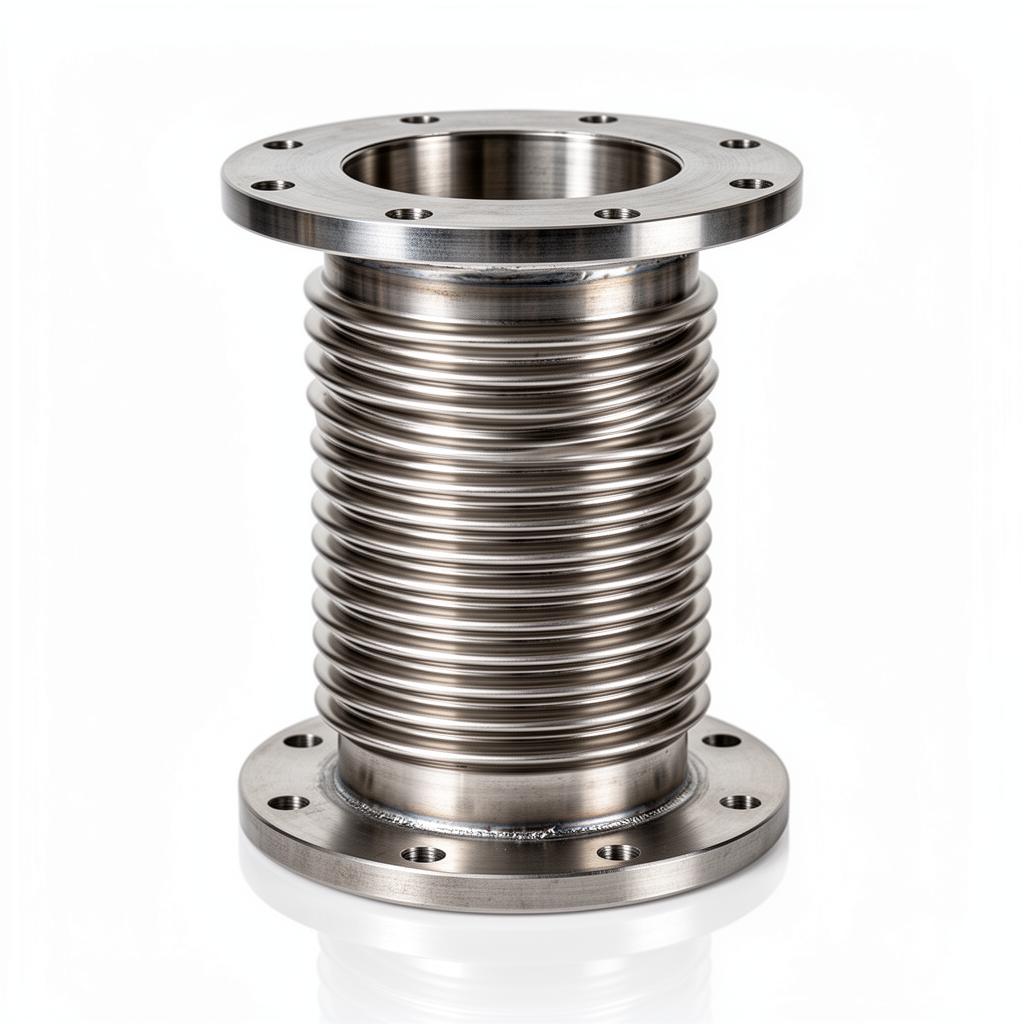
The Mechanics of Universal Expansion Bellows
A universal expansion joint is fundamentally comprised of two bellows joined by a common centre pipe (or spool). This configuration allows the unit to act as a double-hinged mechanism, converting angular rotation of the individual bellows into significant lateral displacement. Unlike a single axial expansion joint, which is limited by the number of convolutions it can safely carry before squirming, the universal joint leverages the length of the centre spool to amplify its movement capacity.
The total lateral movement capacity of a universal joint is directly proportional to the length of the centre spool piece. By increasing the distance between the two bellows elements, engineers can accommodate hundreds of millimetres of offset without overstressing the bellows' material. This makes them indispensable in district heating schemes and large-scale industrial plant rooms where thermal growth can be substantial across long headers or riser offsets.
- Absorbing large lateral movements in any direction.
- Compensating for land settlement or building movement in seismic-prone or poor-ground areas.
- Reducing loads on sensitive equipment nozzles, such as pumps or turbines.
- Bridging gap offsets where pipework alignment is imperfect.
Materials and Construction Standards
In British building services, universal expansion bellows are typically manufactured to BS EN 14917 or EJMA (Expansion Joint Manufacturers Association) standards. For metallic bellows, Grade 321 or 316L stainless steel is the industry standard due to its excellent fatigue resistance and wide temperature range. The choice of material is critical when dealing with secondary heating circuits or steam, where chloride stress corrosion cracking must be mitigated.
The flanges are typically supplied according to BS EN 1092-1, with PN16 being the most common rating for LTHW and chilled water systems. However, for high-pressure process steam or HPW systems, PN25 or PN40 ratings may be required. Quality universal joints often feature multi-ply bellows construction; this allows for a lower spring rate and increased flexibility while maintaining the pressure-retaining integrity required for industrial applications.
- 304, 316L, or 321 Stainless Steel for bellows membranes.
- Carbon steel or stainless steel centre spools.
- Tie rods (limit rods) to contain pressure thrust.
- Internal sleeves (vanstone ends or welded) to ensure laminar flow.
Frequently asked questions
How does a universal expansion joint differ from a single axial bellows?
- While both can handle large movements, a universal joint consists of two bellows separated by a spool piece, allowing for significantly greater lateral offset than a single tied unit. A single unit is typically limited to small axial movements or very minor offsets.
Can universal bellows accommodate axial and lateral movement simultaneously?
- Yes, but only if they are 'Unrestrained Universal' types. However, this is rare in commercial HVAC as it places immense pressure thrust on the main anchors. Most universal joints are 'Tied', which prevents axial extension but allows lateral movement.
What is the purpose of the centre spool piece?
- The spool piece length directly determines the lateral compensation capacity. Doubling the length of the centre spool effectively doubles the amount of lateral offset the unit can absorb without increasing the stress on the bellows convolutions.
When should I specify stainless steel over rubber universal joints?
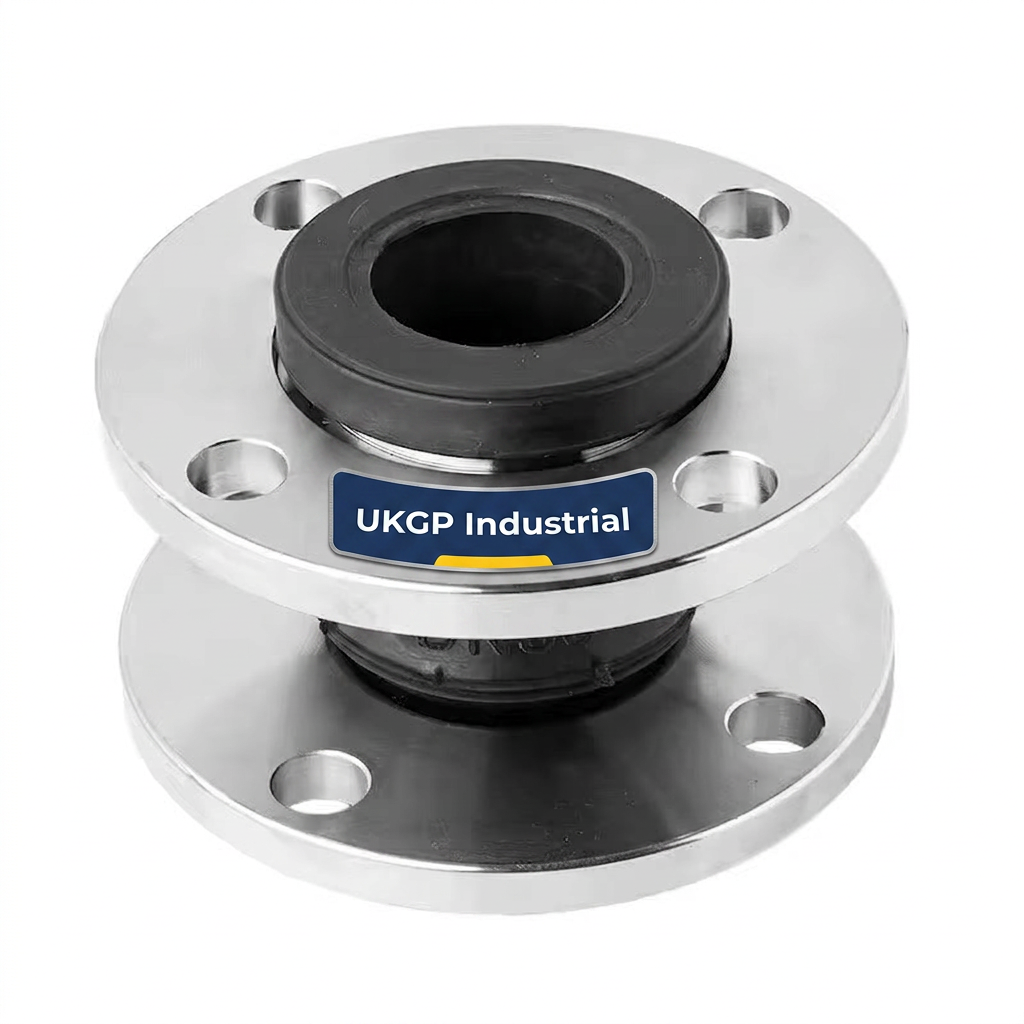
- Standard EPDM rubber bellows are often limited to 100°C - 110°C. For LTHW, MTHW, or steam applications exceeding these limits, or where chemical compatibility is an issue, stainless steel (Grade 316L or 321) universal bellows must be specified.
Which standards govern the design of universal expansion joints?
- EJMA (Expansion Joint Manufacturers Association) provides the global standard for расчет (calculation) and design, while EN 14917 is the specific European standard for metal bellows expansion joints. Standard flange drillings usually follow BS EN 1092-1.