Thermal Performance and Local Engineering Standards
The role of high-quality thermal transfer equipment is central to the design of energy-efficient commercial buildings. For consultants and M&E contractors, selecting from the list of UK heat exchanger manufacturers involves more than just price analysis; it requires a focus on thermal precision and UK-specific regulatory compliance. UKGP Industrial leads this selection by providing equipment that adheres to rigorous material standards, ensuring that components are perfectly suited to the unique pressures of British commercial heating loops. Whether you are designing for high-rise residential blocks or school boiler room replacements, the heat exchanger acts as the critical interface between the primary heat source and the secondary distribution system, necessitating high-grade materials.
Engineering your plant room with equipment sourced from reputable UK heat exchanger manufacturers significantly reduces the risks associated with long-distance logistics and mismatched technical documentation. Our gasketed and brazed units are designed to meet the specific requirements of BSRIA BG50, ensuring that water quality and thermal efficiency are protected through robust hydraulic separation. By opting for a UK-based supplier, technical teams gain access to rapid sizing services and detailed thermal specs that reflect the realities of UK water chemistry and building loads. This local expertise is vital for ensuring that the plate heat exchanger is not just a component, but a perfectly sized solution for the specific Delta-T requirements of your commercial project.
In the context of the UK’s net-zero transition, thermal efficiency is non-negotiable for commercial FM leads and procurement professionals. High-performance heat exchangers must mitigate energy losses while maintaining system flow rates as dictated by CIBSE design guides. UKGP Industrial understands these pressures, offering technical consultations that translate complex thermal loads into reliable plate configurations. Our approach focuses on delivering solutions that integrate seamlessly with modern commercial boilers and heat pumps. By choosing established UK heat exchanger manufacturers, you ensure that every part of the heat transfer process is documented, tested, and backed by a local warranty that provides peace of mind for the duration of the building's operational life.
- Full compliance with PED 2014/68/EU and relevant British Standards.
- Local technical support for BSRIA BG29 and BG50 compliance.
- Rapid response times for thermal sizing and performance calculations.
- High-grade stainless steel plates for maximum corrosion resistance.
Technical Specs: Specifying a Plate Heat Exchanger
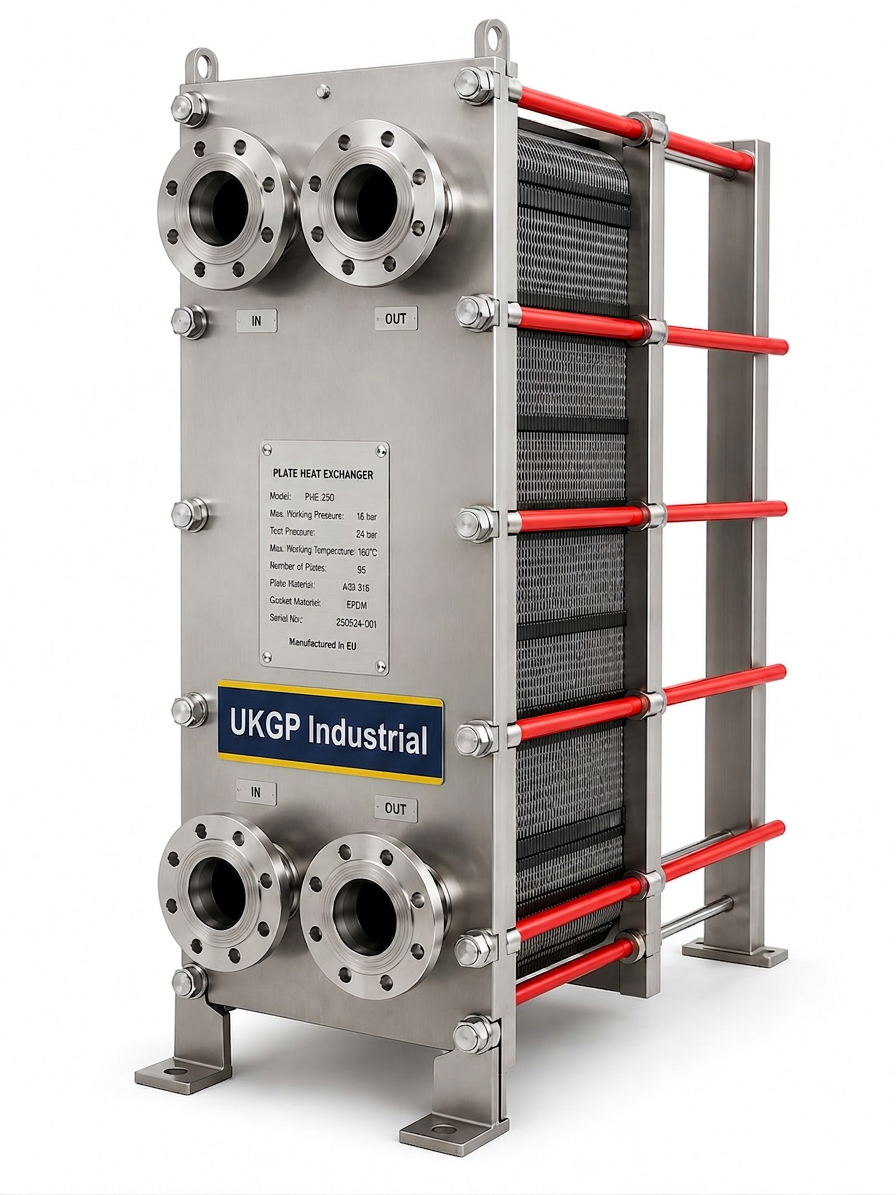
When you decide to work with UK heat exchanger manufacturers for your next commercial heating scheme, the technical specification phase is the most critical hurdle. At UKGP Industrial, we provide both gasketed and brazed plate heat exchangers, ranging from DN20 to DN300, tailored to your specific application. Our sizing process is rigorous; we require a full thermal specification to ensure that the heat transfer surface area is perfectly calculated for your system's flow and return temperatures. This precision prevents over-sizing, which can lead to inefficient pump operation, and under-sizing, which fails to meet the building's peak demand during the coldest winter months.
Our gasketed plate heat exchangers offer the advantage of serviceability and expansion, whereas our brazed units provide a compact, robust solution for installations with limited footprint. For M&E contractors, the assurance of a 2-year warranty on these units reflects the confidence we have in our UK-based manufacturing and assembly processes. We typically offer a lead time of 4-6 weeks, allowing for project schedules to be managed with certainty. This is a significant competitive advantage over many international suppliers who may currently face shipping delays. By sourcing from UK heat exchanger manufacturers, you ensure that your project milestones for plant room fit-outs are met without compromises on build quality.
Requesting a quote from UKGP Industrial means you receive a solution sized from a full thermal spec, ensuring the plate heat exchanger meets the exact demands of your secondary heating or hot water circuits. Our DN20-DN300 range covers everything from small office heat interfaces to massive industrial process loads. Whether your system involves low-temperature hot water (LTHW) or higher-pressure steam-to-water applications, our engineering team provides the necessary documentation to support your BSRIA BG29 water treatment and commissioning strategies. Investing in a quality heat exchanger today prevents the costly downtime associated with scaling and thermal fatigue in the future.
- Sizing provided from a full thermal specification for maximum accuracy.
- Connections sizes ranging from DN20 up to DN300 for all load sizes.
- Choice between gasketed (serviceable) and brazed (compact) designs.
- Standard lead times of 4-6 weeks for most commercial configurations.
- Comprehensive 2-year warranty across the entire PHE range.
The Importance of Pressure Management in HVAC
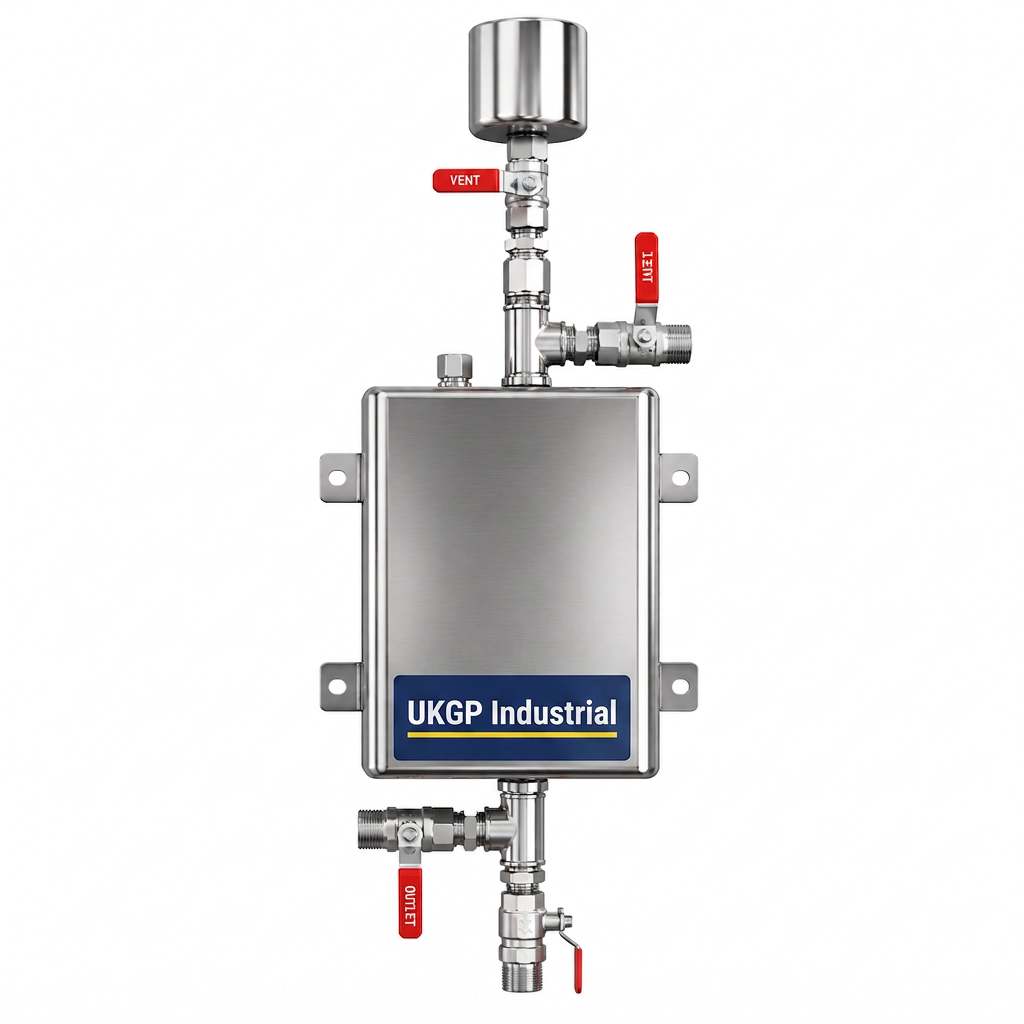
While heat exchangers handle the thermal transfer, the physical integrity of the pipework depends on how the system manages thermal expansion. This is where the synergy between UK heat exchanger manufacturers and expansion component specialists becomes evident. As water is heated through the plate surfaces, it expands; without adequate expansion bellows, this physical force can distort pipework and put undue stress on the heat exchanger connections. UKGP Industrial provides a holistic approach to plant room design, ensuring that every expansion joint is selected to withstand the specific temperature cycles of the commercial installation, thereby protecting the delicate plates within the heat exchanger.
BS EN 14917 provides the framework for the design and application of metal bellows expansion joints in pressure systems. Following these standards is vital for commercial FM teams who are responsible for long-term plant room maintenance. A failures in expansion management often leads to premature leaks at the heat exchanger gaskets. By specifying expansion bellows that are rated for the same pressure and temperature ranges as your heat exchanger, you create a unified system that is resilient to the hydraulic shocks common in large-scale commercial heating networks. Our engineering team ensures that every expansion solution complements the hydraulic separation provided by our thermal products.
Integrating expansion bellows from a trusted UK supplier allows for better quality control across the secondary side of the system. Contractors often find that procuring expansion solutions and heat exchangers from the same technical partner simplifies the submittal process. This unified procurement strategy ensures that the displacement and vibration absorption qualities of the bellows are perfectly matched to the mechanical requirements of the plate heat exchanger flanging. At UKGP Industrial, we focus on the entire mechanical lifecycle, ensuring that the components that protect your heat exchanger are just as robust as the heat exchanger itself.
- Prevention of mechanical stress on heat exchanger flanged connections.
- Adherence to BS EN 14917 for metal bellows design and safety.
- Reduced pipework vibration and acoustic transfer in plant rooms.
- Bespoke configuration to match DN20-DN300 heat exchanger ports.
Protecting Thermal Assets with Side Stream Filtration
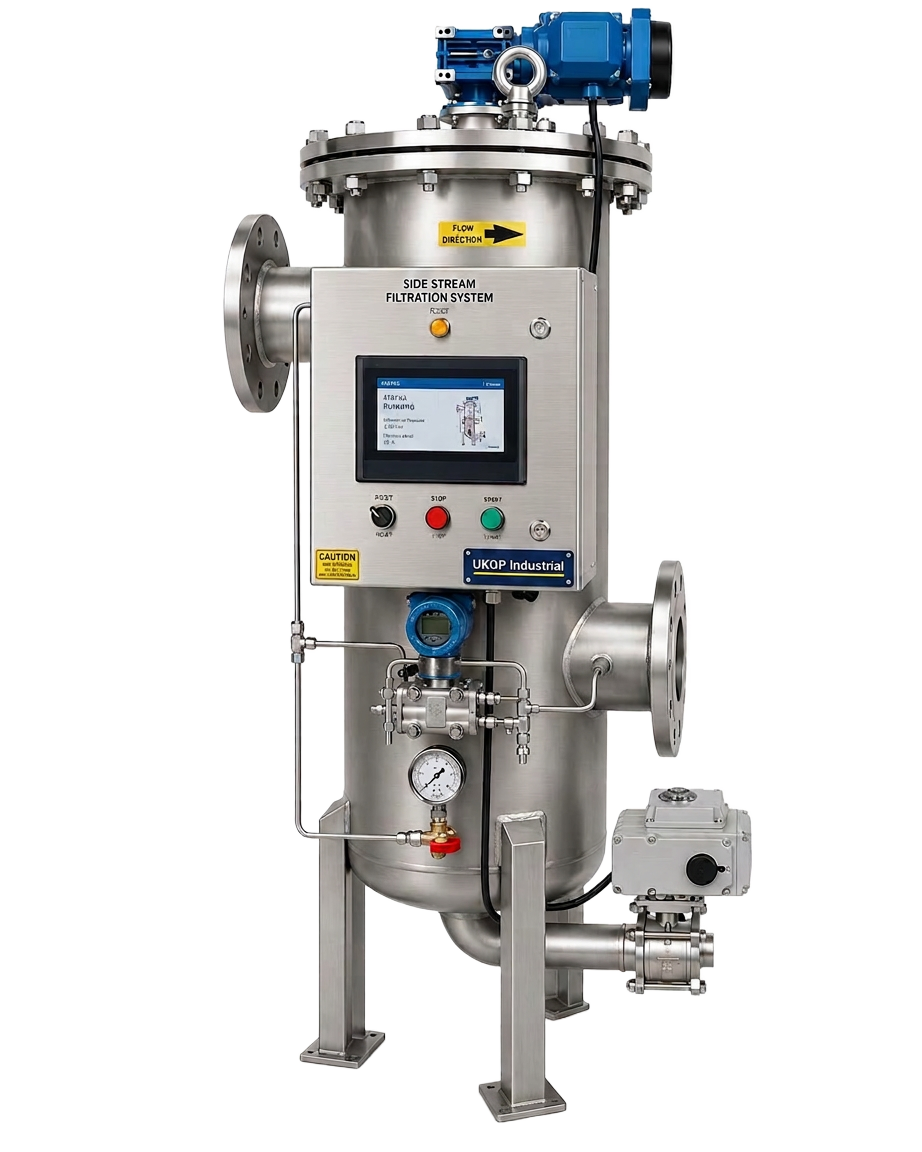
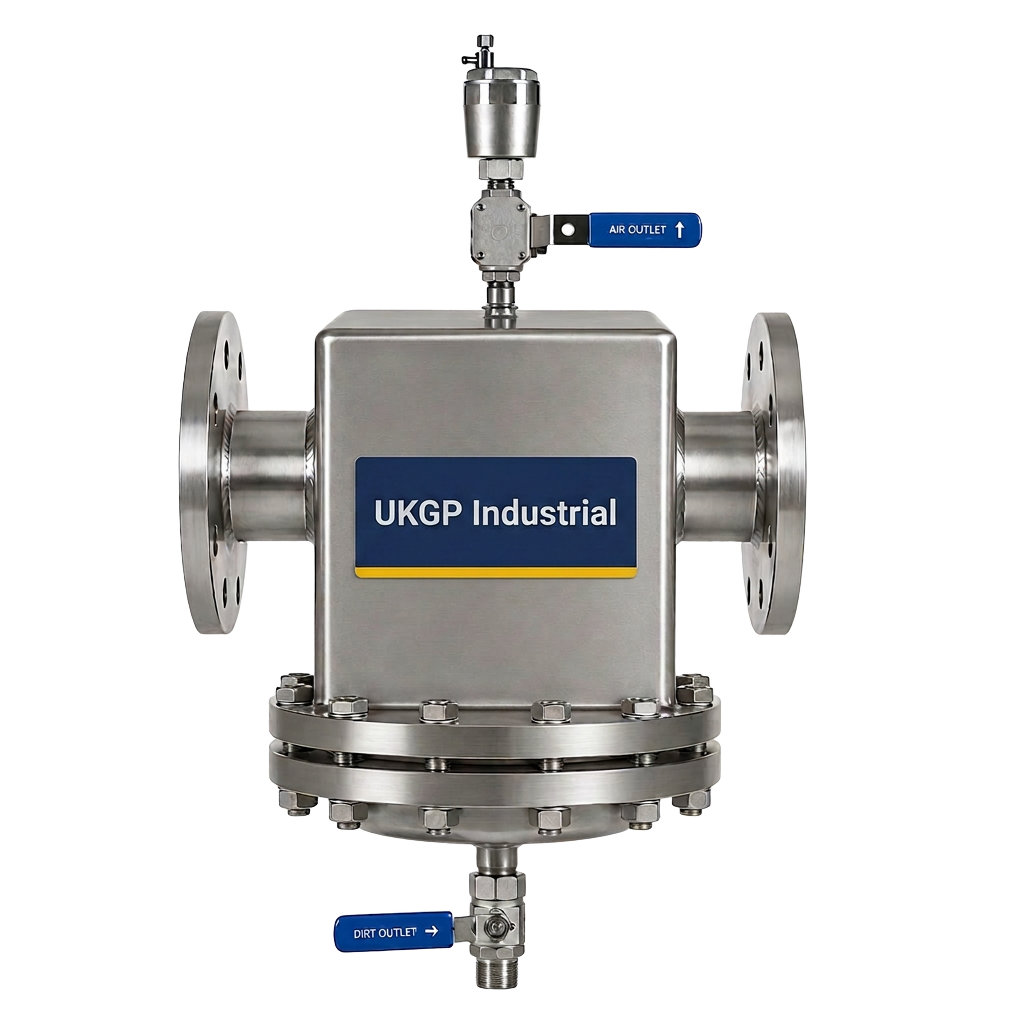
Water quality is the single most significant factor in the longevity of equipment produced by UK heat exchanger manufacturers. According to BSRIA BG50, the presence of suspended solids and magnetite in a commercial circuit can lead to rapid fouling of the narrow channels within a plate heat exchanger. Once these channels are blocked, the heat transfer coefficient drops significantly, forcing the primary heat source to work harder and increasing energy costs. Side stream filtration acts as the primary defense mechanism, continuously removing debris from the system without requiring a full shutdown, thus maintaining the clean surfaces required for optimal heat exchange.
For M&E contractors, installing a high-performance side stream filtration skid alongside a plate heat exchanger is now considered best practice in the UK. This approach simplifies the path to achieving BSRIA BG29 cleaning standards during the pre-commissioning phase and sustains those standards throughout the system's life. By removing 97% of magnetic and non-magnetic particles down to sub-micron levels, these skids protect the stainless steel plates from pitting and erosion. When you consult with UKGP Industrial, we look at the whole system health, recommending filtration solutions that ensure your 2-year warranty remains valid and your thermal performance stays consistent.
Procurement leads should recognize that the capital cost of a side stream filtration unit is far lower than the cost of chemically cleaning or replacing a fouled heat exchanger. Commercial heating systems, especially those utilizing modern low-carbon heat sources, are sensitive to flow restrictions. A clean system, maintained by industrial-grade filtration, ensures that the pressure drop across the heat exchanger remains within design parameters. By partnering with UK heat exchanger manufacturers who also understand filtration, you ensure a coordinated approach to water chemistry and mechanical integrity, resulting in a plant room that operates at peak efficiency from day one.
- Continuous removal of magnetite and scale to prevent PHE fouling.
- Alignment with BSRIA BG50 requirements for water quality monitoring.
- Reduction in chemical cleaning frequency and associated costs.
- Maintains design pressure drops across the heat transfer plates.
The Role of UK Heat Exchanger Manufacturers in Plant Room Retrofits
Retrofitting plant rooms in older commercial buildings presents unique challenges, from space constraints to legacy pipework configurations. When navigating these complexities, the flexibility offered by UK heat exchanger manufacturers is invaluable. Unlike mass-produced imported units, UK-based engineering allow for bespoke plate configurations that can be adjusted to fit the exact footprint of an existing plant room. This is particularly relevant when replacing aging shell-and-tube units with more efficient plate versions. UKGP Industrial assists contractors in navigating these transitions by providing detailed CAD drawings and technical sizing that ensures the new unit integrates perfectly with existing DN-rated pipework.
The shift toward lower operating temperatures in commercial heating—driven by the adoption of heat pumps—demands much larger heat transfer surfaces. UK heat exchanger manufacturers are at the forefront of this shift, designing plates with higher theta values to manage smaller temperature differentials effectively. Our gasketed range, available up to DN300, is specifically engineered to handle the higher flow rates required by low-temperature systems. This expertise ensures that even in a retrofit scenario, the building's thermal comfort is maintained while significantly reducing carbon emissions. Our 4-6 week lead time is specifically tailored to meet the tight windows often found in seasonal replacement projects.
Effective project management in the UK construction sector relies on supply chain transparency. Dealing directly with a manufacturer in Surrey means that M&E contractors can get real-time updates on their orders. This level of communication is often missing when sourcing through generic distributors. Whether you need a brazed unit for a compact HIU or a large gasketed unit for a primary boiler bypass, our standard 2-year warranty provides the assurance needed for public sector and high-end commercial contracts. By choosing a UK partner, you are investing in a relationship that covers sizing, safety, and long-term performance, ensuring the boiler house upgrade is a success from procurement to commissioning.
- Bespoke plate configurations optimized for low-temperature heat pumps.
- Assistance with footprint optimization for congested plant rooms.
- Direct communication with UK-based engineers for custom solutions.
- Reliable delivery schedules to fit summer maintenance windows.
Ensuring Compliance and System Integrity
For professional engineers, compliance with British Standards is the cornerstone of any specification. Selecting from reputable UK heat exchanger manufacturers ensures that equipment is not only built to last but also strictly follows the Pressure Equipment Directive (PED). This compliance is essential for insurance purposes and for meeting the handover requirements of major UK developers. At UKGP Industrial, we ensure that every plate heat exchanger undergoes rigorous pressure testing before it leaves our facility. This commitment to quality is why we can confidently offer a 2-year warranty, exceeding the industry standard and providing our clients with a reliable thermal interface that they can trust for years to come.
Water treatment also plays a pivotal role in the compliance landscape. BSRIA BG29 and BS 8552 provide clear frameworks for monitoring system water, and the heat exchanger is often the first place where poor water quality manifests as a problem. By working with UK heat exchanger manufacturers who understand these standards, contractors can ensure that their dosing and filtration strategies are adequate. Our technical team often works alongside water treatment specialists to ensure that the materials used in our heat exchangers—typically 316L stainless steel—are compatible with the intended chemical dosing regime, preventing any risk of stress corrosion cracking or premature gasket failure.
Finally, the commercial aspect of procurement cannot be ignored. In a market where energy prices are volatile, the efficiency of a plate heat exchanger has a direct impact on the building's operational expenditure. A unit sized from a full thermal spec by UKGP Industrial will minimize bypass and maximize thermal transfer, leading to lower fuel consumption for commercial boilers. When you evaluate UK heat exchanger manufacturers, consider the total cost of ownership. The combination of high-efficiency plates, local technical support, and a robust warranty makes our solutions the preferred choice for forward-thinking M&E professionals looking to deliver high-quality, sustainable heating systems across the UK.
- Adherence to PED 2014/68/EU and CE/UKCA marking requirements.
- Compatibility with 316L stainless steel and EPDM/NBR gasket materials.
- Focus on reducing building OpEx through superior thermal efficiency.
- Detailed O&M manuals provided to assist FM teams with maintenance.
Frequently asked questions
Why should I choose UK heat exchanger manufacturers over international suppliers?
- Choosing UK heat exchanger manufacturers like UKGP Industrial offers significant benefits including shorter lead times (typically 4-6 weeks), local technical support for BSRIA compliance, and equipment sized specifically for UK heating standards and water chemistry. You also benefit from a UK-backed 2-year warranty and easier access to spare parts.
What information is needed to size a plate heat exchanger?
- To provide an accurate quote and ensure peak performance, we require a full thermal specification. This includes the primary and secondary flow and return temperatures, the required heat load (kW), the maximum allowable pressure drop, and the type of fluids being used.
What is the difference between gasketed and brazed plate heat exchangers?
- Gasketed units (DN20-DN300) can be dismantled for cleaning or expanded with more plates, making them ideal for systems prone to fouling or future growth. Brazed units are compact and permanently sealed, offering a cost-effective and high-pressure solution where space is limited and water quality is strictly controlled.
How does a plate heat exchanger help with BSRIA BG50 compliance?
- A plate heat exchanger provides hydraulic separation, protecting the primary heat source from contaminants in the secondary circuit. By working with UK heat exchanger manufacturers who understand BG50, you ensure the system is designed to allow for proper flushing, sampling, and filtration, which are essential for maintaining water quality.
What lead times can I expect for a custom-sized heat exchanger?
- At UKGP Industrial, our standard lead time for both gasketed and brazed plate heat exchangers is approximately 4-6 weeks from the approval of the thermal design, allowing M&E contractors to plan their plant room fit-outs with confidence.