TECHNICAL DESIGN GUIDE

How does a plate heat exchanger work?

Plate heat exchangers (PHEs) have become the definitive solution for heat transfer in modern UK building services, largely replacing traditional shell-and-tube calorifiers. Whether utilised for hydraulic separation in high-rise district heating, domestic hot water (DHW) generation, or as interface units for low-carbon heat pump arrays, the PHE offers unparalleled thermal efficiency within a compact footprint. This guide examines the fluid dynamics, mechanical construction, and specification criteria essential for M&E consultants and plant-room engineers.

10 June 2026 10 min readPlate heat exchangers
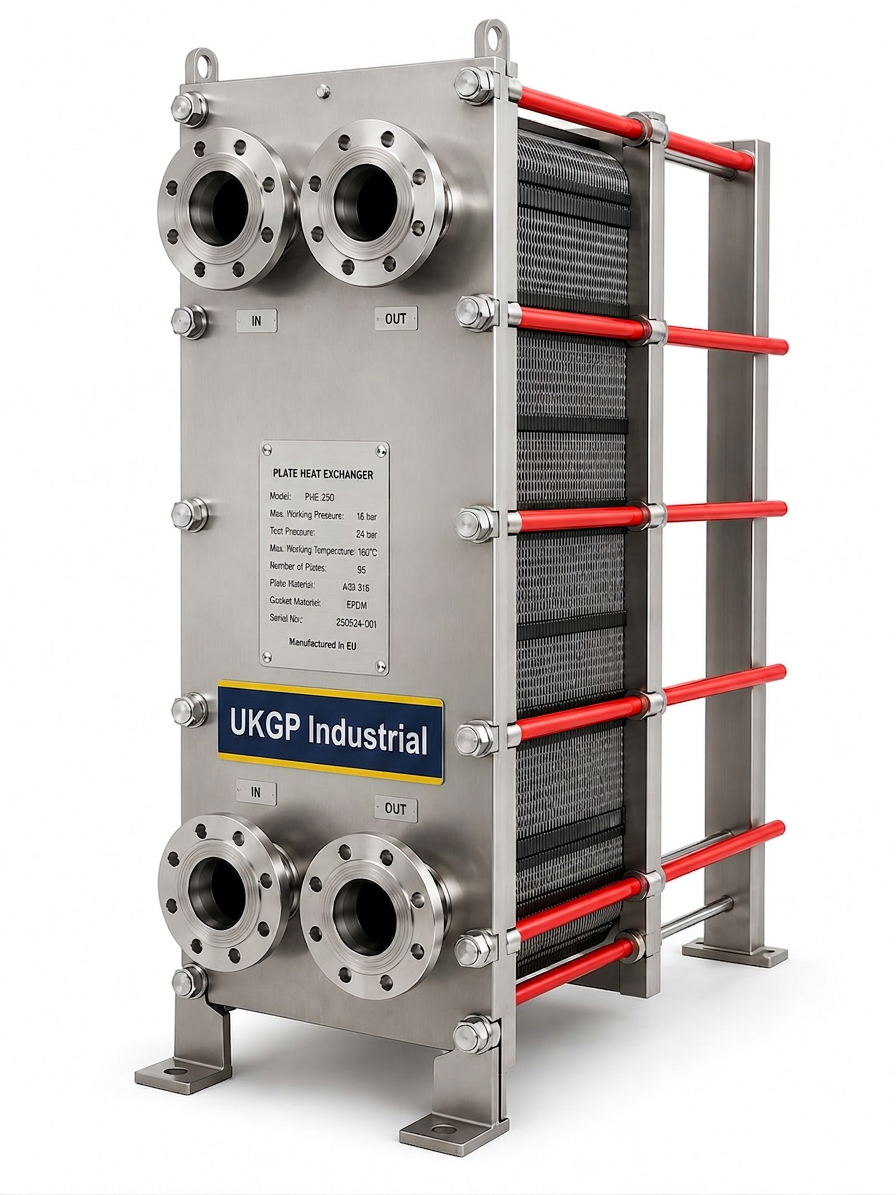
How does a plate heat exchanger work? — UKGP gasketed plate heat exchanger for commercial plant rooms
UKGP gasketed plate heat exchanger for commercial plant rooms

The Fundamentals of Thermal Transfer in PHEs

At its core, a plate heat exchanger facilitates the transfer of thermal energy between two fluids without them ever coming into direct contact. This is achieved by passing the fluids through a series of thin, corrugated metal plates. In a standard liquid-to-liquid application, the hot medium (primary) and the cold medium (secondary) flow through alternate channels created by the plate stack. The heat is conducted through the plate material—typically stainless steel—driven by the temperature gradient between the two circuits.

Unlike shell-and-tube exchangers, which rely on large volumes of fluid, the PHE utilises thin films of liquid. This design achieves a significantly higher heat transfer coefficient because the plate corrugations (often referred to as 'chevron' or 'herringbone' patterns) induce intentional turbulence. This turbulence breaks down the boundary layer of the fluid, ensuring that even at low flow rates, the heat transfer remains efficient. This characteristic allows for a very 'close approach,' where the output temperature of the secondary fluid can get within 1°C to 2°C of the primary inlet temperature.

In UK building services, the pressure drop across the plate pack is a critical design constraint. While higher turbulence leads to better heat transfer, it also increases the pumping energy required to move fluid through the narrow channels. Engineers must therefore strike a balance between thermal performance (size of the unit) and the operational costs associated with system pressure losses, typically aiming for drops between 20 kPa and 60 kPa for commercial heating applications.

  • Primary and secondary fluid isolation.
  • Corrugated plate patterns to induce turbulence.
  • High surface-area-to-volume ratio.
  • Counter-current flow regimes.

Frequently asked questions

Should I specify a brazed or gasketed heat exchanger?

Brazed units are more compact and higher-pressure capable but cannot be opened for cleaning. Gasketed units (GPHEs) can be disassembled for plate cleaning or frame expansion, making them better suited for systems with higher fouling risks or where future load changes are expected.

What is the significance of LMTD in PHE selection?

The LMTD expresses the average temperature difference between the hot and cold fluids. A smaller LMTD indicates a more efficient heat transfer but requires a larger surface area (more plates), which impacts both the footprint and the capital cost.

How does water quality affect PHE performance?

BSRIA BG29/21 and BG50 highlight that PHEs act as debris traps. While the PHE transfers heat, it often protects expensive plant like chillers or boilers. High-efficiency filtration is required to prevent the narrow plate channels from clogging.

What is a typical 'approach temperature' for UK building services?

Approach temperature is the difference between the primary inlet and secondary outlet (or vice versa). In UK district heating, an approach of 2°C to 5°C is common. Narrower approaches increase plate count and pressure drop.
Buy plate heat exchangers direct

Plate Heat Exchanger — UK stock, same-day dispatch

Efficient thermal transfer across fluids.

See sizes & prices

More on Plate heat exchangers

Continue the plate heat exchangers cluster

See all plate heat exchangers guides →
guide · 10 min

Engineering Plate Heat Exchangers for Efficiency

For the modern building services engineer, the plate heat exchanger (PHE) is the cornerstone of efficient thermal energy transfer. Whether decoupling a high-pressure district heating network from a tertiary building circuit or providing instantaneous domestic hot water (DHW) in a commercial plant room, the PHE offers unparalleled thermal efficiency within a compact footprint. This guide examines the mechanical configurations, material specifications, and operational maintenance requirements for gasketed, brazed, and welded plate heat exchangers in line with current UK standards and engineering best practices.

Read
how to · 10 min

Mastering Plate Heat Exchanger Cleaning Techniques

In modern UK plant rooms, plate heat exchangers (PHEs) are the workhorses of district heating interfaces, DHW generation, and heat pump loops. However, their high efficiency is derived from narrow flow channels, making them exceptionally sensitive to fouling, scaling, and debris. Neglecting PHE maintenance leads to increased pumping costs, diminished thermal transfer, and potential system failure. This guide details the engineering standards and practical methodologies for cleaning both gasketed and brazed PHEs, ensuring compliance with BSRIA BG50 and maintaining peak operational efficiency.

Read
buyers guide · 9 min

The Engineer Guide to UK Heat Exchanger Selection

When specifying a commercial HVAC system, selecting the right uk heat exchanger is critical for ensuring thermal efficiency and system longevity. Our Surrey-based technical team provides bespoke sizing for gasketed and brazed units to ensure your plant room operates at peak performance under CIBSE guidelines.

Read
buyers guide · 9 min

Guide to Selecting UK Heat Exchanger Manufacturers

Specifying thermal transfer solutions within commercial HVAC requires a deep understanding of hydraulic separation and heat transfer coefficients. When evaluating UK heat exchanger manufacturers, it is essential to consider local lead times and technical support that aligns with British standards and BSRIA guidelines. Selecting the right industrial partner ensures that your commercial heating systems maintain peak efficiency and long-term durability.

Read
buyers guide · 9 min

How to Select the Right Heat Exchanger Manufacturers UK

Specifying thermal equipment for UK plant rooms requires a robust partnership with reputable heat exchanger manufacturers UK to ensure long-term system efficiency. This guide explores the critical technical and commercial factors that M&E contractors and building services consultants must evaluate when selecting a supplier for gasketed or brazed plate units.

Read
buyers guide · 10 min

Why Specify a Tranter Plate Heat Exchanger for Your Plant Room?

When designing high-efficiency hydronic systems, selecting a Tranter plate heat exchanger ensures reliable thermal separation between primary boiler circuits and secondary distribution loops. Understanding the nuances of heat transfer coefficients and pressure drop limits is vital for building services consultants aiming to maintain long-term system integrity in UK commercial developments.

Read
Request Quote