Thermal Load Assessment for Swimming Pool Heat Exchanger Sizing
Sizing a swimming pool heat exchanger correctly is the difference between a facility that meets its duty and one that leads to constant occupant complaints. For UK M&E contractors, calculating the warm-up period—typically 0.5°C to 1°C per hour—is the primary driver for power requirements. A typical commercial pool at 28-30°C requires a robust thermal transfer surface that accounts for both the surface area evaporation and the intermittent cold water makeup. Over-sizing leads to inefficiency and thermal cycling, while under-sizing makes the initial heat-up from cold prohibitively slow for operational schedules.
Precision in engineering data is non-negotiable when dealing with high-capacity leisure centres. When you source a swimming pool heat exchanger through UKGP, we require a full thermal spec including primary flow and return temperatures, secondary target temperatures, and flow rates. This data allows our technical team to model the heat transfer coefficients precisely. We often find that consultants rely on generic rules of thumb, but our bespoke sizing process ensures that the plate count and channel configuration are optimised for the specific water chemistry and pressure drop constraints of your plant room.
The secondary side of the heat exchanger—the pool water—presents unique challenges due to chlorine or bromine content. Stainless steel 316L is the standard for many applications, but for high-salinity or saltwater pools, Titanium plates are mandatory to prevent pitting and stress corrosion cracking. By integrating a swimming pool heat exchanger designed for these specific environments, facility managers can extend the asset lifecycle significantly. UKGP offers both gasketed and brazed options from DN20 to DN300, ensuring we can match the scale of any project from boutique hotel spas to Olympic-sized competition pools.
- Calculate the 24-hour heat-up load versus the steady-state maintenance load.
- Account for humidity and air temperature variables as per CIBSE Guide G.
- Select plate materials based on LSI (Langelier Saturation Index) and chlorine levels.
- Verify primary circuit bypass requirements to protect boiler plants.
Compliance with BSRIA BG50 and Water Quality Standards
Maintaining water quality is not just a health and safety requirement; it is a mechanical necessity for the longevity of your plate heat exchanger. BSRIA BG50 provides clear guidelines on the treatment of closed-loop systems, but the pool-side of the swimming pool heat exchanger is exposed to continuous chemical dosing. If water chemistry drifts into an aggressive or scaling state, the efficiency of the thermal transfer will plummet, leading to increased energy costs and potential hardware failure. It is essential that the secondary loop is monitored with the same rigour as the primary heating mains.
Regular testing for pH, total alkalinity, and calcium hardness is vital to prevent scale formation on the plates of your swimming pool heat exchanger. Even a thin layer of calcium carbonate can act as an insulator, forcing the primary boiler to run hotter and longer to achieve the same set point. This increased delta-T can stress other components in the plant room. M&E contractors should always specify ports for chemical cleaning access in their pipework design, allowing for periodic descaling without the need for a full system strip-down, which keeps downtime to an absolute minimum.
To ensure the ongoing health of the entire heating circuit, we recommend the inclusion of high-quality dosing and monitoring equipment. By using a pH sensor and transmitter alongside your heat exchanger, you can ensure that the water remains within the neutral range, protecting the copper or stainless steel internal components. UKGP provides a range of pH sensors & transmitters that integrate seamlessly with BMS systems, providing real-time alerts if chemical levels fluctuate beyond the safe operating parameters of the heat transfer equipment.
- Adhere to BSRIA BG50 for primary side corrosion and scale protection.
- Implement continuous monitoring of chloride levels to prevent plate pitting.
- Use manual or automated dosing pots to maintain inhibitor concentrations.
- Schedule annual thermal performance audits to detect gradual fouling.
Installation Best Practices for M&E Contractors
Installation of a swimming pool heat exchanger must follow a logical layout that facilitates easy maintenance and optimal flow dynamics. The exchanger should be installed in a counter-flow arrangement to maximise the log mean temperature difference (LMTD), ensuring the highest energy efficiency possible. Contractors must ensure that there is sufficient clearance around the unit—particularly for gasketed models—to allow for the removal of plates and the replacement of gaskets. We recommend high-quality valving on all four ports to allow for complete isolation during servicing without draining the entire pool circuit.
The physical mounting of the unit should be on a level, structurally sound plinth that can handle the operating weight of the exchanger when fully flooded. For larger DN300 units, the weight can be significant. Furthermore, vibration isolation should be considered if the exchanger is located near sensitive acoustic areas or if the primary pumps are not adequately decoupled. Properly installed support pipework is essential; the ports of the swimming pool heat exchanger should never be used as structural support for the surrounding pipework, as this can lead to stress fractures and leaks at the gasket interface.
Thermal expansion is another critical factor in pool plant rooms where temperature fluctuates can be frequent. The use of expansion bellows on the primary flow and return lines can help accommodate the thermal movement of pipework, protecting the heat exchanger ports from mechanical fatigue. By following these practical installation steps, engineers can ensure that the UKGP 2-year warranty remains valid and that the system operates at peak efficiency from the moment of commissioning. Our lead times of 4-6 weeks allow for precise project scheduling for new builds or refurbishments.
- Always install in a vertical position to prevent air pocket formation.
- Ensure counter-flow orientation for maximum thermal efficiency.
- Install strainers upstream to prevent debris from clogging narrow plate channels.
- Provide clear labelling for primary (Boiler) and secondary (Pool) connections.
Pressure Management and Air & Dirt Separation
A swimming pool heat exchanger is a precision-engineered component with narrow fluid channels designed to create turbulence and high heat transfer. However, this design makes it susceptible to air locking and debris accumulation. High-velocity bubbles can lead to erosion on the plate surfaces, while suspended solids can settle in 'dead zones,' causing localised corrosion and reducing the effective surface area. This is why BSRIA BG29 highlights the importance of pre-commission cleaning and the ongoing removal of contaminants through dedicated air and dirt separators.
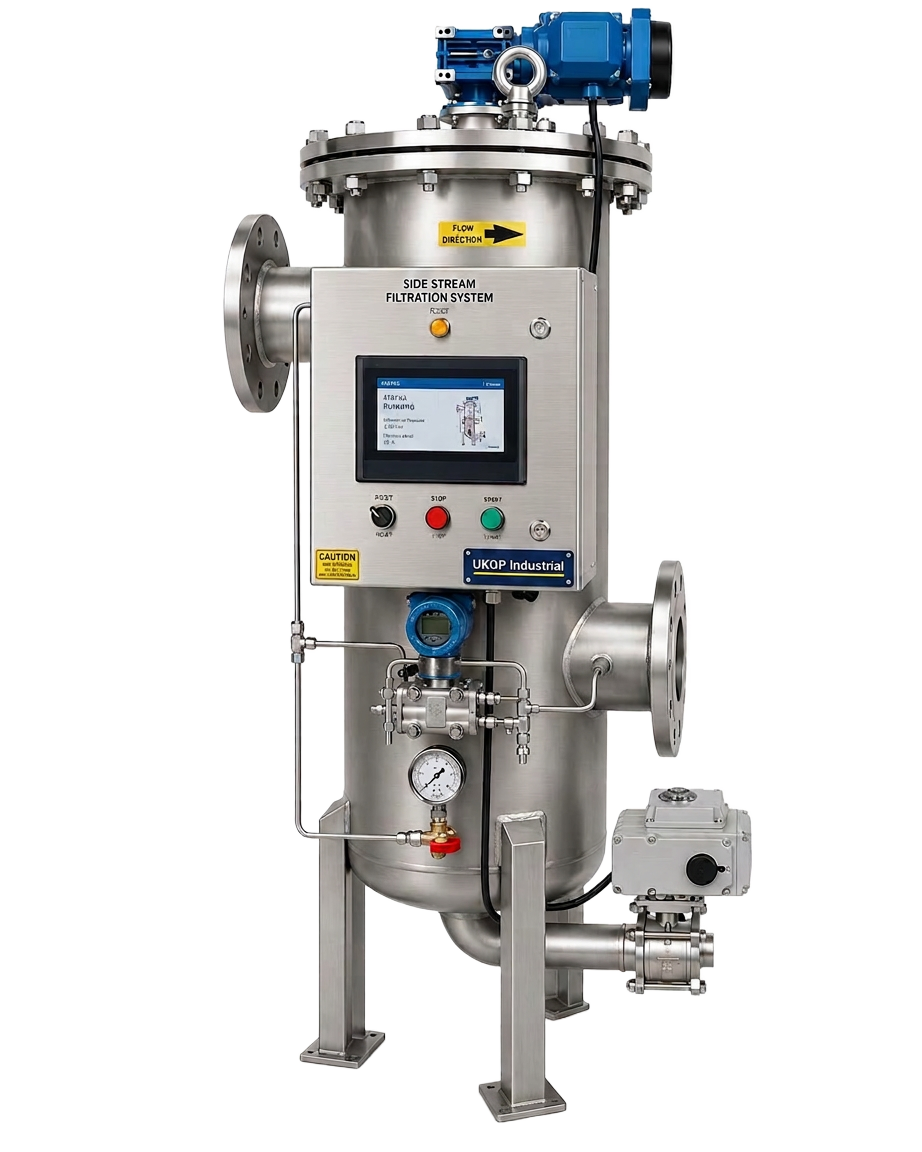
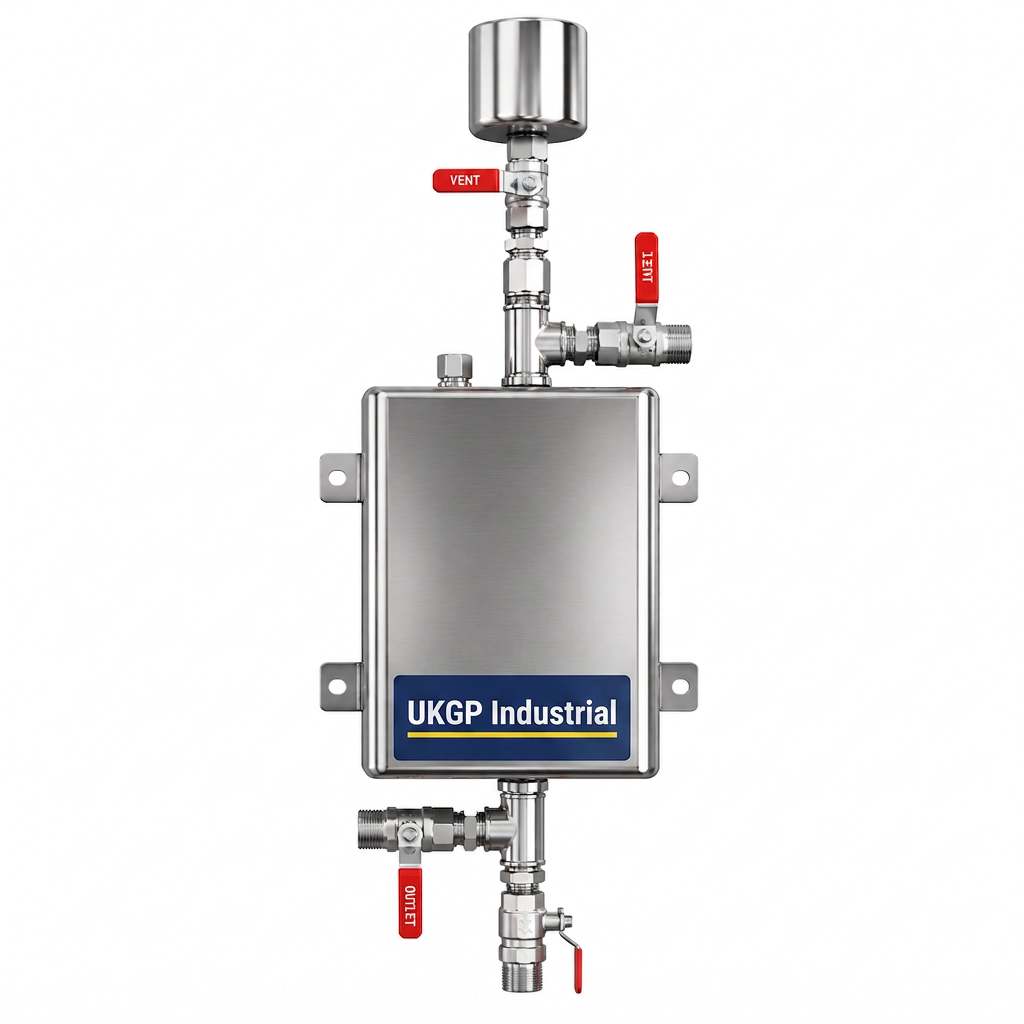
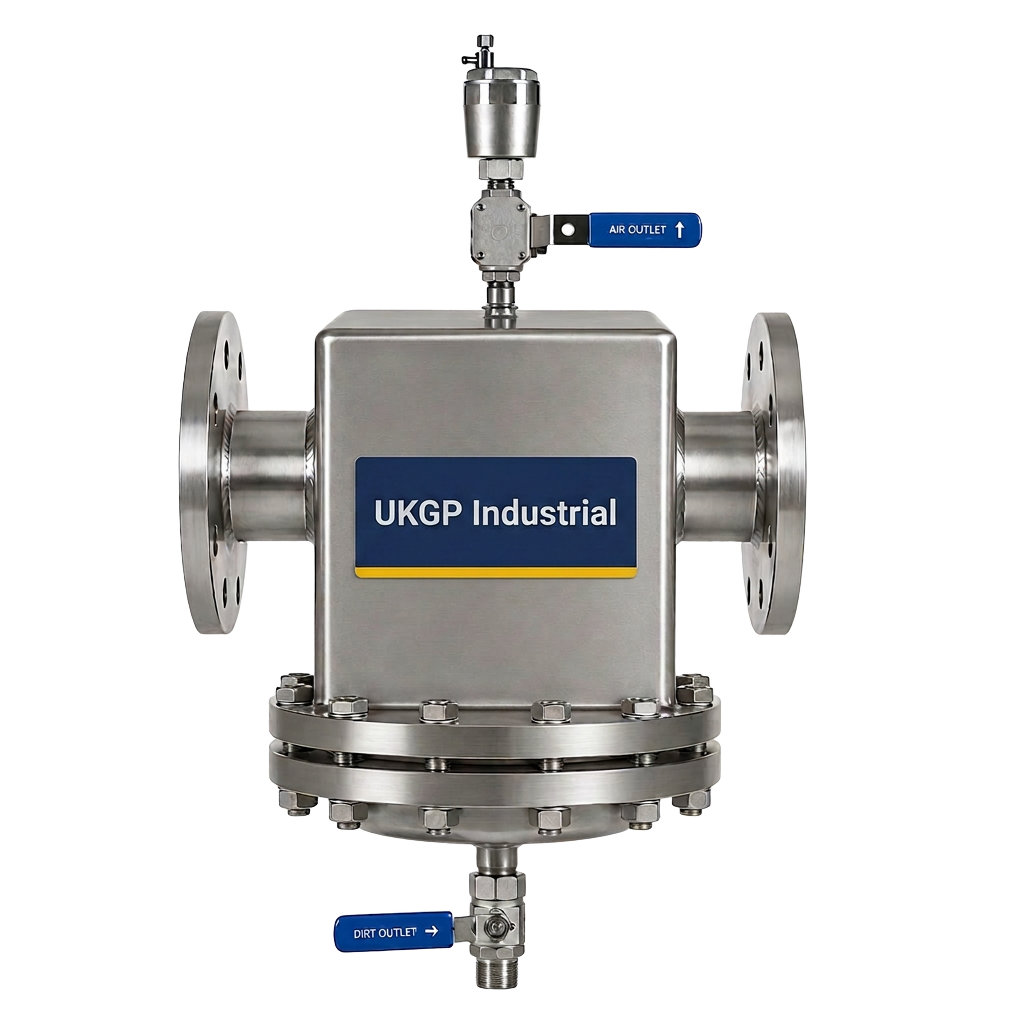
Integrating a combined air and dirt separator on the primary circuit is a standard British engineering best practice that pays dividends in the long run. By removing micro-bubbles and magnetite from the boiler water, you protect the high-efficiency plates within the swimming pool heat exchanger from fouling. On the pool side, while sand filters handle the bulk of the debris, fine particulates can still bypass and settle in the heat exchanger's narrow gaps. Regular flushing and the use of sidestream filtration can further enhance the system's reliability and heat transfer consistency over years of service.
Pressure drops across the exchanger must be carefully matched with the pump curves to ensure flow rates do not drop below the minimum required for turbulent flow. If flow rates are too low, the heat exchanger will not achieve its rated capacity, and the pool will fail to reach temperature. UKGP's technical sizing service provides the exact pressure drop figures for both the primary and secondary sides, allowing plant room engineers to select the correct circulators. Our brazed and gasketed range covers everything from DN20 to DN300, providing flexible solutions for every flow requirement.
- Install air and dirt separators on the highest and hottest points of the primary loop.
- Monitor pressure gauges across the exchanger to identify clogging early.
- Ensure expansion vessels are sized correctly to handle primary water volume.
- Follow BS EN 12828 for the design of water-based heating systems.
Selecting Gasketed vs Brazed Heat Exchangers
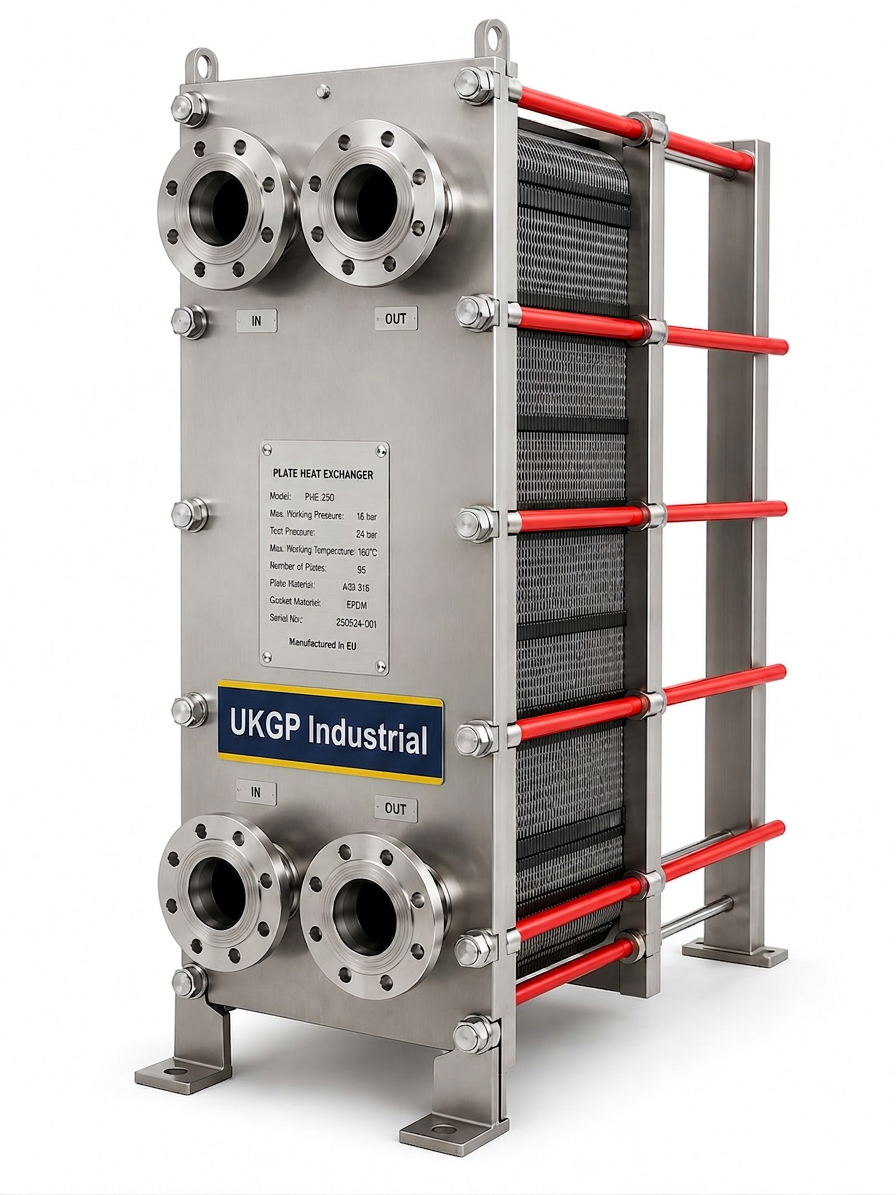
When specifying a swimming pool heat exchanger, the choice between a gasketed and a brazed plate heat exchanger depends on the long-term maintenance strategy and the scale of the facility. Brazed units are compact, cost-effective, and ideal for smaller commercial pools or spas. They offer high pressure and temperature ratings but cannot be opened for manual cleaning. If a brazed unit becomes severely fouled, it usually requires chemical CIP (Clean-In-Place) or total replacement, making water quality management even more critical for these models.
For larger installations, municipal pools, or sites with hard water, a gasketed swimming pool heat exchanger is often the preferred choice. These units can be fully dismantled, allowing for mechanical cleaning of every individual plate and the replacement of gaskets as they age. This serviceability extends the life of the asset indefinitely. UKGP offers these units with a 2-year warranty and lead times of 4-6 weeks, providing a reliable supply chain for M&E contractors who need to meet strict project deadlines without compromising on long-term maintainability.
Regardless of the construction type, the thermal specification remains the backbone of the procurement process. A full thermal spec includes the fluid types, mass flow rates, and allowable pressure drops. At UKGP, we use advanced software to ensure the swimming pool heat exchanger is perfectly matched to these inputs. This bespoke approach reduces the risk of 'guestimation' and ensures that the plant room performs exactly as the consultant intended, maintaining the delicate balance required for humid, high-usage indoor pool environments found across the UK.
- Brazed units are best for space-constrained plant rooms and smaller duties.
- Gasketed units offer superior serviceability for high-fouling applications.
- Ensure gasket materials (e.g., EPDM or NBR) are compatible with pool chemicals.
- Verify the maximum operating pressure exceeds the static head of the system.
Maximising Efficiency in British Leisure Facilities
In the current economic climate, energy efficiency in leisure facilities is a priority for procurement leads and facility managers. The swimming pool heat exchanger plays a central role in the energy recovery and heating strategy. By utilising low-temperature hot water (LTHW) from modern condensing boilers or heat pumps, the exchanger must be sized with a larger surface area to compensate for the smaller temperature differential. UKGP specialises in sizing exchangers for these modern, low-carbon heating systems, ensuring your facility remains sustainable.
Furthermore, integrating a swimming pool heat exchanger with a variable speed drive (VSD) on the primary pump can lead to significant electricity savings. By modulating the flow based on the actual heat demand of the pool, the system avoids unnecessary pumping energy. This holistic approach to plant room design, where every component from the low loss header to the final heat exchanger is optimised, ensures the lowest possible operational cost. Our technical team is available to help you navigate these complex design choices to deliver a high-performance system.
Finally, always ensure that the installation complies with BS EN 14917 for any metallic bellows used in the pipework and BS 8552 for the sampling of water within the building's services. These standards ensure that your swimming pool heat exchanger operates in a safe, controlled environment. Whether you are refurbishing an existing plant room or designing a new one, UKGP provides the expertise and the hardware—including DN20 to DN300 plates—to ensure a successful outcome. Contact us today for a quote based on your specific thermal requirements.
- Optimise for low-return temperatures to enhance boiler condensing.
- Consider heat recovery from greywater or air handling units.
- Ensure all insulation meets the latest Part L building regulations.
- Review the 2-year warranty terms to ensure your maintenance schedule complies.
Frequently asked questions
What material is best for a swimming pool heat exchanger?
- For standard chlorinated pools, 316L Stainless Steel is often sufficient. However, for saltwater or high-chlorine environments, Titanium plates are recommended to prevent corrosion. UKGP can provide advice based on your water chemistry report.
How do I size a heat exchanger for a commercial pool?
- Sizing is based on the pool volume, the desired warm-up time, and the primary boiler temperature. Provide UKGP with a full thermal spec, and we will model the most efficient plate configuration for your project.
What is the lead time for a UKGP plate heat exchanger?
- Our standard lead time for bespoke sized gasketed and brazed units ranging from DN20 to DN300 is 4-6 weeks, ensuring you can stay on track with your M&E installation schedule.
Do you provide a warranty on your heat exchangers?
- Yes, all UKGP plate heat exchangers come with a 2-year warranty, providing peace of mind for building services consultants and facility managers regarding the long-term reliability of our equipment.
Can I use a heat exchanger with a heat pump?
- Absolutely. However, because heat pumps operate at lower flow temperatures, the swimming pool heat exchanger must be sized with a larger surface area to achieve the required heat transfer.