Understanding Your Sondex Heat Exchanger UK Requirements
When planning a commercial plant room upgrade or a new build installation, identifying the specific thermal profile for your sondex heat exchanger uk is the foundation of any procurement strategy. Building services consultants must assess the primary and secondary flow rates, temperature differentials, and the total kW load required to meet the building's peak demand. Over-specification leads to unnecessary capital expenditure and potential pumping inefficiencies, while under-specification risks failing to maintain comfort levels or domestic hot water temperatures. In the UK market, achieving the right balance is essential for complying with Part L of the Building Regulations and ensuring that the wider hydronic circuit remains balanced according to CIBSE CP1 standards.
Precision in thermal data is non-negotiable for a successful installation. M&E contractors often find that generic sizing leads to fouling issues or plate erosion if the velocity profiles are not correctly calculated for the specific fluid properties. Whether your system is utilizing water-to-water transfer or involves glycol mixtures for chilled water applications, the physical footprint of the sondex heat exchanger uk must be integrated into the plant room layout early in the design phase. This includes allowing for the 'A' dimension pull-back space required for plate removal and maintenance during annual servicing regimes. Proper spacing ensures that facilities managers can inspect the internal plate surfaces without dismantling the surrounding pipework or compromising safety protocols.
At UKGP, we understand that technical accuracy is the catalyst for system reliability. We provide expert support for engineers who need to transition from theoretical designs to physical hardware that performs under real-world pressure. Our technical team works alongside consultants to cross-reference thermal specifications, ensuring that every unit delivered to site matches the precise duty required for the project. By focusing on robust engineering standards and high-grade materials, we help eliminate the guesswork often associated with procuring large-scale heat transfer equipment. Our commitment to quality ensures that your commercial systems operate at peak efficiency from day one, reducing the likelihood of remedial works or unexpected downtime.
- Determine fluid flow rates (l/s) for both primary and secondary circuits.
- Identify specific inlet and outlet temperature requirements for thermal duty.
- Calculate the maximum allowable pressure drop to maintain pump efficiency.
- Assess fluid chemistry to select appropriate plate and gasket materials.
- Verify existing plant room space for maintenance access and connection orientation.
Thermal Profiling for Plate Heat Exchangers
To achieve the highest efficiency from your sondex heat exchanger uk, you must provide a full thermal spec that accounts for 'approach temperatures'—the difference between the primary inlet and the secondary outlet. A closer approach temperature often requires a larger heat transfer area, which impacts the number of plates and the overall length of the frame. In district heating or high-temperature lthw systems, these variables are critical for ensuring that condensing boiler plant or heat pumps operate within their intended efficiency windows. Without this data, specifying the correct unit becomes an exercise in estimation, which can lead to significant operational penalties and increased energy consumption over the system's lifespan.
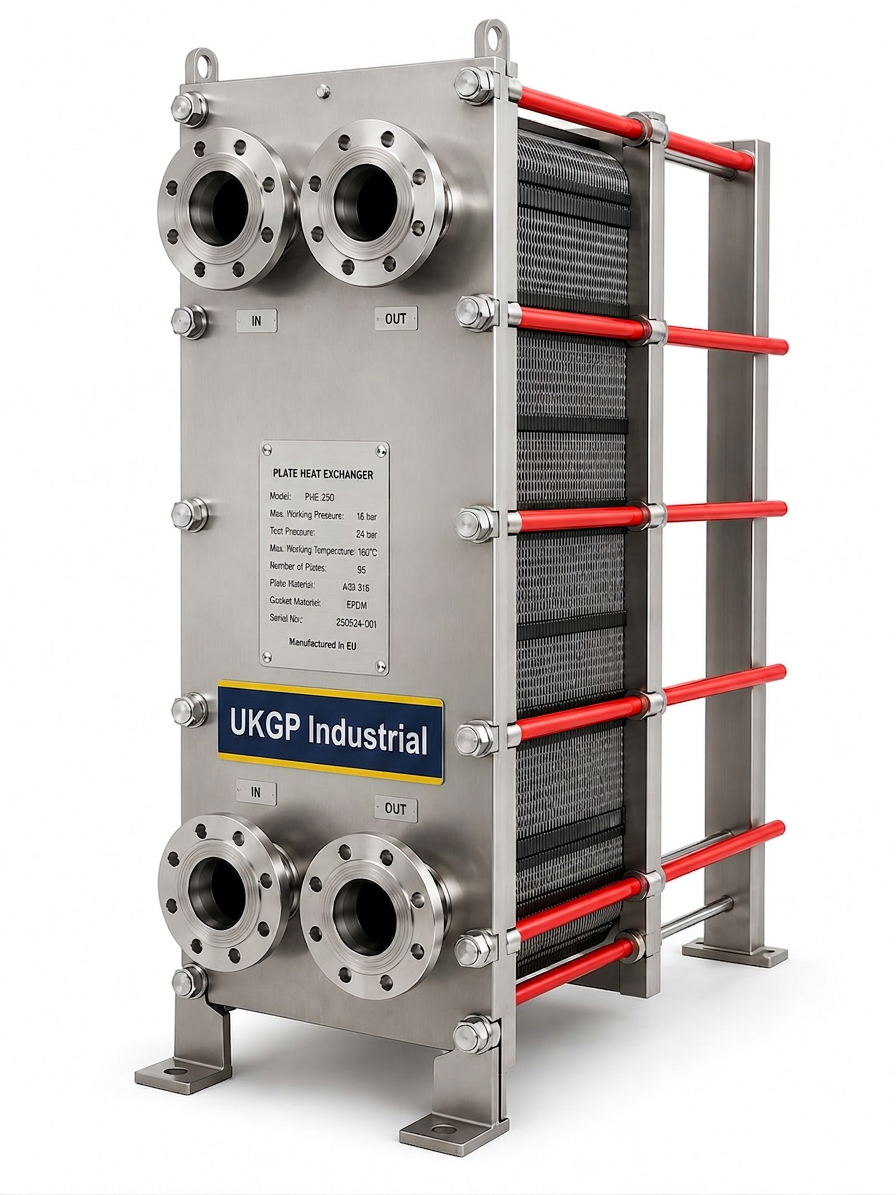
For those seeking a reliable alternative or a direct thermal match, UKGP offers a comprehensive range of plate heat exchangers. Our units are available in both gasketed and brazed configurations, covering connection sizes from DN20-DN300. When you provide a full thermal spec, we can size a unit that delivers equivalent or superior performance to a standard sondex heat exchanger uk. Each UKGP unit is engineered to withstand the rigours of commercial demand, featuring high-quality stainless steel plates and robust frames that meet BS EN 13445 standards. This level of technical rigour ensures that our solutions integrate seamlessly into your existing hydronic designs without requiring significant modifications to the secondary pipework.
Choosing UKGP means opting for a partner that prioritises your project timelines. Our plate heat exchangers, whether gasketed or brazed, are available with a lead time of 4-6 weeks, significantly bettering industry averages for custom-sized equipment. Furthermore, we provide a 2-year warranty on our units, offering peace of mind to procurement leads and FM teams alike. When you request a quote from UKGP, you aren't just buying hardware; you are investing in a thermally verified solution designed to survive the harsh environments of modern plant rooms. We ensure that every DN20-DN300 unit we supply is fully pressure tested and documented, supporting your compliance with BSRIA BG29 water quality guidelines.
- Request a quote for UKGP plate heat exchangers based on full thermal specs.
- Choose between gasketed (for serviceability) and brazed (for compact site footprints).
- Benefit from connection sizes ranging from DN20 to DN300 for any system scale.
- Standard lead times of 4-6 weeks for custom-sized commercial units.
- Two-year warranty included on all plate heat exchanger assemblies.
Hydronic Protection and Water Quality Standards
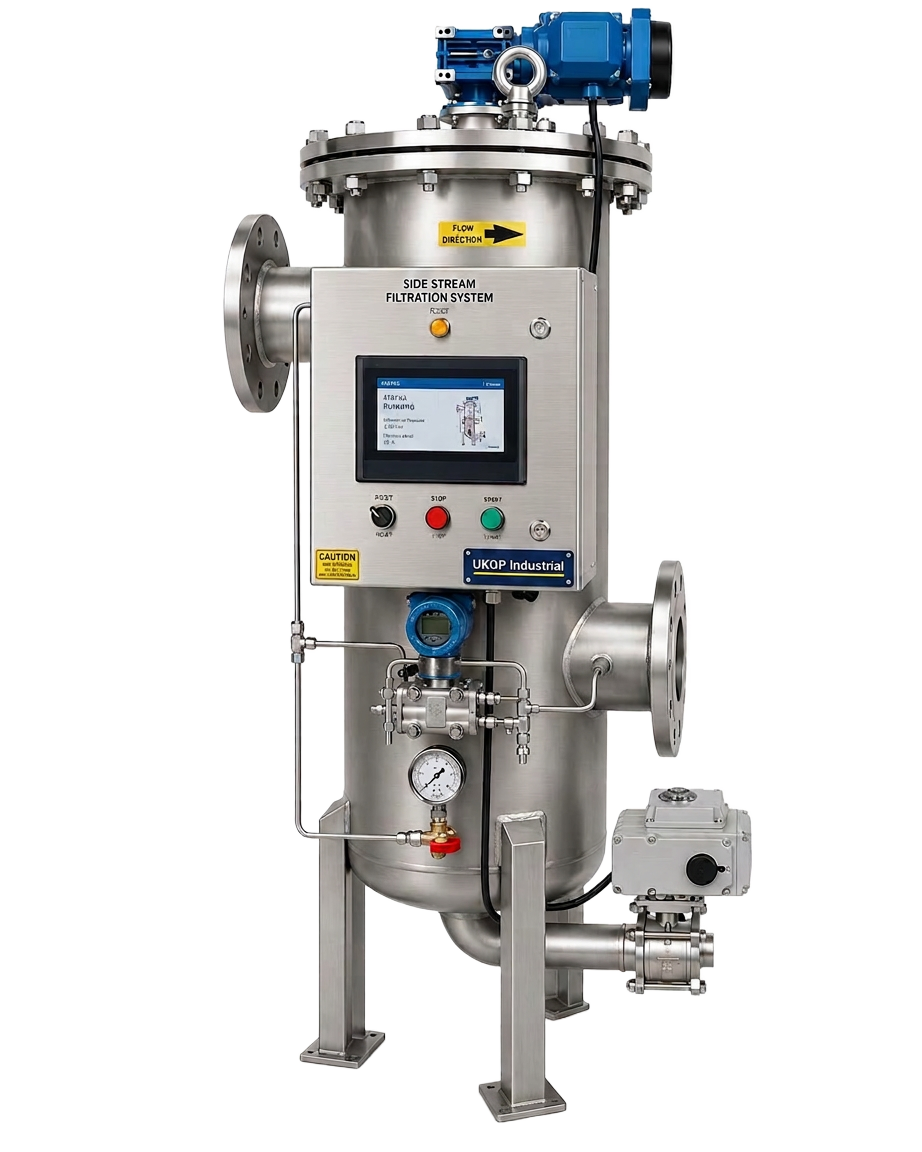
Installing a sondex heat exchanger uk is only the first step; protecting that investment requires strict adherence to BSRIA BG29 and BG50 water treatment standards. Plate heat exchangers are particularly susceptible to fouling from suspended solids and magnetite, which can settle in the narrow channels between plates. This dramatically increases pressure drop and reduces the heat transfer coefficient, leading to higher fuel bills and systemic strain. To mitigate this, side stream filtration is essential in any commercial loop. By continuously removing micron-sized particles, you ensure that the internal surfaces of your heat exchanger remain clean, maintaining the k-value (thermal transmittance) and extending the gaps between internal inspections.
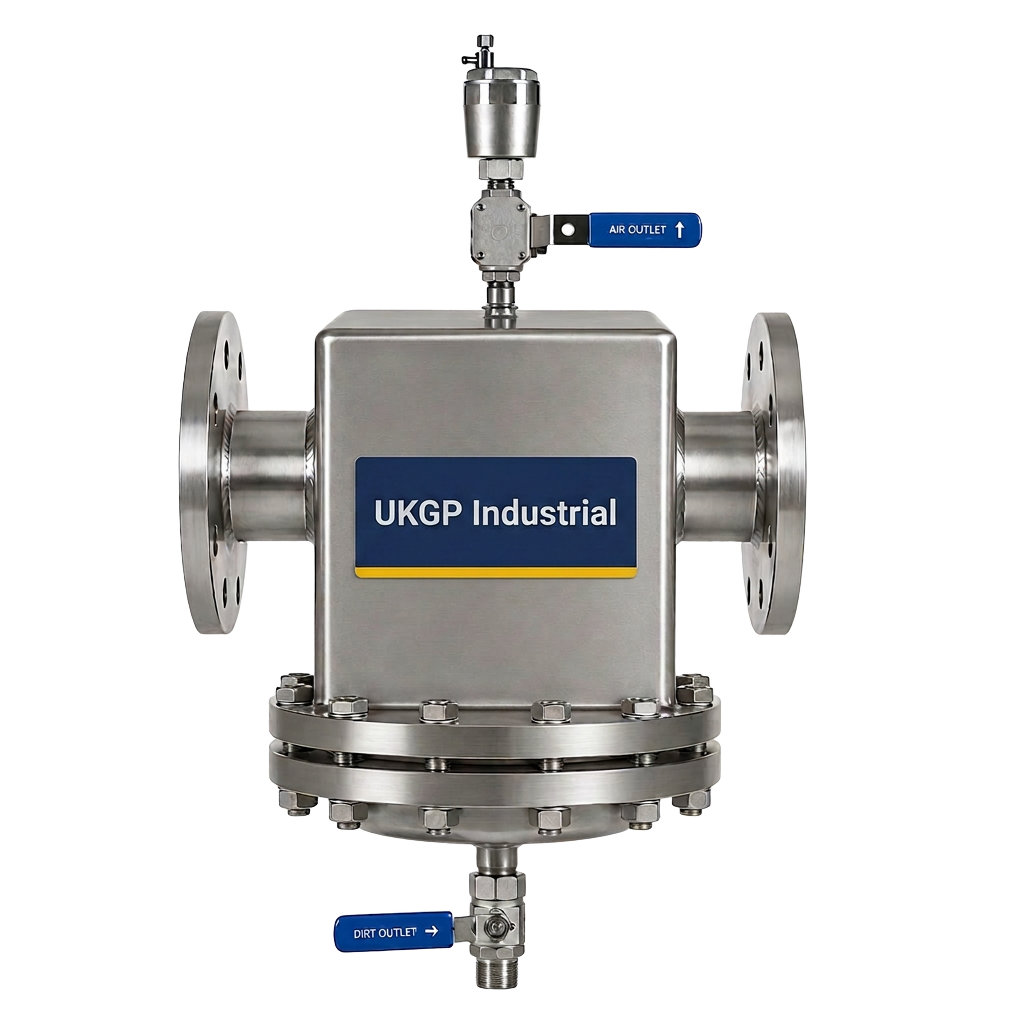
In addition to filtration, removing entrained air and micro-bubbles is vital for preventing the oxidative corrosion that leads to leaks in heat exchanger plates. Air and dirt separators should be installed on the primary circuit to capture contaminants before they reach the delicate plate surfaces. This is especially important in systems where the sondex heat exchanger uk acts as a hydraulic break between a sensitive boiler plant and a potentially contaminated secondary circuit. By integrating these protective components, M&E contractors can significantly reduce the risk of warranty claims and improve the 'set-and-forget' reliability that commercial clients expect. A clean system is an efficient system, and proactive protection is more cost-effective than reactive descaling.
UKGP manufactures a range of air and dirt separators designed to handle the high flow rates common in UK commercial buildings. These units facilitate the removal of both buoyant air bubbles and heavy sludge particles that would otherwise clog your plate heat exchanger. When coupled with our side stream filtration skids, they provide a comprehensive shield for your primary assets. Using these components in tandem with your heat transfer equipment ensures compliance with BS 8552 monitoring protocols. By managing water quality from the outset, you protect the thermal performance of your system and ensure that the heat exchanger delivers its rated output throughout its entire service life.
- Install side stream filtration to prevent magnetite buildup in plate channels.
- Utilise high-efficiency air and dirt separators for primary circuit protection.
- Adhere to BSRIA BG50 for ongoing system water quality monitoring.
- Protect plate gaskets from premature degradation caused by poor chemistry.
- Ensure all separators are sized correctly for the system's peak flow velocity.
Material Selection and Gasket Compatibility
When specifying a sondex heat exchanger uk, material selection is dictated by the operating environment and the fluid chemistry. Standard 316 stainless steel plates are suitable for most LTHW and chilled water applications, but for systems involving high chlorine content or aggressive industrial fluids, titanium plates may be required to prevent pitting and stress corrosion cracking. Gasket materials also vary; NBR (Nitrile Butadiene Rubber) is often preferred for lower temperature heating and cooling, whereas EPDM (Ethylene Propylene Diene Monomer) is the industry standard for high-temperature duties and domestic hot water where WRAS approval is paramount. Choosing the wrong gasket material can lead to catastrophic leaks and expensive plant room flooding.
The mechanical construction of the frame is equally important. For commercial applications in the UK, frames must be finished with robust coatings to prevent environmental corrosion, especially in vented plant rooms or coastal locations. The clamping bolts should be high-tensile steel, often protected with zinc plating or caps to ensure they remain adjustable for future plate additions or gasket replacements. As your system demand grows, a well-specified gasketed unit allows for the addition of extra plates to increase thermal capacity—a flexibility not found in brazed alternatives. This modularity makes the gasketed plate heat exchanger a sustainable choice for future-proofing commercial building services.
UKGP provides full technical documentation for all our plate heat exchanger builds, ensuring that the material certificates meet your project's FAT (Factory Acceptance Test) requirements. Our DN20-DN300 range includes various plate patterns and thicknesses, allowing us to accurately replicate or improve upon the performance of a sondex heat exchanger uk. By selecting the correct plate profile—whether 'hard' for high turbulence/efficiency or 'soft' for low pressure drop—we tailor the unit to your specific hydraulic needs. This bespoke approach to engineering ensures that the equipment you install is perfectly matched to the system it serves, backed by our 4-6 week lead time and 2-year manufacturer's guarantee.
- Select 316 Stainless Steel as the default for high-performance heat transfer.
- Specify EPDM gaskets for high-temperature LTHW and DHW applications.
- Consider titanium plates for high-chloride or aggressive chemical environments.
- Verify WRAS approval for all components in contact with potable water.
- Ensure frame coatings are suitable for the specific plant room environment.
Installation and Commissioning Best Practices
Correct installation of your sondex heat exchanger uk is critical to preventing hydraulic shocks and thermal stress. Best practice dictates the installation of flexible connectors or expansion bellows on the pipework leading to and from the unit. These components absorb the thermal expansion of the pipework and isolate the heat exchanger frame from vibration and mechanical stress, which can otherwise lead to plate misalignment and leaking gaskets. Following BS EN 14917 guidelines for expansion bellows ensures that the forces exerted on the heat exchanger nozzles remain within the manufacturer's specified limits. This is a common oversight that can void warranties and cause premature failure in large-scale commercial installations.
During commissioning, the system must be slowly filled and vented to avoid water hammer. Pressure gauges should be installed on all four ports to monitor the pressure drop across the unit; an unexpected increase in delta-P is the first sign of internal fouling or a blockage. It is also essential to ensure that the primary and secondary pumps are balanced according to the design flow rates specified during the procurement of the sondex heat exchanger uk. If the flow is too low, the fluid may pass through the heat exchanger in a laminar state rather than turbulent, significantly reducing the heat transfer efficiency. Proper balancing ensures the unit achieves the intended thermal duty.
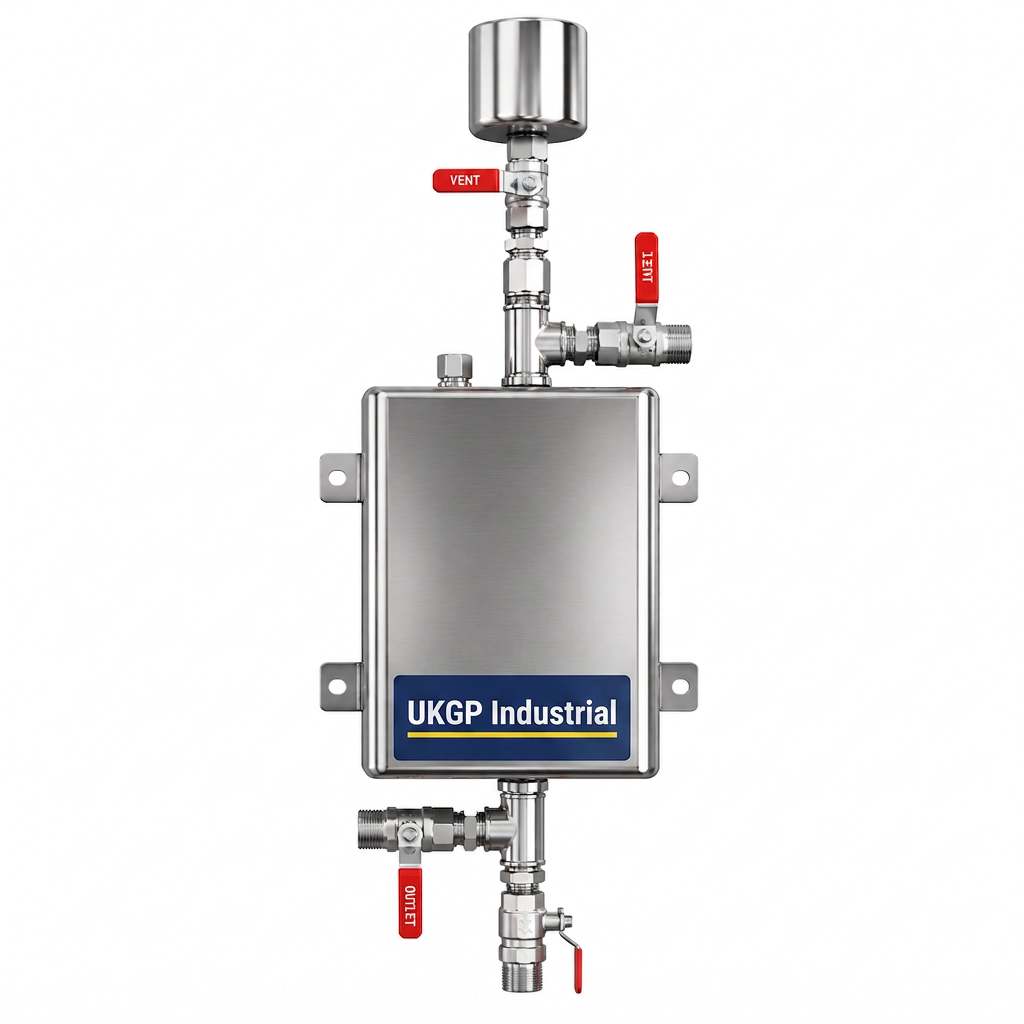
For engineers and contractors, the commissioning phase is the point where technical specification meets operational reality. At UKGP, we provide the detailed data labels and O&M documentation needed to make this process seamless. Our DN20 to DN300 units are designed with standard flanged or threaded connections to simplify the installation process. By following our recommended installation layouts, including the fitment of dosing pots for chemical treatment and air separators for deaeration, you create a robust ecosystem around the plate heat exchanger. This holistic approach to system design is what separates a high-performing plant room from one plagued by recurring maintenance issues and efficiency losses.
- Install expansion bellows to protect heat exchanger nozzles from thermal stress.
- Utilise four-port pressure monitoring to track performance and fouling.
- Ensure pumps are commissioned to match the design flow rates of the unit.
- Slow-fill the system to prevent water hammer and plate deformation.
- Provide clear access for bolt tightening and plate inspection according to O&M guides.
Long Term Maintenance and Performance Monitoring
The lifecycle of a sondex heat exchanger uk depends heavily on a structured maintenance regime. Gasketed units should be opened periodically for manual cleaning and inspection, particularly in hard water areas where limescale can build up on the secondary side. For brazed units, which cannot be opened, Clean-In-Place (CIP) procedures using mild acidic descalents are the only option for restoring performance. Monitoring the temperature differential across the plates daily can provide facilities managers with a clear indication of when a cleaning cycle is required. A drop in the secondary outlet temperature while primary inlet temperatures remain constant is a primary indicator of reduced heat transfer efficiency.
In many commercial systems, pH levels and inhibitor concentrations can drift over time, especially if there are leaks in the circuit. Utilizing pH sensors and transmitters to monitor the water chemistry in real-time allows FM teams to intervene before corrosion affects the thin metal plates of the heat exchanger. Maintaining a stable pH as per BSRIA BG50 guidelines prevents the stripping of protective magnetite layers and protects the integrity of the gaskets. When replacing gaskets, always ensure they are from a certified supplier to maintain the unit's pressure rating and temperature tolerance, as inferior parts can fail under the cyclic loads of a commercial heating system.
Buying from UKGP ensures you have a reliable technical partner for the long haul. While we specialize in providing high-quality plate heat exchangers with a 2-year warranty, our expertise extends to the peripheral equipment that keeps them running. From DN20 to DN300, our gasketed and brazed units are built for longevity. When you request a quote for a UKGP plate heat exchanger, you are gaining access to a 4-6 week lead time on a product sized from a full thermal spec that is engineered to be a direct, high-performance alternative to any sondex heat exchanger uk. We are committed to supporting the UK building services industry with robust, commercially aware engineering solutions that stand the test of time.
- Implement a Clean-In-Place (CIP) schedule for brazed heat exchangers.
- Monitor temperature differentials daily to detect early-stage fouling.
- Use real-time pH monitoring to protect plate and gasket integrity.
- Carry out annual bolt-tensioning checks on gasketed plate frames.
- Replace gaskets with high-quality EPDM or NBR components to prevent leaks.
Frequently asked questions
Can I replace an existing sondex heat exchanger uk with a UKGP unit?
- Yes. By providing a full thermal spec (flow rates, temperatures, and kW duty), UKGP can size a plate heat exchanger—either gasketed or brazed—that matches or exceeds the performance of the original unit. Our lead times are 4-6 weeks.
What connection sizes are available for UKGP plate heat exchangers?
- We offer a wide range of connection sizes from DN20 up to DN300, allowing our units to be integrated into almost any commercial or industrial HVAC system in the UK.
Do you offer a warranty on your heat transfer equipment?
- All UKGP plate heat exchangers come with a 2-year warranty as standard, reflecting our confidence in the engineering quality and material durability of our builds.
What is the typical lead time for a custom-sized plate heat exchanger?
- Our standard lead time for both gasketed and brazed models is 4-6 weeks, ensuring your project remains on schedule without compromising on technical precision.
Is side stream filtration necessary for these heat exchangers?
- While not mandatory for the unit to function, BSRIA BG29 and BG50 strongly recommend side stream filtration to prevent magnetite and debris from fouling the narrow channels within the plate pack, which would otherwise reduce efficiency and lifespan.