The basics of side stream filtration how it works
To understand side stream filtration how it works, you must first picture your entire HVAC system as a high-volume loop of water that is constantly circulating. Rather than attempting to filter 100% of that massive volume at once—which would require enormous, high-pressure equipment—a side stream setup diverts a small, manageable portion (typically around 5% to 15%) of the total flow through a specialised filtration skid. This bypass method ensures that although only a fraction of water is cleaned at any single moment, the entire system volume is theoretically turned over and purified multiple times every twenty-four hours. This approach significantly reduces the mechanical strain on the system while providing continuous protection against debris that can lead to catastrophic failures.
The physics of side stream filtration how it works relies on the principle of cumulative cleaning. By extracting water from the return line using a dedicated boost pump, the filtration skid passes the medium through various media or magnetic stages to strip away particulates like iron oxide, grit, and scale. For UK consultants and M&E contractors, this is a far more efficient method than traditional full-flow strainers which often become blocked and cause significant pressure drops. Our UKGP Industrial skids are specifically engineered to provide these bypass flows without disrupting the hydraulic balance of the main circuit, ensuring that the primary heating or cooling plant continues to function at peak efficiency while the cleaning process happens silently in the background.
When considering the commercial reality of side stream filtration how it works, it is important to note that these systems are not merely 'optional' extras; they are foundational to modern asset management. In the UK, industrial facilities and commercial offices face strict guidelines regarding water quality. By installing a robust side stream unit, you are investing in a persistent cleaning cycle that actively removes the abrasive contaminants that would otherwise erode pump seals and foul heat exchanger plates. Contact UKGP Industrial to discuss our made-to-order range, including systems from DN50 to DN100, which are designed to integrate seamlessly into your existing plant room layout with minimal disruption to your daily operations or maintenance schedules.
- Diverts 5-15% of the total system flow for constant cleaning
- Prevents massive pressure drops associated with full-flow alternatives
- Continuously removes suspended solids and harmful magnetite
- Essential for meeting BSRIA BG29 and BG50 water quality targets
Compliance and Standards: BSRIA BG29 and BG50
In the UK building services sector, the benchmark for water quality is defined by the Building Services Research and Information Association (BSRIA). Specifically, BG29 (Pre-commission Cleaning) and BG50 (Water Treatment for Closed Heating and Cooling Systems) provide the roadmap for maintaining an efficient circuit. When we examine side stream filtration how it works in the context of these standards, it becomes clear that manual flushing alone is insufficient for long-term protection. BSRIA guidelines explicitly advocate for the continuous removal of suspended solids to prevent the build-up of sludge. Our filtration skids ensure that your water chemistry remains within these strict parameters, preventing the corrosion that leads to costly emergency repairs and premature boiler failures.
Adhering to BS 8552 for water sampling further reinforces the need for a persistent filtration strategy. Without a dedicated skid, your water samples may frequently show high levels of iron or high turbidity, leading to non-compliance during tenant audits or insurance inspections. The side stream filtration how it works process allows for a steady reduction in these particulate levels without the need for aggressive chemical flushes that can sometimes damage older pipework. For facility managers, this means a more stable system and fewer 'out of range' lab results. Our UKGP units are built to help you achieve these standards consistently, providing the peace of mind that your HVAC assets are operating exactly as the designers intended.
UKGP Industrial provides a 2-year warranty on all skid components because we understand the rigours of the UK commercial environment. Whether you are managing a London office block or a Manchester manufacturing plant, the requirement for clean system water is universal. By following CIBSE and BSRIA best practices, you ensure that your investment in a side stream filtration system pays for itself through reduced energy consumption and lower maintenance costs. Our DN50 to DN100 units start from £6,800+VAT and are made to order with a lead time of 6-8 weeks, ensuring you get a bespoke solution that matches the specific thermal loads and flow rates of your unique building services infrastructure.
- Aligns with BSRIA BG29 pre-commissioning requirements
- Supports long-term BG50 water treatment strategies
- Reduces the risk of non-compliance during BS 8552 water sampling
- Made-to-order units with lead times of 6-8 weeks for precise site fit
Energy Efficiency and Plate Heat Exchanger Protection
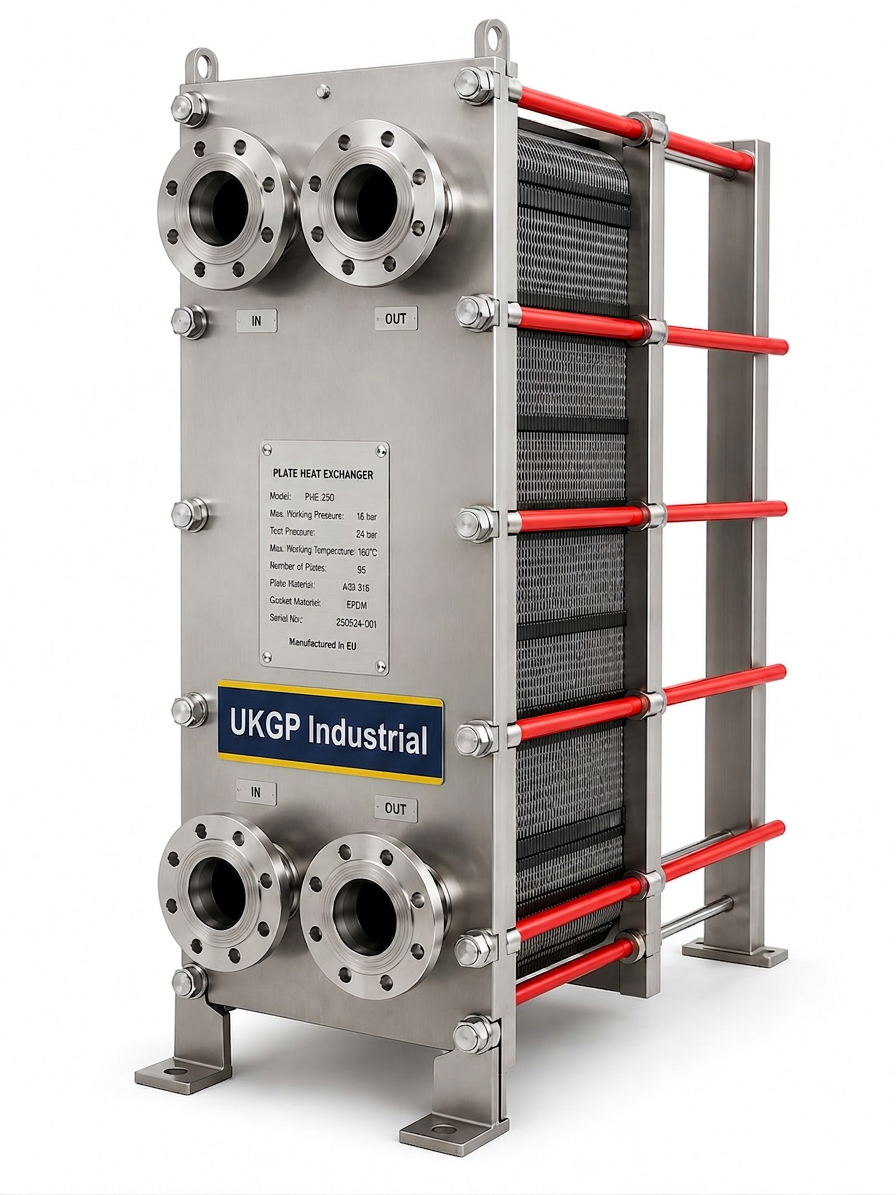
One of the primary benefits of side stream filtration how it works is the massive improvement in heat transfer efficiency. In a system where scale or magnetite is allowed to settle, it often finds its way into the narrow channels of a plate heat exchanger. Even a thin layer of debris can act as an insulator, forcing your boilers or chillers to work significantly harder to reach desired temperatures. By constantly removing these particles, the side stream unit ensures that every kilowatt of energy you pay for is effectively transferred to the building. This can result in energy savings of up to 10-15% in heavily fouled systems, making the initial investment in a UKGP skid a commercially savvy decision.
Protection of downstream assets is another critical factor. When you understand side stream filtration how it works, you realise it acts as a sacrificial barrier for your most expensive equipment. Instead of magnetite eroding the delicate surfaces of a plate heat exchanger or becoming lodged in terminal unit control valves, it is safely captured within the filtration media of the skid. This drastically extends the service intervals for heat exchangers, as they no longer requires frequent strip-downs for manual cleaning. For procurement leads, this translates to lower operational expenditure (OPEX) over the life cycle of the building, as the cost of a filtration unit is far less than a full heat exchanger replacement.
Furthermore, our side stream filtration how it works in harmony with other plant room components such as air and dirt separators to create a comprehensive debris-management strategy. By maintaining a clean circuit, you are also protecting the investment made in high-efficiency variable speed pumps, which are notoriously sensitive to abrasive suspended solids. UKGP Industrial offers these bespoke skids with a 2-year warranty, reinforcing our commitment to UK manufacturing quality. If you are looking to improve your system's Delta T and overall thermal performance, requesting a quote for a custom DN50-DN100 filtration skid is the first step toward a more sustainable and reliable commercial HVAC installation.
- Maintains high heat transfer rates across plate heat exchangers
- Reduces abrasive wear on expensive variable speed pump seals
- Improves system Delta T and overall energy efficiency
- Available in various sizes starting from £6,800+VAT
The Mechanical Process: Inside the UKGP Skid
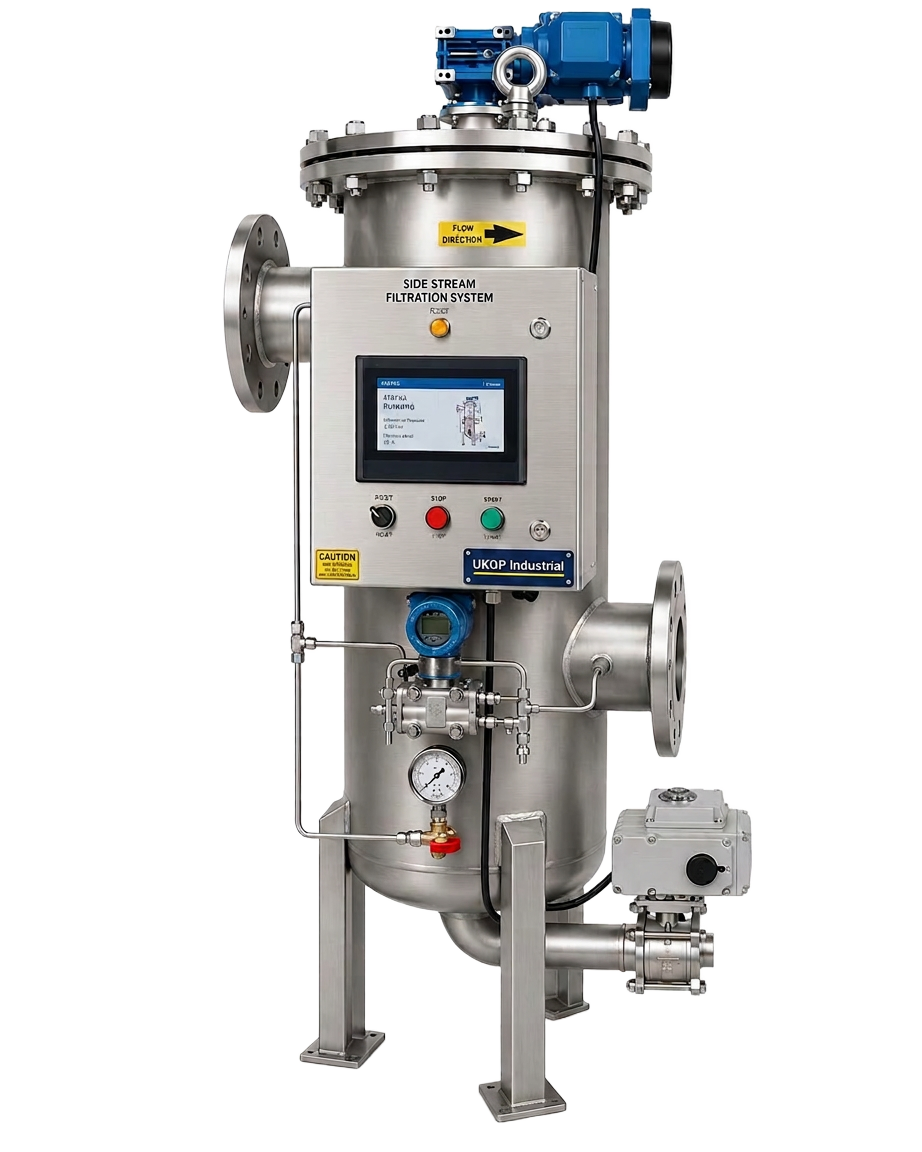
To get into the technical details of side stream filtration how it works, we must look at the mechanical components of the skid itself. A typical UKGP unit consists of a high-quality boost pump, a flow controller, and a filtration vessel—often containing a stainless steel mesh or high-capacity bag filter. The boost pump is necessary because it overcomes the internal pressure drop of the filter media, ensuring that the diverted flow actually moves through the cleaning stages rather than just taking the path of least resistance through the main pipework. This controlled flow rate is essential for effective entrapment of particles down to 5 microns, which are often the most damaging to modern high-efficiency HVAC equipment.
In addition to physical filtration, many of our units incorporate powerful Neodymium magnets. This is a crucial aspect of side stream filtration how it works in UK systems which are predominantly made of steel pipework. As water passes through the magnetic zone, black iron oxide (magnetite) is pulled from the flow and held securely on the magnetic rods. This prevents the sludge from settling in low-flow areas of the building where it would otherwise cause cold spots in radiators or blockages in fan coil units. The removal process for these captured solids is simple, allowing for easy maintenance without needing to drain the entire building system, which is a major advantage for commercial facility managers.
The control logic of the skid can be integrated into your building's BMS (Building Management System), providing real-time alerts when the filters require changing. This 'fit and forget' reliability is why UKGP Industrial is a preferred supplier for Surrey and London-based engineering projects. Our skids are engineered to be robust yet simple to operate, ensuring that site staff can perform routine checks without specialized training. With our made-to-order approach, we can provide DN50 to DN100 connections that match your existing pipework exactly, reducing site fabrication time. These units represent a vital investment in the longevity of your plant room, specifically designed for the demanding requirements of UK industrial and commercial heating loops.
- High-performance boost pumps ensure consistent bypass flow
- Magnetic filtration stages capture damaging black iron oxide
- Simple integration with site BMS for maintenance alerts
- 2-year warranty on all Surrey-manufactured skids
Integrating Dosing Pots and Deaerators
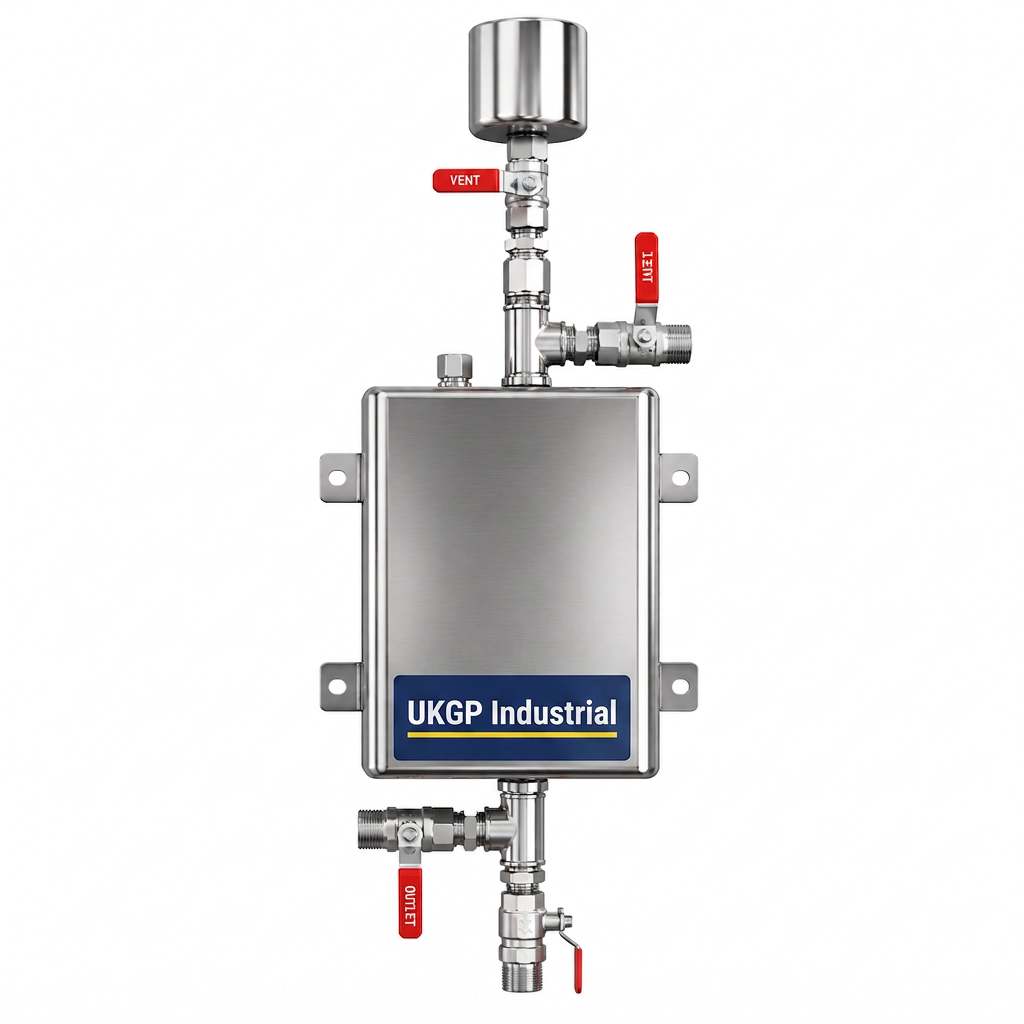
A holistic approach to water quality means understanding that side stream filtration how it works is only one part of the equation. To truly protect a commercial system, you must also maintain correct chemical levels. This is where chemical dosing pots come into play. While the filtration skid removes existing debris, the dosing pot allows for the introduction of inhibitors that prevent new corrosion from forming. By using these two components in tandem, you create a dual-layered defence: the skid removes the 'old' dirt, and the chemicals prevent 'new' dirt from being created through oxidative stress. This ensures that the water remains clear and the internal surfaces of the pipework remain passivated.
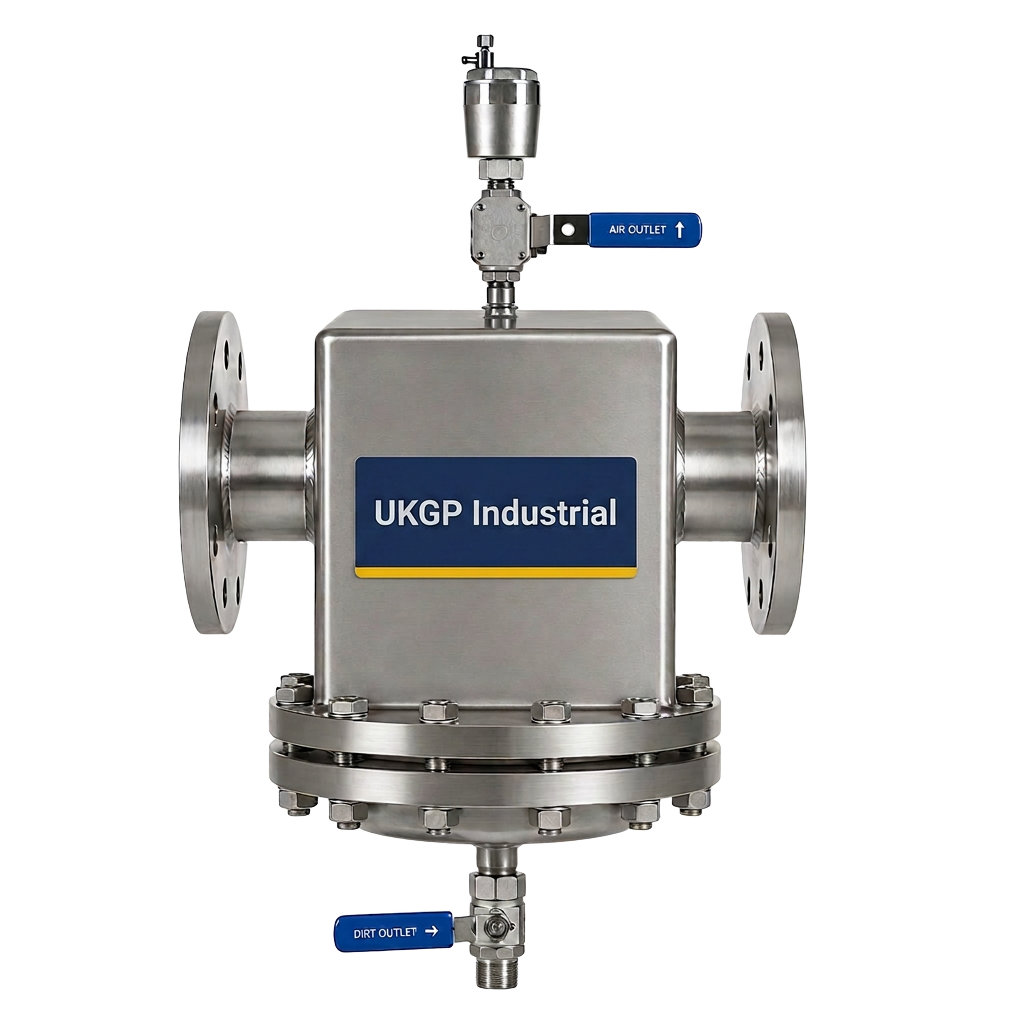
Furthermore, the presence of air in a system can significantly interfere with the filtration process. Microbubbles can lead to localized corrosion and can also cause 'air-locking' in certain types of filtration media. Installing air and dirt separators alongside your side stream filtration unit creates an ideal environment for water treatment. The separator handles the large-scale debris and trapped air, while the side stream unit focuses on the finer particulates that the separator might miss. This layered approach is highly recommended by CIBSE for large-scale commercial installs where downtime is not an option and where the cost of system failure far outweighs the cost of preventative components.
UKGP Industrial provides a full suite of these components, ensuring that your plant room is fully equipped for long-term reliability. When you consult with our team, we don't just explain side stream filtration how it works; we help you design a complete water quality station tailored to your specific system volume and operational hours. Our standard lead time of 6-8 weeks means you can plan your upgrades around scheduled maintenance windows. With prices for our high-end side stream filtration skids starting from £6,800+VAT, there is a clear commercial path for FMs to upgrade their facilities and meet modern BSRIA standards without breaking the capital expenditure budget.
- Dosing pots allow for introduction of corrosion inhibitors
- Air and dirt separators complement the filtration process
- Comprehensive water treatment ensures long-term asset life
- UKGP provides bespoke support for Surrey and London plant rooms
ROI and Long-Term Maintenance Benefits
The financial justification for side stream filtration how it works is found in the reduction of emergency call-outs and part replacements. In many UK commercial properties, the annual cost of repairing pumps, valves, and heat exchangers fouled by debris can easily exceed £10,000. By investing in a UKGP side stream filtration skid, you are effectively eliminating the root cause of these failures. The return on investment is often realized in less than 24 months, especially when considering the energy savings and the extended lifespan of the central heating and cooling plant. It is a strategic move from reactive 'firefighting' to proactive asset management that any procurement lead will appreciate.
Maintenance for these units is straightforward and designed for minimal system impact. Unlike full-flow filters, which require the main line to be shut down for cleaning, our side stream systems can be serviced while the rest of the building's HVAC remains fully operational. By simply closing the isolation valves on the skid, a technician can swap out a filter bag or wipe down a magnetic rod in minutes. This ease of maintenance ensures that the filtration is actually looked after, rather than being ignored by busy site staff because it is too difficult or disruptive to access. This practicality is at the heart of our design philosophy at UKGP Industrial.
In summary, understanding side stream filtration how it works is about recognizing the value of continuous water purification. As a Surrey-based supplier, we are proud to offer made-to-order skids that range from DN50 to DN100, providing flexible solutions for diverse commercial applications. With a 2-year warranty and pricing starting from £6,800+VAT, our products offer the reliability and performance required to meet the challenges of 21st-century building management. Whether you are dealing with a legacy system full of magnetite or a new build requiring BSRIA BG29 compliance, UKGP Industrial has the expertise and the hardware to keep your water clean and your energy bills low.
- Calculable ROI through reduced repair and energy costs
- Serviceable without shutting down primary HVAC loops
- Reduces technical debt by preventing system-wide sludge build-up
- Expert UK support and 2-year warranty on all products
Frequently asked questions
What is the typical lead time for a UKGP filtration skid?
- Our side stream filtration skids are made to order with a standard lead time of 6 to 8 weeks, ensuring they are built to your specific project requirements.
Do these systems comply with BSRIA BG50?
- Yes, our skids are specifically designed to help facility managers meet and maintain the water quality standards outlined in BSRIA BG50 and BG29.
What size connections are available?
- We offer a range of sizes typically from DN50 to DN100 to suit most commercial and industrial heating and cooling circuits.
How much does a side stream filtration unit cost?
- Prices for our bespoke side stream filtration skids start from £6,800+VAT, depending on the specific capacity and features required for your system.
Is a warranty included with the purchase?
- Yes, UKGP Industrial provides a 2-year warranty on all our manufactured side stream filtration skids for your peace of mind.