The Challenge of Suspended Solids in Open Cooling Systems
Cooling towers are inherently prone to contamination. Unlike closed-loop chilled water systems, the open nature of the evaporative process means the water is constantly exposed to the environment. In a typical urban or industrial UK setting, a cooling tower can pull in dozens of kilograms of particulate matter over a single operating season. These particles range from large debris to microscopic silts, all of which contribute to the 'mud' or sludge that settles in low-flow areas of the system.
The presence of these solids is not merely an aesthetic or maintenance concern; it is a fundamental threat to the thermodynamic performance of the plant. Suspended solids tend to settle in the basins of cooling towers and within the narrow channels of heat exchangers. This accumulation creates an insulating layer, known as fouling, which significantly increases thermal resistance. For the building services engineer, this manifests as higher approach temperatures and increased energy consumption as the chillers work harder to compensate for the loss of heat transfer efficiency.
Furthermore, the accumulation of organic and inorganic solids provides a primary breeding ground for microbial growth. Biofilm thrives under these deposits, protected from the oxidising biocide treatments typically used in cooling water regimes. This phenomenon, known as under-deposit corrosion, can lead to localised pitting and premature pipework failure. Effective debris management through side stream filtration is therefore a prerequisite for any robust water treatment strategy.
- Atmospheric scrubbing of dust, grit, and biological spores.
- Makeup water impurities, particularly in areas with high mineral content.
- Corrosion by-products (magnetite and haematite) from within the pipework.
- Biofilm sloughing from internal surfaces.
Principles of Side Stream Filtration Design
The core principle of side stream filtration is the continuous diversion of a portion of the recirculating water (typically 5% to 10%) through a high-efficiency filtration medium. Unlike full-flow filtration, which would require massive, energy-intensive vessels to handle the primary pump flow, side stream systems operate incrementally. By constantly removing a small percentage of TSS, the overall water quality is maintained at a steady state, preventing the 'spike' in turbidity that often occurs during peak summer loads.
Selecting the correct technology depends on the particle size distribution (PSD) of the contaminants. For instance, centrifugal separators are excellent for removing heavy, dense particles like sand or grit but struggle with organic matter or fine silts that have a density close to that of water. In contrast, media filters provide depth filtration capable of capturing much finer particles, often down to 5–10 microns, making them the preferred choice for systems prone to atmospheric dust and biological debris.
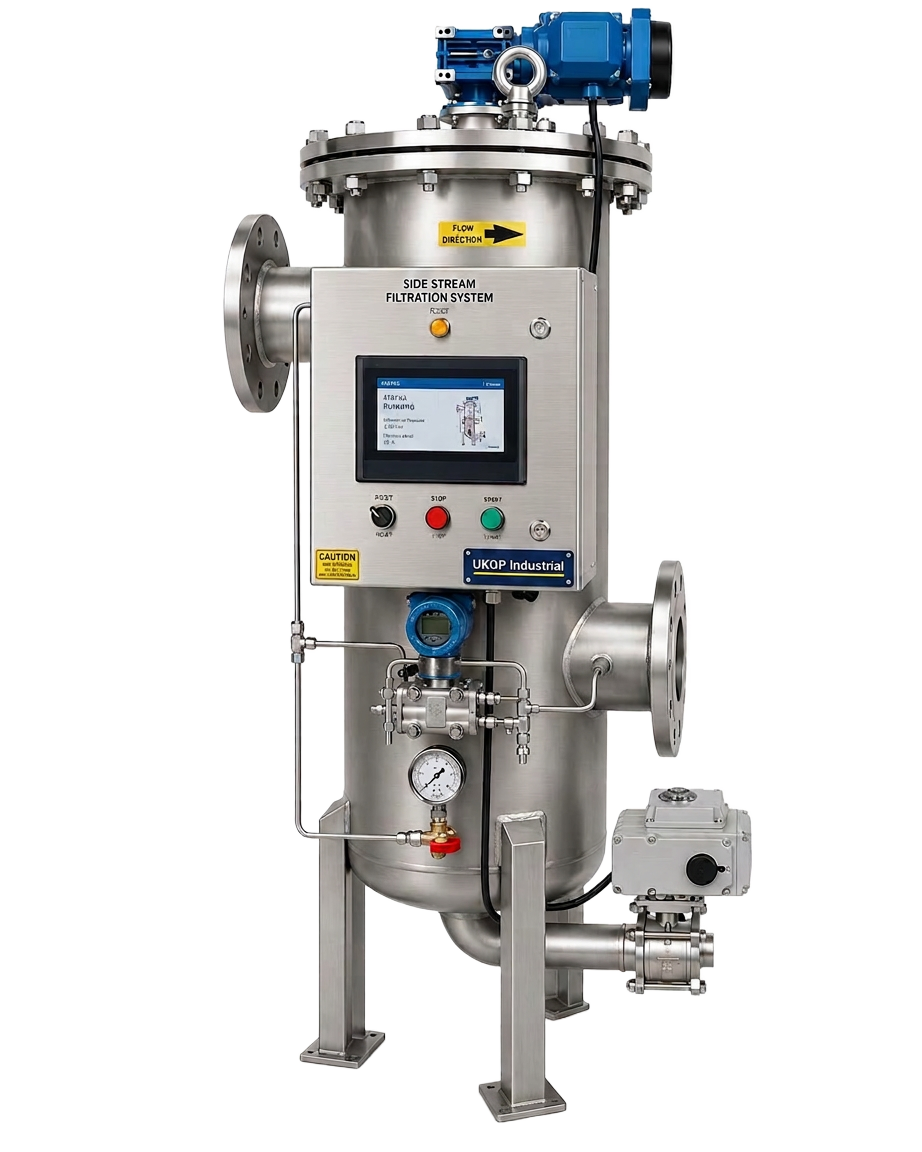
The UKGP side stream filtration skid is an example of an integrated solution designed for this purpose. These skids typically incorporate the pump, filtration vessel, and automated control interface into a compact footprint. For the consultant or contractor, specified skids simplify the installation process, ensuring that the pump head is correctly matched to the pressure drop across the filter media, particularly as the filter 'loads up' between backwash cycles.
- Sand or multi-media depth filters.
- Centrifugal separators (hydrocyclones).
- High-efficiency cartridge or bag filters.
- Automatic backwashing screen filters.
Hydraulic Integration and Flow Rates
The hydraulic layout of a side stream filter is as critical as the filter type itself. The most effective configuration involves drawing water from the cooling tower basin—the point where solids naturally settle—and returning the filtered water back into the system. Often, eductors are installed in the basin to create a sweeping motion, directing solids toward the filter suction point. This prevents the buildup of 'dead zones' where sludge can accumulate and harbour bacteria.
Flow rate calculation is usually based on the 'turnover' concept. For most UK commercial applications, the rule of thumb is to filter the equivalent of the system’s total volume every 12 to 24 hours. If the system volume is 50,000 litres, a filtration rate of approximately 2,000 to 4,000 litres per hour (2-4 m³/h) is required. This ensures the TSS levels are suppressed without requiring excessively large pipework or high auxiliary power consumption.
Engineers must also account for the backwash or cleaning cycle. Whether the system uses a timed backwash or relies on a differential pressure (DP) switch, the discharge water must be routed to a suitable foul drain. In a UK context, this must comply with local water authority trade effluent consents if the water contains high concentrations of treatment chemicals. High-efficiency systems minimise the volume of water lost during backwash, which is vital for maintaining the water balance and BREEAM ratings.
- Suction from the cooling tower basin or the 'clean side' of the sump.
- Discharge back into the basin or the return main.
- Maintaining a minimum of 0.6 m/s velocity in the side stream loops to prevent settling.
Impact on Heat Transfer and Component Longevity
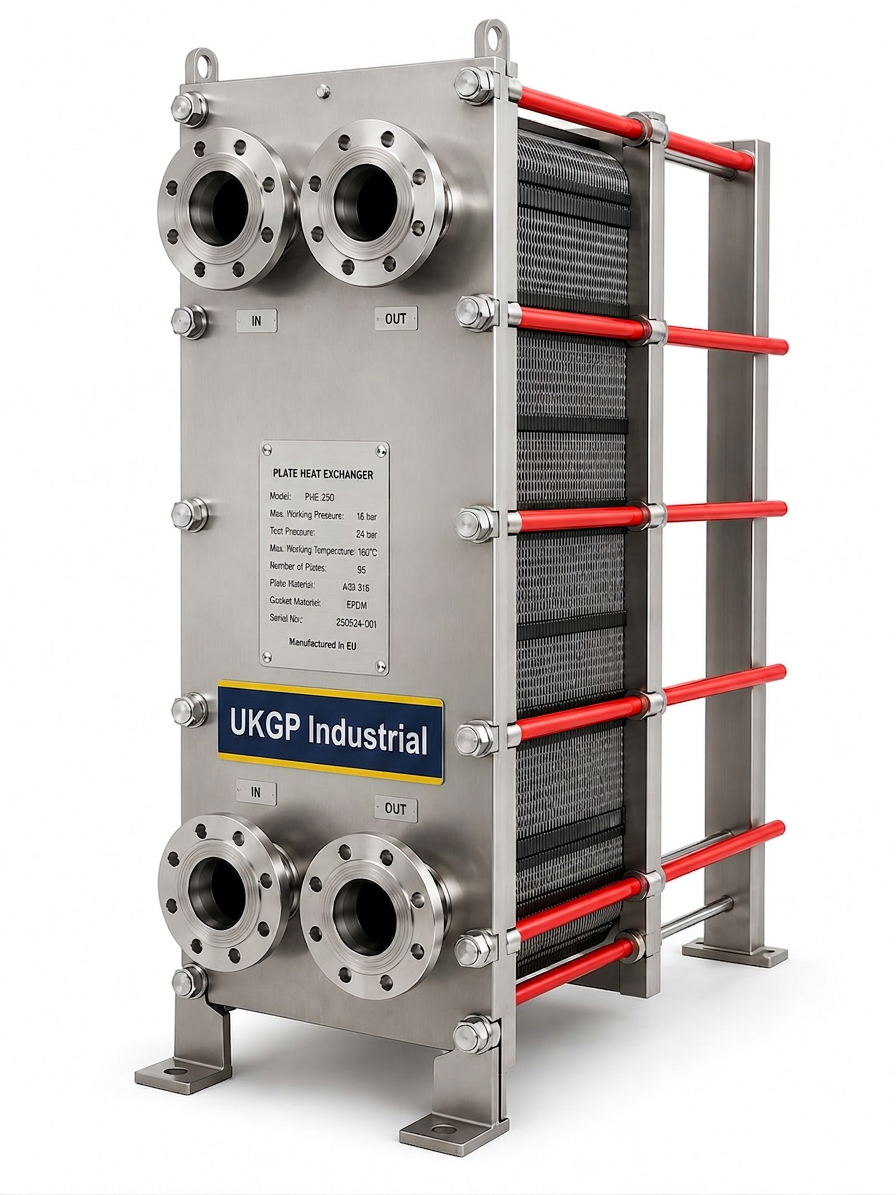
The primary beneficiary of clean cooling water is the heat exchanger. Many modern cooling systems use a secondary circuit separated by a UKGP plate heat exchanger to protect the chiller’s delicate condenser tubes from the open cooling tower water. These PHEs have narrow plate gaps (often less than 3mm) that are highly susceptible to clogging. Even a thin layer of silt on these plates can reduce the heat transfer coefficient by 20% or more, leading to a direct increase in the chiller’s lift and power draw.
By implementing side stream filtration, the frequency of PHE strip-downs and chemical cleanings is drastically reduced. In an industrial setting, this translates to higher plant availability and lower labour costs. Furthermore, the removal of abrasive grit prevents the erosion of pump impellers and mechanical seals, extending the mean time between failures (MTBF) for the recirculating pumps.
From a regulatory perspective, ACoP L8 and HSG274 underscore the importance of cleanliness in cooling systems for the control of Legionella. A system contaminated with organic sludge is significantly harder to disinfect. Filtration ensures that the water is 'clear,' allowing UV sterilisers or chemical oxidants to work effectively throughout the water column rather than being consumed by suspended organic matter.
- Reduced risk of Legionnaire's disease through removal of nutrient sources.
- Lower chemical consumption by improving biocide efficacy.
- Protection of expensive downstream assets like the UKGP plate heat exchanger.
- Compliance with BSRIA BG50 guidelines for water quality.
Operational Standards and Monitoring
The engineering success of a side stream filtration installation is measured by its ability to maintain water quality parameters over time. BSRIA BG50 provides specific guidance on the expected water quality for cooling systems. While many operators focus on pH and conductivity, TSS is often overlooked until a problem arises. Regular water sampling should include a gravimetric analysis of suspended solids to verify that the filter is performing to its specified micron rating.
Modern skids often feature integrated turbidity sensors and flow meters. These allow facilities managers to track the performance of the filtration system in real-time via the BMS (Building Management System). An upward trend in turbidity despite the filter running suggests either a failure in the filtration media, an incorrectly sized system, or an external event—such as nearby construction work—introducing an abnormal volume of dust into the cooling tower.
Commissioning is another critical phase. Following the principles of BSRIA BG29, the system should be thoroughly flushed and cleaned before the filtration equipment is brought online. This prevents the filter from being immediately overwhelmed by construction debris, which can 'blind' the media and require an immediate, and costly, media replacement.
- Total Suspended Solids (TSS) should ideally be maintained below 10 mg/L.
- Turbidity should be kept below 5 NTU for optimal performance.
- Regular monitoring of the filter differential pressure.
Maintenance and Lifecycle Considerations mould
No filtration system is 'fit and forget.' For depth filters using sand or glass media, the media itself will eventually experience 'mud-balling' or channelling if backwash cycles are not properly managed. Glass media is increasingly preferred in the UK market as it is less prone to bio-fouling and provides better filtration finer particles than traditional silica sand. Regular inspection of the media bed depth is necessary to ensure optimal filtration.
Automated systems reduce the manual intervention required, but mechanical components still require lifecycle management. The backwash valves, often pneumatic or electric actuators, operate in harsh environments and should be cycled and checked during quarterly maintenance visits. Failure of a backwash valve can lead to either a permanently bypassed filter (resulting in dirty water) or a continuous drain of system water, which can trigger an over-feeding of chemicals and water wastage.
Finally, the cost-benefit analysis of side stream filtration is overwhelmingly positive over a 5-to-10-year period. When the costs of energy savings, reduced chemical use, and the avoidance of manual heat exchanger cleaning are tallied, the payback period for a high-quality filtration skid is often less than 24 months. For facilities managers, this makes a compelling case for retrofitting filtration to existing cooling circuits.
- Media replacement (sand/glass) every 3-5 years.
- Checking and calibrating differential pressure sensors.
- Inspection of the backwash valve assembly and actuators.
Specifying UKGP Solutions for Cooling Circuits
When specifying equipment for a UK plant room, engineers must balance performance with spatial constraints. UKGP provides a range of solutions that address these needs directly. The UKGP side stream filtration skid is engineered to meet the rigorous demands of continuous industrial operation, featuring heavy-duty vessels and robust control logic that integrates seamlessly with existing plant infrastructure.
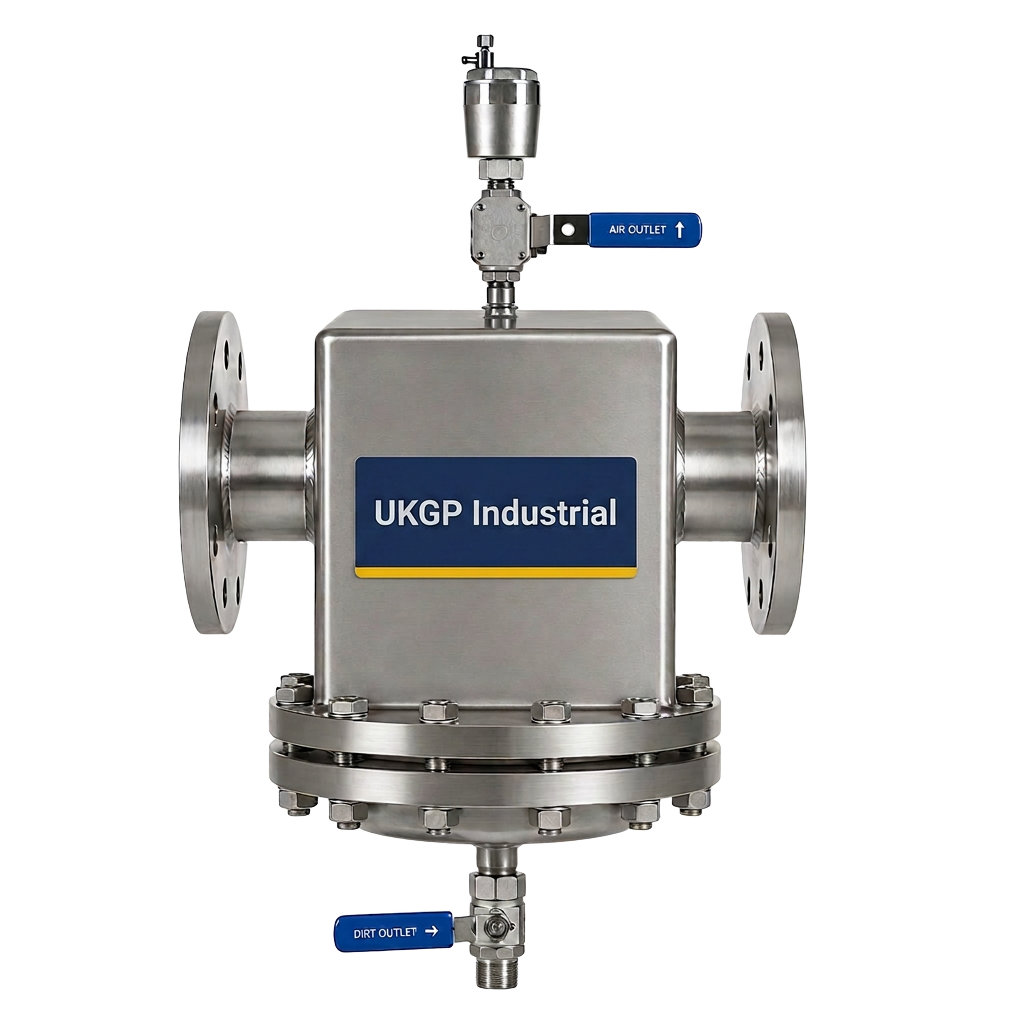
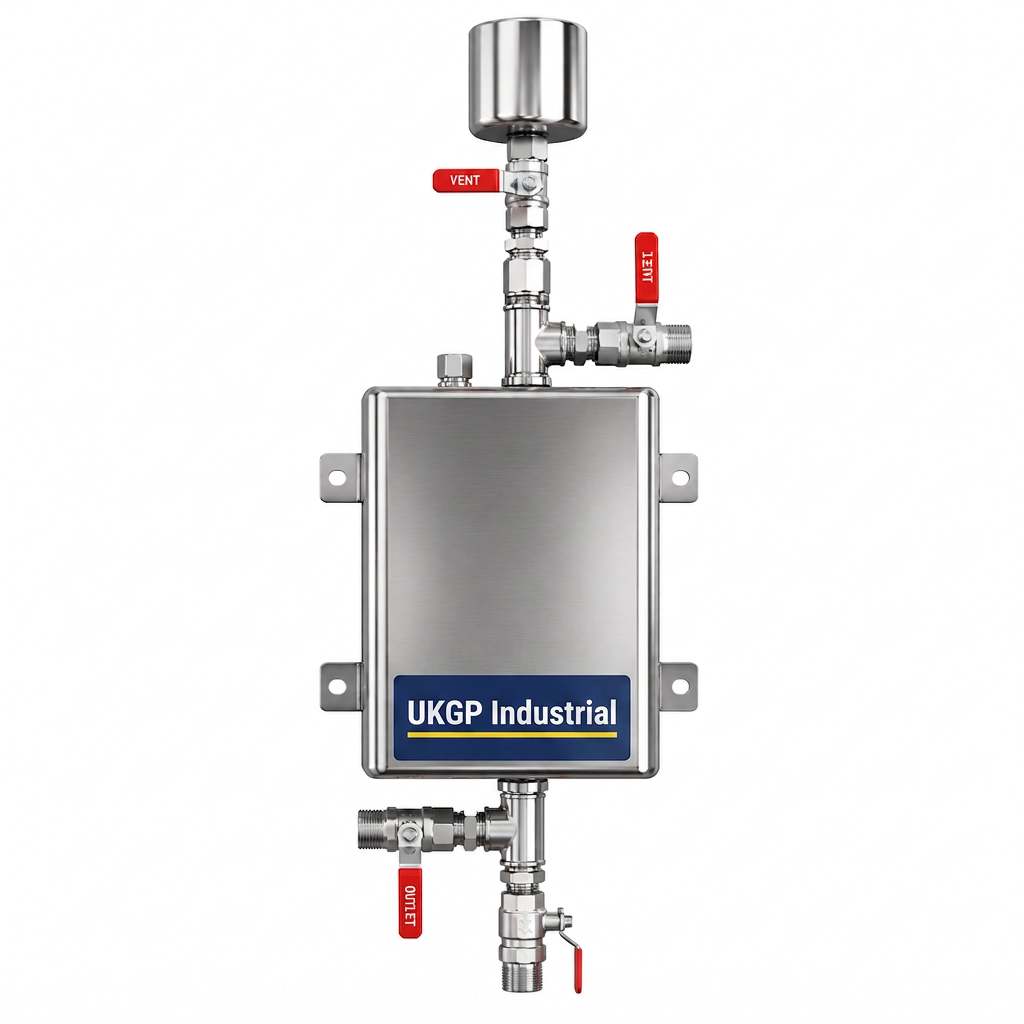
In addition to the primary filtration skid, total system protection is achieved by incorporating complementary components. While the side stream filter handles the bulk of the TSS, UKGP air & dirt separators can be utilised on the closed-loop side of the system to manage micro-bubbles and fine magnetite particles that may have bypassed the PHE or originated within the closed circuit. This multi-stage approach ensures that both the open and closed sides of the cooling plant are maintained to the highest standards.
Finally, the ease of maintenance must be considered during the specification stage. UKGP skids are designed with accessible valve sets and clear instrumentation, allowing for straightforward servicing by onsite FM teams. By choosing UK-sourced and supported equipment, contractors also benefit from local technical expertise and rapid spare parts availability, which is crucial for maintaining critical cooling loads in data centres and healthcare facilities.
- Integrated pump and control panel for ease of installation.
- Variable speed drives (VSD) on filtration pumps to optimise energy use.
- Compact footprints for retrofitting into constrained plant rooms.
Summary of Engineering Benefits
Side stream filtration is no longer considered an optional 'add-on' for modern cooling tower systems; it is a fundamental component of a high-performance plant. By addressing the root cause of fouling and biological growth—the accumulation of suspended solids—engineers can ensure that their systems operate at peak design efficiency throughout their operational life.
The transition from reactive cleaning to proactive filtration represents a shift toward more sustainable and cost-effective building services management. With the guidance of BSRIA standards and the implementation of robust hardware like the UKGP side stream filtration skid, the risks associated with open cooling systems can be effectively mitigated, providing peace of mind for both owners and operators.
Ultimately, the goal is a resilient cooling system that meets the twin challenges of energy efficiency and regulatory compliance. Effective filtration is the cornerstone of this objective, protecting the significant capital investment represented by modern chiller plant and ensuring the safety of the environment in which they operate.
- Total Suspended Solids (TSS) reduction by up to 90%.
- Energy savings of 5% to 15% on chiller operation.
- Significantly reduced risk of Legionella and biological fouling.
- Extended lifespan of pumps, valves, and heat exchangers.
Frequently asked questions
What percentage of the cooling tower flow should be diverted to side stream filtration?
- Typically, a side stream system should be sized to process 5-10% of the total circulating water volume per hour. This turnover rate is sufficient to manage suspended solids without excessive energy consumption or infrastructure costs.
Does side stream filtration replace the need for chemical water treatment?
- While chemical dosing manages biological growth and scale, it cannot physically remove suspended solids. Filtration complements chemicals by removing the organic 'shelter' where bacteria like Legionella thrive, often reducing chemical consumption by up to 20%.
Can side stream filtration improve the energy efficiency of the chiller plant?
- Yes. By maintaining lower Total Suspended Solids (TSS), the water's heat transfer properties are improved, and the workload on the cooling tower fans and pumps is stabilised. This often results in a measurable reduction in kWh consumption and lower carbon footprints for plant rooms.
Which BSRIA standards apply to side stream filtration?
- BSRIA BG50 (Water treatment for closed heating and cooling systems) and BG29 (Pre-commission cleaning) provide the framework for suspended solids management. While cooling towers are open systems, the principles of maintaining low turbidity to prevent fouling reflect the best practices established in these standards.