Defining the power flushing heating system in commercial HVAC
In a commercial or industrial context, a power flushing heating system involves using a high-flow pump to circulate water and chemicals at high velocity through the pipework to dislodge magnetite, lime scale, and debris. This process is typically a reactive measure, often undertaken when a system has been neglected or prior to the installation of new plant, such as a high-efficiency plate heat exchanger. For UK M&E contractors, the goal is to restore flow rates and heat transfer efficiency that have been compromised by years of internal corrosion. However, the mechanical stress of a high-pressure flush can sometimes pose risks to aged gaskets and thin-walled emitters in older London-based commercial buildings where the infrastructure may be fragile.
The technical efficacy of a power flushing heating system depends heavily on the chemical cleaning agents used, often requiring a neutralizer to ensure the pH balance is restored post-flush. BSRIA BG29 (Pre-commission Cleaning of Pipework Systems) provides the framework for new builds, but for existing systems, BSRIA BG50 is the definitive guide for water treatment and maintenance. A one-off flush is frequently viewed as a 'reset button' for a fouled system, yet it provides no ongoing protection against the inevitable return of magnetite as soon as fresh oxygen-saturated water enters the loop through tiny leaks or expansion vessels. This makes it a temporary fix rather than a comprehensive water quality management strategy for modern engineering standards.
From a procurement perspective, the cost of a full commercial power flushing heating system can be significant, often requiring the building to be out of operation or for the work to be carried out during unsociable hours. When specifying this work, engineers must ensure that the contractor provides a full report of the water quality both before and after the procedure, including iron levels and turbidity. If you are managing a plant room where the performance of the boilers is dropping due to sludge, a deep clean is necessary, but it should always be followed by the installation of permanent protection to prevent the need for repeating such a costly and disruptive exercise in three years' time.
- Restores design flow rates in heavily fouled pipework
- Essential prior to installing new high-efficiency boilers
- Clears blockages that standard circulating pumps cannot move
- Requires careful chemical management and neutralisation
The limitations of reactive power flushing
While a power flushing heating system is excellent at clearing heavy deposits, it is fundamentally a reactive maintenance task. In the UK, many Facility Managers find themselves trapped in a cycle of flushing every few years because the underlying cause of the magnetite—corrosion—is not being addressed. Once the flush is complete, the lack of continuous filtration means that any residual particles or new corrosion products immediately begin to settle in low-velocity areas. This is particularly problematic in systems with variable speed pumps where flow rates can drop low enough for debris to accumulate in the base of radiators or the heat zones furthest from the pump house, leading to cold spots and complaints.
Engineers often overlook the fact that a power flushing heating system can actually exacerbate some issues if not managed correctly. The high-velocity water can dislodge large chunks of scale that may then lodge in control valves or delicate sensors elsewhere in the circuit. Furthermore, the volume of water used in a commercial flush is substantial, often necessitating specific waste-water disposal permits if high concentrations of chemicals are involved. This logistical burden, combined with the risk of system leaks under high pressure, makes the specification of a flush a high-stakes decision for consultant engineers who are responsible for the operational uptime of a client's facility or hospital plant room.
The move toward more sustainable building management encourages moving away from these water-heavy, chemically intensive 'emergency' flushes. Instead of relying solely on a power flushing heating system, the industry is shifting towards the BSRIA BG50 philosophy of 'continuous improvement' of water quality. By focusing on constant debris removal and atmospheric protection, the need for high-pressure interventions is drastically reduced. This not only protects the physical assets but also ensures the energy efficiency of the building is maintained at its peak, which is critical for meeting modern ESG targets and reducing total cost of ownership for commercial landlords and stakeholders.
- High water consumption and chemical disposal issues
- Risk of damaging older pipework and valve seals
- Does not provide a long-term solution to ongoing corrosion
- System downtime is almost always required for a full flush
The superior alternative: Side stream filtration skids
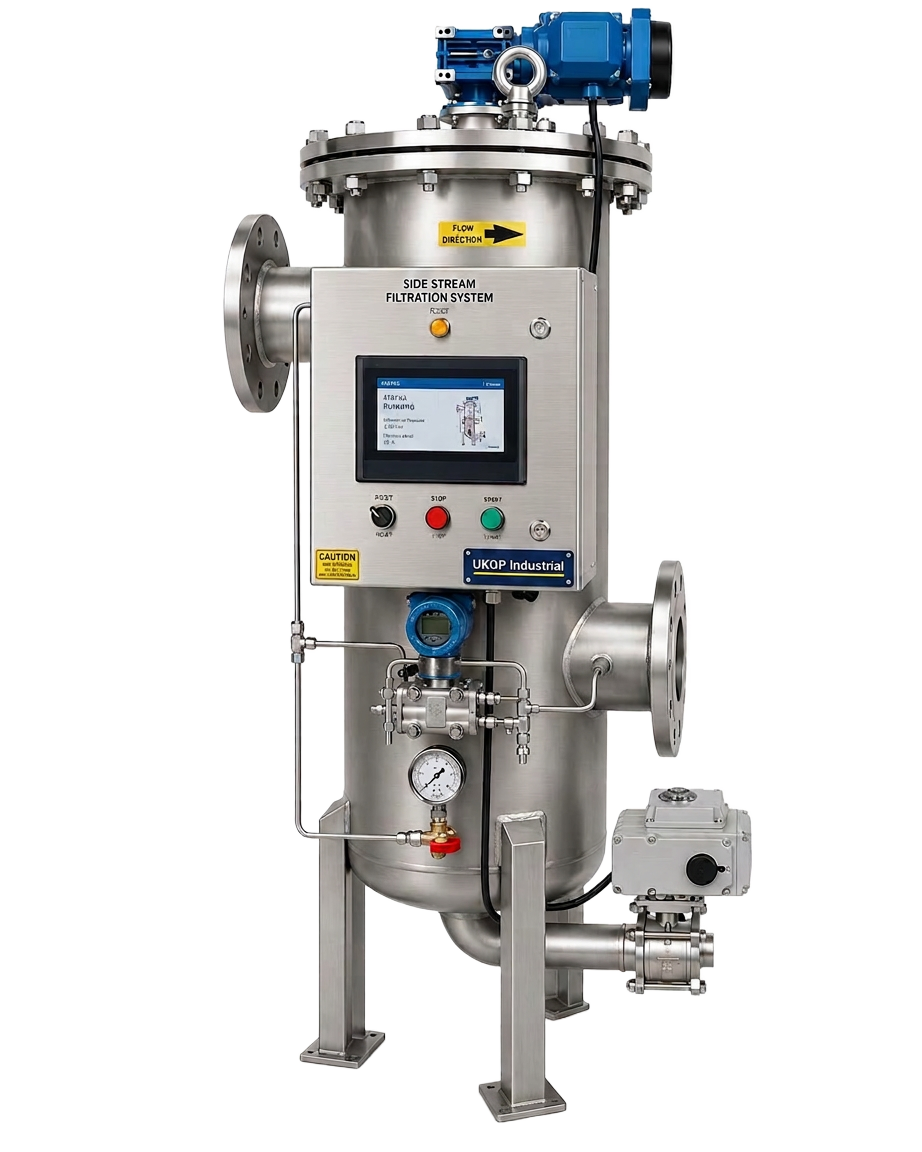
For most UK commercial applications, the most effective alternative to a recurring power flushing heating system is the installation of a dedicated side stream filtration skid. Unlike a one-off flush, side stream filtration operates continuously, diverting approximately 5-15% of the total flow through a high-intensity magnetic filter and a fine particle cartridge. This ensures that even the smallest sub-micron magnetite particles are captured before they can settle or cause abrasion to pump seals. UKGP Industrial specializes in manufacturing these systems, which provide far more consistent results than a manual flush. Our units are made to order with a 6-8 week lead time and are designed for UK plant room specifications.
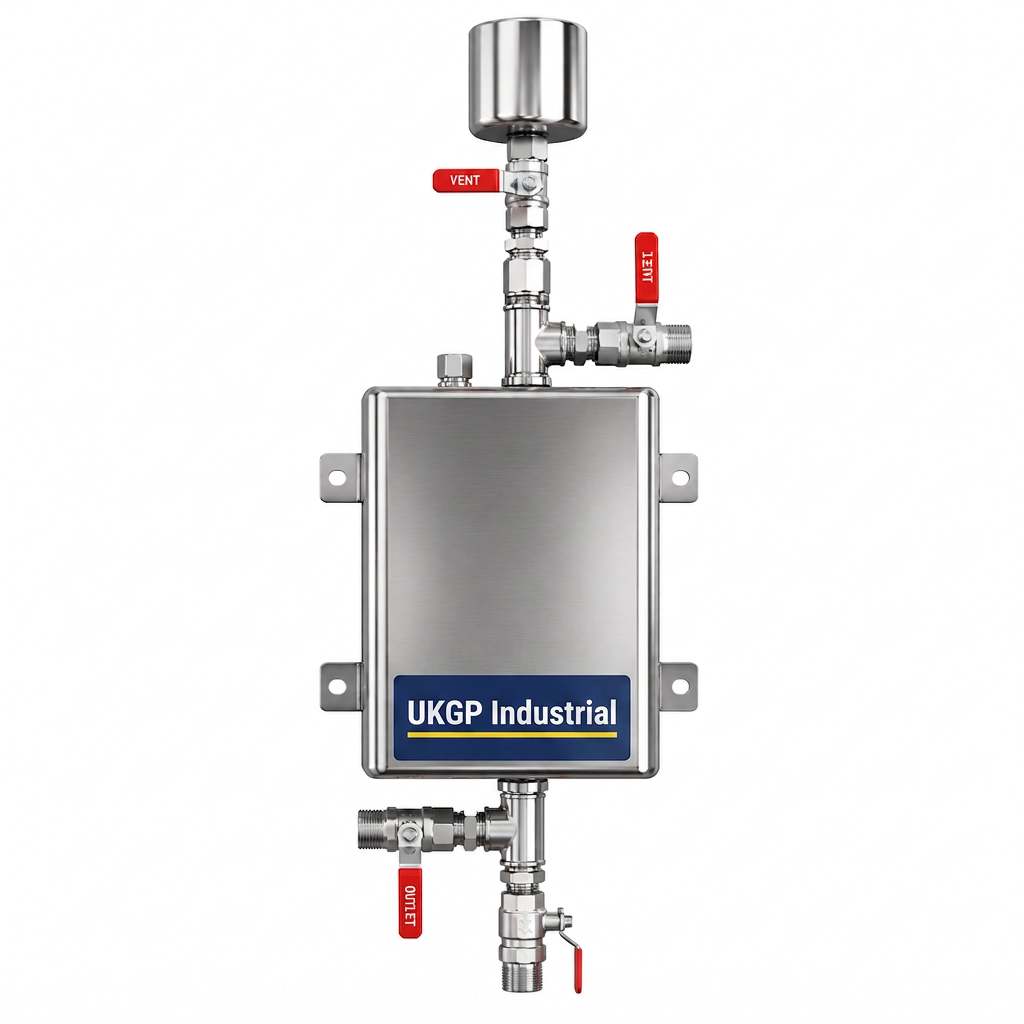
Pricing for a professional-grade side stream filtration skid starts from £6,800+VAT for a DN50 unit, ranging up to DN100 for larger commercial circuits. When compared to the repeatable cost of a power flushing heating system over a ten-year period, the ROI on a side stream unit is indisputable. These skids allow for the 'cleaning' of the system while it is fully operational, meaning there is zero downtime for the building's occupants. Furthermore, the inclusion of a dosing pot on the skid allows for easy maintenance of corrosion inhibitors, ensuring the system water stays within the parameters specified by BS 8552 and BSRIA BG50 without requiring a specialist contractor to visit the site frequently.
UKGP skids come with a 2-year warranty and are built for durability, featuring easy-to-clean magnetic rods and transparent housings for visual inspections. By specifying a side stream unit instead of just a power flushing heating system, you are providing the client with a proactive asset that guards against the number one cause of boiler failure: contaminated water. Our skids are often specified by consultants during plant room refurbishments to protect new plate heat exchangers and high-efficiency boilers from the debris that inevitably resides in older distribution pipework. For a tailored quote or to discuss your specific flow rate requirements, the UKGP technical team is available to assist with bespoke skid designs.
- Continuous 24/7 cleaning without system downtime
- Removes particles down to sub-micron sizes via magnetism
- Integrated dosing pot for easy chemical maintenance
- Typical UKGP pricing from £6,800+VAT with 2-year warranty
Protecting secondary circuits with plate heat exchangers
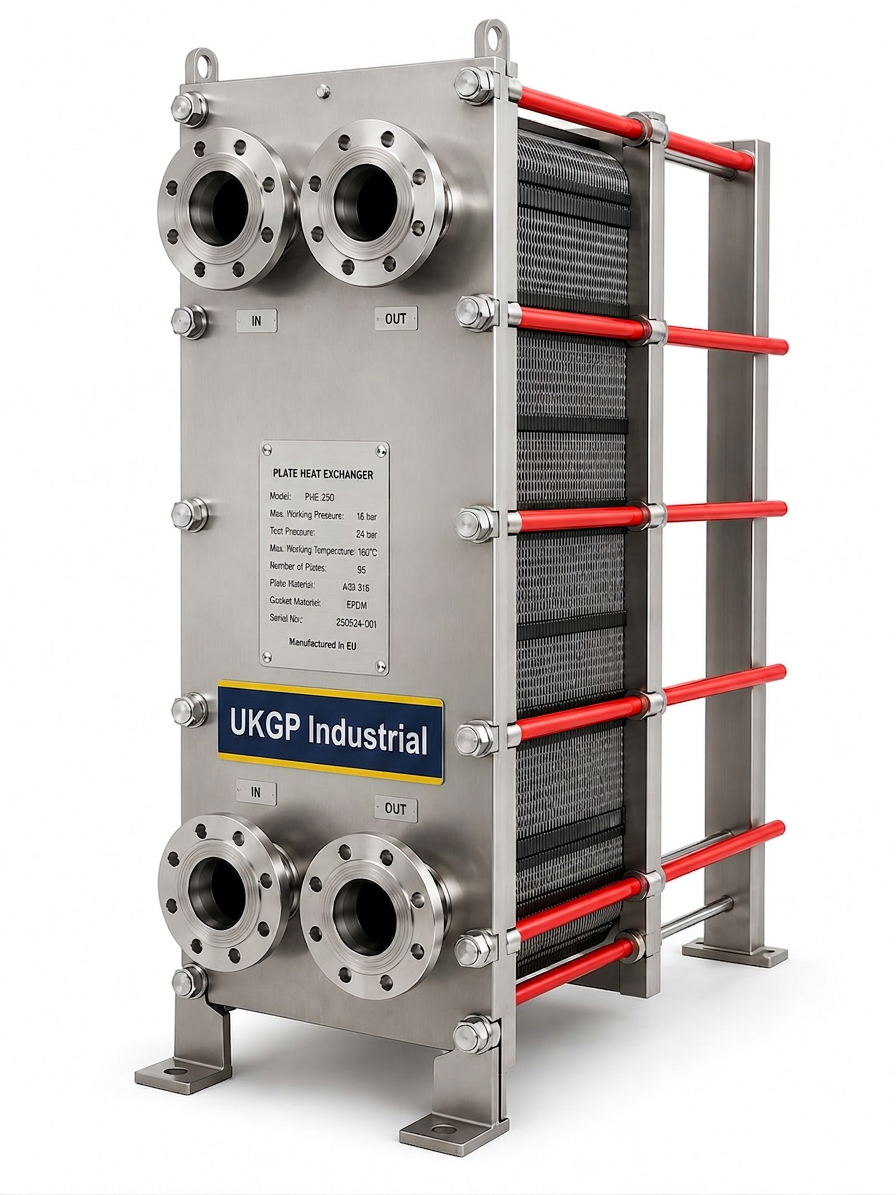
In addition to considering a power flushing heating system, engineers must evaluate how they isolate different parts of a system to prevent cross-contamination. Plate heat exchangers (PHEs) are the industry standard for hydraulic separation, allowing a clean primary boiler circuit to exchange heat with a potentially dirtier secondary heating loop. However, PHEs themselves are highly susceptible to fouling if the water quality is poor. The narrow channels between plates can quickly become blocked by the very sludge that a power flushing heating system is intended to remove. Using a PHE in conjunction with filtration is the only way to ensure 100% heat transfer efficiency is maintained throughout the winter season.
UKGP Industrial provides a wide range of plate heat exchangers designed for high BTU transfer in compact footprints. When refurbishing a plant room, installing a new PHE often necessitates a thorough cleaning of the existing pipework. While you might use a power flushing heating system to clear the radiators, the PHE acts as the primary barrier. If the secondary side is not filtered, the PHE will eventually require strip-down cleaning, which is labor-intensive and requires new gaskets. Integrating a side stream filter before the PHE is the 'gold standard' specification for modern M&E contractors looking to reduce their liability and improve system performance for the end-user.
By separating circuits with a PHE, you also limit the volume of water that needs to be treated or flushed. This makes water chemistry management much simpler and more cost-effective. Whether you are dealing with a district heating scheme or a localized office block, the combination of hydraulic separation and continuous filtration far outweighs the benefits of a reactive power flushing heating system. Contact our Surrey office to discuss how our PHEs can be integrated into your next project alongside our dosing pots and separators for a complete plant room solution that meets every BSRIA requirement and BS standard.
- Hydraulic separation prevents sludge migration
- High-efficiency heat transfer in a compact design
- Reduces the volume of water requiring high-level treatment
- Pairs perfectly with side stream filtration for maximum longevity
When to recommend a power flushing heating system
There are specific scenarios where a power flushing heating system is still the correct technical recommendation. If a system is so heavily fouled that certain zones have zero flow, a side stream filter will not help because the water isn't reaching the filter. In these 'dead-leg' scenarios, the aggressive pressure from an external pump is required to break through the blockages. A consultant should specify a flush when taking over a neglected asset or when converting a low-pressure open-vented system to a modern sealed system. This ensures the baseline water quality is acceptable before the side stream filtration takes over the long-term maintenance duty.
It is also worth noting that a power flushing heating system is highly effective at removing loose 'construction debris' in new builds that may have been missed during a standard flush. However, in the context of BSRIA BG29, the emphasis is on pre-commission cleaning rather than power flushing. For existing buildings, if a chemical analysis shows iron levels exceeding 15mg/l, a heavy-duty flush followed by a secondary clean is often the only way to quickly stabilize the environment. Once the iron levels are brought down to manageable levels, the installation of a UKGP side stream skid (priced from £6,800+VAT) will prevent the levels from ever spiking again, keeping the system healthy.
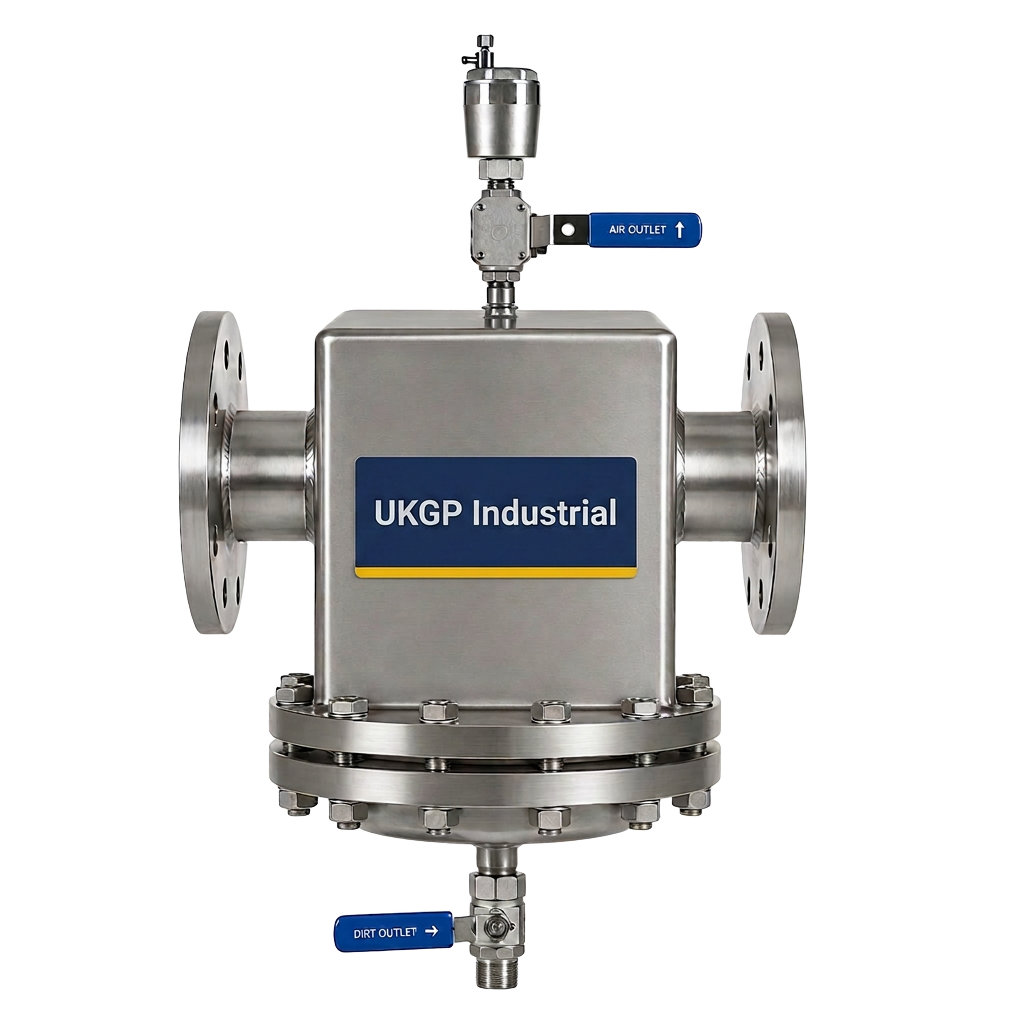
Ultimately, the best approach is often a hybrid one. Start with a power flushing heating system to clear the historical buildup, and then immediately install a permanent side stream filter and an air and dirt separator to maintain that cleanliness. This 'clean and maintain' strategy is what UKGP recommends to all our M&E partners. It provides the immediate results of a flush with the long-term security of constant filtration. Our made-to-order skids are available with lead times of 6-8 weeks, making them a viable addition even for fast-track refurbishment projects across the UK. Specifying both ensures you are providing a robust, professional-grade solution to the client.
- Use when flow is completely blocked in certain zones
- Necessary when migrating from open-vented to sealed systems
- Best used as a 'reset' before installing continuous filtration
- Must be followed by chemical inhibition to be effective
Technical considerations for filtration and flow
When moving away from a reactive power flushing heating system toward continuous filtration, understanding flow dynamics is essential. A side stream filter doesn't need to treat the full flow of the system at once; instead, it cleans the total volume several times over a 24-hour period. This is why it is called 'side stream'—it is installed on a bypass loop. This allows for the filter to be serviced without ever shutting down the main pumps. For a DN50 to DN100 system, our skids are sized to ensure the optimal capture rate of magnetite, which is often as small as 0.5 microns and easily missed by bypass filters with lower magnetic flux.
Crucially, the side stream approach avoids the high-pressure risks associated with a power flushing heating system. There is no surge in pressure that could blow out a weak seal or an old valve. Instead, the system operates at its design pressure while the water quality progressively improves. Within the first two weeks of installing a UKGP skid, we typically see a dramatic change in water clarity. This visual evidence is a powerful tool for FMs to show their stakeholders that the investment in permanent plant room equipment was justified compared to the ephemeral benefits of a one-time flush. Our skids are manufactured in the UK, ensuring high build quality and support.
To maximize the efficiency of your system, we also recommend the use of air and dirt separators alongside your filtration strategy. While a power flushing heating system removes solids, micro-bubbles can still lead to internal 'pitting' corrosion which creates more sludge. A comprehensive approach involves removing the air, the dirt, and the microscopic magnetite simultaneously. UKGP Industrial offers a complete suite of products to handle these requirements, from dosing pots for chemical injection to bespoke bellows for expansion control. Investing in high-quality hardware now prevents the high-cost emergency repairs later, keeping British commercial heating systems running at peak operational efficiency throughout their design life.
- Bypass installation allows for maintenance without downtime
- Captures microscopic magnetite that flushes often miss
- Maintains design pressure without risking mechanical failure
- UKGP technical support for correct skid sizing (DN50-DN100)
Frequently asked questions
How often should a power flushing heating system be specified?
- In a well-maintained commercial system with side stream filtration and correct chemical dosing according to BSRIA BG50, a power flush should rarely be necessary. It is typically specified once every 5-10 years if water quality has been allowed to degrade substantially.
What is the cost of a side stream filtration skid versus power flushing?
- A one-off commercial power flush can cost several thousand pounds depending on system size, with no ongoing benefit. A UKGP side stream filtration skid starts from £6,800+VAT, providing 24/7 protection and reducing long-term maintenance costs.
Can side stream filtration replace a power flush?
- Yes, in many cases. If the system still has flow, a side stream filter can clear the water over several days without the risks or downtime associated with a power flushing heating system. However, for totally blocked pipes, a flush is still required first.
Is downtime required to install a UKGP filtration skid?
- No, because our skids are installed on a side stream (bypass) loop. Once the pipework connections are made, the system can be commissioned and serviced while the building's heating or cooling remains fully operational.
What standards should I reference for commercial water quality?
- You should refer to BSRIA BG29 for new build pre-commissioning and BSRIA BG50 for the ongoing treatment and maintenance of closed-loop water systems. BS 8552 is also relevant for the sampling and monitoring of these systems.