The Engineering Case for a Power Flush For Central Heating
In the UK commercial sector, a power flush for central heating acts as the primary corrective measure for systems suffering from poor circulation, cold spots, or excessive boiler noise. Over time, chemical reactions within untreated or poorly maintained steel pipework lead to the formation of black iron oxide, commonly known as magnetite. This sludge settles in areas of low flow, such as the bottom of heat exchangers and radiators, significantly increasing the thermal resistance of the system. For facilities managers and M&E contractors, the immediate benefit of a high-velocity flush is the restoration of design flow rates and the reduction in fuel consumption by ensuring heat can be transferred efficiently from the primary source to the emitters without the insulating barrier caused by internal fouling.
Undertaking a power flush for central heating is not merely about comfort; it is a critical protective measure for high-value plant equipment. Modern commercial boilers, often featuring narrow waterways and sophisticated plate heat exchangers, are particularly susceptible to damage from suspended solids. When these particles are allowed to circulate freely, they cause abrasive wear on pump impellers and seals, and can eventually lead to the premature failure of integrated control valves. By removing these contaminants under controlled, high-flow conditions, engineers can reset the system to its baseline cleanliness, preventing the cascading financial losses associated with emergency repairs and unplanned downtime in critical building services environments such as hospitals or data centres.
From a commercial perspective, the justification for a power flush for central heating extends to the longevity of the entire HVAC infrastructure. When a system is heavily fouled, the circulating pumps must work harder to overcome increased pressure drops, leading to higher electricity consumption and shortened component lifespans. Furthermore, the presence of oxygen-rich sludge promotes under-deposit corrosion, which can cause pinhole leaks in sections of pipework that are costly to access and repair. Implementing a thorough cleaning regime ensures that the initial capital investment in the plant room is protected, providing a stable foundation for the application of chemical inhibitors and the integration of advanced side stream filtration technologies that maintain water quality over the long term.
- Restoration of design flow rates and thermal efficiency
- Protection of sensitive commercial boiler components and heat exchangers
- Reduction in operational noise and pump strain
- Mitigation of under-deposit corrosion and localized pitting
- Base compliance with BSRIA BG29 pre-commissioning cleaning requirements
Compliance with BSRIA BG50 and Water Quality Standards
Following a robust power flush for central heating, the focus must shift towards maintaining the system according to BSRIA BG50 guidelines for water treatment in closed heating and cooling systems. BSRIA guidelines emphasise that cleanliness is not a one-time event but a continuous requirement to prevent the re-accumulation of solids. Monitoring parameters like iron levels, conductivity, and pH is essential for ensuring the system remains within safe operating limits. If water quality measurements deviate from the recommended benchmarks set in BS 8552, it indicates that the initial flush needs to be supported by ongoing mechanical filtration to prevent the return of the detrimental effects of sludge and scale that typically plague mature UK plant rooms.
M&E consultants often specify a power flush for central heating as part of a wider remedial project, particularly when upgrading to high-efficiency condensing boilers or heat pumps. Use of generic cleaning chemicals during the flush can be effective if neutralised correctly, but the process must be documented to ensure compliance with insurance requirements and manufacturer warranties. Failure to provide evidence of adequate system cleaning and ongoing maintenance can lead to the voiding of warranties on major plant items. Therefore, the integration of a permanent filtration solution after the initial flush is highly recommended to provide a 'belt and braces' approach to system health, ensuring that any residual debris missed during the high-velocity flush is captured before it can settle.
Legal and safety considerations also play a role in how a power flush for central heating is executed within the UK. Works must be carried out in accordance with Water Regulations to prevent any backflow or contamination of the mains supply. Professional engineers will typically use a dedicated pumping station to circulate cleaning agents at high velocity but low pressure, ensuring that older pipework is not stressed by excess weight or pressure surges. By adhering to BSRIA BG29 for new installations or BG50 for existing ones, stakeholders can be confident that their heating infrastructure meets the highest industry standards for efficiency and safety, while also laying the groundwork for sustainable long-term operation through the use of high-performance filtration skids.
- Alignment with BSRIA BG50 for ongoing water quality management
- Adherence to BS 8552 for sampling and monitoring protocols
- Ensuring compliance with major UK commercial boiler warranty terms
- Preventing the re-accumulation of suspended solids and magnetite
- Establishing a documented audit trail for system maintenance and cleaning
Integrating Side Stream Filtration for Permanent Protection
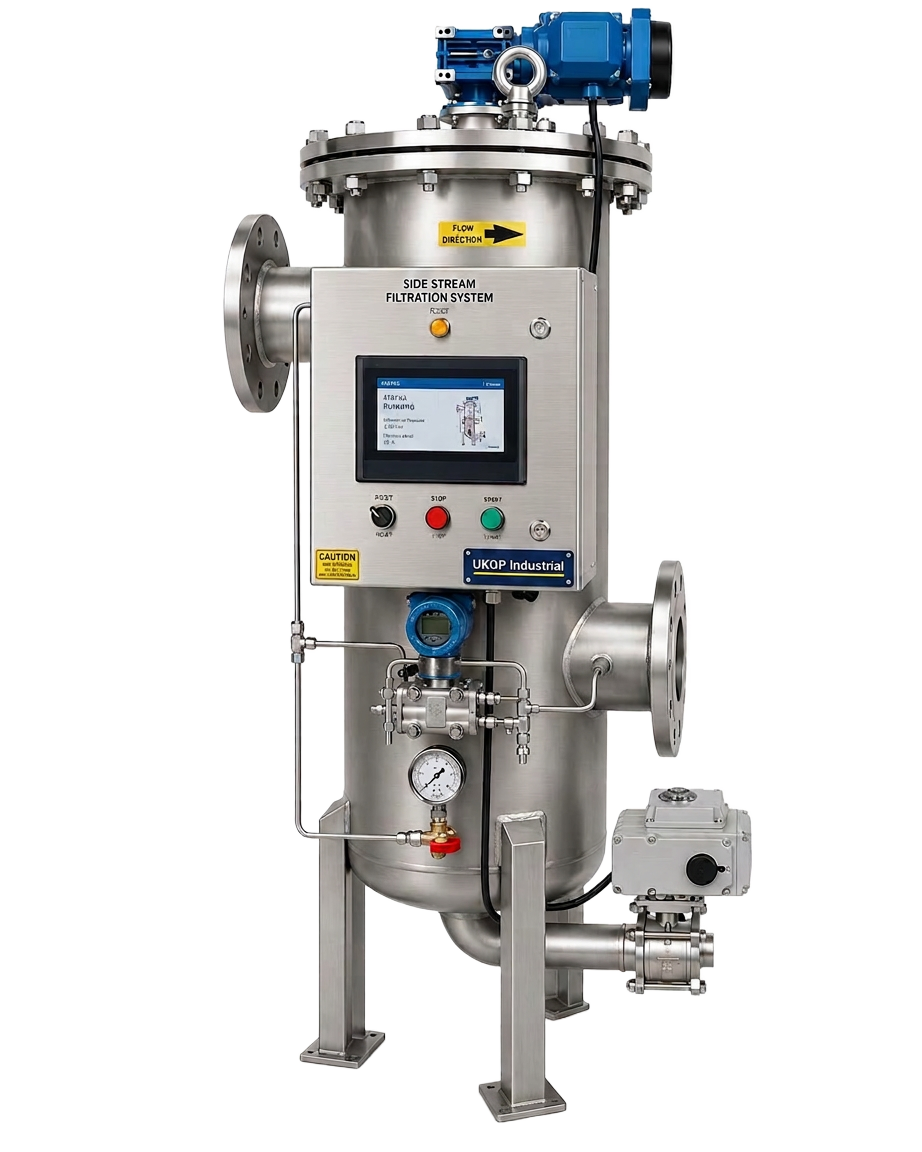
While a power flush for central heating is an effective 'reset' button, it is a reactive process that does not prevent future contamination. To achieve permanent water clarity, a UKGP side stream filtration skid is the industry-standard solution. Designed for commercial plant rooms, these skids are engineered to process 5-50 m³/h, providing continuous cleaning of the system water without disrupting the primary heating circuit. By diverting a portion of the flow through a high-strength magnetic separator and a 25 µm bag or cartridge filter, these units capture even the finest magnetite particles that a standard flush might miss. This dual-action approach ensures that the clarity achieved during the initial cleaning is maintained throughout the life of the system.
The UKGP side stream filtration skid is uniquely positioned to support BSRIA BG29 and BG50 compliance. Built with robust isolation valves and mounted on a durable skid for easy installation into existing plant rooms, the unit offers a practical way for facilities managers to manage water quality without the need for frequent, costly system flushes. Each unit comes with a 2-year warranty, reflecting the build quality and reliability required for demanding industrial applications. By installing a skid rated for the system's total volume, engineers can ensure that the entire water contents are circulated through the fine filtration media multiple times a day, effectively polishing the water and preventing the buildup of sludge that leads to the need for another power flush for central heating.
For procurement leads and contractors, a UKGP side stream filtration skid represents a significant reduction in life-cycle costs. Rather than scheduling a repeat power flush for central heating every few years, which involves labour-intensive chemical cleaning and significant water waste, the skid provides a low-maintenance alternative. The 25 µm bag or cartridge filters are easily replaceable, and the magnetic assembly can be cleaned in minutes during routine site visits. This professional approach to water management ensures that the heating system operates at peak efficiency year-round, reducing carbon emissions and ensuring the comfort of building occupants while strictly following the best practices defined by CIBSE and BSRIA.
- High-performance magnetic separation combined with 25 µm bag/cartridge filtration
- Flow rates of 5-50 m³/h suitable for large-scale commercial circuits
- BSRIA BG29 and BG50 aligned for industry-standard compliance
- Reduced need for repeat chemical flushes and intensive maintenance
- Skid-mounted design with isolation valves and inclusive 2-year warranty
Protecting Secondary Heat Transfer with Plate Heat Exchangers
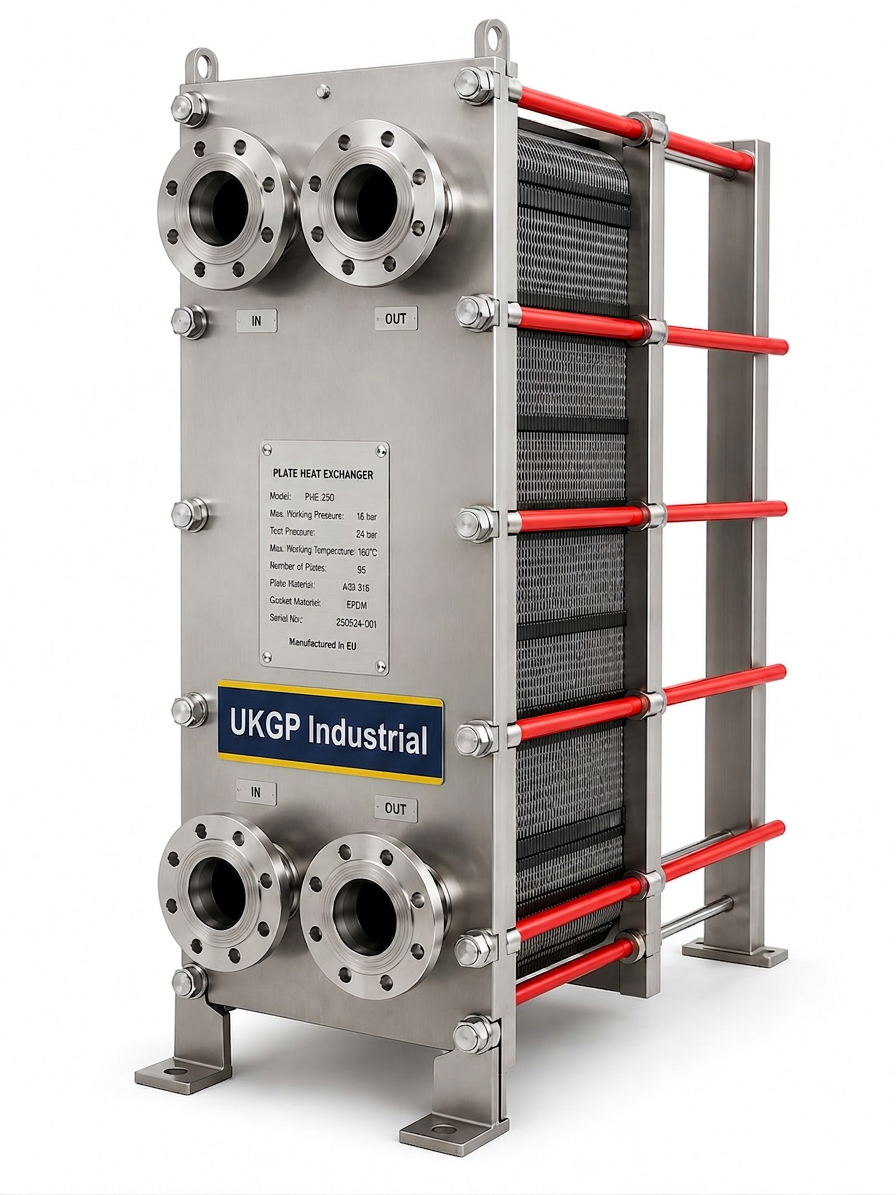
Once a power flush for central heating has cleared the primary circuit of debris, it is vital to protect the points where heat is transferred to secondary loops or domestic hot water. Plate heat exchangers are particularly vulnerable to fouling if any residual magnetite remains in the system. Small particles can lodge between the stainless steel plates, creating turbulent flow and reducing the surface area available for thermal exchange. By ensuring the primary water is clean and filtered, the efficiency of these exchangers is preserved, leading to lower return temperatures and better boiler condensation rates. This synergy between filtration and heat transfer is essential for modern, low-carbon building operation.
Using a high-quality UKGP plate heat exchanger alongside a filtration skid creates a resilient thermal system. If the water quality is neglected after a power flush for central heating, the narrow channels within the heat exchanger can quickly become blocked, leading to a significant drop in hot water output or heating capacity. Our exchangers are designed to handle high pressures and temperatures in commercial environments, but their performance is intrinsically linked to the cleanliness of the circulating fluid. Maintaining low turbidity levels through constant side stream filtration ensures that the plates remain free from deposits, extending the interval between required service or chemical cleaning of the heat transfer station.
In many plant room refurbishments, the installation of a new plate heat exchanger follows a thorough power flush for central heating to ensure the new equipment starts in a clean environment. We provide range of solutions that cater to various thermal loads, ensuring that whether you are managing a residential district heating scheme or an office block, the heat transfer efficiency is maximised. Combining our filtration skids with our plate heat exchangers allows engineers to build a robust system that meets the technical requirements of CIBSE and BSRIA, while providing the end-user with a reliable, energy-efficient heating solution that stands the test of time.
- Prevents thermal degradation in high-efficiency plate heat exchangers
- Maintains low return temperatures for optimal condensing performance
- Reduces the risk of plate blockage and mechanical failure
- Simplified maintenance schedules for secondary heat transfer stations
- Enhances the overall energy efficiency of the HVAC plant room
Best Practices for Maintaining Air and Dirt Separation
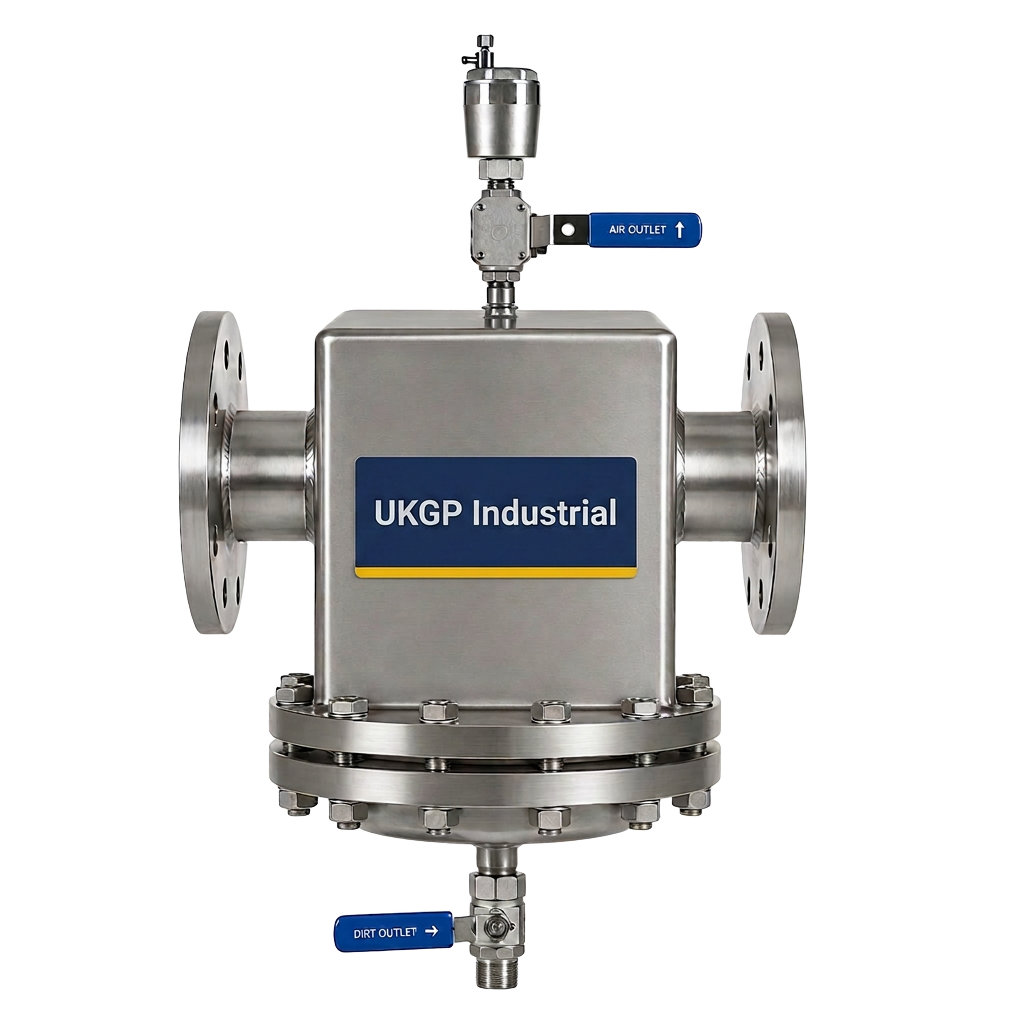
In addition to a power flush for central heating, effective air and dirt separation is a non-negotiable component of a modern plant room. Micro-bubbles and suspended solids act as significant barriers to heat transfer and can contribute to the very corrosion that requires a power flush in the first place. By installing high-performance separators at the point of lowest solubility—typically the warmest part of the system—engineers can remove entrained air and larger debris particles before they can settle in the pipework. This preventative measure works in tandem with side stream filtration to provide a comprehensive management strategy for fluid quality in large-scale commercial developments.
When a system has been subjected to a power flush for central heating, there is often a period of 'outgassing' where dissolved gases are released as the new water is heated. Without adequate air separation, this can lead to air locks, pump caviarion, and accelerated internal corrosion. By combining air separators with a side stream skid, you ensure that both the gaseous and solid contaminants are actively removed. This reduces the frequency of manual venting and ensures that the inhibitors injected into the system can provide a uniform protective layer on all internal metal surfaces, as opposed to being blocked by air pockets or sludge deposits.
Ultimately, the goal of any plant room engineer is to avoid the need for emergency shutdowns. By prioritising a power flush for central heating during the commissioning or remedial phase and backing it up with permanent filtration and separation equipment, you build a self-sustaining system. This approach is favoured by UK building services consultants who require proven, durable hardware that meets BS EN 12828 standards. UKGP offers a suite of products designed to work together, ensuring that your HVAC system remains clean, efficient, and compliant with all relevant BSRIA and CIBSE recommendations, providing peace of mind for both contractors and end-users.
- Removal of micro-bubbles to prevent corrosion and noise
- Capture of heavy debris that settles in low-velocity zones
- Reduction in the risk of pump cavitation and premature wear
- Enhanced chemical distribution throughout the entire circuit
- Supports long-term water quality stabilty after a deep system flush
Chemical Dosing and Water Quality Monitoring Post-Flush
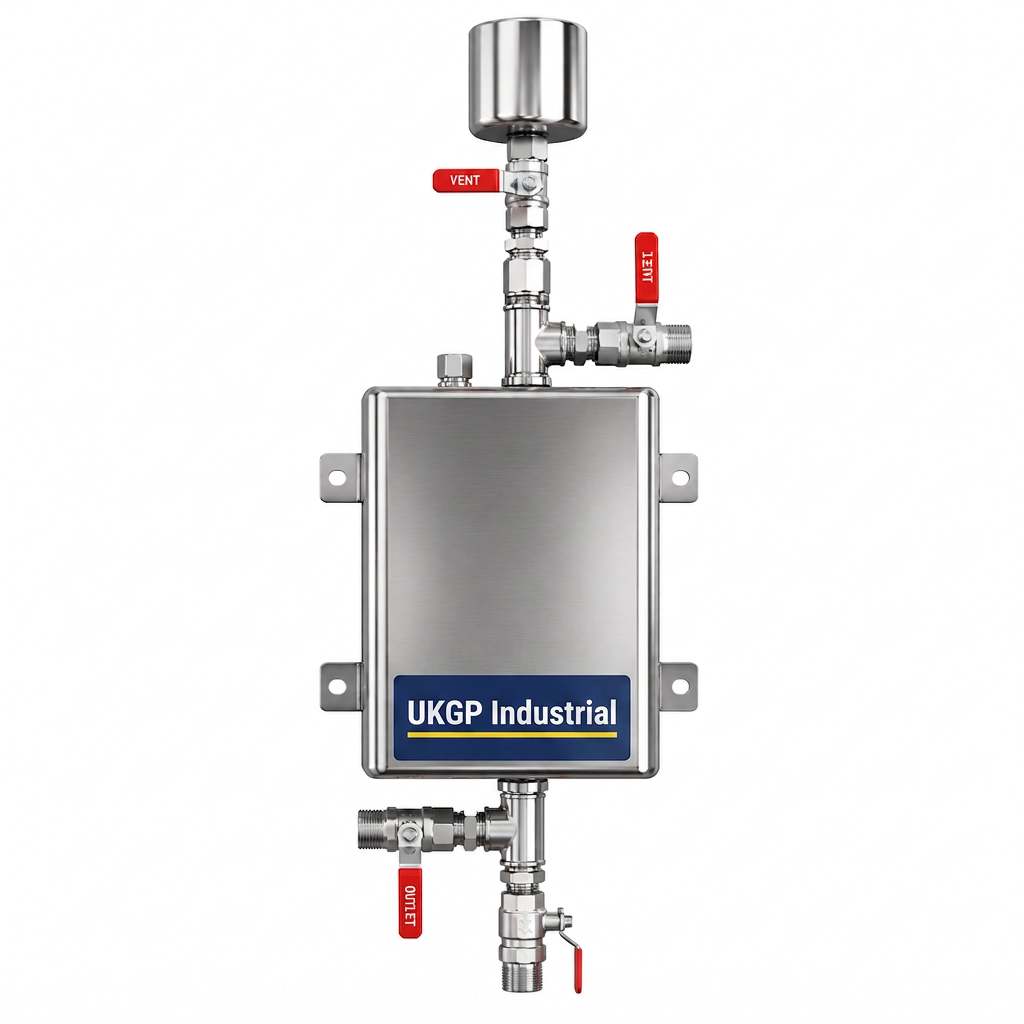
A power flush for central heating is incomplete without the subsequent application of corrosion and scale inhibitors. These chemicals provide a thin protective film over the metal surfaces within the pipework, preventing the oxidation process that creates magnetite. In a commercial environment, a dedicated dosing pot is necessary to introduce these chemicals safely into the system without introducing fresh oxygen. Regular water testing, as advised by BSRIA BG50, ensures that inhibitor levels remain at the correct concentration to prevent the recurrence of sludge. This chemical treatment, when combined with mechanical filtration, forms the backbone of a professional maintenance strategy for UK plant rooms.
Monitoring pH levels is another vital aspect of post-flush maintenance. Highly acidic or alkaline water can be aggressive toward certain metals, particularly aluminium and copper found in some modern heat exchangers. Using a pH sensor and transmitter allows for real-time monitoring of the system health, alerting the FM team if a chemical imbalance occurs. This proactive approach prevents the slow degradation that eventually necessitates a disruptive power flush for central heating. By managing the thermodynamics and the chemistry of the system water simultaneously, engineers can ensure building comfort while keeping operational costs within strict budgetary constraints.
Integrating these fluid management components—filters, dosing pots, and sensors—creates a professional plant room environment that far exceeds the basic requirements for a power flush for central heating. For M&E contractors, providing a complete water treatment package including a UKGP side stream filtration skid demonstrates a commitment to quality and long-term performance. This not only fulfills the technical obligations under BSRIA standards but also provides a more marketable and reliable service for the client. Investing in the right hardware from the outset is the most effective way to ensure the heating system delivers its intended efficiency throughout its operational life.
- Controlled chemical introduction via dedicated dosing pots
- Real-time pH and conductivity monitoring for rapid response
- Maintenance of inhibitor concentrations to prevent magnetite formation
- Early detection of corrosion trends through regular water sampling
- Comprehensive approach to HVAC fluid health and system longevity
Frequently asked questions
How often should a commercial power flush for central heating be performed?
- A power flush for central heating is typically a remedial action and frequency depends on water quality monitoring. If BSRIA BG50 standards for iron and turbidity are exceeded, a flush may be necessary. However, installing a UKGP side stream filtration skid can eliminate the need for regular flushing by continuously removing contaminants.
Is a power flush for central heating enough to meet BSRIA BG50?
- While a power flush for central heating is an excellent initial cleaning step, BSRIA BG50 recommends ongoing water treatment and filtration to maintain system health. A flush is a reactive measure, whereas side stream filtration provides the continuous protection required for compliance.
What filter size is needed after a power flush for central heating?
- For commercial systems, we recommend a 25 µm bag or cartridge filter. This fine filtration level, used in our UKGP side stream filtration skids, is effective at capturing the microscopic magnetite particles that are often left behind or generated following a power flush for central heating.
Can I install a side stream filter instead of a power flush?
- If a system is heavily fouled and suffering from blockages, a power flush for central heating is usually required to clear the 'heavy' debris. Once the system is reasonably clean, a side stream filtration skid should be installed to maintain that clarity and prevent the need for future flushes.
Will a power flush for central heating protect my boiler warranty?
- Most major UK commercial boiler manufacturers require evidence that the system has been cleaned according to BSRIA standards. Conducting a power flush for central heating and installing a side stream filter is the best way to ensure your warranty remains valid and your heat exchanger stays protected.