Fundamental Mechanics of Heat Transfer Plates
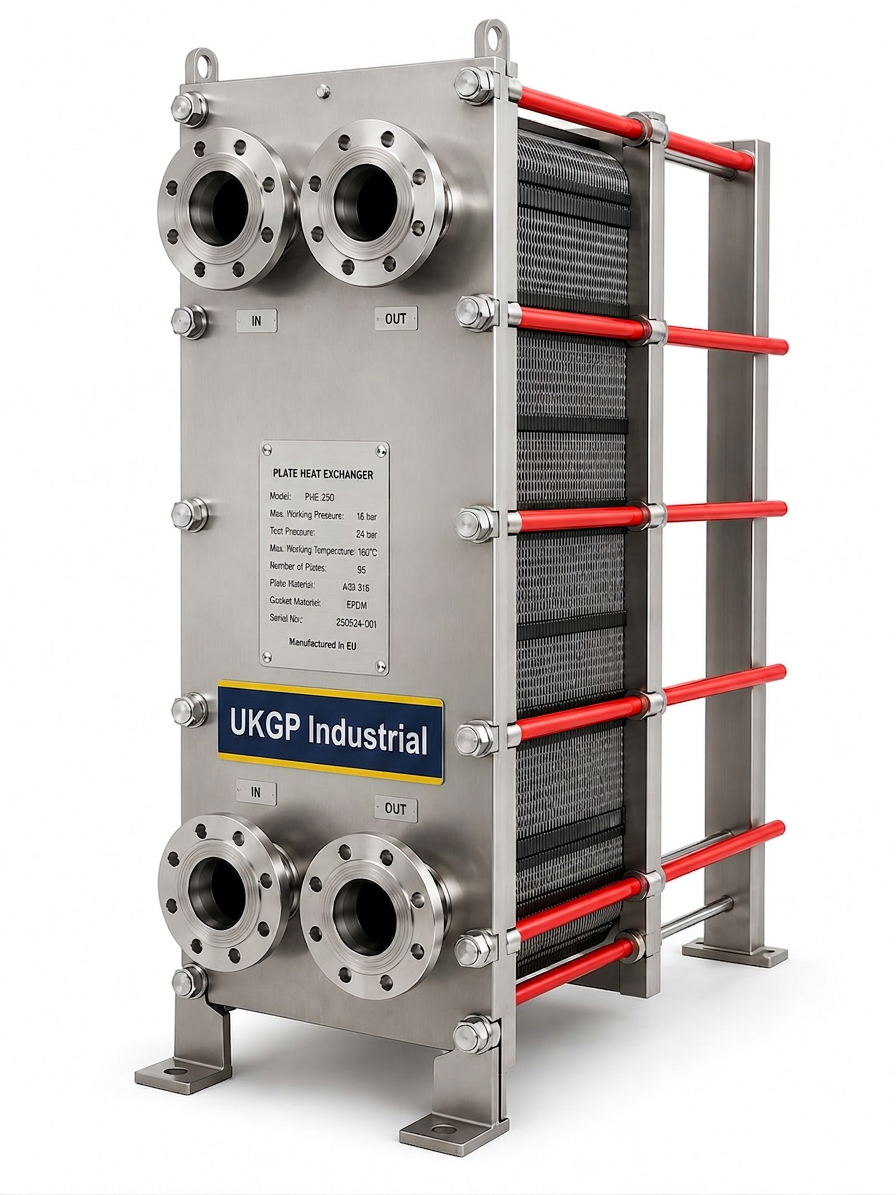
At the core of the plate heat exchanger working principle is the use of a series of thin, corrugated metal plates that create a large surface area for thermal energy exchange. Unlike traditional shell and tube designs, these units use a high surface-area-to-volume ratio to achieve rapid temperature changes within a compact footprint. Each plate is stamped with a chevron pattern which serves two purposes: increasing the turbulence of the fluid flow and providing structural rigidity against internal pressure. This turbulence is vital as it disrupts the boundary layer of the fluid, significantly enhancing the heat transfer coefficient compared to laminar flow regimes often found in older commercial installations.
In a standard gasketed configuration, these plates are compressed together within a frame by tightening bolts. The gaskets around the perimeter of the plates ensure that the two fluids—the primary and secondary circuits—are directed into alternating channels. This counter-current flow arrangement is a hallmark of the plate heat exchanger working principle, ensuring the highest possible temperature difference is maintained across the entire length of the plate. Building services consultants in the UK rely on this precise engineering to ensure that district heating or chilled water systems operate at peak efficiency, typically matching specific thermal duties provided during the initial design and procurement phase of the project.
Precision in the plate heat exchanger working principle allows for very close approach temperatures, sometimes as little as 1 degree Celsius. This is particularly beneficial when integrating low-carbon heat sources like heat pumps where maintaining high COP values requires minimal temperature degradation across domestic hot water or space heating interfaces. UKGP ensures that each unit is sized from a full thermal spec provided by the client, ensuring that the physical dimensions and plate arrangement perfectly align with the specific flow rates and pressure drop requirements of the site, preventing common issues like excessive pumping costs or inadequate thermal delivery in peak winter months.
- Chevron plate patterns induce high turbulence for better thermal efficiency
- Counter-current flow design maximises the logarithmic mean temperature difference
- Compact footprint saves valuable plant room floor space versus shell and tube
- Modular design allows for additional plates to be added if load increases
Gasketed vs Brazed Plate Heat Exchanger Designs
While the plate heat exchanger working principle remains constant across different types, the method of sealing the plates varies between gasketed and brazed designs. Gasketed units (GPHEs) are the industry standard for large-scale commercial HVAC and industrial processes because they offer the flexibility of being opened for manual cleaning or plate expansion. Each plate is fitted with an elastomer gasket—typically EPDM or Nitrile—which dictates the maximum operating temperature and pressure. These units are highly serviceable, which is a major advantage for facilities managers following BSRIA BG50 guidelines for the maintenance of closed-loop water systems, as it allows for physical inspection of the heat transfer surfaces.
Brazed plate heat exchangers (BPHEs), however, eliminate the need for gaskets and frames by vacuum-brazing the stainless steel plates together with copper or nickel. This creates a more compact, high-pressure-resistant unit that is ideal for refrigeration cycles or smaller domestic hot water modules. Although they cannot be opened for cleaning, their robust nature makes them popular for high-rise applications where static pressures are significant. For UK contractors, selecting between these two often comes down to the required DN size and the specific maintenance strategy of the site. UKGP provides both gasketed and brazed options ranging from DN20 to DN300, ensuring every plant room scale is covered by a high-quality thermal solution.
Technical teams must consider the long-term operational costs when choosing based on the plate heat exchanger working principle. Gasketed units provide a pathway for longevity through refurbishment, while brazed units are often treated as 'fit and forget' components until they reach the end of their service life. At UKGP, we provide units sized from a full thermal spec and offer a 2-year warranty to give M&E contractors peace of mind. With lead times of 4-6 weeks for most standard configurations, we help projects stay on track while meeting British Standards for thermal performance and pressure vessel safety, regardless of whether the system requires a brazed or gasketed interface.
- Gasketed units offer superior serviceability and modular expansion capabilities
- Brazed units provide exceptional pressure resistance and compact dimensions
- Compatibility with various fluids including water-glycol mixes and oils
- Available in DN20 to DN300 sizes to suit any commercial pipework
The Role of Side Stream Filtration in Thermal Efficiency
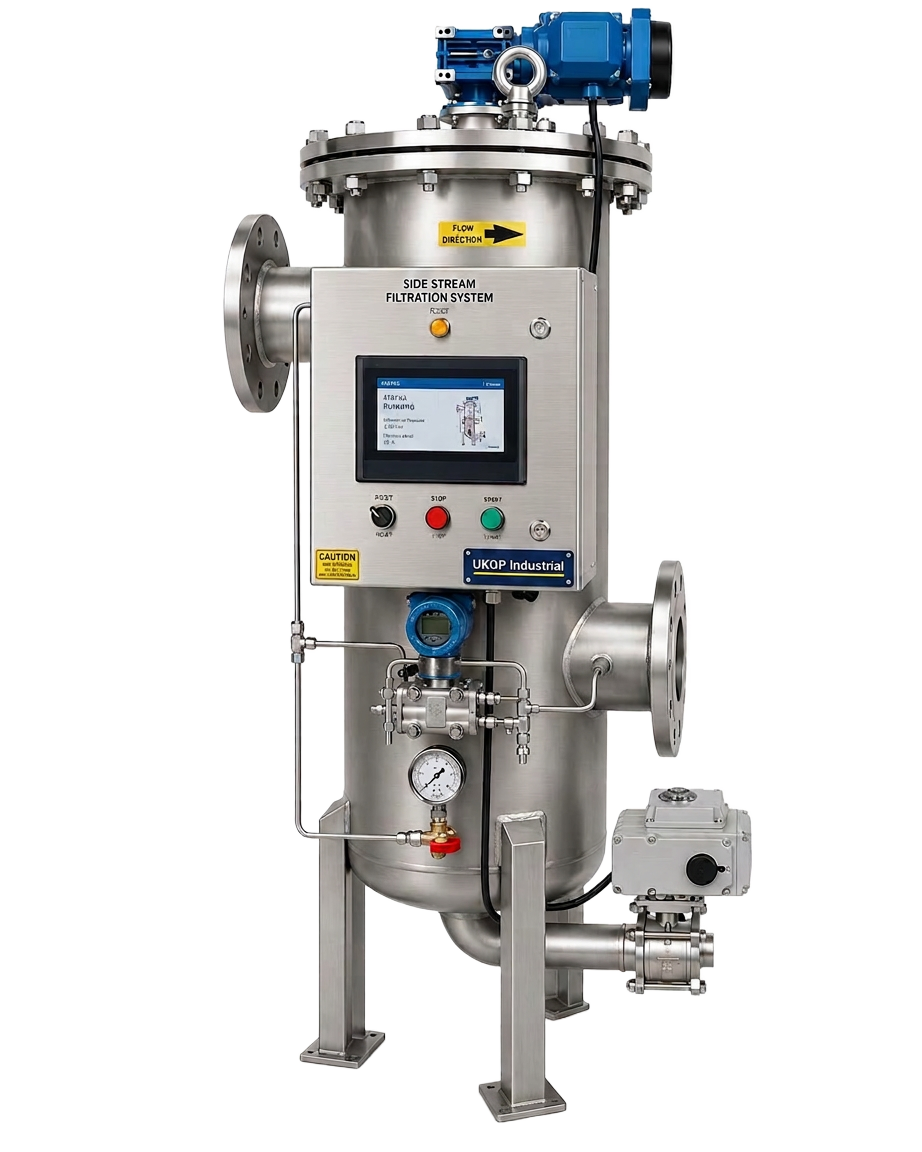
To maintain the peak efficiency identified in the plate heat exchanger working principle, water quality must be meticulously managed. The narrow channels between plates are susceptible to fouling and debris, which can rapidly increase pressure drops and reduce thermal transfer. According to BSRIA BG29 and BG50, keeping system water clean is non-negotiable for system longevity. Installing a side stream filtration skid alongside your heat exchanger protects those thin plates from suspended solids that would otherwise settle in low-velocity areas or clog the chevron channels. This proactive approach ensures that the design temp-cross remains consistent throughout the winter season, preventing thermal drift.
Filtration systems work by diverting a portion of the system flow through a high-efficiency filter media, removing particles down to a few microns. When a plate heat exchanger is fouled, the pump must work harder to overcome the resistance, leading to increased energy bills and carbon emissions. By integrating side stream filtration, the plate heat exchanger working principle is preserved because the metallic surfaces remain clean and conductive. This is especially important in older systems being retrofitted with new heat exchangers where existing magnetite and debris are likely to be present. It is a critical risk-mitigation strategy for FM teams responsible for high-value assets in Surrey and across the UK.
Furthermore, chemical balance is easier to manage when the physical particulate load is reduced. Foulants don't just block flow; they can also house bacteria or accelerate under-deposit corrosion. Therefore, the combination of a high-spec heat exchanger and a robust filtration skid represents the gold standard for modern M&E design. UKGP manufactures bespoke filtration solutions that complement our plate heat exchangers, providing a holistic approach to plant room hardware. When sourcing components, procurement leads should look for this synergy between thermal delivery and system protection to ensure the two-year warranty on the heat exchanger is supported by a clean, compliant operating environment.
- Mandatory for compliance with BSRIA BG29/BG50 water quality standards
- Reduces pressure drop by preventing sediment buildup in plate channels
- Extends the period between manual cleaning for gasketed heat exchangers
- Improves total system energy efficiency by removing insulating foulants
Sizing and Selection Based on Thermal Specs
Correctly applying the plate heat exchanger working principle requires precise sizing based on a full thermal specification. This includes the primary and secondary inlet/outlet temperatures, the required heat load in kilowatts (kW), and the maximum allowable pressure drop across the unit. A common mistake in the UK market is specifying heat exchangers based on pipe size alone, which often leads to oversized units that suffer from low velocity and subsequent 'silting up,' or undersized units that fail to meet peak demand. UKGP engineers evaluate every inquiry against thermal dynamics to ensure the plate count and channel pattern are optimised for the specific fluid properties.
The selection process also involves considering the material of the plates and gaskets to ensure long-term compatibility. While 316 stainless steel is standard for most HVAC applications, aggressive environments or saline-treated water may require titanium plates. Understanding the plate heat exchanger working principle helps the engineer realise that the material choice affects not just corrosion resistance but also the rate of heat conduction. Lead times for these units are typically 4-6 weeks from design approval, which is a critical timeline for M&E contractors to manage when coordinating plant room deliveries with other major equipment like boilers or chillers.
When you request a quote from UKGP, you receive a detailed data sheet that outlays the physical and thermal performance of the proposed unit. This documentation is essential for the O&M manual and for verifying that the system will meet the CIBSE design criteria. We cover a broad range of connections from DN20 up to DN300, accommodating flow rates for everything from small commercial units to large-scale district energy centres. Providing a 2-year warranty on our heat exchangers reflects our confidence in the precision of our sizing process and the durability of the components we supply to the British building services industry.
- Full thermal spec sizing ensures optimal heat transfer and pressure drop
- Plate materials include 316 Stainless Steel and Titanium for various fluids
- Gasket options (EPDM/Nitrile) selected based on temperature requirements
- DN20 to DN300 connection sizes to match existing or new pipework
Maintaining Low Pressure Drops with Air and Dirt Separators
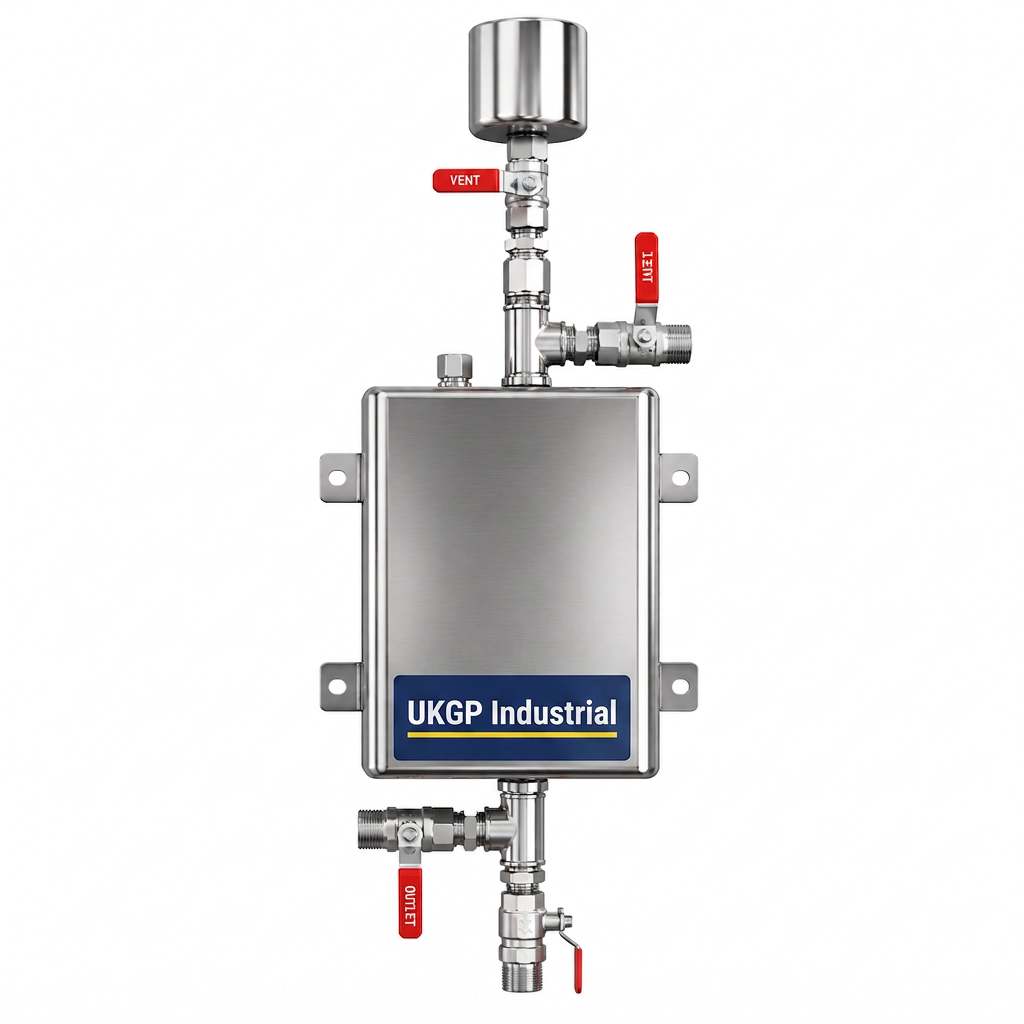
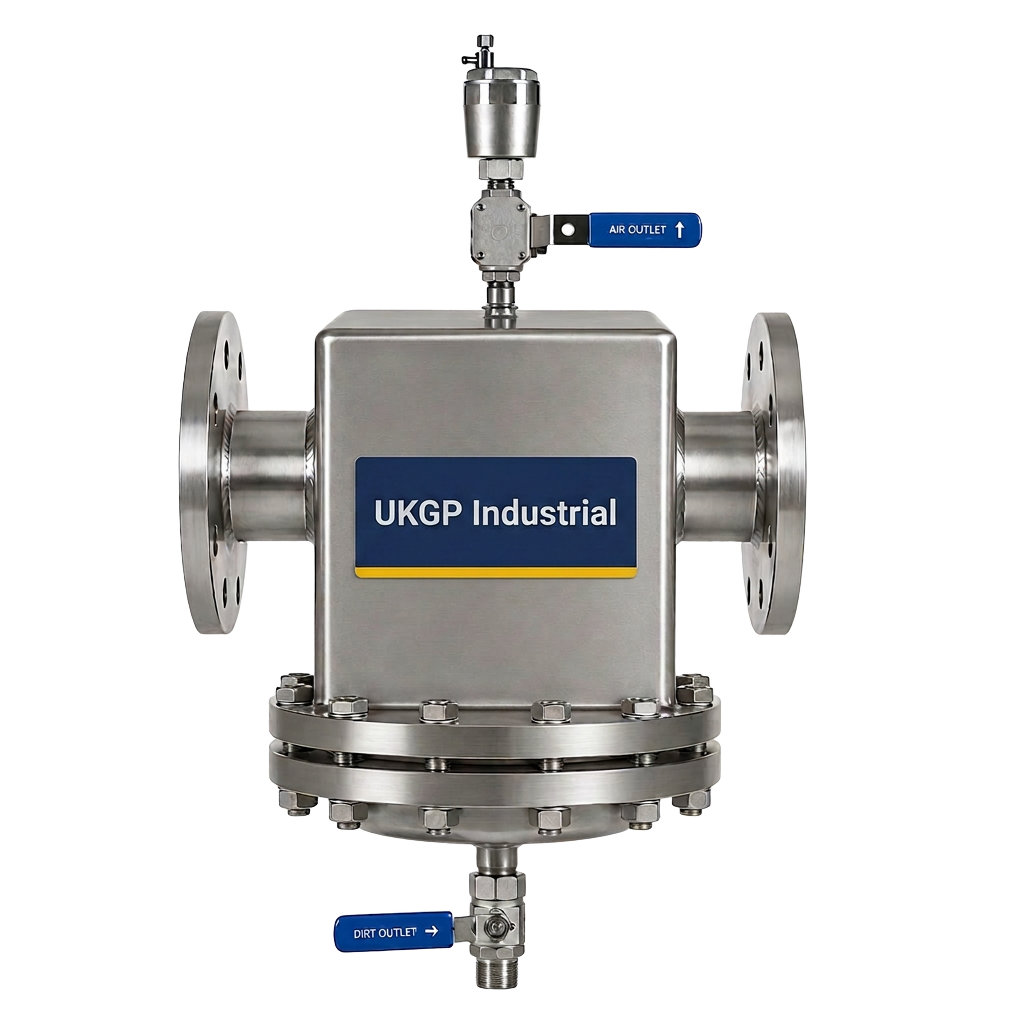
Air and microbubbles can be just as detrimental to the plate heat exchanger working principle as physical dirt. Entrained air acts as an insulator on the plate surface, creating 'cold spots' and reducing the effective area available for heat transfer. Furthermore, oxygen in the system promotes corrosion, leading to the formation of magnetite which eventually finds its way into the narrow channels of the heat exchanger. By installing high-efficiency air and dirt separators, installers can ensure that the fluids entering the heat exchanger are as clean and gas-free as possible, protecting the integrity of the thermal exchange process from day one of commissioning.
These separators should be placed in the primary flow where temperatures are highest, as this is where air is most likely to come out of solution. By stripping away these gases and capturing even the smallest dirt particles, the separator keeps the velocity through the plate heat exchanger consistent. If air is allowed to build up within the plates, it can also lead to noise issues and localized overheating, which can stress the gaskets in a gasketed unit. For engineers, the goal is to maintain the laminar and turbulent flow characteristics defined by the plate heat exchanger working principle, which is only possible in a system free from hydraulic obstructions.
UKGP offers a range of air and dirt separators that integrate seamlessly with our plate heat exchanger installations. Using these components in tandem satisfies the technical requirements of CIBSE guidelines and ensures that the facility manager has fewer reactive maintenance issues to deal with. When the system is clean, the plate heat exchanger operates exactly as it was designed on the datasheet, delivering the required kW with minimal pump energy. This synergy between separation and heat transfer is a hallmark of a well-engineered UK plant room, ensuring that all components from the DN20 brazed units to the massive DN300 gasketed versions perform reliably over their two-year warranty period and beyond.
- Removes entrained air that causes insulating cold spots on plates
- Captures magnetite and micro-dirt before it can clog heat exchanger channels
- Essential for quiet operation and preventing gasket stress
- Supports the long-term thermal efficiency of the plate heat exchanger
Installation Best Practices for Plate Heat Exchangers
Proper installation is the final step in ensuring the plate heat exchanger working principle is effectively realised. Units must be installed with sufficient clearance to allow for maintenance, particularly for gasketed models that need the plate pack to be opened. It is also standard practice to install pressure gauges and temperature sensors on both the primary and secondary inlets and outlets. This allows the plant room engineer to monitor the performance of the unit in real-time; a rising pressure drop or a falling temperature cross is a clear indicator that the unit needs cleaning or that there is an issue with the system water quality in violation of BS 8552.
Flexible connectors or expansion bellows should be used on the pipework leading to the heat exchanger to prevent mechanical stress from being transferred to the unit's nozzles. This is especially important in systems with high thermal expansion rates. By isolating the heat exchanger from pipework vibration and expansion, you protect the delicate gaskets and plates from cracking or leaking. UKGP supplies a range of expansion bellows designed to work with our DN20-DN300 units, ensuring a robust and durable installation that will stand the test of time and meet the stringent requirements of UK building regulations and safety standards.
Finally, insulation jackets are highly recommended. While the plate heat exchanger working principle is efficient, radiant heat loss from the metal frame and plate edges can still occur, particularly in high-temperature applications. A bespoke insulation jacket ensures that the thermal energy stays within the fluid circuit and the plant room remains at a manageable ambient temperature. For all your heat exchanger needs, from thermal spec-based sizing to 4-6 week delivery and a 2-year warranty, UKGP is your Surrey-based partner. Contact us today for a quote on our gasketed or brazed plate heat exchangers to ensure your next project achieves maximum thermal performance and reliability.
- Install with maintenance clearance for plate pack inspection
- Use pressure and temperature ports for performance monitoring
- Utilise expansion bellows to protect nozzles from mechanical stress
- Apply insulation jackets to minimise radiant heat loss
Frequently asked questions
What is the primary benefit of the plate heat exchanger working principle?
- The primary benefit is high thermal efficiency in a compact size. The corrugated plates create high turbulence and a large surface area, allowing for close approach temperatures and significant space savings compared to shell and tube exchangers.
How long is the lead time for a UKGP plate heat exchanger?
- Our standard lead time for both gasketed and brazed units is typically 4-6 weeks, with each unit sized from a full thermal spec to ensure it meets your project's specific requirements.
Can I use a plate heat exchanger for domestic hot water (DHW)?
- Yes, they are ideal for DHW applications. Gasketed units are often used in commercial settings for ease of descaling, while brazed units are popular for smaller packages or hi-rise interfaces.
What maintenance does a gasketed plate heat exchanger require?
- Maintenance involves monitoring pressure drops and occasionally opening the unit to clean the plates and check or replace gaskets. This is simplified by the modular design of gasketed units compared to brazed versions.
What connection sizes does UKGP offer?
- We provide plate heat exchangers with connection sizes ranging from DN20 for small duties up to DN300 for large industrial and district heating applications.