Performance Monitoring and Condition Assessment
Predictive maintenance of plate heat exchangers begins with the monitoring of the Log Mean Temperature Difference (LMTD). In a well-functioning UK plant room, the approach temperature—the difference between the primary inlet and secondary outlet—should remain within the design margin, typically 2K to 5K for modern high-efficiency systems. A widening of this margin usually indicates fouling, which increases thermal resistance across the plate material.
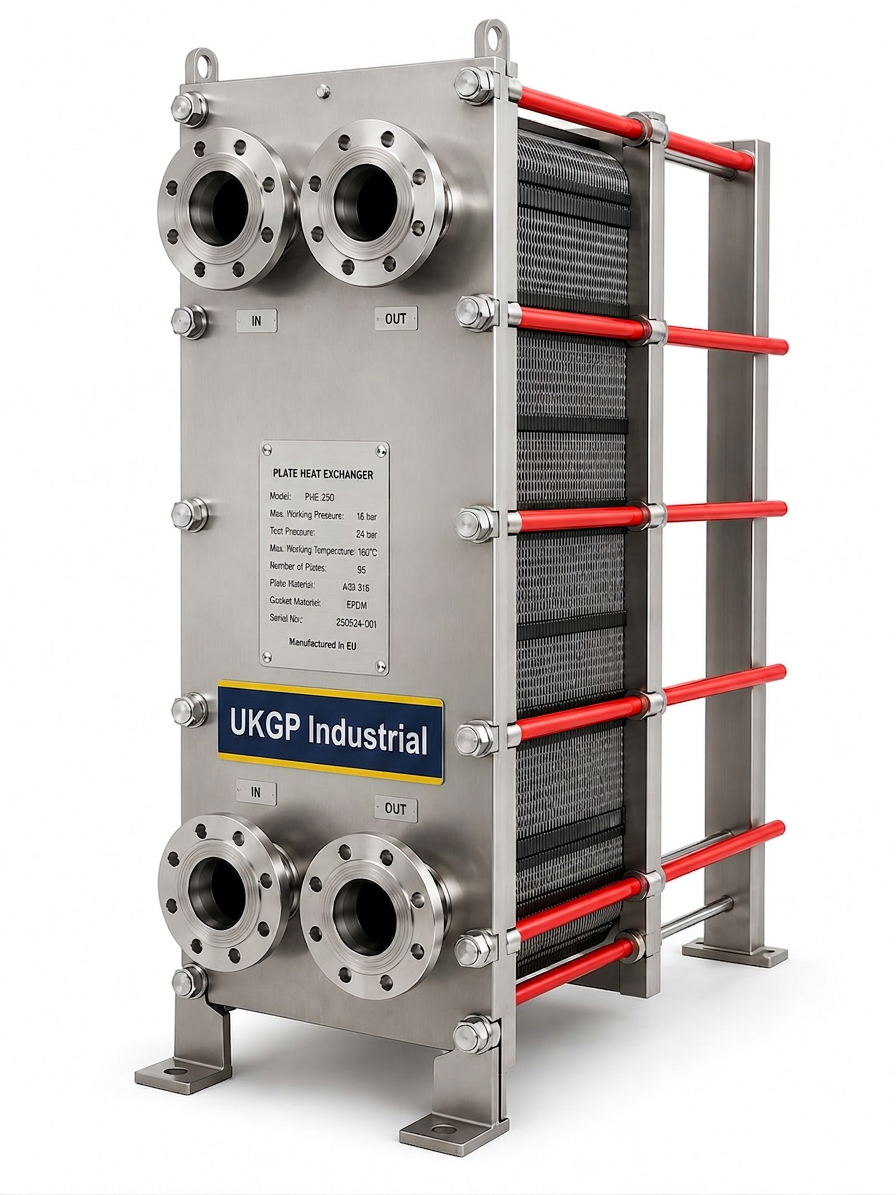
Physical inspection is equally critical. For gasketed units, engineers must regularly check the tensioning bolts and the alignment of the plate stack. The 'A' dimension (the distance between the inside of the frame head and the follower) must be measured and compared against the manufacturer's data plate. If the pack is over-compressed to stop a leak, it risks deforming the chevron patterns, leading to permanent plate damage and turbulent flow restrictions.
- Visual inspection for 'weeping' or salt deposits at the plate pack.
- Monitoring of secondary side approach temperatures against design specifications.
- Differential pressure (DP) logging to identify scaling or debris accumulation.
- Verification of the plate pack 'A' dimension to ensure correct gasket compression.
Gasket Selection and Elastomer Compatibility
The selection of replacement gaskets is a critical safety and performance factor. UK building services often utilise EPDM (Ethylene Propylene Diene Monomer) for LTHW and DHW applications due to its excellent heat resistance. However, the presence of oil or specific chemical additives in the system can lead to elastomer swelling and subsequent seal failure. In such cases, Nitrile (NBR) or Viton (FKM) gaskets may be required.
Gasket attachment methods also vary, with 'Clip-on' or 'Snap-on' designs now favoured over traditional glued gaskets for ease of site servicing. When sourcing spares, it is essential to match the profile exactly; even minor variations in the gasket groove geometry can lead to bypass leakage or 'cross-contamination' between the primary and secondary circuits. UKGP Industrial provides exact-match gaskets and plates for most major UK plant room installations, ensuring compliance with original design pressures.
- NBR (Nitrile): Best for general HVAC and oil applications up to 110°C.
- EPDM: Superior resistance to hot water and steam, rated up to 160°C.
- FKM (Viton): Required for high-temperature process fluids and specific chemicals.
Cleaning Procedures and Mechanical Overhaul
When a PHE requires a full mechanical overhaul, the plate pack must be professionally cleaned to restore the heat transfer coefficient (U-value). For gasketed units, plates should be removed and soaked in a chemical bath tailored to the specific type of scaling. Limescale (calcium carbonate) is typically treated with mild acids, while magnetite and organic biofilm require different chemical agents. Safety is paramount; all chemicals must be neutralised and disposed of in accordance with local UK water authority regulations.
For brazed plate heat exchangers (BPHEs), mechanical opening is impossible. Here, a 'Clean-in-Place' (CIP) system is used, circulating cleaning fluids through the unit in reverse flow (backflushing). If DP continues to exceed 50kPa above design after CIP, the unit has likely reached its end of life. For sustainability and cost-efficiency in large installations, replacing only the plate pack while retaining the heavy steel frames of gasketed units is often the preferred route for M&E contractors.
- Chemical cleaning using inhibited phosphoric or citric acid.
- Manual jet washing (maximum 20 bar, 45-degree angle).
- Platage replacement for warped or pitted stainless steel sheets.
- Nondestructive testing (NDT) such as dye penetrant for micro-fractures.
Water Quality and Secondary Protection
The longevity of PHE spares is directly linked to the water quality standards defined in BSRIA BG50. High levels of suspended solids and dissolved oxygen lead to rapid fouling and corrosion. In UK systems, the primary cause of PHE failure is often the accumulation of magnetite (black iron oxide), which settles in the low-velocity areas of the chevron plates. This not only reduces heat transfer but can lead to under-deposit corrosion and pitting of the 316L stainless steel.
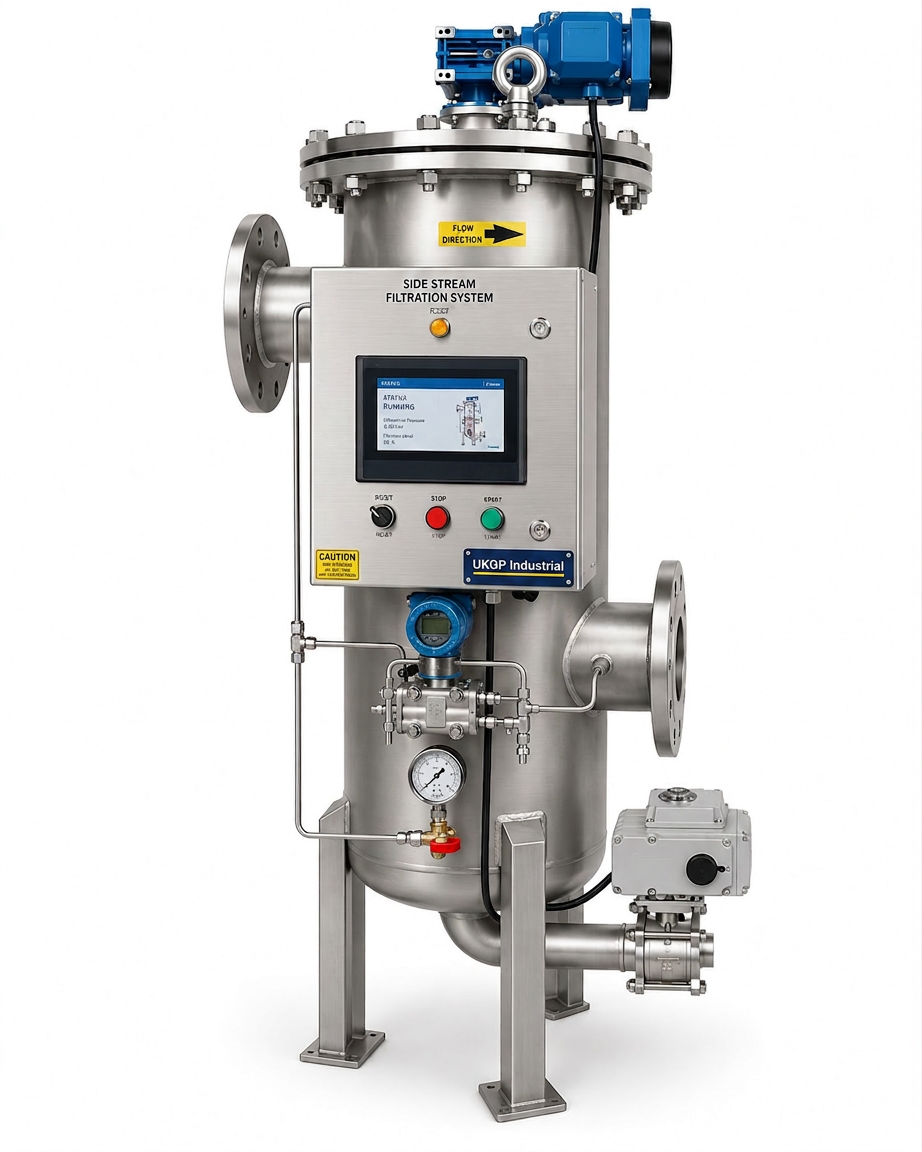
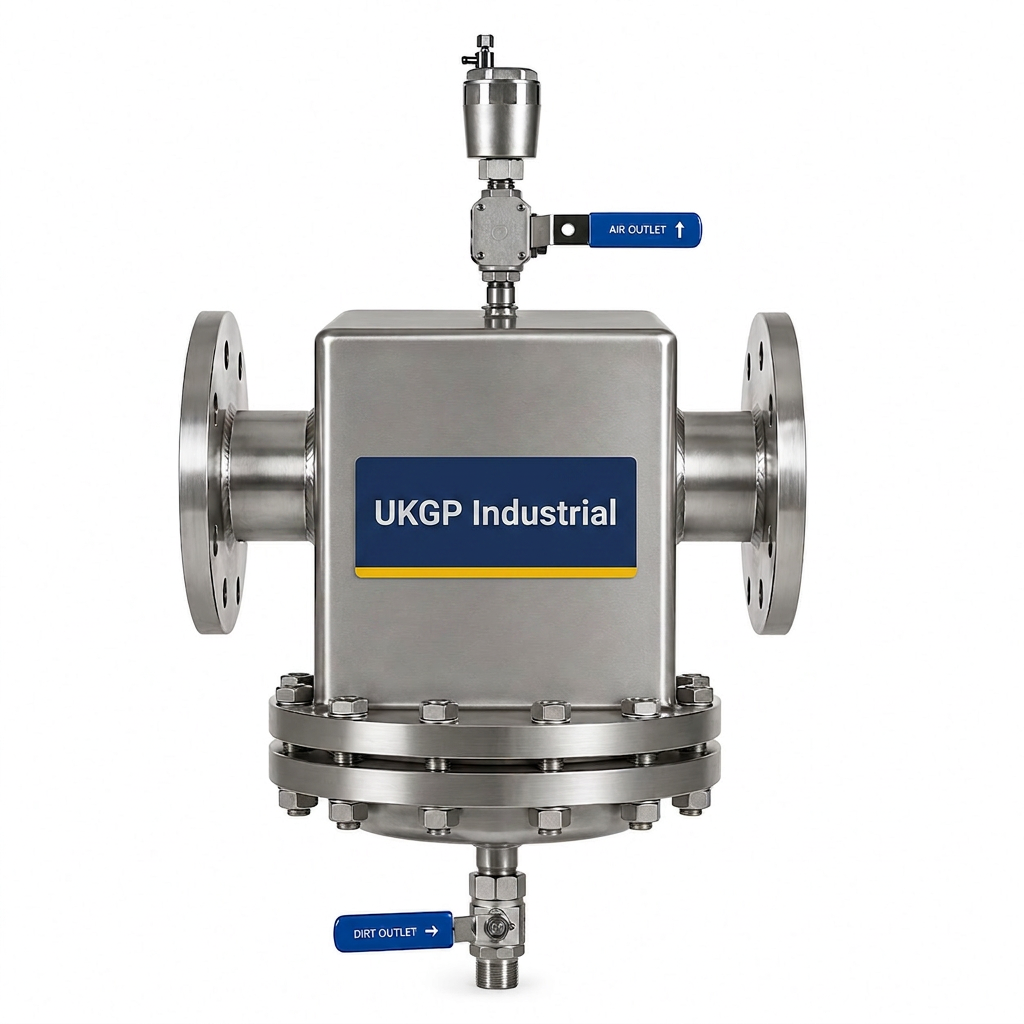
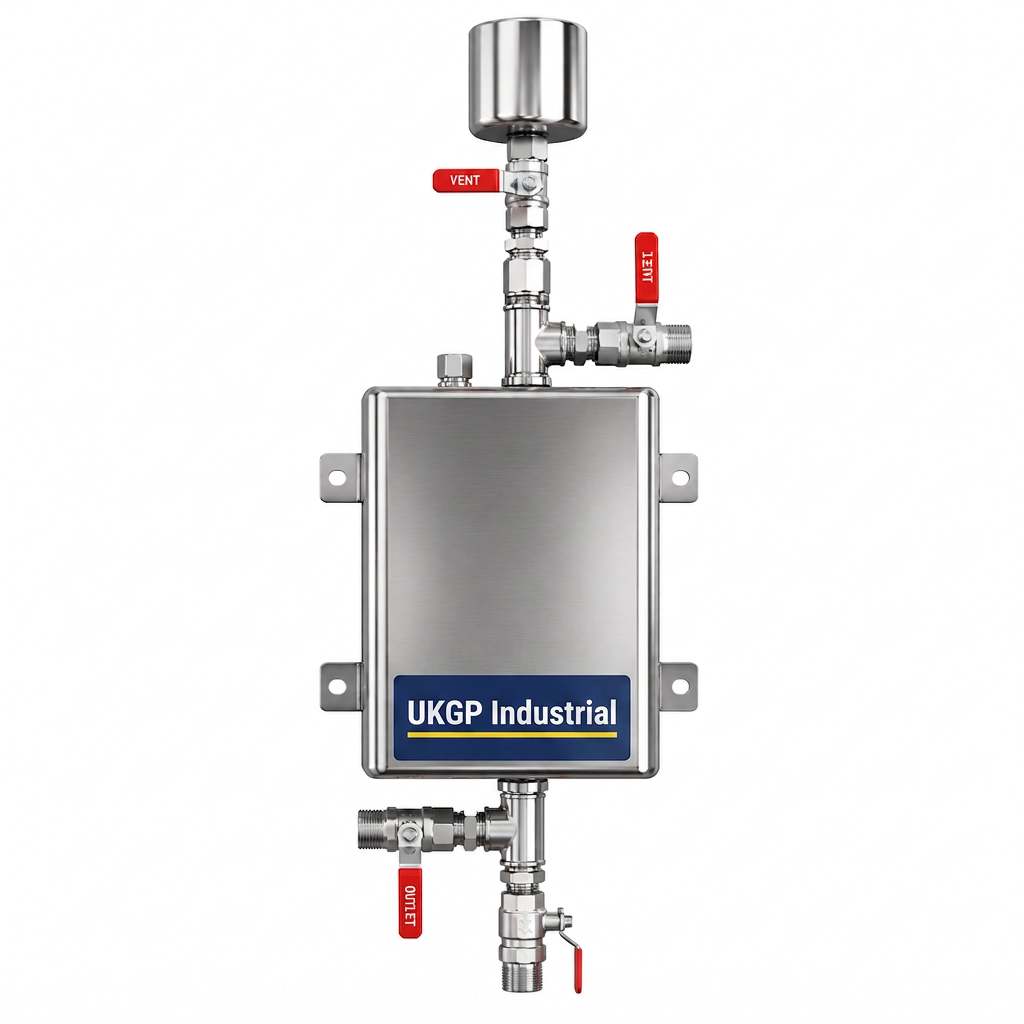
To protect the heat exchanger infrastructure, the installation of side-stream filtration is highly recommended. These units continuously remove fine particulates down to sub-micron levels, preventing the 'sandblasting' effect on plate surfaces and extending the intervals between manual cleans. When combined with air and dirt separators, these protective measures ensure that the plate heat exchanger operates at peak design efficiency throughout its lifecycle.
Materials Science: Titanium vs. Stainless Steel
Selecting the correct plate material for spares is as important as the gasket. While 316L stainless steel is the default for most UK chilled water and heating systems, it is susceptible to chloride stress corrosion cracking at high temperatures. In environments with high chloride concentrations—such as coastal installations or process applications involving saline solutions—Titanium plates must be specified.
Engineers must also be wary of 'crevice corrosion' which occurs in the contact points between plates. If a system has been poorly maintained with high oxygen ingress, even 316L plates will eventually fail. During a service, plates should be inspected under bright light for any 'pinholing'. If one plate has failed, it is standard industry practice to replace the entire pack, as the remaining plates will likely have similar levels of material fatigue.
- 304 Stainless Steel: Standard for non-corrosive domestic water.
- 316L Stainless Steel: The HVAC standard, offering better corrosion resistance.
- Titanium: Mandatory for seaside locations or chlorinated pool water applications.
Commissioning and Post-Service Verification
Once service work is complete or new spares have been installed, the PHE must be recommissioned following CIBSE guidelines. The tightening of the plate pack must be done incrementally, ensuring the follower remains parallel to the head. Failure to do so can 'snake' the plate pack, causing permanent deformation of the gaskets. Once the 'A' dimension is reached, the unit should be slowly pressurised, venting air from the highest points of both the primary and secondary circuits.
Final verification involves recording the pressure drops and temperatures at full load. These figures should be documented as the new 'baseline' for the unit. In district heating applications, where the DHW load can fluctuate rapidly, the responsiveness of the plate pack to the control valve movement is an excellent indicator of a successful service. Regular maintenance not only protects the asset but ensures the building's carbon footprint remains as low as possible by avoiding the inefficiencies associated with fouled heat transfer surfaces.
- Verify the plate count matches the original design submittal.
- Inspect the carrier bar and guiding bar for lubrication and alignment.
- Tighten bolts in a cross-over pattern to maintain even pressure.
- Pressure test at 1.3x operating pressure prior to full commissioning.
Frequently asked questions
How often should I service a gasketed plate heat exchanger?
- For gasketed units, performance degradation usually manifests as an increased pressure drop or a decrease in the approach temperature. If the LMTD is widening or you see external weeping from the gasket stack, a minor service is required. Gaskets typically require replacement every 5-8 years depending on thermal cycling frequency.
What gasket material is best for district heating interfaces?
- Nitrile (NBR) is standard for water/glycol up to 110°C. EPDM is preferred for higher temperatures (up to 160°C) and DHW applications. For aggressive fluids or high-temperature oils, Viton (FKM) may be specified. Always verify the elastomer compatibility with the system's chemical dosing regime.
Can brazed plate heat exchangers be repaired if they leak?
- Brazed units are non-serviceable and cannot be opened. Maintenance is limited to 'Clean-in-Place' (CIP) using mild phosphoric or citric acid solutions. If a brazed unit is terminally fouled or leaking internally, it must be replaced as a complete assembly.
Which BSRIA guides govern PHE maintenance?
- BSRIA BG29/21 (pre-commissioning) and BG50 (run-care) provide the framework for water quality. Failure to maintain correct inhibitor levels and filtration leads to magnetite build-up, which increases Reynolds number requirements for heat transfer and causes premature plate pitting.