Gasketed Plate Heat Exchangers (GPHE) Overview
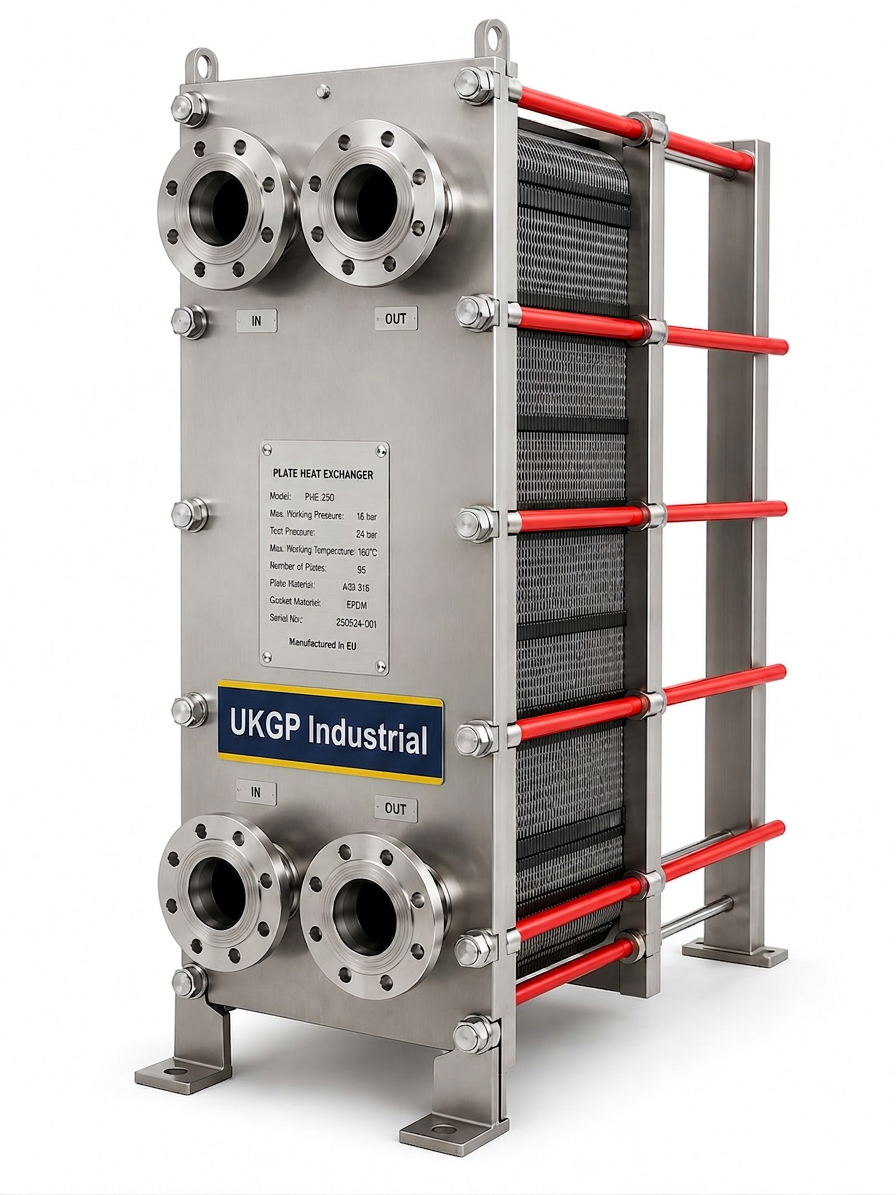
The gasketed plate heat exchanger remains the industry standard for large-scale commercial heating and cooling. It consists of a pack of corrugated metal plates compressed between a fixed frame plate and a moveable pressure plate by tightening bolts. The gaskets not only seal the channels but also direct the fluid flow, ensuring that the two media move in counter-current directions for maximum logarithmic mean temperature difference (LMTD).
In UK building services, GPHEs are predominantly used for hydraulic separation in district heating substations and high-rise developments. Because the plate pack can be dismantled, these units are ideal for systems where fouling is anticipated. They are compliant with PED 2014/68/EU and are often specified in accordance with CIBSE Guide S for heat interface units (HIUs) and secondary distribution.
The primary advantage of the GPHE is its flexibility. If a building's heat load increases due to an extension, additional plates can often be installed within the original frame. Conversely, if a system suffers from scaling or magnetite build-up due to poor water treatment, the unit can be opened and mechanically cleaned, restoring it to 100% thermal efficiency without the need for total replacement.
- High thermal efficiency with approach temperatures as low as 1K.
- Complete serviceability: units can be stripped, cleaned, and re-gasketed.
- Scalability: plates can be added or removed to meet changing load requirements.
- Visual leak detection: gasket failure typically leaks to atmosphere, preventing cross-contamination.
Brazed Plate Heat Exchangers (BPHE) Characteristics
Brazed plate heat exchangers are constructed by vacuum-brazing stainless steel plates together using a filler material, typically copper or nickel. This process eliminates the need for heavy frames and gaskets, resulting in a hermetically sealed, lightweight unit. BPHEs are ubiquitous in smaller commercial boiler circuits, heat pump domestic hot water (DHW) production, and refrigerant evaporators/condensers.
While highly efficient, BPHEs are considered 'disposable' components in the context of UK plant rooms. Because they are permanently sealed, they cannot be opened for inspection or mechanical cleaning. If internal fouling occurs, the only recourse is chemical cleaning (CIP), which is often ineffective against heavy mineral scaling or magnetite. If CIP fails, the entire unit must be cut out and replaced.
Engineers must be cautious when specifying copper-brazed units in applications with aggressive water chemistry or where ammonia is present, as copper corrosion can lead to premature failure. In such cases, stainless steel or nickel-brazed variants are required. Despite these limitations, their high pressure-bearing capability makes them the default choice for CO2 refrigeration cycles and high-pressure DHW systems.
- Compact footprint: roughly 10-20% the size of a gasketed unit for the same capacity.
- Higher pressure and temperature ratings (up to 45 bar and 225°C).
- Lower capital expenditure (CAPEX) for small to medium duties.
- Elimination of gasket compatibility issues and potential external leaks.
Welded and Semi-Welded Heat Exchangers
Fully welded plate heat exchangers (often referred to as block-type or plate-and-shell) are engineered for the most demanding industrial environments. By laser-welding the plate seams, the unit achieves the mechanical robustness of a shell-and-tube exchanger while retaining the high heat transfer coefficients of a plate-and-type. These are typically found in UK industrial steam systems, oil refineries, and high-pressure chemical processing.
A common middle ground is the semi-welded heat exchanger. In these units, plates are welded together in pairs (cassettes) to form a sealed channel for a 'difficult' or high-pressure fluid (such as a refrigerant), while the second fluid flows through a traditional gasketed channel. This allows for the containment of hazardous media while still permitting manual cleaning on one side of the exchanger.
The selection of a welded unit is usually driven by safety and reliability over cost. In UK building services, they are rare, except in specific high-temperature district heating primary circuits or where steam is the primary heat source. The inability to mechanically clean both sides of a fully welded unit means that upstream filtration and strict water chemistry control are non-negotiable.
- Design pressures exceeding 60 bar and temperatures above 300°C.
- Resistance to thermal shock and cycling.
- Suitability for hazardous fluids where gasket leakage is unacceptable.
- Maximum security against cross-contamination in critical processes.
Hydraulic and Thermal Design Limits
When designing for UK plant rooms, pressure drop (ΔP) is often the limiting factor. Gasketed units offer the greatest flexibility in plate geometry (H-theta vs. L-theta plates), allowing engineers to optimize the balance between heat transfer and pump energy consumption. This is particularly vital when complying with Part L of the Building Regulations, which mandates strict limits on auxiliary power.
Temperature approach (the difference between the inlet of the hot side and the outlet of the cold side) is another critical metric. In heat pump applications, maintaining a low approach temperature is essential for maximizing COP. Gasketed units excel here, as their plate lengths and configurations can be tuned to achieve 1K approaches without excessive surface area. Brazed units, while efficient, often require larger footprints to achieve the same precision.
Velocity and shear stress must also be considered. High velocities promote self-cleaning but increase erosion risk and pressure drop. Conversely, low velocities lead to sedimentation. GPHEs allow for internal baffling and multi-pass arrangements to maintain optimal velocities even during part-load conditions, a feature generally unavailable in standard off-the-shelf BPHEs.
- GPHE: 1-5 bar typical, up to 25 bar with heavy frames.
- BPHE: 30-45 bar standard, up to 80+ bar for specialized CO2 units.
- Welded: Virtually unlimited, with standard units reaching 40-100 bar.
Maintenance and Lifecycle Cost Analysis
The lifecycle cost of a heat exchanger is heavily influenced by the UK's water quality. In hard water areas like London and the South East, limescale accumulation is a primary cause of PHE failure. A gasketed heat exchanger has a higher initial CAPEX but significantly lower long-term costs because it can be serviced. BSRIA BG50 (Water Treatment for Closed Heating and Cooling Systems) emphasizes the importance of maintaining heat transfer efficiency through cleanable components.
For brazed units, the maintenance strategy is purely reactive. Once the thermal performance degrades or the pressure drop increases beyond the pump's head capacity, the unit is effectively at the end of its life. For mission-critical installations—such as data centre cooling or hospital heating—this lack of serviceability represents a significant risk. In these environments, GPHEs with redundant ‘duty/standby’ configurations are the standard.
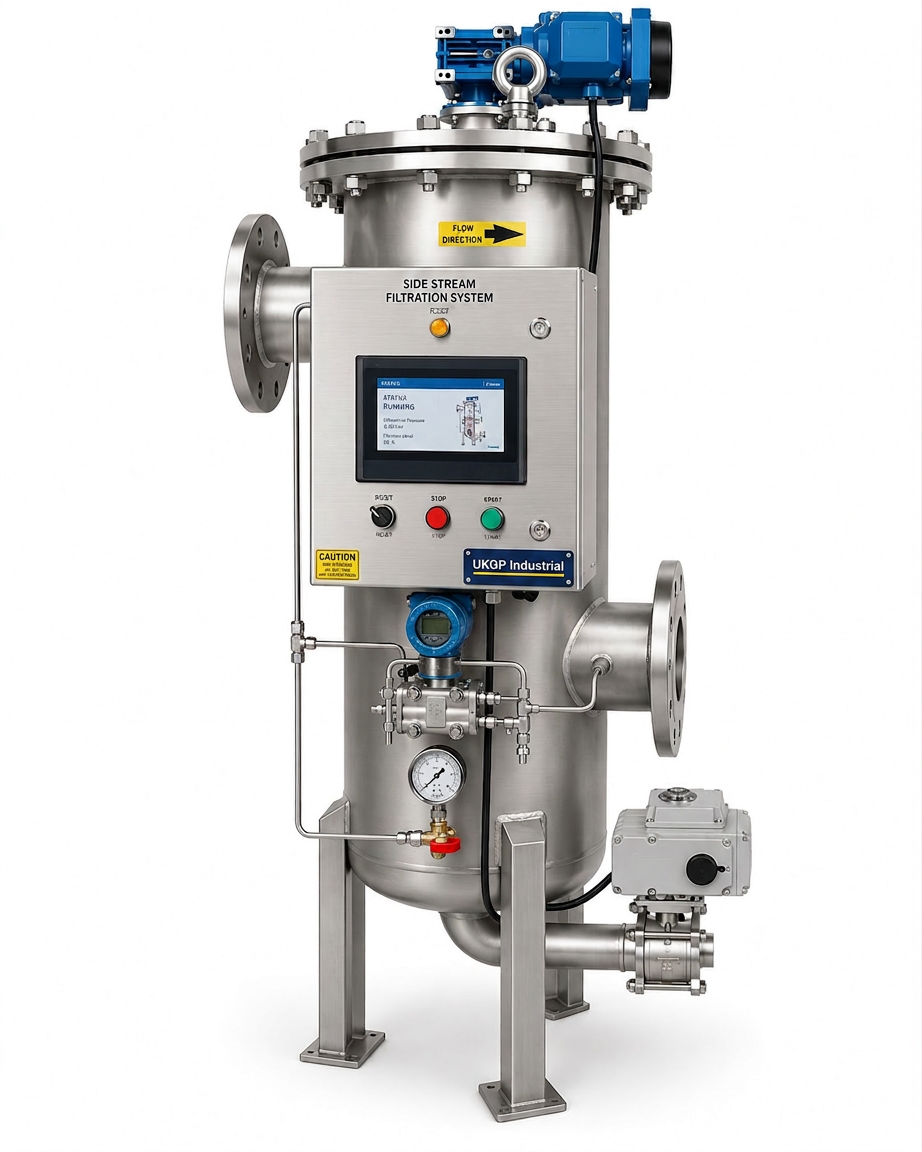
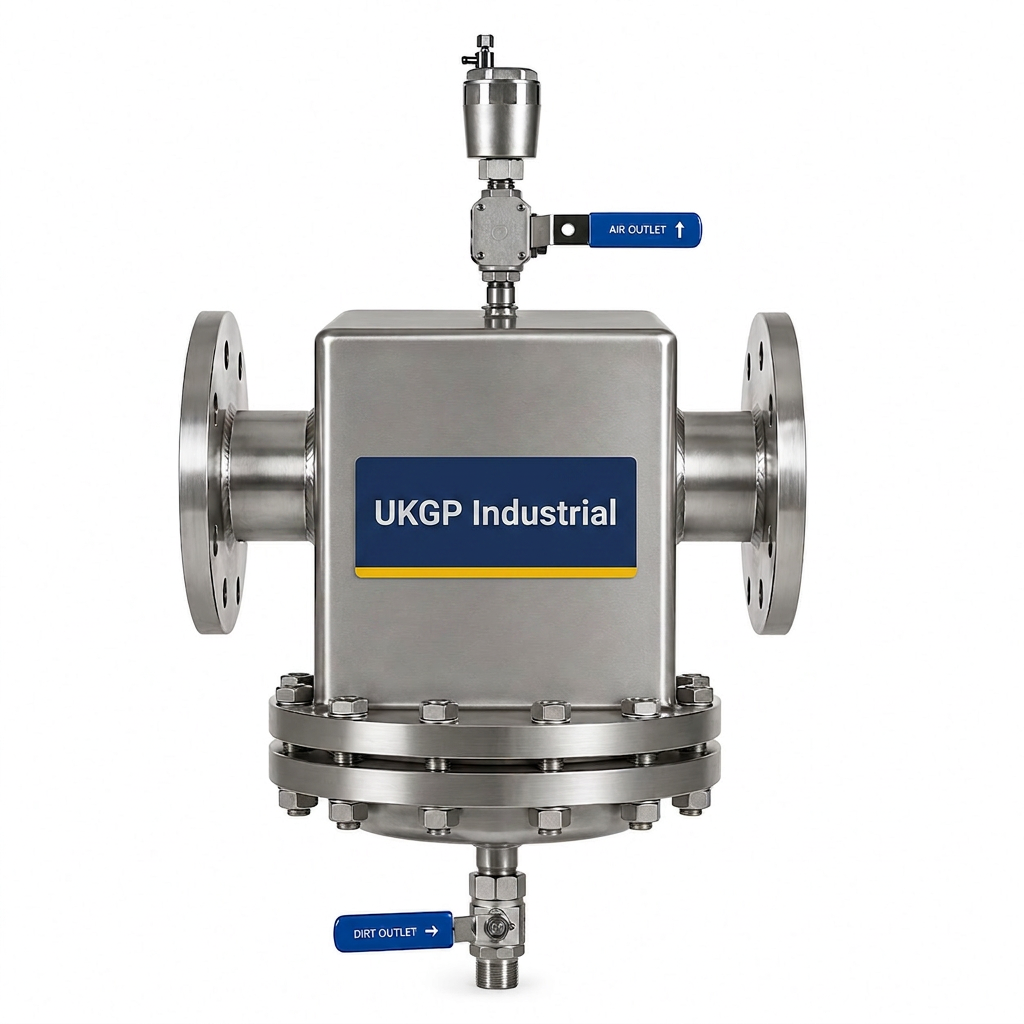
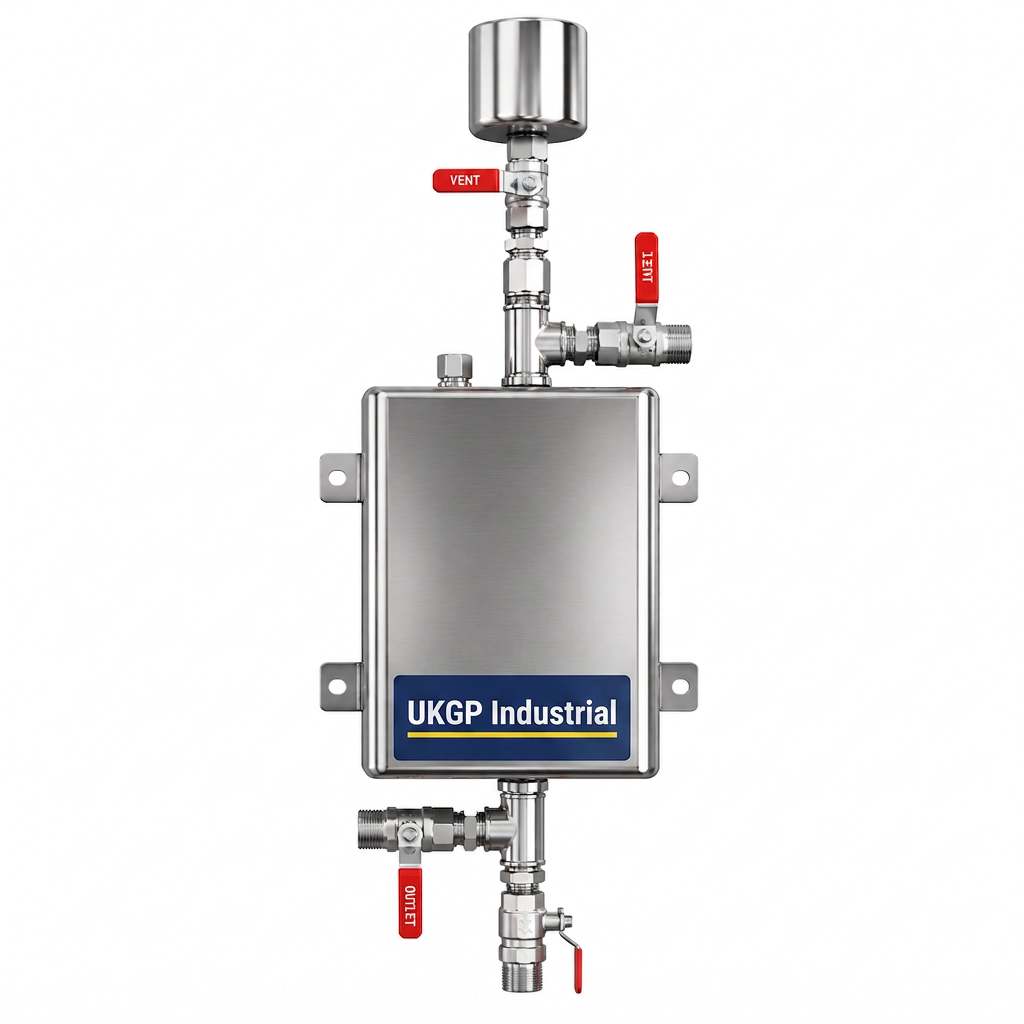
The integration of side-stream filtration and air/dirt separators (such as those from UKGP Industrial) can dramatically extend the intervals between manual cleanings for gasketed units and protect brazed units from premature blockage. However, even with filtration, the 'cleanability' of the gasketed unit provides a safety net that brazed technology cannot match. An engineered approach involves evaluating the 'Total Cost of Ownership' (TCO) over a 20-year horizon, where the GPHE often emerges as the more economical choice despite its higher purchase price.
- Openable units allow for the removal of magnetite and calcium deposits.
- Replacement gaskets ensure the longevity of the frame for 25+ years.
- Inspection of plates for pitting corrosion or stress cracking is possible.
Material Selection and Corrosion Resilience
Material compatibility is a cornerstone of BS EN 12828 compliance. Most UK commercial systems utilize 316L stainless steel plates due to their excellent resistance to general corrosion. However, in applications involving swimming pool water, saline environments, or high-chloride process fluids, 316L will succumb to pitting corrosion. In these instances, Titanium plates in a gasketed frame are mandatory.
Gasket material selection is equally critical. EPDM (Ethylene Propylene Diene Monomer) is the workhorse for UK heating systems, rated for temperatures up to 160°C and compatible with water-glycol mixes. NBR (Nitrile Butadiene Rubber) is preferred for oil-inclusive processes or lower temperature cooling. Specifying the wrong gasket can lead to swelling, degradation, and catastrophic leaks within months of commissioning.
Brazed units face a unique challenge: galvanic corrosion between the stainless steel plates and the copper braze. If the water has high conductivity or low pH, the copper can leach out, leading to 'pinhole' leaks between the two circuits. While many modern BPHEs feature vacuum-sealing techniques to minimize this, they remain more vulnerable than their gasketed counterparts in systems with poor chemical dosing control.
- Standard Plate Materials: AISI 304, AISI 316L, Titanium.
- Gasket Materials: NBR (nitrile), EPDM, Viton.
- Brazing Material: Copper (standard), Nickel (corrosive environments).
Conclusion: Selecting the Right Architecture
The choice between gasketed, brazed, and welded plate heat exchangers should be driven by the specific demands of the UK plant room environment. For district heating substations where downtime is not an option and water quality varies, the gasketed PHE is the superior technical choice. Its ability to be resized, cleaned, and maintained aligns with the sustainability goals of modern building management.
Brazed units serve an important role in the mass market for smaller domestic and light-commercial applications where space is at a premium and the cost of the unit is low enough to justify replacement over repair. However, engineers must ensure that adequate filtration and water treatment are in place to protect these non-serviceable assets. Failure to do so leads to increased energy consumption and premature system failure.
Ultimately, the decision should be documented through a risk-based assessment during the RIBA Stage 3/4 design process. By considering the fluid properties, operating pressures, maintenance access, and the consequences of failure, building services engineers can specify a heat transfer solution that provides reliable performance throughout its intended service life. For bespoke calculations and sizing, consulting with UKGP Industrial technical specialists ensures that the selected PHE meets both thermal requirements and UK regulatory standards.
- GPHE: Best for high-capacity, low-approach, and high-fouling systems.
- BPHE: Ideal for compact, high-pressure, and low-maintenance small loads.
- Welded: Reserved for extreme temperatures, pressures, or hazardous media.
Frequently asked questions
Which PHE type is best for air source heat pump (ASHP) interfaces?
- For ASHP systems, brazed units are often chosen for smaller capacities due to cost, but gasketed PHEs are superior for larger installations where lower approach temperatures (down to 1K) and serviceability are required to maintain high COP.
How does BSRIA BG29/21 impact the choice of heat exchanger?
- BSRIA BG29/21 and BG50 highlight that brazed units cannot be mechanically cleaned. If a system has high debris risk and no side-stream filtration, a gasketed unit is mandatory to allow for manual plate cleaning.
When should a fully welded PHE be specified over a gasketed one?
- Welded PHEs are typically reserved for high-pressure steam-to-water applications or aggressive chilled water circuits where temperatures exceed 200°C or pressures exceed 40 bar, beyond the limits of standard gasketed units.
Can I increase the capacity of an existing heat exchanger?
- Yes, but only gasketed units. One of their primary advantages is the ability to add plates to the existing frame to increase kW output, provided the frame length (tie-bolts) allows for the expansion.