Pre-Installation and Siting Requirements
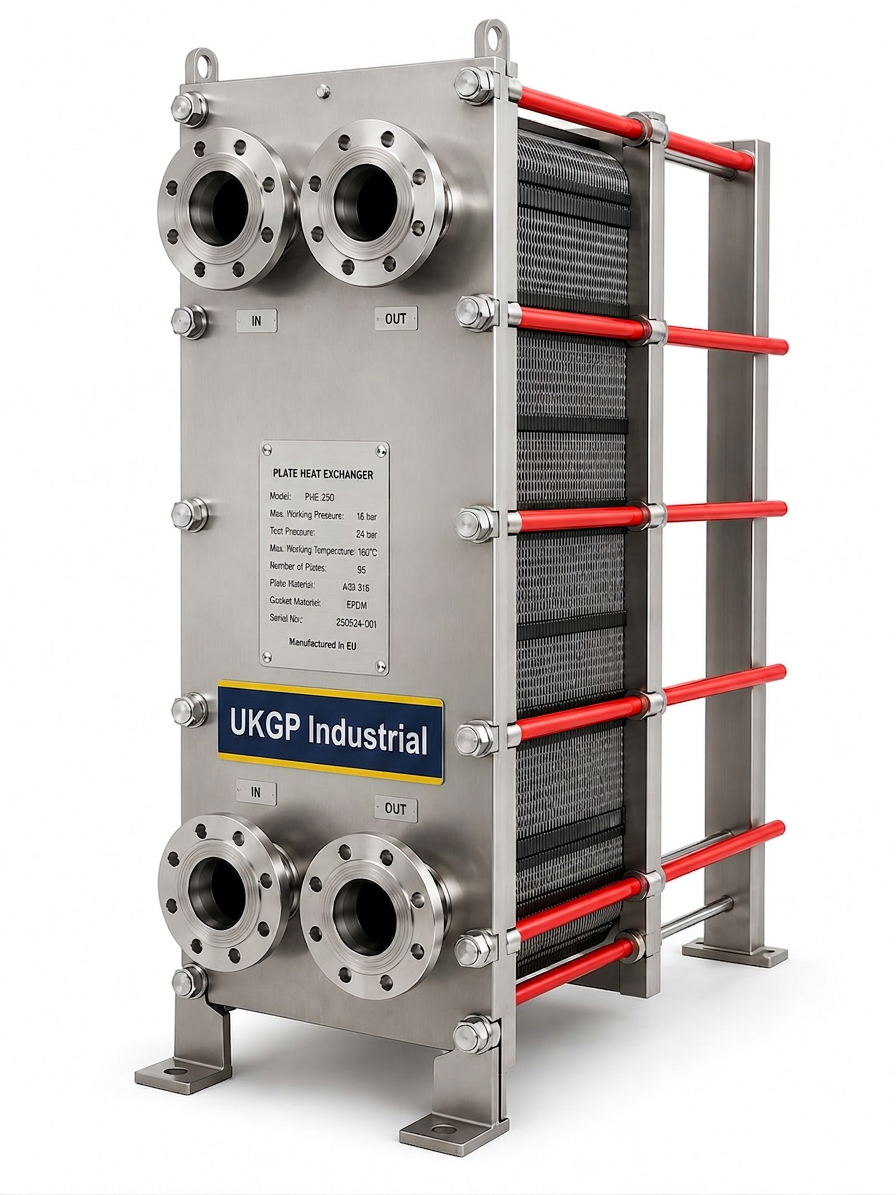
Before the PHE arrives on-site, the plant room environment must be prepared according to the specific mechanical load of the equipment. Gasketed plate heat exchangers (GPHEs) are significantly heavier than brazed units (BPHEs) and require a level, reinforced concrete plinth. A common error in plant room design is failing to account for the 'wet weight' of the unit, which can be 20-30% higher than the dry shipping weight. The plinth should be designed to isolate vibrations and provide a stable base for the frame footings.
Spatial requirements are often overlooked during the design phase. For gasketed units, access is required not just for the pipework connections but for future maintenance. BSRIA guidelines suggest leaving sufficient space for a technician to slide plates out laterally and for the tightening of the tie-bolts. If a unit is installed too close to a wall, the entire heat exchanger may need to be disconnected and moved just to replace a single failed gasket, significantly increasing the cost of lifecycle maintenance.
For brazed units, while they are lighter and more compact, they should still be securely mounted using purpose-made brackets. Relying on the pipework itself to support the weight of a BPHE is a breach of standard engineering practice and can lead to stress fractures at the nozzle welds. Ensure the unit is positioned to allow for the installation of insulation jackets, which are essential for meeting Part L of the Building Regulations.
- Ensure the concrete plinth is level to within +/- 2mm to prevent frame distortion.
- Verify that the floor loading capacity accounts for the unit's operating weight (filled with fluid).
- Maintain a minimum clearance equal to the plate width on one side for gasketed units to allow for plate inspection and removal.
- Check that the 'A' dimension (the distance between the inside of the head and the follower) matches the manufacturer’s datasheet before pressurisation.
Frequently asked questions
What are the pressure testing requirements for a newly installed PHE?
- For gasketed units, pressure testing should typically be carried out at 1.5 times the design pressure, in accordance with the Pressure Equipment Directive (PED) and relevant British Standards. Pressure must be increased gradually and monitored for a minimum of 30 minutes.
What is the maximum temperature for standard EPDM gaskets?
- Standard EPDM gaskets are typically rated up to 150°C, while Nitrile (NBR) is usually limited to 110°C. For high-temperature steam or solar thermal applications, Viton or specialized gaskets are required. Always check the manufacturer's data plate.
How do I prevent thermal shock in a PHE?
- Thermal shock occurs when rapid temperature changes cause differential expansion between the plates and the frame, leading to gasket failure or fatigue. This is prevented by using slow-opening valves and VFD-controlled pumps to ramp temperatures gradually.
Can I clean a brazed plate heat exchanger if it becomes fouled?
- Brazed units cannot be opened for manual cleaning. They must be cleaned using a Clean-In-Place (CIP) system where chemical descaling agents are circulated through the unit in a reverse-flow direction. If blockage remains, the unit must be replaced.