Thermal Dynamics and Selection Criteria
In a commercial solar thermal assembly, the plate heat exchanger acts as the hydraulic break between the primary collector circuit—often containing a 40-50% propylene glycol mix—and the secondary DHW or heating return. Unlike standard LTHW-to-secondary transitions, solar PHEs must be sized to handle variable flow rates. As solar irradiance fluctuates, the primary pump often operates via PWM or 0-10V control to maintain a specific temperature delta, requiring a PHE that can maintain turbulent flow even at lower velocities.
The ‘approach temperature’ is a critical design metric. To maximise the yield from the solar array, engineers should aim for a close approach, often between 2K and 5K. A smaller approach temperature requires a larger heat transfer surface area (more plates), which must be balanced against the increased domestic water volume held within the exchanger and the subsequent risk of calcification if the secondary side exceeds 60°C.
- Thermal expansion management for glycol-based fluids.
- Approach temperature differences (typically 2-5K for solar).
- Stagnation temperature resilience (up to 200°C in some vacuum tube arrays).
- Scalability for future array expansions.
Gasketed vs Brazed PHEs in Solar Applications
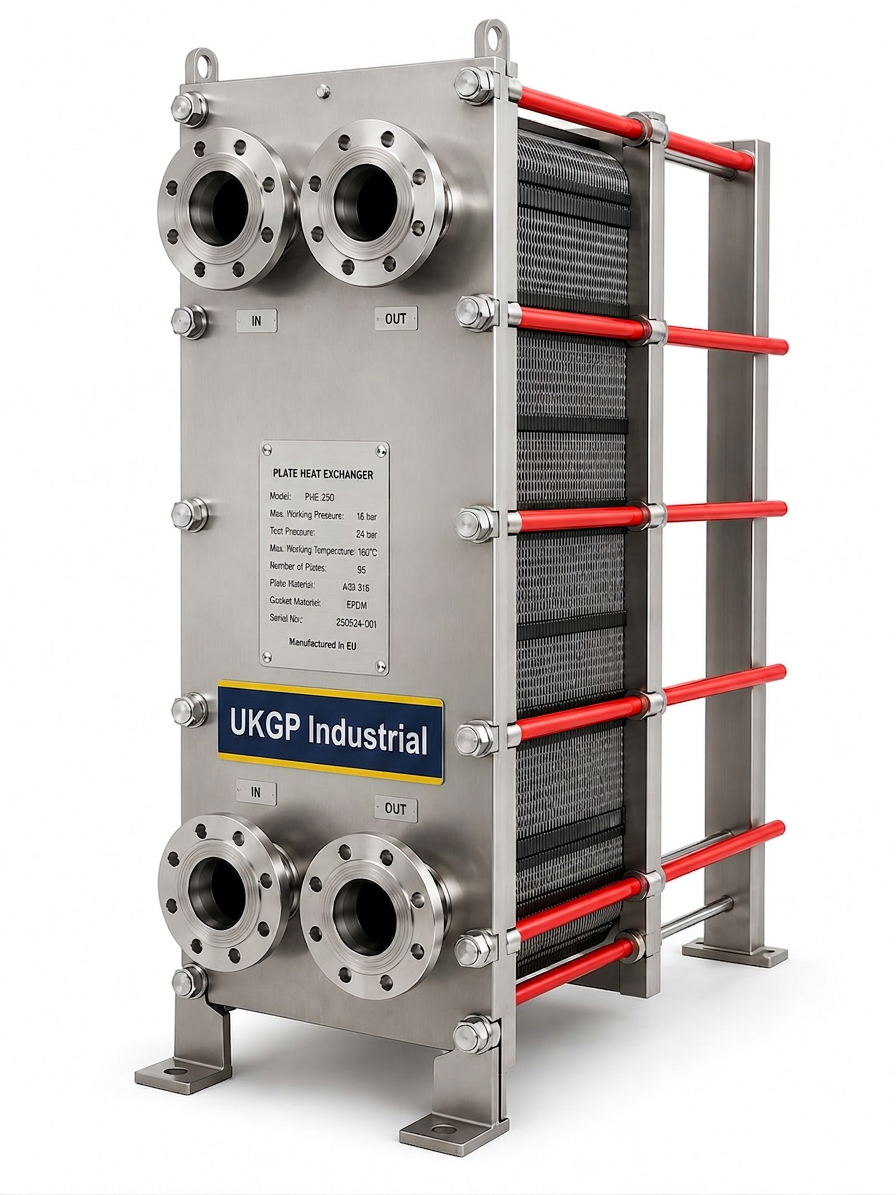
For small to medium solar arrays (up to 50m²), copper-brazed plate heat exchangers are frequently specified due to their high pressure ratings and cost-effectiveness. However, in larger commercial installations or district heating schemes, gasketed plate heat exchangers (GPHEs) are the preferred choice. The primary advantage of the GPHE is maintainability; solar primary circuits are prone to glycol degradation if the system frequently enters stagnation, leading to 'sludging' that can foul the narrow channels of a brazed unit beyond repair.
Gasketed units, such as those supplied by UKGP Industrial, allow for mechanical cleaning and the addition of plates should the solar array be expanded. Furthermore, in British building services, the risk of 'thermal shock' during sudden cloud cover or pump activation is better managed by the mechanical flexibility of a gasketed frame compared to the rigid structure of a brazed unit, which may suffer from fatigue at the braze points over time.
Material Specification and Corrosion Resistance
The primary solar circuit is a closed loop, but the chemical composition of the heat transfer fluid is aggressive. Propylene glycol, when exposed to high temperatures during stagnation, can break down into organic acids (glycolic and acetic), significantly lowering the pH. Consequently, 316L stainless steel is the minimum standard for plates to prevent pitting corrosion. In highly saline environments or where secondary water quality is poor, titanium plates may be considered, though this is rare for standard UK solar thermal applications.
Gasket material is arguably the most vulnerable component. Standard EPDM gaskets are rated to 150°C, which is often insufficient for solar primary loops where stagnation temperatures at the manifold can exceed 180°C. UKGP Industrial recommends EPDM-HT (High Temperature) or Viton gaskets for these applications. It is also vital to consider the secondary side; if the PHE is heating domestic water directly, the unit must be WRAS approved to ensure no contaminants are leached into the potable supply.
- BS EN 12897: Water supply and heat exchangers specifications.
- HSE L8: Control of legionella bacteria in water systems.
- CIBSE CP1: Heat networks code of practice.
Mitigating Fouling and System Protection
Fouling is the primary enemy of heat exchanger efficiency. In solar systems, 'suspended solids' often take the form of degraded glycol particles and magnetite from the secondary heating pipework. A fouled PHE increases the required pumping power and reduces the thermal yield, potentially forcing the solar array into stagnation more frequently. Protecting the PHE requires a multi-stage approach, starting with effective filtration.
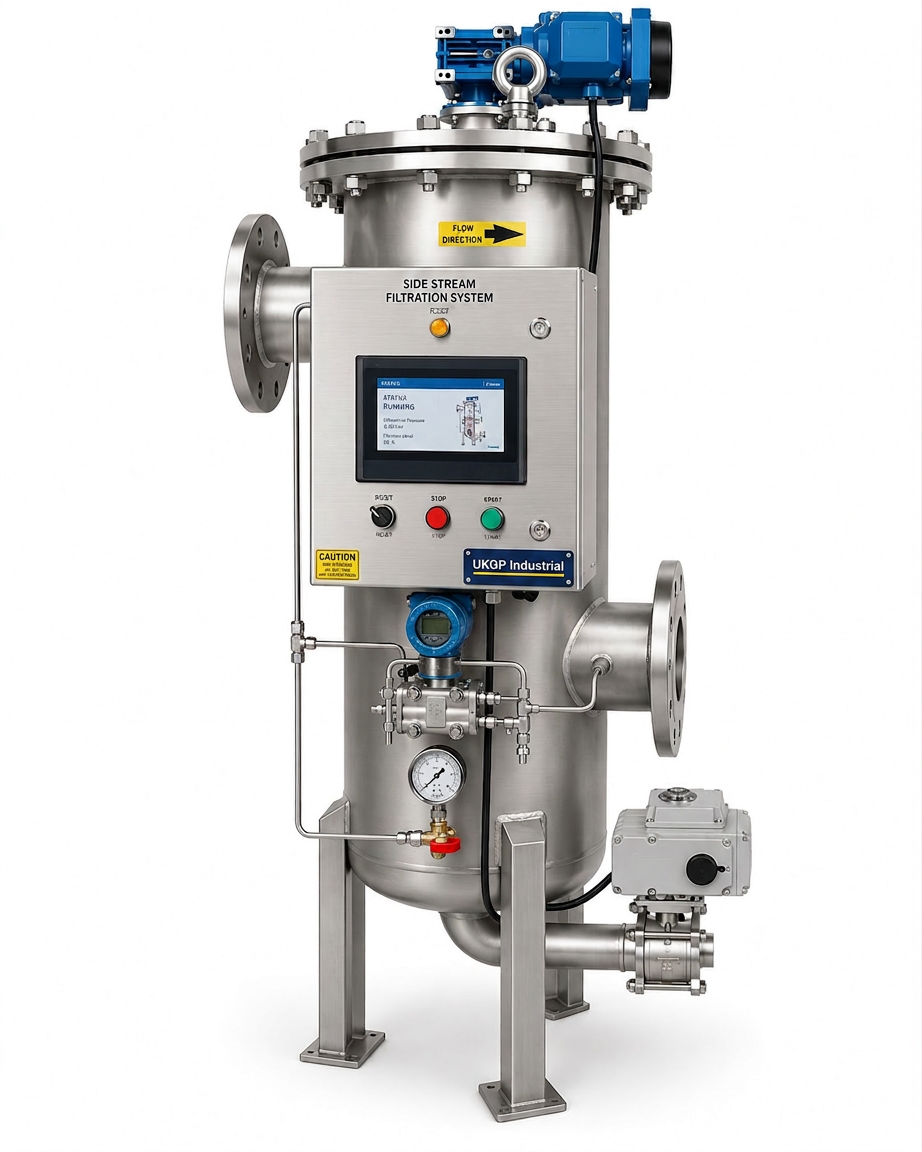
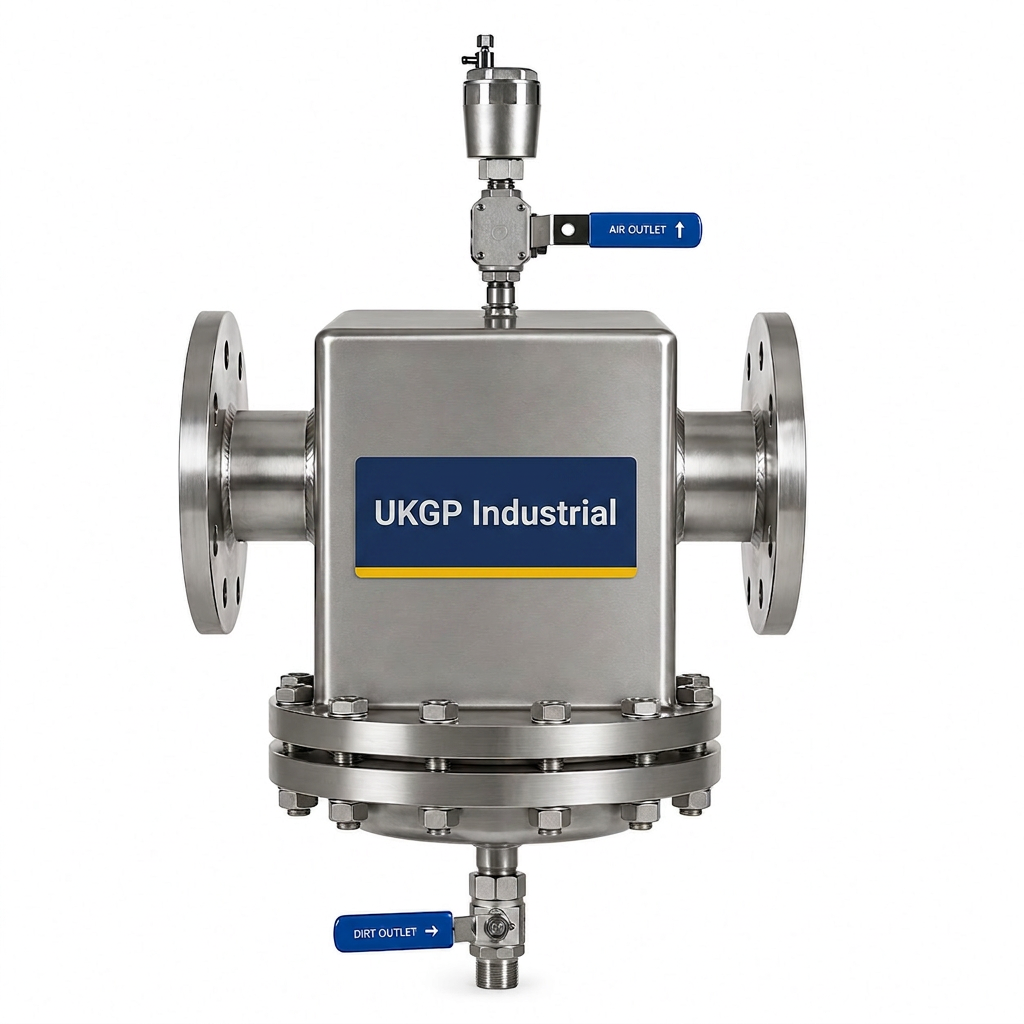
The installation of high-efficiency air and dirt separators on both the primary and secondary sides is non-negotiable for long-term reliability. Removing micro-bubbles is particularly important in solar circuits to prevent pump cavitation and 'air-locking' of the plate channels, which can lead to localised hot spots and gasket failure. For larger systems, sidestream filtration should be considered to maintain fluid clarity according to BSRIA BG29 and BG50 standards.
Hydraulic Integration and Best Practice
Correct hydraulic orientation is essential for the PHE to hit its design duty. It must be piped in a true counter-current flow pattern. If piped in parallel flow, the heat transfer efficiency can drop by up to 40%, rendering the solar array unable to dump its heat into the secondary store during peak irradiance. This often results in the system 'short-cycling' and significantly reduces the lifespan of the solar fluid.
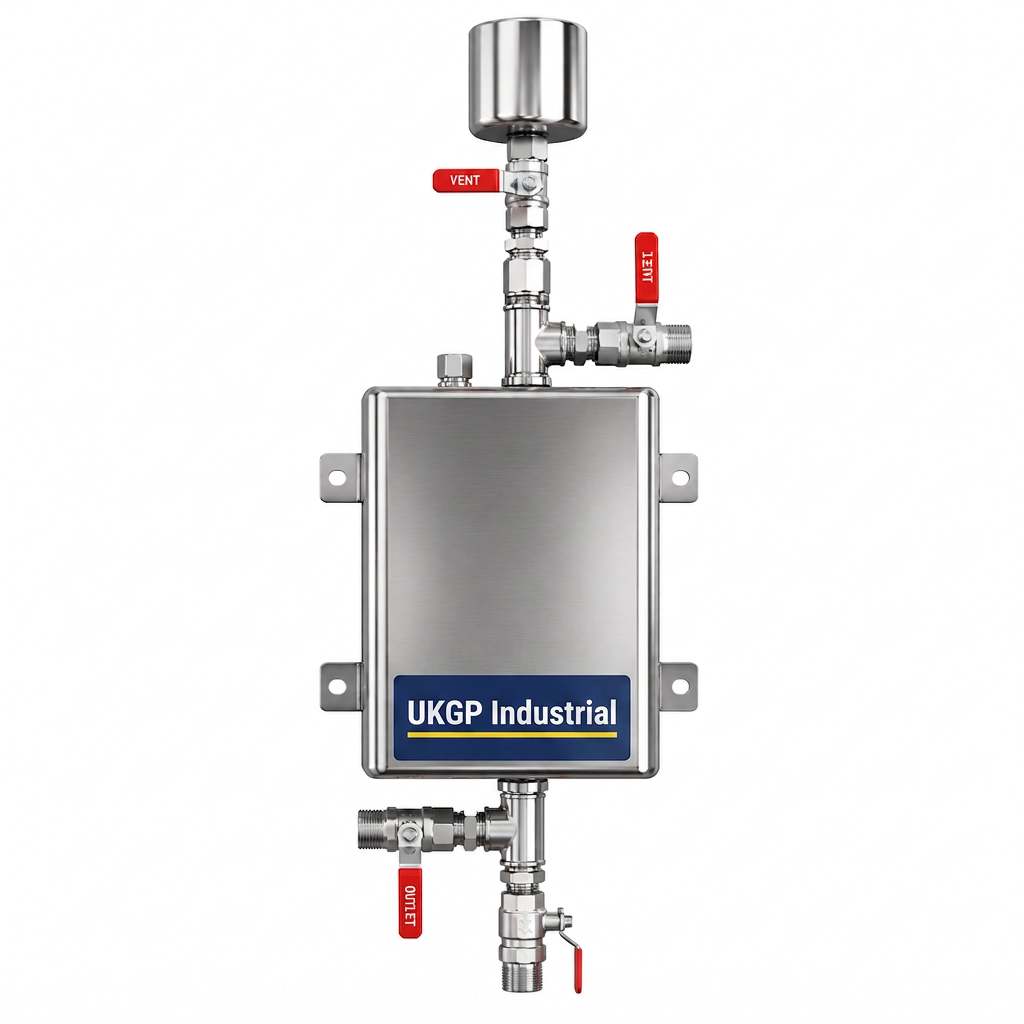
Furthermore, the secondary side pump must be interlocked with the primary solar pump. In many UK plant rooms, the PHE feeds a solar buffer vessel or a thermal store. The use of a variable speed pump on the secondary side, controlled to maintain a constant return temperature to the PHE, ensures the solar array operates at its lowest possible mean temperature, thereby increasing the collector's efficiency. Integration of a UKGP Industrial dosing pot on the secondary circuit allows for easy introduction of corrosion inhibitors to protect the PHE plates from the internal water chemistry of the building.
- Counter-flow configuration is essential for maximizing the Log Mean Temperature Difference (LMTD).
- Isolation valves should be placed to allow for CIP (Cleaning-In-Place) without draining the entire solar loop.
- Sensors for the solar controller must be placed as close to the PHE ports as possible to ensure accurate BTU metering and pump modulation.
Maintenance and Performance Monitoring
A plate heat exchanger is not a 'fit and forget' component. For solar thermal systems, annual performance verification is required. This involves checking the pressure drop across the PHE and comparing it to the original design data. An increase in pressure drop usually indicates internal fouling or scaling. For gasketed units, the ‘A’ dimension (the compressed thickness of the plate pack) should be checked to ensure no relaxation in the gaskets, which could lead to external leaks.
Chemical cleaning of the PHE should be performed using agents that are compatible with 316L stainless steel. Hydrochloric acid must never be used as it will cause rapid stress corrosion cracking. Instead, citric or phosphoric acid-based cleaners are preferred for removing limescale, while specialized alkaline cleaners are used if glycol sludge has accumulated. By adhering to a strict maintenance regime, the operational life of the PHE can exceed 20 years, ensuring the solar thermal investment continues to deliver carbon savings.
Frequently asked questions
What gasket material is best for high-temperature solar primary circuits?
- For solar thermal applications, we recommend EPDM HT (high temperature) gaskets, which typically offer resistance up to 160°C or 170°C, providing a necessary safety margin over standard EPDM.
What is the ideal pressure drop for a solar PHE?
- The pressure drop on the primary (solar) side should typically be kept between 20-40 kPa to balance pump energy consumption with the turbulent flow required for efficient heat transfer.
Why use a plate heat exchanger instead of a direct solar coil?
- Indirect systems using a PHE allow the primary circuit to be pressurised and filled with glycol, protecting against freezing and boiling while allowing the secondary side to remain potable or treated water at different pressures.
Can I use a standard brazed PHE for solar DHW?
- Yes, but double-wall (safety) plates are often specified in UK commercial projects to prevent cross-contamination between the glycol-heavy primary loop and the domestic hot water supply.