The Role of PHEs in Modern Heat Pump Architecture
In traditional UK boiler rooms, the plate heat exchanger was often used as a simple hydraulic break or for DHW separation. However, in the context of heat pumps, the PHE acts as the thermal gatekeeper. Because air-source heat pumps (ASHPs) and ground-source heat pumps (GSHPs) operate with significantly lower flow temperatures—typically 45°C to 55°C compared to 80°C for gas boilers—the efficiency of heat transfer becomes paramount. Any temperature loss across a PHE directly impacts the compressor's work, reducing the seasonal COP (SCOP) of the entire installation.
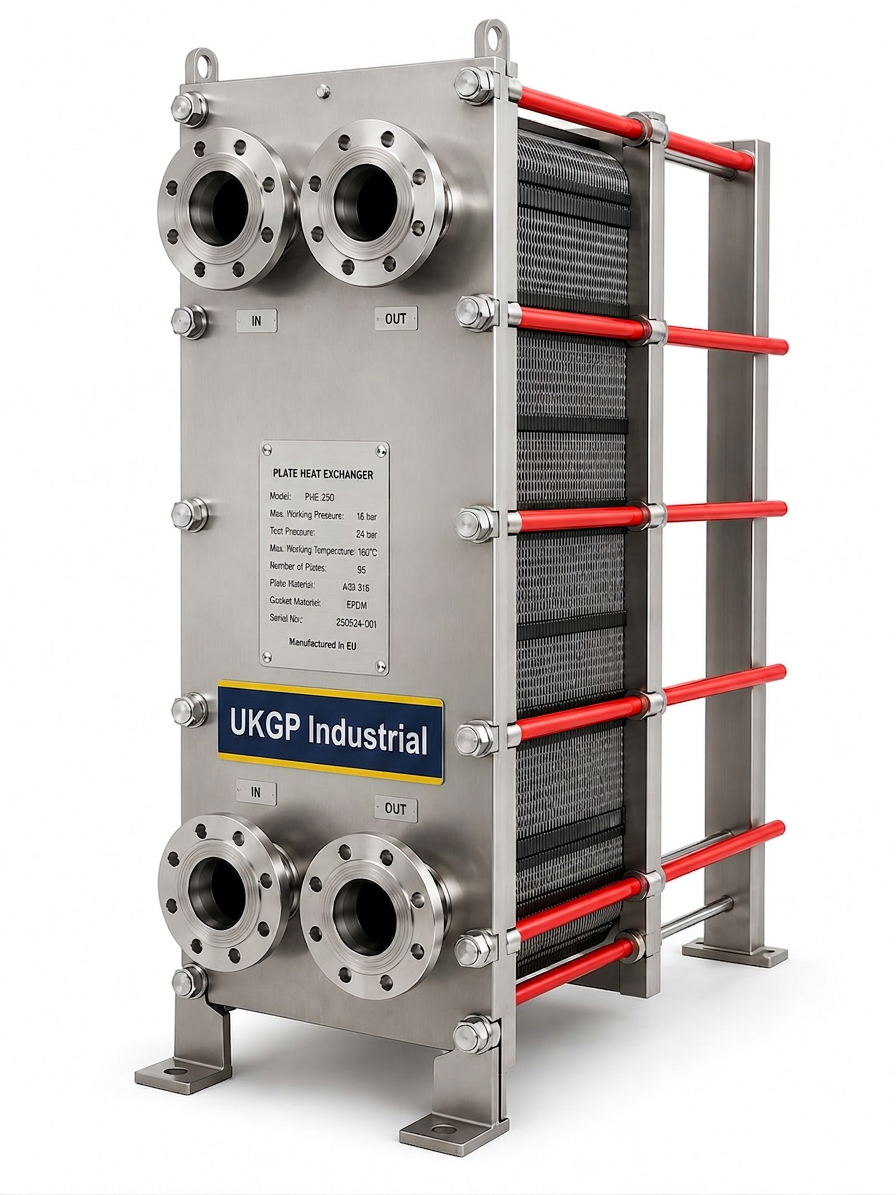
Designers must decide between gasketed and brazed units based on the system's thermal capacity and long-term serviceability. Large-scale commercial plant rooms, such as those in district heating schemes or high-rise residential blocks, typically favour gasketed plate heat exchangers (GPHEs). These units allow for future expansion by adding plates and enable physical cleaning of the heat transfer surfaces, which is critical in systems where water quality management cannot be guaranteed 100% of the time.
Brazed plate heat exchangers (BPHEs) are more common in smaller monobloc units or as internal components within heat pump skids. While they offer a compact footprint and high pressure/temperature resistance, they are 'sealed for life.' In a UK commercial environment, where the lifespan of plant is expected to exceed 20 years, the inability to mechanically clean a BPHE can be a liability if the primary or secondary circuits suffer from corrosion or scaling.
- Separation of glycol-filled external circuits from internal LTHW circuits.
- Hydraulic decoupling of high-pressure heat pump primary loops from variable-flow secondary circuits.
- Protection of delicate heat pump evaporators or condensers from system debris and magnetite.
- Facilitating domestic hot water (DHW) generation via high-performance instantaneous plate packs.
Thermal Design and Approach Temperatures
The most critical metric when specifying a plate heat exchanger for heat pumps is the 'approach temperature' or 'temperature cross.' In an ASHP system delivering 50°C water, the secondary heating circuit may require 48°C. This 2K approach requires a significantly larger surface area than a traditional boiler-plate setup where a 10K or 20K delta T is common. Specifying a PHE with too small a surface area forces the heat pump to run at higher flow temperatures to overcome the thermal resistance, which can drop the COP by as much as 2-3% for every degree of increased temperature.
Plate geometry plays a vital role in achieving these tight approaches. 'H-type' plates (high chevron angle) create more turbulence and better heat transfer but at the cost of a higher pressure drop. 'L-type' plates (low chevron angle) have lower pressure drops but reduced thermal efficiency. For heat pump applications, a 'mixed' plate configuration is often the optimum solution, balancing the available pump head against the required thermal performance.
UK consultants must also account for the viscosity of antifreeze additives. Many ASHP installations utilise monopropylene glycol for environmental safety. However, glycol is more viscous and has a lower specific heat capacity than water. A PHE designed for pure water will underperform by 10-15% if switched to a 30% glycol mix without resizing, leading to compressor cycling and potential high-pressure refrigerant trips.
- Approach temperatures (Difference between secondary flow and primary return).
- Plate material thickness versus thermal conductivity.
- Turbulence and the Reynolds number at low flow velocities.
- The impact of glycol concentrations (Monoethylene vs Monopropylene) on heat transfer coefficients.
Hydraulic Dynamics and Pressure Drop Management
Hydraulic design in heat pump plant rooms is a balancing act between heat transfer efficiency and parasitic pumping power. Most commercial heat pumps have relatively narrow allowable flow ranges to protect the internal heat exchanger. When a PHE is used as a hydraulic break, it must be sized to handle the primary flow rate while maintaining a low pressure drop on the secondary side to keep the building’s circulating pumps within their high-efficiency zones.
BSRIA BG29/21 and CIBSE Guide S emphasize the importance of system cleanliness to maintain these hydraulic characteristics. If a PHE becomes partially blocked with magnetite or scale, the pressure drop increases exponentially. This not only strains the pumps but can also lead to 'stagnation' in certain plates, creating cold spots and reducing the effective kW rating of the unit. UKGP Industrial units are designed with optimized port sizes to ensure low entry velocities, reducing the risk of localized erosion and debris accumulation.
In district heating or multi-dwelling unit (MDU) applications, the PHE must also handle high 'turndown' ratios. During periods of low demand, such as overnight in summer, the flow velocity through the PHE drops. If the velocity falls too low, the flow becomes laminar rather than turbulent, and the heat transfer coefficient collapses. Engineers should specify PHEs that maintain turbulent flow down to the minimum expected system load.
Material Selection for Longevity and Safety
Standard heat pump installations typically utilize 316L Stainless Steel plates. This material provides an excellent balance of corrosion resistance and thermal conductivity. However, if the PHE is used for heat recovery from a process cooling loop or involves groundwater in a GSHP system, the chloride content must be checked. High chloride levels can lead to pitting and stress corrosion cracking in 316L, necessitating the upgrade to Titanium plates.
Gasket selection is equally critical. In heat pump DHW applications, where temperatures are moderate (under 65°C), EPDM gaskets are the industry standard due to their excellent elasticity and lifespan. For systems that might see higher temperatures during a thermal disinfection cycle (Legionella flush at 70°C+), the gaskets must be rated accordingly. NBR gaskets are generally reserved for oil-based process applications and are less common in standard HVAC heat pump circuits.
When a PHE is used for instantaneous DHW, UK water regulations (WRAS/KIWA) may require double-wall plates. This design consists of two plates nested together with an air gap; if one plate fails, the fluid leaks out of the assembly rather than contaminating the other circuit. This is particularly relevant when using industrial refrigerants or high-concentration glycols on the primary side of the heat pump.
- Double-wall (Duo) plates for potable water safety.
- ASME and PED compliance for high-pressure refrigerants.
- EPDM vs NBR gasket materials for heat pump temperatures.
- Stainless Steel 316L vs Titanium for corrosive environments.
Protecting the Thermal Core: Filtration and Water Quality
The narrow channels within a plate heat exchanger—often as small as 2mm to 4mm—make it an efficient 'filter' for all the debris in a heating system. In a retrofit project where a heat pump replaces a gas boiler, the existing pipework often contains high levels of black iron oxide (magnetite). Without proper protection, this magnetite will settle in the PHE, leading to reduced heat transfer and potential 'pinholing' due to under-deposit corrosion.
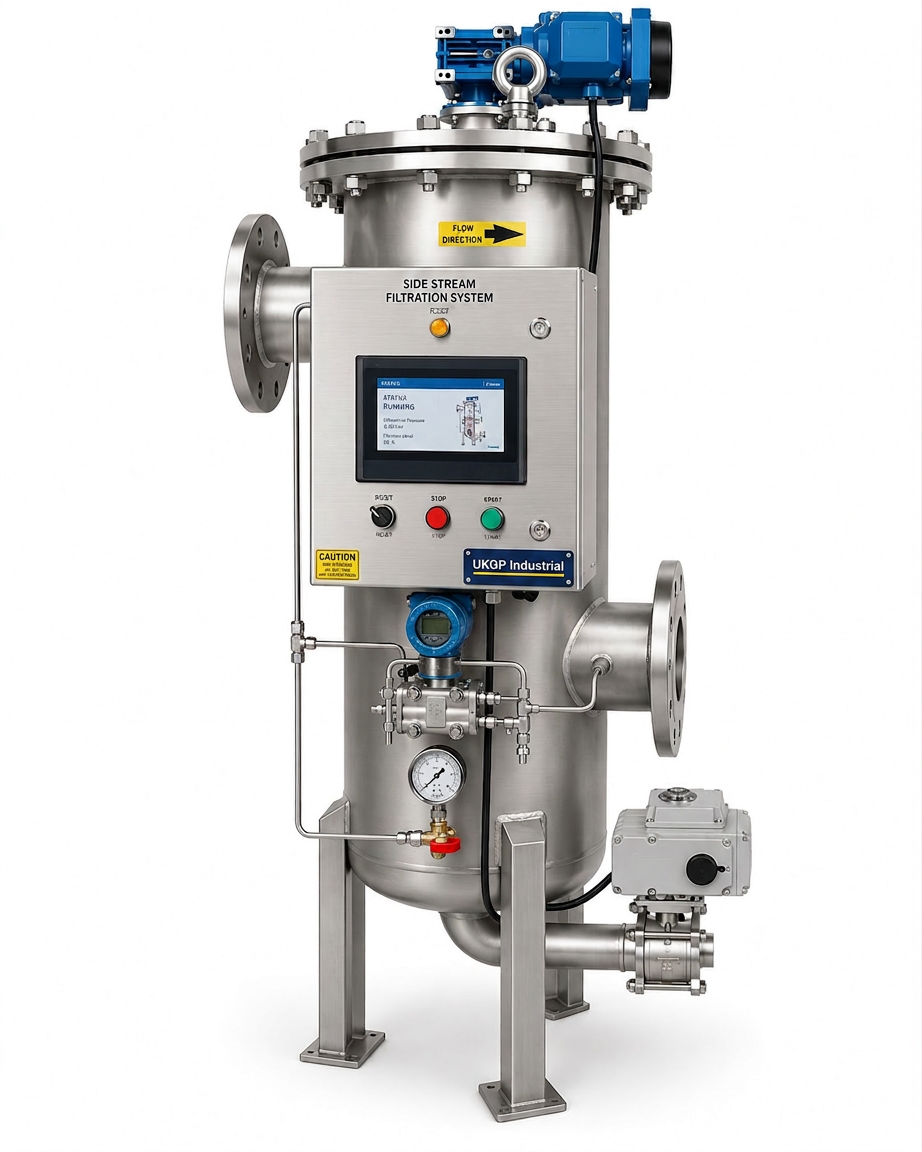
To prevent this, the installation of side-stream filtration is highly recommended for all heat pump plant rooms. Unlike full-flow filters which can be bypassed or become a point of failure if blocked, a side-stream filter continually cleans a portion of the circulating water, removing particles down to sub-micron levels. This is particularly important for the secondary side of the PHE, which is exposed to the wider building circuit.
In addition to filtration, chemical dosing remains a cornerstone of UK building services. Maintaining the correct levels of inhibitor, as per BS 7593 and BSRIA BG50, ensures that the internal surfaces of the PHE remain passivated. For heat pump systems, which often operate with lower flow velocities than traditional systems, the risk of biological growth (biofilm) is higher, requiring careful monitoring of biocides in addition to corrosion inhibitors.
Installation Best Practices in UK Plant Rooms
Proper orientation and pipework support are frequently overlooked during PHE installation. For gasketed units, it is essential to leave sufficient space on one side of the unit to allow the plate pack to be drawn out for servicing. A common error in cramped London plant rooms is installing the PHE too close to a wall, making it impossible to perform future maintenance without disconnecting all secondary pipework.
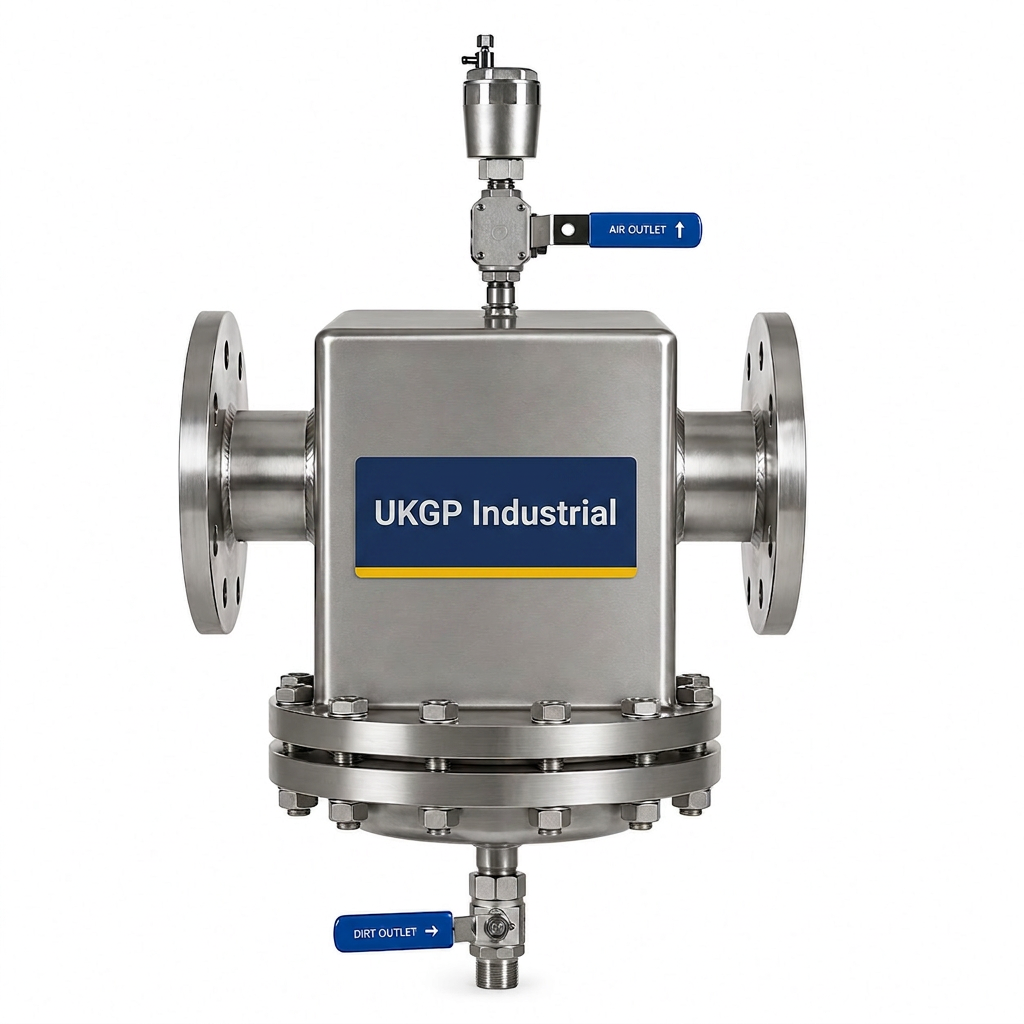
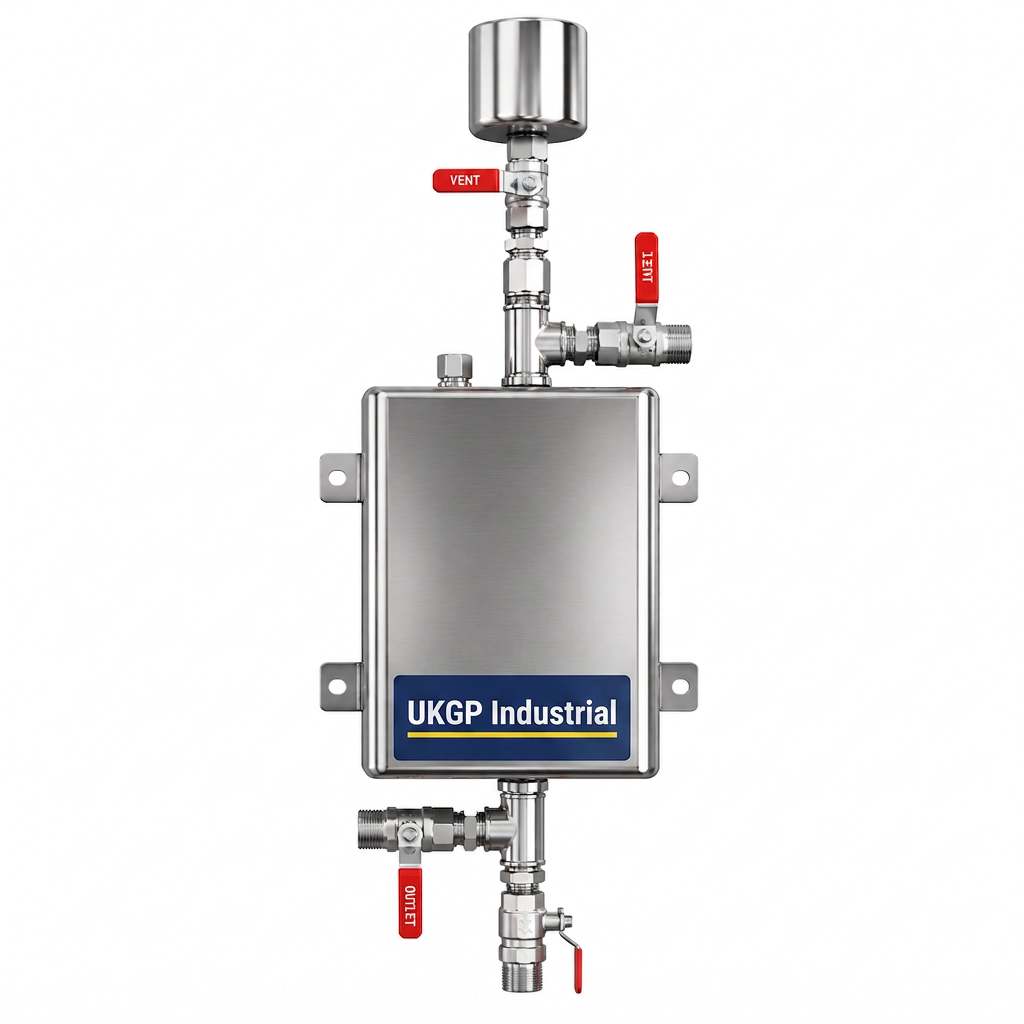
Ventilation is critical. Air trapped in the top of a PHE reduces the effective heat transfer area and can cause 'knocking' sounds and cavitation. Every PHE installation should include high-quality automatic air vents or manual bleed valves on the pipework immediately adjacent to the upper ports. Similarly, drain valves should be installed at the lowest points to facilitate flushing and Cleaning-In-Place (CIP) procedures.
Flexible connectors or bellows should be considered if the heat pump unit is prone to vibration, although modern commercial ASHPs are generally well-isolated. More importantly, the PHE should be fitted with thermal insulation jackets. For heat pumps, where every fraction of a degree counts, losing heat from the edges of the plate pack is an avoidable waste of energy. UKGP Industrial provides bespoke, removable jackets that allow for easy inspection without damaging the insulation.
- Primary inlet/outlet (ASHP/GSHP side).
- Secondary inlet/outlet (Internal heating/DHW side).
- Air vent valves at the highest point of the PHE frame.
- Drain valves for maintenance and C.I.P. (Cleaning In Place).
- Pressure and temperature gauges on all four ports.
Maintenance and Longevity of Gasketed Units
The maintenance cycle for a gasketed plate heat exchanger in a heat pump system is typically longer than in a high-temperature steam or boiler system, but it is no less critical. The most common maintenance task is the 'tighten' check. Over time, particularly during thermal cycling, the gaskets may compress. The dimension of the plate pack (the 'A' dimension) should be measured and compared against the manufacturer's data sheet. If the pack is outside the tolerance, the bolts must be tightened uniformly to prevent leaks.
If the differential pressure across the PHE increases by more than 10-15% over the baseline, a Cleaning-In-Place (CIP) procedure should be performed. This involves circulating a mild descaling or cleaning solution through the PHE without dismantling the plate pack. CIP is effective for removing light scaling or bio-films, but for heavy magnetite ësludgingí, the unit may need to be opened and manually cleaned using high-pressure water and soft brushes.
When a GPHE is opened, the gaskets should be inspected for elasticity. If the rubber has become brittle or 'set,' it is time for a full gasket replacement. It is standard practice to replace the entire set rather than individual gaskets to ensure uniform sealing pressure across the pack. Proper maintenance ensures that the PHE continues to operate at its design COP, protecting the investment in the heat pump technology.
- Annual torque checks on the tightening bolts (for GPHE).
- Differential pressure monitoring to detect fouling.
- Visual inspection for 'weeping' at the gaskets.
- Chemical analysis of the circulating fluid.
Conclusion: Future-Proofing Heat Pump Systems
The plate heat exchanger is much more than a simple radiator in a box; it is a precision-engineered component that determines the financial and environmental success of a heat pump installation. For UK engineers, the move towards Net Zero means designing systems that are efficient at lower temperatures. This requires a shift in mindset from 'oversizing for safety' to 'precision sizing for efficiency.'
By selecting high-quality gasketed PHEs, engineers provide building owners with a maintainable, adaptable asset that can be serviced and expanded. Integrating these units with robust air and dirt separation and side-stream filtration ensures that the theoretical efficiency of the heat pump is realized in the real-world operation of the building.
As heat pump capacities continue to grow, from 50kW monoblocs to multi-megawatt district schemes, the role of the industrial PHE will only become more central. Working with experienced suppliers like UKGP Industrial allows consultants to specify units that meet the rigorous demands of British building standards while delivering the thermal performance required for the next generation of HVAC systems.
- Heat pumps operate at lower Delta Ts, necessitating more surface area.
- The primary loop is often glycol-based; the secondary is water-based.
- Pressure drops must be kept low to maximize system efficiency.
- Water quality is the single biggest factor in PHE longevity.
Frequently asked questions
What is the acceptable pressure drop for a PHE in a heat pump circuit?
- For heat pump systems, we typically specify a maximum pressure drop of 20-40 kPa across the PHE to manage pump power consumption and maintain COP. Values exceeding 50 kPa often indicate an undersized unit or fouling.
When should I specify Titanium plates instead of Stainless Steel?
- While 316 Stainless Steel is standard, systems with high chloride levels or those using saline groundwater (GSHP) may require Titanium plates to prevent stress corrosion cracking.
Does the flow direction matter for heat pump PHEs?
- Always install the PHE with counter-current flow (fluids moving in opposite directions). This maximizes the Log Mean Temperature Difference (LMTD) and is essential for achieving the close temperature approaches required by heat pumps.
Are PHEs for heat pumps larger than those for gas boilers?
- Yes, because heat pumps operate at lower temperatures, the Delta T is smaller, requiring a larger surface area (more plates) to transfer the same amount of kW compared to a boiler system.