Thermal Separation in Low-Carbon Systems
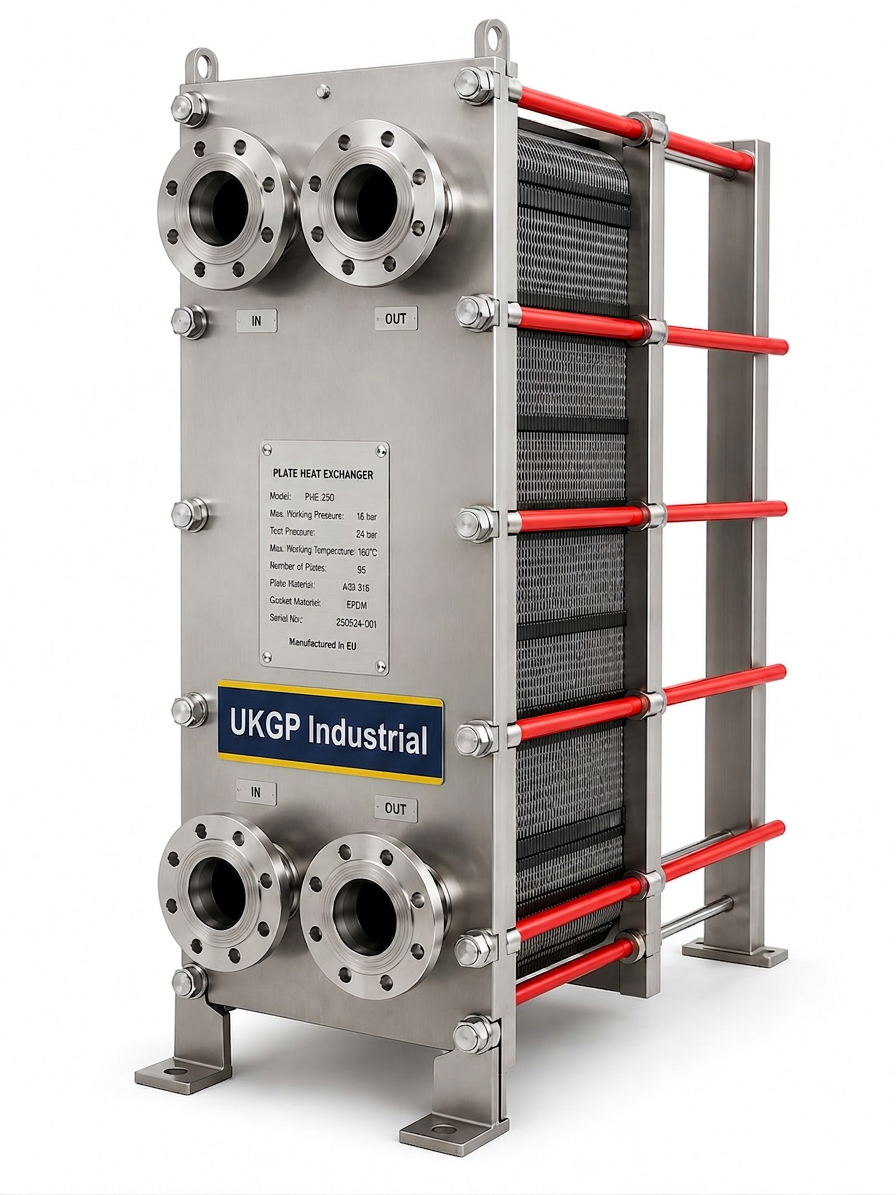
In the evolving landscape of UK building services, the transition from gas-fired boilers to air-source or ground-source heat pumps necessitates a shift in hydraulic design. A plate heat exchanger acts as the critical thermal interface, allowing different fluid circuits to operate at their optimum pressures and flow rates without physical mixing. This is particularly vital in retrofit scenarios where the existing radiator or underfloor heating circuit may contain legacy debris or operate at significantly different pressures than the new heat pump unit. By utilizing a high-efficiency interface, engineers can protect sensitive heat pump components from potentially contaminated system water, which is a common cause of premature failure in UK commercial plant rooms.
When designing these systems, CIBSE AM16 and CP1 guidelines emphasize the importance of maintaining narrow approach temperatures to maximize the Coefficient of Performance (COP) of the heat pump. A precision-engineered plate heat exchanger allows for a close temperature cross, meaning the secondary fluid can be heated to within 1 or 2 degrees of the primary flow temperature. This thermal efficiency is non-negotiable for contractors aiming to meet BREEAM or LEED certifications, as any unnecessary temperature drop across the heat exchanger directly increases the electrical consumption of the heat pump compressors. It is therefore essential to source units from manufacturers who can provide full thermal sizing data backed by rigorous engineering standards.
Furthermore, the use of a plate heat exchanger facilitates easier system maintenance and commissioning. By decoupling the heat source from the heat emitters, engineers can treat the water chemistry in the heat pump circuit separately from the rest of the building. This is highly beneficial for complying with BSRIA BG50 standards, which mandate strict water quality monitoring to prevent corrosion and scaling. In UKGP installations, we see that well-separated systems experience significantly fewer issues with air ingress and cavitation, ensuring that the critical heat generation assets operate within their intended design parameters for the duration of their twenty-year service life expectancy.
- Ensures total hydraulic separation between primary and secondary circuits
- Enables close approach temperatures to maintain high heat pump COP
- Protects heat pump internals from legacy system debris and contaminants
- Facilitates compliance with CIBSE AM16 heat pump design guidelines
Material Selection and Gasket Integrity
The durability of a plate heat exchanger depends heavily on the materials specified for the plates and gaskets. For standard commercial heating applications, 316L stainless steel plates are the industry benchmark, providing excellent resistance to corrosion and thermal stress. However, in environments near coastal areas or in industrial processes where aggressive fluids are present, more resilient alloys like Titanium may be required. The plate profile also plays a role in performance; 'hard' and 'soft' plates are often mixed to achieve the specific pressure drop and heat transfer requirements of the consultant’s specification. UKGP provides both gasketed and brazed units to suit various project scales and maintenance requirements.
Gasketed plate heat exchangers offer the distinct advantage of being serviceable and expandable. As building loads change, additional plates can often be added to the frame, provided the frame size was initially selected with future-proofing in mind. This is a crucial consideration for facilities managers looking to manage long-term life cycle costs. BSRIA BG29 highlights the importance of keeping heat exchange surfaces clean to maintain efficiency; gasketed units can be professionally stripped, chemically cleaned, and re-gasketed, which is a significant sustainable advantage over sealed units that must be replaced entirely. We recommend Nitrile or EPDM gaskets depending on the operating temperatures and fluid chemistry of the specific project.
For smaller commercial applications or district heating substations where space is at a premium and the load is constant, brazed plate heat exchangers provide a compact and cost-effective alternative. These units eliminate the need for a heavy frame and gaskets, utilizing a copper-brazing process to seal the plates together. While they are not serviceable in the same way as their gasketed counterparts, they offer exceptionally high pressure and temperature ratings. When choosing a brazed plate heat exchanger, it is vital to ensure the water quality is managed meticulously in accordance with BS 8552 to prevent fouling, as these units cannot be manually cleaned. UKGP offers DN20 to DN300 connections to accommodate a wide range of flow requirements.
- 316L Stainless Steel plates as standard for corrosion resistance
- Choice between EPDM and Nitrile gaskets for various thermal profiles
- Gasketed designs allow for future expansion and mechanical cleaning
- Brazed units offer high pressure ratings in a compact footprint
Managing Water Quality and System Debris
Effective water treatment is the cornerstone of any efficient HVAC system, especially one utilizing a plate heat exchanger with narrow plate gaps. Even small amounts of magnetite or suspended solids can settle on the plate surfaces, leading to a phenomenon known as fouling. Fouling increases the thermal resistance and the pressure drop across the exchanger, forcing pumps to work harder and reducing the overall energy efficiency of the building. To prevent this, BSRIA BG29 and BG50 recommend a robust pre-commissioning cleaning process followed by ongoing chemical dosing and filtration. Without these measures, the performance of the heat interface will degrade rapidly, leading to increased operational costs and potential system downtime.
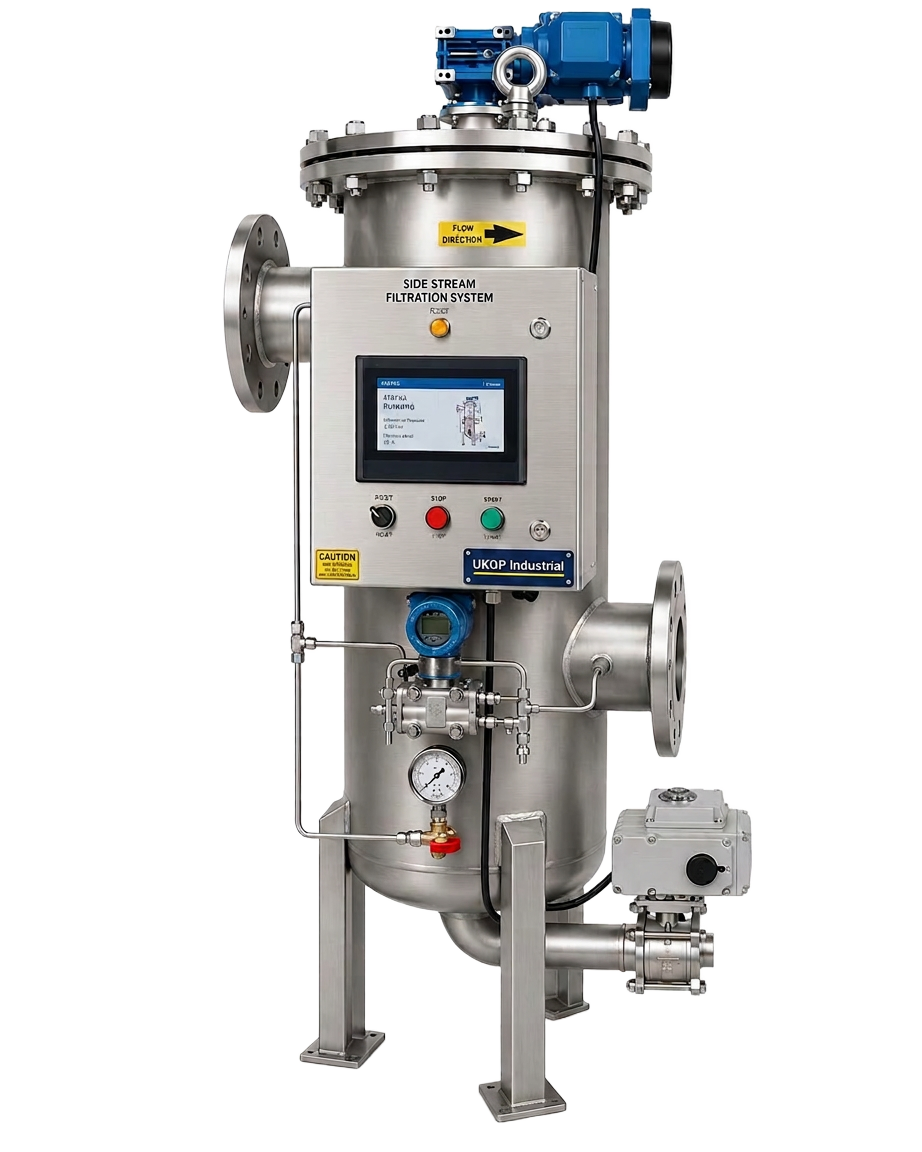
Incorporating a side-stream filtration system alongside your plate heat exchanger is the most effective way to manage these risks. Side-stream filters continuously remove fine particulate matter, including magnetite, which is common in older UK pipework. By removing these particles before they can settle in the narrow channels of the heat exchanger, you maintain the design flow rates and heat transfer coefficients. Consultants should always specify a filtration solution that can handle at least 5% to 15% of the total system flow to ensure water clarity is maintained. This proactive approach significantly extends the intervals between necessary heat exchanger maintenance and ensures that the system continues to meet its carbon reduction targets.
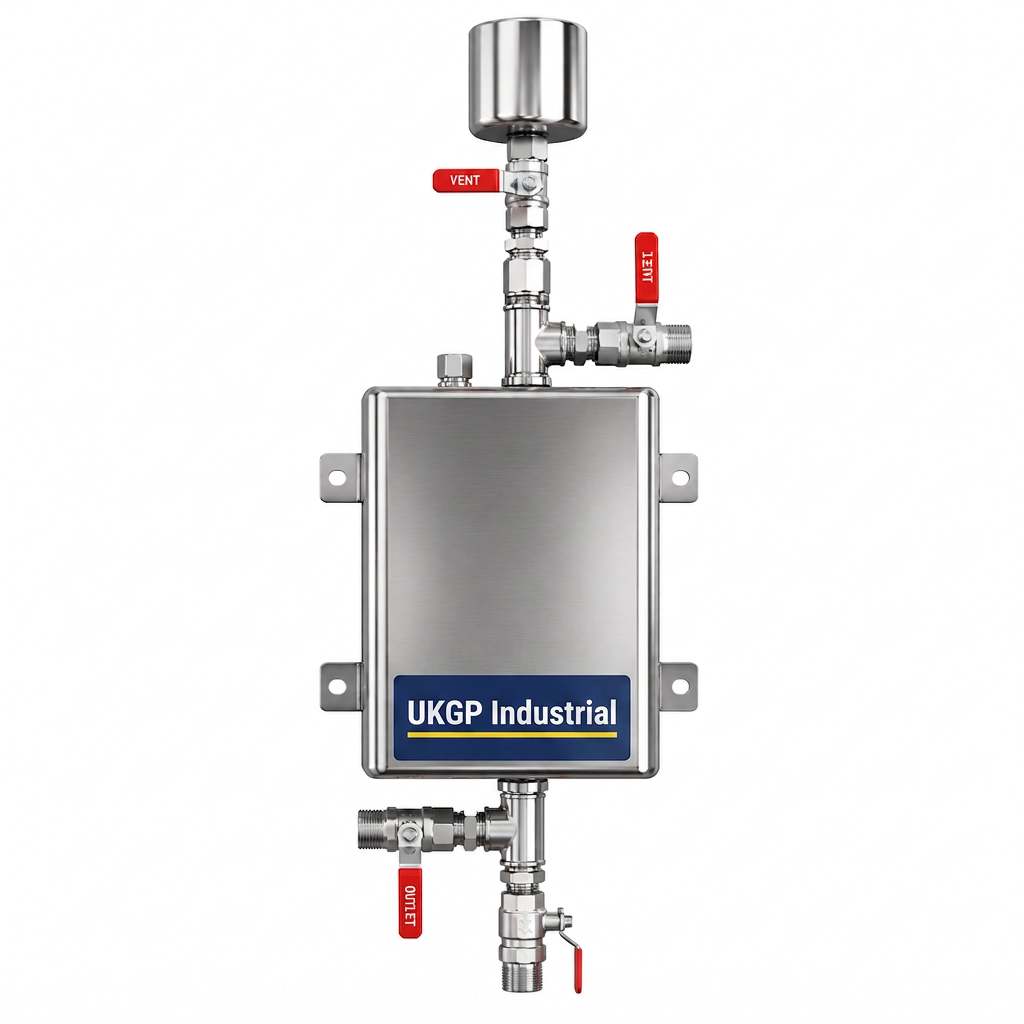
In addition to filtration, the use of chemical dosing pots allows for the controlled introduction of inhibitors and biocides. These chemicals form a protective film on metal surfaces, preventing the electrolytic corrosion that leads to leaks and blockages. For M&E contractors, ensuring that the dosing pot is installed correctly in a bypass loop is a key part of the installation process. When paired with a UKGP plate heat exchanger, which comes with a 2-year warranty, a well-managed water treatment regime provides the end-user with peace of mind and long-term reliability. We can help size these components based on the total system volume and the specific requirements of the heat pump manufacturer.
- Prevents fouling of narrow plate channels to maintain efficiency
- BSRIA BG50 compliance through continuous side-stream filtration
- Reduces pressure drop and pump energy consumption over time
- Dosing pots allow for precise maintenance of chemical inhibitors
Sizing the Plate Heat Exchanger for Peak Performance
Accurate sizing is the most critical step in the procurement of a plate heat exchanger. At UKGP, we do not believe in 'rule of thumb' estimations; every unit we supply is sized from a full thermal specification provided by the consultant or lead engineer. This data includes the primary and secondary flow and return temperatures, the required heat load in kilowatts, the maximum allowable pressure drop, and the properties of the fluids being used. By inputting this data into our advanced thermal modelling software, we can design a unit that perfectly matches the building's demand, ensuring that the heat pump is never starved of flow and that the secondary circuit receives the exact energy required.
One common mistake in UK plant rooms is over-sizing the heat exchanger, which can lead to low flow velocities across the plates. Low velocity reduces the turbulence within the fluid channels, which is essential for the self-cleaning effect that prevents sediment build-up. Conversely, under-sizing leads to excessive pressure drops, which can exceed the pump's head capacity and lead to insufficient heating during peak winter loads. Our technical team works closely with procurement leads to find the 'sweet spot' in design, balanced with a lead time of 4-6 weeks to ensure that project timelines are met without compromising on engineering precision or component quality.
The resulting selection will define the connection sizes, which for UKGP typically range from DN20 for small commercial units up to DN300 for large-scale district heating or industrial applications. Whether the project requires a gasketed unit for easy maintenance or a vacuum-brazed unit for high-pressure durability, we ensure all components meet BS EN 14917 and other relevant British Standards. Providing a full thermal spec at the tender stage allows us to offer a firm quote for a plate heat exchanger that includes a comprehensive 2-year warranty, giving contractors and clients confidence in the longevity of their investment.
- Precision sizing from full thermal specs (kW, ΔT, and pressure drop)
- Ensures turbulent flow to maximize heat transfer and self-cleaning
- Prevents pump over-work by managing plate-side pressure drops
- Range of DN20 to DN300 connections to suit all project scales
Protecting the System: Air, Dirt, and Expansion
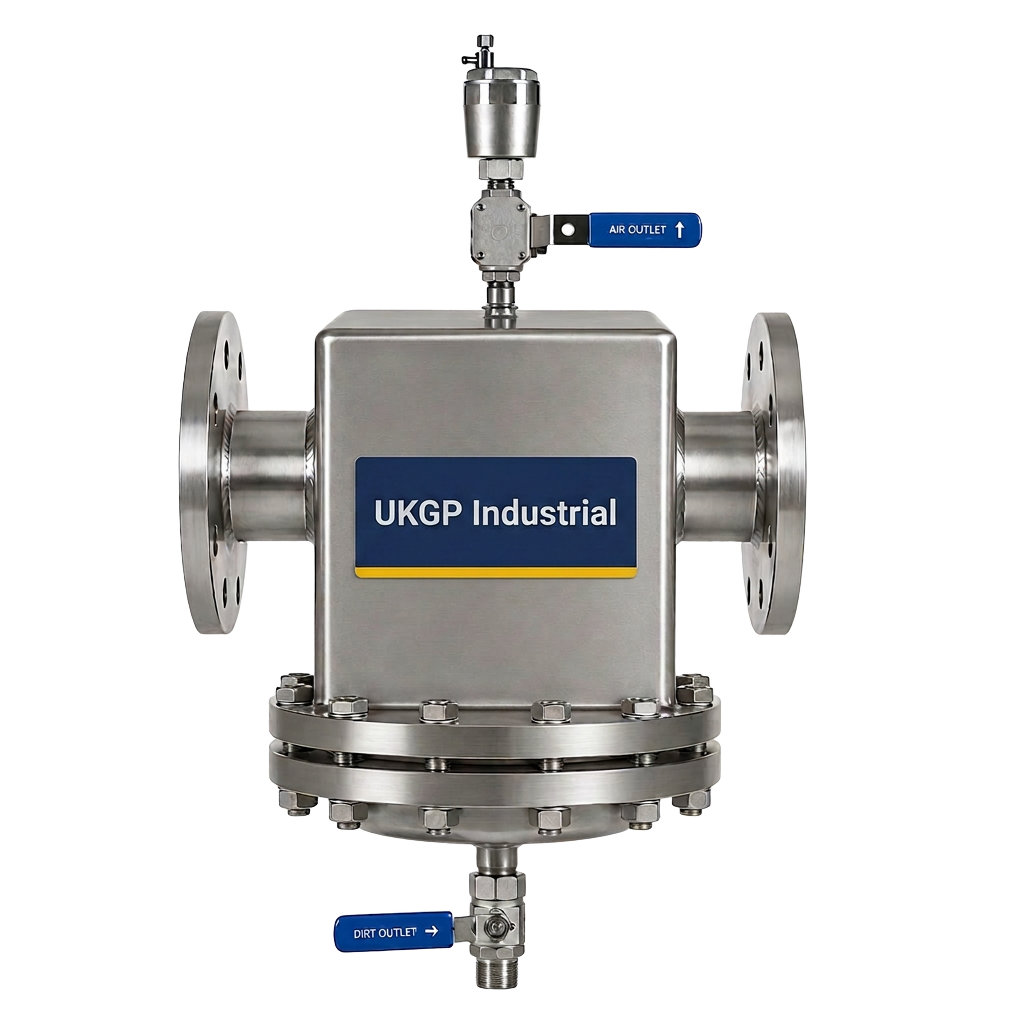
A plate heat exchanger cannot operate in isolation; it is part of a complex hydraulic ecosystem that requires management of air, dirt, and thermal expansion. In any heat pump system, air is the enemy of efficiency. Micro-bubbles can attach to the heat transfer surfaces, creating insulating pockets that reduce the effectiveness of the exchanger. Installing a high-quality air and dirt separator at the point of lowest solubility—usually the hottest point in the system—is essential. These units remove both entrained air and heavy sediment, protecting the delicate plates within the exchanger and ensuring that the calculated thermal performance is actually achieved in practice.
Thermal expansion is another critical factor, especially as systems transition through different seasonal load profiles. As the water temperature fluctuates, the volume of the fluid changes, potentially leading to dangerous pressure spikes or vacuum conditions if not properly managed. Expansion bellows and vessels must be sized according to the total system volume and the temperature range of the heat pump. Without adequate expansion relief, the gaskets in a plate heat exchanger can be subjected to excessive stress, leading to leaks. Ensuring the mechanical stability of the entire pipework assembly is a core requirement for any UK M&E installation, adhering to BS EN standards for pressurized equipment.
Finally, for systems where multiple heat pumps are banked together or where there is a significant variable flow requirement on the secondary side, low loss headers are often employed. These headers ensure that the primary flow from the heat pumps and the secondary flow to the building remain hydraulically independent, preventing pump conflict and ensuring stable flow through the plate heat exchanger. When all these components—filtration, separation, expansion, and heat exchange—are designed as a cohesive whole, the result is a robust plant room that delivers high efficiency with minimal required intervention from the facilities management team.
- Air and dirt separators protect plates from insulating micro-bubbles
- Expansion bellows manage thermal stress on gaskets and pipework
- Low loss headers ensure stable flow for variable speed pumping
- Complete system approach improves long-term reliability and efficiency
Procurement and Lead Times for UK Projects
In the current UK construction market, lead times are a significant factor in project delivery. Waiting three months for critical plant room equipment is often not an option for contractors working on tight schedules. At UKGP, we have optimized our supply chain to offer a standard lead time of 4-6 weeks for most plate heat exchanger configurations. This allows project managers to stay on track without having to settle for off-the-shelf units that might not meet the specific thermal requirements of the building. Our Surrey-based technical team provides rapid response times for quotes and technical queries, ensuring that the procurement process is as efficient as the products we supply.
Commercially, the decision to invest in a high-quality plate heat exchanger is supported by the 2-year warranty we offer as standard. This warranty reflects our confidence in the build quality and engineering of our units, whether they are gasketed or brazed. For procurement leads, this reduces the risk profile of the equipment and provides a clear path for recourse should any issues arise during the commissioning or early operation phases. When combined with our ability to provide all the ancillary plant room equipment—from dosing pots to expansion bellows—UKGP acts as a single-source supplier for many M&E contractors, simplifying the supply chain and reducing administrative overhead.
When you are ready to move forward with a project, simply provide our team with your full thermal specification. We will provide a detailed proposal that includes the physical dimensions, weight, and performance data for the suggested plate heat exchanger. Whether you are working on a new-build heat pump installation or a complex retrofit project, our expert advice will ensure that your thermal interface is optimized for energy efficiency and compliant with all relevant British Standards. Contact UKGP today to leverage our technical expertise and secure a high-efficiency solution for your next building services project.
- Reliable 4-6 week lead times to keep UK projects on schedule
- Comprehensive 2-year warranty on all heat exchanger units
- Surrey-based technical support for rapid quoting and sizing
- Streamlined procurement with a single-source plant room supplier
Frequently asked questions
Why is a plate heat exchanger necessary for a heat pump system?
- It provides hydraulic separation, protecting the heat pump from system debris while allowing for different operating pressures and fluid types between the primary and secondary circuits.
What is the typical lead time for a UKGP plate heat exchanger?
- Our standard lead time is 4-6 weeks, significantly faster than many international manufacturers, ensuring your project remains on schedule.
Can I get a warranty on these units?
- Yes, UKGP provides a 2-year warranty on all gasketed and brazed plate heat exchangers, provided they are installed and maintained according to our guidelines.
How do you size a plate heat exchanger for my project?
- We size each unit from a full thermal specification, including heat load (kW), flow/return temperatures, and allowable pressure drops to ensure maximum efficiency.
Are your heat exchangers compliant with British Standards?
- Absolutely. All our units are designed and manufactured to meet BS EN 14917 and other relevant UK standards for pressurized HVAC equipment.