Thermal Interface Principles in District Heating
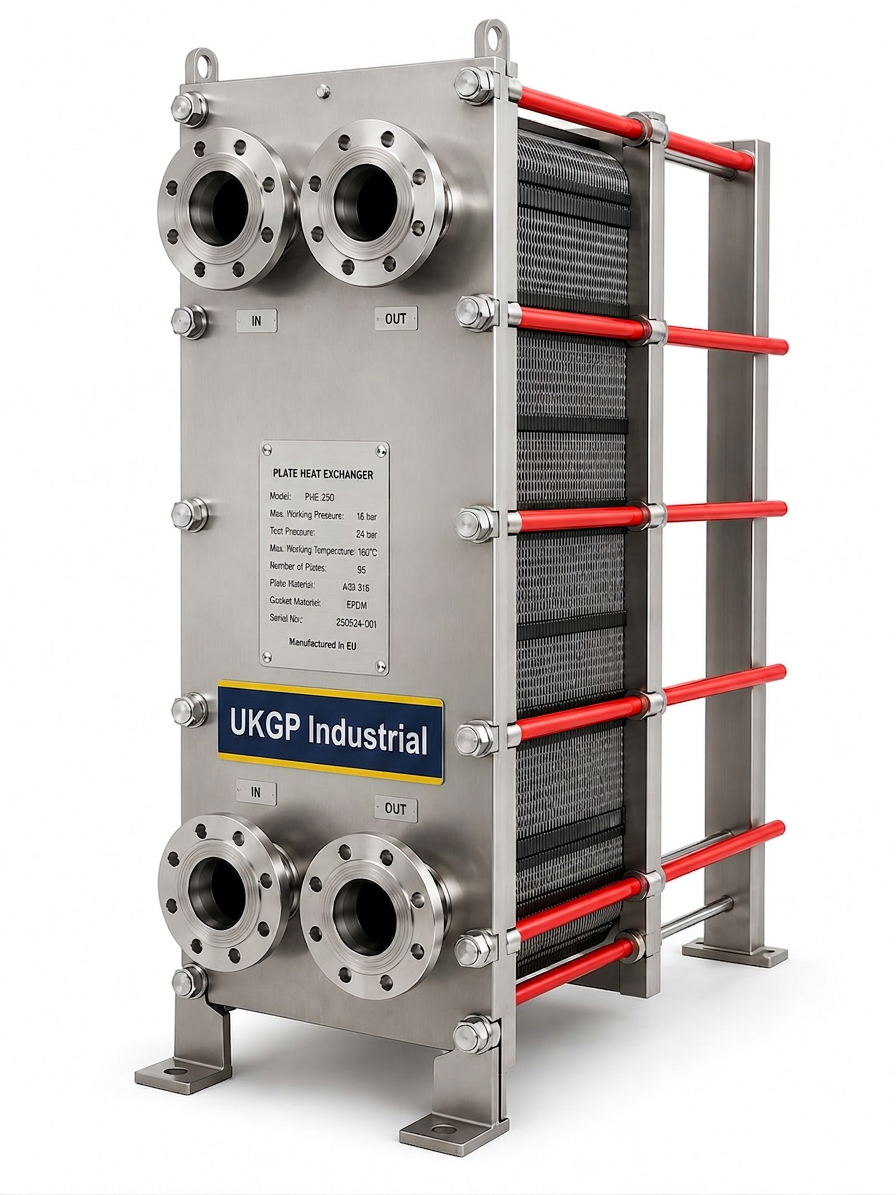
The primary function of a plate heat exchanger in a district heating substation is hydraulic separation. By isolating the primary network from the secondary building services, engineers protect the central plant from potential contamination, leaks, or pressure spikes originating within individual properties. This separation also allows the primary network to operate at significantly higher pressures and temperatures than the internal building emitters, which is essential for efficient long-distance heat distribution.
Thermal efficiency is dictated by the Logarithmic Mean Temperature Difference (LMTD) and the heat transfer coefficient of the plates. In modern UK heat networks, there is a drive toward 'low-return temperatures' to maximise the efficiency of condensing boilers and heat pumps in the central energy centre. This requires PHEs with high 'theta' values—units designed to achieve a close temperature approach, often as small as 2°C to 5°C, ensuring maximum heat extraction from the primary fluid.
Material selection for these interfaces is governed by the chemistries of both the primary and secondary fluids. While AISI 316 stainless steel is the standard for most UK applications, systems involving high chloride content or specific industrial processes may require titanium or higher-grade alloys. The gasket material, typically EPDM or Nitrile (NBR), must also be specified based on the peak operating temperatures and the presence of any chemical additives in the system water.
- Low Temperature Hot Water (LTHW) networks (typically 70/40°C or 80/50°C).
- Medium Temperature Hot Water (MTHW) systems requiring higher pressure ratings.
- Domestic Hot Water (DHW) isolation to prevent legionella and scale build-up in primary circuits.
- Hydraulic separation of high-rise buildings to manage static head pressures.
Frequently asked questions
What plate materials are required for high-temperature district heating?
- For district heating, Titanium plates are preferred if seawater is used or if the secondary side involves high-corrosion processes. AISI 316L Stainless Steel is the standard for most UK LTHW and DHW applications. For high-temperature primary networks (above 130°C), EPDM-HT or Viton gaskets are required rather than standard Nitrile.
When should I specify a Gasketed PHE over a Brazed unit?
- While no fixed rule exists, it is industry practice to use Gasketed PHEs (GPHEs) for duties exceeding 1MW or where the primary/secondary temperature approach (LMTD) is very tight. Brazed units are more cost-effective for smaller substations but are non-serviceable and must be replaced if fouled.
What is a typical temperature approach for a district heating substation?
- A 2°C to 5°C approach is typical for district heating substations. Specifying a tighter approach increases the plate count and surface area, which improves network efficiency but raises initial capital cost and physical footprint.
What pressure ratings are standard for UK district heating?
- Standard HVAC plates are usually rated to 10 or 16 bar. In high-rise district heating or deep-trench networks, 25 bar ratings are often required. Always ensure the PHE test pressure is 1.3x or 1.5x the design pressure in accordance with the Pressure Equipment Directive (PED).