Hydraulic Separation and Chilled Water Dynamics
In modern UK commercial building services, the plate heat exchanger serves as a critical interface between primary energy centers and secondary distribution loops. By providing robust hydraulic separation, these units protect sensitive terminal equipment from pressure fluctuations and potential contamination originating from the main chiller plant. In chilled water systems, the temperature approach across the plates is often narrow, frequently between 1.0K and 2.0K, necessitating a high NTU (Number of Transfer Units) design. Choosing the correct plate heat exchanger ensures that cooling loads are met precisely without over-pumping, which directly translates to lower operational costs for facilities managers and reduced energy consumption for the building owner.
Maintenance and water quality are paramount when selecting a plate heat exchanger for chilled water applications. BSRIA BG50 highlights the risks of corrosion and biofouling in closed-loop cooling systems, which can significantly degrade the heat transfer coefficient of the plates. Unlike domestic hot water systems, chilled water circuits often operate at lower temperatures where certain bacterial strains thrive if chemical dosing is inadequate. Therefore, the specification must include high-grade stainless steel plates—typically AISI 316—to resist pitting. UKGP provides technical support to ensure your plate heat exchanger is sized with sufficient fouling factors to accommodate the real-world conditions of UK plant rooms, maintaining thermal transparency throughout the system lifecycle.
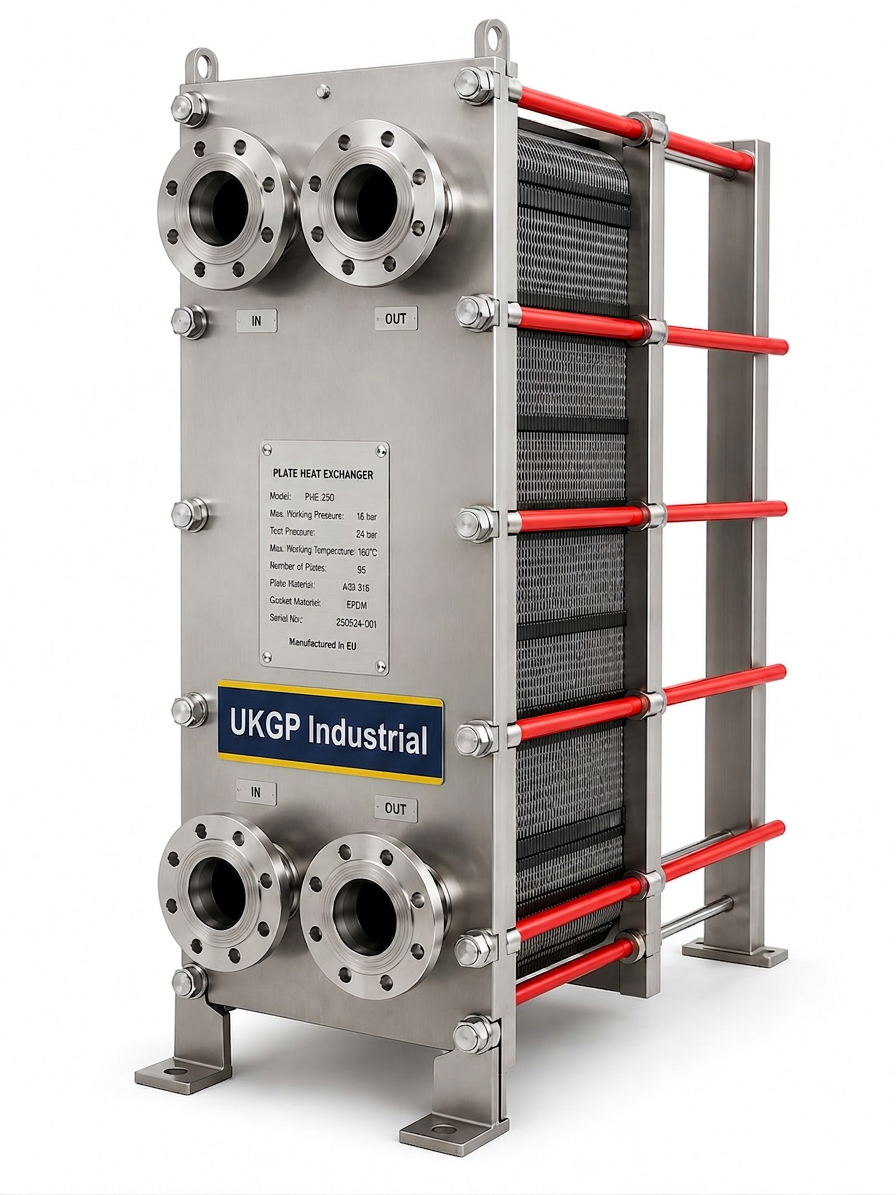
The commercial viability of a project often hinges on the selection between gasketed and brazed configurations. For larger chilled water loads, a gasketed plate heat exchanger is typically preferred due to its modularity and the ability to mechanically clean individual plates. This accessibility is vital for complying with BS EN 12828 and BS 8552 monitoring regimes. In contrast, smaller chilled water skids or secondary cooling loops might employ brazed units for their compact footprint and high pressure resistance. At UKGP, we offer gasketed units from DN20 to DN300, ensuring versatile connectivity regardless of the pipework scale. Our range is supported by a 2-year warranty and a standard 4-6 week lead time to meet tight construction schedules.
- Hydraulic separation protects chillers from secondary circuit debris.
- Precision thermal sizing for narrow chilled water temperature approaches.
- Selection of AISI 316 stainless steel for corrosion resistance.
- Compliance with BSRIA BG50 water quality management standards.
Compliance with BSRIA and CIBSE Standards
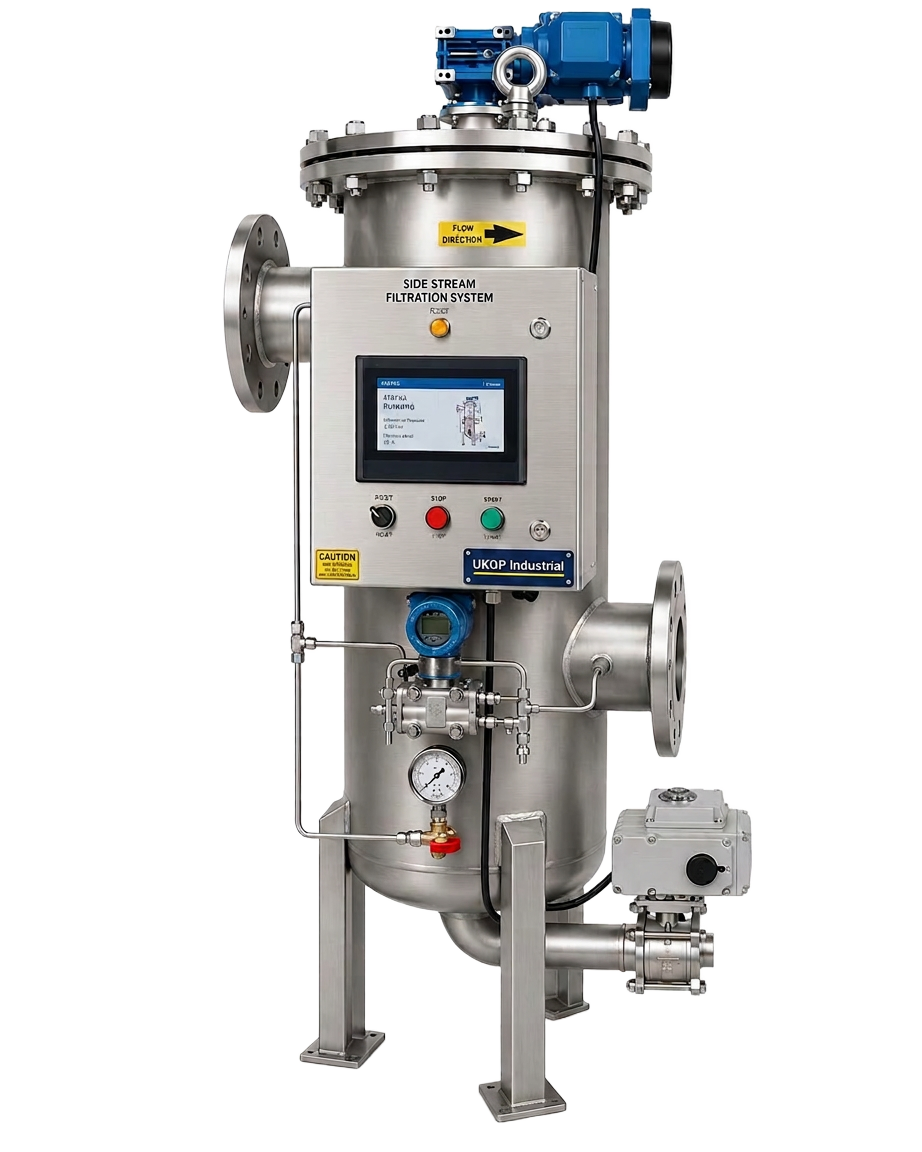
Compliance with technical standards like BSRIA BG29 and BG50 is non-negotiable for UK M&E contractors. When installing a plate heat exchanger, the pre-commissioning cleaning process is essential to remove mill scale and construction debris that could otherwise clog the narrow channels between plates. Chilled water systems are particularly sensitive to blockages because they often operate with lower flow velocities in certain zones, allowing suspended solids to settle. A well-designed system will incorporate effective side-stream filtration alongside the plate heat exchanger to maintain the water quality required for optimal heat transfer. Neglecting these standards often leads to premature failure of gaskets or reduced cooling capacity during peak summer months.
Furthermore, CIBSE Guide S provides the framework for professional thermal design, emphasizing the importance of accurate sizing to prevent excessive pressure drops. A plate heat exchanger that is undersized will cause the primary pumps to work harder, increasing the delta-P and wasting energy. Conversely, an oversized unit might lead to low velocities that promote sediment deposition. UKGP engineers use specific thermal software to size each plate heat exchanger from a full thermal specification provided by the consultant. This ensures that the LMTD (Logarithmic Mean Temperature Difference) calculations are precise and that the selected unit will deliver the specified kW output under all design conditions, including part-load scenarios commonly found in vended cooling applications.
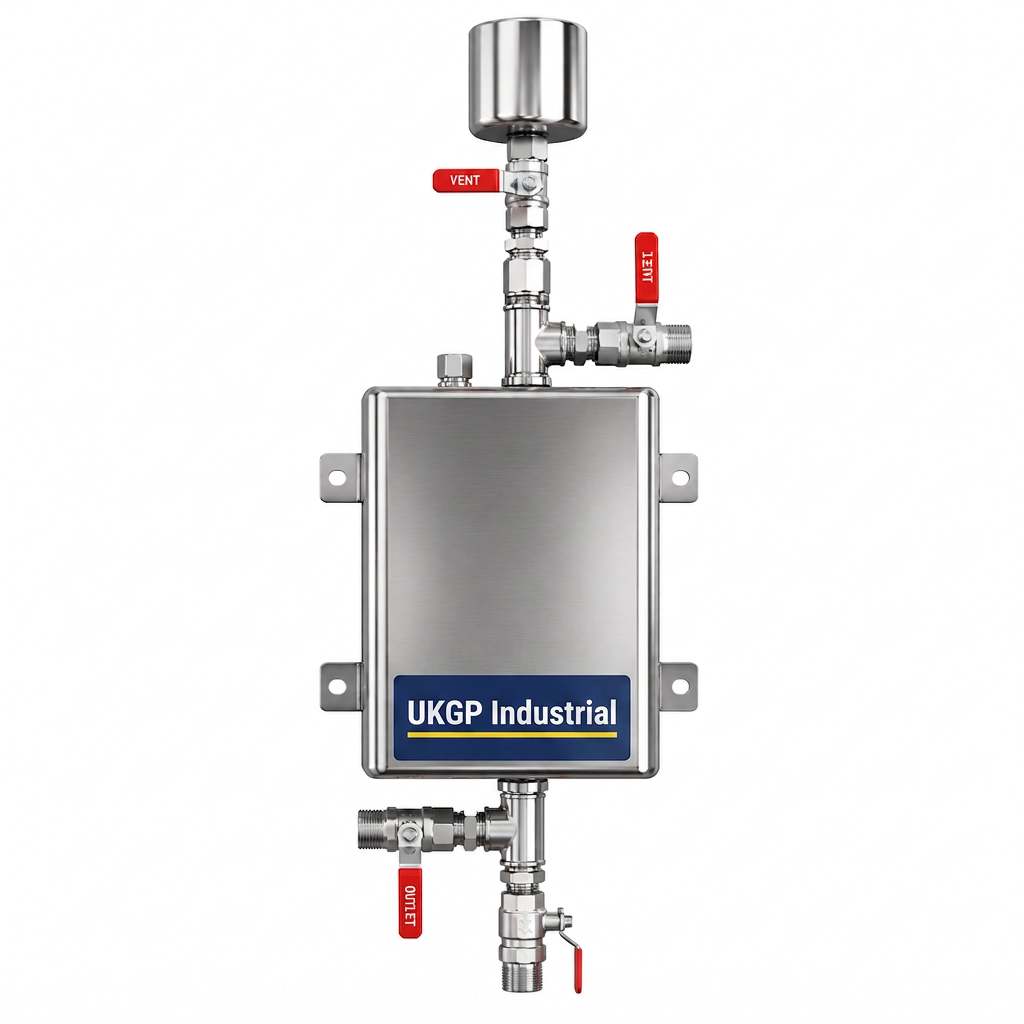
Building services consultants must also consider the vibration and stress factors outlined in BS EN 14917 for expansion bellows when connecting heavy plant-room equipment. The rigid nature of a plate heat exchanger means that it should be isolated from pipework stresses to prevent leaks or frame distortion. Integrating high-quality expansion joints ensures that the thermal expansion of the chilled water pipework does not compromise the integrity of the heat exchanger gaskets. By sourcing a complete package from UKGP, including d-aerators and dosing pots, contractors can ensure that the entire cooling system is compliant with current UK best practices and the rigorous requirements of BS 8552 water testing protocols.
- BSRIA BG29 compliance for pre-commissioning cleanliness.
- Adherence to CIBSE Guide S for thermal design accuracy.
- Integration of side-stream filtration to protect plate surfaces.
- Stress isolation using expansion bellows to BS EN 14917.
Technical Specifications and Material Selection
The material choice for a plate heat exchanger in a chilled water system is driven by the fluid chemistry and the required longevity of the asset. While standard 304 stainless steel may suffice for some internal loops, 316 stainless steel is the professional standard for commercial chilled water applications due to its superior resistance to chlorides and organic acids. Gasket materials also play a vital role; EPDM (Ethylene Propylene Diene Monomer) is the industry standard for chilled water due to its excellent performance in temperatures ranging from -30°C to +150°C. Ensuring that the gaskets are clip-on or 'glueless' allows for easier maintenance during the 2-year warranty period and beyond, reducing the downtime required for routine inspections.
The plate heat exchanger frame must be robust enough to handle the static head of a multi-storey building. UKGP frames are built to high industrial standards, capable of managing pressures from PN10 up to PN25 depending on the application requirements. For chilled water systems in London's high-rise commercial sector, this pressure rating is crucial. Each plate heat exchanger we supply is custom-built based on the specific pipe sizes, ranging from DN20 for small branch lines to DN300 for major plant-room headers. This flexibility allows M&E contractors to integrate our units seamlessly into existing or new-build infrastructure without the need for complex reducers or expensive pipework modifications, saving both time and material costs on site.
Heat transfer efficiency is also influenced by the plate pattern, often referred to as 'H' (high theta) or 'L' (low theta) plates. For chilled water systems where the chilled water supply and return temperatures are close, a mix of these plate types in a single plate heat exchanger can achieve the exact thermal requirements with the minimum number of plates. This bespoke thermal sizing approach, offered by UKGP, ensures that the footprint of the heat exchanger is minimised—a critical factor in cramped UK basement plant rooms. Our lead times of 4-6 weeks are specifically structured to support the fast-track nature of commercial fit-out projects, ensuring that project milestones are met without compromising on the technical excellence of the thermal equipment.
- Use of EPDM gaskets for optimal chilled water performance.
- Custom frame ratings from PN10 to PN25 for high-rise loads.
- Bespoke plate patterns (H and L) for precise thermal scaling.
- Compact footprint design for space-constrained UK plant rooms.
Optimising Maintenance and System Longevity
Long-term operational efficiency of a plate heat exchanger depends heavily on the maintenance strategy implemented by the facilities management team. In chilled water systems, the risk of micro-biological growth requires rigorous adherence to BS 8552, which dictates frequent water sampling and analysis. If the plate heat exchanger begins to show a rising pressure drop or a declining approach temperature, it is often a sign of 'fouling' or 'scaling' on the plate surfaces. Gasketed units facilitate a 'clean-in-place' (CIP) procedure or, if necessary, a full manual strip-down and cleaning. Regular servicing not only extends the life of the plate heat exchanger but also ensures that the chillers operate at their highest possible EER (Energy Efficiency Ratio).
At UKGP, we advocate for the installation of chemical dosing pots and air & dirt separators upstream of the plate heat exchanger. These components are essential for maintaining the chemistry required to prevent corrosion of the stainless steel plates. In a chilled water system, maintaining a stable pH is critical; therefore, integrating pH sensors and transmitters into the control logic can provide real-time alerts if the glycol or water chemistry deviates from the set parameters. This proactive approach to system health prevents the costly emergency replacement of plates and ensures the 2-year warranty remains valid through documented evidence of proper water treatment and system maintenance as per the BSRIA BG50 requirements for closed loops.
When planning a plant-room upgrade, the procurement lead should look for a plate heat exchanger supplier that offers more than just the hardware. Detailed thermal submittals, including pressure drop curves, fluid velocities, and physical weights (both dry and flooded), are essential for structural and hydraulic calculations. UKGP provides comprehensive documentation for every plate heat exchanger sized from our DN20 to DN300 range. With a reliable 4-6 week lead time and a commitment to competitive pricing, our goal is to streamline the procurement process for M&E contractors and consultants who require technically superior thermal management solutions for the London and Surrey commercial markets and the wider UK.
- Facilitation of Clean-in-Place (CIP) for gasketed units.
- Integration of chemical dosing pots to maintain water chemistry.
- Utilisation of pH sensors for real-time monitoring of system health.
- Full technical documentation provided with every UKGP thermal unit.
Energy Savings and Environmental Impact
The role of the plate heat exchanger in reducing the carbon footprint of a building cannot be overstated. By enabling high-efficiency heat transfer at low temperature differences, these units allow chillers to operate at higher chilled water flow temperatures, which significantly improves the compressor efficiency. In the context of the UK’s drive toward Net Zero, every kilowatt saved in the HVAC system contributes to the building's overall BREEAM or LEED rating. A correctly sized plate heat exchanger minimizes internal turbulence and bypass, ensuring that every joule of energy is effectively transferred to the secondary circuit. This level of precision is what differentiates a standard off-the-shelf unit from a UKGP bespoke thermal solution.
Environmental considerations also extend to the refrigerant side of the system. While the chilled water is the secondary medium, the plate heat exchanger acts as the barrier that allows for the separation of primary cooling sources, such as lake water or ground-source heat pumps, from the building's internal distribution. This versatility makes the plate heat exchanger a cornerstone of sustainable building design in the UK. Furthermore, the longevity of our gasketed and brazed units reduces the waste associated with frequent equipment replacement. With a 2-year warranty, UKGP provides the peace of mind that the selected thermal equipment is built for durability and long-term performance in demanding commercial environments.
To achieve these goals, M&E contractors must ensure that the plate heat exchanger is not the 'weak link' in the system. High-quality construction, combined with expert sizing from a full thermal spec, eliminates the risk of system underperformance. Whether you are working on a small office refurbishment or a large-scale data centre cooling project, the requirement for a robust, efficient, and easily maintained plate heat exchanger remains constant. UKGP’s technical team is available to assist with the sizing of units from DN20 up to DN300, ensuring your project benefits from the latest in plate technology and rapid 4-6 week delivery times, keeping your HVAC project on track and under budget.
- Improvements in chiller COP through precise temperature control.
- Contribution to BREEAM and LEED green building certifications.
- Facilitation of renewable cooling sources like ground-source loops.
- High-durability construction reducing lifecycle environmental impact.
Installation Best Practices for M&E Contractors
Installation of a plate heat exchanger should follow the strict guidelines outlined by CIBSE and the manufacturer’s technical manual. Proper orientation is vital; for most counter-current flow plate heat exchanger designs, the fluid inlets and outlets must be piped correctly to achieve the calculated heat transfer. Incorrect piping often leads to a 'short-circuiting' effect where the thermal performance drops by as much as 30%. Additionally, the foundation or plinth for a gasketed plate heat exchanger must be level and capable of supporting the operating weight when fully flooded. UKGP provides all necessary dimensional data and weights during the submittal phase to ensure that the site teams can prepare the plant room accurately before the unit arrives within the 4-6 week window.
Access space is another critical factor often overlooked in tight UK plant rooms. A gasketed plate heat exchanger requires clearance on at least one side equal to twice the plate width to allow for the removal and replacement of the plate pack. If the unit is located against a wall, maintenance becomes impossible without disconnecting the pipework. Our DN20 through DN300 units are designed with maintenance accessibility in mind, providing clear guidance on the required service envelope. By involving UKGP early in the design stage, contractors can avoid the spatial conflicts that frequently arise between the plate heat exchanger, low loss headers, and other large distribution components in the mechanical room.
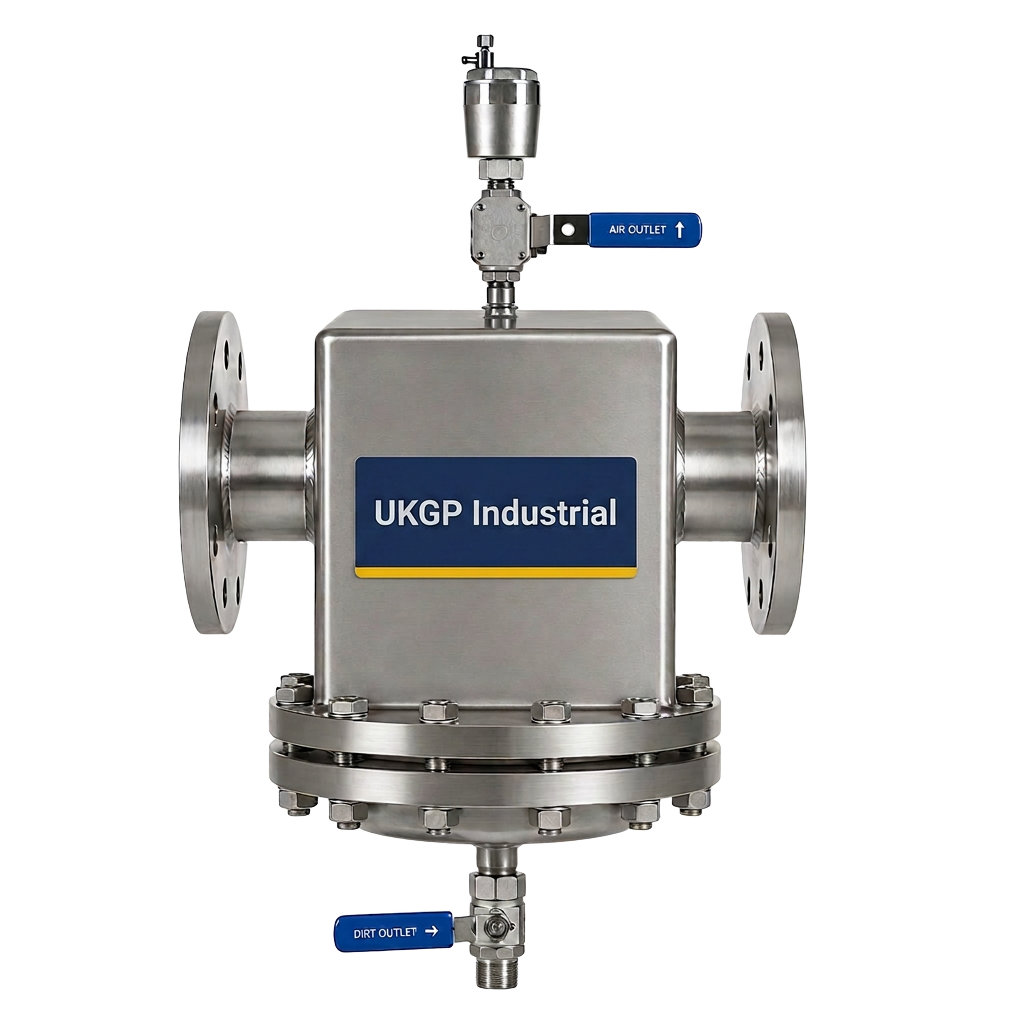
Finally, the importance of commissioning cannot be ignored. Once the plate heat exchanger is installed and the system is filled, it must be vented to remove air pockets that insulate the plate surfaces and reduce efficiency. Integrating high-quality air and dirt separators into the primary and secondary legs of the heat exchanger protects the unit from air-binding and debris accumulation. UKGP units are built to withstand the rigorous flushing procedures required by BSRIA standards. We encourage all clients to request a quote based on a full thermal spec to ensure that the delivered plate heat exchanger meets every technical requirement of the project, backed by our comprehensive 2-year warranty and expert UK technical support.
- Strict adherence to counter-current flow piping configurations.
- Provision for maintenance clearance based on plate pack dimensions.
- Inclusion of air and dirt separators to prevent air-binding.
- Early stage coordination to integrate with low loss headers and pumps.
Frequently asked questions
What information is needed to size a plate heat exchanger for chilled water?
- To provide an accurate selection, we require the total heat load (kW), primary and secondary flow and return temperatures, the maximum allowable pressure drop, and the fluid types (e.g., water or glycol percentage).
How long is the typical lead time for a UKGP plate heat exchanger?
- Our standard lead time for both gasketed and brazed plate heat exchangers is 4-6 weeks, covering the range from DN20 to DN300.
Does a UKGP plate heat exchanger come with a warranty?
- Yes, all our plate heat exchangers are supplied with a 2-year warranty, reflecting our confidence in the industrial build quality and material selection.
Are your plate heat exchangers compliant with BSRIA BG50?
- While BSRIA BG50 covers the whole system, UKGP units are designed and materials selected (such as AISI 316 and EPDM) to help systems meet the rigorous water quality and maintenance standards set out in BG50.
Can I get a gasketed unit for a DN250 connection?
- Absolutely. We supply plate heat exchanger units with connections ranging from DN20 up to DN300, sized specifically to your thermal specification.