The Engineering Logic of a Plate Heat Exchanger for Boiler Isolation
In modern UK commercial heating installations, the integration of a plate heat exchanger for boiler protection has moved from a recommendation to an engineering necessity. High-efficiency stainless steel or aluminium boiler heat exchangers feature narrow waterways that are notoriously susceptible to blockages from magnetite and suspended solids. By using a plate heat exchanger for boiler circuits, you create a hydraulic break that prevents debris from the secondary emitters—often decades-old radiators or cast-iron pipework—from entering the delicate primary loop. This physical separation is the first line of defence in maintaining the manufacturer's warranty and ensuring the long-term operational integrity of the plant room.
Beyond simple debris management, a plate heat exchanger for boiler applications allows for the management of disparate pressure regimes. Many large-scale UK district heating or multi-storey residential projects operate with secondary static heads that would exceed the safe working pressure of a standard commercial boiler. By decoupling the circuits, the primary loop can be maintained at a stable, lower pressure, while the secondary side handles the building's specific hydraulic demands. This approach simplifies the specification of expansion vessels and safety relief valves, ensuring that the boiler circuit remains a controlled, closed-loop environment regardless of the complexities found in the wider building services network.
From a commercial perspective, the ROI for installing a plate heat exchanger for boiler systems is realised through drastically reduced maintenance interludes. Without this separation, M&E contractors often find themselves performing frequent power flushes or replacing expensive internal boiler components. UKGP provides bespoke thermal sizing for these units, ensuring that the temperature approach (DT) is minimised so that the boiler can still reach its condensing dew point for maximum fuel savings. Our gasketed and brazed units, ranging from DN20 to DN300, are specifically engineered to handle these high-demand scenarios with minimal pressure drop, keeping your system running at peak performance for years.
- Hydraulic decoupling of primary and secondary circuits
- Protection of narrow boiler waterways from magnetite
- Management of differential pressure across high-rise buildings
- Preservation of boiler manufacturer warranties
BSRIA BG29 and BG50 Compliance in Secondary Circuits
Adhering to BSRIA BG29 (Pre-commission cleaning of pipework systems) and BG50 (Water treatment for closed heating and cooling systems) is a standard requirement for UK building services. When a plate heat exchanger for boiler protection is specified, it acts as a central checkpoint for water quality management. While the primary side remains relatively clean, the secondary side often requires intensive treatment. Utilising a plate heat exchanger allows for more aggressive chemical cleaning or dosing on the secondary side without the risk of those chemicals damaging the sensitive internal alloys of the boiler heat exchanger itself, which is a common failure point in poorly managed refurbishments.
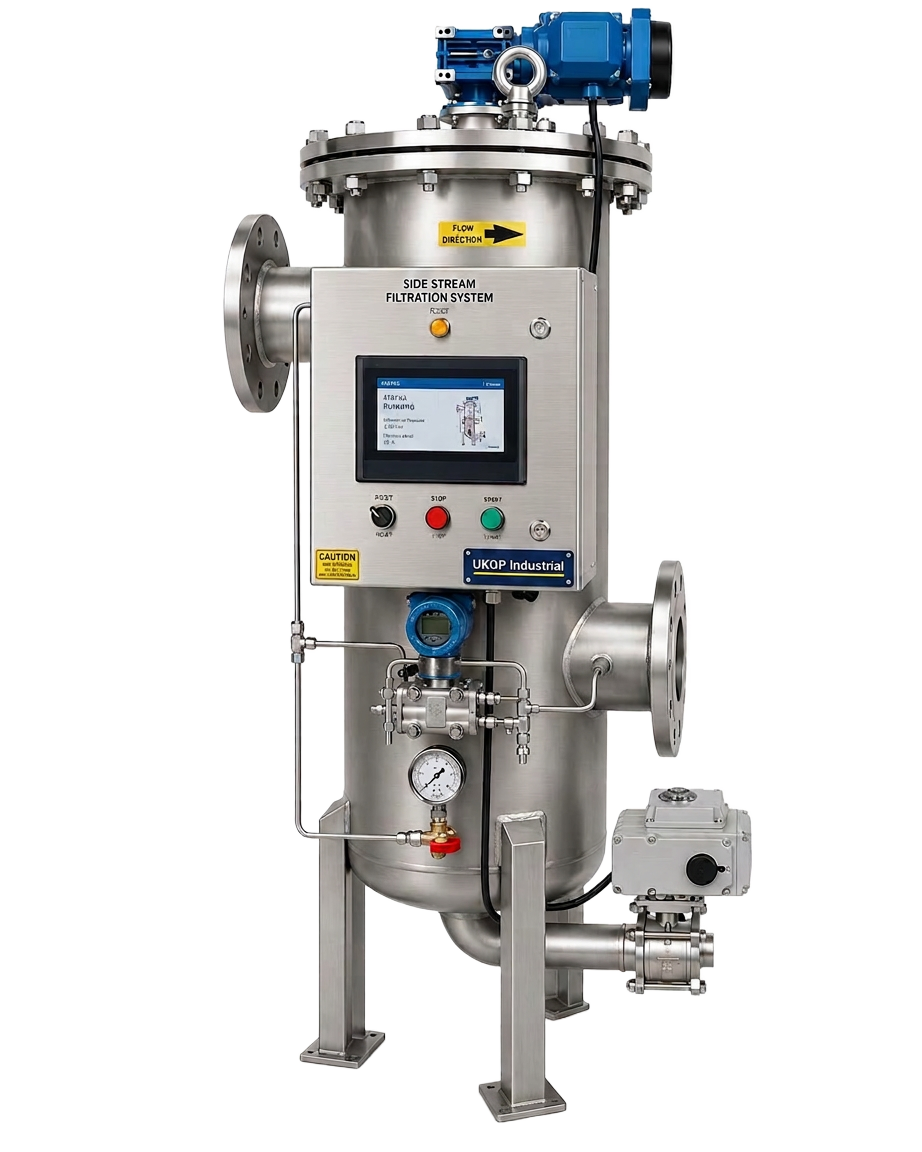
In addition to chemical treatment, the physical removal of contaminants is paramount. While the plate heat exchanger for boiler isolation protects the heat source, the plates themselves can become fouled over time if the secondary water is not adequately filtered. This is why BSRIA guidelines emphasise the importance of side stream filtration. By combining a gasketed plate heat exchanger with high-performance filtration, you ensure that any suspended solids are captured before they can bake onto the heat transfer surfaces. This preventative strategy significantly extends the time between manual plate cleanings, maintaining the critical heat transfer coefficient required for building comfort.
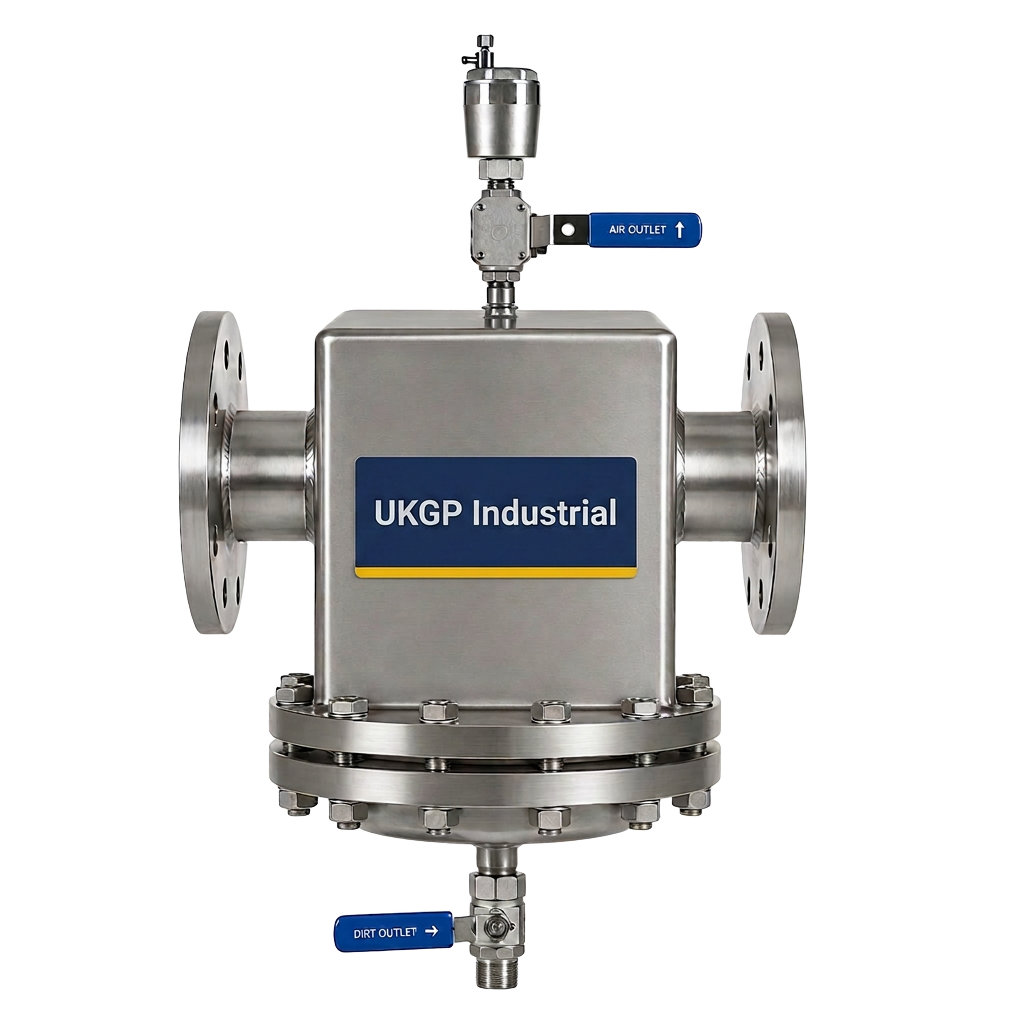
Engineers must also consider the role of air and dirt separation in accordance with BS 8552. A well-designed plant room will feature an air and dirt separator upstream of the plate heat exchanger for boiler circuits to remove micro-bubbles and heavy particles. This holistic approach to water quality not only protects the heat exchanger but also ensures that the circulating pumps and control valves throughout the building are not subjected to abrasive wear. UKGP’s technical team provides full thermal specs for these systems, ensuring that every component from the exchanger to the filter is perfectly matched to the system's flow rates and temperature profiles.
- Alignment with BSRIA BG29 pre-commissioning standards
- Facilitates easier BG50 water treatment protocols
- Protects boiler alloys from aggressive cleaning chemicals
- Reduces frequency of emergency call-outs for fouled components
Domestic Hot Water Generation via Plate Heat Exchangers
The use of a plate heat exchanger for boiler systems extends beyond space heating into high-demand Domestic Hot Water (DHW) generation. For hotels, hospitals, and large residential blocks, the traditional calorifier is increasingly being replaced by Plate Heat Exchanger (PHE) packages linked to buffer vessels. This 'load-store' configuration allows for instantaneous hot water delivery while keeping the boiler in its most efficient firing mode. A UKGP plate heat exchanger sized for DHW can handle peak loads with precision, providing a hygienic and scale-resistant alternative to large-volume hot water storage, which is often a breeding ground for Legionella if not managed correctly.
When selecting a plate heat exchanger for boiler DHW applications, the material choice is vital. For potable water, stainless steel plates (AISI 316) are standard, often with EPDM gaskets for easy maintenance. Our gasketed units, available in sizes up to DN300, allow for the plates to be inspected and cleaned, which is a significant advantage in hard water areas where limescale accumulation is inevitable. Because we size every unit from a full thermal spec, we can ensure the secondary outlet temperature is precisely controlled, meeting CIBSE G guidelines for safe and efficient hot water delivery without risking scalding or inefficient heat transfer.
Another benefit of using a plate heat exchanger for boiler hot water duty is the rapid recovery time. Unlike traditional coils in a tank, the high surface area of a PHE allows for almost immediate heat transfer. This means smaller storage vessels can be used, saving valuable footprint in cramped urban plant rooms. UKGP offers a 2-year warranty on these units, providing peace of mind for Facility Managers who require 24/7 reliability. With a lead time of just 4-6 weeks, we can support both new build specifications and urgent replacements for failed existing units in commercial settings across the UK.
- Hygienic DHW delivery with reduced Legionella risk
- Compact footprint compared to traditional calorifiers
- Rapid recovery times for high-demand commercial sites
- Easy maintenance with gasketed DN20-DN300 configurations
Selecting Gasketed vs Brazed Plate Heat Exchangers
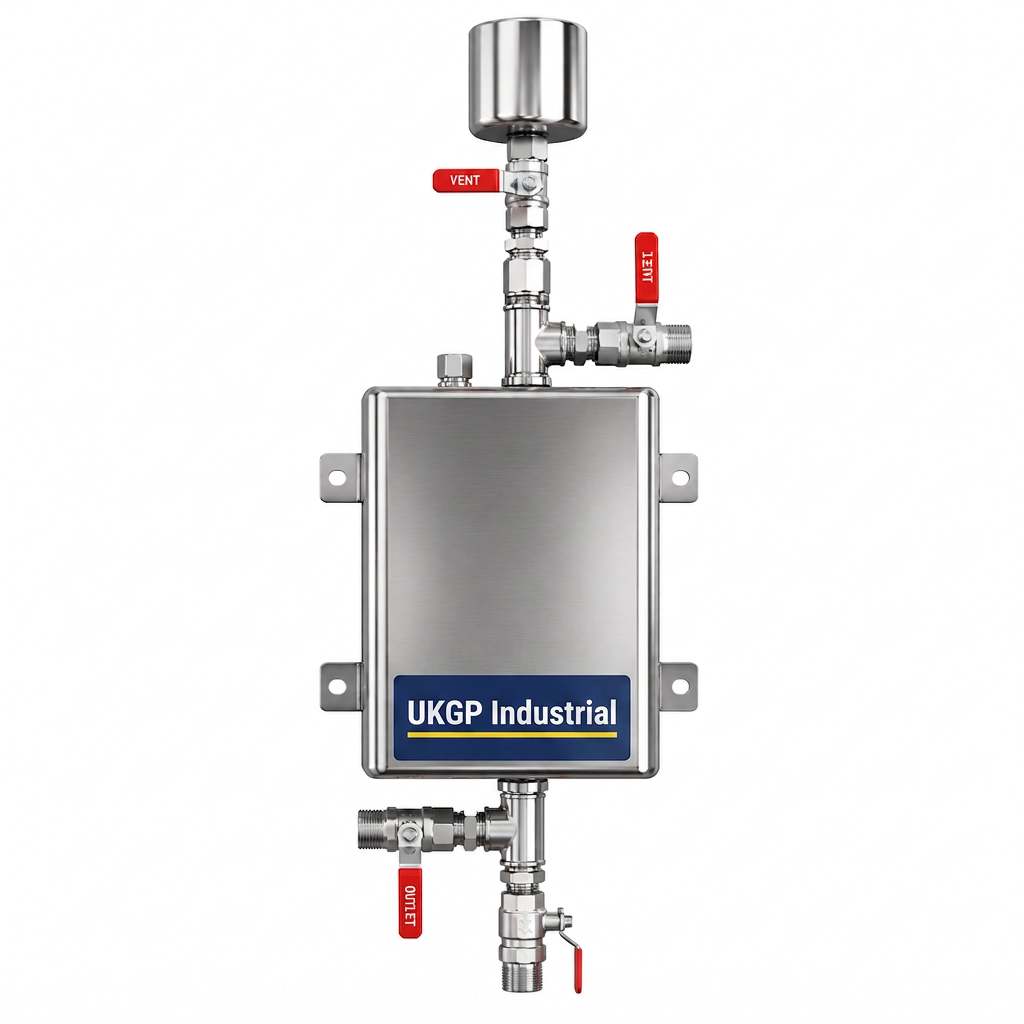
Choosing the right type of plate heat exchanger for boiler systems depends largely on the application and maintenance strategy. Brazed plate heat exchangers are compact, cost-effective, and ideal for smaller commercial applications or where space is at an absolute premium. They are hermetically sealed and can withstand higher pressures and temperatures. However, because they cannot be opened for manual cleaning, they are best suited for primary-to-secondary isolation where water quality is strictly controlled via chemical dosing pots and high-efficiency filtration, ensuring no large particulates enter the narrow channels.
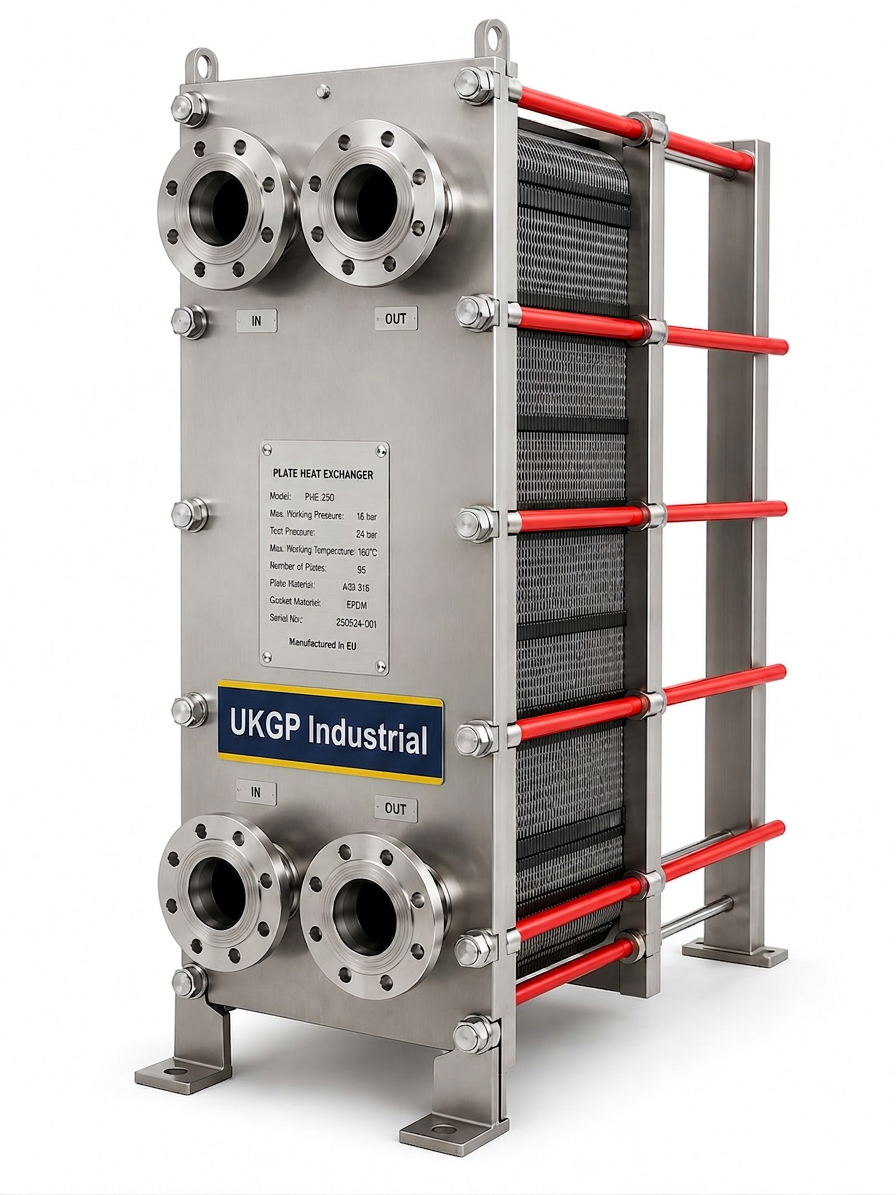
For larger installations, particularly refurbishments where water quality may be an ongoing challenge, a gasketed plate heat exchanger for boiler protection is often the superior choice. The ability to unbolt the frame and manually clean each plate ensures that the unit can be restored to'as-new' performance even after years of service in a demanding environment. This serviceability is a key factor for FMs responsible for life-cycle costing. UKGP provides both options, with our gasketed range offering the flexibility of adding more plates in the future if building loads increase, providing a future-proof thermal solution for evolving HVAC requirements.
Regardless of the construction type, the thermal sizing remains the most critical step. A poorly sized plate heat exchanger for boiler circuits will lead to excessive pump energy consumption or a failure to meet the required flow temperatures. At UKGP, we don't just sell components; we provide expert technical consultation. By providing us with your primary and secondary flow/return temperatures and total kW load, we generate a full thermal specification. This ensures your DN20 to DN300 unit is perfectly optimised for the specific hydraulic characteristics of your plant room, backed by our 2-year warranty for total confidence.
- Brazed units for high-pressure, space-constrained sites
- Gasketed units for ease of maintenance and scalability
- Detailed thermal sizing to prevent excessive pressure drops
- Expert selection based on water quality and service access
Installation Best Practices and Commissioning
Successful integration of a plate heat exchanger for boiler systems requires careful attention to piping geometry and sensor placement. To achieve the best thermal efficiency, units must always be piped in a counter-flow configuration. This ensures the greatest mean temperature difference across the plates, allowing for maximum heat transfer. Incorrectly piped units in parallel flow will suffer from significantly reduced performance, often leading to the boiler cycling or failing to meet the secondary setpoint. Our technical drawings clearly indicate the primary and secondary ports, ensuring M&E contractors can complete the installation correctly the first time.
Commissioning must include the verification of flow rates on both sides of the plate heat exchanger for boiler isolation. If the primary flow is too low, the boiler may trip on high delta-T; if the secondary flow is too low, the building will not receive adequate heat. We recommend the installation of temperature and pressure test points on all four ports of the PHE. This allows engineers to monitor the pressure drop across the unit and compare it against the original thermal spec. An increasing pressure drop is the first sign of fouling, indicating that it may be time to check the side stream filters or schedule a plate clean.
Finally, the role of the expansion system cannot be overlooked. Once a plate heat exchanger for boiler protection is installed, the primary and secondary sides become two independent sealed systems. Both will require their own expansion bellows, safety valves, and pressurisation units. BS EN 14917 guidelines for expansion joints should be followed to ensure that thermal expansion in large-diameter headers does not put undue mechanical stress on the heat exchanger ports. By treating the PHE as the heart of the system, and supporting it with the correct peripheral components, you ensure a robust and reliable HVAC installation.
- Always use counter-flow piping for maximum delta-T
- Install test points for ongoing performance monitoring
- Independent expansion and safety kits for both circuits
- Adherence to BS EN 14917 for mechanical stress relief
Commercial Advantages and Procurement with UKGP
Procuring a high-quality plate heat exchanger for boiler systems in the UK shouldn't involve long lead times or technical ambiguity. At UKGP, we understand that plant room projects operate on tight schedules. Our typical lead time of 4-6 weeks for custom-sized units ensures that you can stay on track, whether you are managing a planned upgrade or an emergency replacement. By choosing a UK-based supplier, you benefit from direct access to technical expertise and a 2-year warranty that is backed by local support and stock of essential spare parts including gaskets and replacement plates.
In terms of commercial value, a correctly specified plate heat exchanger for boiler protection significantly reduces the total cost of ownership (TCO) for the heating plant. By preventing the premature failure of high-value boilers and reducing the need for expensive chemical flushes of the primary loop, the PHE pays for itself within a few years of operation. For procurement leads, this makes the inclusion of a UKGP heat exchanger a ‘no-brainer’ for any large-scale residential or commercial tender. Our DN20 to DN300 range ensures we have a solution for every scale, from small light-commercial units to massive industrial heat networks.
To get started, simply provide our engineering team with your full thermal spec—including temperatures, fluids, and allowable pressure drops. We will provide a detailed quote and data sheet that can be dropped straight into your project submittals. Our confident, practical approach ensures that you receive a plate heat exchanger for boiler applications that is not just a component, but a high-performance solution tailored to the specific demands of the UK building services industry. Contact us today to discuss your next plant room project and experience the UKGP difference in technical service and product reliability.
- Fast 4-6 week lead times for UK projects
- Comprehensive 2-year warranty on all units
- Bespoke thermal sizing from DN20 to DN300
- Direct access to Surrey-based technical expertise
Frequently asked questions
Why is a plate heat exchanger for boiler protection necessary in refurbishments?
- In refurbishment projects, older pipework often contains significant amounts of magnetite and debris. A plate heat exchanger acts as a physical barrier, preventing these contaminants from entering and damaging the new, high-efficiency boiler's narrow waterways.
What information is needed to size a plate heat exchanger for boiler use?
- To provide a full thermal spec, we require the total heat load (kW), primary flow and return temperatures, secondary flow and return temperatures, and the maximum allowable pressure drop for each circuit.
Can I use a brazed plate heat exchanger for domestic hot water?
- Yes, brazed units are excellent for DHW due to their compact size. However, in hard water areas, a gasketed plate heat exchanger for boiler DHW duty may be preferred as it can be opened for manual descaling, whereas brazed units must be chemically cleaned or replaced if they scale up.
Does a plate heat exchanger for boiler systems affect the pump head?
- Yes, every heat exchanger introduces some resistance. When we size your UKGP unit, we calculate the exact pressure drop so that you can select the correct primary and secondary pumps to ensure design flow rates are maintained.
What is the typical lifespan of a gasketed plate heat exchanger?
- With proper water treatment according to BSRIA BG50 and regular maintenance, a high-quality gasketed unit can last 20+ years. The plates themselves are durable, and gaskets can be replaced easily every 5-10 years as part of a preventative maintenance schedule.