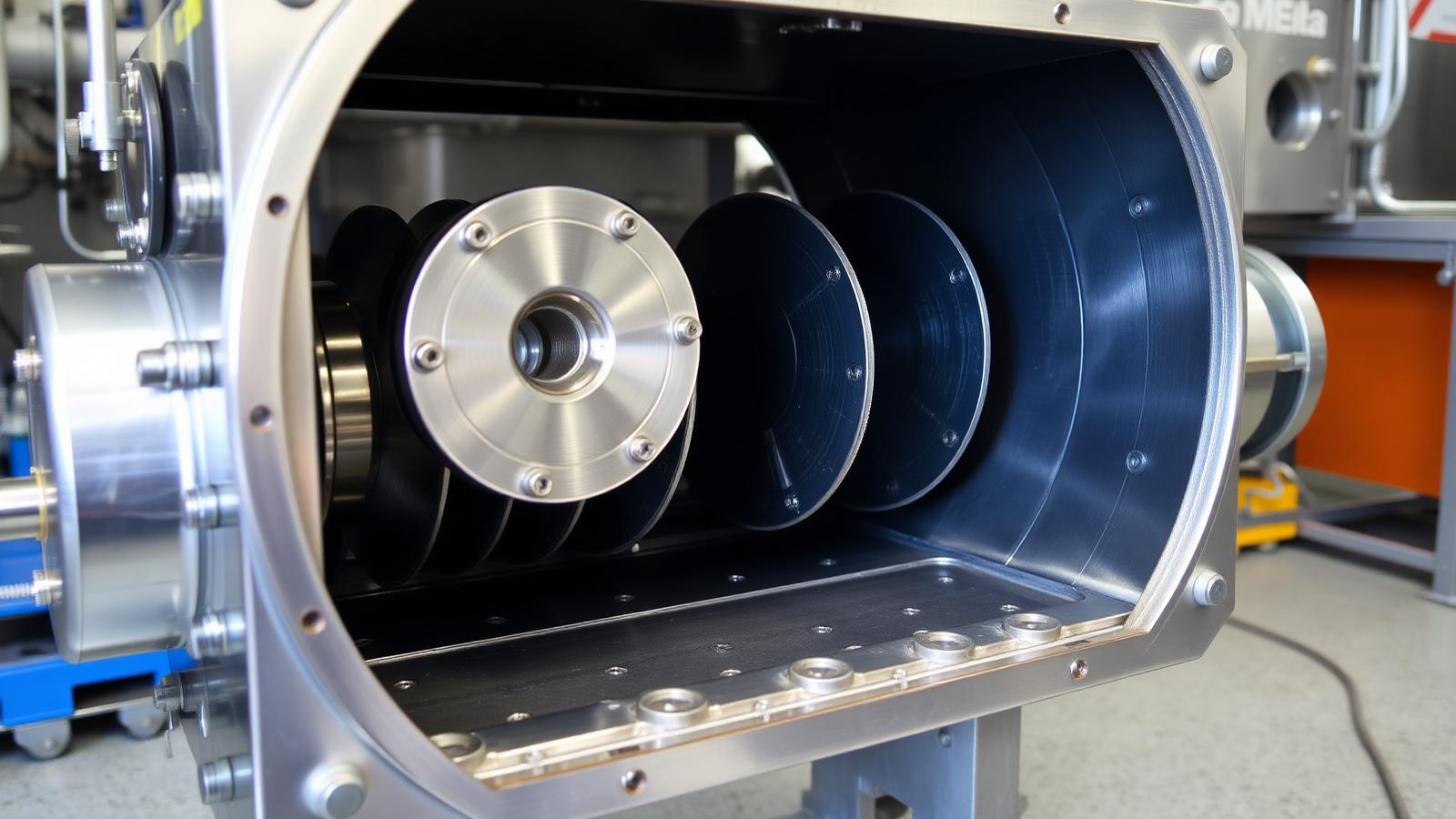
The Importance of Regular Plate Heat Exchanger Cleaning
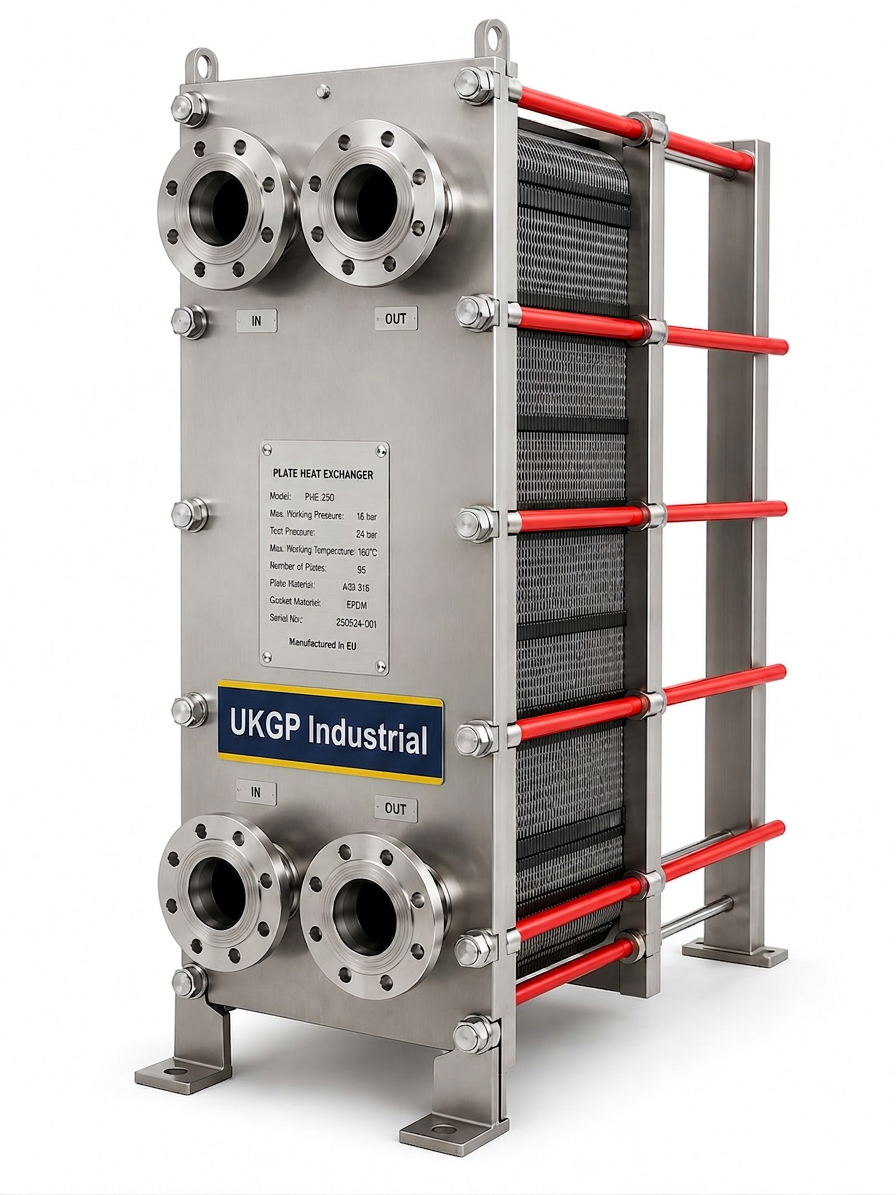
In the UK's commercial HVAC sector, plate heat exchangers (PHEs) are the workhorses of domestic hot water (DHW) and space heating separation. However, their narrow plate gaps make them susceptible to fouling from limescale, magnetite, and biological films. Neglecting plate heat exchanger cleaning leads to a measurable increase in differential pressure and a significant drop in heat transfer coefficients. When plates become fouled, the primary circuit must work harder, increasing pump energy consumption and potentially leading to premature boiler cycling. By adhering to a proactive maintenance schedule, plant room engineers can ensure that the system operates within the original design parameters specified by CIBSE, avoiding the costly emergency downtime associated with total thermal failure or gasket degradation.
Effective cleaning is not merely a cosmetic exercise but a critical component of water quality management as outlined in BSRIA BG50. In systems where closed-loop water is not treated correctly, the accumulation of sludge and debris can lead to under-deposit corrosion, which eventually compromises the integrity of the stainless steel plates. UKGP Industrial emphasises that a clean PHE is the cornerstone of a sustainable building strategy. By monitoring the supply and return temperatures across the primary and secondary sides, facility managers can identify exactly when a plate heat exchanger cleaning cycle is required. Typically, a temperature deviation of more than 2-3 degrees from the commissioning set-point indicates that fouling has reached a level that warrants professional chemical intervention via a CIP pump skid.
From a commercial perspective, the cost of a planned cleaning intervention is significantly lower than the price of a full plate pack replacement or the secondary damage caused by system inefficiency. For UK contractors, offering a structured cleaning service provides long-term value to clients and ensures compliance with insurance requirements for building maintenance. At UKGP, we understand that reliability is paramount, which is why we support engineers with the technical data required to maintain their heat transfer assets. Whether you are managing a high-rise residential block in London or a commercial office in Surrey, ensuring your heat exchangers are free from mineral scale and magnetite is vital for operational longevity and meeting stringent energy performance certificates (EPC) requirements in the current regulatory landscape.
- Restores design thermal conductivity and limits heat loss
- Reduces electrical consumption by lowering pump head requirements
- Extends the operational lifespan of gaskets and plate sets
- Complies with BSRIA BG50 and CIBSE preventive maintenance codes
- Minimises the risk of under-deposit corrosion in stainless steel
Pre-Cleaning Inspection and System Preparation
Before commencing any plate heat exchanger cleaning activity, it is vital to perform a thorough system assessment and isolate the unit correctly. Begin by recording the current operating pressures and temperatures on both the primary and secondary circuits. This data provides a baseline to measure the effectiveness of the CIP process. Ensure that all isolation valves are fully functional and that there are no signs of external leaks around the gasket line. If the unit is leaking externally, a simple CIP may not be sufficient, and a full strip-down and re-gasketing may be necessary. UKGP Industrial recommends checking the compression measurement of the plate pack against the manufacturer's data plate to ensure the frame is correctly tightened before introducing chemical cleaning agents.
Safety is the primary concern when dealing with chemical descalers and high-temperature water. Ensure the PHE has cooled to a safe ambient temperature, typically below 40 degrees Celsius, before beginning the drainage process. Personal Protective Equipment (PPE), including acid-resistant gloves and eye protection, is mandatory for all site personnel. Once isolated, the unit should be vented and drained of all system water. It is important to remember that most commercial PHEs in the UK contain several litres of fluid even after drainage due to the plate geometry. Using the dedicated drain and vent ports, engineers should flush the unit with clean mains water to remove any loose debris or sludge before the chemical circulation phase of the plate heat exchanger cleaning begins.
Proper preparation also involves selecting the correct cleaning chemistry based on the type of fouling suspected. For calcium carbonate scale, a phosphoric or citric acid-based descaler is often preferred, while magnetite and iron oxides may require more specialised chelating agents. It is critical to ensure that the chemical used is compatible with the gasket materials (typically EPDM or Nitrile) and the plate metallurgy (usually 316 Stainless Steel). Incorrect chemical selection can lead to chloride-induced stress corrosion cracking, a catastrophic failure mode for heat exchangers. Always consult the Safety Data Sheet (SDS) and ensure that the neutralisation process is planned for the waste effluent in accordance with local UK water authority regulations and environmental standards.
- Baseline data logging for pressure and temperature differentials
- Verification of isolation valve integrity and pack compression
- Complete drainage and preliminary freshwater flushing
- Selection of compatible chemical agents for EPDM/NBR and 316SS
- Site safety audit and provision of required PPE and spill kits
The Clean-In-Place (CIP) Step-By-Step Procedure
The Clean-In-Place (CIP) method is the most efficient way to perform plate heat exchanger cleaning without the need for time-consuming disassembly. To start, connect your CIP pump skid to the drain and vent ports of the isolated PHE. The circulation should ideally be in the opposite direction to the normal flow (counter-current) to help dislodge stubborn deposits wedged in the plate contact points. Once the hoses are secured and leak-tested with water, the cleaning solution should be introduced into the CIP tank. Start the pump and circulate the fluid through the heat exchanger. During this phase, it is beneficial to monitor the pH of the solution; if the acid is neutralised too quickly, additional chemicals may be required to maintain the cleaning strength necessary to dissolve thick scale.
Most UKGP plate heat exchangers benefit from a circulation time of between 2 and 4 hours, depending on the severity of the fouling. Periodically stopping the pump to allow the chemical to 'soak' can also be effective for breaking down heavy mineral deposits. If the unit is particularly large or heavily fouled, heating the cleaning solution to approximately 40-50 degrees Celsius can significantly accelerate the chemical reaction, though this must be balanced against the temperature limits of the cleaning pump and hoses. During the circulation, check for any pressure build-up and ensure that the vent side is clear. If the cleaning solution becomes excessively dark or turbid, it may be necessary to drain the spent chemical and start a second pass with fresh solution to ensure a comprehensive internal clean.
Once the circulation period is complete, the chemical must be thoroughly flushed from the unit. This is a critical stage of plate heat exchanger cleaning. Use clean mains water to flush the PHE until the discharge water is clear and the pH levels return to neutral (approx. pH 7). Failure to flush correctly can leave residual acids behind, which may cause pitting corrosion over time. Following the flush, some engineers choose to circulate a mild passivating agent to protect the stainless steel surfaces. Finally, reconnect the system pipework, slowly open the isolation valves to avoid water hammer, and bleed any trapped air from the vent ports. The unit is now ready to be put back into service, at which point you should record the new operating data to confirm the restoration of thermal performance.
- Connect CIP pump for counter-current circulation flow
- Monitor pH levels to ensure chemical activity remains effective
- Allow for 2-4 hours of circulation with optional soak periods
- Flush with mains water until neutral effluent pH is achieved
- Slowly re-pressurise the unit and vent all air pockets
Preventing Future Fouling with Side Stream Filtration
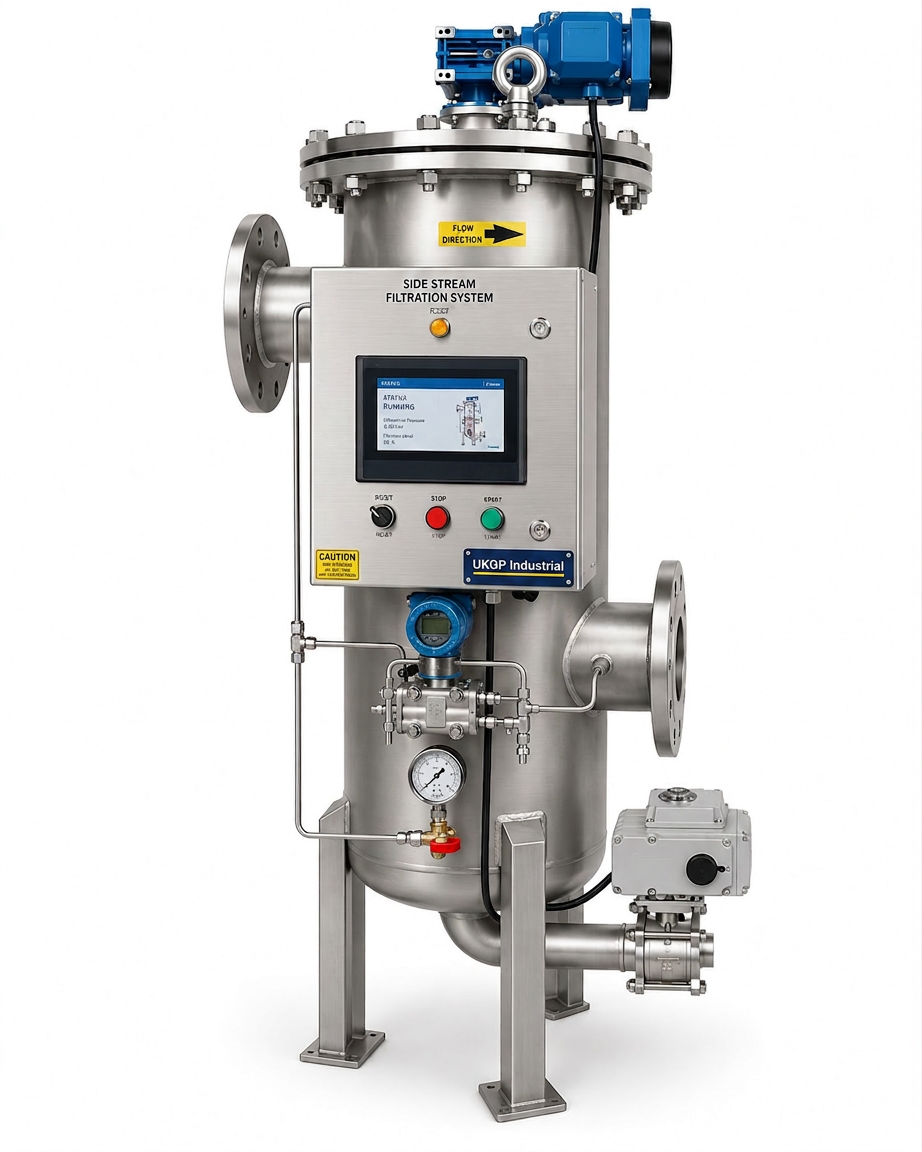
While reactive plate heat exchanger cleaning is a necessary part of plant maintenance, the most cost-effective strategy is to prevent debris from reaching the plates in the first place. This is where high-quality side stream filtration is indispensable. By installing a side stream filtration skid, you can continuously remove suspended solids, magnetite, and sludge from the closed-loop system. At UKGP Industrial, we manufacture made-to-order side stream filtration skids from DN50 to DN100, specifically designed for the UK market. These units start from £6,800 +VAT and offer a robust solution for protecting sensitive components like PHEs and high-efficiency boilers. With a 2-year warranty and a standard lead time of 6-8 weeks, our skids are an essential investment for any modern commercial plant room.
The integration of side stream filtration is a core recommendation of BSRIA BG29 and BG50. These standards highlight that keeping system water clean reduces the frequency of plate heat exchanger cleaning and ensures that chemical inhibitors can work effectively. A UKGP skid typically includes a high-grade stainless steel filter vessel, a premium pump, and an integrated controller for ease of operation. By diverting 5-15% of the total system flow through our filtration units, you can achieve a significant reduction in the total suspended solids (TSS) within the circuit. This proactive approach not only protects your heat exchanger but also prevents the clogging of control valves and secondary emitters, leading to a more balanced and reliable heating or cooling network across the entire facility.
Investing in a UKGP side stream filtration skid provides peace of mind for M&E contractors and procurement leads. Our skids are engineered in Surrey to withstand the rigours of industrial environments and are tested to meet the highest performance standards. For a quote on our side stream filtration units or to discuss your specific site requirements, please contact our technical sales team. By combining regular plate heat exchanger cleaning with continuous filtration, you create a 'belt and braces' approach to system health. This strategy ensures that your high-value assets remain efficient for the duration of their lifecycle, reducing the total cost of ownership and enhancing the building's overall environmental performance in line with net-zero targets.
- Removes magnetite and sludge before it fouls heat exchanger plates
- UKGP skids manufactured in Surrey from DN50 to DN100 sizes
- Pricing from £6,800 +VAT with a 6-8 week lead time
- Compliant with BSRIA BG29/BG50 water quality guidelines
- Includes a 2-year warranty for long-term operational security
When to Choose Manual Cleaning Over CIP
There are instances where a standard Clean-In-Place procedure is insufficient for effective plate heat exchanger cleaning. If the unit has been neglected for many years, the scale may have hardened to a degree that chemicals cannot penetrate, or the debris might be large enough to physically block the internal ports. In such cases, a manual 'strip and clean' is required. This involves loosening the tightening bolts, sliding back the pressure plate, and removing the individual plates for manual pressure washing and chemical bathing. While this method allows for a visual inspection of every plate and the replacement of all gaskets, it is significantly more labour-intensive and carries a higher risk of gasket displacement during reassembly.
Manual cleaning is also the preferred option if there is a known cross-contamination issue between the primary and secondary fluids. A manual inspection allows for dye penetrant testing or UV leak detection to identify micro-cracks in the plates that a CIP process would miss. For UK plant room engineers, the decision between CIP and manual cleaning often comes down to the age of the unit and the available maintenance window. Manual cleaning requires the PHE to be offline for a longer period and necessitates the purchase of a new set of gaskets, as old gaskets rarely reseal perfectly once the compression is released. UKGP Industrial recommends stocking a spare set of gaskets for critical heat exchangers to avoid extended downtime during these major service intervals.
Regardless of the method chosen, the goal remains the same: to return the heat transfer surfaces to a 'like-new' condition. For M&E contractors, documenting the cleaning process is vital. This includes photos of the plates before and after cleaning, the quantity of debris removed, and the final pressure drop readings. This documentation is essential for handover packs and for demonstrating compliance with BS 8552 regarding water quality in buildings. If you are unsure which method is appropriate for your installation, our technical team at UKGP can provide guidance on the best approach for your specific plate heat exchanger cleaning needs, ensuring you achieve the best thermal results with the least operational disruption.
- Use manual cleaning for heavy, insoluble blockage or aged scale
- Required for detailed plate inspection and dye penetrant testing
- Necessitates the replacement of all EPDM or Nitrile gaskets
- Higher labour costs and longer downtime than CIP methods
- Best for units where cross-contamination is suspected
Maintaining System Water Quality Standards
The longevity of a plate heat exchanger is fundamentally linked to the chemistry of the water circulating through it. In the UK, following the guidance in BS 8552 and BSRIA BG50 is the gold standard for protecting against corrosion and scale. Even the most thorough plate heat exchanger cleaning routine will be undermined if the system water is not properly balanced with inhibitors and biocides. High levels of dissolved oxygen or improper pH levels can lead to rapid oxidation of pipework, resulting in a constant stream of magnetite that quickly re-fouls a freshly cleaned PHE. Therefore, a proactive water treatment regime is more than just a chemical addition; it is a holistic approach to system integrity.
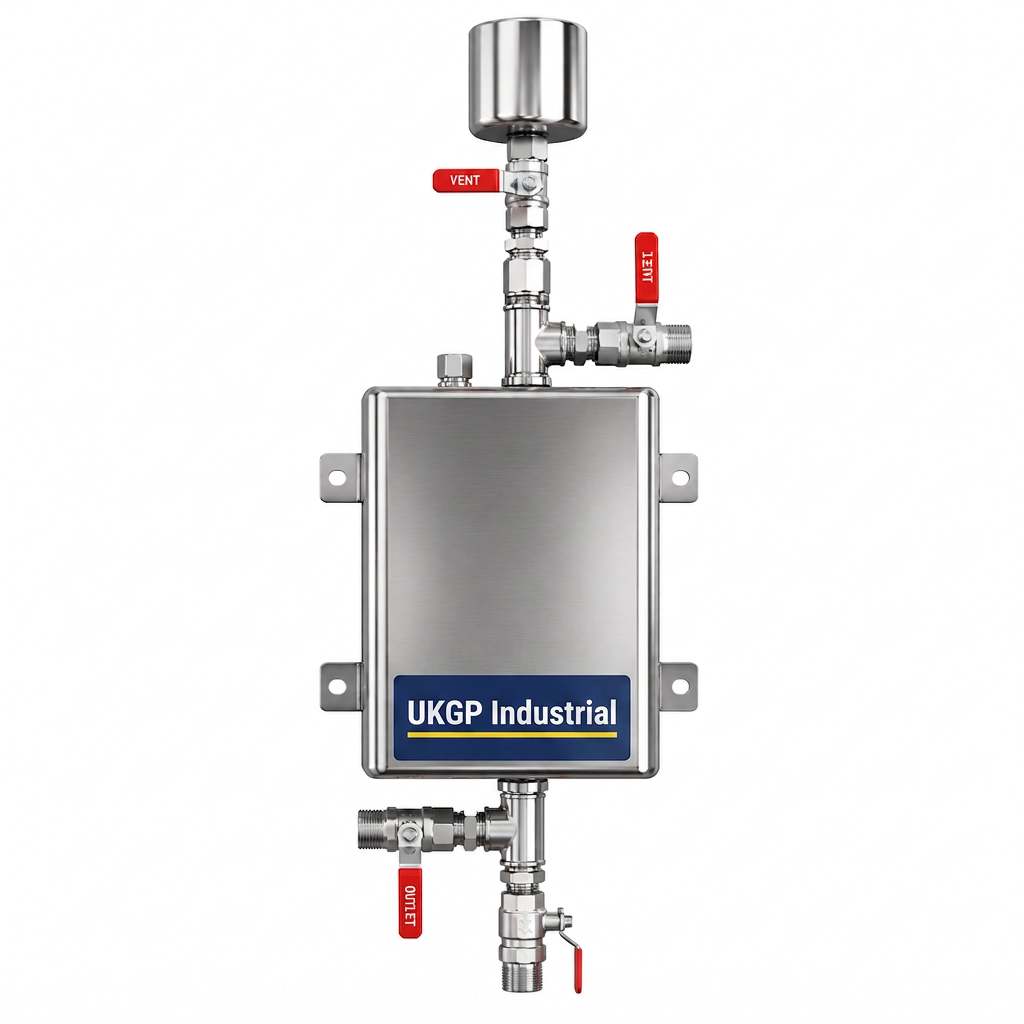
To facilitate easy chemical management, UKGP provides a range of industrial dosing pots that allow for the controlled introduction of treatment chemicals without interrupting system flow. By combining a dosing pot with a side stream filtration system, facilities managers can maintain a clean, chemically stable environment that minimises the need for frequent plate heat exchanger cleaning. Regular water sampling should be conducted at least quarterly to check for inhibitor levels, iron content, and bacterial growth. If levels are found to be outside of the BSRIA recommended limits, immediate corrective action should be taken to prevent damage to the heat exchangers and other sensitive plant room components like expansion bellows and air separators.
Ultimately, the efficiency of your heating or cooling system depends on the synergy between high-quality hardware and diligent maintenance. UKGP Industrial is proud to support the UK engineering community with reliable plate heat exchangers, separators, and filtration skids that are built to last. By following the CIP steps outlined in this guide and investing in protective technologies like side stream filtration, you can ensure your plant room operates at peak performance for years to come. Should you require technical support or a quotation for new equipment, including our made-to-order filtration skids from £6,800 +VAT, our Surrey-based team is ready to assist with your next building services project.
- Adhere to BS 8552 guidelines for water sampling and analysis
- Utilise dosing pots for precise chemical inhibitor management
- Quarterly testing for iron, pH, and microbiological activity
- Prevent magnetite build-up to protect heat transfer efficiency
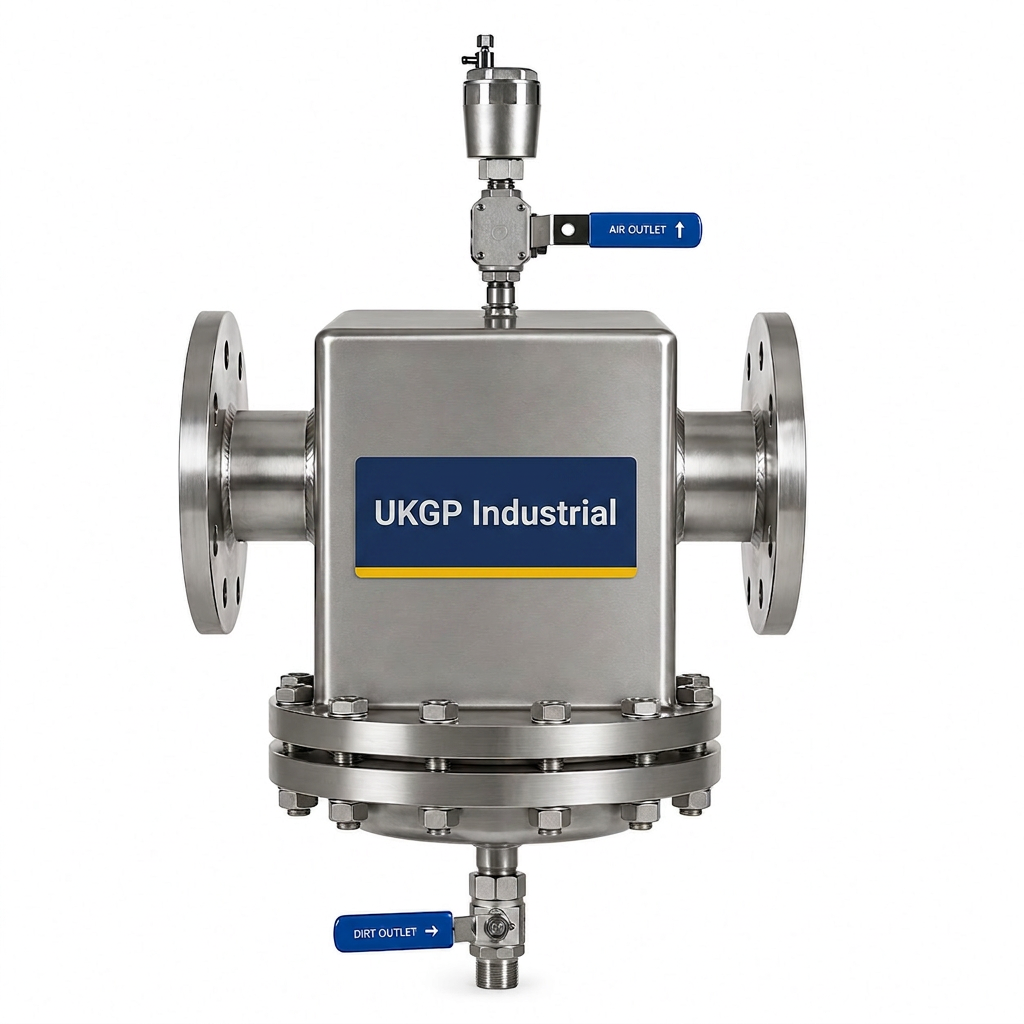
- Integrate air and dirt separators to further enhance water quality
Frequently asked questions
How often should plate heat exchanger cleaning be performed?
- Frequency depends on system water quality and thermal load. However, we recommend a CIP cycle every 12-24 months for most UK commercial systems, or whenever the pressure differential increases by 10% over the commissioned value.
What chemicals are best for PHE cleaning?
- Phosphoric acid and citric acid are common for limescale. For magnetite, specialised chelants are used. Always verify chemical compatibility with 316 stainless steel and EPDM gaskets to prevent plate corrosion.
Can I use a high-pressure washer on the plates?
- During manual cleaning, a low-pressure power wash (below 30 bar) is acceptable. High-pressure jets can damage the gasket grooves or deform thin plates, so caution and a wide-angle nozzle are essential.
How much does a side stream filtration skid cost to protect my PHE?
- UKGP Industrial side stream filtration skids start from £6,800 +VAT. They are made to order in Surrey with a 6-8 week lead time and are available in sizes DN50 to DN100.
Is a CIP really as effective as manual cleaning?
- For routine maintenance and mineral scaling, a CIP is highly effective and significantly safer for the gaskets. Manual cleaning is only necessary for severe blockages or when internal plate damage is suspected.